
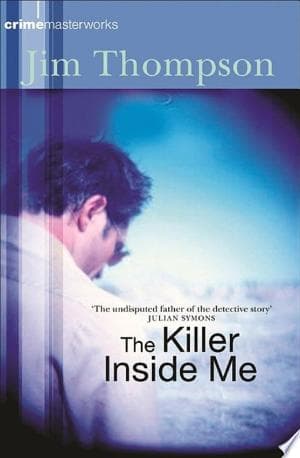
Synopsis
Covers the whole plot, including the ending.
- Difficulty
- Medium
- Pacing
- Moderate
- Mood
- Dark, Chilling, Disturbing, Nihilistic, Suspenseful
- Read it if
- You want a disturbing, first-person dive into the mind of a psychopath, classic noir, or a truly dark psychological thriller.
- Skip it if
- You prefer protagonists with whom you can empathize, shy away from graphic violence, or dislike morally reprehensible characters.
The Killer Inside Me Plot Summary
Covers the whole plot, including the ending.
The Sickness Stirring
Lou Ford, a deputy sheriff in the small town of Central City, Texas, appears to be a mild-mannered, slow-witted man. He begins an affair with Joyce Lakeland, a prostitute new to town. Their initial meetings are set up by Lou's boss, Sheriff Bob Maples, to get Joyce to leave town. However, Lou's interactions with Joyce quickly turn into a sadomasochistic dynamic, where he enjoys physically abusing her. This reawakens a dormant 'sickness' within him, a deep-seated psychopathy he has suppressed since a childhood incident involving his adopted brother, Mike, who took the blame for Lou's violent acts.
The Double Murder
Lou continues his affair with Joyce, and his 'sickness' grows stronger. He plans to murder both Joyce and Elmer Conway, the son of a wealthy construction magnate, whom Lou has long resented. Lou beats Joyce to death with a baseball bat, making it seem as if Elmer was responsible. He then shoots Elmer, staging the scene to suggest a murder-suicide or a struggle between the two, with Elmer as the aggressor. Lou carefully plants evidence to incriminate Elmer, confident that his position as a deputy and his harmless demeanor will protect him from suspicion. He even injures himself to make the struggle look more convincing.
Initial Investigations and Suspicion
After the bodies are found, the official story is that Elmer killed Joyce and then himself. However, Sheriff Maples, a shrewd and experienced lawman, quickly finds inconsistencies in Lou's account and the crime scene. Maples subtly questions Lou, expressing doubts about the neatness of the murder-suicide theory. Other townspeople, like Lou's girlfriend Amy Stanton, also notice changes in Lou's behavior, especially his growing detachment and occasional breaks in his calm facade. Lou, despite the pressure, maintains his innocent act, using his reputation as a simple, honest deputy to deflect suspicion. He feels the net closing in.
The Framing of Johnnie Pappas
As the investigation continues and the pressure on Lou intensifies, he realizes he needs a new scapegoat. He targets Johnnie Pappas, a young handyman who works for him and has a history of petty theft. Lou lures Johnnie to a secluded spot, brutally murders him, and then plants evidence to make it appear as though Johnnie was the true killer of Joyce and Elmer. He manipulates the scene to suggest Johnnie confessed to the initial murders before being killed by an unknown assailant, or perhaps even by Lou himself in a moment of 'justice.' This desperate act temporarily diverts suspicion from Lou, but it also further traps him in his web of lies and violence.
Amy's Growing Unease
Amy Stanton, Lou's kind and devoted girlfriend, becomes increasingly disturbed by Lou's erratic behavior, his coldness, and his evasiveness about the murders. She tries to reconcile the man she loves with the dark currents she senses, but his explanations become less and less convincing. Amy confronts Lou about his past, particularly the incident involving his adopted brother Mike. She senses a deep darkness within him that she cannot understand or accept. Her growing unease and quiet questioning become another source of pressure for Lou, threatening to expose his true nature and unravel his carefully constructed life.
The Return of the Past
Lou's adopted brother, Mike, returns to Central City, released from prison where he served time for the childhood incident that was Lou's fault. Mike's presence is a constant, unsettling reminder of Lou's past and the 'sickness' that has defined his life. Mike knows the truth about Lou's early violence and holds a subtle power over him. Lou initially tries to control Mike, but Mike's return also brings back memories of their abusive childhood and the psychological trauma that shaped Lou. Mike's reappearance forces Lou to confront the origins of his pathology and the long-suppressed memories of his family's dark secrets.
The Confrontation with Sheriff Maples
Sheriff Maples, through diligent investigation and keen observation, eventually uncovers the truth about Lou's involvement in the murders. He confronts Lou, not with accusations, but with a series of leading questions and subtle hints that reveal his certainty of Lou's guilt. Maples, a seasoned and morally upright lawman, understands the depth of Lou's deception and the evil beneath his calm exterior. This confrontation is a psychological battle, with Lou trying to maintain his facade and Maples systematically dismantling it, forcing Lou to realize that his carefully constructed world is crumbling around him, and he is no longer above suspicion.
The Descent into Paranoia
As the walls close in, Lou's mental state rapidly deteriorates. His carefully maintained composure shatters, replaced by intense paranoia, hallucinations, and uncontrollable urges to violence. He begins to see enemies everywhere, convinced that everyone is conspiring against him. His internal monologue, already dark and self-justifying, becomes increasingly fragmented and deranged. He lashes out at those around him, including Amy, showing his true, terrifying nature. The 'sickness' fully consumes him, stripping away any semblance of the mild-mannered deputy and revealing the monstrous killer beneath, driving him further down a path of self-destruction.
The Final Murders
In a desperate and brutal attempt to cover his tracks and silence those who know too much, Lou commits two more heinous murders. First, he kills Amy Stanton, his girlfriend, who has become increasingly aware of his true nature and a potential threat to his freedom. He then lures Sheriff Maples into a trap and murders him as well, believing that by eliminating the key figures who suspect him, he can escape justice. These acts are born out of sheer panic and a complete surrender to his psychopathic impulses, marking his final, irreversible descent into an abyss of violence and depravity.
The End of Lou Ford
After the murders of Amy and Maples, Lou's carefully constructed world completely collapses. With no one left to trust and nowhere left to run, he orchestrates his own demise. He sets fire to his house, believing he can escape the consequences of his actions in a final, defiant act. However, the plan goes awry, and Lou is caught in the blaze. The novel ends with his agonizing death, an inevitable conclusion to his reign of terror. His internal monologue continues to the very end, a final, chilling glimpse into the mind of a killer who was consumed by his own 'sickness'.
Principal Figures
Lou Ford
Protagonist/Antagonist
A seemingly slow-witted deputy sheriff who secretly harbors a brutal psychopathic 'sickness'.
Lou Ford is the first-person narrator and central character, a deputy sheriff in a small Texas town. On the surface, he is perceived as simple, slow, and harmless, often using folksy charm and clichés to disarm others. Beneath this facade lies a deeply disturbed psychopath, driven by a violent 'sickness' that manifests in sadistic pleasure from inflicting pain. He is intelligent, manipulative, and capable of meticulous planning, using his seemingly innocuous persona to commit horrific crimes and evade suspicion. His childhood trauma and an incident involving his adopted brother, Mike, are central to understanding the origins of his pathology.
Relationships: Joyce Lakeland (Victim, initial catalyst for his 'sickness' resurfacing, sadomasochistic lover); Amy Stanton (Girlfriend, eventual victim, represents normalcy and potential exposure); Sheriff Bob Maples (Boss, investigator, eventual victim, the primary intellectual adversary); Mike Ford (Adopted brother, childhood victim, reminder of Lou's past); Elmer Conway (Victim, object of Lou's long-standing resentment); Johnnie Pappas (Victim, framed scapegoat)
Joyce Lakeland
Supporting/Victim
A prostitute whose affair with Lou ignites his dormant psychopathic tendencies.
Joyce Lakeland is a prostitute who arrives in Central City and quickly becomes entangled with Lou Ford. She is portrayed as cynical and world-weary, yet she finds herself drawn to Lou's strange intensity, even as their relationship becomes increasingly violent and sadomasochistic. She is initially a pawn in Lou's scheme to appear normal, but her presence ultimately serves as the catalyst for his 'sickness' to resurface. She is Lou's first victim in the novel, her murder meticulously planned to frame Elmer Conway.
Relationships: Lou Ford (Lover, victim); Elmer Conway (Acquaintance, framed for her murder)
Amy Stanton
Supporting/Victim
Lou's kind and unsuspecting girlfriend, who slowly uncovers his true, terrifying nature.
Amy Stanton is Lou Ford's girlfriend, a seemingly wholesome and loving woman who represents a semblance of normalcy and domesticity in Lou's life. She genuinely cares for Lou and tries to understand him, despite his peculiar habits. As Lou's crimes escalate, Amy becomes increasingly uneasy and suspicious of his behavior, sensing a darkness within him that she cannot reconcile with the man she loves. Her growing awareness of his psychopathy makes her a threat and ultimately leads to her tragic end.
Relationships: Lou Ford (Girlfriend, victim)
Sheriff Bob Maples
Supporting/Victim
Lou's shrewd and observant boss, who gradually uncovers the truth about the murders.
Sheriff Bob Maples is Lou Ford's superior and a seasoned, intelligent lawman. Unlike many others in Central City, Maples is not easily fooled by Lou's simpleton act. He possesses a keen intuition and a methodical approach to investigation, slowly piecing together inconsistencies in Lou's stories and the crime scenes. Maples becomes Lou's primary adversary, a quiet but persistent force of justice that threatens to expose him. He represents the moral compass and the looming threat of the law, making him a target for Lou's desperate final acts.
Relationships: Lou Ford (Boss, investigator, victim)
Mike Ford
Supporting/Mentioned
Lou's adopted brother, who took the blame for Lou's childhood violence, a living reminder of Lou's past.
Mike Ford is Lou's adopted older brother, who served time in prison for a violent incident from their childhood that was actually Lou's doing. Mike's return to Central City is a significant plot point, as he embodies Lou's dark past and the origins of his 'sickness.' He understands Lou's true nature better than anyone and represents a constant threat of exposure. Mike is portrayed as troubled and somewhat damaged by his experiences, both with Lou and in prison, but his presence forces Lou to confront suppressed memories and the long-standing lies that have shaped his life.
Relationships: Lou Ford (Adopted brother, childhood victim/scapegoat)
Elmer Conway
Supporting/Victim
The wealthy, arrogant son of a construction magnate, framed for Joyce Lakeland's murder.
Elmer Conway is the son of a powerful local construction magnate, known for his arrogance and privileged background. Lou Ford harbors a deep-seated resentment towards Elmer, stemming from their differing social statuses and Lou's own sense of injustice. Elmer is targeted by Lou not just as a convenient scapegoat for Joyce's murder, but also as an outlet for Lou's class-based hatred and desire for revenge. His death is orchestrated to appear as a murder-suicide or a struggle connected to Joyce, diverting initial suspicion from Lou.
Relationships: Lou Ford (Antagonist, victim); Joyce Lakeland (Acquaintance, framed for her murder)
Johnnie Pappas
Supporting/Victim
A young, petty criminal handyman, framed and murdered by Lou to divert suspicion.
Johnnie Pappas is a young handyman who works for Lou and has a history of minor criminal offenses. He is somewhat naive and easily manipulated, making him an ideal secondary scapegoat for Lou. When the initial framing of Elmer Conway begins to unravel, Lou brutally murders Johnnie and plants evidence to make it appear as though Johnnie was the true killer of Joyce and Elmer. Johnnie represents the expendable, marginalized figures Lou uses and discards to protect himself, further illustrating Lou's lack of empathy and his cynical view of human life.
Relationships: Lou Ford (Employer, murderer, framer)
Themes & Insights
The Duality of Human Nature
The novel explores duality, especially the contrast between outward appearance and inner reality. Lou Ford embodies this, presenting himself as a slow, harmless deputy while harboring a monstrous psychopathic 'sickness' inside. This duality allows him to deceive everyone around him, from his girlfriend Amy to his boss Sheriff Maples. The quiet, conservative setting of Central City further highlights this, as the seemingly idyllic small town hides a deep darkness. Lou constantly reflects on this, often presenting his violent acts with a folksy, almost philosophical detachment, emphasizing the internal war he wages, or rather, embraces.
“A lot of people think I'm crazy. But I'm not. I'm just sick. I'm sick because I'm a man.”
The Nature of Evil and Psychopathy
Jim Thompson explores the psychology of a killer, presenting a chilling first-person account of psychopathy. Lou Ford's 'sickness' is not portrayed as sudden madness but as an inherent, deeply ingrained part of his being, made worse by childhood trauma and abuse. The novel shows how psychopathy manifests—through manipulation, lack of empathy, a twisted sense of justice, and a chilling ability to rationalize horrific acts. Lou's internal monologues are key here, offering a direct, unfiltered look into his twisted logic and the thrill he gets from violence and deception. The narrative suggests that evil can exist beneath the most ordinary exteriors, challenging common ideas of villainy.
“It was just a game. A game. And I was good at it. The best. It got to be a habit, like scratching yourself.”
Social Hypocrisy and Deception
The novel critiques the social hypocrisy in small-town America, where appearances are often more important than truth. Central City is a place where respectability can shield dark secrets, and where a seemingly harmless figure like Lou Ford can operate freely for a time. Lou masterfully exploits this, using his 'simple' persona and the town's expectations to manipulate situations and deflect suspicion. The ease with which he frames others, like Elmer Conway and Johnnie Pappas, highlights the town's willingness to accept convenient narratives, especially when they involve those already deemed 'undesirable.' This theme shows how societal norms and expectations can be twisted to serve malevolent ends.
“They all loved me, all of 'em. And they hated me, too. But they loved the idea of me, the idea of a good, simple man.”
Justice and Impunity
A main question in the novel is about justice and whether true perpetrators can escape it. For much of the story, Lou Ford believes he is untouchable, using his position as a deputy and his manipulative intelligence to commit murders and frame others. The initial success of his schemes highlights the fragility of the justice system when confronted with a truly cunning and remorseless killer. However, the slow, methodical investigation by Sheriff Maples and the growing unease of Amy Stanton introduce the idea that impunity is not absolute. Ultimately, while Lou avoids formal legal justice for a time, his actions lead to his own self-destruction, suggesting a form of cosmic or psychological justice.
“I knew I couldn't be caught. Not by them. Not by anyone. I was too smart. Too careful.”
Plot Devices & Literary Techniques
First-Person Unreliable Narrator
Lou Ford's internal monologue provides a chilling, biased, and self-justifying account of his crimes.
The entire novel is narrated from the first-person perspective of Lou Ford. This device is crucial as it allows the reader direct access to his twisted thought processes, his rationalizations, and his chilling lack of remorse. However, Lou is an unreliable narrator, constantly manipulating the truth, even in his own mind, to justify his actions and maintain his self-image as a victim or a misunderstood genius. This forces the reader to constantly question his account and piece together the true events, creating a deeply unsettling and immersive experience into the mind of a psychopath.
Foreshadowing and Irony
Subtle hints and ironic statements by Lou Ford often precede or comment on his violent acts.
Thompson uses extensive foreshadowing and dramatic irony throughout the narrative. Lou often makes seemingly innocent or folksy comments that, in retrospect, hint at his violent intentions or the dark events to come. For instance, his early reflections on 'sickness' or his seemingly casual observations about people's weaknesses often precede his murderous acts. The irony lies in the reader's knowledge of Lou's true nature, which makes his outwardly benign statements all the more chilling, creating a sense of dread and suspense as the reader anticipates his next move.
The 'Sickness' Metaphor
Lou's term for his psychopathy, used to rationalize and distance himself from his actions.
Lou Ford consistently refers to his psychopathic tendencies as his 'sickness.' This serves as a powerful metaphor for his inherent evil, but also as a psychological defense mechanism. By labeling it a 'sickness,' Lou attempts to distance himself from personal responsibility, framing his violence as an uncontrollable affliction rather than a conscious choice. This device allows Thompson to explore the nature of psychopathy without explicitly using clinical terms, making it more visceral and personal to Lou's internal struggle, or lack thereof, with his violent urges.
The Small Town Setting
The seemingly idyllic backdrop of Central City, Texas, contrasts sharply with the horror unfolding within it.
The setting of Central City, a quiet, unassuming small town in Texas, is a crucial plot device. It provides a stark contrast to the horrific violence and psychological torment that Lou Ford inflicts. The perceived innocence and close-knit nature of the community initially allow Lou to hide in plain sight, as no one expects such depravity from a local deputy. This setting amplifies the shock and horror of Lou's crimes, highlighting how evil can fester undetected beneath a veneer of normalcy and respectability, making his eventual exposure more impactful.
The Killer Inside Me Quotes
“It was a good, clean shot. But there's no such thing as a clean shot.”
“I'm a killer, I guess. I always have been. Only, I didn't know it until now.”
“The world's full of nice people. If you can't find one, be one. But don't expect me to.”
“I got to thinking that maybe I wasn't so crazy after all. Maybe it was just the world that was crazy.”
“You can't fool me. I know what you are. And I know what I am. We're two of a kind.”
“I wasn't really a killer. I was just a guy who was trying to get along. And sometimes, getting along meant killing.”
“It's funny, the things you remember. And the things you forget. Or maybe you don't forget them. Maybe you just push them down.”
“I was just a simple country boy. And simple country boys don't do things like that. Unless they do.”
“You can't escape yourself. No matter how far you run, you're still there.”
“Everything was going to be all right. It had to be. Because if it wasn't, then nothing was.”
“It was just a game. A very dangerous game. And I was very good at it.”
“The truth is, I don't know why I do the things I do. Maybe nobody does.”
“You got to be tough in this world. Or you get eaten alive. And I wasn't about to get eaten.”
“I was just trying to do what was right. Or what felt right. Which was usually the same thing for me.”
Quiz
10 questions on the plot and the characters. Each answer comes with a short explanation.
Question 1
What is the name of the small Texas town where Deputy Sheriff Lou Ford works?
- Central City
- Lariat
- Harmony Creek
- Prairie View
Show answer
B. Lariat Lou Ford is the Deputy Sheriff in the small Texas town of Lariat, where the majority of the novel's events unfold.
Question 2
Who is Lou Ford's adopted brother who took the rap for his earlier 'sickness' incident?
- Billy Boy
- Johnnie
- Mike
- Ted
Show answer
A. Billy Boy Lou's adopted brother, Billy Boy, took the blame for a past incident involving Lou's violent tendencies, saving Lou from being institutionalized.
Question 3
What is the primary motive Lou Ford gives for killing Joyce Lakeland?
- She was blackmailing him.
- He wanted to frame her for another crime.
- He was following orders from a local crime boss.
- It was part of a twisted plan to make her death look like a lovers' quarrel gone wrong, satisfying his 'sickness'.
Show answer
D. It was part of a twisted plan to make her death look like a lovers' quarrel gone wrong, satisfying his 'sickness'. Lou's murder of Joyce Lakeland is meticulously planned as part of his 'sickness,' designed to look like a violent argument between lovers to deflect suspicion from himself.
Question 4
What physical manifestation does Lou Ford claim accompanies his 'sickness'?
- Intense headaches and blurred vision.
- A burning sensation in his stomach and a feeling of pressure in his head.
- Numbness in his limbs and auditory hallucinations.
- Extreme fatigue and an inability to focus.
Show answer
B. A burning sensation in his stomach and a feeling of pressure in his head. Lou frequently describes his 'sickness' as being accompanied by a burning in his stomach and a pressure in his head, physical sensations that precede his violent outbursts.
Question 5
How does Lou Ford typically present himself to the community?
- As a flamboyant and attention-seeking individual.
- As a quiet, somewhat slow, and unassuming deputy.
- As a stern and overly authoritative figure.
- As a charming and highly intelligent local leader.
Show answer
B. As a quiet, somewhat slow, and unassuming deputy. Lou cultivates an image of being slow, patient, and boring to the community, which serves as a perfect cover for his true psychopathic nature.
Question 6
What is the ultimate fate of Lou Ford at the end of the novel?
- He is arrested and sentenced to life imprisonment.
- He escapes justice and leaves town to start a new life.
- He commits suicide by blowing up his house with himself inside.
- He is killed in a shootout with federal agents.
Show answer
C. He commits suicide by blowing up his house with himself inside. In a climactic and desperate act, Lou Ford blows up his own house, killing himself and anyone else nearby, to avoid capture and facing the consequences of his actions.
Question 7
Which recurring theme is most central to 'The Killer Inside Me'?
- The triumph of good over evil.
- The corrupting influence of wealth and power.
- The duality of human nature and the hidden darkness within seemingly ordinary individuals.
- The importance of community and social bonds.
Show answer
C. The duality of human nature and the hidden darkness within seemingly ordinary individuals. The novel is a deep exploration of the duality of human nature, specifically the terrifying contrast between Lou's outward persona and his inner psychopathic 'sickness.'
Question 8
How does Lou Ford deal with the growing suspicion of Sheriff Bob Maples regarding his involvement in the murders?
- He confesses to Maples, hoping for leniency.
- He attempts to frame another innocent person for the crimes.
- He murders Maples, making it look like an accident or suicide.
- He tries to convince Maples that he is mentally unstable and needs help.
Show answer
C. He murders Maples, making it look like an accident or suicide. As suspicion mounts, Lou's solution to Sheriff Maples's increasing scrutiny is to eliminate him, staging his death to further his manipulative narrative.
Question 9
What is the significance of the recurring motif of 'the sickness' in Lou's internal monologue?
- It represents a literal physical illness he is battling.
- It is a metaphor for his deep-seated psychological disorder and psychopathic tendencies.
- It refers to a contagious disease affecting the town.
- It symbolizes the moral decay of the entire community.
Show answer
B. It is a metaphor for his deep-seated psychological disorder and psychopathic tendencies. 'The sickness' is Lou's personal, chilling term for his innate psychopathy, his uncontrollable urges to inflict violence, and his twisted worldview.
Question 10
Before he becomes a deputy, what was Lou Ford's first significant act of violence that led to Billy Boy taking the blame?
- Setting fire to a local barn.
- Beating a young girl with a piece of wood.
- Stealing money from the church collection.
- Killing stray dogs in the neighborhood.
Show answer
B. Beating a young girl with a piece of wood. The incident where Lou beat a young girl with a piece of wood was the first major manifestation of his 'sickness,' for which Billy Boy took the fall, allowing Lou to escape punishment.
The Killer Inside Me FAQ
What is the central premise of 'The Killer Inside Me'?
The novel follows Lou Ford, a seemingly slow and unassuming deputy sheriff in a small Texas town, who secretly harbors a deep-seated psychopathic 'sickness.' This illness manifests as extreme violence and a manipulative nature, leading him to commit brutal murders while maintaining his facade of normalcy.
Who are the main characters involved in Lou Ford's initial crimes?
Lou's initial significant victims are Joyce Lakeland, a prostitute he's having an affair with, and Elmer Conway, a wealthy construction magnate's son. He orchestrates their deaths to appear as a lovers' quarrel and murder-suicide, setting the stage for his subsequent manipulations and escalating violence.
How does Lou Ford manage to evade suspicion for so long?
Lou employs a cunning strategy of feigning mental slowness and a simple demeanor, which causes others to underestimate him. He also meticulously plans his crimes, plants false evidence, and manipulates key figures like Sheriff Bob Maples and prosecutor Howard Hendricks, exploiting their biases and trusting natures.
What role does Amy Stanton play in Lou's life and the unfolding narrative?
Amy Stanton is Lou's long-suffering and devoted girlfriend, who initially believes in his innocence and stands by him. She becomes increasingly entangled in his web of deceit and violence, eventually suffering a tragic fate as Lou's 'sickness' consumes him entirely.
What is the significance of the 'sickness' Lou Ford refers to?
The 'sickness' is Lou's euphemism for his psychopathy and deep-seated sadistic urges, which he attributes to a traumatic childhood incident involving sexual abuse and the death of his stepsister. It's a psychological condition that drives his compulsion for violence and control, making him incapable of genuine empathy or remorse.
How does the past incident involving Lou's adopted brother, Mike, connect to Lou's present 'sickness'?
When Lou was younger, he committed a violent act that Mike took the blame for, leading to Mike's imprisonment. This event solidified Lou's understanding of his 'sickness' and his ability to manipulate others, laying the groundwork for his later crimes and his continued evasion of justice.
Are there any subtle clues about Lou's true nature early in the book that readers might miss?
Yes, Lou's internal monologues often reveal his calculating and detached perspective, even when outwardly appearing benign. His overly detailed observations of others' weaknesses, his detached recounting of violent fantasies, and his seemingly random acts of cruelty towards animals or the less fortunate hint at his underlying psychopathy.
What is the significance of the specific methods Lou uses to kill his victims?
Lou often employs methods that are intimate and brutal, such as strangulation or severe beatings, which suggest a desire for control and a personal connection to the act of violence. His choice to frame crimes as passion-driven or accidental also reflects his manipulative intelligence and his understanding of human assumptions.
How does Lou's narration style reflect his psychological state?
Lou's first-person narration is characterized by its chillingly calm, rational, and often humorous tone, even when describing horrific acts. This detached, almost clinical voice serves to highlight his lack of empathy and his ability to intellectualize his 'sickness,' making his psychopathy all the more disturbing.
What psychological defense mechanisms does Lou Ford employ to justify his actions?
Lou primarily uses rationalization, blaming his 'sickness' or external circumstances for his violent urges, effectively externalizing his pathology. He also employs projection, attributing malice and deceit to others, thereby absolving himself of responsibility and maintaining his self-perception as a victim or an agent of justice.
How does Lou's relationship with Amy Stanton evolve and what does it reveal about his capacity for connection?
Initially, Lou seems to genuinely care for Amy, or at least values her presence as a symbol of normalcy. However, as his 'sickness' escalates, his affection for her proves superficial. He ultimately betrays and murders her, demonstrating his complete inability to form genuine emotional bonds and his readiness to sacrifice anyone for his own survival and gratification.
What is the novel's stance on the nature vs. nurture debate regarding psychopathy?
The novel suggests a complex interplay, hinting at a traumatic childhood incident as a catalyst for Lou's 'sickness' while also portraying it as an inherent, almost unstoppable force. Thompson doesn't offer a definitive answer, instead presenting Lou's psychopathy as a horrifying, deeply ingrained aspect of his being.
Is Lou Ford meant to be seen as a purely evil character, or is there any room for sympathy?
While Lou's actions are undeniably evil, the first-person narration allows glimpses into his twisted logic and his own suffering from the 'sickness,' which some readers might interpret as a plea for understanding, if not sympathy. However, his calculated cruelty and lack of remorse ultimately position him as a deeply disturbed and dangerous individual.
How does the novel challenge traditional notions of justice and law enforcement?
The novel starkly challenges these notions by placing the psychopathic killer within the very system meant to uphold justice. Lou's ability to manipulate Sheriff Maples and the legal process highlights the vulnerability of the system to cunning individuals and the difficulty of detecting evil hidden behind a facade of respectability.
What is the significance of the ending, particularly Lou's final moments and monologue?
The ending, with Lou's self-inflicted demise and his final, rambling monologue, emphasizes his complete mental breakdown and the ultimate triumph of his 'sickness.' It suggests that his psychopathy was an inescapable part of him, leading to his self-destruction even as he tried to maintain control, leaving a chilling impression of his warped reality.
How does the setting of a small Texas town contribute to the novel's atmosphere and themes?
The seemingly idyllic, close-knit small town setting creates a stark contrast with Lou's inner depravity, amplifying the horror. It also allows Lou to operate with less scrutiny, as people are more trusting and less likely to suspect a local deputy, highlighting themes of hidden evil and the corruption beneath a veneer of normalcy.
Does the novel offer any hope for redemption or escape from Lou's 'sickness'?
No, the novel offers no hope for redemption or escape for Lou. His 'sickness' is portrayed as an inherent and incurable condition that only intensifies throughout the narrative, ultimately consuming him entirely. The story is a bleak exploration of an unredeemable mind.
About the author
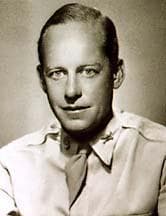
James, Jim, Jimmy or Jamie Thompson may refer to:
Similar books
- American Psycho
Bret Easton Ellis
3.8 (242k) average on GoodreadsThrillerBoth offer a first-person, unvarnished look into the mind of a high-functioning psychopath who commits horrific acts.
- No Country for Old Men
Cormac McCarthy
4.1 (148k) average on GoodreadsThrillerFeatures relentless, amoral violence and a bleak, unforgiving atmosphere in a rural setting.
- The Postman Always Rings Twice
James M. Cain
3.8 (32k) average on GoodreadsThrillerWhile both The Killer Inside Me and Cain's The Postman Always Rings Twice (1934) are quintessential noir novels featuring protagonists driven by dark impulses, Thompson's work delves far deeper into the internal, pathological motivations of its killer. Cain's Frank Chambers is an opportunist, driven by lust and a desire for freedom, making his crimes more reactive. Thompson's Lou Ford, conversely, is a pre-meditated, almost clinical psychopath whose violence stems from an intrinsic 'sickness,' offering a more disturbing and internal psychological landscape. Cain's narrative is more external and action-driven, while Thompson's is a chilling descent into a deranged mind.
- Angels & Demons
Dan Brown
3.9 (2.7M) average on GoodreadsThrillerA Harvard symbologist races through Rome's ancient sites, deciphering cryptic clues to unmask the Illuminati and stop a vengeful plot to destroy the Vatican with a stolen antimatter weapon.
- Gone Girl
Gillian Flynn
4.1 (2.3M) average on GoodreadsThrillerA wife's sudden disappearance on her fifth anniversary reveals a web of lies and psychological warfare, exposing the secrets within a seemingly perfect marriage.
- The Girl on the Train
Paula Hawkins
3.9 (2.1M) average on GoodreadsThrillerA woman’s fascination with a seemingly perfect couple she watches from her daily train commute leads her into a dark investigation when she witnesses something that shatters their idyllic image.





Enjoyed the summary?
A summary gives you the shape of the book. The book itself has the detail, the examples and the voice.
Find The Killer Inside Me on AmazonAs an Amazon Associate, BookBrief earns from qualifying purchases. How we're funded