

Synopsis
Covers the whole plot, including the ending.
- Difficulty
- Easy
- Pacing
- Fast
- Mood
- Dark, Suspenseful, Fatalistic, Erotic
- Read it if
- You enjoy classic noir, stories of illicit passion and crime, or a bleak, fatalistic view of human nature.
- Skip it if
- You prefer morally upright characters, happy endings, or stories with clear-cut justice.
The Postman Always Rings Twice Plot Summary
Covers the whole plot, including the ending.
Frank Chambers Arrives at the Twin Oaks Tavern
Frank Chambers, a young drifter, hitches a ride and stops at the Twin Oaks Tavern, a run-down roadside diner and filling station owned by Nick Papadakis, a friendly but aging Greek immigrant. Nick offers Frank a job, and Frank takes it, despite not wanting to settle down. He is immediately drawn to Nick's much younger, beautiful wife, Cora Papadakis. Cora is unhappy with her life, feeling stuck in the diner and her marriage to Nick. Frank and Cora are instantly attracted to each other, setting the stage for dark events.
An Immediate and Dangerous Affair
Frank and Cora's attraction quickly becomes a passionate affair. They meet secretly, their desire for each other consuming them. Cora tells Frank about her unhappiness, her dreams of a better life, and her dislike for Nick and the diner. She sees Frank as her way out, believing he can help her escape her miserable existence. Frank, equally infatuated, agrees to her plans. Their affair is reckless and dangerous, fueled by lust and desperation, leading them to consider drastic measures to remove Nick from their lives.
First Attempted Murder and Its Failure
Wanting to be together and for Cora to inherit the diner, they plan to kill Nick. Their first attempt involves electrocuting Nick in the bathtub. Cora waits for Nick to be in the tub, then Frank, after cutting the power, tries to drop a radio into the water. The plan fails when the lights flicker back on early, and a cat causes a distraction, making Nick suspicious. Nick is only knocked unconscious, and they pretend it was an accident, though Nick remains suspicious.
Cora's Brief Departure and Return
After the failed murder attempt, the tension between Frank and Cora grows. Cora, frustrated and scared, briefly leaves Frank and the diner, going to her mother's home. Frank is upset by her leaving but stays at the diner, working for Nick. However, Cora soon realizes she cannot live without Frank and the freedom he offers. She returns to the diner, and their reunion is intense, restarting their passion and their shared desire to get rid of Nick. Her brief absence only strengthens their resolve.
The Successful Murder of Nick Papadakis
Frank and Cora plan a second murder attempt, this time staging a car accident. They take Nick on a drive along a winding road, intending to hit him and then crash the car. During the drive, Frank hits Nick with a wrench, knocking him out. Cora then drives, but their plan almost fails when the car goes off the road and crashes down an embankment. They put Nick's body in the driver's seat and make the scene look like he lost control while drunk. Frank and Cora escape the wreck, pretending to be injured to support their story to the authorities.
The Investigation and District Attorney Sackett's Trap
The police investigate the 'accident.' While initial findings support Frank and Cora's story, District Attorney Sackett is very suspicious. He believes they murdered Nick. Sackett uses psychological tactics, separating Cora and Frank and suggesting evidence that does not exist. He offers Cora a deal, saying Frank has confessed and implicated her. Cora, fearing betrayal, signs a confession implicating Frank in the murder, hoping to save herself. However, Sackett's plan is a bluff, and he does not have enough evidence to prosecute them immediately.
The Insurance Company's Intervention
The situation becomes more complicated when Nick's life insurance company, also suspicious, refuses to pay out and hires a lawyer named Katz. Katz, working to protect the insurance company's interests, examines every detail of the case, forcing Sackett to delay charges. He subtly threatens Frank and Cora with exposure, creating pressure on them. This external pressure makes Frank and Cora stick together, despite their growing distrust and resentment, as they face a common enemy in the legal system.
Frank and Cora's Troubled Coexistence
Despite Sackett's and Katz's efforts, Frank and Cora are not charged with Nick's murder due to lack of conclusive evidence and conflicting statements. They return to the diner, now legally Cora's, but their relationship is broken by suspicion and the trauma of their crime. They marry, but their passion is replaced by resentment and fear. Cora becomes pregnant, and for a short time, they find a fragile hope for a new beginning. However, the past continues to bother them, preventing any true peace or happiness.
Cora's Accidental Death and Frank's Final Arrest
While on an outing by the beach, Frank and Cora go for a swim. A sudden squall hits, and Cora, who is pregnant, struggles in the water. Frank tries to save her, but she drowns. The authorities, still suspicious from Nick's death, immediately suspect Frank. Despite Frank's genuine grief and Cora's accidental death, the district attorney, Sackett, sees an opportunity to convict Frank. The previous murder, Frank's confession to Cora's first 'confession,' and his general character are used against him. Frank is arrested and charged with Cora's murder.
Frank's Conviction and Execution
During the trial for Cora's death, Frank cannot convince the jury of his innocence. The prosecution uses the circumstances of Nick's death, Cora's earlier signed confession, and Frank's own testimony against him. The jury, already biased by Frank's history and the lingering suspicion of Nick's murder, finds him guilty of killing Cora. Despite his pleas and the accidental nature of Cora's drowning, Frank is sentenced to death. He thinks about the irony of being executed for a crime he did not commit, while getting away with the murder he did commit.
The Postman Always Rings Twice Characters
Frank Chambers
Protagonist
A drifter whose impulsive desires lead him down a path of crime and destruction.
Frank is a young, amoral drifter who lives by his wits and instincts. He's charming, restless, and driven by immediate gratification, particularly physical desire. He has no fixed address, no real ambitions beyond survival, and a casual disregard for societal norms. His initial attraction to Cora is purely physical, but he quickly becomes entangled in her desperate ambition, leading him to commit murder. Despite his criminal acts, he's not entirely heartless; he genuinely falls for Cora and feels remorse, particularly after her death. He is a classic noir anti-hero, trapped by fate and his own poor choices.
Relationships: Cora Papadakis (Passionate, destructive, and ultimately mutually dependent lovers); Nick Papadakis (Employer, victim of Frank and Cora's plot); District Attorney Sackett (Antagonist, legal adversary)
Cora Papadakis
Protagonist/Antagonist
A beautiful, ambitious woman trapped in a loveless marriage, who instigates a murder plot.
Cora is a beautiful, young woman, deeply unhappy and resentful of her life as the wife of an older Greek immigrant and owner of a dingy diner. She dreams of a better life, financial security, and a respectable social standing, feeling she's been cheated by fate. Her ambition and desperation make her manipulative and ruthless, particularly when she meets Frank. She instigates the murder plot against Nick, believing it's her only way out. She's a femme fatale figure, but also a victim of her circumstances and desires. Her love for Frank is intertwined with her need for escape and control.
Relationships: Frank Chambers (Passionate, destructive, and ultimately mutually dependent lovers); Nick Papadakis (Husband, victim of Cora and Frank's plot)
Nick Papadakis
Supporting
The jovial but unsuspecting owner of the Twin Oaks Tavern and Cora's husband.
Nick is an older, good-natured Greek immigrant who owns the Twin Oaks Tavern. He's kind, trusting, and genuinely fond of Frank, whom he hires. He loves Cora deeply, despite their age difference, and is largely oblivious to her unhappiness and the affair she's having. He represents the innocent victim, a symbol of the life Cora despises and Frank seeks to disrupt. His death is the catalyst for the novel's main conflict and the subsequent downfall of Frank and Cora. He is portrayed with a certain pathos, making his murder even more unsettling.
Relationships: Cora Papadakis (Husband); Frank Chambers (Employer, eventual murderer)
District Attorney Sackett
Antagonist
The shrewd prosecutor who relentlessly pursues Frank and Cora.
Sackett is the determined and cunning District Attorney who becomes suspicious of Nick's 'accident.' He is relentless in his pursuit of justice, or at least a conviction, for Nick's death. He uses psychological tactics and legal maneuvers to try and break Frank and Cora, even resorting to trickery and bluffing to extract confessions. He represents the long arm of the law and the inevitability of consequences, even if those consequences are delayed or misdirected. He is a formidable adversary, embodying the systemic forces that ultimately ensnare Frank.
Relationships: Frank Chambers (Legal adversary); Cora Papadakis (Legal adversary)
Katz
Supporting
The lawyer representing Nick's insurance company, who complicates the murder investigation.
Katz is a sharp, pragmatic lawyer hired by Nick's insurance company to investigate the suspicious circumstances of his death. He is not interested in justice in the same way Sackett is, but rather in protecting his client's financial interests. His involvement creates a legal stalemate, preventing Sackett from immediately prosecuting Frank and Cora. Katz's presence highlights the intricate web of consequences beyond simple criminal justice, showing how financial institutions also play a role in the aftermath of crime. He's a cynical and effective operator within the legal system.
Relationships: Frank Chambers (Legal adversary); Cora Papadakis (Legal adversary)
Madge Allen
Mentioned
A lion tamer who briefly offers Frank a job, representing an alternative life.
Madge is a lion tamer whom Frank briefly encounters and considers running away with. She represents a different kind of wild, adventurous life, one that Frank briefly contemplates as an escape from his entanglement with Cora. Her appearance is fleeting but significant, highlighting Frank's inherent restlessness and the paths he chooses not to take. She offers a stark contrast to the domestic, yet deadly, trap of the diner and Cora.
Relationships: Frank Chambers (Brief acquaintance, potential romantic interest)
The Postman Always Rings Twice Themes
Passion and Obsession
The novel is driven by the immediate, overwhelming sexual passion between Frank and Cora. Their obsession with each other, fueled by lust and a desire for escape, blinds them to consequences and leads them to murder. This theme is clear from their first meeting, where their mutual attraction is almost instantaneous and all-consuming, leading to Nick Papadakis's murder, a direct result of their desire to be together without impediment. Their passion, however, quickly turns into resentment and distrust, showing its destructive nature.
“We were like a couple of wild animals, and all the time we were trying to figure out how to get rid of the Greek.”
Fate and Inevitability
A strong sense of fatalism is in the story. Frank and Cora's attempts to escape their past and create a new life are constantly stopped by unforeseen circumstances and the lingering consequences of their actions. The title, 'The Postman Always Rings Twice,' suggests that consequences will inevitably catch up to you. Frank's final conviction for Cora's accidental death, despite having successfully avoided justice for Nick's murder, shows this theme, implying he was destined for retribution regardless of the specific crime.
“I knew it was coming. I knew I'd get it. But I didn't think it would be for something I didn't do.”
The Corrupting Nature of Desire
The novel explores how unchecked desire, both sexual and material, can corrupt people and lead to moral decay. Cora's desire for a better life and Frank's lust for her combine to form a destructive force that destroys their moral sense. They justify their actions, but their pursuit of personal gratification ultimately leads to murder and a life filled with suspicion and misery. Even after achieving their initial goal (Nick's death and ownership of the diner), their desires are never truly satisfied, and their relationship becomes poisoned by guilt and distrust.
“Once you get in trouble, it's like a bear trap. The more you struggle, the deeper you get.”
Justice and Injustice
The theme of justice is explored ironically in the novel. Frank and Cora successfully commit murder and initially avoid legal consequences, showing the flaws of the justice system. However, Frank is ultimately convicted and executed for a crime he did not commit (Cora's accidental death), while escaping punishment for the one he did. This twisted outcome challenges traditional ideas of justice, suggesting that retribution can be arbitrary and that the system can fail to deliver true justice, instead punishing for perceived rather than actual guilt.
“They always get you. They always do. It's like the postman. He always rings twice.”
Plot Devices & Literary Techniques
First-Person Narration
Provides an intimate, biased, and immediate perspective of Frank Chambers's thoughts and actions.
The story is told entirely from Frank Chambers's perspective, giving the reader direct access to his raw desires, amoral justifications, and immediate sensory experiences. This narrative choice immerses the reader in Frank's criminal mindset, making his actions, however reprehensible, understandable from his point of view. It also creates a sense of immediacy and tension, as events unfold through his limited and often self-serving lens, blurring the lines between protagonist and villain and enhancing the noir atmosphere.
The Femme Fatale
Cora Papadakis as a seductive, dangerous woman who leads the male protagonist to ruin.
Cora Papadakis embodies the classic femme fatale archetype. She is beautiful, alluring, and deeply dissatisfied, using her sexuality to manipulate Frank into committing murder. While she is also a victim of her circumstances, her calculated ambition and willingness to instigate violence are central to the plot. She promises Frank a better life, but ultimately leads him to destruction, fulfilling the role of the dangerous woman who ensnares the male protagonist in a web of crime and despair characteristic of noir fiction.
Irony (Situational and Dramatic)
The use of contrasting outcomes, particularly Frank's conviction for a crime he didn't commit.
Situational irony is a dominant plot device, most notably in Frank's ultimate fate. He successfully murders Nick and evades justice for that crime, only to be convicted and executed for Cora's accidental death, a crime he is truly innocent of. This profound irony underscores the novel's fatalistic themes and its commentary on the arbitrary nature of justice. Dramatic irony also appears as the reader is aware of Frank and Cora's guilt while other characters, particularly the authorities initially, remain oblivious, building suspense and tension.
The Roadside Diner Setting
A claustrophobic and isolated backdrop for the unfolding drama and illicit affair.
The Twin Oaks Tavern, a run-down roadside diner, serves as a crucial setting. Its isolation on the highway creates a sense of being cut off from mainstream society, fostering an environment where illicit activities can thrive unseen. The small, confined space of the diner also contributes to a feeling of claustrophobia, trapping Frank and Cora together and intensifying their passionate and destructive relationship. It symbolizes their mundane, undesirable existence, which Cora desperately wants to escape, and becomes the stage for their crimes and their subsequent, troubled life together.
The Postman Always Rings Twice Quotes
“I kissed her. Her eyes were shining up at me like two blue stars. It was like being in church.”
“She was like the first woman I ever saw. I couldn't take my eyes off her.”
“I wanted to do something to her, and I didn't know what it was.”
“We were like two people that had been locked up in a room and had found the key.”
“I had her and she had me and from now on, nothing could ever be the same.”
“The Greek was a big guy, but he was soft. I could have taken him with one hand.”
“I was all tightened up inside, like a spring.”
“We had to go through with it now. There was no backing out.”
“It was like we were in a trap, and the only way out was to go ahead.”
“I never knew what love was until I saw her. Then I knew, and I knew I'd never know it again.”
“The law doesn't care about love. It cares about evidence.”
“We were two of a kind, and that's why we understood each other.”
“It's a funny thing. A woman can be your whole life, and then she's gone, and you go on living.”
“I had to have her, and I had to have her all to myself.”
Quiz
10 questions on the plot and the characters. Each answer comes with a short explanation.
Question 1
What is the name of the diner where Frank Chambers first meets Cora Papadakis?
- The Twin Oaks Tavern
- The Roadside Grill
- Papadakis's Diner
- The California Cafe
Show answer
A. The Twin Oaks Tavern Frank Chambers stumbles upon the Twin Oaks Tavern, a roadside diner and gas station owned by Nick Papadakis, where he first encounters Cora and gets hired as a handyman.
Question 2
What is the initial plan Frank and Cora devise to kill Nick Papadakis?
- Poison his food
- Stage a car accident
- Shoot him during a robbery
- Drown him in a bathtub
Show answer
B. Stage a car accident Frank and Cora plan to make Nick's death look like a car accident by knocking him unconscious and crashing his car, but this first attempt fails when Frank loses his nerve.
Question 3
What legal strategy does the prosecutor use to try Frank and Cora separately for Nick's murder?
- Charge them with conspiracy
- Pit them against each other by offering deals
- Argue they acted in self-defense
- Claim insanity for both
Show answer
B. Pit them against each other by offering deals The prosecutor attempts to turn Frank and Cora against each other by offering them separate deals, hoping one will testify against the other, but their loyalty initially holds.
Question 4
Why is the book titled 'The Postman Always Rings Twice'?
- It refers to a postal worker character in the story
- It symbolizes fate's inevitable double punishment for their crimes
- It describes a literal event where a postman rings twice at their door
- It is a metaphor for Frank's two attempts to leave Cora
Show answer
B. It symbolizes fate's inevitable double punishment for their crimes The title metaphorically suggests that fate, like a postman who always rings twice to ensure you hear, will inevitably deliver retribution for their crimes, no matter how they try to evade it.
Question 5
What happens to Frank and Cora after they are acquitted of Nick's murder?
- They move to Mexico and live happily ever after
- They inherit Nick's diner and run it successfully
- Their relationship deteriorates, leading to mutual suspicion and a fatal accident
- Frank is arrested for another crime, leaving Cora alone
Show answer
C. Their relationship deteriorates, leading to mutual suspicion and a fatal accident After being acquitted, Frank and Cora's relationship becomes strained by guilt and paranoia, culminating in a car accident where Cora dies and Frank is wrongly convicted for her murder.
Question 6
How does Frank Chambers characterize himself at the beginning of the novel?
- A reformed criminal seeking redemption
- A hardworking man down on his luck
- An amoral drifter with no fixed purpose
- A wealthy entrepreneur traveling for business
Show answer
C. An amoral drifter with no fixed purpose Frank introduces himself as a rootless, amoral tramp who drifts from place to place, driven by impulse rather than morality, which sets the tone for his actions throughout the story.
Question 7
What role does the insurance investigator, Mr. Katz, play in the story?
- He helps Frank and Cora cover up the murder
- He provides comic relief in an otherwise dark tale
- He uncovers key evidence that implicates Frank and Cora
- He is a romantic rival for Cora's affections
Show answer
C. He uncovers key evidence that implicates Frank and Cora Mr. Katz, the insurance investigator, suspects foul play in Nick's death and gathers evidence that helps build the case against Frank and Cora, adding to the tension of their legal troubles.
Question 8
What is the significance of the 'double indemnity' clause in Nick's life insurance policy?
- It allows Cora to claim twice the money if Nick dies in an accident
- It prevents Frank from inheriting any money
- It requires two witnesses to verify Nick's death
- It is a red herring that never comes into play
Show answer
A. It allows Cora to claim twice the money if Nick dies in an accident The double indemnity clause doubles the insurance payout if Nick dies accidentally, which motivates Frank and Cora to stage his death as an accident rather than a murder, though this ultimately backfires.
Question 9
How does Albert Camus' 'The Stranger' relate to 'The Postman Always Rings Twice'?
- Camus wrote it as a direct sequel to Cain's novel
- Camus acknowledged it as a model for his exploration of absurdism and amorality
- Both books feature postmen as central characters
- Camus criticized Cain's work as overly sentimental
Show answer
B. Camus acknowledged it as a model for his exploration of absurdism and amorality Albert Camus cited 'The Postman Always Rings Twice' as an influence on 'The Stranger', particularly in its depiction of an amoral protagonist and bleak, existential themes, highlighting Cain's impact on noir literature.
Question 10
What ultimately leads to Frank's conviction at the end of the novel?
- A confession he makes under duress
- New eyewitness testimony from the diner
- Circumstantial evidence from the car accident that kills Cora
- A letter Cora wrote before her death implicating him
Show answer
C. Circumstantial evidence from the car accident that kills Cora Frank is convicted for Cora's murder based on circumstantial evidence from the car accident that killed her, even though he is innocent of that crime, illustrating the theme of inevitable retribution for his earlier actions.
The Postman Always Rings Twice FAQ
What is 'The Postman Always Rings Twice' about?
The novel follows Frank Chambers, a drifter who takes a job at a roadside diner owned by Nick Papadakis and his much younger wife Cora. Frank and Cora begin a passionate affair and conspire to murder Nick to collect insurance money and be together, but their crime sets off a chain of consequences that entangles them in further violence, legal manipulation, and psychological torment.
Why should I read 'The Postman Always Rings Twice'?
It's a foundational work of American noir that explores themes of desire, fate, and moral decay with brutal efficiency. Cain's taut prose and unflinching portrayal of flawed characters influenced generations of crime writers, and its banned status in 1934 highlights its provocative blend of sex and violence that remains compelling today.
What is the background/setting of 'The Postman Always Rings Twice'?
Set in Depression-era California, primarily at the Twin Oaks Tavern, a roadside diner and gas station. The bleak, dusty environment mirrors the characters' desperation and moral emptiness, with the legal and insurance systems of the time playing key roles in the plot's development.
What are the most memorable quotes?
Notable lines include Frank's opening: 'They threw me off the hay truck about noon,' and Cora's declaration: 'I love you like I've never loved anybody.' The title itself is referenced when a lawyer explains it metaphorically: fate always catches up, just as the postman rings twice to ensure you hear the delivery.
What writing style does the author use?
Cain employs a first-person, confessional narrative from Frank's perspective, with hard-boiled, economical prose that emphasizes action and dialogue over description. The style is direct and visceral, mirroring the characters' raw emotions and the novel's relentless pace.
What minor details add significant meaning?
The repeated imagery of the 'twin oaks' sign at the diner symbolizes the doomed partnership of Frank and Cora. Small acts, like Frank initially refusing a sandwich from Nick, foreshadow his eventual betrayal, while Cora's fixation on her appearance hints at her deeper insecurities and ambitions.
What are some subtle foreshadowing moments?
Early on, Frank notes that Cora's eyes have 'a sleepy, sullen look' that suggests hidden violence. The failed first attempt to kill Nick—where they stage a car accident but he survives—foreshadows their eventual success and the inevitable consequences, as fate gives them a warning they ignore.
What unexpected character connections exist?
The lawyer, Katz, initially helps Frank and Cora avoid prosecution but later manipulates them for his own gain, revealing how the legal system is as corrupt as the criminals. Cora's backstory as a would-be actress connects to her desire to escape her dull life, driving her complicity in the murder.
What are unspoken character motivations?
Frank is driven not just by lust for Cora but by a rootless, self-destructive impulse that makes him crave chaos. Cora's motivation extends beyond love to a deep-seated resentment of her marginalized status as an immigrant's wife and a yearning for respectability and control over her own life.
What psychological complexities do characters exhibit?
Frank and Cora exhibit a toxic codependency, where their passion is intertwined with mutual distrust and guilt. After the murder, their relationship deteriorates into paranoia and manipulation, showing how crime corrupts their bond rather than freeing them, as they become prisoners of their own consciences and circumstances.
What are the major emotional turning points?
Key moments include the first failed murder attempt, which heightens their desperation; the successful killing of Nick, which marks a point of no return; Cora's near-death in a car accident, leading to a temporary reconciliation; and the final betrayal when Frank accidentally causes Cora's death, culminating in his execution.
How do relationship dynamics evolve?
Frank and Cora's relationship shifts from illicit passion to co-conspirators, then to suspicious partners trapped by their crime, and finally to tragic figures doomed by their actions. Their love becomes poisoned by guilt and fear, leading to a destructive cycle where they both seek escape but only find more entanglement.
Which parts remain ambiguous or open-ended?
The title's meaning is never explicitly stated in the text, leaving it to interpretation as a metaphor for fate or justice. Additionally, the extent of Frank's remorse is ambiguous—he narrates with a detached tone, making it unclear if he feels genuine guilt or merely accepts his doomed fate.
What are controversial scenes or decisions?
The graphic depiction of Nick's murder and the erotic scenes between Frank and Cora were considered scandalous in 1934, leading to the book's ban in Boston. Frank's decision to cover up Cora's death by making it look like an accident, after accidentally killing her, sparks debate about his morality and love for her.
'The Postman Always Rings Twice' ending explained: how it ends & what it means
Frank is executed for Cora's murder, which he caused unintentionally after she survived a car accident. The ending reinforces the novel's theme of inescapable fate—the 'postman' of justice or consequence rings twice, ensuring that their crimes catch up to them despite temporary reprieves, highlighting the futility of their struggle against moral decay.
What is the significance of the legal proceedings in the story?
The trial and insurance scam after Nick's death expose how the legal system can be manipulated, with lawyers like Katz using technicalities to free Frank and Cora. This underscores the novel's critique of a corrupt society where justice is transactional, yet ultimately, fate delivers a harsher judgment than the courts.
About the author
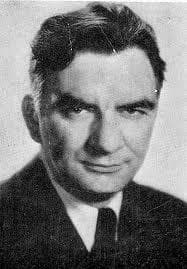
James Mallahan Cain was an American novelist, journalist and screenwriter. He is widely regarded as a progenitor of the hardboiled school of American crime fiction.
Similar books
- The Stranger
Albert Camus
4.1 (3k) average on GoodreadsFantasyA philosophical novel acknowledging Cain's influence, exploring alienation and a protagonist's indifference to societal norms.
- Mildred Pierce
James M. Cain
3.9 (8k) average on GoodreadsHistorical FictionA Cain novel with a strong female protagonist, exploring ambition, class, and troubled relationships.
- The Maltese Falcon
Dashiell Hammett
3.9 (89k) average on GoodreadsThrillerWhile both are foundational noir, Cain's novel is more focused on the internal psychological landscape of its protagonists and their doomed relationship, whereas Hammett's is more an intricate, external puzzle-solving mystery with a detached detective.
- The Big Sleep
Raymond Chandler
4.0 (126k) average on GoodreadsThrillerCain's prose is leaner and more direct than Chandler's, which often employs more poetic metaphors and philosophical musings. Cain's characters are more overtly driven by primal urges, lacking the cynical moral code often displayed by Chandler's Philip Marlowe.
- Angels & Demons
Dan Brown
3.9 (2.7M) average on GoodreadsThrillerA Harvard symbologist races through Rome's ancient sites, deciphering cryptic clues to unmask the Illuminati and stop a vengeful plot to destroy the Vatican with a stolen antimatter weapon.
- Gone Girl
Gillian Flynn
4.1 (2.3M) average on GoodreadsThrillerA wife's sudden disappearance on her fifth anniversary reveals a web of lies and psychological warfare, exposing the secrets within a seemingly perfect marriage.





Enjoyed the summary?
A summary gives you the shape of the book. The book itself has the detail, the examples and the voice.
Find The Postman Always Rings Twice on AmazonAs an Amazon Associate, BookBrief earns from qualifying purchases. How we're funded