
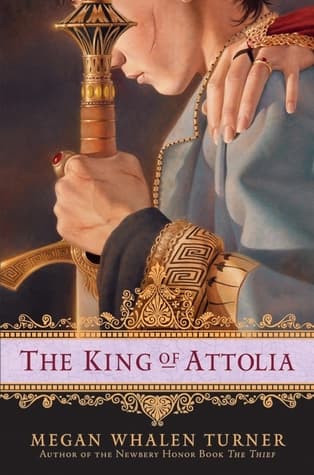
Synopsis
Covers the whole plot, including the ending.
- Difficulty
- Medium
- Pacing
- Moderate
- Mood
- Intriguing, Strategic, Suspenseful, Clever
- Read it if
- You enjoy intricate political plots, clever protagonists who hide their intelligence, and slow-burn character development within a richly imagined fantasy world.
- Skip it if
- You prefer fast-paced action over strategic maneuvering and court intrigue, or dislike protagonists who are initially perceived as weak or foolish.
The King of Attolia Plot Summary
Covers the whole plot, including the ending.
The New King's Unrest
Six months after his marriage to Queen Attolia, Eugenides, formerly Gen, the Thief of Eddis, is King of Attolia. The Attolian court sees him as a weak, unkingly figure, resenting his foreign origins and his lack of traditional regal manner. Costis, a young Attolian guard, is assigned to Eugenides and quickly develops deep contempt for the king, believing him to be foolish and cowardly. Eugenides, for his part, seems to actively provoke this disdain, often appearing clumsy, distracted, and uninterested in courtly affairs. This initial period has tension and a clear lack of respect from the Attolian nobility towards their new king.
Costis's Punishment and Observation
Costis, while on duty, makes a disparaging remark about Eugenides's perceived weakness. The king overhears him and, in an unexpected display of authority, orders Costis to be flogged. This severe punishment, seemingly too much for the offense, shocks Costis and the other guards. Despite the pain and humiliation, Costis finds himself unable to fully hate the king, noticing a strange undercurrent to Eugenides's behavior. He begins to observe Eugenides more closely, trying to understand the king's motivations and the true nature of his personality beyond the public facade of incompetence.
The Poisoned Wine
During a court banquet, Eugenides is poisoned, an act clearly meant to remove him from power. Costis, witnessing the event, is surprised by the king's calm reaction despite his severe illness. The poisoning attempt is attributed to factions within the Attolian court who wish to see Eugenides replaced. This incident further complicates Costis's perception of the king; he sees not a weakling, but someone capable of enduring immense suffering and maintaining composure under extreme duress. The event highlights the dangerous political situation Eugenides navigates daily.
The King's Strategic Infirmity
Following the poisoning, Eugenides pretends to be severely incapacitated, almost dying. This prolonged 'illness' is a strategic move. While seemingly bedridden and vulnerable, he subtly observes the reactions of the Attolian nobility, identifying those loyal to him and those who are actively plotting his downfall. Costis, now assigned to guard the king's chambers, sees these private moments and starts to realize that Eugenides's weakness is a carefully constructed illusion. He sees the king's sharp intellect at play, even in his supposed delirium.
The False Coup and Exposure
Eugenides, with the help of his loyal Eddisian guards and a few trusted Attolians, stages a false coup. He appears to be kidnapped and taken to Eddis, leaving Attolia in chaos. This trick is designed to draw out the conspirators who believe they can now seize power. Costis, initially confused and fearful, begins to understand the elaborate deception as he witnesses the king's meticulous planning and the precise execution of the 'kidnapping.' This event is a turning point, as it reveals Eugenides's true capabilities as a master strategist and manipulator.
The Revelation of Eugenides's Strength
During the 'coup,' Costis must confront the reality that Eugenides is far from the inept figure he once believed him to be. He realizes that the king's clumsiness, his seemingly foolish remarks, and even his initial punishment of Costis were all part of a larger, intricate plan. Eugenides reveals his true strength, not through physical prowess, but through his intelligence, his ability to read people, and his strategic foresight. Costis's contempt transforms into awe and a deep, if still grudging, respect for his king.
The Eddisian Alliance and Attolian Loyalties
While supposedly in Eddis, Eugenides is actually consolidating his power and ensuring the loyalty of his Eddisian allies. He uses this time to further unravel the complex web of Attolian political intrigue. The 'kidnapping' allows him to assess who among the Attolian nobility would rally to his wife, Queen Attolia, and who would actively work against them. Costis, now a reluctant participant in the king's schemes, sees firsthand the extensive network of spies and informants Eugenides commands, solidifying his understanding of the king's formidable reach.
The Return and Judgment
Eugenides returns to Attolia, no longer pretending weakness. He arrives with the support of Eddis, demonstrating his solidified power. The conspirators, having revealed themselves during his absence, are now exposed. Eugenides, with Queen Attolia by his side, confronts them. He delivers justice with a calm authority that silences any remaining doubts about his competence. Costis watches as the king, once mocked and underestimated, decisively dismantles the opposition, showing his true nature as a formidable ruler who commands respect and fear.
The King's Council
With the traitors dealt with, Eugenides begins the process of re-establishing order and asserting his authority within the Attolian court. He surrounds himself with trusted individuals, including Costis, who has now become a loyal and respected member of his guard. The king shows his commitment to justice and fair rule, but also his willingness to be ruthless when necessary. The court, once dismissive, now regards him with a mix of fear and respect, understanding that their new king is a force to be reckoned with, far more dangerous than he ever let on.
A King's True Face
In the aftermath, Costis reflects on all he has witnessed. He realizes that Eugenides's initial behavior, including the flogging, was not arbitrary cruelty but a calculated move to assess Costis's character and loyalty, and to teach him a lesson about judging appearances. Costis now sees the king for who he truly is: a brilliant, complex, and strategic individual who uses deception as a primary tool of governance. He has moved from unwilling subject to a devoted, if still sometimes bewildered, follower, understanding that the King of Attolia is a master of his own intricate game.
The King of Attolia Characters
Eugenides (Gen)
Protagonist
The cunning Thief of Eddis, now the underestimated King of Attolia.
Eugenides, or Gen, is a brilliant and manipulative strategist, renowned as the Thief of Eddis. Despite his new role as King of Attolia, he deliberately projects an image of weakness, clumsiness, and disinterest to lull his enemies into a false sense of security. Beneath this facade lies a sharp intellect, an unparalleled ability to read people, and a deep, if sometimes hidden, capacity for love and loyalty. He is driven by his love for Queen Attolia and his desire to secure their combined kingdoms against internal and external threats.
Relationships: Queen Attolia (Husband and wife, deeply in love and politically allied); Costis (King and guard; initially antagonistic, evolving into mutual respect and loyalty); The Mede (Political rival and external threat)
Costis
Supporting
A young Attolian guard whose perspective shapes the narrative.
Costis is a loyal, earnest, and somewhat naive Attolian guard. He initially embodies the Attolian court's prejudice against Eugenides, viewing him with contempt for his perceived weakness and foreign origins. Despite his initial disdain, Costis is observant and possesses a strong sense of duty. He is forced into close proximity with the king and, through a series of bewildering events, gradually comes to understand the true nature of Eugenides's power and intelligence. His journey is one of learning to see beyond appearances.
Relationships: Eugenides (Guard to king; initially antagonistic, evolving into mutual respect and loyalty); Queen Attolia (Loyal subject)
Queen Attolia
Supporting
The formidable Queen of Attolia and Eugenides's wife.
Queen Attolia is a powerful, intelligent, and fiercely independent ruler. She possesses a keen understanding of politics and a reputation for ruthlessness. While she loves Eugenides, she is also a monarch first, navigating the treacherous waters of her own court. She is aware of Eugenides's true capabilities and supports his elaborate schemes, often playing a crucial role in maintaining the facade of his weakness while secretly aiding his manipulations. Her strength and unwavering support are vital to Eugenides's success.
Relationships: Eugenides (Wife and husband, deeply in love and politically allied); Costis (Ruler to subject)
The Mede
Antagonist
The powerful empire threatening Attolia and Eddis.
The Mede is a vast and expansionist empire that serves as the primary external threat to the kingdoms of Attolia and Eddis. While not a single character, the Mede represents the constant geopolitical pressure and military threat that necessitates Eugenides's complex political maneuvering. Their agents and spies are active in Attolia, attempting to destabilize the kingdom and exploit any perceived weakness in its new king. The Mede's power and ambition are a driving force behind many of the internal conflicts Eugenides must resolve.
Relationships: Eugenides (Political and military adversary); Queen Attolia (Political and military adversary)
Pol
Supporting
Eugenides's loyal Eddisian guard and confidante.
Pol is one of Eugenides's most trusted Eddisian guards and a long-time companion. He is fiercely loyal, perceptive, and one of the few who truly understands the depth of Eugenides's intelligence and the purpose behind his deceptive behavior. Pol acts as a silent observer and a reliable operative, executing Eugenides's subtle commands and helping to maintain the illusion of the king's weakness. His presence offers a quiet counterpoint to the Attolian court's open disdain.
Relationships: Eugenides (Loyal guard and confidante); Costis (Fellow guard, initially distant, later sharing mutual respect)
Ornon
Supporting
A high-ranking Attolian official, initially skeptical but later loyal.
Ornon is a prominent figure in the Attolian court, initially sharing the general disdain for Eugenides. He is a pragmatic and experienced politician, more concerned with the stability of Attolia than with personal loyalties. As Eugenides's plans unfold, Ornon is one of the Attolians who slowly begins to recognize the king's true capabilities. He ultimately shifts his loyalty, becoming a valuable asset to Eugenides and Attolia, demonstrating that even entrenched Attolian opinion can be swayed by true competence.
Relationships: Eugenides (Initially skeptical courtier, later a loyal advisor); Queen Attolia (Loyal minister)
The Baron Erondites
Supporting
A powerful Attolian noble and leader of an opposing faction.
Baron Erondites is a powerful and influential Attolian noble who harbors significant resentment towards Eugenides's marriage to Queen Attolia and his subsequent ascension to the throne. He represents the faction of the Attolian court that actively plots against Eugenides, believing him to be an unworthy and foreign king. Erondites is a key figure in the conspiracy to remove Eugenides, and his actions drive much of the political intrigue that Eugenides must untangle. He is proud and underestimates Eugenides.
Relationships: Eugenides (Political adversary and conspirator); Queen Attolia (Disgruntled subject, opposing her husband)
Sejanus
Supporting
A calculating and treacherous Attolian noble.
Sejanus is another prominent Attolian noble involved in the conspiracy against Eugenides. He is portrayed as cunning and self-serving, willing to align himself with whoever he believes will further his own interests. Sejanus is one of the individuals Eugenides carefully observes and manipulates, using his ambition and greed against him. He is a prime example of the internal corruption and political maneuvering that Eugenides must cleanse from the Attolian court.
Relationships: Eugenides (Political adversary and conspirator); Baron Erondites (Co-conspirator)
The King of Attolia Themes
The Power of Deception and Illusion
This theme is central to the entire narrative. Eugenides deliberately cultivates an image of weakness, foolishness, and incompetence to mislead his enemies, both within the Attolian court and from the Mede. His 'clumsiness,' his apparent disinterest in governance, and even his initial punishment of Costis are all carefully constructed illusions designed to make his adversaries underestimate him. The entire plot, particularly the staged kidnapping, hinges on this theme, revealing that true power often lies not in overt strength, but in the ability to manipulate perceptions and exploit the expectations of others. It highlights how appearances can be profoundly misleading.
“He was the Thief. He was the King of Attolia. He was the master of his own fate. And he was very, very good at it.”
The Nature of Kingship and Leadership
The novel explores what it truly means to be a king. Eugenides challenges traditional notions of kingship, demonstrating that leadership isn't solely about physical prowess or outward majesty, but about intelligence, strategic thinking, and the ability to inspire loyalty (even through unconventional means). His methods are often morally grey, but ultimately serve the greater good of his kingdom. The contrast between the Attolian court's expectations of a king and Eugenides's actual, effective leadership highlights this theme, showing that a true ruler might be a hidden, cunning force rather than an obvious figurehead. Costis's evolving understanding of Eugenides is key to this theme.
“A king's choices are not his own, but his country's.”
Prejudice and Perception
Costis's journey is a microcosm of the Attolian court's prejudice against Eugenides. Initially, Costis, like many Attolians, judges Eugenides based on his foreign origin, his perceived lack of regal bearing, and the rumors surrounding him. This prejudice blinds him to Eugenides's true capabilities. The novel carefully dismantles these preconceived notions, forcing Costis and the reader to re-evaluate their initial judgments. It demonstrates how easily people can be misled by appearances and how difficult it is to overcome ingrained biases, but also the transformative power of direct observation and experience.
“He knew, now, that the King of Attolia was not a fool. He was the opposite of a fool.”
Loyalty and Betrayal
The political dealings of the Attolian court are driven by shifting loyalties and widespread betrayal. Eugenides's primary task is to identify and neutralize those who are disloyal to him and Queen Attolia. The plot devices of the poisoning and the staged coup are specifically designed to expose these betrayals. Conversely, the unwavering loyalty of characters like Pol and, eventually, Costis, stands in contrast to the treachery. The novel examines the different forms loyalty can take – from the unquestioning devotion of a soldier to the strategic allegiance of a politician – and the devastating consequences of its absence.
“Loyalty is a weapon, to be used with care.”
Plot Devices & Literary Techniques
The Unreliable Protagonist's Perspective (via Costis)
The story is filtered through Costis's initially biased and limited understanding.
The narrative is primarily told from Costis's point of view, a young guard who initially despises King Eugenides. This makes Costis an unreliable lens through which the reader perceives Eugenides's actions. The king's true motives and intelligence are deliberately obscured, mirroring Costis's own confusion and prejudice. This device allows for a gradual reveal of Eugenides's true character, forcing the reader to re-evaluate their understanding of events alongside Costis, creating suspense and a deeper appreciation for the king's cunning when his true nature is revealed.
The 'Weak King' Facade
Eugenides deliberately projects an image of incompetence to deceive his enemies.
This is a core plot device. Eugenides actively cultivates an image of being a clumsy, foolish, and easily distracted king, much to the disdain of the Attolian court. This facade is a sophisticated form of misdirection, a strategic tool to make his adversaries underestimate him and reveal their true intentions. His seemingly arbitrary actions, like the flogging of Costis, are later understood to be part of this larger, intricate deception, allowing him to gather information and manipulate events from a position of perceived vulnerability.
The Staged Coup/Kidnapping
A meticulously planned deception to expose traitors and consolidate power.
Eugenides orchestrates his own 'kidnapping' and apparent removal to Eddis. This elaborate deception is a crucial turning point, serving multiple purposes: it draws out the conspirators within the Attolian court who believe they can now seize power, it allows Eugenides to consolidate his alliances with Eddis, and it provides a dramatic reveal of his strategic genius. This device functions as a grand trap, allowing Eugenides to identify and deal with his enemies decisively upon his return, solidifying his reign.
The Unseen Threat (The Mede)
An external empire whose looming presence drives internal political maneuvering.
While the Mede empire does not appear as a direct character, its constant presence as an expansionist and powerful external threat is a significant plot device. The Mede's ambition and the threat of invasion are the underlying reasons for Eugenides's complex political maneuvering to stabilize Attolia and secure its alliance with Eddis. The fear of Mede intervention forces the Attolian court to eventually accept Eugenides's rule, as internal division would make them vulnerable. It provides a constant, high-stakes backdrop to the internal power struggles.
The King of Attolia Quotes
“It is not a good idea to tell the Attolian king what to do.”
“The worst part of being a king is that you are always on display.”
“You cannot make a good bargain with someone who is afraid to say no.”
“It is always a mistake to underestimate your enemy, even if your enemy is yourself.”
“There are some things that cannot be bought, and loyalty is one of them.”
“The hardest part of being a king is not making decisions, but living with their consequences.”
“Sometimes the cleverest thing to do is to do nothing at all.”
“You cannot rule a country without knowing its people.”
“A king must be able to change his mind, but never his purpose.”
“It is a heavy crown, but it is mine.”
“Love is not a weakness, it is a strength.”
“The most dangerous thing in the world is a man with nothing to lose.”
“You cannot win a war if you are fighting on two fronts.”
“Every man has his price, but it is not always gold.”
Quiz
10 questions on the plot and the characters. Each answer comes with a short explanation.
Question 1
What is the primary reason Eugenides initially wanted to become King of Attolia?
- To gain political power over the Mede empire.
- To unite the three kingdoms of Eddis, Sounis, and Attolia.
- To marry Queen Attolia and protect her from political enemies.
- To retrieve a stolen Eddisian artifact from the Attolian treasury.
Show answer
C. To marry Queen Attolia and protect her from political enemies. Eugenides's main motivation for becoming King of Attolia was his love for Queen Attolia and his desire to protect her, not for the crown itself.
Question 2
Which character serves as Eugenides's personal guard and initially despises him?
- Phresis
- Costis
- Teleus
- Ornon
Show answer
B. Costis Costis is the young Attolian guard who is assigned to Eugenides and initially harbors deep resentment and contempt for the new king.
Question 3
What physical ailment does Eugenides frequently feign or exaggerate to manipulate others?
- Limp
- Coughing fits
- Poor eyesight
- Dizziness
Show answer
A. Limp Eugenides often uses his limp, sustained from a previous injury, to appear weaker or more vulnerable than he truly is, thereby disarming his political opponents.
Question 4
What is the name of the general who attempts to undermine Eugenides's rule in Attolia?
- General Eddis
- General Teleus
- General Sounis
- General Ornon
Show answer
B. General Teleus General Teleus is a prominent Attolian general who is part of the faction trying to depose Eugenides and reinstate a more traditional Attolian ruler.
Question 5
What gift does Eugenides give to Costis that signifies a shift in their relationship and Costis's loyalty?
- A new sword
- A finely crafted cloak
- A horse named Ambiades
- A promotion to captain
Show answer
C. A horse named Ambiades Eugenides gives Costis a horse named Ambiades, a significant and personal gift that solidifies Costis's growing respect and loyalty towards the king.
Question 6
What is the true nature of Eugenides's 'incompetence' and 'childishness' as perceived by the Attolian court?
- He genuinely struggles with the responsibilities of kingship.
- It is a deliberate facade to disarm his enemies and allow them to underestimate him.
- He is suffering from a psychological trauma from past events.
- He is constantly trying to escape his duties to return to Eddis.
Show answer
B. It is a deliberate facade to disarm his enemies and allow them to underestimate him. Eugenides's apparent incompetence is a carefully constructed act, a master class in misdirection, designed to make his enemies underestimate his intelligence and capabilities.
Question 7
How does Eugenides ultimately deal with the corrupt Attolian court and the factions plotting against him?
- He executes all the conspirators publicly.
- He abdicates the throne and returns to Eddis.
- He subtly manipulates them against each other, exposing their treachery and consolidating his power.
- He seeks military aid from Sounis and Eddis to crush the rebellion.
Show answer
C. He subtly manipulates them against each other, exposing their treachery and consolidating his power. Eugenides, true to his nature as the Thief, uses his cunning and strategic mind to turn the Attolian factions against each other, revealing their plots and securing his position without overt violence.
Question 8
What significant historical or mythological figure from the book's world does Eugenides often reference or allude to, highlighting his own cunning nature?
- The Gods of the Underworld
- The legendary hero Hamiathes
- The Thief of Eddis (his own alter ego)
- The Oracle of Delphi
Show answer
C. The Thief of Eddis (his own alter ego) Eugenides, both as himself and through his actions, frequently embodies and references the legendary Thief of Eddis, a figure of great cunning and skill, which is his own past identity.
Question 9
Which specific event causes Queen Attolia to finally acknowledge Eugenides's true capabilities and deeper motivations?
- His public defeat of General Teleus in a duel.
- His eloquent speech to the assembled court about his love for her.
- His revelation of the Mede plot against Attolia and the method he used to thwart it.
- His successful negotiation of a peace treaty with Sounis.
Show answer
C. His revelation of the Mede plot against Attolia and the method he used to thwart it. Queen Attolia truly understands Eugenides's depth and his strategic genius when he reveals the intricate Mede plot he uncovered and manipulated, demonstrating his profound commitment to her and the kingdom.
Question 10
What is the underlying theme of 'The King of Attolia' regarding appearances versus reality?
- That first impressions are always accurate.
- That true power comes from brute force, not intellect.
- That outward appearances can be deceiving, and true strength often lies beneath a carefully constructed facade.
- That royalty is inherently corrupt and untrustworthy.
Show answer
C. That outward appearances can be deceiving, and true strength often lies beneath a carefully constructed facade. A central theme of the book is that Eugenides's 'childish' and 'incompetent' exterior hides a brilliant, cunning, and deeply dedicated king, proving that appearances are often misleading.
The King of Attolia FAQ
What is the central conflict Eugenides faces at the beginning of 'The King of Attolia'?
Eugenides, having stolen the Attolian throne, finds himself a reluctant king. His central conflict is the clash between his desire for Queen Attolia and his unexpected responsibilities as ruler, which he initially resents and struggles to fulfill, creating a deeply uncomfortable and often dangerous position for himself.
Who is Costis, and what is his initial role in the story?
Costis is a young, loyal Attolian guard who, through a series of unfortunate events and the King's deliberate manipulation, becomes Eugenides's personal guard and reluctant companion. He initially views Eugenides with suspicion and contempt, believing him to be a capricious and cruel tyrant.
How does Eugenides's perception by the Attolian court differ from his true nature?
The Attolian court perceives Eugenides as a weak, often foolish, and perhaps even mad foreign king, easily manipulated or overthrown. In reality, he is a brilliant strategist, a master of deception, and far more cunning and dangerous than any of them realize, using their underestimation to his advantage.
What is the significance of the relationship between Eugenides and Queen Attolia in this book?
Their relationship is the emotional core of the novel, evolving from a forced political marriage into a deeper, more trusting bond. Eugenides's initial love for Attolia is complicated by his kingship, and their shared struggle to rule Attolia together solidifies their partnership and mutual respect, despite their past animosity.
What major political threat does Eugenides have to contend with in Attolia?
Eugenides faces constant threats from the entrenched Attolian nobility and the various factions within the court, who are accustomed to their own power and resent his foreign rule. These nobles, particularly figures like Lord Erondites and Lord Relides, engage in subtle intrigues and open defiance, constantly testing his authority.
What is the true purpose behind Eugenides's seemingly erratic and cruel behavior towards Costis?
Eugenides's harsh treatment of Costis is a deliberate strategy to break Costis's preconceived notions, teach him resilience, and ultimately mold him into a more insightful and loyal guard. He also uses Costis as a tool to project an image of a capricious king to the court, distracting them from his true machinations.
How does Eugenides use his physical limitations and perceived weakness to his advantage?
Eugenides, despite his limp and small stature, skillfully weaponizes these perceived weaknesses. He encourages the court to underestimate him, allowing him to observe and plan unnoticed, and uses his 'frailty' as an excuse for actions that are, in fact, highly calculated and strategic.
What subtle clues indicate Eugenides's long-term planning regarding the Attolian court?
His seemingly random appointments, his calculated provocations of nobles, and his deliberate public displays of 'foolishness' are all subtle clues. He is systematically identifying loyalties, exposing traitors, and dismantling the power structures that would oppose his rule, all while maintaining his facade.
What role does Eugenides's past as the Thief of Eddis play in his kingship?
His past as the Thief provides him with unparalleled skills in observation, manipulation, and strategic thinking, which are crucial for navigating the Attolian court. He applies the same principles of stealth, misdirection, and understanding human nature to his political maneuvers, making him an unconventional but effective king.
How does Costis's initial contempt for Eugenides evolve, and what psychological factors drive this change?
Costis's contempt slowly transforms into grudging respect and eventually loyalty as he witnesses Eugenides's true intelligence and strategic brilliance. This change is driven by Costis's growing understanding of Eugenides's complex motives, his exposure to the harsh realities of court politics, and Eugenides's subtle mentorship.
Discuss the psychological toll of Eugenides's constant deception and performance as king.
Eugenides's constant performance and the need to maintain multiple layers of deception are psychologically exhausting. He rarely drops his guard, even with Attolia, and the burden of carrying such an intricate plan while being underestimated takes a significant toll, evident in his moments of vulnerability and weariness.
How does Queen Attolia's past trauma and pride influence her interactions with Eugenides as king?
Attolia's past trauma, particularly her previous experience with Eugenides and her pride, initially makes her wary and resistant to his kingship. She struggles to reconcile her perception of him as a thief with his new role, and her guardedness is a defense mechanism against further vulnerability or perceived loss of power.
What is the psychological impact of Eugenides's 'love' for Attolia on his decision-making as king?
Eugenides's love for Attolia is a powerful motivator, driving many of his initial actions to secure her as queen. However, it also complicates his kingship, as he must balance his personal feelings with the needs of the state, often using his affection as a shield or a tool in his political games, making his true intentions hard to discern.
Is Eugenides truly 'good' or merely a masterful manipulator acting in his own self-interest, and why?
This is debatable. While Eugenides is undeniably a master manipulator, his actions consistently serve the greater good of his kingdom and those he cares for. His methods are often ruthless and deceptive, but his ultimate goal is stability and justice, suggesting a pragmatic 'goodness' rather than pure self-interest.
How does 'The King of Attolia' subvert traditional fantasy tropes of kingship?
The book subverts tropes by presenting a physically unimposing, seemingly weak king who rules through intellect, manipulation, and deception rather than strength or inherent nobility. It challenges the idea of a 'heroic' king, showing that effective leadership can come from unexpected places and through unconventional means.
To what extent is Costis a willing participant in Eugenides's plans versus an unwilling pawn?
Costis begins as an unwilling pawn, dragged into the king's machinations against his will. However, as the story progresses, he gradually becomes a more willing, albeit still sometimes reluctant, participant. His loyalty becomes genuine, and he actively chooses to support Eugenides, demonstrating a shift from pawn to trusted ally.
What is the ultimate message about power and leadership conveyed by Eugenides's reign in Attolia?
The book suggests that true power lies not in overt displays of force or inherited status, but in intelligence, adaptability, and the ability to understand and manipulate human nature. Effective leadership requires foresight, the willingness to make difficult choices, and the capacity to inspire loyalty, even through unconventional means.
Does Eugenides genuinely desire the crown, or is his primary motivation solely for Queen Attolia?
While his initial motivation was undoubtedly for Queen Attolia, his actions as king suggest a growing, if reluctant, acceptance of his responsibilities. He did not desire the crown for its own sake, but once he had it, he committed to ruling effectively, indicating that his motivation evolved beyond purely personal desire for the queen.
About the author

Megan Whalen Turner is an American author known for her works of young adult fiction, particularly in the fantasy genre. She is best known for her books "The Thief" and "The King of Attolia," which are part of the Queen's Thief series, exploring themes of loyalty, deception, and political intrigue.
Similar books
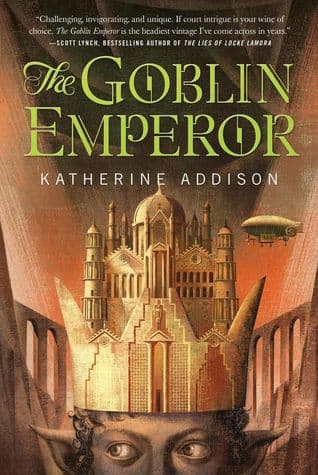
- The Goblin Emperor
Katherine Addison
4.0 (28k) average on GoodreadsFantasyFeatures a new, underestimated monarch navigating a hostile and complex court.
- A Wizard of Earthsea
Ursula K. Le Guin
4.0 (241k) average on GoodreadsFantasyWhile both The King of Attolia and A Wizard of Earthsea feature young protagonists coming into power and grappling with their identities, Turner's novel places a much heavier emphasis on political maneuvering and strategic deception. Le Guin's work focuses more on internal struggle, magical development, and ecological balance, whereas Turner's Gen is constantly operating within a complex web of court politics and international relations. Le Guin's narrative is more mythic and philosophical, while Turner's is intensely focused on the practicalities and psychological toll of governance.
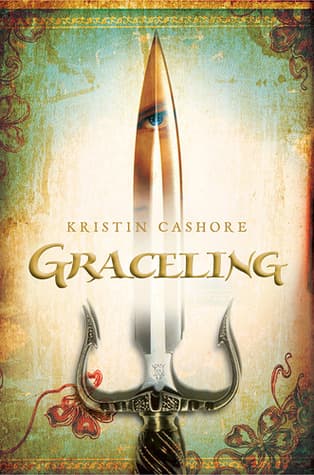
- Graceling
Kristin Cashore
4.1 (385k) average on GoodreadsFantasyBoth The King of Attolia and Graceling feature protagonists with extraordinary abilities navigating dangerous political landscapes. However, Cashore's Katsa relies on her physical prowess and martial skills to solve problems and protect the innocent, often through direct confrontation. Turner's Eugenides, by contrast, relies almost entirely on his intellect, cunning, and ability to manipulate perceptions. While both explore themes of power and justice, Graceling is more action-oriented and focuses on individual agency against systemic injustice, while The King of Attolia delves into the intricacies of ruling from within that system, often requiring morally ambiguous choices.
- Harry Potter and the Sorcerer's Stone
J.K. Rowling
4.5 (7M) average on GoodreadsFantasyRescued from a miserable life under the stairs, an orphaned boy discovers he's a wizard destined for a magical school, where he uncovers a dangerous secret tied to the dark wizard who murdered his parents.
- The Hunger Games
Suzanne Collins
4.3 (6.4M) average on GoodreadsFantasyIn a future where children fight to the death on live television, Katniss Everdeen volunteers for the arena, turning a death sentence into a fight for survival and a spark of rebellion.
- 1984
George Orwell
4.2 (3.1M) average on GoodreadsPoliticsIn a future where surveillance and thought control are absolute, a man's search for truth clashes with the Party, showing that hope can be a form of rebellion.




Enjoyed the summary?
A summary gives you the shape of the book. The book itself has the detail, the examples and the voice.
Find The King of Attolia on AmazonAs an Amazon Associate, BookBrief earns from qualifying purchases. How we're funded