

Estimated read time: 7 min read
One Sentence Summary
"The Knight" by Gene Wolfe is a richly layered fantasy novel that follows a man who awakens in a strange, medieval world with no memory, embarking on a quest to uncover his identity and purpose amidst mysterious and magical challenges.
Table of Contents
Introduction
Gene Wolfe’s The Knight stands as a captivating gem in the landscape of fantasy literature, weaving a tale that is as much a journey of self-discovery as it is an adventurous quest. Written in Wolfe’s characteristically intricate prose, the novella invites readers into a world where memory, identity, and chivalry intermingle with a mysterious, almost dreamlike narrative style. While compact in length, The Knight offers a dense, richly textured experience that rewards close reading, making it a significant work for both fantasy enthusiasts and scholars interested in narrative complexity and thematic depth.
Historical Context
Published in 2000, The Knight emerges during a period when fantasy literature was increasingly exploring more introspective and literary approaches, moving beyond traditional sword-and-sorcery tropes. Gene Wolfe, already renowned for his complex and layered storytelling—especially in his acclaimed series The Book of the New Sun—continues this trend with The Knight. The novella reflects a late 20th-century fascination with unreliable narrators and fragmented memory, resonating with broader postmodern literary currents prevalent at the time.
Brief Synopsis
Plot Overview
At its core, The Knight chronicles the journey of a nameless protagonist who awakens in an unfamiliar land with no memory of his past. Clad in armor and armed with a sword, he embarks on a quest to find his place in this strange world. As he encounters enigmatic characters and confronts surreal challenges, the story unfolds as a meditation on identity, memory, and the ideals of knighthood.
Setting
The narrative is set in an ambiguous, fantastical realm that blends medieval motifs with dreamlike, almost otherworldly landscapes. This setting enhances the novella’s themes by creating an atmosphere where reality is fluid and perception is constantly questioned. The temporal and geographical vagueness invites readers to focus less on concrete world-building and more on the internal journey of the protagonist.
Main Characters
| Name | Role | Key Traits | Importance to the Plot |
|---|---|---|---|
| The Knight | Protagonist | Amnesiac, determined, introspective | Central figure whose quest drives the narrative |
| The Lady | Mysterious guide | Elusive, enigmatic, maternal | Catalyst for the knight’s self-discovery |
| The Page | Companion | Loyal, youthful, inquisitive | Represents innocence and the knight’s past |
| The Villainous Figure | Antagonist | Threatening, shadowy | Embodies the obstacles and fears to overcome |
Plot Summary
Awakening and Quest Initiation
The story begins with the knight awakening in an unfamiliar place, armored but without memories. His initial confusion mirrors the reader’s curiosity, establishing a shared sense of mystery. This amnesia sets a tone of existential uncertainty, prompting the knight to seek identity and purpose.
Encounters and Challenges
As the knight journeys, he meets various characters, each embodying different facets of his psyche and the ideals of knighthood. These encounters are often allegorical, blending reality with symbolism. For instance, the Lady serves as both a protector and a reminder of what the knight has lost or forgotten.
Confrontation and Revelation
The knight faces a shadowy antagonist, representing both external danger and internal conflict. This confrontation forces him to reconcile fragmented memories and understand his true nature. However, Wolfe carefully avoids explicit exposition, maintaining narrative ambiguity that encourages interpretation.
Resolution and Reflection
The novella concludes on a reflective note rather than a traditional resolution. The knight’s journey becomes a metaphor for the human condition—searching for meaning and identity amid uncertainty. The open-ended finale invites readers to ponder the nature of memory and selfhood.
Themes and Motifs
Identity and Memory
Central to The Knight is the exploration of memory’s role in shaping identity. The protagonist’s amnesia is not merely a plot device but a thematic lens through which Wolfe examines how personal history informs self-understanding.
The Nature of Chivalry
Wolfe interrogates traditional notions of knighthood, juxtaposing the protagonist’s ideals against the ambiguous reality he inhabits. The novella questions whether chivalry is an attainable ideal or a mythic construct.
Reality vs. Perception
The blurred line between reality and illusion permeates the narrative. The dreamlike setting and unreliable narration challenge readers to question the nature of truth and the reliability of memory.
The Journey as Metaphor
The knight’s quest symbolizes a universal journey toward self-awareness and reconciliation with the past. This motif resonates with classical epic traditions while incorporating modern psychological insights.
Literary Techniques and Style
Gene Wolfe employs a distinctive narrative style characterized by:
- Unreliable Narration: The knight’s fragmented memories and subjective viewpoint create ambiguity, compelling readers to actively interpret the text.
- Symbolism and Allegory: Characters and events often carry deeper symbolic meanings, enriching the narrative’s thematic complexity.
- Sparse Yet Evocative Prose: Wolfe’s economical language paints vivid images without excessive detail, enhancing the novella’s dreamlike atmosphere.
- Nonlinear Structure: The narrative occasionally shifts in time and perspective, reflecting the protagonist’s disoriented mental state.
These techniques position The Knight as a sophisticated work that rewards analytical reading and discussion.
Author’s Background
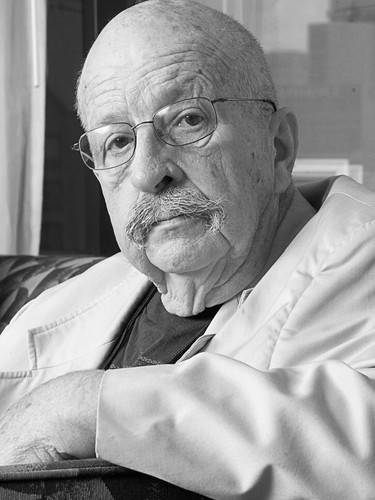
Gene Wolfe (1931–2019) was an American science fiction and fantasy author celebrated for his intricate storytelling and rich prose. A former engineer and editor, Wolfe infused his work with layers of symbolism, religious and philosophical themes, and complex narrative structures. His most famous work, The Book of the New Sun, earned him widespread critical acclaim and a devoted readership.
Wolfe’s writing often challenges conventional genre boundaries, blending speculative fiction with literary depth. His background in engineering informed his precise prose, while his Catholic faith influenced the spiritual dimensions of his stories. The Knight reflects these elements, showcasing Wolfe’s ability to craft a narrative that is both intellectually stimulating and emotionally resonant.
Key Takeaways
- The Knight explores profound themes of identity, memory, and the search for meaning.
- The novella employs an unreliable narrator to engage readers in piecing together the story.
- Traditional ideals of knighthood are deconstructed and reimagined in a modern context.
- Wolfe’s use of symbolism and allegory invites multiple interpretations.
- The dreamlike setting enhances the narrative’s exploration of reality versus perception.
Reader’s Takeaway
For readers—whether college students, lecturers, or fantasy aficionados—The Knight offers a rich text for contemplation and discussion. It challenges conventional storytelling, encouraging readers to question how memory shapes identity and to consider the nature of heroism beyond surface-level valor. Emotionally, the novella resonates as a poignant meditation on loss and rediscovery, while intellectually, it serves as fertile ground for exploring narrative reliability and thematic depth.
Conclusion
Gene Wolfe’s The Knight is a masterful novella that blends fantasy adventure with philosophical inquiry. Its concise yet layered narrative invites readers into a world where memory, identity, and chivalry intertwine in mysterious ways. Through its evocative prose and allegorical depth, the book encourages deep reflection on universal human experiences. Whether approached as a literary puzzle or a heartfelt quest, The Knight rewards those who venture into its enigmatic realm. For anyone intrigued by the interplay of myth, memory, and meaning, this novella is a compelling invitation to explore the complexities of the human spirit.
The Knight FAQ
What is the main plot of 'The Knight' by Gene Wolfe?
'The Knight' follows the story of a man who journeys into a mysterious and fantastical world to find and rescue a missing woman, encountering various strange creatures and challenges along the way.
Who is the protagonist of 'The Knight'?
The protagonist is a nameless man who takes on the quest to find the missing woman, often referred to as 'the lady,' navigating a surreal and dreamlike landscape.
What genre does 'The Knight' belong to?
'The Knight' is a fantasy novella with elements of allegory, myth, and surrealism.
What are some of the major themes explored in 'The Knight'?
The novella explores themes such as love, sacrifice, the nature of reality, and the hero's journey.
Is 'The Knight' a standalone story or part of a series?
'The Knight' is a standalone novella but shares thematic and stylistic similarities with other works by Gene Wolfe.
What is unique about Gene Wolfe’s writing style in 'The Knight'?
Wolfe's style is notable for its poetic language, ambiguity, and layered storytelling that invites multiple interpretations.
Are there any symbolic elements in 'The Knight'?
Yes, many characters, creatures, and events in the story serve as symbols that reflect deeper philosophical and emotional meanings.
How long is 'The Knight'?
'The Knight' is a novella, typically around 60 to 80 pages depending on the edition.
Is 'The Knight' suitable for young readers?
'The Knight' contains complex themes and some mature content, so it is generally recommended for adult or mature young adult readers.
Where can I find 'The Knight' by Gene Wolfe?
'The Knight' is available in various formats including print, ebook, and audiobook, and can be found through major book retailers and libraries.


