
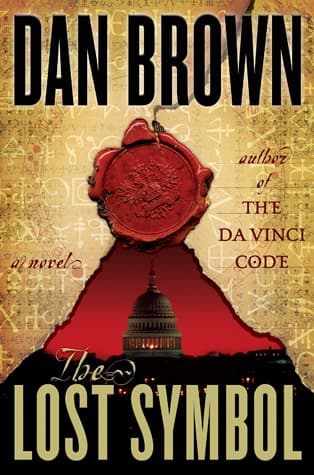
Synopsis
Covers the whole plot, including the ending.
- Difficulty
- Medium
- Pacing
- Fast
- Mood
- Suspenseful, Mysterious, Intellectually Stimulating, Conspiratorial
- Read it if
- You enjoy fast-paced thrillers with historical puzzles, secret societies, and intricate codes set in iconic real-world locations.
- Skip it if
- You dislike extensive exposition on history, symbology, and science, or find plot conveniences and a predictable formula frustrating.
The Lost Symbol Plot Summary
Covers the whole plot, including the ending.
An Urgent Summons and a Grisly Discovery
Harvard symbologist Robert Langdon is called to Washington D.C. by his mentor, Peter Solomon, to give a lecture at the U.S. Capitol Building. When he arrives, Langdon learns the lecture is canceled and he is sent to Peter's office. Instead of Peter, Langdon finds Peter Solomon's severed hand, tattooed and arranged to point towards a fresco in the Rotunda, the Apotheosis of Washington. The hand has Peter's Masonic ring, and Langdon recognizes it as an invitation to an ancient path of esoteric wisdom, a path Peter had often discussed.
The Threat of Mal'akh and the Race Against Time
A mysterious, tattooed man named Mal'akh contacts Langdon, revealing he kidnapped Peter. Mal'akh threatens to kill Peter unless Langdon deciphers the symbols on Peter's hand and finds the Masonic Pyramid, said to contain the Lost Symbol, a source of power. Mal'akh believes this symbol will give him god-like abilities. Langdon realizes he is being forced into a deadly treasure hunt, with Peter Solomon's life at stake, making him engage with the Masonic secrets Peter had protected.
Katherine Solomon and the Noetic Science
Langdon seeks help from Dr. Katherine Solomon, Peter's sister, a noetic scientist studying the mind's ability to affect reality. Katherine is unaware of her brother's situation but soon becomes a target. Mal'akh tries to steal her research data, thinking it is key to unlocking the Lost Symbol's power. Langdon and Katherine realize their fates are connected, as Katherine's science and Peter's Masonic knowledge seem to be two parts of the truth Mal'akh seeks.
The Capitol Building and the Hidden Chamber
Following clues in the Capitol Building's architecture and art, Langdon and Katherine navigate hidden passages and rooms, deciphering Masonic codes and symbols. They are pursued by Mal'akh and CIA agents led by Director Inoue Sato, who believes Langdon is involved in Peter's kidnapping. The two find a hidden chamber beneath the Capitol, revealing riddles that point to the Masonic Pyramid and its ultimate secret.
The Library of Congress and the Alchemical Clues
The chase leads Langdon and Katherine to the Library of Congress, where they continue to decode Peter Solomon's clues. Here, they find clues related to alchemy and ancient wisdom, deepening the mystery. Mal'akh, using surveillance, stays one step ahead, twisting their efforts to his advantage. The historical and symbolic meaning of each location shows the deep roots of the secrets they uncover, linking the capital to ancient esoteric traditions.
The House of the Temple and the Masonic Rituals
Mal'akh corners Langdon and forces him to the House of the Temple, the headquarters of the Scottish Rite of Freemasonry. Here, Langdon must take part in Masonic rituals and decipher more clues, all under Mal'akh's watch. The rituals, meant to guide initiates through enlightenment, are twisted by Mal'akh into a performance to unlock the pyramid's final secrets. Langdon's knowledge of symbology is pushed to its limits as he navigates the layers of Masonic tradition.
Mal'akh's True Identity Revealed
Through shocking revelations, it is discovered that Mal'akh is Zachary Solomon, Peter Solomon's son, long thought dead. Zachary faked his death after an incident in Turkey and has undergone physical and psychological changes, driven by resentment towards his father and a desire for power. He believes his father abandoned him and now seeks to use the Lost Symbol to become god-like, convinced it will give him control and retribution.
The Washington Monument and the Missing Capstone
The clues lead Langdon and Katherine to the Washington Monument. The monument itself is a Masonic obelisk, and its missing capstone, a pyramid-shaped object, is the key to finding the Masonic Pyramid. Mal'akh's plan relies on getting this capstone to complete his ritual. The monument, a symbol of American ideals, becomes a focal point for the clash between ancient wisdom and modern ambition, showing the symbolic layers in the capital's architecture.
The Ritual and Peter's Sacrifice
At the climax, Zachary (Mal'akh) tries to complete his ritual atop the Washington Monument, aiming to use the Lost Symbol's power to ascend. Peter Solomon, having survived captivity, confronts his son. In an act of love and self-sacrifice, Peter prevents Zachary from gaining the full power he wants, leading to Zachary's death. Peter's sacrifice shows his commitment to protecting ancient wisdom and preventing its misuse, even at the cost of his own life and confronting his son.
The Revelation of the Lost Symbol
After the confrontation, Langdon and Katherine uncover the true meaning of the Lost Symbol. It is not an artifact or a magical power, but humanity's collective wisdom and potential, the ability to create, to connect with higher consciousness, and to understand the universe through reason and faith. The 'lost symbol' is the realization of humanity's divine potential and the power of knowledge, a concept Peter Solomon had always tried to teach his son and Langdon.
The Capitol's True Cornerstone
Afterward, Langdon is led to the true cornerstone of the U.S. Capitol Building, a hidden, plain stone that symbolizes the foundation of American ideals and principles. This discovery reinforces the idea that important truths are often hidden in plain sight, overlooked amidst grander spectacles. It signifies the lasting power of foundational beliefs, echoing Masonic ideals of building a better society from the ground up.
A New Understanding of Ancient Wisdom
With the mystery solved and Mal'akh defeated, Langdon and Katherine gain a new understanding. They realize that Peter Solomon's work, combining ancient Masonic wisdom with modern noetic science, pointed towards a unified theory of human potential and the universe. The events make Langdon re-evaluate his understanding of symbols, not just as historical markers, but as paths to deeper spiritual and scientific truths. The journey changes his view on the interconnectedness of all knowledge.
The Lost Symbol Characters
Robert Langdon
Protagonist
Harvard symbologist drawn into a dangerous quest.
Robert Langdon is a brilliant Harvard professor of symbology and religious iconology, known for his photographic memory and sharp analytical skills. He is an academic at heart, preferring libraries to high-stakes chases, but his unique expertise consistently pulls him into life-threatening mysteries involving ancient symbols and secret societies. Langdon is fundamentally a good man, driven by a desire to uncover truth and protect knowledge, often acting as a moral compass in chaotic situations. He possesses a deep respect for history and intellectual pursuits.
Relationships: Peter Solomon (Mentor and close friend); Katherine Solomon (Collaborator and potential romantic interest); Mal'akh (Antagonist, intellectual and physical adversary)
Peter Solomon
Supporting/Catalyst
Prominent Mason, philanthropist, and Langdon's mentor, whose kidnapping sets the plot in motion.
Peter Solomon is a highly respected 33rd-degree Mason, philanthropist, and Secretary of the Smithsonian Institution. He is a man of immense wealth, influence, and profound spiritual depth, deeply committed to preserving ancient wisdom and using it for the betterment of humanity. Peter is a loving but complex father figure, grappling with past tragedies and the burden of immense secrets. His actions throughout the story, even when he appears to be a victim, are meticulously planned to guide Langdon and protect the true meaning of the Lost Symbol.
Relationships: Robert Langdon (Mentee and trusted confidant); Katherine Solomon (Devoted sister); Zachary Solomon (Mal'akh) (Estranged and tormented son, victim of his perceived abandonment)
Katherine Solomon
Supporting/Protagonist
Peter's sister and a brilliant noetic scientist.
Dr. Katherine Solomon is a pioneering noetic scientist, dedicated to studying the human mind's ability to affect physical reality and its connection to consciousness. She is intelligent, analytical, and possesses a strong scientific skepticism, but is also open to exploring phenomena beyond conventional understanding. Katherine is fiercely independent and protective of her research, which becomes a crucial element in the quest for the Lost Symbol. Her scientific approach often provides a counterbalance to Langdon's symbolic interpretations, leading to a more holistic understanding.
Relationships: Robert Langdon (Collaborator and intellectual partner, with growing mutual respect); Peter Solomon (Loving brother, whose work she eventually understands and respects deeply)
Mal'akh (Zachary Solomon)
Antagonist
A heavily tattooed, vengeful figure seeking the Lost Symbol for personal power.
Mal'akh is the primary antagonist, a physically imposing and psychologically disturbed man covered in tattoos and driven by a profound desire for revenge and ultimate power. He is revealed to be Zachary Solomon, Peter Solomon's son, who faked his death and meticulously transformed himself, both physically and mentally. Zachary harbors deep-seated resentment towards his father, believing he was abandoned. He is cunning, manipulative, and incredibly brutal, seeing himself as a chosen one destined to unlock ancient secrets and ascend to godhood through the power of the Lost Symbol.
Relationships: Peter Solomon (Father, object of his profound hatred and desire for revenge); Robert Langdon (Intellectual adversary, pawn in his scheme); Katherine Solomon (Aunt, target of his attempts to steal her research)
Inoue Sato
Supporting
The formidable Director of the CIA Office of Security.
Inoue Sato is the sharp, determined, and highly pragmatic Director of the CIA Office of Security. She is initially suspicious of Langdon, believing him to be complicit in Peter Solomon's kidnapping and a threat to national security. Sato is relentless in her pursuit of the truth, often operating with a strict, by-the-book mentality, but she is not entirely without a moral compass. Her role is to represent the government's perspective and the immediate threat to public safety, creating an additional layer of pressure for Langdon and Katherine.
Relationships: Robert Langdon (Initial adversary, later uneasy ally); Peter Solomon (Target of her investigation, though she respects his public standing)
Warren Bellamy
Supporting
Architect of the Capitol and a high-ranking Mason.
Warren Bellamy is the Architect of the Capitol, a man deeply entrenched in the history and secrets of the U.S. Capitol Building. He is also a high-ranking Freemason and a trusted colleague of Peter Solomon. Bellamy is initially suspicious of Langdon but becomes a crucial ally, providing historical context and access to restricted areas within the Capitol. He represents the hidden, yet powerful, influence of Masonic traditions within American institutions and is dedicated to protecting the ancient wisdom entrusted to the Masons.
Relationships: Robert Langdon (Reluctant ally, then trusted resource); Peter Solomon (Fellow Mason and trusted friend)
Trent Anderson
Supporting
A CIA operative working under Sato.
Trent Anderson is a CIA operative working under Director Sato. He is a loyal and capable agent, following orders and assisting Sato in her pursuit of Langdon and the truth behind Peter Solomon's disappearance. Anderson represents the more conventional law enforcement aspect of the story, often providing tactical support and intel. He is less concerned with the symbolic or esoteric aspects of the mystery and more focused on the immediate operational objectives.
Relationships: Inoue Sato (Subordinate and loyal agent)
Reverend Colin Galloway
Mentioned
Peter Solomon's spiritual advisor.
Reverend Colin Galloway is Peter Solomon's spiritual advisor and a trusted friend. He is a man of deep faith and wisdom, often consulted by Peter on matters of spiritual significance. Although he plays a minor role in the active pursuit, his character helps to illustrate Peter's spiritual depth and provides a moral perspective on the ancient wisdom being sought. He represents the traditional religious interpretation of the spiritual journey, contrasting with Katherine's scientific and Langdon's symbolic approaches.
Relationships: Peter Solomon (Spiritual advisor and trusted friend)
The Lost Symbol Themes
The Power of Human Consciousness and Noetic Science
This theme explores the idea that the human mind, through intention and belief, can influence reality. Dr. Katherine Solomon's research into noetic science shows how thoughts, emotions, and consciousness might have measurable effects on the physical world. This theme questions the boundaries between science and spirituality, suggesting that ancient wisdom (like the Masonic quest for enlightenment) and science are converging towards a unified understanding of human potential. Mal'akh's pursuit of the Lost Symbol is an attempt to use this power for selfish gain, contrasting with Peter and Katherine's desire to understand and apply it for humanity's good.
“What the mind believes, the body perceives.”
Ancient Wisdom and Modern Knowledge
The novel highlights the connection between ancient esoteric traditions, especially Freemasonry, and modern scientific and philosophical thought. The Masonic quest for enlightenment, represented by Peter Solomon, is presented not as superstition but as a path to understanding universal truths. Langdon's symbology connects these worlds, showing how symbols hold knowledge. The revelation of the Lost Symbol as human consciousness suggests that 'ancient wisdom' was always about unlocking humanity's inherent potential, a truth modern science is now beginning to quantify. The mix of historical sites with scientific labs reinforces this theme.
“The greatest secrets are always hidden in the most obvious places.”
The Duality of Knowledge and Power
A recurring theme is how knowledge, especially ancient wisdom, can be used for good or evil. The Lost Symbol, representing the power of the human mind, is sought by Mal'akh for selfish control, leading to violence. In contrast, Peter Solomon and the Masons protect and use this knowledge for enlightenment and societal improvement. This duality is presented through Zachary/Mal'akh, who, exposed to the same wisdom as his father, twists it into a path of revenge and self-importance. The story questions whether humanity is worthy of such knowledge.
“All knowledge is in the world. It is simply waiting to be discovered.”
Father-Son Relationships and Forgiveness
At the story's emotional center is the fractured relationship between Peter Solomon and his son, Zachary (Mal'akh). Zachary's motivation comes from a sense of abandonment and betrayal by his father, leading to a twisted quest for revenge and validation. Peter, despite his love, struggled to connect with his son and communicate the true meaning of the ancient wisdom he held. The tragic climax involving Peter's sacrifice to save Zachary, despite his son's actions, highlights themes of parental love, the struggle for forgiveness, and the consequences of unresolved family conflict. It explores how perceived abandonment can warp a person's view of truth and purpose.
“Forgiveness is a gift you give yourself.”
The Architecture of Washington D.C. as a Symbolic Map
Washington D.C. is not just a setting but an active character and a symbolic map. The city's landmarks – the U.S. Capitol, the Washington Monument, the Library of Congress, the House of the Temple – are shown to be designed with Masonic symbols and hidden clues. These structures, often taken for granted, become a labyrinth of ancient wisdom, guiding Langdon through the mystery. The architecture itself holds secrets, reinforcing the idea that truths are often hidden in plain sight, encoded within society's fabric and its monuments.
“Every structure tells a story.”
Plot Devices & Literary Techniques
Symbolic Scavenger Hunt
A series of clues, often symbolic, leading the protagonist through various locations.
The entire plot is driven by a symbolic scavenger hunt, initiated by Peter Solomon's severed hand and the cryptic messages embedded within it. Robert Langdon must decipher a complex sequence of Masonic symbols, historical references, and architectural clues that lead him from one iconic Washington D.C. landmark to another. This device creates a relentless pace and allows for the exploration of historical and symbolic details unique to each location, drawing the reader into the puzzle-solving process alongside Langdon. Each solved clue not only advances the plot but also reveals another layer of the overarching mystery.
The MacGuffin (The Lost Symbol)
An object or concept that drives the plot, but whose true nature is less important than its pursuit.
The 'Lost Symbol' itself functions as a MacGuffin for much of the novel. Initially presented as a physical object or a source of immense power that Mal'akh desperately seeks, its precise nature remains elusive, driving the characters' actions. The true significance of the Lost Symbol is revealed only at the very end: it is not a tangible artifact but rather the profound concept of human consciousness and its potential. This twist redefines the entire quest, shifting its focus from a physical object to an internal, philosophical truth, giving the MacGuffin a symbolic rather than literal importance.
Red Herring/Misdirection
Clues or plot points designed to mislead the reader and characters.
Dan Brown frequently employs red herrings to build suspense and surprise. A significant example is the initial belief that Langdon is a suspect or conspirator, perpetuated by Sato and the CIA. Another is the assumption that the Lost Symbol is a physical object of immense power, leading both Mal'akh and the reader down a specific path. Mal'akh's elaborate setup, including his fake identity and the carefully orchestrated 'kidnapping' of Peter, is designed to misdirect Langdon and the authorities, ensuring they follow his prescribed path, making the eventual reveal of his true identity and motives all the more shocking.
The Mentor Figure (Peter Solomon)
A wise, experienced character who guides the protagonist, often through indirect means.
Peter Solomon serves as the classic mentor figure, though his guidance is largely indirect and posthumous for much of the story. His initial 'kidnapping' and the subsequent trail of clues he meticulously left behind are all part of a larger plan to guide Robert Langdon to the truth of the Lost Symbol while simultaneously protecting it from Mal'akh. Peter's profound wisdom and deep understanding of both ancient traditions and human nature are evident in the intricate design of his 'game,' which ultimately leads to enlightenment rather than just a physical discovery. He orchestrates the entire journey from behind the scenes.
The Lost Symbol Quotes
“Science and religion are not at odds. Science is simply too young to understand.”
“The mind has a powerful way of attracting that which it continually thinks about.”
“Knowledge is a tool, and like all tools, its impact is in the hands of the user.”
“What the mind can conceive and believe, it can achieve.”
“Every secret has a price.”
“The greatest enemy of knowledge is not ignorance, it is the illusion of knowledge.”
“Symbols are the language of the soul.”
“Coincidence is a spiritual super glue.”
“The human mind has an almost infinite capacity for self-deception.”
“The true measure of a man is not what he has, but what he gives.”
“There is a vast difference between what we wish to be true and what is actually true.”
“The greatest power of all is the power to change one's own mind.”
“The world is not as it appears. It is far more complex, far more mysterious, and far more beautiful.”
“Every journey begins with a single step, but it is the first step that is always the hardest.”
Quiz
10 questions on the plot and the characters. Each answer comes with a short explanation.
Question 1
Where is Robert Langdon initially summoned to deliver an evening lecture before the night takes a bizarre turn?
- The Library of Congress
- The U.S. Capitol Building
- The Washington Monument
- The Smithsonian National Museum of Natural History
Show answer
B. The U.S. Capitol Building The story opens with Robert Langdon being summoned to the U.S. Capitol Building for a lecture.
Question 2
What is discovered in the Capitol Building that sets the events in motion, described as 'artfully encoded with five symbols'?
- An ancient map
- A disturbed object
- A coded message on a scroll
- A valuable piece of art
Show answer
B. A disturbed object A 'disturbing object - artfully encoded with five symbols' is discovered, which Langdon recognizes as an ancient invitation.
Question 3
Who is Robert Langdon's beloved mentor, a prominent Mason and philanthropist, who is brutally kidnapped?
- Mal'akh
- Peter Solomon
- Warren Bellamy
- Trish Dunne
Show answer
B. Peter Solomon Peter Solomon, Langdon's mentor and a prominent Mason, is kidnapped, forcing Langdon to follow the mystical invitation.
Question 4
What organization's secrets and hidden history does Langdon find himself instantly immersed in after his mentor's kidnapping?
- The Illuminati
- The Knights Templar
- The Freemasons
- Opus Dei
Show answer
C. The Freemasons The synopsis explicitly states Langdon is drawn into 'a clandestine world of Masonic secrets, hidden history'.
Question 5
What is the primary setting for the events of 'The Lost Symbol'?
- Rome, Italy
- Paris, France
- Washington, D.C., USA
- London, England
Show answer
C. Washington, D.C., USA The story is 'Set within the hidden chambers, tunnels, and temples of Washington, DC.'
Question 6
The 'disturbing object' found in the Capitol Building is recognized by Langdon as what type of item?
- A warning sign
- A lost artifact
- An ancient invitation
- A coded weapon
Show answer
C. An ancient invitation Langdon recognizes the object 'as an ancient invitation...one meant to usher its recipient into a long-lost world of esoteric wisdom.'
Question 7
What is the central motivation for Robert Langdon to accept the 'mystical invitation' and delve into the clandestine world?
- To gain ancient wisdom for himself
- To prevent a global catastrophe
- To save his kidnapped mentor, Peter Solomon
- To expose the secrets of the Masons
Show answer
C. To save his kidnapped mentor, Peter Solomon Langdon realizes his 'only hope of saving Peter is to accept this mystical invitation and follow wherever it leads him.'
Question 8
The synopsis describes the villain in 'The Lost Symbol' as what compared to Brown's previous antagonists?
- His most cunning villain
- His most terrifying villain to date
- His most enigmatic villain
- His most technologically advanced villain
Show answer
B. His most terrifying villain to date The jacket copy states the story is 'all under the watchful eye of Brown's most terrifying villain to date.'
Question 9
What does Robert Langdon realize the 'ancient invitation' is meant to usher its recipient into?
- A new political order
- A long-lost world of esoteric wisdom
- An underground society of artists
- A hidden library of forbidden texts
Show answer
B. A long-lost world of esoteric wisdom The object is 'an ancient invitation...one meant to usher its recipient into a long-lost world of esoteric wisdom.'
Question 10
What is the ultimate goal or outcome that Langdon's journey through Masonic secrets and hidden history seems to be dragging him towards?
- A vast treasure of gold
- A single, inconceivable truth
- The location of a secret society's headquarters
- The identity of Peter Solomon's kidnapper
Show answer
B. A single, inconceivable truth The narrative states that all the events 'seem to be dragging him toward a single, inconceivable truth.'
The Lost Symbol FAQ
What is the central mystery Robert Langdon must solve in 'The Lost Symbol'?
Robert Langdon must decipher a series of ancient Masonic symbols and follow a trail of clues left by Peter Solomon to locate the Masonic Pyramid and unlock its ultimate secret. This quest is driven by the need to rescue Peter, who has been kidnapped by Mal'akh, and prevent him from revealing a powerful, dangerous truth to the world.
Who is Mal'akh and what is his primary motivation?
Mal'akh is the primary antagonist, a powerfully built, heavily tattooed individual who believes he is destined to become a god through ancient rituals. His primary motivation is to gain access to the 'Lost Word' and the power he believes it holds, using Peter Solomon's knowledge and the Masonic Pyramid as his means to achieve this apotheosis.
How is Katherine Solomon involved in the plot?
Katherine Solomon is Peter Solomon's sister and a leading noetic scientist researching the power of the human mind. She becomes an unwitting participant in Langdon's quest, as her research into consciousness and the soul's energy directly relates to the ancient wisdom Mal'akh seeks to exploit and Langdon is trying to protect.
What significant real-world locations in Washington D.C. are featured in the book?
The story extensively features the U.S. Capitol Building, the Library of Congress, the Washington Monument, the House of the Temple (Supreme Council, 33°), and various underground tunnels and hidden Masonic chambers throughout Washington D.C. These locations serve as crucial settings for the puzzles and chases.
What is the 'Lost Word' and its significance in the narrative?
The 'Lost Word' is a powerful, ancient secret believed by Masons to be a source of immense wisdom and spiritual enlightenment, capable of transforming human consciousness. Mal'akh believes it's a literal word that grants god-like power, while the true meaning, revealed at the end, is far more profound and symbolic.
What is the true identity of Mal'akh, and how does it connect to Peter Solomon?
Mal'akh is actually Zachary Solomon, Peter Solomon's presumed-dead son, who faked his death years ago after a prison escape. He resurfaced under a new identity, consumed by a desire for revenge against his father and a distorted interpretation of ancient power, believing Peter abandoned him.
How does Katherine Solomon's noetic science research tie into the ancient Masonic secrets?
Katherine's research into the measurable energy of the human soul and the power of collective consciousness parallels the ancient Masonic belief in the 'Lost Word' as a key to unlocking human potential and spiritual awakening. Her scientific findings inadvertently provide a modern, empirical framework for understanding the ancient wisdom.
What is the significance of the Masonic Pyramid and its capstone?
The Masonic Pyramid is a symbolic representation of spiritual ascent and enlightenment, with each layer representing a degree of knowledge. Its capstone, the 'all-seeing eye,' is meant to symbolize divine omnipresence and the ultimate truth, and it conceals the final clue to the 'Lost Word' and the true meaning of the Masonic journey.
How does the ring Peter Solomon wears, a gift from Zachary, play a symbolic role?
The ring, bearing a double-headed eagle, was a gift from Zachary that Peter wore as a reminder of his son. It becomes a crucial symbol of Peter's enduring love and hope, ultimately revealing a hidden inscription that helps Langdon understand the true nature of the 'Lost Word' and Zachary's misguided quest.
Discuss the psychological motivations behind Zachary/Mal'akh's transformation and vengeful actions.
Zachary's transformation into Mal'akh stems from deep-seated feelings of abandonment, betrayal, and a desperate need for power and recognition. His time in prison and subsequent immersion in dark occult practices warped his perception, leading him to believe that his father's perceived neglect justified his extreme actions and that the 'Lost Word' would grant him ultimate control and validation.
Analyze Peter Solomon's internal conflict and his approach to the ancient secrets.
Peter Solomon is a man torn between his deep commitment to Masonic traditions and his love for his family, particularly his lost son, Zachary. He understands the profound spiritual meaning of the ancient secrets but struggles with the weight of protecting them from those who would misuse them, like Zachary, while also trying to guide his son back to the light.
How does Robert Langdon's character evolve or deepen in 'The Lost Symbol' compared to previous novels?
In 'The Lost Symbol,' Langdon is pushed to a more personal and emotional brink, as the threat directly impacts his beloved mentor, Peter Solomon. He grapples not only with intellectual puzzles but also with the moral implications of ancient power and the psychological torment of a misguided individual, deepening his understanding of human nature beyond mere symbolism.
What is the thematic significance of the 'Lost Word' being revealed as the human mind/consciousness itself?
The revelation that the 'Lost Word' is not a literal word but the inherent power and divinity within every human mind emphasizes the theme of self-discovery and the potential for enlightenment. It shifts the focus from external, mystical power to internal, accessible wisdom, urging humanity to look within for truth and connection.
How does the book's ending challenge traditional notions of religion and spirituality?
The ending suggests that true spirituality and connection to the divine are not found in rigid dogma or external rituals, but within human consciousness and the collective experience. It blurs the lines between science and faith, proposing that scientific understanding of the mind can illuminate ancient spiritual truths, thereby offering a more inclusive and personal path to enlightenment.
What is the book's message regarding the balance between ancient wisdom and modern science?
The book argues that ancient wisdom and modern science are not mutually exclusive but rather two complementary paths to understanding the universe and humanity's place within it. Katherine's noetic science provides empirical evidence for what Masons have believed spiritually for centuries, suggesting that science can validate and deepen our appreciation for ancient truths.
Does 'The Lost Symbol' offer a definitive answer to the existence of God, or does it leave it open to interpretation?
The book leans towards an interpretation of 'God' as a universal consciousness or an inherent divine spark within humanity, rather than a singular, anthropomorphic deity. While it doesn't definitively prove or disprove a traditional God, it strongly suggests that the power and wisdom sought by Mal'akh are internal and accessible through self-awareness, leaving the ultimate nature of the divine open to individual interpretation.
How does the portrayal of Freemasonry in the novel compare to its real-world perception?
The novel portrays Freemasonry as a benevolent, ancient brotherhood dedicated to knowledge, self-improvement, and the protection of profound spiritual truths, often misunderstood by outsiders. While it highlights their secrecy and powerful connections, it ultimately demystifies their 'secrets' as internal wisdom, contrasting with common conspiracy theories that depict them as a shadowy, malevolent organization.
What is the significance of the tattoo Peter Solomon has on his chest?
Peter's tattoo, a simple square and compass symbol, is revealed at the climax to be a hidden key to the final mystery. It contains a unique sequence of numbers that, when combined with the symbols on the capstone, unlocks the ultimate truth of the 'Lost Word' and the location of the final revelation, demonstrating his deep commitment to the Masonic path.
About the author
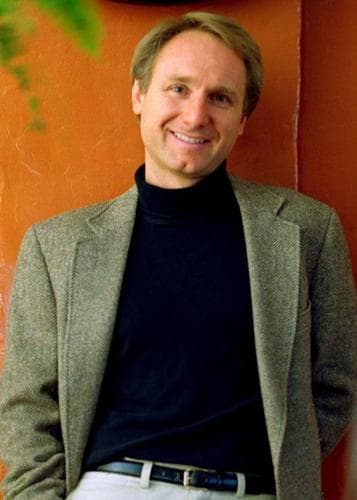
Daniel Gerhard Brown is an American author best known for his thriller novels, including the Robert Langdon novels Angels & Demons (2000), The Da Vinci Code (2003), The Lost Symbol (2009), Inferno (2013), and Origin (2017). His novels are treasure hunts that usually take place over a period of 24 hours. They feature recurring themes of cryptography, art, and conspiracy theories. His books have been translated into 57 languages and, as of 2012, have sold over 200 million copies. Three of them, Angels & Demons, The Da Vinci Code, and Inferno, have been adapted into films, while one of them, The Lost Symbol, was adapted into a television show.
Similar books
- The Da Vinci Code
Dan Brown
3.9 (1.9M) average on GoodreadsThrillerFeatures the same protagonist, Robert Langdon, solving a historical mystery involving secret societies and religious symbology.
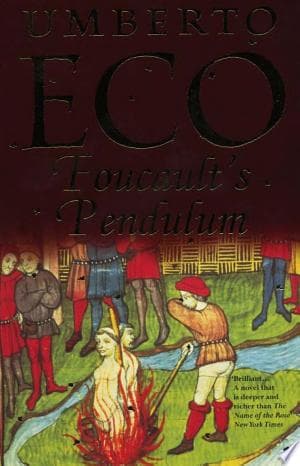
- Foucault's Pendulum
Umberto Eco
3.9 (60k) average on GoodreadsThrillerExplores complex conspiracy theories, secret societies, and historical esotericism, though with a more literary and philosophical approach.
- Angels & Demons
Dan Brown
3.9 (2.7M) average on GoodreadsThrillerA Harvard symbologist races through Rome's ancient sites, deciphering cryptic clues to unmask the Illuminati and stop a vengeful plot to destroy the Vatican with a stolen antimatter weapon.
- Gone Girl
Gillian Flynn
4.1 (2.3M) average on GoodreadsThrillerA wife's sudden disappearance on her fifth anniversary reveals a web of lies and psychological warfare, exposing the secrets within a seemingly perfect marriage.
- The Girl on the Train
Paula Hawkins
3.9 (2.1M) average on GoodreadsThrillerA woman’s fascination with a seemingly perfect couple she watches from her daily train commute leads her into a dark investigation when she witnesses something that shatters their idyllic image.
- The Guest List
Lucy Foley
3.8 (1.3M) average on GoodreadsThrillerOn a remote Irish island, a glamorous wedding descends into a deadly whodunnit when a guest is found murdered, trapping everyone with their secrets as a storm rages.





Enjoyed the summary?
A summary gives you the shape of the book. The book itself has the detail, the examples and the voice.
Find The Lost Symbol on AmazonAs an Amazon Associate, BookBrief earns from qualifying purchases. How we're funded