
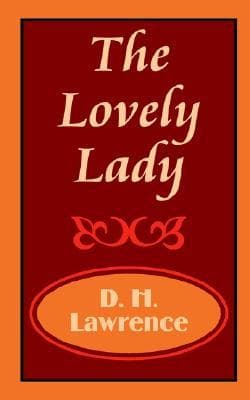
Synopsis
Covers the whole plot, including the ending.
- Difficulty
- Medium
- Pacing
- Moderate
- Mood
- Atmospheric, Psychological, Dark, Introspective
- Read it if
- You enjoy psychological short stories, explorations of family dynamics, or D.H. Lawrence's distinctive prose.
- Skip it if
- You prefer fast-paced plots, clear-cut resolutions, or stories with overt happy endings.
The Lovely Lady Plot Summary
Covers the whole plot, including the ending.
The Lovely Lady: Lady Maria's Isolation
Lady Maria, an old aristocratic woman, lives in a large but crumbling family home, St. Mawr, with her devoted but somewhat suppressed companion, Miss Hammond. Maria is a woman deeply connected to the past, spending her days meticulously caring for her appearance and preserving her family's history. She has a unique, almost mystical link to the house, seeing herself as its living form. Her only living relative is her nephew, Robert, a young man who visits but does not truly understand her strong attachment to the estate. Maria's reclusiveness and her almost ritualistic self-care show her isolation and her desperate attempt to hold onto a fading grandeur, both personal and familial.
The Lovely Lady: Robert's Inheritance and Intrusion
Robert, Lady Maria's nephew and heir, starts visiting St. Mawr more often. At first, his presence is a minor disturbance to Maria's organized life, but it slowly becomes a bigger intrusion. Robert, though not openly mean, is somewhat insensitive and materialistic. He lacks his aunt's deep, almost spiritual connection to the estate. He sees St. Mawr as property to be managed or sold, rather than a living place with generations of history. His visits highlight the generational clash between Maria's respect for tradition and Robert's more modern, practical view, creating an underlying tension in the household.
The Lovely Lady: The Ancestral Portrait and Maria's Secret
A key moment happens when Robert shows interest in an old portrait of a beautiful, young Lady Maria. This portrait, which seems to defy time, subtly matches Lady Maria's own preserved looks. During a late-night talk, Maria, prompted by Robert's comments, finally reveals her dark secret: she can absorb the life force of men who fall in love with her. This power, she explains, is what lets her keep her youthful beauty and energy, while her lovers slowly waste away and die. This confession adds a chilling, fantastical element to the story, explaining her reclusiveness and the lack of any lasting male companions.
The Lovely Lady: The Revelation's Impact on Robert
Robert is at first horrified and disgusted by Lady Maria's confession. The revelation shatters his view of his elegant, reclusive aunt, turning her into something monstrous and unnatural. However, along with his disgust, a morbid fascination begins to take hold. He struggles to believe the beautiful, seemingly delicate woman before him is the vampiric being she claims to be. The weight of this secret, and what it means for his future as her heir, starts to trouble him. He feels psychological tension as he deals with the truth of his family's dark past and his aunt's terrifying power.
The Lovely Lady: Robert's Growing Fear and Entrapment
After the revelation, Robert's visits to St. Mawr become filled with unspoken dread. He starts to see his aunt's gaze as scrutinizing, almost predatory. He becomes very aware of her subtle attempts to draw him closer. He feels a growing sense of entrapment, as if the old house and Lady Maria herself are closing in on him. His attempts to distance himself are met with subtle manipulations and emotional appeals from Maria, who, despite her monstrous secret, keeps an air of vulnerability and need. Robert realizes the danger he is in, understanding that his aunt's 'love' could be a death sentence.
The Lovely Lady: Lady Maria's Decline and Robert's Escape
As time passes, Lady Maria's power seems to lessen slightly, or perhaps Robert's resistance grows stronger. She shows subtle signs of weakening; her beauty, though still remarkable, occasionally flickers. Robert, sensing a chance, becomes more determined to break free from her influence. He finds a reason to leave St. Mawr, perhaps faking an urgent appointment or an illness. This escape is not a dramatic confrontation but a quiet, desperate flight from his aunt's emotional and psychological hold. He understands that staying would risk his own life force being consumed.
The Rocking-Horse Winner: Paul's Obsession
Paul, a young boy from a rich but poor family, becomes very aware of his mother Hester's unspoken worry about money. The house itself seems to whisper, 'There must be more money!' Driven by a desperate wish to please his mother and ease the family's financial troubles, Paul finds a strange, almost mystical connection to horse racing. By riding his rocking horse with intense, feverish focus, he can 'know' the name of the winning horse in upcoming races. This secret ability, shared with the family gardener, Basset, and his Uncle Oscar, becomes his only focus, a desperate attempt to bring luck and wealth to his family.
The Rocking-Horse Winner: The Cycle of Greed
Paul's predictions are surprisingly accurate, and he starts to win large amounts of money, which he secretly gives to his mother. However, instead of bringing happiness, the money only increases Hester's underlying worry and endless desire for more. The house's whispers grow louder, and Hester's spending increases, creating a cycle. Paul, driven by his mother's unspoken need, becomes more frantic in his rocking-horse sessions, pushing himself to the point of physical and mental exhaustion. The joy of winning is overshadowed by the increasing pressure and the realization that his efforts are never enough to truly satisfy his mother's materialistic cravings.
The Rocking-Horse Winner: Paul's Tragic End
The peak of Paul's obsession comes with the Derby. Desperate for the biggest win yet, he rides his rocking horse with an almost insane frenzy, pushing his young body and mind beyond their limits. His mother, Hester, finds him in a frantic state and is horrified. Paul, having correctly predicted the winner, Malabar, collapses into a feverish delirium. Despite the massive winnings, which finally ease the family's financial burdens, Paul dies a few days later from brain fever. His death is a tragic result of his desperate attempt to fulfill his mother's materialistic desires, showing the destructive nature of unchecked greed and the emotional cost it takes on the innocent.
Rawdon's Roof: Rawdon's Aversion to Women
Rawdon, a man in his late thirties, lives alone in a small, isolated cottage. He chose a life away from the complexities of relationships, especially with women. He is intelligent and sensitive, but also deeply afraid of closeness and commitment. His dislike is not just shyness; it comes from a deep psychological block, an almost primal dread of women and the demands of a romantic relationship. He finds comfort in his independence and the quiet rhythm of his own life, carefully building barriers to keep any woman from getting too close and disrupting his solitude.
Rawdon's Roof: The Intrusion of Ethel
One stormy night, Rawdon's solitude is suddenly broken when Ethel, a young woman seeking shelter from the heavy rain, appears at his door. Ethel is a lively, somewhat unconventional character, direct and open. Her unexpected arrival forces Rawdon to face his deep fears. He is at first uncomfortable and awkward. His ingrained dislike of women clashes with the social duty to offer hospitality. Ethel's close presence in his small cottage creates an intense, almost suffocating atmosphere, challenging Rawdon's careful emotional distance and making him interact with a woman in a way he has long avoided.
Rawdon's Roof: The Uncomfortable Coexistence
As the storm rages, Rawdon and Ethel are forced to spend the night under the same roof. The situation is full of tension, mainly from Rawdon. Ethel, though aware of his discomfort, remains mostly calm. Her naturalness contrasts sharply with Rawdon's rigid self-consciousness. Rawdon struggles internally, fighting his fear of intimacy and his desire to keep women away. He tries to be polite but distant, but Ethel's presence, her laughter, and her simple requests for warmth and food slowly break down his defenses. The night becomes a test of Rawdon's emotional strength, forcing him to confront the very thing he has spent years avoiding.
Rawdon's Roof: A Glimmer of Connection and Rawdon's Retreat
During the night, a brief, fragile moment of connection seems to form between Rawdon and Ethel. Perhaps a shared laugh, a moment of comfortable silence, or a simple act of human kindness. This fleeting closeness is both appealing and terrifying for Rawdon. He feels a flicker of something he has long denied himself, a hint of the warmth and companionship he has actively avoided. However, his deep-seated fear ultimately wins. As morning breaks and the storm passes, Rawdon, despite the brief softening of his defenses, retreats back into his shell. He is relieved when Ethel eventually leaves, allowing him to resume his solitary life, though with the memory of her visit lingering.
Principal Figures
Lady Maria
Protagonist/Antagonist
The 'lovely lady' who maintains her youth by consuming the life force of men.
Lady Maria is an elderly, aristocratic woman who lives in a decaying ancestral home, St. Mawr. She is obsessed with her appearance, the preservation of her beauty, and the legacy of her family. Beneath her refined exterior lies a sinister secret: she possesses a supernatural ability to absorb the life force of men who fall in love with her, which allows her to remain eternally youthful. She is reclusive, manipulative, and deeply attached to the past, embodying a blend of elegant decay and terrifying power.
Relationships: Robert (Nephew and potential victim; object of her manipulation and life-force absorption.)
Robert
Supporting/Victim
Lady Maria's nephew and heir, who becomes entangled in her dark secret.
Robert is Lady Maria's young, somewhat pragmatic nephew. He initially views St. Mawr as an inheritance to be managed but gradually becomes entangled in his aunt's sinister secret. He is initially repulsed by her confession but also morbidly fascinated. He struggles with fear and a sense of entrapment, ultimately seeking to escape his aunt's insidious influence. He represents the modern world clashing with ancient, dark traditions.
Relationships: Lady Maria (Aunt and would-be life-source victim; manipulative relationship.)
Paul
Protagonist
A young boy with a supernatural gift for predicting horse race winners, driven by his mother's unspoken greed.
Paul is a sensitive and empathetic young boy who yearns to bring happiness and financial security to his family. He is acutely aware of his mother's unspoken anxiety about money and becomes obsessed with solving the family's financial woes. He discovers an uncanny ability to predict horse race winners by riding his rocking horse with intense fervor. His innocence is tragically consumed by the relentless pressure of his mother's insatiable desires, leading to his demise.
Relationships: Hester (Mother) (Mother, whose unspoken greed drives Paul's obsession.); Uncle Oscar (Confidant and partner in betting.); Basset (Family gardener and trusted betting partner.)
Hester
Antagonist/Supporting
Paul's mother, whose insatiable desire for money unknowingly drives her son to his death.
Hester is Paul's mother, a woman from an aristocratic background who struggles with a pervasive, unspoken anxiety about money. She is beautiful but emotionally detached, and her materialistic desires are insatiable. Unaware of the supernatural source of Paul's winnings, she only sees the money as a temporary fix, never truly finding contentment. Her greed, though perhaps not overtly malicious, ultimately consumes her son.
Relationships: Paul (Son, whose life she unknowingly sacrifices for money.)
Rawdon
Protagonist
A reclusive man with a deep-seated fear of women and intimacy.
Rawdon is a man in his late thirties who has deliberately chosen a solitary life, avoiding women due to a profound psychological aversion to intimacy. He is intelligent and sensitive but rigidly self-conscious, preferring the quiet order of his own company. His fear is not merely shyness but a deep-seated dread that prevents him from forming connections. He represents the theme of emotional repression and the fear of vulnerability.
Relationships: Ethel (Unexpected visitor who briefly challenges his solitude.)
Ethel
Supporting
A vibrant young woman who inadvertently challenges Rawdon's reclusive life.
Ethel is a young, natural, and somewhat unconventional woman who seeks shelter in Rawdon's cottage during a storm. She is direct and uninhibited, contrasting sharply with Rawdon's rigid self-consciousness. Her presence forces Rawdon to confront his deep-seated fears of intimacy. She acts as a catalyst for Rawdon's internal conflict, representing the life and connection he actively avoids.
Relationships: Rawdon (Temporary companion, challenging his solitude.)
Miss Hammond
Supporting
Lady Maria's devoted but stifled companion.
Miss Hammond is Lady Maria's long-suffering and devoted companion. She is a quiet, observant woman who has dedicated her life to serving Lady Maria. She is aware of the strange atmosphere surrounding her employer but remains loyal, perhaps out of a sense of duty or a lack of other options. She embodies the quiet subservience often found in such domestic roles, a silent witness to Maria's peculiar existence.
Relationships: Lady Maria (Employer/companion; a relationship of long-standing service and subtle manipulation.)
Uncle Oscar
Supporting
Paul's uncle and betting partner.
Uncle Oscar is Paul's uncle, a somewhat irresponsible but charming man who becomes involved in Paul's secret betting scheme. He is initially skeptical but quickly becomes a willing participant, drawn in by the promise of easy money. He represents the adult world's susceptibility to greed and its failure to protect Paul from the destructive consequences of his gift.
Relationships: Paul (Uncle and betting partner; complicit in Paul's secret.)
Themes & Insights
The Destructive Nature of Greed
This theme is most powerfully seen in 'The Rocking-Horse Winner,' where the endless desire for 'more money' consumes Paul's family and leads to his tragic death. Hester's unspoken worry about not having enough money creates a constant feeling of need, which Paul desperately tries to fix. However, each influx of money only increases the desire, showing how greed is a bottomless pit that can destroy innocence and life. The story illustrates how pursuing material wealth, when not controlled, can corrupt love and family bonds, turning a child into a sacrifice for an abstract, never-ending need.
“There must be more money! There must be more money! The great house was whispering at him, whispering, like a secret in the dark.”
The Sinister Conflict Between Parent and Child
This theme is central to both 'The Lovely Lady' and 'The Rocking-Horse Winner.' In 'The Lovely Lady,' Lady Maria, the 'parental' figure, literally takes the life force of men, including the implied threat to her nephew Robert. This symbolizes a self-serving maternal power that stifles and drains the younger generation. In 'The Rocking-Horse Winner,' Hester's unconscious greed acts as a destructive force, driving Paul to his death. Her unspoken desires become a burden that Paul tries to carry, ultimately sacrificing himself for a mother who cannot be satisfied. Both stories show a parental influence that is far from nurturing, instead being a source of deep harm and even death.
“And yet he was sure there was a secret, hostile something in the atmosphere, that was always against him.”
The Fear of Intimacy and Connection
'Rawdon's Roof' directly addresses this theme through Rawdon, a man who has deliberately isolated himself from women because of a deep fear of closeness and commitment. His carefully built solitude is broken by Ethel's unexpected arrival, forcing him to confront the connections he has avoided. Rawdon's discomfort and eventual retreat highlight the psychological barriers people build to protect themselves from vulnerability. The story explores the tension between the human need for connection and the paralyzing fear of its demands, showing how ingrained emotional defenses can prevent real human interaction.
“He lived in his house as a snail lives in its shell, alone, and not wanting to be touched.”
The Decay of Aristocracy and Tradition
This theme is clear in 'The Lovely Lady,' where the decaying ancestral home, St. Mawr, reflects Lady Maria's attempts to preserve a fading past. Lady Maria herself is a relic of an earlier time, clinging to her beauty and lineage through unnatural means. The story contrasts her old-fashioned life with the more practical, modern view of her nephew, Robert. The narrative suggests that old traditions, when held onto too tightly or maintained through unnatural means, can become monstrous and suffocating. This leads to a sterile or destructive existence rather than a flourishing one. The grandeur is gone, leaving only a shell sustained by dark secrets.
“She was a lovely lady, but she was like a piece of exquisite porcelain that had been preserved for centuries, and that was now kept in a glass case, never to be touched.”
Plot Devices & Literary Techniques
Symbolic Setting
The ancestral home reflects the characters' inner states and family legacies.
In 'The Lovely Lady,' St. Mawr, the decaying ancestral home, acts as a powerful symbolic setting. Its grandeur and gradual decline mirror Lady Maria's own fading beauty and her desperate attempts to preserve a past that is no longer sustainable. The house is not just a dwelling but an extension of Maria's being, imbued with the weight of her family's history and her dark secrets. Similarly, in 'The Rocking-Horse Winner,' the 'great house' that whispers 'There must be more money!' symbolizes the pervasive, insidious nature of the family's financial anxiety and greed, influencing Paul's actions and ultimate fate.
Supernatural Element
Fantastical abilities or occurrences drive the central conflicts.
Both 'The Lovely Lady' and 'The Rocking-Horse Winner' employ supernatural elements to propel their narratives. Lady Maria's ability to absorb the life force of men is a chilling, fantastical power that explains her eternal youth and creates the central horror of her story. In 'The Rocking-Horse Winner,' Paul's uncanny ability to predict race winners by riding his rocking horse is a mystical gift, an almost magical connection to luck. These supernatural devices elevate the stories beyond mere psychological dramas, introducing an element of the uncanny and the inexplicable that profoundly impacts the characters' lives and fates.
Unreliable Narration/Internal Monologue
The narrative often delves into characters' unspoken thoughts and perceptions.
While not strictly unreliable in the sense of deception, Lawrence frequently employs a narrative style that delves deeply into the internal monologues and subjective perceptions of his characters, particularly in 'The Rocking-Horse Winner' and 'Rawdon's Roof.' In 'Rocking-Horse Winner,' the 'whispers' of the house are perceived through Paul's anxious mind, making the financial pressure a tangible, almost auditory presence. In 'Rawdon's Roof,' the story is heavily filtered through Rawdon's internal struggles and fears regarding Ethel's presence. This device allows readers direct access to the characters' psychological states, biases, and anxieties, shaping the interpretation of events.
Foreshadowing
Subtle hints and ominous details prepare the reader for future events.
Foreshadowing is skillfully used, particularly in 'The Rocking-Horse Winner.' The constant, almost oppressive whispers of 'There must be more money!' in the house, perceived by Paul, subtly foreshadow the destructive impact of greed. Paul's feverish, almost violent rocking of his horse, and the increasing intensity of his efforts, hint at the physical and mental toll his gift is taking, ultimately foretelling his tragic collapse and death. In 'The Lovely Lady,' Lady Maria's unnaturally preserved beauty and the lingering sense of unease around her subtly prepare the reader for the revelation of her vampiric secret.
The Lovely Lady Quotes
“She was like a flower that had bloomed too early, and was already losing its petals.”
“The past was a dead thing, but it still had a way of reaching out and touching the present.”
“He felt a strange mixture of pity and resentment, as if she were both a victim and a tormentor.”
“The house itself seemed to breathe with a quiet, decaying life, full of shadows and forgotten things.”
“There was a certain cruelty in her beauty, a cold, remote perfection that kept men at a distance.”
“He longed for something real, something tangible, to cut through the suffocating unreality of their lives.”
“The silence in the room was not empty, but filled with unspoken words and unacknowledged desires.”
“She had built a wall around herself, brick by brick, until she was entirely enclosed in her own sorrow.”
“The truth was a heavy burden, often best left buried.”
“He felt like a moth drawn to a flame, knowing it would burn, but unable to resist.”
“Life was a series of small deaths, each one taking a little piece of you away.”
“There was a fierce, almost desperate hunger in her eyes, for something she could not name.”
“He saw in her not just a woman, but a whole world of vanished elegance and fading dreams.”
“The illusion of control was often more comforting than the reality of helplessness.”
Quiz
10 questions on the plot and the characters. Each answer comes with a short explanation.
Question 1
In 'The Rocking-Horse Winner', what is the primary motivation behind Paul's desperate attempts to win money?
- To buy himself expensive toys and gifts.
- To impress his school friends with his wealth.
- To stop the house from whispering about the lack of money, driven by his mother's unspoken anxieties.
- To fund his parents' extravagant social life.
Show answer
C. To stop the house from whispering about the lack of money, driven by his mother's unspoken anxieties. Paul is driven by a deep-seated desire to alleviate the unspoken financial anxieties that permeate his home, which he perceives as the 'house whispering' about the need for more money.
Question 2
Which of the following stories from 'The Lovely Lady' volume is explicitly mentioned as exploring the theme of 'the sinister conflict between parent and child'?
- 'Rawdon's Roof'
- 'The Rocking-Horse Winner'
- 'The Lovely Lady' and 'Mother and Daughter'
- All of the above
Show answer
C. 'The Lovely Lady' and 'Mother and Daughter' The introduction specifically states that 'the title story and Mother and Daughter pursue one of Lawrence's favorite themes, the sinister conflict between parent and child.'
Question 3
What is the central characteristic attributed to the man in the story 'Rawdon's Roof'?
- He is exceptionally wealthy and generous.
- He is an adventurous explorer.
- He is afraid of women.
- He is a renowned artist.
Show answer
C. He is afraid of women. The description states that 'Rawdon's Roof gives the character of a man afraid of women.'
Question 4
In 'The Rocking-Horse Winner', what is the tragic outcome for Paul as a result of his relentless 'rocking' to find the winning horse?
- He becomes incredibly rich but loses all his friends.
- He wins a large sum of money but succumbs to a brain fever and dies.
- He is caught cheating and expelled from school.
- He loses all his inherited wealth in a final, disastrous bet.
Show answer
B. He wins a large sum of money but succumbs to a brain fever and dies. Paul tragically dies from a brain fever shortly after winning a significant amount of money through his intense and obsessive rocking, a consequence of his psychological burden.
Question 5
What does the phrase 'feverish psychological twist' used to describe 'The Rocking-Horse Winner' imply about the story's narrative?
- It features a character suffering from a literal fever throughout.
- It focuses on a child's intense, almost pathological obsession and its dire mental consequences.
- It involves a mystery that needs to be solved through deduction.
- It describes a quick and exciting turn of events.
Show answer
B. It focuses on a child's intense, almost pathological obsession and its dire mental consequences. The 'feverish psychological twist' refers to Paul's increasingly intense and unhealthy obsession with winning money, which consumes him psychologically and leads to his tragic end.
Question 6
How does Lawrence typically use 'domestic dramas' in this volume, according to the description?
- As lighthearted comedies to provide comic relief.
- As opportunities for a 'brilliant attack on the shortcomings of modern life'.
- To showcase idealized family relationships.
- To explore historical events within a family setting.
Show answer
B. As opportunities for a 'brilliant attack on the shortcomings of modern life'. The description states that other stories are 'chiefly domestic dramas - sketches or character studies affording the author a new chance for his brilliant attack on the shortcomings of modern life.'
Question 7
What specific detail about the Lawrence's writing style is highlighted in the description of 'The Lovely Lady' volume?
- His use of highly experimental narrative structures.
- His focus on historical fiction.
- His 'most mellow vein' and ability to craft 'shorter masterpieces'.
- His preference for fantasy and mythological elements.
Show answer
C. His 'most mellow vein' and ability to craft 'shorter masterpieces'. The introduction explicitly states, 'It is in his most mellow vein, and several of the stories at least should rank among his shorter masterpieces.'
Question 8
Considering the description of 'The Rocking-Horse Winner' as an 'uncanny study of childhood', what specific aspect of childhood does Lawrence most disturbingly portray?
- The innocence and joy of play.
- The profound and often destructive impact of adult anxieties and unspoken desires on a child's psyche.
- The typical sibling rivalries in a large family.
- A child's natural curiosity about the world.
Show answer
B. The profound and often destructive impact of adult anxieties and unspoken desires on a child's psyche. The story delves into how Paul internalizes and tragically acts upon his parents' unspoken financial worries, transforming childhood play into a desperate, life-consuming endeavor, highlighting the 'uncanny' psychological burden placed upon him.
Question 9
How does the 'sinister conflict between parent and child' theme, as seen in 'The Lovely Lady' and 'Mother and Daughter', differ from the 'uncanny study of childhood' in 'The Rocking-Horse Winner'?
- The former focuses on financial struggles, while the latter focuses on emotional neglect.
- The former implies a more direct, perhaps manipulative or oppressive, struggle between wills, whereas the latter depicts a child internalizing and suffering from adult anxieties, leading to self-destruction.
- The former involves physical abuse, while the latter involves psychological abuse.
- The former is about rebellious children, while the latter is about obedient children.
Show answer
B. The former implies a more direct, perhaps manipulative or oppressive, struggle between wills, whereas the latter depicts a child internalizing and suffering from adult anxieties, leading to self-destruction. The 'sinister conflict' suggests a direct, often power-based struggle or antagonism between parent and child, while 'The Rocking-Horse Winner' shows a child's internal, obsessive response to the unexpressed anxieties of the parents, leading to a self-destructive attempt to 'fix' the family's problems.
Question 10
Given the overall description of the stories, what common criticism of modern life might Lawrence be 'brilliantly attacking' through his portrayal of domestic dramas and character studies?
- The lack of technological advancement.
- The superficiality, emotional repression, and destructive materialism that often underpin seemingly ordinary lives.
- The challenges of urban living versus rural living.
- The decline of traditional religious beliefs.
Show answer
B. The superficiality, emotional repression, and destructive materialism that often underpin seemingly ordinary lives. Lawrence often critiqued the emotional deadness, materialism, and societal pressures that stifled genuine human connection and expression, a theme evident in the 'sinister conflict' and the 'feverish psychological twist' of the stories mentioned.
The Lovely Lady FAQ
What is the central theme explored in 'The Lovely Lady'?
'The Lovely Lady' delves into the destructive nature of possessive love and the psychological toll it takes on individuals. Countess Johanna, the titular character, clings to her deceased lover's memory, creating a suffocating environment for her nephew, Robert, and preventing him from forming his own relationships. The story highlights how an idealized past can cripple present and future happiness.
How does the relationship between Paul and his mother evolve in 'The Rocking-Horse Winner'?
Paul's relationship with his mother, Hester, is initially one of desperation to gain her love and approval, believing money will achieve this. As he secretly wins more, his efforts become a frantic attempt to silence the house's whispers of 'there must be more money,' ultimately leading to his tragic demise. His mother, ironically, becomes wealthier but remains emotionally distant and ultimately responsible for his fate.
What kind of 'sinister conflict' is depicted in 'Mother and Daughter'?
In 'Mother and Daughter,' the sinister conflict arises from Mrs. Bodoin's overbearing control and emotional manipulation of her daughter, Virginia. Mrs. Bodoin subtly sabotages Virginia's potential relationships and independence, particularly with Mr. Ruge, ensuring Virginia remains dependent on her. This dynamic showcases the destructive power of a parent's possessiveness over their child's autonomy.
What societal shortcomings does Lawrence critique through the 'domestic dramas' in this collection?
Lawrence critiques the emotional sterility and superficiality prevalent in modern relationships and family life. He often highlights how societal expectations, materialism, and a lack of genuine connection lead to unfulfilled lives and psychological distress. Stories like 'Sun' and 'The Man Who Loved Islands' further explore individuals' desperate attempts to escape or find authenticity outside conventional norms.
How does Rawdon's character in 'Rawdon's Roof' illustrate his fear of women?
Rawdon's fear of women manifests in his extreme isolation and the physical barrier of his self-built, secluded roof-house, which he retreats to. He avoids all female interaction, even refusing to let a woman clean for him. His anxiety intensifies when a woman finally intrudes on his space, revealing his profound discomfort with intimacy and the feminine presence.
What is the significance of the rocking horse in 'The Rocking-Horse Winner' beyond its literal function?
The rocking horse is a potent symbol of Paul's desperate and ultimately futile attempts to control his fate and his family's financial woes. It represents a childhood activity twisted into a feverish, compulsive quest for money, reflecting his mother's unspoken desires. The horse's 'madness' mirrors Paul's own escalating psychological distress and the destructive nature of greed.
How does the ghost of Eustace in 'The Lovely Lady' continue to exert influence?
The ghost of Eustace is not a literal apparition but a pervasive psychological presence maintained by Countess Johanna. She keeps his memory alive through rituals, his preserved room, and by constantly speaking of him, effectively preventing anyone, especially Robert, from truly moving on. This 'ghost' is her possessive love, which dominates the household and its inhabitants.
What subtle clues suggest the mother's complicity or awareness of Paul's actions in 'The Rocking-Horse Winner'?
While the mother, Hester, doesn't explicitly know about Paul's rocking horse 'system,' her constant lament about the family's lack of luck and money creates the psychological pressure that drives Paul. Her acceptance of the initial anonymous gift and her later insatiable demand for more money, even after Paul's illness, subtly implicates her in his tragic pursuit. She benefits from his 'gift' without truly understanding its cost.
In 'The Lovely Lady,' how does Robert's eventual marriage challenge the established order?
Robert's marriage to the woman from the village represents a direct rebellion against Countess Johanna's suffocating influence and her idealized memory of Eustace. It signifies his attempt to break free from the past and establish his own life and identity, outside the shadow of his aunt's possessiveness. This act is an assertion of life and autonomy against the stasis of death and remembrance.
Discuss the psychological impact of the 'whispers' in 'The Rocking-Horse Winner' on Paul.
The 'whispers' of 'there must be more money' are a powerful psychological manifestation of the family's unspoken financial anxieties and the mother's subconscious desires. They torment Paul, driving him to a feverish obsession with winning money. These whispers represent the internalized pressure and the toxic atmosphere of greed that ultimately consume him, blurring the lines between external reality and internal psychological torment.
How does Countess Johanna's possessiveness in 'The Lovely Lady' reflect a deeper psychological insecurity?
Countess Johanna's possessiveness stems from a profound psychological insecurity, particularly her fear of losing love and relevance. By clinging to Eustace's memory and controlling Robert, she attempts to perpetuate a past where she felt significant and loved, avoiding the loneliness and uncertainty of the present. Her 'love' becomes a defensive mechanism against her own mortality and emotional vulnerability.
Analyze Rawdon's fear of women in 'Rawdon's Roof' from a psychoanalytic perspective.
Rawdon's intense fear of women suggests a deep-seated psychological trauma or unresolved Oedipal conflict, leading to an extreme aversion to female presence and intimacy. His retreat to his roof-house symbolizes a return to a womb-like state of isolation and safety, where he can avoid the perceived threats or demands of the feminine. This aversion cripples his ability to form normal human connections.
What is the psychological significance of Virginia's passivity in 'Mother and Daughter'?
Virginia's passivity is a direct result of years of subtle psychological conditioning and emotional manipulation by her mother, Mrs. Bodoin. She has internalized her mother's expectations and fears, making her incapable of asserting her own desires or pursuing independent relationships. Her passivity reflects a learned helplessness, where she unconsciously allows her mother to dictate her life choices.
Is Paul's death in 'The Rocking-Horse Winner' a consequence of his own actions or a critique of societal values?
Paul's death can be interpreted as both. While his actions are ultimately self-destructive, they are driven by the intense pressure created by his mother's unspoken desire for wealth and the family's materialistic values. Lawrence critiques a society where money is equated with love and happiness, suggesting Paul is a victim of both his own desperation and the toxic environment he inhabits.
How might one argue that Countess Johanna's love for Eustace in 'The Lovely Lady' is not truly love but a form of necrophilia or self-worship?
One could argue Johanna's 'love' for Eustace is less about him and more about her idealized self-image and control. By preserving his memory so rigidly, she maintains a static, perfect past where she was beloved, avoiding the complexities of real, evolving relationships. Her obsession with his preserved belongings and denial of life for Robert suggests a fixation on death and a projection of her own desires onto a dead figure, rather than genuine affection for a living person.
Does Lawrence present any characters in this collection who successfully defy the 'shortcomings of modern life'?
While many characters struggle, some stories hint at attempts to defy modern life's shortcomings, though not always successfully. 'Sun' shows a woman seeking renewal and connection with nature to escape a stifling marriage, suggesting a path to authenticity. However, Lawrence often portrays the difficulty of such defiance, implying that genuine escape from societal pressures is rare and often comes at a high personal cost.
To what extent is Mrs. Bodoin in 'Mother and Daughter' a villain, or is she merely a product of her own anxieties?
Mrs. Bodoin can be seen as a nuanced character. While her actions are undeniably destructive to Virginia's independence, she is likely driven by her own anxieties about aging, loneliness, and perhaps a fear of losing her daughter, who represents her sole purpose. Her 'villainy' stems from a profound insecurity and a misguided, possessive form of love, making her a tragic figure as much as an antagonist.
What is the broader philosophical statement Lawrence makes about memory and the past through 'The Lovely Lady'?
Through 'The Lovely Lady,' Lawrence makes a profound statement about the dangers of allowing the past to dominate the present. He suggests that an idealized or unreleased past can become a prison, stifling life, growth, and genuine human connection. The story argues for the necessity of letting go of the dead, both literally and figuratively, to embrace the vitality and possibilities of the living present.
About the author

D.H. Lawrence was a prominent English novelist, poet, playwright, and essayist whose works explored themes of sexuality, industrialization, and the human condition. His most controversial and famous novel, "Lady Chatterley's Lover," challenged societal norms and censorship. Other notable works include "The Rainbow," "Women in Love," and "Sons and Lovers," solidifying his place as a significant figure in modernist literature.
Similar books
- Dubliners
James Joyce
3.9 (123k) average on GoodreadsLiterary FictionExplores everyday lives and psychological states with a focus on character and atmosphere.
- The Lottery and Other Stories
Shirley Jackson
4.1 (64k) average on GoodreadsFictionContains unsettling and psychologically intense short stories that delve into human darkness and societal peculiarities.
- Nineteen Eighty-Four
George Orwell
4.2 (5.5M) average on GoodreadsFictionWinston Smith dreams of truth and rebellion in a world where Big Brother watches all, but he confronts the terrifying power of a regime that controls not just actions, but thoughts.
- The Frozen River
Ariel Lawhon
4.4 (600k) average on GoodreadsFictionIn 1789 Maine, a heroic midwife's diary helps her expose a murder and get justice in a town that wants to silence her.
- A Man Called Ove
Fredrik Backman
4.4 (569k) average on GoodreadsFictionA stubborn widower, who lives by strict rules, finds his quiet world changed by a lively new family next door, making him face his past and find happiness in human connection.
- The Art of Racing in the Rain
Garth Stein
4.2 (452k) average on GoodreadsFictionThrough the eyes of Enzo, a wise and observant dog, a race car driver's family navigates a journey of love, loss, and resilience, learning that life's most important lessons often come in the curves, not just on the straightaways.




Enjoyed the summary?
A summary gives you the shape of the book. The book itself has the detail, the examples and the voice.
Find The Lovely Lady on AmazonAs an Amazon Associate, BookBrief earns from qualifying purchases. How we're funded