
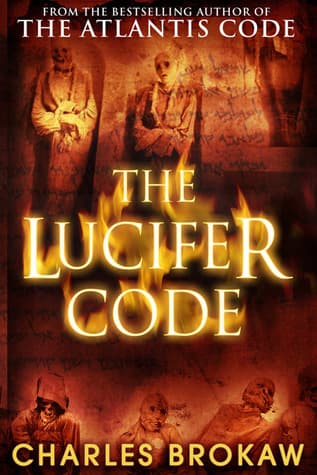
Synopsis
Covers the whole plot, including the ending.
- Difficulty
- Medium
- Pacing
- Fast
- Mood
- Suspenseful, Mysterious, Action-packed, Conspiratorial
- Read it if
- You enjoy fast-paced thrillers involving ancient mysteries, secret societies, and a race against time to prevent global catastrophe, with a focus on linguistic puzzles and historical conspiracies.
- Skip it if
- You prefer character-driven narratives over plot-driven action, or find thrillers with heavy reliance on ancient prophecies and cults to be cliché.
The Lucifer Code Plot Summary
Covers the whole plot, including the ending.
The Vatican Heist and the Unveiling of the Codex
The novel begins with a precise heist in the Vatican's secret archives. A skilled team, led by 'The Scholar,' bypasses security to steal an ancient codex—the Codex Gigas, or a hidden part of it. This codex is believed to hold a secret protected for centuries by a brotherhood. The theft alerts guardians of the secret that a prophecy might be coming true. The Scholar's reasons are unclear, but their efficiency suggests strong backing and knowledge of the codex's importance.
Dr. Thomas Lourds Enters the Fray
Dr. Thomas Lourds, a linguist and scholar of ancient languages, lives a quiet life, trying to avoid past dangers. However, his skills are needed. Father Michael, a Vatican official and old friend, asks for his urgent help with the stolen codex. Father Michael explains the seriousness of the situation, hinting at global disaster if the codex's secrets are misused. Despite wanting a normal life, Lourds's curiosity and sense of duty make him accept the challenge, knowing he is re-entering a world of old conspiracies and dangerous enemies.
The Brotherhood's Warning and Lourds's First Clues
As Lourds starts his research, members of the 'Guardians of the Light,' the ancient brotherhood protecting the codex, contact him. They give him incomplete information and warnings about the manuscript's power and the disaster if its hidden message is fully revealed. They warn that the codex is more than a text; it is a key to a dangerous force. Lourds, using his linguistic skills, finds inconsistencies and hidden layers in the known parts of the Codex Gigas, realizing the stolen section likely contains a highly encrypted message. He understands the language itself is a puzzle.
The Scholar's Pursuit and Lourds's Escape
The Scholar, aware of Lourds's involvement and his ability to decipher the codex, starts hunting him. Lourds is constantly on the run, avoiding assassination attempts and surveillance from The Scholar's operatives. A chase through Rome shows the immediate danger he faces. He narrowly escapes capture multiple times, using his intellect and quick thinking. These encounters confirm to Lourds the extreme measures his enemies will take to get his knowledge, making him realize he is a crucial part of the puzzle, not just a translator but also bait.
Unraveling the 'Lucifer Code'
Through research, Lourds discovers that the stolen section of the Codex Gigas contains 'The Lucifer Code.' This is not a direct text, but a complex series of ciphers, astronomical alignments, and theological paradoxes in the ancient script. He realizes the code points to a specific date and location, hinting at a convergence of cosmic and terrestrial events. The code suggests a way to access a destructive power, perhaps an ancient scientific or alchemical secret. The implications of this discovery are terrifying, confirming the brotherhood's fears.
The Cult of the Serpent's Eye
Lourds, with help from the Guardians, identifies The Scholar's true allegiance: an ancient cult called the 'Serpent's Eye.' This cult believes humanity has strayed and that a cataclysmic event, triggered by The Lucifer Code, is needed to 'purify' the world. They see the code as a divine tool for global reset. Their leader, a charismatic zealot, is the mastermind behind the theft and the pursuit of Lourds. The cult has vast resources and influence, having infiltrated global institutions.
The Race Against Time to Prevent the Ritual
With the cult's intentions clear, Lourds and his allies—Father Michael and an agent from the Guardians—begin a race against time. The Lucifer Code requires not just translation, but the precise execution of a ritual at a specific location and time, linked to an astronomical event. Lourds must decipher the final, complex layers of the code to understand the ritual's exact details, hoping to find a way to stop it. The cult is also close to their goal, preparing for their plan. The tension grows as the date approaches.
The Ancient Site and the Convergence
The deciphered code leads Lourds and his team to an ancient, significant site—perhaps a temple, observatory, or geological anomaly with unique energy. This is where the Serpent's Eye plans to perform their ritual, believing it to be the point for unleashing the code's power. The site is heavily guarded by the cult's operatives, leading to intense fighting. The astronomical alignment is beginning, and the cult leader is preparing the final stages of the ritual, convinced of their success in reshaping the world. Lourds understands the scale of the cult's ambition and how close they are to succeeding.
Lourds's Intervention and the Ritual's Disruption
In a confrontation, Lourds reaches the ritual's center. He does not physically fight, but uses his understanding of the code to exploit a flaw or counter-sequence in the ritual. He realizes the code has a failsafe or an 'undo' command, or that the cult misinterpreted a key element. By manipulating specific symbols, sounds, or alignments at the precise moment, Lourds disrupts the ritual's energy flow, causing it to fail. The cult leader is defeated, captured, or dies in the chaos, their plan stopped.
Aftermath and the Code's Sealing
With the ritual disrupted, the immediate global threat is gone. The remaining members of the Serpent's Eye cult are rounded up or scattered, their organization broken. The Codex Gigas, or its critical section, is recovered and again protected by the Guardians of the Light. Lourds ensures his knowledge of the code's true nature and failsafes is documented and secured, so future attempts to use it can be stopped. Though tired, Lourds feels accomplished, but also burdened by the existence of such a dangerous secret.
The Lingering Shadow
Afterward, Lourds thinks about The Lucifer Code. He understands it represents not just an ancient secret, but a basic truth about power and humanity's capacity for creation and destruction. He knows that while this threat is gone, the appeal of such power will always exist, and new groups will seek it. The Guardians reaffirm their commitment to their watch, acknowledging their work is ongoing. Lourds, though wanting a normal life, knows his skills will likely be needed again, forever linked to history's shadows and dangerous secrets.
The Lucifer Code Characters
Dr. Thomas Lourds
Protagonist
A brilliant but reluctant linguist drawn into ancient conspiracies.
Dr. Thomas Lourds is the world's foremost scholar of ancient languages, possessing an unparalleled intellect and an insatiable curiosity that often pulls him into dangerous situations. Despite his brilliance, he yearns for a quiet, academic life, having experienced the perils of past adventures. He is resourceful, quick-witted, and principled, driven by a strong moral compass to prevent catastrophic events. He often relies on his vast knowledge and analytical skills rather than physical prowess, making him an intellectual hero. His greatest strength is his ability to see patterns and connections where others see only chaos.
Relationships: Father Michael (old friend and Vatican liaison); The Guardians of the Light (allies and protectors of ancient knowledge)
The Scholar / Cult Leader
Antagonist
The enigmatic and ruthless leader of the Serpent's Eye cult.
Initially known as 'The Scholar,' this individual is the cunning and highly intelligent leader of the Serpent's Eye cult. They possess a deep, albeit twisted, understanding of ancient texts and prophecies, and are driven by a fanatical belief that humanity needs a catastrophic 'reset.' The Scholar is ruthless, manipulative, and charismatic, capable of inspiring fervent loyalty in their followers. Their true identity is slowly revealed, showcasing a person utterly convinced of their righteous cause, willing to sacrifice countless lives for their vision of a 'purified' world. They are the intellectual foil to Lourds.
Relationships: Dr. Thomas Lourds (nemesis, target for his knowledge); Serpent's Eye Cult (leader and inspiration)
Father Michael
Supporting
A Vatican official and Lourds's trusted contact.
Father Michael is a high-ranking Vatican official and a long-time friend of Dr. Thomas Lourds. He serves as Lourds's primary link to the Church's concerns and the broader conspiracy. Michael is a man of deep faith but also pragmatic, understanding that ancient threats require unconventional solutions. He is dedicated to protecting humanity and the sacred secrets of the Church, often acting as the bridge between the academic world and the clandestine operations. He provides moral support and crucial intelligence to Lourds, demonstrating courage and conviction in the face of grave danger.
Relationships: Dr. Thomas Lourds (close friend and colleague); The Vatican (loyal official)
The Guardians of the Light
Supporting
An ancient brotherhood sworn to protect sacred knowledge.
The Guardians of the Light are a secretive, ancient brotherhood dedicated to protecting humanity from the destructive potential of certain ancient knowledge, particularly the Lucifer Code. They operate in the shadows, observing and intervening when necessary. Their members are highly knowledgeable about history, esotericism, and various forms of combat and intelligence gathering. They serve as allies and protectors for Lourds, providing him with crucial information, resources, and sometimes physical protection. They embody the eternal vigil against malevolent forces, representing a force of order and preservation.
Relationships: Dr. Thomas Lourds (temporary ally, recipient of their knowledge and protection); The Vatican (unspoken, often uneasy alliance in protecting ancient secrets)
Agent Elena Petrova
Supporting
A skilled operative, potentially from a secular intelligence agency, assisting Lourds.
Elena Petrova is a highly competent and resourceful agent, possibly from an international intelligence agency or a secular faction within the Guardians. She is pragmatic, skilled in combat, surveillance, and tactical operations. Initially, she might be suspicious of Lourds's academic approach but quickly comes to respect his intellect. She provides the necessary physical protection and strategic planning that Lourds often lacks, balancing his scholarly pursuits with real-world dangers. Her skepticism sometimes challenges Lourds, but her loyalty to the mission is unwavering.
Relationships: Dr. Thomas Lourds (protector and strategic partner); The Guardians of the Light (potential member or allied operative)
The Serpent's Eye Cult Members
Mentioned
Fanatical followers of The Scholar, dedicated to enacting the 'reset.'
These are the devoted and often highly trained individuals who serve The Scholar and the Serpent's Eye cult. They range from skilled operatives capable of infiltration and combat to zealous ideologues willing to commit any act for their cause. They act as the physical manifestation of the cult's threat, carrying out the heist, pursuing Lourds, and preparing the ritual. Their unwavering belief in The Scholar's vision makes them dangerous and unpredictable adversaries, embodying the collective fanaticism driving the antagonist's plot.
Relationships: The Scholar / Cult Leader (devoted followers); Dr. Thomas Lourds (adversaries)
The Lucifer Code Themes
The Peril of Forbidden Knowledge
This theme explores the idea that some knowledge is too dangerous for humans to use, and seeking it can lead to disaster. The Lucifer Code itself shows this, as its discovery and misinterpretation threaten global destruction. The Guardians of the Light protect humanity from itself, illustrating the danger of power without wisdom. The cult's belief in using this knowledge for 'purification' highlights the arrogance and destructive potential when ancient secrets are twisted for a fanatical purpose, as seen when The Scholar thinks they can control the ritual's outcome.
“There are some doors best left unopened, some truths that humanity is not yet ready to bear.”
Faith vs. Reason
The novel contrasts Dr. Lourds's scientific and linguistic reasoning with the faith of characters like Father Michael and the cult's misguided faith. Lourds approaches the code as a puzzle to solve with logic, while the cult sees it as a divine command for destruction. Father Michael struggles with the code's scientific implications within his spiritual beliefs. This theme explores how different ways of understanding ancient texts and prophecies can lead to vastly different, and sometimes dangerous, results, and how both faith and reason can be corrupted or enlightened.
“To believe without understanding is a path to folly; to understand without belief is a path to despair.”
The Burden of Responsibility
Dr. Thomas Lourds repeatedly finds himself with the responsibility of saving the world, a task he often accepts reluctantly. His language skills place him in a unique position where only he can decipher critical information. This theme explores the psychological cost of carrying such a burden, the personal sacrifices required, and the moral dilemmas faced when one's actions decide the fate of millions. The Guardians also embody this theme, having protected their secret for centuries, understanding the constant watch needed to protect humanity from itself and from those who seek ultimate power.
“The greatest gifts often come with the heaviest chains.”
The Nature of Evil
The novel examines the nature of evil, showing it not just as bad intent but also as misguided zealotry and the corrupting effect of power. The Serpent's Eye cult believes they are acting for a 'greater good,' yet their methods are destructive and their vision catastrophic. This suggests evil can come from a twisted sense of righteousness. The Lucifer Code itself, while a tool, represents the potential for both creation and devastation, showing that true evil often lies in the intent of those who use such power. The story questions whether evil is an inherent force or a human idea.
“Evil is not always a monstrous face, but often a beautiful lie whispered in the ear of the desperate.”
Plot Devices & Literary Techniques
The MacGuffin (The Lucifer Code / Codex Gigas)
The central object of desire and conflict, driving the entire plot.
The Lucifer Code, hidden within the stolen section of the Codex Gigas, serves as the primary MacGuffin. It is the object that everyone in the story is either trying to obtain, decipher, or protect. Its exact nature and power are initially mysterious, gradually revealed to be a complex series of ciphers and instructions for unleashing immense power. The code itself is not fully understood until Lourds deciphers it, making its 'contents' the driving force for both the antagonist's goals and the protagonist's desperate efforts to stop them. It is the catalyst for all the action and revelations.
The Unreliable Narrative (Ancient Texts/Prophecies)
The ambiguity and multiple interpretations of ancient texts create suspense and misdirection.
The ancient texts, prophecies, and the very structure of the Lucifer Code itself serve as a form of unreliable narrative. Their cryptic nature allows for multiple interpretations – a divine mandate for the cult, a warning for the Guardians, and a complex puzzle for Lourds. This ambiguity creates suspense and forces Lourds to constantly question his own understanding, preventing easy solutions and heightening the stakes. The cult's misinterpretation of a crucial element of the code is ultimately what allows Lourds to disrupt their plan, demonstrating how the 'text' itself can be misleading.
The ticking clock
A fixed deadline that increases tension and urgency.
The plot is driven by a relentless ticking clock, primarily the approaching astronomical alignment and the specific date and time required for the Serpent's Eye cult to perform their ritual. This deadline creates immense urgency for Lourds and his allies, as they must decipher the code, locate the cult, and intervene before the critical moment passes. Every setback and delay amplifies the tension, making the race against time a central element of the thriller genre, pushing the characters to their limits and compressing the narrative into a high-stakes, action-packed sequence of events.
The Expert Protagonist
The hero possesses unique, indispensable knowledge crucial to solving the crisis.
Dr. Thomas Lourds embodies the 'expert protagonist' device. His unparalleled knowledge of ancient languages and decipherment is not merely a character trait but the singular skill essential for resolving the central conflict. Without Lourds, the Lucifer Code cannot be understood, and the cult's plan cannot be effectively countered. This device establishes him as indispensable, justifying why he is targeted by the antagonist and sought out by the allies. It elevates intellectual prowess to the level of a superpower, making his mental battles as critical as any physical confrontation.
The Lucifer Code Quotes
“The greatest truths are often hidden in plain sight, disguised as myth or legend.”
“History is not a simple linear progression, but a tangled web of influences, some seen, many unseen.”
“Faith, even when misplaced, can move mountains. Or destroy them.”
“The devil, my friend, is not a creature of horns and pitchforks, but an idea, a corruption that resides within the human heart.”
“Sometimes, the most profound knowledge comes not from what is written, but from what is deliberately omitted.”
“Power corrupts, but absolute power, especially when wielded in the name of a 'greater good,' corrupts absolutely and with terrifying justification.”
“The past is never truly dead; it echoes in our present, often demanding to be heard.”
“For every truth revealed, a thousand more secrets remain, waiting for the right key.”
“Fear is the oldest weapon, and often the most effective, for it turns us against ourselves.”
“The line between genius and madness is often blurred, especially when one dares to peer into the abyss of forbidden knowledge.”
“Symbols are more than mere images; they are condensed wisdom, keys to unlocking ancient understanding.”
“Even the most impenetrable fortress has a weakness, if only you know where to look, or have the patience to find it.”
“The greatest deceptions are not outright lies, but truths twisted, subtly altered until they serve a different master.”
“Some burdens are meant to be carried alone, for their weight would crush anyone else.”
Quiz
10 questions on the plot and the characters. Each answer comes with a short explanation.
Question 1
What is the primary object that Dr. Thomas Lourds is tasked with deciphering in 'The Lucifer Code'?
- An ancient map to a hidden treasure
- A sacred scroll containing a terrifying truth
- A series of runic inscriptions on a temple wall
- A coded message within a Renaissance painting
Show answer
B. A sacred scroll containing a terrifying truth Dr. Thomas Lourds is called upon to decipher a holy scroll that has been concealed for centuries, holding 'the most unholy secret known to mankind'.
Question 2
Who is Dr. Thomas Lourds, as described in the book's premise?
- A retired military strategist
- A leading expert in cryptography
- The world's foremost scholar of ancient languages
- An investigative journalist
Show answer
C. The world's foremost scholar of ancient languages The synopsis explicitly states Dr. Thomas Lourds is 'the world's foremost scholar of ancient languages' and was previously featured in 'The Atlantis Code'.
Question 3
What is the primary goal of the 'sacred brotherhood' mentioned in the premise?
- To spread the terrifying truth to mankind
- To use the unholy secret to gain power
- To protect the terrifying truth from those who would use it for doomsday
- To assist Dr. Lourds in his deciphering efforts
Show answer
C. To protect the terrifying truth from those who would use it for doomsday The sacred brotherhood has sworn 'generation after generation, to protect this terrifying truth from those who would use it to unleash doomsday upon mankind'.
Question 4
What happens that initiates the 'race' to reveal the true meaning of the cryptic language?
- Dr. Lourds discovers the scroll by accident
- The sacred brotherhood decides to reveal the secret
- The holy scroll is uncovered by external forces
- A prophecy foretells the scroll's revealing
Show answer
C. The holy scroll is uncovered by external forces The premise states, 'When the unthinkable happens, and the holy scroll is uncovered, the race is on to reveal the true meaning of the cryptic language.'
Question 5
What is the ultimate consequence if the 'unholy secret' contained within the manuscript is misused?
- A global economic collapse
- The unleashing of doomsday upon mankind
- The rise of a new world order
- The revelation of extraterrestrial life
Show answer
B. The unleashing of doomsday upon mankind The brotherhood protects the truth from those who would use it 'to unleash doomsday upon mankind', indicating the severe consequence of its misuse.
Question 6
How is Dr. Thomas Lourds positioned in the conflict once he begins deciphering the scripture?
- He becomes the leader of the sacred brotherhood
- He is targeted as 'the bait in the most lethal manhunt'
- He retreats into hiding to complete his work
- He forms an alliance with the forces of evil
Show answer
B. He is targeted as 'the bait in the most lethal manhunt' The synopsis clearly states, 'Lourds soon becomes the bait in the most lethal manhunt', highlighting his vulnerable and central role.
Question 7
What previous novel is Dr. Thomas Lourds mentioned as having appeared in?
- The Da Vinci Code
- The Rosetta Code
- The Atlantis Code
- The Exodus Code
Show answer
C. The Atlantis Code The description specifies Dr. Thomas Lourds is 'who we first met in the bestselling novel The Atlantis Code'.
Question 8
What is the nature of the 'evil' that Dr. Lourds must confront to save the world?
- A natural disaster triggered by ancient mechanisms
- A supernatural entity seeking to possess mankind
- Human antagonists who wish to misuse the secret for doomsday
- An alien invasion facilitated by the scroll's power
Show answer
C. Human antagonists who wish to misuse the secret for doomsday While 'true face of evil' is vague, the context of the brotherhood protecting the truth from 'those who would use it to unleash doomsday' implies human adversaries with malicious intent.
Question 9
The synopsis implies that the 'cryptic language' of the scroll is dangerous primarily because:
- It is inherently cursed and brings misfortune
- Its true meaning, if understood by the wrong people, could lead to global catastrophe
- It contains instructions for creating a weapon of mass destruction
- It summons malevolent spirits when read aloud
Show answer
B. Its true meaning, if understood by the wrong people, could lead to global catastrophe The danger stems from 'those who would use it to unleash doomsday upon mankind', indicating the meaning itself, if misinterpreted or maliciously applied, is the threat, not the language's inherent properties.
Question 10
What is the central conflict Dr. Lourds faces beyond just deciphering the language?
- A personal crisis of faith regarding the scroll's contents
- A race against time while being hunted by dangerous parties
- An ethical dilemma about whether to reveal the truth or keep it secret
- A battle against a rival scholar attempting to decipher it first
Show answer
B. A race against time while being hunted by dangerous parties The text states 'the race is on' and Lourds 'becomes the bait in the most lethal manhunt', clearly establishing a high-stakes, time-sensitive pursuit where he is the target.
The Lucifer Code FAQ
What is the central mystery Dr. Thomas Lourds must solve in 'The Lucifer Code'?
Dr. Thomas Lourds is tasked with deciphering an ancient, cryptic manuscript known as 'The Lucifer Code.' This manuscript is believed to contain a terrifying secret that, if misused, could lead to global catastrophe, and its true meaning has been protected by a secret brotherhood for centuries.
Who is Dr. Thomas Lourds and what is his special skill?
Dr. Thomas Lourds is the world's foremost scholar of ancient languages, a skill that makes him uniquely qualified to interpret the dangerous scripture. He was previously introduced in 'The Atlantis Code,' establishing his expertise in deciphering complex, historical texts.
What is the role of the 'sacred brotherhood' in the story?
The sacred brotherhood has sworn, generation after generation, to protect the terrifying truth contained within 'The Lucifer Code' from falling into the wrong hands. Their mission is to prevent anyone from using its secrets to unleash doomsday upon mankind.
What prompts the urgent need for Dr. Lourds's expertise?
The urgent need arises when the unthinkable happens: the holy scroll containing 'The Lucifer Code' is uncovered. This event triggers a race against time to reveal the true meaning of its cryptic language before those with malicious intent can exploit its power.
What are the stakes for Dr. Lourds personally in this mission?
Dr. Lourds becomes the primary target, the 'bait in the most lethal manhunt,' as he is the only one who can decipher the deadly scripture. He knows he must confront the true face of evil to save the world, putting his own life in extreme peril.
Is there a specific historical or mythological figure that 'Lucifer' in the title refers to?
While the title 'The Lucifer Code' immediately evokes the fallen angel from Christian theology, the book likely uses 'Lucifer' more broadly to represent a source of ultimate evil or forbidden knowledge, rather than a literal character. The code itself might reveal a secret tied to this concept.
How does the 'sacred brotherhood' identify those who are 'worthy' or 'unworthy' of the scroll's knowledge?
The book likely explores the brotherhood's criteria through their actions and internal conflicts. They probably have ancient rituals or prophecies guiding their decisions, and their judgment is based on an individual's perceived intent and moral character, rather than just intellectual capability.
Are there any clues early on that foreshadow the true nature of the 'unholy secret'?
The synopsis hints at the 'unholy secret' being something capable of 'unleashing doomsday.' This suggests it's not merely a historical fact but a mechanism or knowledge that could disrupt the natural order, possibly involving a powerful, ancient technology or a forbidden magical formula.
What is the significance of Dr. Lourds previously appearing in 'The Atlantis Code'?
His past adventure in 'The Atlantis Code' establishes his credibility and experience with dangerous, world-altering ancient texts. It also suggests a pattern of him being drawn into high-stakes mysteries involving long-lost civilizations or forbidden knowledge, preparing readers for a similar challenge.
How does the pressure of a 'lethal manhunt' affect Dr. Lourds's cognitive abilities and decision-making?
The immense pressure likely sharpens Dr. Lourds's focus on the deciphering, but also introduces an element of paranoia and urgency. He might make more impulsive decisions, or conversely, become hyper-analytical, knowing that a single mistake could have global consequences and cost him his life.
What psychological toll does confronting 'the true face of evil' take on Dr. Lourds?
Confronting such evil likely forces Dr. Lourds to question his own morality and capacity for hope. It could lead to profound existential dread, making him more cynical, or paradoxically, strengthening his resolve by solidifying his understanding of what he is fighting against.
How does the 'sacred brotherhood' rationalize their centuries-long deception and secrecy?
The brotherhood likely justifies their secrecy as a necessary evil to protect humanity from itself, believing that the truth is too dangerous for the masses. They likely see themselves as guardians, bearing a heavy burden for the greater good, even if it means withholding vital information.
What motivates the antagonists who seek to use the code for 'doomsday'?
The antagonists are likely driven by a desire for ultimate power, a twisted ideology, or a belief that the world needs to be purged and rebuilt. Their motivations could stem from fanaticism, nihilism, or a desire to reshape humanity according to their own dark vision, seeing themselves as rightful heirs to the code's power.
Does the book suggest that the 'unholy secret' is inherently evil, or is its danger purely in how it's used?
The phrasing 'unholy secret' suggests an inherent malevolence or a forbidden nature to the knowledge itself. However, the emphasis on 'those who would use it to unleash doomsday' implies that while the secret is dangerous, its ultimate destructive potential is activated by human intent and application.
Could the 'cryptic language' of the scroll be a metaphor for something more than just a literal ancient script?
Yes, the 'cryptic language' could metaphorically represent a hidden truth about human nature, a pattern of historical events, or a philosophical concept that, once understood, reveals a dark potential within humanity itself. It might be less about literal translation and more about profound understanding.
Is the 'doomsday' mentioned in the synopsis a literal end-of-the-world scenario, or something more metaphorical?
Given the thriller and fantasy elements, 'doomsday' likely refers to a literal, catastrophic event that could wipe out civilization or fundamentally alter reality. However, it could also have a metaphorical layer, representing the end of an era or the destruction of a deeply held belief system.
How does 'The Lucifer Code' contribute to the broader themes explored in Charles Brokaw's works, especially after 'The Atlantis Code'?
'The Lucifer Code' likely continues Brokaw's exploration of ancient mysteries, forbidden knowledge, and the thin line between historical discovery and global catastrophe. It probably reinforces the idea that humanity is constantly on the brink of unleashing its own destruction through the misuse of powerful secrets.
What kind of ending can readers expect: a definitive resolution, or a more ambiguous conclusion that leaves room for debate?
While thrillers often aim for a satisfying resolution, the profound nature of 'unholy secrets' and 'doomsday' suggests that even if the immediate threat is averted, the underlying implications might be left open. There could be an ambiguous element regarding the true nature of evil or humanity's future.
Similar books
- The Da Vinci Code
Dan Brown
3.9 (1.9M) average on GoodreadsThrillerFeatures a brilliant scholar deciphering ancient codes, secret societies, and a high-stakes chase to uncover religious secrets.
- The Last Templar
Raymond Khoury
3.6 (43k) average on GoodreadsThrillerShares themes of ancient religious secrets, a Vatican connection, and a race to uncover a historical truth. Khoury's work, however, often delves deeper into historical research and the philosophical implications of its revelations, offering more intellectual depth and a less fantastical approach than Brokaw's The Lucifer Code.
- Angels & Demons
Dan Brown
3.9 (2.7M) average on GoodreadsThrillerA Harvard symbologist races through Rome's ancient sites, deciphering cryptic clues to unmask the Illuminati and stop a vengeful plot to destroy the Vatican with a stolen antimatter weapon.
- Gone Girl
Gillian Flynn
4.1 (2.3M) average on GoodreadsThrillerA wife's sudden disappearance on her fifth anniversary reveals a web of lies and psychological warfare, exposing the secrets within a seemingly perfect marriage.
- The Girl on the Train
Paula Hawkins
3.9 (2.1M) average on GoodreadsThrillerA woman’s fascination with a seemingly perfect couple she watches from her daily train commute leads her into a dark investigation when she witnesses something that shatters their idyllic image.
- The Guest List
Lucy Foley
3.8 (1.3M) average on GoodreadsThrillerOn a remote Irish island, a glamorous wedding descends into a deadly whodunnit when a guest is found murdered, trapping everyone with their secrets as a storm rages.





Enjoyed the summary?
A summary gives you the shape of the book. The book itself has the detail, the examples and the voice.
Find The Lucifer Code on AmazonAs an Amazon Associate, BookBrief earns from qualifying purchases. How we're funded