
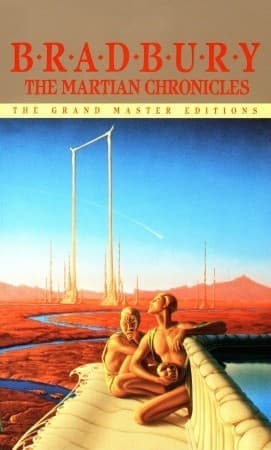
Synopsis
Covers the whole plot, including the ending.
- Difficulty
- Medium
- Pacing
- Variable
- Mood
- Melancholy, Poetic, Thought-provoking, Nostalgic
- Read it if
- You enjoy classic science fiction with a poetic, philosophical bent, exploring themes of colonialism, human nature, and environmental impact through a series of interconnected short stories.
- Skip it if
- You prefer a single, continuous narrative with a strong plot arc and character development, or hard science fiction with detailed technological explanations.
The Martian Chronicles Plot Summary
Covers the whole plot, including the ending.
Rocket Summer
In January, the usually cold Ohio weather suddenly becomes warm and spring-like for a few hours. This unusual weather is caused by the heat and energy from a rocket launching from Earth, likely heading to Mars. The brief, surprising summer delights the townspeople, who go outside to enjoy the unexpected warmth and marvel at the strange event. The scene sets a dreamlike tone for human space travel, suggesting the big changes it will bring, both to Earth and beyond, as humanity reaches for the stars.
Ylla
Ylla, a Martian woman, has vivid, telepathic dreams of two Earth astronauts, Nathaniel York and his companion, arriving on Mars. Her dreams are very detailed, showing their appearance, their rocket, and their songs, which she finds beautiful. Her husband, Yll, becomes increasingly suspicious and jealous of these dreams, sensing a threat to their traditional Martian life and his marriage. Despite Ylla's claims that they are only dreams, Yll, a practical and possessive Martian, takes his ancient, green weapon and goes hunting. He returns later, having shot down the arriving Earth rocket and killed the astronauts, including Nathaniel York, before they could make contact. This prevents Ylla's imagined romance and protects his Martian way of life.
The Earth Men
Captain Williams and his three-man crew arrive on Mars, expecting to be celebrated as explorers. However, the Martians they meet, including Mr. K and Mrs. K (who resemble Yll and Ylla from the previous story), see them as hallucinations or mentally ill people. Because of their telepathic abilities, Martians often project their own thoughts and desires onto others, leading them to believe the Earthmen are just products of their imagination or escaped patients from a mental institution. The Martians see Williams and his crew as a manifestation of their repressed desires, like clowns or beloved dead relatives. Eventually, the Martians, unable to understand their perceived delusions, place the entire Earth expedition in a Martian asylum, treating them as harmless but delusional patients. The Martians, in their mistaken diagnosis, kill the crew.
The Third Expedition
Captain John Black and his crew land on Mars and find a perfectly rebuilt, ideal American town from their own past. They are greeted by long-lost relatives and friends who look exactly as they did on Earth, seemingly alive and well. The crew is filled with joy and nostalgia, believing they have somehow returned to Earth or found a miraculous paradise. However, this is a telepathic trap set by the Martians. The Martians, sensing the Earthmen's deep loneliness and desire for home, create these perfect illusions. Each crew member is led to a house where their 'family' waits. In the middle of the night, the Martian 'relatives' return to their true forms and kill the unsuspecting Earthmen, burying them in the Martian soil. Captain Black realizes the deception too late, as he is killed by his 'brother' and 'parents,' becoming another victim of Mars's subtle yet deadly resistance to colonization.
And the Moon Be Still As Bright
Captain Wilder leads the fourth expedition, which includes the cynical archaeologist Spender and the practical Biggs. Spender quickly becomes fascinated with Martian culture, its cities, and its philosophy, feeling a strong connection to the dying civilization. He begins to reject his human identity and adopt the Martian way of life, becoming increasingly critical of his crew's destructive and disrespectful attitudes toward Martian artifacts. After a tense argument, Spender kills several crew members, including Biggs, to protect the remaining Martian cities from further damage. Wilder, understanding Spender's reasons but bound by duty, eventually confronts and kills Spender. Before his death, Spender asks Wilder to protect Mars, urging him to wait fifty years before allowing more colonization, a request that weighs heavily on Wilder.
The Green Morning
Benjamin Driscoll, a quiet and somewhat frail settler, arrives on Mars with a deep sense of loneliness and a desire to make a lasting mark. He is bothered by Mars's barren, red landscape and longs for Earth's greenness. Driven by this longing and a desire to fight the pervasive loneliness, Driscoll takes on a huge task: he begins planting millions of tree seeds across the Martian landscape. He works tirelessly, enduring the harsh conditions and the skepticism of others. One morning, after a night of heavy rain, Driscoll wakes to a surprising sight: the entire Martian landscape has transformed overnight into a green, oxygen-rich forest. The trees have grown to maturity in a single night, fundamentally changing the Martian environment and making it more hospitable for human life, showing one man's will and nature's power.
The Locusts
After successful terraforming and the elimination of the Martian population (mainly due to chickenpox brought by earlier expeditions), humanity begins a massive, uncontrolled colonization of Mars. Rockets arrive constantly, like a swarm of locusts landing on new ground. Thousands of people pour onto the planet, quickly building towns and cities that imitate those they left behind on Earth. They bring their culture, architecture, flaws, and dreams, rapidly turning Mars into a copy of Earth. The Martians are gone, and their ancient cities are ignored, repurposed, or destroyed to make way for human expansion. This chapter shows the relentless, almost thoughtless, nature of human expansion and colonization, emphasizing Mars's rapid and profound change into a 'second Earth,' without its original inhabitants and unique character.
Night Meeting
Tomas Gomez, an Earthman driving his truck through the Martian desert, stops for the night. He meets Muhe Ca, a Martian, seemingly from a different era, riding a sand ship. They both see each other, but each perceives the other as a ghostly, translucent figure. They try to communicate, describing their worlds and cultures, but their realities do not align. Gomez sees a dead Martian city, while Muhe Ca sees a vibrant, living Martian civilization. Each believes the other is a spectral illusion, a remnant of a past era. They part ways with a sense of wonder and confusion, realizing they are experiencing different timelines or dimensions of Mars simultaneously. The encounter highlights the theme of perception, the impermanence of existence, and the sad irony of two intelligent species occupying the same space but at different points in time.
Usher II
William Stendahl, a rich and unusual literary enthusiast, has fled Earth because of its harsh censorship and book-burning policies. On Mars, he carefully builds a replica of the House of Usher from Edgar Allan Poe's story, complete with robots, elaborate traps, and strange illusions. He invites Mr. Garrett, a government censor from Earth, and other officials to his mansion, claiming it shows the power of imagination. Stendahl's true goal is revenge. He systematically lures his guests into various grim scenarios, like classic horror literature, ultimately leading them to their deaths within the house's elaborate mechanisms. The mansion then sinks into a corrosive Martian sea, taking Stendahl and his robots with it, a final, dramatic act of defiance against censorship and a celebration of forbidden art.
There Will Come Soft Rains
In 2026, a fully automated, advanced house in Allendale, California, continues its daily routine, preparing meals, announcing the time, and doing chores. The house is clean but eerily empty. The story slowly reveals that its human residents – a family – were incinerated in a nuclear blast, leaving only their silhouettes burned onto the exterior wall. The house, unaware of the apocalypse, continues to function, serving phantom meals and announcing appointments to non-existent people. A family dog, thin and dying, briefly enters the house before dying from radiation sickness. The story ends with a fire, caused by a falling tree branch, that slowly consumes the house, which frantically tries to save itself. The house's final, desperate efforts to survive, next to humanity's complete absence, show the fragility of human civilization and the indifference of nature and technology.
The Million Year Picnic
William Thomas, along with his wife and three sons, escapes a nuclear war on Earth by flying their private rocket to Mars. They settle by a Martian canal, bringing only essential supplies and a few personal items. William tells his children that they are not on a picnic, but are permanently moving to Mars to escape Earth's destruction and start a new, better civilization. He destroys their rocket, symbolizing a complete break from their past. The next morning, William tells his sons they will see the 'Martians.' He takes them to the canal, where they see their own reflections in the water. This moment means they are the new Martians, tasked with preserving humanity's best qualities and building a new future on the red planet, free from the mistakes of their ancestors.
The Martian Chronicles Characters
Ylla
Supporting
A Martian woman who dreams of Earthmen.
Ylla is a sensitive and imaginative Martian woman, initially depicted as content but subtly longing for something more. Her telepathic abilities allow her to dream vividly of the arriving Earth astronauts, particularly Nathaniel York, finding their alien presence and songs captivating. She represents the initial, almost innocent, encounter between Martians and humans, and her dreams highlight the profound cultural clash and the danger that humanity poses to Martian life. Her yearning for the 'other' ultimately leads to her tragic isolation and the death of the first expedition.
Relationships: Yll (Husband, jealous and protective.); Nathaniel York (Object of her telepathic dreams and nascent romantic interest.)
Yll
Supporting
Ylla's traditional and possessive Martian husband.
Yll is a pragmatic and deeply traditional Martian, representing the resistance of Martian culture to external influence. He is initially dismissive of Ylla's dreams but grows increasingly suspicious and jealous as her visions of Earthmen become more frequent and detailed. His actions are driven by a desire to protect his marriage, his family, and the established Martian way of life from what he perceives as a dangerous, intrusive foreign element. His decisive, violent act of shooting down the first rocket establishes the Martians' initial, fatal response to human invasion.
Relationships: Ylla (Wife, whose dreams he perceives as a threat.)
Captain John Black
Supporting
Leader of the third expedition, lured to his death by Martian illusions.
Captain John Black is a seasoned space explorer, initially confident and perhaps a bit arrogant about humanity's ability to conquer Mars. He represents the typical Earthman's perspective: driven by curiosity and a desire for expansion, but ultimately vulnerable to his own deepest emotional needs. His experience on Mars, where he encounters a seemingly perfect recreation of his hometown and family, exposes his profound loneliness and longing for home. He is intelligent enough to eventually question the illusion, but too late to save himself or his crew, making him a tragic figure who succumbs to the Martians' most insidious trap.
Captain Wilder
Protagonist
Leader of the fourth expedition, a thoughtful and conflicted explorer.
Captain Wilder is a more nuanced and introspective explorer than his predecessors. He leads the fourth expedition and is characterized by a blend of duty and a growing respect for Martian culture. He struggles with the destructive impulses of his crew, particularly Biggs, and develops a reluctant understanding, if not agreement, with Spender's radical views. Wilder is forced to make difficult moral choices, ultimately killing Spender but internalizing his message about preserving Mars. He represents a potential bridge between human ambition and cultural sensitivity, though his efforts are ultimately overwhelmed by the tide of colonization.
Relationships: Spender (Crew member, intellectual adversary, and ultimately a moral influence.); Biggs (Crew member, antagonist to Spender, representing humanity's destructive impulses.)
Spender
Antagonist/Supporting
An archaeologist who betrays his crew to protect Martian culture.
Spender is an archaeologist on the fourth expedition who becomes deeply disillusioned with humanity's destructive approach to Mars. He rapidly identifies with the Martians, learning their language and understanding their philosophy, becoming a passionate advocate for their dying culture. His actions, which include murdering his crewmates, are extreme but driven by a profound moral conviction to preserve what he sees as beautiful and sacred from human desecration. Spender embodies the internal conflict within humanity regarding colonization – the desire to explore versus the imperative to respect and preserve indigenous cultures. He acts as a tragic hero, sacrificing himself for a lost cause.
Relationships: Captain Wilder (Commander and eventual executioner, but also a reluctant confidant.); Biggs (Crew member, whom Spender kills for his disrespectful behavior.)
Benjamin Driscoll
Supporting
A lonely settler who single-handedly terraforms Mars with trees.
Benjamin Driscoll is a quiet, unassuming settler on Mars, marked by a deep sense of loneliness and a longing for the familiar greenery of Earth. He is not a soldier or a leader, but an ordinary man driven by an extraordinary desire to make Mars more habitable and beautiful. His act of planting millions of tree seeds is a solitary, almost spiritual endeavor, reflecting humanity's capacity for creation and hope amidst the desolation of a new world. He represents the constructive, life-affirming aspect of human colonization, providing a stark contrast to the destructive tendencies seen elsewhere.
Tomas Gomez
Supporting
An Earthman settler who has a surreal encounter with a Martian.
Tomas Gomez is an ordinary Earthman settler on Mars, driving a truck and navigating the new landscape. He represents the common colonist, trying to make a life on the red planet. His encounter with Muhe Ca is a moment of profound wonder and confusion, challenging his perceptions of reality and time. He is open to the strange experience, attempting to communicate and understand, but ultimately leaves with more questions than answers. Gomez embodies the human capacity for awe and the limitations of understanding when faced with truly alien concepts.
Relationships: Muhe Ca (A Martian he encounters, both perceiving the other as a ghost.)
William Stendahl
Antagonist
A wealthy literary enthusiast who builds a deadly 'House of Usher' on Mars.
William Stendahl is a wealthy, eccentric, and vengeful man who has fled Earth's oppressive censorship. He is a passionate advocate for literature and imagination, particularly the horror genre. On Mars, he uses his immense resources to create a macabre, living tribute to forbidden books, specifically Edgar Allan Poe's 'The Fall of the House of Usher.' His actions are driven by a deep-seated anger against the censors who destroyed his cherished books. Stendahl represents the rebellion against intellectual oppression and the dangerous consequences of unchecked artistic passion, turning his creativity into a tool for elaborate, deadly revenge.
Relationships: Mr. Garrett (A government censor from Earth, targeted for Stendahl's revenge.)
William Thomas
Protagonist
A father who leads his family to Mars to escape Earth's nuclear war.
William Thomas is a decisive and protective father who takes the ultimate step to save his family from Earth's impending nuclear destruction. He represents humanity's capacity for survival and the hope for a fresh start. His actions are driven by a deep love for his children and a desire to build a better, more peaceful future, free from the mistakes of the past. By destroying their rocket and declaring his family the 'new Martians,' he makes a powerful statement about breaking cycles of destruction and embracing a new identity and responsibility.
Relationships: His wife (Partner in his escape and new life on Mars.); His three sons (Children whom he guides to a new future.)
The Martian Chronicles Themes
The Dangers of Human Colonization and Imperialism
Bradbury often criticizes humanity's colonizing impulse, showing it as destructive and often thoughtless. The first expeditions to Mars are met with Martian hostility, not from malice, but self-preservation, as seen in 'Ylla' where Yll kills the astronauts to protect his wife and culture. Later, human diseases like chickenpox destroy the Martians, making way for uncontrolled expansion in 'The Locusts,' where Earthmen quickly replicate their own flawed societies on the untouched Martian landscape. The destruction of Martian cities and artifacts, as Spender protests in 'And the Moon Be Still As Bright,' further highlights the disregard for native culture and history, framing human expansion as a type of cultural imperialism.
“The Martians were dead. They had died from the chicken pox and the measles which the First Expedition had brought over, and which, because of the Martians' lack of immunity, had swept through the native population like a firestorm.”
Nostalgia and the Irresistibility of Home
A strong theme is humanity's deep longing for home and the comfort of the familiar. This is most clearly shown in 'The Third Expedition,' where Martians use the astronauts' deep loneliness by creating perfect, illusionary copies of their hometowns and dead loved ones. The crew, overcome by nostalgia, willingly walks into their deaths. Even later, as Mars is colonized, humans immediately recreate Earth-like towns and social structures, showing a reluctance to truly adapt to or appreciate the alien world. The weight of Earth's memory is a constant pull, making it hard for humans to truly embrace a new future without recreating the past.
“The Earthmen stared. The town was not Martian. It was an American small town, with a drug store and a movie theatre and a grocery store.”
The Fragility and Resilience of Life and Civilization
The chronicles explore both how easily civilizations can be destroyed and the persistent drive to create anew. The Martian civilization, old and wise, is easily wiped out by Earth diseases, showing its fragility against an unforeseen biological weapon. Conversely, Earth itself faces nuclear annihilation, leading to its own end in 'There Will Come Soft Rains' and prompting the desperate escape of families like the Thomases in 'The Million Year Picnic.' Yet, even with such devastation, the urge to survive and build anew is strong. Benjamin Driscoll's act of planting trees in 'The Green Morning' transforms Mars overnight, symbolizing life's powerful resilience, and the Thomas family's decision to become the 'new Martians' offers a hopeful, though cautious, vision of humanity's ability to learn and rebuild.
“There will come soft rains and the smell of the ground, / And swallows circling with their shimmering sound; / And frogs in the pools singing at night, / And trees just over the fence, but out of sight.”
The Nature of Perception and Reality
Bradbury often blurs the lines between reality, illusion, and dream, especially through the Martians' telepathic abilities. In 'Ylla,' the Martian woman's dreams are so vivid they predict Earth's arrival. In 'The Earth Men,' Martians mistake the astronauts for lunatics or hallucinations, unable to see them as truly alien beings. The most striking example is 'Night Meeting,' where an Earthman and a Martian meet, each seeing the other as a translucent ghost from a different time, showing how individual perception shapes reality. This theme suggests that reality is subjective and that true understanding between different beings, or even within the same species, is very difficult, often leading to misunderstanding and tragedy.
“I see you, but you're like a ghost. I can almost see through you.”
The Power and Peril of Technology
Technology is a mixed blessing throughout the chronicles. Rockets allow humanity to reach Mars, offering escape and new beginnings, as seen with the Thomas family. However, the same technology is used for destructive purposes, bringing disease and allowing uncontrolled colonization. More subtly, the advanced, self-sufficient house in 'There Will Come Soft Rains' shows technology's ability for detailed service, yet its continued operation after human extinction highlights its ultimate indifference and the ironic futility when its creators are gone. In 'Usher II,' technology is used by Stendahl to carry out a vengeful, elaborate form of justice against censorship, showing its potential for both creative and destructive use, depending on human intent.
“The house was an altar with ten thousand attendants, big and small, for the gods who had gone away.”
Plot Devices & Literary Techniques
Telepathy and Illusion
Martian ability to project thoughts and create convincing realities.
The Martians' telepathic abilities are a central plot device, driving much of the early conflict and misunderstanding. They allow Martians to perceive Earthmen as hallucinations ('The Earth Men') or to create elaborate, irresistible illusions that exploit human longing ('The Third Expedition'). This device not only serves as a defense mechanism for the Martians but also highlights the subjective nature of reality and the profound differences in perception between species. It allows Bradbury to explore themes of psychological manipulation and the power of the mind, making the Martian threat less about physical force and more about mental vulnerability.
The Journey/Expedition Motif
Repeated human voyages to Mars, each with distinct outcomes.
The structure of the book relies heavily on the motif of repeated expeditions to Mars. Each journey serves as a distinct narrative unit, illustrating different facets of human ambition, folly, and adaptation. The first expeditions meet with misunderstanding and death, establishing Mars as a dangerous, alien world. Subsequent waves of colonization show the systematic transformation of Mars. This episodic structure, centered around the journeys, allows Bradbury to cover vast stretches of time and numerous character perspectives, painting a comprehensive picture of the human-Martian encounter from initial contact to eventual human settlement and beyond.
The Apocalypse (on Earth)
Nuclear war on Earth as a catalyst for human migration to Mars.
The impending and eventual nuclear destruction of Earth serves as a crucial plot device, shifting the motivation for human presence on Mars from exploration and conquest to desperate survival. This global catastrophe provides a powerful external force that drives the later narratives, explaining the mass exodus ('The Locusts') and the ultimate hope for a new beginning for families like the Thomases ('The Million Year Picnic'). It also provides a stark contrast to humanity's destructive tendencies on Mars, implying that humanity carries its self-destructive nature with it, but also offers a chance for redemption on a new world.
Environmental Transformation
The changing physical landscape of Mars due to human intervention.
The transformation of Mars's environment is a significant plot device that mirrors humanity's impact. Initially a barren, red world, Mars is gradually altered by human presence. Benjamin Driscoll's tree-planting in 'The Green Morning' is a miraculous act of terraforming, making the planet breathable and lush. This physical change reflects humanity's capacity for both creation and destruction. The subsequent paving over of Martian canals and the construction of Earth-like towns ('The Locusts') demonstrate a complete disregard for the original environment, highlighting the theme of human imposition and the loss of Martian identity.
The Martian Chronicles Quotes
“It was a lovely evening. The two rockets stood in the night, their metal gleaming under the light of a single, immense moon.”
“The wind came up, a dry, hot wind that whispered of ages and dust and the ghosts of a billion forgotten things.”
“They were leaving the Earth to make a new life, and they were taking with them all the old failures, the old prejudices, the old hatreds.”
“The Martians, when they did appear, seemed to be made of crystal and light.”
“You can't erase a planet. You can't just take it away. It's always there, in the back of your mind.”
“Science has not yet taught us if madness is to be the end of all or if all is to be the end of madness.”
“An entire world, a Martian world, had been destroyed by men who had come to save it.”
“We've got to clean up this old planet, make it look like something. You can't just leave it lying around like a dirty shirt.”
“They built their cities of crystal and their machines of song.”
“And the rockets were gone, and the cities were gone, and the men were gone, and the wind blew over the ruins.”
“War. It was always war. A final, absolute, and total war.”
“And the children looked at their reflections in the canal water, and they were Martians.”
“There was a smell of rain and green things growing in the air, a smell of Earth.”
Quiz
10 questions on the plot and the characters. Each answer comes with a short explanation.
Question 1
In the story 'Ylla', what is the Martian woman Ylla's husband's name?
- Pao
- K
- Mu
- X
Show answer
B. K Ylla's husband is named K. He grows increasingly suspicious of her dreams about the Earthmen.
Question 2
What is the primary reason the Martian Martians initially perceive the first Earth explorers as 'lunatics'?
- The Martians cannot understand human language.
- The Earthmen's appearance is too grotesque for them.
- The Martians believe the Earthmen are manifestations of their own thoughts or hallucinations.
- The Earthmen immediately try to attack the Martians upon arrival.
Show answer
C. The Martians believe the Earthmen are manifestations of their own thoughts or hallucinations. In 'The Earth Men', the Martians' telepathic and empathetic nature leads them to believe the humans are merely products of their own minds or delusions, rather than distinct beings.
Question 3
Which story features a character who attempts to plant trees across Mars to make the planet more Earth-like?
- The Settlers
- The Green Morning
- The Locusts
- Night Meeting
Show answer
B. The Green Morning 'The Green Morning' focuses on Benjamin Driscoll, who, despite his lung condition, dedicates himself to planting trees across the Martian landscape, transforming it overnight.
Question 4
What is the central theme explored in the story 'Usher II'?
- The dangers of unchecked technological advancement.
- The importance of preserving artistic freedom and imagination against censorship.
- The futility of trying to escape one's past.
- The inevitable clash between different cultures.
Show answer
B. The importance of preserving artistic freedom and imagination against censorship. 'Usher II' is a direct critique of censorship and book burning, as William Stendahl builds a house inspired by Edgar Allan Poe's 'The Fall of the House of Usher' to spite the Society for the Prevention of Fantasy.
Question 5
What event causes the mass exodus of humans from Mars back to Earth in 'The Watchers' and subsequent stories?
- A new Martian plague targeting humans.
- The outbreak of nuclear war on Earth.
- A severe resource shortage on Mars.
- The discovery of a more habitable planet.
Show answer
B. The outbreak of nuclear war on Earth. The threat and eventual outbreak of atomic war on Earth prompts nearly all human colonists to abandon Mars and return to their home planet.
Question 6
In 'There Will Come Soft Rains', what is the fate of the house and its inhabitants?
- The family successfully evacuates before a nuclear blast, but the house is destroyed.
- The family perishes in a nuclear blast, and the automated house continues its daily routines until it is destroyed by fire.
- The house is abandoned, and Martians eventually take it over.
- The house and family survive, illustrating humanity's resilience.
Show answer
B. The family perishes in a nuclear blast, and the automated house continues its daily routines until it is destroyed by fire. The family is gone, reduced to silhouettes on the exterior walls, while their automated house continues its programmed existence until a tree branch falls, igniting a fire that consumes it.
Question 7
What philosophical concept is explored through the interaction between Tomás Gomez and the old Martian in 'Night Meeting'?
- The inevitability of conflict between different species.
- The subjective nature of reality and perception across cultures.
- The superiority of one civilization over another.
- The desire for universal peace and understanding.
Show answer
B. The subjective nature of reality and perception across cultures. Tomás Gomez and the Martian perceive each other as ghosts, unable to fully grasp each other's 'physical' reality, highlighting how different perspectives shape what is considered real.
Question 8
In 'The Third Expedition', how do the Martians successfully deal with the arriving Earth explorers?
- They use advanced weaponry to destroy the rocket.
- They create illusions of the explorers' deceased loved ones to lure and kill them.
- They imprison the explorers in an inescapable fortress.
- They communicate telepathically and convince the explorers to leave.
Show answer
B. They create illusions of the explorers' deceased loved ones to lure and kill them. The Martians, using their telepathic abilities, manifest the explorers' dead relatives and friends, drawing them into a trap where they are ultimately killed and buried.
Question 9
What is the ultimate irony presented in 'The Million Year Picnic'?
- The family discovers that Earth was not destroyed after all.
- The 'new Martians' are actually the surviving human family, who have become the indigenous inhabitants of the planet.
- They find ancient Martian technology that could have saved Earth.
- The family is eventually found and returned to a rebuilt Earth.
Show answer
B. The 'new Martians' are actually the surviving human family, who have become the indigenous inhabitants of the planet. The story concludes with the father showing his children their reflections in the water, declaring them the 'new Martians,' signifying humanity's fresh start as the native inhabitants of Mars after Earth's destruction.
Question 10
The collection 'The Martian Chronicles' serves as an allegory for what historical human tendency?
- The exploration and scientific advancement of new frontiers.
- The destructive nature of colonialism, prejudice, and humanity's inability to learn from its mistakes.
- The inherent goodness of humanity when faced with new challenges.
- The inevitable triumph of technology over nature.
Show answer
B. The destructive nature of colonialism, prejudice, and humanity's inability to learn from its mistakes. Bradbury uses the Martian colonization as a mirror to reflect historical patterns of human colonization, the destruction of indigenous cultures, environmental neglect, and the carrying of Earth's vices to new worlds.
The Martian Chronicles FAQ
What is the overarching premise of 'The Martian Chronicles'?
The book chronicles humanity's repeated attempts to colonize Mars, depicting the initial awe and wonder, the subsequent destruction of Martian civilization, and the eventual self-destruction of Earth, leading to a new beginning for the human survivors on Mars.
How do the native Martians initially react to the human expeditions?
The Martians, particularly in stories like 'Ylla' and 'The Earth Men,' perceive the early human arrivals as hallucinations, dreams, or even lunatics, often attempting to dismiss or contain them through their telepathic abilities rather than engaging in direct conflict.
What major event on Earth drives the later waves of human migration to Mars?
A devastating atomic war on Earth, hinted at throughout the latter half of the book and culminating in stories like 'There Will Come Soft Rains' and 'The Million Year Picnic,' compels the remaining humans to flee to Mars, abandoning their dying home planet.
What is the significance of the 'Great Loneliness' mentioned in the early stories?
The 'Great Loneliness' describes the profound existential despair and homesickness experienced by early human colonists as they watched Earth shrink into the distance, a psychological affliction that often led to madness or death, highlighting the emotional toll of space travel.
How does the story 'Usher II' reflect a critique of censorship and puritanism?
'Usher II' features William Stendahl, who builds a house based on Edgar Allan Poe's 'The Fall of the House of Usher' on Mars, recreating forbidden literature and art after Earth's puritanical 'Moral Climate' had outlawed them, ultimately destroying it in a fiery act of defiance against censorship.
What hidden connection exists between the Martians and human desires/fears?
The Martians, with their telepathic and shape-shifting abilities, often manifest the deepest desires or fears of the human colonists, as seen when they appear as deceased loved ones or familiar figures to lure or confuse the Earthmen, blurring the lines between reality and illusion.
How does the 'Third Expedition' differ from previous attempts, and what is its fate?
The 'Third Expedition,' led by Captain John Black, is unique because its crew is entirely taken in by Martian telepathy, each member encountering their deceased loved ones and familiar hometown scenes. They are ultimately murdered by the Martians who have taken on these forms, effectively eliminating the threat of further colonization.
What is the subtle implication of the Martian's 'caged flowers and birds of flame'?
These poetic descriptions suggest the Martians' inherent connection to and mastery over their environment, indicating a civilization deeply integrated with its planet's unique flora and fauna, which contrasts sharply with humanity's destructive approach.
How does the theme of nostalgia and the past manifest in the human characters?
Many human characters, like Ylla's husband in 'Ylla' or the settlers in 'The Long Years,' cling to memories and artifacts from Earth, struggling to adapt to a new world. This nostalgia often manifests as a resistance to change or a longing for a lost comfort, hindering true integration with Mars.
What psychological impact does the 'emptiness' of Mars have on the colonists?
The vast, ancient emptiness of Mars, devoid of familiar Earthly sounds and life, contributes to feelings of isolation and alienation among the colonists, exacerbating the 'Great Loneliness' and forcing them to confront their own insignificance in the cosmic scale.
How do the Martians' telepathic abilities influence human perception and sanity?
The Martians' telepathy frequently blurs the line between reality and illusion for humans, causing confusion, paranoia, and even madness. It forces characters to question what is real and what is a projection of their own minds or the Martians' will, as seen in 'The Earth Men' and 'The Third Expedition.'
In what ways do human prejudices and fears from Earth resurface on Mars?
Humans bring their racial prejudices, fears, and cultural biases to Mars, attempting to recreate familiar societal structures and divisions. This is evident in stories where characters like the Martians are treated as inferior or where Earthly conflicts are mirrored on the new planet, preventing a fresh start.
Is the ending of 'The Martian Chronicles' ultimately pessimistic or optimistic?
The ending, particularly 'The Million Year Picnic,' can be interpreted as cautiously optimistic. While Earth is destroyed by atomic war, the surviving human families on Mars find a new beginning, becoming the 'new Martians' and suggesting a cyclical nature of life, destruction, and rebirth, free from past mistakes.
How does the book critique human colonialism and expansionism?
The book strongly critiques human colonialism by showing how Earthlings, driven by ambition and greed, destroy the ancient Martian civilization, pollute the environment, and bring their destructive tendencies with them, ultimately leading to their own downfall and the loss of a unique culture.
What is the symbolic significance of the Martian ruins and their eventual fate?
The Martian ruins symbolize the fragility of civilization and the impermanence of even ancient cultures. Their destruction by human hands, and eventual re-habitation or neglect, highlights humanity's disregard for history and heritage, and the replacement of one civilization with another, often less advanced one.
How does 'There Will Come Soft Rains' function as a standalone yet integral part of the narrative?
'There Will Come Soft Rains' is a chilling vignette depicting an automated house continuing its routine after its inhabitants have been vaporized by atomic war. It serves as a stark, powerful testament to Earth's destruction, justifying the final human exodus to Mars and highlighting the futility of human conflict.
To what extent do the Martians represent an idealized, albeit doomed, civilization?
The Martians are often portrayed as an idealized civilization, living in harmony with their environment, possessing advanced telepathy, and valuing art and contemplation. Their downfall at the hands of the more primitive, aggressive humans serves as a tragic commentary on the destructive nature of unchecked human ambition and a lost potential for coexistence.
What is the ultimate lesson or warning Bradbury conveys through 'The Martian Chronicles'?
Bradbury conveys a warning about humanity's destructive tendencies, its inability to learn from past mistakes, and the dangers of unchecked technological advancement without moral guidance. He also offers a glimmer of hope for redemption and a fresh start, if humanity can embrace a new identity and respect for its environment, as seen in the final stories.
About the author
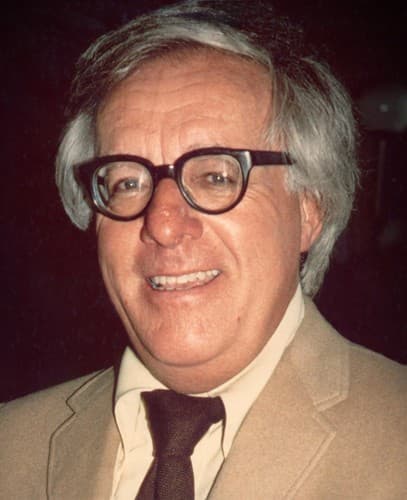
Ray Douglas Bradbury was an American author and screenwriter. One of the most celebrated 20th-century American writers, he worked in a variety of modes, including fantasy, science fiction, horror, mystery, and realistic fiction.
Similar books
- Dandelion Wine
Ray Bradbury
4.1 (57k) average on GoodreadsFantasyShares Bradbury's lyrical prose and nostalgic tone, focusing on human experiences in a specific setting.
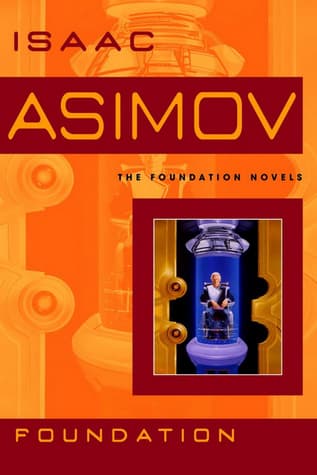
- Foundation
Isaac Asimov
4.0 (11k) average on GoodreadsFantasyExplores the rise and fall of civilizations across vast stretches of time, though with a different narrative structure.
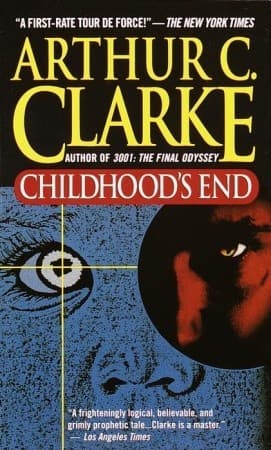
- Childhood's End
Arthur C. Clarke
4.1 (130k) average on GoodreadsFantasyChildhood's End explores humanity's future and encounters with superior alien intelligence but takes a more grand-scale, abstract approach to species evolution and cosmic destiny, contrasting with Bradbury's more intimate and human-centric tragedy of colonial destruction.
- Stranger in a Strange Land
Robert A. Heinlein
3.9 (275k) average on GoodreadsFantasyStranger in a Strange Land also examines cultural clashes and societal critique through an alien lens, but employs a more direct, satirical, and often didactic narrative style, differing from Bradbury's more elegiac and implicitly critical tone and poetic prose.
- Harry Potter and the Sorcerer's Stone
J.K. Rowling
4.5 (7M) average on GoodreadsFantasyRescued from a miserable life under the stairs, an orphaned boy discovers he's a wizard destined for a magical school, where he uncovers a dangerous secret tied to the dark wizard who murdered his parents.
- The Hunger Games
Suzanne Collins
4.3 (6.4M) average on GoodreadsFantasyIn a future where children fight to the death on live television, Katniss Everdeen volunteers for the arena, turning a death sentence into a fight for survival and a spark of rebellion.



Enjoyed the summary?
A summary gives you the shape of the book. The book itself has the detail, the examples and the voice.
Find The Martian Chronicles on AmazonAs an Amazon Associate, BookBrief earns from qualifying purchases. How we're funded