

Synopsis
Covers the whole plot, including the ending.
- Difficulty
- Medium
- Pacing
- Moderate
- Mood
- Philosophical, Melancholy, Awe-inspiring, Contemplative
- Read it if
- You enjoy thought-provoking, philosophical science fiction exploring humanity's ultimate destiny and the potential for a post-human future.
- Skip it if
- You prefer character-driven narratives, fast-paced action, or stories with clear-cut heroes and villains.
Childhood's End Plot Summary
Covers the whole plot, including the ending.
The Arrival of the Overlords
In the mid-20th century, humanity is on the brink of nuclear war. Suddenly, vast, silent alien spaceships, belonging to a race dubbed the 'Overlords,' appear hovering over every major city. They do not communicate directly for fifty years, only observing. Their initial actions are subtle, preventing a nuclear conflict by disabling all weapons, thereby forcing humanity into a unified, peaceful existence. This intervention, though initially met with fear and resistance, particularly from figures like Rupert Boyce, eventually brings an era of unprecedented peace, prosperity, and technological advancement, ending poverty and war. The Overlords remain unseen, communicating only through their enigmatic envoy, Karellen, who speaks to the UN Secretary-General, Stormgren.
Karellen's Guidance and the Golden Age
After fifty years of observation, the Overlords, through Karellen, begin to actively guide humanity. They enforce a global government, eliminate all forms of warfare, and provide advanced technology that eradicates poverty and disease. This period, known as the Golden Age, sees humanity achieve a utopian society, free from the struggles that once plagued it. However, a sense of stagnation begins to settle in; with no challenges to overcome, human creativity and ambition wane. Stormgren, as the UN Secretary-General, becomes Karellen's primary contact, often questioning the Overlords' motives and their continued concealment, sensing a deeper, unrevealed purpose behind their benevolence.
The Revelation of the Overlords' Appearance
After seventy years of hidden presence, Karellen finally agrees to reveal the Overlords' physical form. The revelation is shocking: they resemble the traditional Western depiction of the Devil, complete with horns, leathery wings, and a tail. This physical appearance deeply disturbs humanity, particularly religious individuals, leading to widespread psychological impact and the breakdown of many traditional beliefs. Despite their terrifying appearance, Karellen reassures humanity that they are not malevolent, explaining that their form is purely coincidental to human mythology and that their intentions remain benevolent. This reveal, however, solidifies a sense of unease and mystery about their true nature and long-term plans.
The Rise of the New Athens
As the Golden Age progresses, a faction of humanity, feeling stifled by the Overlords' enforced utopia and the decline of creative arts, establishes a commune called 'New Athens' on an island. Led by figures like George Greggson and Jean Morrel, this community aims to preserve and cultivate human creativity, art, and intellectual pursuits, believing that the Overlords' perfect society has inadvertently stripped humanity of its drive. They reject the Overlords' technological advancements, opting for a simpler, self-sufficient life focused on artistic expression and philosophical debate, hoping to find purpose beyond the imposed peace.
The Children's Peculiar Evolution
The children born in the Golden Age, starting with Jennifer Greggson, George and Jean's daughter, begin to display extraordinary psychic abilities. They experience powerful telepathy, telekinesis, and precognition, often in their sleep. These powers manifest as vivid dreams and uncontrolled physical phenomena. The Overlords, through Karellen, reveal that this is the true purpose of their long stewardship: to facilitate humanity's transition into the next stage of evolution, a collective consciousness, a process they themselves cannot undergo. The children, exhibiting these powers, are essentially the harbingers of this transformation, becoming increasingly detached from their parents and the physical world.
The Separation and the Great Divide
As the children's powers intensify, they become more unified and less individual. The Overlords, recognizing the danger and the necessity of this transition, establish facilities where all children under a certain age are gathered. They are no longer capable of normal human interaction, their minds merging into a collective consciousness. Parents, including George and Jean, are devastated by this forced separation, watching their children become something entirely alien. Humanity divides into two distinct groups: the evolving children and the remaining adults, who are left to contemplate their impending obsolescence and the end of their species as they know it.
Last Man on Earth: Jan Rodricks' Journey
Jan Rodricks, a bright and ambitious astrophysicist, secretly stows away on an Overlord supply ship, defying their prohibition on space travel. He journeys to their home planet, a world orbiting a binary star system. During his lengthy voyage, he learns about the Overlords' own history and their role as 'supervisors' for a cosmic entity known as the Overmind. Upon his return to Earth, 80 years have passed due to relativistic time dilation. He finds a transformed Earth, now devoid of adult human life, populated only by the evolving children and the Overlord observation post.
The Ascent to the Overmind
The children, now a unified, non-corporeal collective consciousness, begin their final transformation. They shed their physical bodies and merge entirely with the Overmind, a vast cosmic intelligence. Their departure from Earth is marked by a spectacular, ethereal light show, leaving behind an empty planet. This event signifies the end of humanity as a distinct biological species, its consciousness transcending physical form and joining a greater cosmic entity. The Overlords, having fulfilled their ancient mission, remain as observers, their role as midwives to humanity's evolution complete.
The End of Earth
After the children's ascension, Jan Rodricks, the last remaining human, witnesses the complete destruction of Earth. The planet, having served its purpose in nurturing the next stage of consciousness, disintegrates into a cloud of stardust, consumed by the energy released during the children's final merging with the Overmind. Karellen explains to Jan that this is a natural consequence of the process, a final act of transformation and transcendence. Jan, alone and overwhelmed, transmits his final observations to Karellen, marking the absolute end of the human race and its home planet, leaving only the Overlords to continue their cosmic watch.
Principal Figures
Karellen
Supporting
The benevolent, enigmatic leader of the Overlords.
Karellen is the primary envoy of the Overlords, serving as the voice and face of their race to humanity. He is initially unseen, communicating only through recordings, and later reveals a form resembling the Devil. Despite his intimidating appearance, he is patient, wise, and consistently benevolent, acting as a guide and guardian for humanity. He carries the burden of his species' ancient mission, which involves overseeing the evolution of other races into the Overmind. His true feelings are often masked by his stoic demeanor, but he expresses a quiet sadness at the necessary extinction of individual species.
Relationships: Stormgren (Primary diplomatic contact and confidant); Jan Rodricks (Last human contact, provides final explanations)
Stormgren
Protagonist
The UN Secretary-General who first interacts with the Overlords.
Stormgren is the UN Secretary-General at the time of the Overlords' arrival. He is a pragmatic and intelligent leader, tasked with navigating humanity's initial fear and later its acceptance of alien rule. He serves as Karellen's primary human contact for decades, tirelessly questioning the Overlords' motives and struggling to understand their hidden agenda. He represents humanity's initial resistance and its eventual, albeit uneasy, compliance, always striving to protect human autonomy while recognizing the overwhelming power of the Overlords. His curiosity and skepticism drive much of the early narrative.
Relationships: Karellen (Primary diplomatic contact, often adversarial but respectful); Rupert Boyce (Opposing political figure, represents initial human resistance)
George Greggson
Supporting
A human who seeks to preserve creativity in the Golden Age.
George Greggson is an intellectual and one of the founders of New Athens, a commune dedicated to preserving human art and creativity in the face of the Overlords' utopian but creatively stifling Golden Age. He is a thoughtful and somewhat disillusioned man, deeply concerned about humanity's loss of purpose and ambition. He becomes the father of Jennifer, one of the first 'evolved' children, and struggles profoundly with her transformation and eventual separation. He represents humanity's desire for self-determination and the tragic helplessness in the face of an unstoppable evolutionary force.
Relationships: Jean Morrel (Partner and fellow founder of New Athens); Jennifer Greggson (His daughter, who becomes one of the psychic children)
Jean Morrel
Supporting
George's partner and the mother of Jennifer.
Jean Morrel is George Greggson's partner and a key figure in the New Athens community. She shares George's concerns about the decline of human creativity and strives to maintain a sense of purpose and beauty in their lives. Her character highlights the emotional and maternal aspects of humanity's struggle against the Overlords' plans. She is particularly affected by Jennifer's transformation, experiencing the deep pain of losing her child to an incomprehensible evolutionary process. Jean represents the human spirit's resilience and its vulnerability in the face of cosmic forces.
Relationships: George Greggson (Partner and co-founder of New Athens); Jennifer Greggson (Her daughter, whose evolution causes immense pain)
Jennifer Greggson
Supporting
The first child to exhibit psychic powers.
Jennifer Greggson is the daughter of George Greggson and Jean Morrel. She is one of the first children to spontaneously develop profound psychic abilities, including telekinesis and telepathy, marking the beginning of humanity's evolutionary leap. Her character embodies the innocent yet terrifying nature of this transformation. She rapidly loses her individuality and merges with the collective consciousness of other psychic children, becoming a symbol of the new, non-human entity that will replace humanity. Her transformation is a catalyst for the final stages of the Overlords' plan.
Relationships: George Greggson (Her father, who struggles with her transformation); Jean Morrel (Her mother, who experiences profound grief over her loss)
Jan Rodricks
Protagonist
The ambitious astrophysicist who travels to the Overlords' home world.
Jan Rodricks is an intellectually curious and ambitious astrophysicist who chafes under the restrictions of the Overlords' Golden Age. Driven by an insatiable desire for knowledge and a longing for adventure, he secretly stows away on an Overlord supply ship and travels to their home planet. He becomes the last human to witness the final stages of humanity's evolution and the destruction of Earth. Jan embodies humanity's enduring spirit of exploration and inquiry, even in the face of its own extinction. His journey provides the final, crucial perspective on the Overlords' mission and the ultimate fate of humankind.
Relationships: Karellen (Receives final explanations from Karellen); Rachel (A brief, unrequited romantic interest on Earth)
Rupert Boyce
Supporting
A media mogul who initially resists the Overlords.
Rupert Boyce is a powerful media magnate who initially leads the human resistance against the Overlords. He attempts to form a united front against the alien invaders, representing humanity's fierce desire for self-determination and its fear of subjugation. However, his efforts are ultimately futile against the Overlords' overwhelming power and benevolent, yet absolute, control. Boyce embodies the political and societal challenges that humanity faces in adapting to an alien-imposed peace.
Relationships: Stormgren (Political rival and ideological opponent)
Themes & Insights
The Price of Utopia
The novel explores whether a perfect, peaceful society, enforced by an external power, comes at the cost of human creativity, ambition, and individuality. The Overlords eradicate war, poverty, and disease, creating a global utopia. However, this lack of struggle leads to a malaise, where art stagnates, scientific inquiry dwindles, and humanity loses its drive. The creation of New Athens by George and Jean is a direct response to this, an attempt to reclaim a sense of purpose and creative freedom that the 'Golden Age' inadvertently suppressed. The story questions whether true human flourishing requires challenges and the freedom to fail.
“The golden age was over. The human race was no longer master of its own destiny, and for the first time it was content.”
Evolution and Transcendence
Central to the narrative is the concept of humanity's next evolutionary leap, not physical, but psychic. The Overlords act as midwives, guiding humanity towards a collective consciousness that merges with the cosmic Overmind. This theme highlights the idea that individual identity and biological form are transient, mere stepping stones to a higher state of being. The transformation of the children, like Jennifer Greggson, from individual beings to a unified psychic entity, illustrates this radical transcendence, suggesting that humanity's ultimate purpose is to shed its physical limitations and join a greater universal intelligence. It's a bittersweet evolution, as it means the end of humanity as we know it.
“You are the chrysalis, and the children are the butterfly.”
The Alien Other and Fear of the Unknown
The Overlords embody the 'alien other' in its most profound sense. Their initial unseen presence, followed by Karellen's shocking 'devil' appearance, plays on humanity's deepest fears and preconceived notions. Despite their benevolence, their alien nature and unfathomable motives create constant unease and suspicion among humans like Stormgren. This theme explores humanity's struggle to come to terms with a superior intelligence that operates on a completely different moral and existential plane. The Overlords' ultimate purpose, while benevolent from a cosmic perspective, is devastating to individual human identity, highlighting the inherent conflict when vastly different species interact.
“The Overlords had done their work so well that humanity had forgotten how to rebel.”
Loss of Individuality vs. Collective Consciousness
The novel charts the gradual erosion of human individuality in favor of a collective consciousness. Initially, the Overlords' global government unifies humanity, but the true shift occurs with the psychic children. Their minds merge, and they lose their distinct personalities, becoming part of a single, vast entity. This raises questions about the value of individual identity versus the power and potential of a unified, collective mind. While the collective consciousness represents a higher evolutionary state, it comes at the cost of everything that defines individual human experience, love, ambition, and personal connection, as painfully experienced by George and Jean with Jennifer.
“The human race was about to take the ultimate step—the step beyond individuality.”
Plot Devices & Literary Techniques
The Overlords' Hidden Appearance
The delay in revealing the Overlords' physical form creates suspense and symbolic impact.
For seventy years, the Overlords remain unseen, communicating only through voice or projections. This prolonged secrecy builds intense curiosity and apprehension. When Karellen finally reveals their 'devil-like' appearance, it serves as a powerful plot device. It shatters human religious and cultural frameworks, forcing humanity to confront its own preconceived notions of good and evil, and demonstrating the profound alienness of their benefactors. This reveal also highlights the Overlords' careful control over humanity's psychological state, only introducing this shock when humanity is stable enough to endure it.
Relativistic Time Dilation (Jan Rodricks' Journey)
Jan Rodricks' space journey uses time dilation to create a vast temporal gap.
Jan Rodricks' clandestine journey to the Overlords' home world involves traveling at near-light speeds, resulting in significant relativistic time dilation. While he experiences only a few years, eighty years pass on Earth. This device allows the narrative to fast-forward through critical stages of humanity's evolution (the full development of the psychic children and the demise of adult humanity) without directly depicting them. It provides a unique perspective through Jan as the 'last human' to witness the ultimate fate of Earth and his species, emphasizing the cosmic scale of the events.
The Overmind
A cosmic entity serving as the ultimate destination for evolving species.
The Overmind is revealed to be the ultimate goal of humanity's evolution, a vast, collective cosmic consciousness that the Overlords serve. This plot device provides the overarching purpose for the Overlords' actions and gives a grand, almost spiritual, dimension to humanity's transformation. It explains why the Overlords, despite their power, are merely 'supervisors' and cannot evolve further themselves. The Overmind represents the ultimate transcendence and the final, inevitable destination for certain intelligent species, contextualizing humanity's end within a much larger, universal process.
The Golden Age
A period of enforced peace and prosperity that inadvertently leads to stagnation.
The 'Golden Age' is the period when the Overlords eradicate war, poverty, and disease, leading to a utopian society on Earth. This device is crucial for exploring the novel's central theme of the 'price of utopia.' By removing all external challenges, the Overlords inadvertently remove humanity's drive for creativity, ambition, and individual struggle. This stagnation sets the stage for the psychic children's emergence, as humanity's traditional path is rendered obsolete, making way for a new form of existence. It highlights the idea that struggle and challenge are fundamental to human identity and progress.
Childhood's End Quotes
“The only way to avoid being miserable is to make sure you have no free time at all. Then you can't get bored, and you can't get lonely, and you can't get sad.”
“The stars are not for man.”
“Man has always assumed that he is the final step in evolution. He may have to learn that he is merely a stage.”
“Behind every man now alive stand thirty ghosts, for that is the ratio by which the dead outnumber the living. Since the dawn of time, roughly a hundred billion human beings have walked the planet. That is a sobering thought, but one which most of us rarely consider.”
“The golden age was over. The golden age had never been.”
“Ignorance is not bliss. Ignorance is merely ignorance.”
“There was no other life, no other hope, no other purpose. Only the stars, and the endless night.”
“The stars are not for you. They are for the children.”
“A world where man had no enemies but himself was a world that had lost its savour.”
“The mind of man, and the mind of the Overlord, were separated by a gulf that no bridge could span.”
“Perhaps they were not devils, nor angels, but simply beings who had outgrown the need for such distinctions.”
“The human race was about to take the ultimate step. It was about to merge its consciousness with that of the Overmind.”
“There are some things that even the Overlords cannot do. They cannot stop the future.”
“It was the end of man, but the beginning of something else.”
Quiz
10 questions on the plot and the characters. Each answer comes with a short explanation.
Question 1
What is the initial, immediate impact of the Overlords' arrival on Earth, as perceived by humanity?
- Widespread panic and global warfare to resist the invasion.
- A golden age of peace, prosperity, and the end of war and poverty.
- Humanity is immediately enslaved and forced to mine resources.
- The Overlords demand tribute in the form of human sacrifices.
Show answer
B. A golden age of peace, prosperity, and the end of war and poverty. The Overlords' arrival ushered in a 'golden age' for humanity, ending war, poverty, and crime, bringing about unprecedented peace and prosperity.
Question 2
What is the primary reason the Overlords initially conceal their true physical appearance from humanity?
- They are vulnerable to Earth's atmosphere and must remain in their ships.
- Their appearance is too terrifying and would cause mass hysteria and rejection.
- They are shapeshifters and haven't decided on a permanent form yet.
- It is a test of humanity's obedience and patience.
Show answer
B. Their appearance is too terrifying and would cause mass hysteria and rejection. The Overlords, particularly Karellen, reveal that they concealed their appearance because it would have been too shocking and frightening for humanity, resembling traditional depictions of demons.
Question 3
What is the ultimate fate of humanity's children in 'Childhood's End'?
- They are transported to the Overlords' home world for education.
- They evolve into a collective, cosmic consciousness and merge with the Overmind.
- They are left behind on Earth to rebuild civilization after the adults die off.
- They become sterile and the human race eventually dies out without reproduction.
Show answer
B. They evolve into a collective, cosmic consciousness and merge with the Overmind. The children of the final generation lose their individuality and merge into a single, collective consciousness, ultimately joining the Overmind, transcending physical existence.
Question 4
What is the Overlords' true role in the cosmic scheme, as revealed later in the novel?
- They are conquerors seeking to expand their empire across the galaxy.
- They are guardians and midwives for emerging species capable of joining the Overmind.
- They are scientists conducting a grand experiment on humanity's development.
- They are refugees seeking a new home and using Earth as a temporary base.
Show answer
B. They are guardians and midwives for emerging species capable of joining the Overmind. The Overlords reveal they are 'supervisors' or 'midwives' for the Overmind, guiding intelligent species like humanity towards a higher collective consciousness, but are themselves unable to join it.
Question 5
Who is Jan Rodricks, and what is his unique contribution to the story?
- He is the last President of the United States, who attempts to resist the Overlords.
- He is the only human to travel to the Overlords' home world and return to Earth.
- He is the leader of the New Athens colony, attempting to preserve human culture.
- He is the scientist who discovers the children's psychic powers.
Show answer
B. He is the only human to travel to the Overlords' home world and return to Earth. Jan Rodricks stows away on an Overlord ship and journeys to their home world, returning to Earth only to find the human race has already transcended, making him the last surviving individual of the 'old' humanity.
Question 6
What is the 'Overmind' that the Overlords serve and humanity's children eventually join?
- A benevolent artificial intelligence created by the Overlords.
- A vast, cosmic collective intelligence of transcended species.
- The combined consciousness of all Overlords throughout the galaxy.
- A physical entity that resides at the center of the galaxy.
Show answer
B. A vast, cosmic collective intelligence of transcended species. The Overmind is described as a vast, collective consciousness formed from countless transcended species across the cosmos, representing the ultimate evolutionary step for intelligent life.
Question 7
What is the primary theme explored by the 'New Athens' colony in the novel?
- The pursuit of technological advancement for space exploration.
- The attempt to preserve human creativity, art, and individuality in a world of enforced Utopia.
- A religious movement seeking to convert the Overlords to their faith.
- A military resistance movement planning to overthrow the Overlords.
Show answer
B. The attempt to preserve human creativity, art, and individuality in a world of enforced Utopia. New Athens is founded by artists and intellectuals who feel stifled by the Overlords' benevolent rule, seeking to maintain human creativity and individuality in a world that no longer requires striving.
Question 8
What specific physical characteristic of the Overlords' appearance is most striking and causes humanity's initial fear?
- Their immense size, dwarfing human cities.
- Their bat-like wings, horns, and cloven hooves, resembling traditional devils.
- Their glowing, ethereal bodies without distinct features.
- Their metallic, robotic exoskeletons.
Show answer
B. Their bat-like wings, horns, and cloven hooves, resembling traditional devils. When the Overlords finally reveal themselves, their appearance—bat-like wings, horns, and cloven hooves—strongly resembles the common historical depiction of the Devil, causing profound shock and fear.
Question 9
What is the primary reason the Overlords themselves cannot join the Overmind, despite being its agents?
- They are too physically frail and their bodies cannot withstand the transformation.
- They lack the necessary psychic abilities and spiritual development.
- They are genetically incompatible with the Overmind's structure.
- They choose not to, preferring their independent existence.
Show answer
B. They lack the necessary psychic abilities and spiritual development. Karellen explains that the Overlords, despite their advanced intellect, lack the 'spark' or the psychic potential required to transcend and merge with the Overmind, a fate they envy for humanity.
Question 10
As humanity's children begin their transformation, what is the ultimate fate of the Earth itself?
- It is transformed into a new paradise by the Overlords.
- It is destroyed by the children's collective psychic energy, leaving behind an empty shell.
- It is abandoned and slowly decays over millennia.
- It becomes the new home world for the Overlords.
Show answer
B. It is destroyed by the children's collective psychic energy, leaving behind an empty shell. As the children fully merge with the Overmind, their collective psychic energy causes the Earth to disintegrate and vanish, leaving nothing behind but a void, witnessed by Jan Rodricks.
Childhood's End FAQ
What is the central premise of 'Childhood's End'?
The novel explores humanity's encounter with the Overlords, an advanced alien race that brings peace and prosperity to Earth. This golden age, however, comes with a profound cost: the cessation of human striving and creativity, leading to a spiritual malaise as humanity's true evolutionary purpose is revealed.
Who are the Overlords, and what is their initial impact on Earth?
The Overlords are a technologically and intellectually superior alien race who arrive over Earth's major cities. They immediately impose peace, unify global governments, eliminate poverty, and end all wars, ushering in an unprecedented era of stability and comfort for humanity.
What is the 'Golden Age' and why does it lead to a decline in human creativity?
The Golden Age is the period of peace and prosperity brought about by the Overlords. With all physical needs met and no challenges to overcome, humanity loses its drive for artistic and scientific innovation, leading to a pervasive sense of boredom and a decline in original thought and creative output.
Who is Jan Rodricks, and what is his significance to the plot?
Jan Rodricks is a curious and ambitious astrophysicist who stows away on an Overlord ship, becoming the only human to visit their home planet, 'Karoon'. His journey provides humanity with its only direct knowledge of the Overlords' origins and motivations, making him a crucial observer of their true nature.
What is the ultimate fate of humanity in the novel?
Humanity, specifically the children of the final generation, undergoes a profound psychic metamorphosis, evolving into a collective consciousness that merges with the Overmind. This transformation results in the physical dissolution of Earth and the complete assimilation of humanity into a cosmic entity.
What is the true appearance of the Overlords, and why do they initially conceal it?
The Overlords resemble the traditional depiction of the Devil, complete with horns, wings, and a tail. They conceal their appearance for fifty years because they feared humanity's superstitious reactions and wanted to establish trust and order before revealing their frightening, yet ultimately benign, forms.
What is the Overmind, and what is the Overlords' relationship to it?
The Overmind is a cosmic, collective intelligence that represents the ultimate stage of evolution for sentient species. The Overlords serve as its 'midwives' or guardians, guiding emergent species like humanity towards assimilation into the Overmind, but they themselves are unable to join it.
How does the story of the Karellen's planet, Karoon, reflect the Overlords' own situation?
Karellen reveals that their home planet, Karoon, is a world of intellectual stagnation, where the Overlords are bound by their duty to the Overmind. They are a species that has reached its evolutionary peak but cannot transcend further, existing in a state of eternal service without the possibility of ultimate union.
What is the significance of Rupert Boyce's psychic abilities and his connection to the Overlords' plan?
Rupert Boyce is one of the first children to exhibit the nascent psychic abilities that signify humanity's next evolutionary stage. His powers, along with those of other children, are a clear indicator to the Overlords that the time for humanity's transformation into the Overmind is rapidly approaching.
How does the novel explore the concept of post-scarcity society and its psychological effects?
The novel depicts a post-scarcity Earth where all material needs are met, leading to a profound psychological emptiness. Without the struggle for survival or the pursuit of grand challenges, humanity loses its sense of purpose, leading to widespread ennui and a decline in individual ambition.
What is the psychological impact of the Overlords' benevolent but controlling presence on humanity?
While benevolent, the Overlords' presence is ultimately stifling, as they remove all need for human initiative and self-governance. This leads to a collective infantilization of humanity, where individuals become complacent and lose the drive for independent thought and action, relying entirely on the Overlords' guidance.
How do characters like George Greggson and Jean Morrel react to the impending transformation, and what does this reveal about human nature?
George and Jean, parents of a transformed child, represent humanity's struggle to cope with the loss of their children and the end of their species. Their attempts to create a new, isolated community on Earth highlight humanity's innate desire for self-determination and the tragic realization that their time has passed.
What is the psychological burden of the Overlords, despite their advanced state?
The Overlords bear the immense psychological burden of being eternal servants to the Overmind, forever guiding other species to a destiny they themselves can never attain. They are highly intelligent but emotionally detached, experiencing a profound melancholy and a sense of unfulfilled potential, knowing they are merely a bridge.
Is the Overlords' intervention ultimately beneficial or detrimental to humanity?
This is a central debate. While it brings peace and eliminates suffering, it also erases humanity's unique identity and individual existence. Some argue it's beneficial as it leads to a higher evolutionary state, while others see it as a tragic loss of what makes humanity special, even if it's for a 'greater good.'
Does the novel present a hopeful or pessimistic view of humanity's future?
The novel offers a complex, ambivalent view. It is pessimistic about the survival of humanity as we know it, portraying its dissolution. However, it is also hopeful in suggesting that this dissolution is not an end but a necessary step in a grander cosmic evolution, leading to a transcendent, collective consciousness.
What is the philosophical implication of humanity merging with the Overmind?
The merging implies a philosophical shift from individual consciousness and physical existence to a collective, non-corporeal entity. It challenges notions of individuality, free will, and the purpose of life, suggesting that the ultimate destiny of intelligence might be a unified, cosmic mind beyond individual comprehension.
How does the novel critique humanity's pursuit of progress and its potential pitfalls?
Clarke critiques the idea of progress solely through technological and material advancement without corresponding spiritual or creative growth. The Golden Age shows that eliminating struggle can lead to stagnation, implying that challenges and striving are essential for humanity's vitality and evolutionary drive.
Could humanity have achieved its ultimate evolutionary state without the Overlords' intervention?
The novel suggests it's unlikely. The Overlords act as catalysts, providing the necessary conditions and guidance for the psychic transformation. Without their presence, humanity might have continued its cycle of conflict and limited progress, never reaching the threshold for merging with the Overmind.
About the author
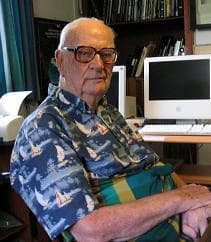
Sir Arthur Charles Clarke was an English science fiction writer, science writer, futurist, inventor, undersea explorer, and television series host.
Similar books
- Sapiens: A Brief History of Humankind
Yuval Noah Harari
4.4 (502k) average on GoodreadsPsychologyOffers a broad, philosophical look at humanity's past and potential future, though non-fiction.
- Dune
Frank Herbert
4.2 (766k) average on GoodreadsFantasyDeals with themes of ultimate human evolution and the influence of powerful, mysterious forces.
- Harry Potter and the Sorcerer's Stone
J.K. Rowling
4.5 (7M) average on GoodreadsFantasyRescued from a miserable life under the stairs, an orphaned boy discovers he's a wizard destined for a magical school, where he uncovers a dangerous secret tied to the dark wizard who murdered his parents.
- The Hunger Games
Suzanne Collins
4.3 (6.4M) average on GoodreadsFantasyIn a future where children fight to the death on live television, Katniss Everdeen volunteers for the arena, turning a death sentence into a fight for survival and a spark of rebellion.
- 1984
George Orwell
4.2 (3.1M) average on GoodreadsPoliticsIn a future where surveillance and thought control are absolute, a man's search for truth clashes with the Party, showing that hope can be a form of rebellion.
- Divergent
Veronica Roth
4.2 (2.9M) average on GoodreadsFantasyIn a society divided by virtues, a sixteen-year-old's difference from the norm starts a rebellion that threatens her world.






Enjoyed the summary?
A summary gives you the shape of the book. The book itself has the detail, the examples and the voice.
Find Childhood's End on AmazonAs an Amazon Associate, BookBrief earns from qualifying purchases. How we're funded