
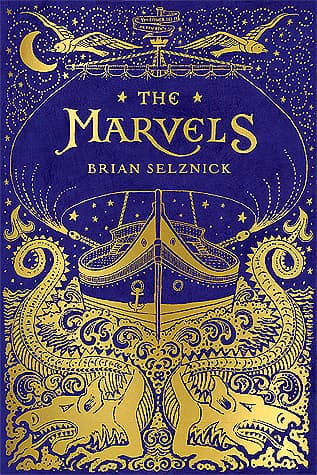
Synopsis
Covers the whole plot, including the ending.
- Difficulty
- Medium
- Pacing
- Moderate
- Mood
- Mysterious, Whimsical, Historical, Evocative, Bittersweet
- Read it if
- You enjoy unique storytelling through interwoven text and illustrations, historical mysteries, and stories about family legacies and discovery.
- Skip it if
- You prefer fast-paced, dialogue-heavy narratives and dislike books with significant portions told solely through pictures.
The Marvels Plot Summary
Covers the whole plot, including the ending.
The Marvel Family's Theatrical Genesis
The story begins in 1766 with Billy Marvel, a young boy on a ship that sinks in a storm. He is the only survivor, washing ashore near London. A theater troupe finds him, takes him in, and he starts working backstage, eventually becoming an actor. He marries, and his children and later generations continue the Marvel family legacy in the theater. They become known actors, with their lives tied to the stage and London playhouses. This establishes the long theatrical history of the Marvel family, a line that connects to the later part of the story.
Leontes Marvel's Downfall
The Marvel family's theatrical run continues for generations. But in 1900, the family's fortunes change with Leontes Marvel. A talented but troubled young actor, Leontes is in an incident backstage that leads to his permanent banishment from the theater. The exact nature of the incident is unclear, but its consequences are severe, ending the Marvels' direct involvement with professional acting. This event marks a break in the family's history, leaving a legacy of shame and secrecy that affects future decades.
Joseph's Escape to London
The story moves to 1990. Twelve-year-old Joseph Jervis is a runaway. He has fled his boarding school after a fight and, feeling abandoned, decides to find his Uncle Albert Nightingale in London. Joseph's only connection to his uncle is a note and an old address. He finds the strange house on Folgate Street. Joseph feels lost and wants to belong, hoping his uncle can offer him stability and understanding.
Arrival at Albert's Peculiar House
At 18 Folgate Street, Joseph finds his Uncle Albert is an eccentric, reclusive man. The house itself is remarkable, preserved as if time has stopped. Every room is filled with artifacts, costumes, props, and portraits, all related to the Marvel family and their theater history. Albert lives among this past, seemingly focused on the Marvels. Joseph is immediately captivated and confused by the amount of detail in the collection, sensing a deep connection between his uncle, the house, and the forgotten theatrical family.
Unraveling the Marvel Mystery
As Joseph settles into his uncle's house, he explores its treasures. He finds miniature stage sets, old playbills, and portraits of Marvel family members, including Leontes. Joseph's curiosity grows, and he starts to piece together parts of the Marvels' story, especially the mystery around Leontes' banishment. He notices that many portraits resemble him, sparking a personal interest in the family's history and his own possible connection. He wants to understand the secrets in the house.
The Secrets of the Studio
Joseph's explorations lead him to a hidden studio in the house, a place his uncle rarely enters. Here, he finds Albert's life's work: a large, detailed diorama showing the final, tragic scene of the Marvel family's theatrical history. It is a recreation of the night in 1900 when Leontes Marvel was banished, showing the backstage drama and emotions. Joseph realizes that the entire house is a memorial, a living museum dedicated to preserving and retelling the Marvels' story, especially the forgotten parts.
Albert's Revelation
When Joseph discovers these things, Albert finally tells the truth. He is not just a collector; he is Albert Marvel, Leontes' younger brother, who changed his name after the tragedy. He explains that Leontes was not banished for a crime, but for falling in love with a man, a relationship that was scandalous in 1900. The 'incident' was an excuse to remove him from public view. Albert dedicated his life to preserving his family's true story, especially Leontes', and to creating a space where their legacy could be honored honestly, not hidden. He has been waiting for someone to truly see and understand his work.
The Connection to Joseph
Albert then reveals the most personal connection: Joseph is a direct descendant of the Marvel family through Leontes. Leontes, despite his banishment, had a child, and Joseph is part of that hidden line. This revelation deeply affects Joseph, giving him a sense of belonging and identity he had sought. The portraits he saw, the resemblances he felt, now all make sense. He is not just a runaway; he is a Marvel, part of this complex history, finally understood and embraced by his last living relative.
Joseph's New Home
With the truth revealed, Joseph chooses to stay with Albert. He helps his uncle maintain the house and its collection, becoming an active part in preserving the Marvel legacy. Joseph, once a lonely runaway, now has a home, a family, and a purpose. He understands the love and dedication that went into creating the house and its contents. The house, once a mystery, becomes a sanctuary for hidden histories, love, and acceptance. Joseph's journey ends with finding the family that was always there, waiting to be found.
Principal Figures
Joseph Jervis
Protagonist
A twelve-year-old runaway seeking belonging and his family's past.
Joseph is a sensitive and observant twelve-year-old boy who runs away from his boarding school, feeling isolated and unloved. He travels to London in search of his mysterious Uncle Albert, the only family connection he feels he has left. Joseph is driven by a deep longing for connection and identity, often feeling like an outsider. He is curious and persistent, gradually piecing together the intricate history of the Marvel family and his own place within it. His journey is one of self-discovery, finding a sense of home and belonging he never thought possible.
Relationships: Albert Nightingale/Marvel (Estranged great-uncle who becomes his guardian and reveals their shared lineage); Leontes Marvel (His ancestor, whose hidden story Joseph helps uncover)
Albert Nightingale / Albert Marvel
Supporting/Mentor
Joseph's reclusive great-uncle, curator of the Marvel family's hidden history.
Albert Nightingale is initially presented as an eccentric, reclusive old man living in a house that is a museum to the Marvel family. He is meticulous, dedicated, and deeply committed to preserving the Marvel legacy, particularly the true story of his brother, Leontes. Later revealed as Albert Marvel, he carries the weight of his family's hidden shame and dedicates his life to creating a space where the truth could be told. He is a quiet guardian of history, patiently waiting for someone like Joseph to truly see and understand his life's work.
Relationships: Joseph Jervis (His great-nephew, to whom he reveals the family secrets and offers a home); Leontes Marvel (His beloved older brother, whose life he dedicates himself to memorializing); Marvel Family (The theatrical dynasty he painstakingly documents and recreates)
Leontes Marvel
Supporting/Central Figure of the Past
A talented but tragic actor whose banishment ends the Marvel family's theatrical dynasty.
Leontes Marvel is a central figure in the historical narrative, a gifted actor whose life takes a tragic turn in 1900. He is portrayed through portraits, artifacts, and Albert's memories as a sensitive and passionate individual. His banishment from the stage, initially shrouded in mystery, is later revealed to be a consequence of his forbidden love for another man, a secret his brother Albert meticulously preserves. Leontes represents the hidden histories and societal prejudices that shaped lives, and his story drives much of the narrative's emotional core and mystery.
Relationships: Albert Marvel (His younger brother, who dedicates his life to preserving Leontes' true story); Marvel Family (A key member whose actions inadvertently end their theatrical era)
Billy Marvel
Supporting/Ancestral Figure
The shipwreck survivor who founded the Marvel theatrical dynasty in 1766.
Billy Marvel is the patriarch of the Marvel family, whose dramatic survival from a shipwreck in 1766 leads to his unlikely entry into the London theater world. He is a figure of resilience and adaptability, laying the foundation for generations of actors. Though he appears only in the historical, illustrated sections, his story is crucial as the origin point of the entire Marvel lineage and their deep connection to the stage. His initial act of survival sets in motion the entire complex history that Joseph eventually uncovers.
Relationships: Marvel Family (The founder and patriarch of the theatrical dynasty)
Rosalind
Mentioned/Supporting (Historical)
A significant actress in the Marvel family's early history.
Rosalind is one of the early, prominent actresses in the Marvel family lineage, depicted in the historical sections. She represents the talent and dedication that defined the family's theatrical success for generations. Her presence in the illustrations highlights the family's long-standing connection to the stage and the various roles they embodied, contributing to the rich tapestry of the Marvel legacy that Albert painstakingly collects and recreates.
Relationships: Marvel Family (A key performer in the early generations)
The Headmaster
Mentioned (Contemporary)
Joseph's boarding school authority figure.
The Headmaster is a minor character from Joseph's contemporary storyline, representing the institutional authority from which Joseph escapes. He is the figure Joseph defies by running away, symbolizing the rules and expectations Joseph feels stifled by. His brief mention emphasizes Joseph's initial sense of rebellion and his desire to break free from external control, setting the stage for his journey of self-discovery in London.
Themes & Insights
Identity and Belonging
Joseph's journey is about finding his place and understanding who he is. As a runaway, he feels rootless and unloved. His discovery of the Marvel family history, and his direct link to Leontes, gives him a strong sense of identity and belonging. The house itself shows this theme, a sanctuary where a forgotten history is kept, offering Joseph a home and family connection he wanted. The story shows how understanding one's past helps build a sense of self.
“He didn't know who he was, or where he belonged. But in this house, with its secrets and its stories, he felt a flicker of something new.”
The Power of Storytelling and Performance
The novel shows the power of stories, both told and untold. The Marvel family's theatrical history shows performance as a way to express and leave a legacy. Albert's careful recreation of the Marvels' lives, especially Leontes' story, through his house and dioramas, shows storytelling as a way to preserve truth and memory. The book itself, with its alternating text and illustrations, reflects this theme, using different narrative forms to tell a complex story across centuries. It shows how stories, whether on stage or in a hidden house, shape our understanding of the past and present.
“Every object in the house was a word, every room a sentence, every floor a chapter in a story that had been waiting to be read.”
Hidden Histories and Secrets
A central theme is uncovering hidden histories and family secrets. The mystery around Leontes Marvel's banishment is the main secret, first shown as a shameful incident but later revealed as a result of prejudice against his homosexuality. Albert's life's work is to find and truthfully preserve this hidden history. Joseph's discovery of his own connection to this past further shows how secrets, while often painful, can lead to understanding and acceptance when revealed. The house itself holds these guarded truths.
“Some secrets were meant to stay hidden, but others, like Leontes's, were meant to be found.”
Love and Acceptance
The novel explores different forms of love and the importance of acceptance. Albert's love for his brother, Leontes, drives his lifelong effort to preserve Leontes' true story and create a memorial that honors his life rather than his public shame. This act of love goes beyond societal norms. Joseph, in turn, finds acceptance from Albert, who offers him a home and reveals their shared line, fulfilling Joseph's deep need for connection. The story champions unconditional love and accepting people for who they are.
“He had built a house not of sorrow, but of love. A love that had outlasted time and prejudice.”
Plot Devices & Literary Techniques
Alternating Narrative Formats
Switches between illustrated historical narrative and text-based contemporary narrative.
Selznick masterfully employs two distinct narrative styles: the historical story of the Marvel family (1766-1900) is told entirely through detailed, sequential pencil illustrations, without words. The contemporary story of Joseph (1990) is told through traditional prose. This creates a powerful juxtaposition, allowing the reader to experience the past visually and the present textually. The two threads converge both thematically and literally as Joseph uncovers the story depicted in the illustrations, enhancing the mystery and the eventual revelation of their connection.
The House on Folgate Street
A living museum and meticulously curated memorial to the Marvel family.
The house itself is a central character and a major plot device. It is not merely a setting but a meticulously constructed 'museum' or 'diorama' created by Albert Nightingale to preserve and narrate the Marvel family's history. Every object, portrait, and miniature stage set within the house serves as a clue, leading Joseph (and the reader) through the complex past. It functions as a physical manifestation of memory, love, and dedication, ultimately revealing Albert's true identity and the hidden story of Leontes.
Symbolic Portraits and Miniatures
Artworks and models that serve as clues and representations of the past.
Throughout the house, Joseph encounters numerous portraits of Marvel family members and intricate miniature stage sets. These are not merely decorative; they are vital plot devices. The portraits hint at Joseph's lineage and the family's theatrical heritage, while the miniatures, especially the final diorama in the hidden studio, directly depict the pivotal events of the past, particularly Leontes's banishment. They function as visual storytelling elements that Joseph must interpret to uncover the full truth, bridging the gap between the illustrated past and the written present.
The Shipwreck
A recurring motif signifying loss, new beginnings, and survival.
The initial shipwreck that Billy Marvel survives in 1766 is a powerful motif. It represents a dramatic loss and a forced new beginning, setting the entire Marvel legacy in motion. The image of a shipwreck, or parts of ships, recurs subtly throughout the illustrations, symbolizing moments of upheaval, change, or the precariousness of life and reputation. It ties into the idea of surviving difficult circumstances and finding new paths, mirroring Joseph's own 'shipwreck' as a runaway and his eventual new beginning with Albert.
The Marvels Quotes
“The wind was picking up now, and soon the snow would start.”
“Every object has a story, if only you know how to listen.”
“Secrets are like seeds. They need to be planted and watered before they can grow.”
“Sometimes the greatest magic is simply seeing what's right in front of you.”
“He knew, with the certainty of a dream, that he had to find out what happened.”
“The past is never really gone. It's just waiting to be discovered.”
“A house holds memories like a shell holds the sound of the ocean.”
“Stories are powerful. They can change the way you see the world.”
“He felt a strange, familiar pull, as if the house itself was calling to him.”
“The silence in the room was thick with unspoken histories.”
“Even the smallest detail can unlock the biggest secret.”
“He had always believed in magic, even when he couldn't see it.”
“The world was full of connections, if only you knew where to look.”
“Sometimes the things you lose are the things that find their way back to you.”
Quiz
10 questions on the plot and the characters. Each answer comes with a short explanation.
Question 1
The first part of 'The Marvels' begins in what year with Billy Marvel?
- 1800
- 1766
- 1900
- 1850
Show answer
B. 1766 The book explicitly states that the journey begins at sea in 1766 with Billy Marvel, establishing the historical setting for the first narrative.
Question 2
What is the primary profession of the Marvel family for generations after Billy finds work in London?
- Sailors
- Shipbuilders
- Actors
- Musicians
Show answer
C. Actors After his shipwreck, Billy Marvel finds work in a London theatre, and his family becomes renowned actors for generations, which is a central plot point for the first half of the book.
Question 3
Who is the young Marvel banished from the stage in 1900?
- Billy Marvel
- Leontes Marvel
- Joseph Jervis
- Albert Nightingale
Show answer
B. Leontes Marvel The synopsis clearly states that 'young Leontes Marvel is banished from the stage' in 1900, marking a turning point for the Marvel family's theatrical legacy.
Question 4
What is Joseph Jervis's relationship to Albert Nightingale?
- He is Albert's son.
- He is Albert's nephew.
- He is a distant cousin.
- He is a friend seeking lodging.
Show answer
B. He is Albert's nephew. The book describes Joseph Jervis as a runaway who 'seeks refuge with an uncle in London,' and that uncle is Albert Nightingale.
Question 5
What aspect of Albert Nightingale's house most captivates Joseph and leads him to investigate?
- Its extensive library of rare books.
- Its modern art collection.
- Its mysterious portraits and ghostly presences.
- Its elaborate garden and maze.
Show answer
C. Its mysterious portraits and ghostly presences. Joseph is drawn into the mystery by 'Albert Nightingale's strange, beautiful house, with its mysterious portraits and ghostly presences,' which compels him to search for clues.
Question 6
What major historical event, if any, is implied to separate the Marvel family's acting career from Joseph Jervis's time?
- The Victorian Era's end.
- World War I.
- Nearly a century passes between Leontes' banishment (1900) and Joseph's arrival.
- The Great Depression.
Show answer
C. Nearly a century passes between Leontes' banishment (1900) and Joseph's arrival. The book explicitly states 'Nearly a century later' after Leontes Marvel is banished in 1900, indicating a significant passage of time and the shift to a different era when Joseph Jervis appears.
Question 7
What is the overarching theme connecting the two seemingly disparate narratives of Billy Marvel's family and Joseph Jervis?
- The impact of war on generations.
- The enduring power of family secrets and the discovery of identity through the past.
- The rise and fall of the British Empire.
- The evolution of London's theatrical scene.
Show answer
B. The enduring power of family secrets and the discovery of identity through the past. The core of the book lies in how Joseph's investigation into the mysterious house and its connection to the Marvel family reveals hidden truths about his own lineage and the past, linking the two timelines through themes of identity and legacy.
Question 8
Why is the detail of Billy Marvel surviving a shipwreck significant to the initial character establishment?
- It explains why he chose a life at sea.
- It sets the stage for his eventual move to America.
- It forces him to seek new opportunities on land, leading him to the theatre in London.
- It introduces a recurring motif of natural disasters throughout the book.
Show answer
C. It forces him to seek new opportunities on land, leading him to the theatre in London. The shipwreck is a pivotal event for Billy, as it directly leads him to London and the theatre, thus initiating the entire Marvel family's acting legacy and the first major plot arc.
Question 9
How does the narrative structure of 'The Marvels' contribute to its mystery genre elements?
- It uses a single, linear timeline to slowly reveal secrets.
- It alternates between two distinct timelines that gradually converge, allowing the reader to piece together connections alongside Joseph.
- It primarily uses flashbacks from a single character's perspective.
- It presents the ending first and then explains how the characters arrived there.
Show answer
B. It alternates between two distinct timelines that gradually converge, allowing the reader to piece together connections alongside Joseph. Selznick's signature style involves alternating between two seemingly separate narratives (Billy Marvel's historical story and Joseph Jervis's modern one) that eventually intertwine, creating a layered mystery where the reader discovers the connections alongside Joseph.
Question 10
What specific type of artistic expression is central to both the Marvel family's history and implied in the 'ghostly presences' and 'portraits' of Albert's house?
- Music composition
- Sculpture
- Performance and visual storytelling (theatre, portraits)
- Literary writing
Show answer
C. Performance and visual storytelling (theatre, portraits) The Marvel family are 'brilliant actors' in a London theatre, which is a form of performance and visual storytelling. Albert's house, with its 'mysterious portraits and ghostly presences,' suggests other forms of visual and narrative art, linking the two parts through shared artistic themes.
The Marvels FAQ
What is "The Marvels" about?
"The Marvels" intertwines two distinct narratives: one, a historical saga following the Marvel family of actors from 1766 to 1900, beginning with shipwreck survivor Billy Marvel; the other, a contemporary mystery in 1990, where runaway Joseph Jervis investigates the secrets of his eccentric uncle Albert Nightingale's London house and its connection to the Marvel family.
Why should I read "The Marvels"?
You should read "The Marvels" for its unique blend of detailed historical fiction, compelling mystery, and stunning visual storytelling. Selznick's signature style, alternating between intricate illustrations and prose, creates an immersive experience that explores themes of family legacy, identity, and the enduring power of stories across generations.
What is the background/setting of "The Marvels"?
The book features two primary settings: the first narrative spans London from 1766 through 1900, detailing the lives and theatrical careers of the Marvel family. The second narrative is set in London in 1990, primarily within the mysterious, art-filled house of Albert Nightingale, which holds the key to unlocking the past.
What writing style does the author use?
Brian Selznick employs his distinctive 'novel in words and pictures' style. The historical Marvel family narrative is told entirely through detailed, evocative pencil illustrations, while the contemporary Joseph Jervis narrative is told through prose. This unique structure creates a powerful contrast and eventual convergence, mirroring the book's themes of interconnectedness.
What minor details add significant meaning?
The consistent motif of a small, carved wooden dog, passed down through the Marvel family, serves as a tangible link between generations and a subtle clue in Joseph's investigation. Similarly, the meticulous arrangement of objects in Albert Nightingale's house, particularly the framed portraits and the miniature theater, are not just decorations but crucial pieces of the historical puzzle.
What are some subtle foreshadowing moments?
Early illustrations in the Marvel family story show characters looking out windows or observing the audience, hinting at their awareness of being watched or part of a larger performance, subtly foreshadowing the meta-narrative twist. Joseph's initial discomfort and later fascination with the 'ghostly' presences in Albert's house also foreshadow the deep, personal connection he will discover with the house's history.
What unexpected character connections exist?
The most significant unexpected connection is revealed through Joseph Jervis's lineage: he is a direct descendant of the Marvel family, specifically Leontes Marvel, the banished actor. His uncle, Albert Nightingale, is Leontes's son and the keeper of the Marvel family history, making Joseph's arrival not accidental but a fated return to his roots.
What are unspoken character motivations?
Albert Nightingale's unspoken motivation is a deep-seated need to preserve and honor his family's legacy, particularly that of his father, Leontes Marvel, who was unjustly cast out. He meticulously curates his house as a living museum, hoping for someone, specifically a descendant, to finally understand and appreciate the story he has protected for decades.
What psychological complexities do characters exhibit?
Leontes Marvel exhibits the psychological complexity of an artist grappling with identity and purpose after being ostracized from the only life he knew. His internal struggle between theatrical ambition and personal authenticity leads to his banishment but ultimately allows him to forge a new path. Albert Nightingale, in turn, demonstrates the complexities of grief and obsessive preservation, living within the shadow of his family's past.
What are the major emotional turning points?
A major emotional turning point for the Marvel family is Leontes's decision to break from the family's traditional acting style, leading to his exile. For Joseph, the turning point is when he discovers the true identity of the 'Marvels' and the deep, personal connection he has to Albert's house and its history, shifting his runaway journey into a quest for belonging and understanding.
How do relationship dynamics evolve?
The relationship between Joseph and Albert evolves from cautious distance and misunderstanding to one of profound familial connection and mutual respect. Initially, Joseph views Albert as merely an eccentric relative, but as he uncovers the house's secrets, he begins to see Albert as the guardian of his own family history, leading to a bond of shared legacy and affection.
Which parts remain ambiguous or open-ended?
While the main mystery is resolved, the exact future of the Marvel family legacy after Joseph's discovery remains somewhat open-ended. The book implies that Joseph will continue to honor and perhaps even expand upon Albert's work, but the specific form this will take, whether through performance, preservation, or a new creative endeavor, is left to the reader's imagination.
What are controversial scenes or decisions?
Leontes Marvel's decision to challenge the established, traditional acting style of his family, leading to his banishment from the stage and his family, could be seen as controversial. While it ultimately leads to a new form of artistry, it represents a radical break from generations of tradition and causes significant pain and division within the Marvel family.
"The Marvels" ending explained: how it ends & what it means
The book ends with the convergence of the two narratives: Joseph discovers that the Marvel family in the illustrations is his own ancestry, and Albert Nightingale is his great-uncle, Leontes Marvel's son. The house is a meticulously preserved shrine to the Marvels, created by Albert to honor his father and await a descendant. The ending signifies the power of stories to connect generations, the importance of uncovering hidden truths, and Joseph's finding a sense of belonging and purpose within his rich, artistic family legacy.
About the author

Brian Selznick is a Caldecott Medal-winning author and illustrator celebrated for his unique blend of text and art. His notable works, including 'The Invention of Hugo Cabret,' 'Wonderstruck,' and 'The Marvels,' combine intricately illustrated narratives with compelling prose. Selznick's distinctive style bridges the gap between children's literature and fine art, captivating readers of all ages.
Similar books
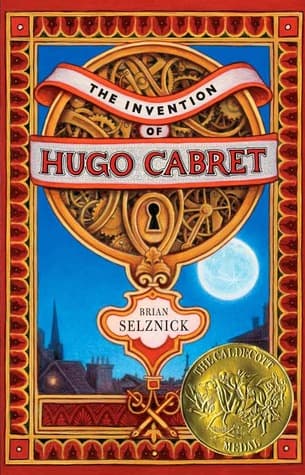
- The Invention of Hugo Cabret
Brian Selznick
4.2 (163k) average on GoodreadsFantasyShares the same author's distinctive style of storytelling through intricate illustrations and interwoven narratives.
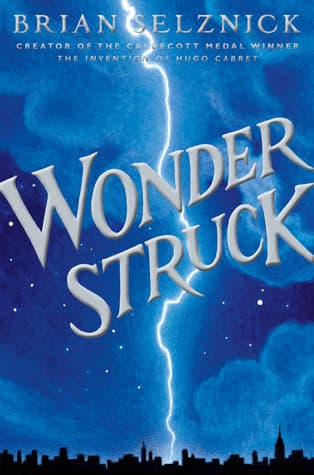
- Wonderstruck
Brian Selznick
4.2 (52k) average on GoodreadsChildren'sFeatures a similar blend of text and illustration to tell a dual-narrative mystery across different time periods.
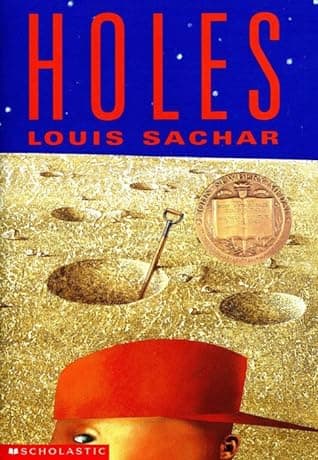
- Holes
Louis Sachar
4.0 (970k) average on GoodreadsChildren'sBoth The Marvels and Holes skillfully interweave historical and contemporary narratives to reveal interconnected destinies. However, Sachar's approach is text-driven, gradually revealing historical context through narrative flashbacks, whereas Selznick uses an extensive visual narrative to establish the historical foundation before transitioning to text.
- Goodbye Stranger
Rebecca Stead
3.9 (12k) average on GoodreadsChildren'sBoth books explore themes of identity, friendship, and navigating the complexities of adolescence. Stead's novel uses multiple narrative perspectives and a more traditional prose structure to explore these themes, while Selznick relies heavily on visual storytelling to convey the historical backstory that shapes the protagonist's present.
- Harry Potter and the Sorcerer's Stone
J.K. Rowling
4.5 (7M) average on GoodreadsFantasyRescued from a miserable life under the stairs, an orphaned boy discovers he's a wizard destined for a magical school, where he uncovers a dangerous secret tied to the dark wizard who murdered his parents.
- The Hunger Games
Suzanne Collins
4.3 (6.4M) average on GoodreadsFantasyIn a future where children fight to the death on live television, Katniss Everdeen volunteers for the arena, turning a death sentence into a fight for survival and a spark of rebellion.


Enjoyed the summary?
A summary gives you the shape of the book. The book itself has the detail, the examples and the voice.
Find The Marvels on AmazonAs an Amazon Associate, BookBrief earns from qualifying purchases. How we're funded