
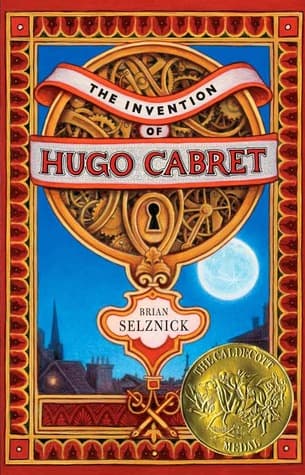
Synopsis
Covers the whole plot, including the ending.
- Difficulty
- Easy
- Pacing
- Moderate
- Mood
- Whimsical, Mysterious, Heartwarming, Nostalgic, Adventurous
- Read it if
- You love a blend of mystery, historical fiction, and a touch of magic, presented with stunning illustrations that are integral to the storytelling.
- Skip it if
- You prefer pure text novels without significant visual elements or are looking for a fast-paced, action-heavy plot.
The Invention of Hugo Cabret Plot Summary
Covers the whole plot, including the ending.
The Hidden Clockmaker
Hugo Cabret, a twelve-year-old orphan, lives alone inside a busy Paris train station in 1931. After his Uncle Claude, the station's clock keeper, disappears, Hugo secretly takes over his job, winding the clocks daily to avoid being sent to an orphanage. His days involve moving through hidden passages, stealing food, and taking care of the clocks, all while trying to stay hidden from the Station Inspector and his dog. Hugo's most prized possession is a broken automaton, a mechanical man his late father found and started to fix. Hugo believes it holds a message from his father.
A Stolen Notebook and a Bitter Man
Hugo often takes small mechanical parts from a toy booth in the station, hoping to fix the automaton. One day, the stern, elderly shop owner, Georges Méliès, catches him. Méliès takes Hugo's most important item: his father's notebook, filled with drawings and notes about the automaton. Méliès, a bitter and private man, refuses to give it back, calling Hugo a thief. Devastated, Hugo keeps watching Méliès, determined to get the notebook back and find out how to fix the automaton, which he thinks is his last link to his father.
Isabelle and the Key
Hugo meets Isabelle, a curious and book-loving girl his age, who is Méliès's goddaughter. Isabelle is interested in Hugo's secret life and his fascination with the automaton. She shows him a heart-shaped key she wears around her neck, given to her by her godfather. Hugo immediately recognizes the key's shape and thinks it might be the missing part needed to start the automaton. This gives Hugo new hope, as he believes the automaton will finally reveal the message his father left, bringing him closer to his lost family.
The Automaton Awakens
With Isabelle's key, Hugo finally starts the automaton in his hidden room. The automaton comes to life, its gears turning and arms moving, and begins to draw a picture. To their surprise, it sketches a scene from a silent film: a rocket stuck in the moon's eye. Below the drawing, it signs 'Georges Méliès.' This discovery confuses Hugo and Isabelle, as they recognize the grumpy toy shop owner's name. The drawing also brings back a strange memory for Isabelle, though she cannot quite place it, suggesting a forgotten connection.
A Hidden Past Revealed
To understand the automaton's drawing, Hugo and Isabelle go to the library and look at a film history book. They learn that Georges Méliès was a famous, pioneering filmmaker, known for his fantasy silent films, including 'A Trip to the Moon,' the scene the automaton drew. The book describes his studio, his special effects, and how he disappeared from public life after the First World War. This discovery changes how they see the bitter old man, revealing a past of creativity and magic lost to time and tragedy.
The Projectionist's Story
Isabelle remembers that her godfather, Méliès, sometimes visited a film library. Hugo and Isabelle find Etienne, a friendly film professor and Méliès's former projectionist, who is happy to hear Méliès is still alive. Etienne explains Méliès's impact on cinema, his imagination, and the sad events that led to his obscurity and the destruction of most of his films. Etienne reveals that many of Méliès's props and sets, including the automaton, were sold or destroyed after his studio closed, which explains how the automaton ended up with Hugo's father.
Confrontation and Reconciliation
With this information, Hugo and Isabelle bring the automaton to Méliès's apartment. Méliès is at first angry and sad, overwhelmed by the painful memories the automaton brings back. He tells them about his despair after losing his money and seeing his films forgotten, which made him destroy his remaining props and withdraw from the world. However, seeing the automaton, a symbol of his past creativity, and witnessing the admiration of Hugo, Isabelle, and Etienne, begins to soften his heart. The automaton helps Méliès face his past and find a way to heal.
The Lost Films Found
Prompted by the new interest in Méliès's work, Etienne remembers a trunk of old film reels in his attic. To everyone's joy, the trunk holds many of Méliès's supposedly lost films, saved years ago. This discovery is a big moment, as it means Méliès's artistic work can be restored. A special screening is held at the film academy, where Méliès is honored for his contributions to cinema. The event is a celebration, bringing Méliès back into the public eye and giving him the appreciation he deserved.
A New Beginning
The successful film screening marks a new beginning for Georges Méliès. He feels purpose again and starts sharing his stories and ideas with new filmmakers. For Hugo, fixing the automaton led him to something even more important: a family. Méliès, having healed and reconnected with his past, adopts Hugo. Hugo, no longer a hidden orphan, finds a loving home and a sense of belonging with Méliès, Isabelle, and their friends, including Etienne. He continues to fix clocks, but now with a family.
The Clockwork Heart
Hugo thrives in his new life with Méliès and Isabelle. He continues to show his mechanical talent, not just with clocks, but also helping Méliès with various projects. The fully repaired automaton is a symbol of their shared journey and the power of connection. Hugo learns storytelling and filmmaking from Méliès, combining his mechanical skills with a new appreciation for art and narrative. He is no longer defined by his past as a hidden orphan, but by his cleverness, his kind spirit, and the loving family he has found.
Principal Figures
Hugo Cabret
Protagonist
An orphaned boy living secretly in a train station, maintaining clocks and obsessed with an automaton.
Hugo is a resourceful, intelligent, and deeply lonely orphan. He is driven by a profound need to complete his father's work on the automaton, believing it holds a final message from him. His mechanical aptitude is exceptional, allowing him to maintain the station's clocks and repair complex machinery. Despite his thieving tendencies, he possesses a strong moral compass and a yearning for connection and belonging. He is observant and resilient, navigating a dangerous existence with determination.
Relationships: Uncle Claude (Absent guardian, taught him clock repair); Georges Méliès (Initial antagonist, later adoptive father and mentor); Isabelle (Close friend, confidante, and adoptive sister); Father (Deceased, source of his obsession with the automaton)
Georges Méliès
Antagonist/Supporting/Mentor
A bitter, reclusive toy booth owner with a forgotten past as a pioneering filmmaker.
Georges Méliès is initially portrayed as a grumpy, strict old man, embittered by his past failures and the loss of his artistic legacy. He runs a toy booth in the train station, a shadow of his former creative self. His gruff exterior hides a deep sadness and a profound artistic spirit. He is initially hostile towards Hugo, but his encounter with the automaton and the subsequent revelations force him to confront his painful past and rediscover his passion. He represents the theme of lost dreams and the power of rediscovery.
Relationships: Hugo Cabret (Initial adversary, later adoptive son and apprentice); Isabelle (God-daughter); Jeanne d'Alcy (Wife, supportive partner); Etienne (Former projectionist and friend)
Isabelle
Supporting
Georges Méliès's curious and adventurous goddaughter, who befriends Hugo.
Isabelle is a bright, independent, and adventurous girl who loves books and mysteries. She is Méliès's goddaughter and lives with him and his wife, Jeanne. She feels constrained by her structured life and longs for adventure, which she finds through her friendship with Hugo. She possesses a keen intellect and a strong sense of loyalty. Her heart-shaped key becomes a crucial plot device, linking her directly to the automaton's mystery and Méliès's past. She acts as Hugo's confidante and intellectual partner in their shared quest.
Relationships: Hugo Cabret (Close friend, adoptive brother); Georges Méliès (Godfather); Jeanne d'Alcy (Godmother)
Station Inspector Gustave
Supporting
The relentless and often comical station inspector, determined to catch orphans.
Inspector Gustave is a stern, limping, and somewhat comical figure who patrols the train station with his Doberman, determined to catch any unattended children and send them to the orphanage. He suffered an injury during the war, which gives him a distinctive limp. Despite his gruff demeanor and single-minded pursuit of Hugo, he is not inherently evil, but rather a man rigidly adhering to rules and duties. His character provides a constant source of tension and a touch of comic relief.
Relationships: Hugo Cabret (Adversary, pursuer); Lisette (Love interest)
Uncle Claude
Mentioned
Hugo's alcoholic and neglectful uncle, who abandoned him.
Uncle Claude was the official clock keeper of the train station and Hugo's legal guardian after his father's death. He was an alcoholic who eventually disappeared, leaving Hugo alone to fend for himself and maintain the clocks. He taught Hugo the intricate craft of clock repair but was ultimately irresponsible and neglectful. His disappearance sets in motion Hugo's secret life and his desperate efforts to avoid the orphanage. He represents the initial catalyst for Hugo's solitude.
Relationships: Hugo Cabret (Nephew and ward)
Father
Mentioned
Hugo's deceased father, a clockmaker who found and began repairing the automaton.
Hugo's father was a kind and skilled clockmaker who worked in a museum. He discovered the broken automaton and became obsessed with repairing it, believing it held a secret. His sudden death from a fever leaves Hugo orphaned and deeply traumatized. He is the initial source of Hugo's mechanical talents and his driving motivation to fix the automaton. His memory is a powerful force throughout the story, guiding Hugo's actions and providing a sense of hope and connection.
Relationships: Hugo Cabret (Son)
Jeanne d'Alcy
Supporting
Georges Méliès's supportive and kind wife, a former actress.
Jeanne d'Alcy is Georges Méliès's wife and Isabelle's godmother. She is a compassionate and understanding woman who tries to soften Méliès's harsh demeanor. She was a former actress in Méliès's films and shares his hidden past, but unlike him, she has come to terms with it more gracefully. She offers warmth and stability to Hugo and Isabelle, providing a nurturing presence in their lives. Her quiet strength and enduring love for Méliès are crucial to his eventual healing.
Relationships: Georges Méliès (Wife); Isabelle (Godmother)
Etienne
Supporting
A film professor and former projectionist for Méliès.
Etienne is a knowledgeable and enthusiastic film professor who was once Georges Méliès's projectionist. He is a key figure in helping Hugo and Isabelle uncover Méliès's past, providing historical context and an understanding of his cinematic importance. His passion for film and his loyalty to Méliès are evident. He plays a vital role in organizing the retrospective screening of Méliès's films, helping to restore his legacy. Etienne represents the enduring power of art and the importance of remembering history.
Relationships: Georges Méliès (Former projectionist, friend, and admirer)
Themes & Insights
The Importance of Purpose and Connection
The story explores the human need for purpose and connection. Hugo's first purpose is to survive and fix the automaton, believing it will link him to his dead father. Georges Méliès has lost his purpose and connection to the world, becoming bitter. Through their journeys, both characters find new purpose – Hugo in a loving family and Méliès in the rediscovery of his art. The automaton itself is a symbol for this idea, a complex machine that needs all its parts to work, much like people need each other.
“Maybe that's why a broken machine always makes me a little sad, because it isn't able to do what it was meant to do… Maybe it's the same with people.”
The Magic and Preservation of Art
The novel is a tribute to the magic of early cinema and the importance of preserving art. Georges Méliès's films were wonderful creations that captivated audiences, yet they were almost lost to time. Hugo and Isabelle's search to understand the automaton becomes a mission to restore Méliès's work. The story shows how art, even when forgotten, can inspire, heal, and connect generations, highlighting the need to protect and celebrate it.
“If you've ever wondered where your dreams come from, you look around. This is where they're made.”
The Nature of Secrets and Discovery
Secrets drive much of the story. Hugo keeps his existence hidden, Méliès hides his past, and the automaton holds a secret message. Discovering these hidden truths moves the plot forward. As secrets are revealed, they often lead to understanding, healing, and change. The book suggests that while secrets can offer protection, revealing them can also lead to freedom and a deeper connection to oneself and others, turning mysteries into paths for growth.
“Every object has a story, if you know how to read it.”
The Interconnectedness of Life
The novel emphasizes that everything in life connects, like the gears of a clock or the frames of a film. Hugo's life, the automaton, Méliès's past, and Isabelle's key are all seemingly separate parts that turn out to be part of a larger, connected system. The train station itself, with its constant movement and many people, is a small example of this connection. This idea suggests that even small actions or objects can have big effects, ultimately bringing people and their destinies together.
“I like to imagine that the whole world is one big machine. If you look at it that way, then everyone has a purpose.”
Plot Devices & Literary Techniques
The Automaton
A broken mechanical man that drives Hugo's quest.
The automaton is the central plot device, serving as a powerful symbol and a direct link to Hugo's past and Méliès's. Its broken state mirrors the brokenness of Hugo's life and Méliès's spirit. Hugo's relentless effort to repair it propels the initial narrative, leading him to Méliès and Isabelle. When activated, it reveals Méliès's signature and a scene from his film, directly unraveling the mystery of the toy maker's identity and setting the stage for the rediscovery of his legacy. It functions as a catalyst for connection and revelation.
The Notebook
Hugo's father's notebook, filled with automaton drawings.
The notebook, filled with Hugo's father's intricate drawings and notes on the automaton, is a vital plot device. Its confiscation by Méliès creates the initial conflict between them and forces Hugo to interact with the old man and Isabelle. It provides crucial information about the automaton's mechanics and history, hinting at its true purpose. Beyond its functional role, it symbolizes Hugo's last tangible connection to his father and his heritage, making its retrieval and study deeply personal and essential to his quest.
The Heart-Shaped Key
A unique key worn by Isabelle, which unlocks the automaton.
Isabelle's heart-shaped key is a classic 'macguffin' that becomes a crucial turning point in the plot. Its unique shape and her innocent possession of it directly enable Hugo to activate the automaton. The key's origin, given to Isabelle by Méliès, further deepens the mystery and foreshadows the connection between Méliès and the automaton. It represents the unforeseen connections between characters and the serendipitous nature of discovery, unlocking not only the machine but also the secrets of the past.
The Train Station
The primary setting, a microcosm of interconnected lives.
The Paris train station is more than just a setting; it's a dynamic plot device that influences the characters' lives and interactions. Its hidden passages allow Hugo to live secretly, while its public spaces facilitate encounters with Méliès, Isabelle, and the Inspector. The constant movement of trains and people symbolizes the passage of time and the interconnectedness of many lives. It acts as a stage where individual stories unfold and intertwine, reflecting the larger theme that 'the whole world is one big machine.'
The Invention of Hugo Cabret Quotes
“Maybe that's why I'm a mechanic. I fix things. And I believe that if something is broken, with a little effort, it can be fixed.”
“Every time I come here, I imagine that the whole world is a great big machine. Machines never have any extra parts. They have the exact number and type of parts they need. So I figure, if the entire world is a big machine, I have to be here for some reason. And you do too.”
“The old man reached out and took the notebook from Hugo. He turned a few pages, then looked up at Hugo with a strange expression. 'This is your father's work?' he asked softly.”
“He imagined the gears inside him grinding to a halt, the springs unwinding, the levers falling limp. He would be nothing but a broken machine.”
“If you've ever wondered where your dreams come from, look no further than the movies. They are the dream factory.”
“He liked the idea that he could disappear, that he was just a ghost in the walls, watching the world go by.”
“The world was a stage, and the clock was the prompter, marking the moments.”
“He closed his eyes and wished he could wind back time, like a clock, to the moment before his father died.”
“Sometimes I think I have a secret, and it's so big and so important that if I ever told anyone, it would change everything.”
“It was a story about an old man who had lost his magic, and a boy who helped him find it again.”
“He thought of the automaton, the way it was designed to draw, to create. And he thought of himself, designed to fix, to repair.”
“The old man's eyes, which had once been filled with a thousand stars, now seemed to hold only shadows.”
“He felt a sudden rush of understanding, as if the pieces of a complicated machine were finally clicking into place.”
“And just like a story, the future was waiting to unfold, one page at a time.”
Quiz
10 questions on the plot and the characters. Each answer comes with a short explanation.
Question 1
What is Hugo's primary job within the walls of the Paris train station?
- Selling newspapers
- Maintaining the station's clocks
- Cleaning the train platforms
- Operating the toy booth
Show answer
B. Maintaining the station's clocks Hugo secretly maintains the station's clocks, taking over the duty from his disappeared Uncle Claude.
Question 2
What is the most precious item Hugo is trying to repair, believing it holds a message from his deceased father?
- A broken pocket watch
- A wind-up toy train
- An automaton (mechanical man)
- A music box
Show answer
C. An automaton (mechanical man) Hugo is obsessed with repairing the automaton his father found and worked on, believing it will write a message for him.
Question 3
What does Hugo steal from the toy booth owner, Georges Méliès, that leads to their initial confrontation?
- A specific wind-up mouse toy
- Money from the till
- A valuable piece of jewelry
- A book of magic tricks
Show answer
A. A specific wind-up mouse toy Hugo is caught trying to steal a wind-up mouse from Méliès's toy booth, which leads to Méliès confiscating Hugo's notebook.
Question 4
What is the name of the eccentric, bookish girl Hugo befriends?
- Isabelle
- Sophie
- Clara
- Annette
Show answer
A. Isabelle Hugo meets and becomes friends with Isabelle, Georges Méliès's goddaughter, who shares his interest in secrets and adventure.
Question 5
What is the true identity of the bitter old man who runs the toy booth?
- A retired clockmaker
- A famous magician
- A pioneering filmmaker
- A former station master
Show answer
C. A pioneering filmmaker The old toy booth owner is revealed to be Georges Méliès, a groundbreaking early filmmaker who became disillusioned after his films were lost and forgotten.
Question 6
What key detail about Isabelle's necklace is crucial to Hugo's efforts to repair the automaton?
- It contains a hidden message.
- It is the missing key to wind the automaton.
- It is a locket with a picture of her parents.
- It glows in the dark, revealing hidden passages.
Show answer
B. It is the missing key to wind the automaton. Isabelle wears a heart-shaped key around her neck, which Hugo eventually realizes is the exact key needed to wind up the automaton.
Question 7
What is the central theme explored through Georges Méliès's backstory and his relationship with the automaton?
- The importance of punctuality and order.
- The power of imagination and the preservation of art.
- The dangers of technological advancement.
- The futility of chasing lost dreams.
Show answer
B. The power of imagination and the preservation of art. Méliès's story emphasizes how his imaginative films were nearly lost to history and the importance of remembering and valuing artistic contributions, a theme echoed in the automaton's ability to 'draw' his film poster.
Question 8
What specific image does the automaton draw once it is fully repaired and wound?
- A portrait of Hugo's father
- A map of the train station
- A poster for Georges Méliès's film 'A Trip to the Moon'
- A blueprint for another automaton
Show answer
C. A poster for Georges Méliès's film 'A Trip to the Moon' The automaton, when finally repaired, draws a scene from Méliès's most famous film, 'A Trip to the Moon,' specifically the man in the moon with the rocket in his eye.
Question 9
How does the film 'A Trip to the Moon' connect directly to the automaton's origin and Méliès's past?
- The automaton was a prop used in the film.
- Méliès designed the automaton as a promotional item for the film.
- Hugo's father found the automaton on the set of the film.
- Isabelle's parents starred in the film and owned the automaton.
Show answer
B. Méliès designed the automaton as a promotional item for the film. Méliès reveals that he built the automaton himself, intending it as a promotional device for his film 'A Trip to the Moon,' but it was never completed.
Question 10
What is the ultimate fate of Hugo and Georges Méliès at the end of the story?
- Hugo leaves the station to become a professional thief, and Méliès remains a forgotten toy seller.
- Hugo becomes Méliès's apprentice and assistant, helping him revive his filmmaking career.
- They both move to America to work in the budding Hollywood film industry.
- Hugo takes over the clock repair business, and Méliès retires completely.
Show answer
B. Hugo becomes Méliès's apprentice and assistant, helping him revive his filmmaking career. At the story's conclusion, Hugo has been adopted by Méliès and is assisting him in a renewed career as a filmmaker and magician, a testament to the theme of finding purpose and connection.
The Invention of Hugo Cabret FAQ
What is the central mystery Hugo Cabret is trying to solve throughout the story?
Hugo is driven by the mystery of repairing the automaton, a mechanical man left by his deceased father. He believes the automaton holds a message from his father that will reveal its purpose and a connection to his past, desperately hoping it will provide guidance and a sense of belonging.
Who is Georges Méliès, and what is his connection to the automaton and Hugo?
Georges Méliès is the bitter old man who runs the toy booth in the train station and is also Isabelle's godfather. He is revealed to be the original creator of the automaton, a renowned magician and filmmaker whose work was lost and forgotten after World War I, leading to his deep melancholy and rejection of his past.
How does Isabelle become involved in Hugo's quest?
Isabelle discovers Hugo's notebook containing drawings of the automaton when her godfather, Georges Méliès, confiscates it. Her curiosity and the shared secret of the automaton draw her into Hugo's world, eventually leading her to possess the heart-shaped key that is essential to activating the mechanical man.
What is the significance of the train station setting for Hugo's daily life?
The train station serves as Hugo's entire world, providing him with a hiding place within its walls and a source of materials for his repairs. He maintains the clocks to avoid detection and continues his uncle's work, constantly navigating its hidden passages and observing the lives of its inhabitants while remaining unseen.
What happens to Hugo's uncle, and how does this impact Hugo?
Hugo's uncle, Claude, disappears after leaving Hugo in charge of the station clocks, abandoning his responsibilities and Hugo. This forces Hugo to continue maintaining the clocks alone, living in secret to avoid being sent to an orphanage and ensuring his survival while pursuing his father's automaton.
What specific film does the automaton draw, and why is it important?
The automaton draws a frame from Méliès's iconic film, 'A Trip to the Moon' (Le Voyage dans la Lune), specifically depicting the rocket embedded in the moon's eye. This drawing serves as the crucial clue that connects the automaton, Hugo's father, and Méliès, finally revealing Méliès's identity as the forgotten filmmaker.
How does the book subtly hint at Méliès's past before his identity is explicitly revealed?
The book drops several hints, such as Méliès's profound sadness, his toy booth's collection of intricate mechanical toys similar to the automaton, and his immediate, visceral reaction to Hugo's drawings of the automaton. Isabelle also mentions her godfather's aversion to movies and his past as a 'magician,' adding to the mystery.
What is the significance of the heart-shaped key Isabelle wears?
The heart-shaped key Isabelle wears around her neck is the missing piece needed to activate the automaton. It symbolizes the connection between her, Méliès, and Hugo, as it was given to her by Méliès, unknowingly holding the power to unlock his past and Hugo's future.
How does the story use the theme of brokenness and repair beyond just the automaton?
The theme extends to the characters themselves: Hugo is an orphan trying to repair his fragmented family legacy, Méliès is a broken artist whose spirit needs mending, and even the train station represents a complex, aging machine. The act of fixing the automaton symbolizes the broader healing and restoration of purpose for all involved.
What psychological impact does living in secret have on Hugo?
Living in constant fear of discovery makes Hugo isolated, resourceful, and extremely observant, yet deeply lonely. He develops a heightened sense of self-preservation and a strong attachment to the automaton as his only link to his past and a potential future, fueling his determination.
How does Méliès's bitterness and despair manifest, and what ultimately helps him overcome it?
Méliès's despair manifests as anger, a rejection of his past, and a refusal to acknowledge his artistic legacy, leading him to destroy Hugo's notebook. He begins to overcome it through Isabelle and Hugo's persistence, the rediscovery of his films, and the recognition from film historian René Tabard, which reignites his passion and sense of purpose.
Discuss the psychological concept of finding purpose through creation, as seen in Méliès and Hugo.
Both Méliès and Hugo find deep psychological purpose in creation and repair. Méliès's early life was defined by his groundbreaking filmmaking, and rediscovering it brings him back to life. Hugo, by tirelessly working on the automaton, not only honors his father but also forges his own identity and destiny as a 'clock keeper' and ultimately, a storyteller.
Is the automaton merely a plot device, or does it represent something deeper for Hugo?
The automaton is far more than a plot device; it symbolizes Hugo's desperate need for connection, a message from his dead father, and a guide for his future. It represents his hope for belonging and purpose, making its repair a metaphorical journey of self-discovery and healing for Hugo.
How does the book explore the idea of forgotten art and its potential for rediscovery?
The book powerfully explores this through Georges Méliès's story, whose pioneering films were lost and forgotten, leading to his despair. Hugo and Isabelle's efforts, along with René Tabard's research, highlight how art, even when seemingly lost to time, can be rediscovered and celebrated, restoring an artist's legacy.
What is the ultimate message about storytelling and cinema conveyed by the novel?
The novel suggests that storytelling, especially through cinema, has the power to create magic, preserve memories, and connect generations. It emphasizes that every individual has a story, and these stories, like clockwork mechanisms, are interconnected and contribute to the grand narrative of life, deserving to be told and remembered.
How does the narrative structure, with its blend of text and illustrations, contribute to the overall themes?
The unique blend of detailed illustrations and text mirrors the intricate mechanics of a clock or an automaton, and the magic of early cinema. The illustrations often convey action and emotion that words cannot, making the reader feel like they are watching a silent film, emphasizing the visual storytelling central to Méliès's art and the book's themes of observation and hidden mechanisms.
Could Hugo be considered an unreliable narrator at times, given his isolated perspective?
While Hugo's perspective is limited by his isolation and youth, the narrative largely presents his experiences directly without overt manipulation, making him more of a naive narrator rather than unreliable. His focus is on his immediate survival and the automaton, filtering events through his desperate need for answers, but not intentionally misleading the reader.
About the author

Brian Selznick is a Caldecott Medal-winning author and illustrator celebrated for his unique blend of text and art. His notable works, including 'The Invention of Hugo Cabret,' 'Wonderstruck,' and 'The Marvels,' combine intricately illustrated narratives with compelling prose. Selznick's distinctive style bridges the gap between children's literature and fine art, captivating readers of all ages.
Similar books
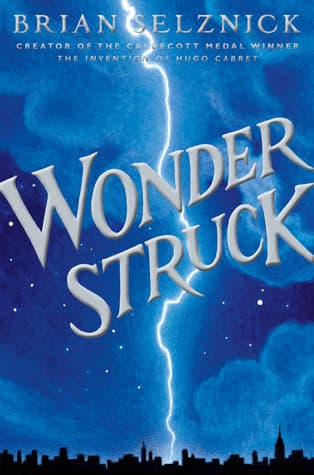
- Wonderstruck
Brian Selznick
4.2 (52k) average on GoodreadsChildren'sAnother visually driven mystery with interconnected storylines and historical elements.
- The Phantom Tollbooth
Norton Juster
4.2 (242k) average on GoodreadsFantasyExplores a journey of discovery and imagination with a unique narrative style.
- Harry Potter and the Sorcerer's Stone
J.K. Rowling
4.5 (7M) average on GoodreadsFantasyRescued from a miserable life under the stairs, an orphaned boy discovers he's a wizard destined for a magical school, where he uncovers a dangerous secret tied to the dark wizard who murdered his parents.
- The Hunger Games
Suzanne Collins
4.3 (6.4M) average on GoodreadsFantasyIn a future where children fight to the death on live television, Katniss Everdeen volunteers for the arena, turning a death sentence into a fight for survival and a spark of rebellion.
- 1984
George Orwell
4.2 (3.1M) average on GoodreadsPoliticsIn a future where surveillance and thought control are absolute, a man's search for truth clashes with the Party, showing that hope can be a form of rebellion.
- Divergent
Veronica Roth
4.2 (2.9M) average on GoodreadsFantasyIn a society divided by virtues, a sixteen-year-old's difference from the norm starts a rebellion that threatens her world.




Enjoyed the summary?
A summary gives you the shape of the book. The book itself has the detail, the examples and the voice.
Find The Invention of Hugo Cabret on AmazonAs an Amazon Associate, BookBrief earns from qualifying purchases. How we're funded