
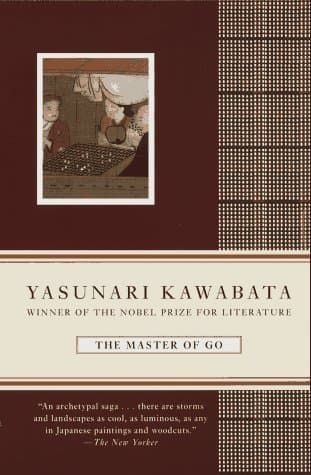
Synopsis
Covers the whole plot, including the ending.
- Difficulty
- Medium
- Pacing
- Slow
- Mood
- Contemplative, Melancholy, Atmospheric, Reflective
- Read it if
- You appreciate literary fiction, Japanese culture, and quiet, contemplative narratives that explore themes of tradition versus modernity, the nature of competition, and the passing of an era.
- Skip it if
- You prefer fast-paced plots, strong character-driven narratives with direct emotional conflict, or have no interest in the game of Go (though the book is more about the cultural context than the game itself).
The Master of Go Plot Summary
Covers the whole plot, including the ending.
The Master's Challenge
The story introduces Honinbo Shusai, the Master of Go and the last of his line. At 63 and in poor health, he announces his final professional game. This retirement match is a symbolic passing of the torch. His opponent is Otake, a younger, ambitious player known for his modern, aggressive style. The match is highly anticipated, not just for its sporting importance, but as a cultural event showing the clash between traditional and modern Go. The rules are set carefully, including a long playing time and the traditional 'nigiri' method to decide who plays first.
Opening Moves and Early Delays
The first moves are played with ceremony, highlighting the event's historical weight. The Master, playing white, opens cautiously, while Otake, with black, plays more assertively. The game soon faces problems. Due to the Master's frail health and the demanding schedule, the match is played in many sessions, often separated by days or weeks. These frequent delays, needed for the Master to rest, frustrate Otake, who believes they disrupt his strategy. The reporter-narrator, Umino, records these events, showing the contrast between the Master's traditional view of time and Otake's desire for efficiency.
The Master's Illness and Otake's Frustration
As the game continues, the Master's health becomes a major factor. He has severe stomach pains, requiring him to stop playing for long periods. These interruptions, some lasting weeks, are noted by the press. Otake grows more frustrated by the delays, seeing them as unfair advantages for the Master, who gets more time to think. He voices his irritation to organizers and the press, creating tension around the game. The narrator observes how these outside factors begin to overshadow the pure strategic play, making the match a test of endurance and will as much as skill.
A Controversial Move
During one session, an important incident occurs. The Master makes a move, but Otake claims the Master had placed a stone elsewhere and then moved it. This accusation, though unproven, causes a big disruption. The Master, already frail, is deeply offended by the implied cheating. The incident highlights the clash between the Master's reliance on honor and tradition and Otake's more practical, competitive mindset. Organizers intervene, and the game continues, but trust between the players is broken, adding personal animosity to the professional rivalry.
The Master's Retreat
After the controversy and his health problems, the Master's play changes. He becomes more conservative, often choosing defensive moves instead of his usual aggressive attacks. Both Otake and the narrator notice this change, interpreting it as a sign of the Master's lessening energy and perhaps a loss of his fighting spirit. His moves, once bold, now show weariness, a desire to preserve rather than conquer. This period of play shows the physical toll the match takes on the aging Master and how it affects his strategic choices.
Otake's Relentless Pressure
In contrast to the Master's fading energy, Otake remains aggressive. He continues to push his advantage, playing with modern, calculated efficiency to exploit any weakness. He shows little sympathy for the Master's condition, seeing the match as a professional contest. His goal is victory, and he uses every strategic tool to achieve it. This determination from Otake further emphasizes the generational and stylistic gap between the two players, as he represents a new era of Go where emotion gives way to pure competition.
The Final Stages
The game enters its final stages. Both players are tired, but Otake's youth and stamina prove key. The Master, under pressure and battling his health, makes a crucial error. This mistake, subtle to an untrained eye, is a significant turning point, giving Otake a clear advantage. The narrator describes the atmosphere of the final sessions, the silence broken only by the click of stones, and the tension as the outcome becomes clear. The Master's declining physical state is clearly linked to his strategic misstep.
Otake's Victory
After 14 sessions and 273 moves, Otake wins. The Master, playing white, resigns. The victory is hard-won, showing Otake's skill and endurance. While Otake wins, the victory feels bittersweet, overshadowed by the Master's illness and the match's controversial aspects. The narrator reflects on the outcome's meaning, not just as a sporting result, but as a symbolic end of an era. The traditional, almost spiritual approach to Go, represented by the Master, gives way to Otake's modern, competitive style.
The Master's Demise
The Master's health, already fragile during the match, quickly worsens after his defeat. Less than a year later, Honinbo Shusai dies. His death, following his retirement game, marks the symbolic end of an era. The narrator reflects on the Master's life and legacy, acknowledging his contribution to Go and the impact of his death. His death is not just the loss of a great player, but the end of a Go style and philosophy that had defined the game for generations, making the retirement match his true final act.
Reflections on Tradition and Modernity
After the Master's death, the narrator, Umino, thinks deeply about the experience. He considers the differences between the Master's traditional, almost spiritual Go approach and Otake's modern, results-oriented style. The match, for Umino, becomes a small example of Japan's move from its feudal past to its industrialized present. He mourns the loss of the Master's era, marked by grace, honor, and respect for the game itself, acknowledging that while progress is unavoidable, something valuable was lost.
Principal Figures
Honinbo Shusai
Protagonist
The aging, revered Master of Go, the last of his lineage.
Honinbo Shusai is the 21st and last hereditary Master of Go, a figure of immense prestige and tradition. He is 63, frail, and suffering from a stomach ailment, yet he embodies the dignity, grace, and spiritual depth of traditional Go. His play is characterized by its elegance, intuition, and a sometimes-unpredictable brilliance. He values honor, ceremony, and the purity of the game above all else, often making decisions based on deep contemplation rather than immediate tactical advantage. His declining health mirrors the waning era he represents, making him a poignant symbol of a vanishing Japan.
Relationships: Otake (Opponent in his final game, representing the modern challenge to his tradition.); Umino (Narrator) (The subject of Umino's admiration and a source of deep reflection.)
Otake
Antagonist
The ambitious, younger challenger representing modern Go.
Otake is a Seventh-Dan player, ambitious, highly skilled, and representing the new generation of Go players. He is pragmatic, competitive, and focused on victory, employing a modern, aggressive style of play. Unlike the Master, Otake is less concerned with ceremony or the spiritual aspects of the game and more with efficiency and tactical advantage. His frustration with the Master's frequent health-related delays highlights his modern sensibility, valuing punctuality and fairness over deference to age or tradition. He is a formidable opponent, relentless in his pursuit of victory, and ultimately the instrument of the old era's symbolic defeat.
Relationships: Honinbo Shusai (His opponent in the historic retirement match, representing the tradition he seeks to overcome.); Umino (Narrator) (The object of Umino's critical observation regarding his modern, less reverent approach.)
Umino
Supporting
The newspaper reporter and primary narrator, observing and reflecting on the match.
Umino is the unnamed reporter assigned to cover the Master's retirement match. He serves as the primary narrator and the reader's guide through the intricate details of the game and its deeper cultural significance. He is observant, reflective, and deeply appreciative of the Master's traditional style and the elegance of the old ways. While he reports objectively, his personal sympathies clearly lie with the Master, and he often muses on the broader implications of the match for Japanese culture. He embodies the intellectual observer, grappling with the tension between tradition and modernity.
Relationships: Honinbo Shusai (The subject of his reporting and admiration, whose decline he chronicles.); Otake (The subject of his reporting and, at times, his subtle critique regarding his modern approach.)
Kensaku
Supporting
The referee and Master's disciple, a figure of loyalty and tradition.
Kensaku is the Master's disciple and the official referee for the match. He is deeply loyal to Honinbo Shusai and committed to upholding the traditions and etiquette of Go. He often acts as a mediator in disputes, particularly regarding the Master's health and the schedule, attempting to balance Otake's demands with respect for his ailing mentor. Kensaku represents the old guard's efforts to maintain decorum and respect in the face of modern pressures, often finding himself in a difficult position between the two players.
Relationships: Honinbo Shusai (His devoted disciple and a loyal supporter during the match.); Otake (The opposing player, with whom he has disagreements regarding match protocols.)
The Go Association Officials
Supporting
The organizers and arbiters of the match, navigating complex logistical and ethical challenges.
These officials are responsible for organizing and overseeing the Master's retirement match. They represent the institutional body of Go, attempting to manage the complex logistics, scheduling, and disputes that arise. They are caught between the demands of the ailing Master and the impatient Otake, striving to maintain fairness and adhere to established rules while also accommodating the unique circumstances of such a historic event. Their role often highlights the difficulties of reconciling traditional practices with modern expectations and competitive pressures.
Relationships: Honinbo Shusai (The respected Master whose final match they are organizing.); Otake (The challenger whose demands they must address.)
Themes & Insights
Tradition vs. Modernity
This is the main theme, shown in the conflict between Honinbo Shusai and Otake. The Master embodies centuries of Go tradition, with its spiritual depth, beauty, and emphasis on honor and ceremony. His slow, thoughtful play and his presence evoke a vanishing era of imperial Japan. Otake, on the other hand, represents the modern, practical, and competitive spirit of the 20th century. His aggressive, efficient play, his frustration with delays, and his focus on winning reflect a shift towards Western values of efficiency and direct competition. The match itself becomes a symbolic battle for the essence of Go and, by extension, for Japan's cultural identity.
“In the Master's Go, there was the scent of the past. In Otake's, the scent of the present.”
The Beauty and Rigor of Go
The novel explores the details and philosophy of Go. Kawabata uses the match to show Go not just as a game, but as an art form, a spiritual discipline, and a reflection of life. The narrator describes the strategic nuances, the subtle power of each move, and the mental and emotional toll it takes on players. The 'immortal game' is presented as a testament to human intellect and intuition, where one mistake can ruin a masterpiece. The game's complexity and the dedication needed to master it are highlighted through the Master's lifelong devotion and Otake's constant study.
“Go is a microcosm of human life, where a single stone can change the fate of a nation.”
Mortality and Decline
The Master's declining health and eventual death are central to the story, tied to the theme of tradition's decline. His physical weakness, stomach pains, and frequent need for rest are not just plot points but show the fragility of life and the inevitability of aging. His struggle during the match reflects a broader struggle against time and change. The Master's defeat and death are presented as a natural, if sad, end to a life dedicated to an art form, symbolizing that even the greatest masters must yield to mortality, just as old traditions give way to new ones. This theme adds melancholy to the story.
“The Master, who had conquered all of Japan, was now fighting a losing battle against his own body.”
Honor and Etiquette
The novel emphasizes the importance of honor, respect, and traditional etiquette in the world of Go, especially as upheld by the Master. The ceremonial aspects of the match, the respect for the Master's status, and the expectation of dignified conduct are constantly highlighted. Otake's challenge about the Master's move, whether true or not, is a serious breach of this honor code, deeply offending the Master and showing a generational shift in values. The narrator often contrasts the Master's stoic adherence to tradition with Otake's more practical and less respectful approach, mourning the erosion of these cultural norms in the face of modern competitive pressures.
“In the old days, there was a certain decorum, even in battle. Now, it was simply about winning.”
Plot Devices & Literary Techniques
The Narrator (Umino)
A newspaper reporter who provides an objective yet reflective account of the match.
Umino, the unnamed newspaper reporter, serves as the primary lens through which the reader experiences the story. He provides a detailed, almost journalistic account of the match, including specific moves, dates, and player reactions. However, his role extends beyond mere reporting; he offers profound philosophical reflections on the game, the players, and the broader cultural shifts represented by the match. His subtle bias towards the Master and the traditional ways imbues the narrative with a sense of elegy and cultural commentary, making him an unreliable but deeply insightful observer.
The Extended Match Schedule
The prolonged, interrupted nature of the game due to the Master's health.
The match's protracted duration, spanning several months and numerous interruptions, is a crucial plot device. It directly highlights the Master's declining health, underscoring his mortality and the physical toll the game takes. These delays also serve to exacerbate Otake's frustration, creating tension and emphasizing the clash between traditional Go's unhurried pace and modern demands for efficiency. The fragmented schedule allows for deeper reflection and external events to influence the narrative, transforming the game from a mere contest into a prolonged, symbolic struggle.
The 'Immortal Game'
The match itself, a real-life historical event, is fictionalized as a symbolic battle.
The entire Go match serves as an extended metaphor for the clash between tradition and modernity in Japan. Kawabata fictionalizes a real-life game (played in 1938) to imbue it with profound symbolic weight. Every move, every delay, and every interaction between the players becomes a representation of larger cultural forces at play. The outcome of the game, Otake's victory, is not just a sporting result but a symbolic declaration of the old era's passing and the new era's ascendancy, making the match itself the central 'device' through which the novel's themes are explored.
Symbolism of the Stones
The black and white Go stones representing opposing forces and philosophies.
The black and white stones of Go are potent symbols throughout the narrative. Beyond their function in the game, they represent the dualities at play: tradition (often associated with the Master's white stones, which traditionally move second and require a more defensive posture) versus modernity (Otake's black stones, which move first and are often more aggressive), life versus death, the past versus the future. The placement of each stone is imbued with meaning, reflecting not only strategic intent but also the philosophical approaches of the players, making the physical components of the game extensions of their personalities and eras.
The Master of Go Quotes
“The life of a man is a long road, and the road of Go is also a long road.”
“The game of Go is a microcosm of life itself. It teaches patience, foresight, and the acceptance of loss.”
“The Master's playing showed a nobility that transcended victory or defeat.”
“Beneath the surface of civility, a fierce battle was being waged.”
“He seemed to be playing not against his opponent, but against fate itself.”
“The true artist plays not with stones, but with the spirit.”
“Modern Go has no room for the beautiful, the artistic. It is a game of cold calculation.”
“The Master's last game was his greatest work of art.”
“Time, like a Go board, has its empty spaces and its filled ones.”
“The old ways were dying, and with them, a certain kind of beauty.”
“There is a loneliness in the pursuit of perfection.”
“Every move on the Go board is a decision in life.”
“The silence of the Go room was heavy with unspoken thoughts and strategies.”
“To win without understanding is to lose in a deeper sense.”
Quiz
10 questions on the plot and the characters. Each answer comes with a short explanation.
Question 1
What is the name of the revered, aging Master in the story?
- Otake
- Shusai
- Otani
- Kuwabata
Show answer
B. Shusai The revered Master, who is playing his final game, is named Shusai.
Question 2
What is the name of the younger, modern challenger who plays against the Master?
- Otake
- Honinbo
- Shusai
- Kawakita
Show answer
A. Otake The challenger is a younger, more aggressive player named Otake, representing the new era.
Question 3
What is the primary reason the Master's final game is considered significant beyond just the win/loss outcome?
- It was the first game ever broadcast on radio.
- It symbolized the clash between traditional Japanese values and modern influences.
- It introduced a revolutionary new Go strategy.
- It was the longest Go match in history.
Show answer
B. It symbolized the clash between traditional Japanese values and modern influences. The match serves as a powerful metaphor for the transition from traditional, imperial Japan to the modern twentieth century.
Question 4
The match between the Master and Otake took place over an extended period. What was a significant practical challenge that arose due to its length and the Master's health?
- They ran out of Go stones.
- The venues had to be changed multiple times due to weather.
- Communication breakdowns occurred between the players and the press.
- The strict rules regarding adjourned games and sealed moves caused tension.
Show answer
D. The strict rules regarding adjourned games and sealed moves caused tension. The extended duration and the Master's declining health led to disputes and misunderstandings regarding the rules of adjournment and sealed moves, highlighting the clash between old customs and modern practicality.
Question 5
What role does the narrator, Uminosuke, play in the story?
- He is a close friend of Otake, advising him during the match.
- He is the chief referee of the Go match.
- He is a journalist chronicling the match, offering an observer's perspective.
- He is the Master's disciple, learning from his final game.
Show answer
C. He is a journalist chronicling the match, offering an observer's perspective. Uminosuke is a journalist, providing the narrative voice and his observations on the game, the players, and the changing times.
Question 6
Which specific move by Otake causes significant controversy and is seen by some as a symbol of 'bad taste' or a break from tradition?
- His decision to play a move immediately after the Master had sealed his own.
- His demand for a specific, modern clock for timing moves.
- His move on the second day, made before the Master had officially returned to the board.
- His refusal to bow to the Master at the start of a session.
Show answer
C. His move on the second day, made before the Master had officially returned to the board. Otake's controversial move on the second day, played before the Master was formally present, highlighted the clash between traditional etiquette and modern expediency, causing a stir among traditionalists.
Question 7
The Master's illness is a recurring element. How does his physical decline relate to the broader themes of the novel?
- It emphasizes the universal struggle against disease, unrelated to the Go match.
- It serves as a metaphor for the fading of old traditions and the passing of an era.
- It suggests that the Master's talent was never truly exceptional, only his endurance.
- It is a plot device to introduce a new character to replace him.
Show answer
B. It serves as a metaphor for the fading of old traditions and the passing of an era. The Master's physical decline mirrors the decline of the traditional world he represents, making his final game a poignant symbol of an era ending.
Question 8
How does the book's narrative style, particularly its fragmented, episodic structure, contribute to its themes?
- It makes the story difficult to follow, reflecting the confusion of the Go game itself.
- It mirrors the disjointed nature of modern life, contrasting with the Master's unified traditional world.
- It allows for multiple narrators to offer different perspectives on the match.
- It is a common feature of Kawabata's work, without specific thematic relevance here.
Show answer
B. It mirrors the disjointed nature of modern life, contrasting with the Master's unified traditional world. The fragmented narrative, jumping between different days and locations of the match, reflects the disruption and loss of continuity characteristic of modernity, contrasting with the Master's more holistic, traditional approach.
Question 9
What is the significance of the Master's 'ghost' or 'phantom' move that he considers playing but ultimately doesn't?
- It was a tactical blunder that would have cost him the game instantly.
- It represents a moment of profound artistic insight and mastery that is beyond the understanding of the modern game.
- It was a move suggested by his wife, showing her influence on his game.
- It was a move that Otake had anticipated and prepared for.
Show answer
B. It represents a moment of profound artistic insight and mastery that is beyond the understanding of the modern game. The 'ghost' move, a brilliant but unplayed possibility, symbolizes the Master's transcendent artistry and intuitive understanding of Go that perhaps cannot be fully expressed or appreciated in the changing, more pragmatic world.
Question 10
The book can be interpreted as an elegy. For what specifically is it an elegy?
- For the lost art of writing Go match reports.
- For the Master's personal career and his competitive spirit.
- For a bygone era of Japanese tradition, grace, and an older form of mastery.
- For the game of Go itself, suggesting its eventual decline.
Show answer
C. For a bygone era of Japanese tradition, grace, and an older form of mastery. The novel is often seen as an elegy for the passing of an older, more traditional Japan, epitomized by the Master's style of play and his ultimate defeat.
The Master of Go FAQ
What is the central conflict of 'The Master of Go'?
The central conflict revolves around the final, ceremonial Go match between the aging, traditional Master Honinbo Shūsai and the younger, more aggressive challenger, Otake. This match symbolizes the clash between old Japan's reverence for tradition and artistry, and modern Japan's embrace of efficiency and strategic innovation.
Who are the two main players in the Go match, and what do they represent?
The two main players are Master Honinbo Shūsai, representing the pinnacle of traditional Go, artistry, and the fading values of imperial Japan, and Otake, the young challenger, who embodies modern strategic thinking, practicality, and the relentless drive of the new era. Their styles mirror their respective eras.
What role does the narrator, Umino, play in the story?
Umino serves as a detached observer and chronicler of the match, initially hired by the newspaper to report on it. He provides insights into the players' psychology, the intricacies of the game, and the broader cultural implications, acting as the reader's guide through this significant event.
How does the novel portray the game of Go beyond a simple board game?
The novel elevates Go into a profound art form and a spiritual discipline, reflecting deep philosophical principles and the essence of Japanese culture. It's not just about winning or losing, but about the beauty of the moves, the players' character, and the communion with tradition.
What is the significance of the match being the Master's 'retirement game'?
The fact that it is the Master's retirement game imbues the match with immense symbolic weight, marking the end of an era and the passing of the torch. It's not just a contest but a final, public performance and a dignified farewell from a living legend, underscoring the irreversible shift in values.
What 'hidden' details about the Master's health contribute to the narrative tension?
The Master's declining health, though often downplayed or attributed to his age, subtly impacts his performance and decision-making throughout the prolonged match. His frequent ailments and need for rest periods highlight his human fragility beneath his legendary status, adding pathos to his struggle.
How do the rules and administration of the match, particularly the 'time limit' and 'adjournment' rules, create conflict?
The modern rules, especially the strict time limits and the contentious adjournment rule where the last move is sealed, clash with the Master's traditional, unhurried approach. This administrative friction, particularly regarding Otake's sealed move, highlights the insensitivity of modern efficiency to the nuances of artistic endeavor.
Is there any symbolism in the choice of colors (black and white stones) for the players?
While not explicitly stated for individual players, the black and white stones inherently symbolize duality: tradition versus modernity, light versus shadow, life versus death. The Master plays white, often associated with purity and age, while Otake plays black, representing aggression and the unknown future.
What is the psychological impact of the 'sealed move' incident on the Master?
The 'sealed move' incident, where Otake's crucial move was recorded and not immediately played, deeply unsettled the Master. It broke his concentration, disrupted his artistic flow, and symbolized the cold, calculated, and somewhat disrespectful nature of the modern approach, contributing to his psychological distress.
How does Otake's personality and strategic approach affect the Master's mental state?
Otake's aggressive, pragmatic, and sometimes impatient approach to the game, contrasted with the Master's meditative style, constantly grates on the Master. Otake's focus purely on winning, rather than the beauty of the game, causes the Master considerable mental fatigue and disillusionment.
Explore the narrator's evolving psychological state or perspective throughout the match.
Initially, Umino is a neutral reporter, but as the match progresses, he develops a profound admiration for the Master and a growing empathy for his struggle against modernity. He becomes increasingly critical of Otake's tactics and the unsympathetic administration, reflecting a shift from objective observer to a more emotionally invested chronicler.
What emotional toll does the Master's declining health take on him, beyond the physical?
The Master's declining health not only weakens him physically but also contributes to his emotional vulnerability and a sense of encroaching obsolescence. It highlights his struggle to maintain his dignity and artistic integrity in the face of both his physical limitations and the relentless pressure of a new era, leading to profound sadness.
Is Otake truly a villain, or merely a product of his time?
Otake is not necessarily a villain but rather a product and champion of his time. His aggressive play and focus on victory reflect the burgeoning pragmatism and efficiency of modern Japan, which valued results over traditional aesthetics. He represents an inevitable cultural shift, rather than malicious intent.
How does the novel subtly critique or lament the loss of traditional Japanese values?
The novel subtly laments the loss of traditional Japanese values through the Master's defeat and subsequent death, symbolizing the fading of an era where art, patience, and spiritual depth were paramount. The narrative often contrasts the serene beauty of the Master's play with the harsh, result-oriented nature of the modern game, highlighting what has been sacrificed.
What is the ultimate 'victory' or 'defeat' in the context of the novel's themes?
While the Master loses the Go match, his 'defeat' is arguably a spiritual victory, as he retains his dignity and artistic integrity, cementing his legend. Otake wins the game but arguably loses the moral high ground, representing a victory for efficiency over art, which the novel suggests is a profound cultural loss.
Could the Master have won if the match had been played under older rules, or if he were younger?
It is strongly implied that the Master's chances would have been significantly higher under older rules that favored unhurried play and respected artistic flow. His age and declining health, exacerbated by the modern rules, were major factors in his loss, suggesting that the outcome was less about pure skill and more about the changing conditions.
What is the significance of the Master's eventual death shortly after the match?
The Master's death shortly after the match is highly symbolic, marking the definitive end of an era. It suggests that his spirit, inextricably linked to the traditional art of Go and the values it represented, could not survive in a world that no longer fully appreciated or accommodated it. His passing closes the chapter on imperial Japan's cultural dominance.
How does Kawabata use the game of Go as a metaphor for life and change?
Kawabata uses Go as a profound metaphor for life's strategic decisions, the beauty of human effort, and the inevitability of change. The evolving game board reflects the shifting landscape of society, where old ways must eventually yield to new, often with a mix of sadness and acceptance, illustrating the continuous cycle of tradition and innovation.
About the author
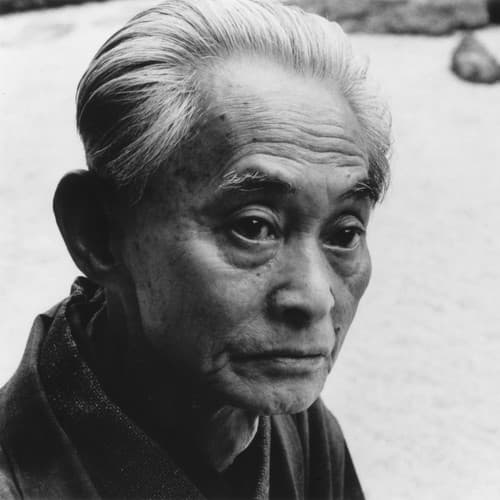
Yasunari Kawabata was a Japanese novelist and short story writer whose spare, lyrical, subtly shaded prose works won him the Nobel Prize in Literature in 1968, the first Japanese author to receive the award. His works have enjoyed broad international appeal and are still widely read.
Similar books
- The Makioka Sisters
Jun'ichirō Tanizaki
4.0 (6k) average on GoodreadsHistorical FictionExplores the decline of traditional Japanese aristocracy and the clash with modern values.
- A Pale View of Hills
Kazuo Ishiguro
3.8 (20k) average on GoodreadsLiterary FictionFeatures subtle prose and explores themes of memory, loss, and post-war cultural shifts in Japan.
- The Temple of the Golden Pavilion
Yukio Mishima
4.0 (12k) average on GoodreadsHistorical FictionBoth deal with reverence for tradition, but Mishima's exploration is often more violent, nihilistic, and focused on destructive impulses. Kawabata's work, while melancholic, maintains a sense of dignity and quiet contemplation, offering a more nuanced and less confrontational lament for the passing of an era.
- Nineteen Eighty-Four
George Orwell
4.2 (5.5M) average on GoodreadsFictionWinston Smith dreams of truth and rebellion in a world where Big Brother watches all, but he confronts the terrifying power of a regime that controls not just actions, but thoughts.
- The Frozen River
Ariel Lawhon
4.4 (600k) average on GoodreadsFictionIn 1789 Maine, a heroic midwife's diary helps her expose a murder and get justice in a town that wants to silence her.
- A Man Called Ove
Fredrik Backman
4.4 (569k) average on GoodreadsFictionA stubborn widower, who lives by strict rules, finds his quiet world changed by a lively new family next door, making him face his past and find happiness in human connection.




Enjoyed the summary?
A summary gives you the shape of the book. The book itself has the detail, the examples and the voice.
Find The Master of Go on AmazonAs an Amazon Associate, BookBrief earns from qualifying purchases. How we're funded