

Synopsis
Covers the whole plot, including the ending.
- Difficulty
- Medium
- Pacing
- Moderate
- Mood
- Dark, Suspenseful, Intellectual, Disturbing
- Read it if
- You enjoy intricate thrillers blending historical research, occult themes, and modern police procedural work with strong female protagonists.
- Skip it if
- You are uncomfortable with graphic descriptions of ritualistic violence, religious/satanic cult themes, or a somewhat ambiguous ending.
The Mephisto Club Plot Summary
Covers the whole plot, including the ending.
The Christmas Eve Sacrifice
On Christmas Eve, medical examiner Dr. Maura Isles is called to a gruesome scene: Father Daniel Brophy's housekeeper, found crucified upside down in her Boston apartment. The victim's hands and feet are pierced with nails, and her body is drained of blood. A pentagram is carved into her abdomen. Detective Jane Rizzoli, heavily pregnant and on maternity leave, joins the investigation due to the disturbing nature of the crime and her past experiences with ritualistic killings. Initial suspects include local cults or satanic groups, but the intricate details suggest a more sophisticated killer. Maura and Jane quickly realize this is not an isolated incident but the first in a series of planned, biblically-inspired murders.
The Scholar and the Suspect
The victim's connection to Father Brophy, a scholar of ancient languages and a member of 'The Mephisto Club,' becomes a focus. The Mephisto Club is a secretive society of academics who study the history of evil. Father Brophy introduces Maura and Jane to the club's leader, Professor Anthony Sansone, a charismatic but enigmatic figure. Sansone and other members offer their expertise, interpreting the cryptic clues at the crime scenes, which appear linked to ancient demonic lore and early Christian persecution. While Sansone seems helpful, his intense interest in the cases and detailed knowledge of obscure rituals make Rizzoli suspicious.
The Second Victim and Ancient Texts
A second victim is found, mirroring another historical martyrdom. This victim, a young man, is in a similar ritualistic pose, strengthening the theory of a serial killer with deep knowledge of religious history. The killer leaves symbols and Latin phrases that baffle police but are recognizable to Mephisto Club members. Maura, intrigued, spends more time with the club, especially Sansone, who seems to decipher the killer's messages. Jane, however, remains wary, sensing an underlying agenda within the club and questioning their motives for 'assisting' the police.
Jane's Growing Suspicions
As more victims appear, each death echoing a historical persecution or demonic legend, Jane Rizzoli's unease with Professor Sansone and the Mephisto Club grows. She notices Sansone's almost gleeful fascination with the murder details and his possessive attitude toward Maura. Jane begins to suspect the club's 'help' might be a way to control the investigation or an intellectual game for them. Her instincts, honed by years with violent criminals, tell her something is wrong. She confides in her husband, Gabriel Dean, but struggles to explain her apprehension, as Sansone's alibis and public persona are perfect.
Maura's Deepening Involvement
Maura Isles, often more comfortable with the dead than the living, becomes captivated by the intellectual discussions and ancient lore presented by the Mephisto Club. She is drawn to Professor Sansone's intellect and his ability to see connections where others see only chaos. Her professional objectivity begins to waver as she spends more time with the club members, attending their late-night meetings and reading their forbidden texts. This immersion creates a rift between her and Jane, who sees Maura's involvement as dangerous and unprofessional. Maura, however, believes understanding the killer's mindset requires understanding the evil the club studies.
The Hunter Becomes the Hunted
The murders become more brutal and complex. The killer, now seemingly aware of the police's progress and the Mephisto Club's involvement, begins to target people loosely connected to the investigation or the club. This shift suggests a more personal motive or a desire to create fear. The stakes are raised, and Jane Rizzoli feels an urgent need to protect Maura, whose closeness to Sansone and the club puts her in danger. The police force is stretched, and the lack of conventional clues makes the case frustrating, leading to pressure from superiors and the public.
The Revelation of a Legacy
A breakthrough occurs when a hidden message or overlooked artifact is found, pointing to an older, darker lineage behind the killings. The murders are not random acts by a disturbed person but are tied to a centuries-old vendetta or a secret society's historical mission to eliminate perceived evil or heresy. This revelation changes the investigation, turning it from a hunt for a modern serial killer into a pursuit of someone enacting an ancient, personal, and organized agenda. The Mephisto Club's knowledge of historical persecutions suddenly becomes terrifyingly relevant, suggesting they might know more than they admit.
The Confrontation and Betrayal
Jane Rizzoli's suspicions about Professor Sansone lead to a direct confrontation. She presents him with her evidence and theories, accusing him of orchestrating or being involved in the murders. Sansone, however, skillfully deflects her accusations, turning them back on her or offering plausible, if unsettling, explanations. The tension between them reaches a breaking point. It is revealed that Sansone and certain Mephisto Club members are not just studying evil but actively engaging with it, believing themselves to be inheritors of an ancient order dedicated to 'purifying' society. Maura, caught in the middle, must choose between her loyalty to Jane and her intellectual fascination with Sansone. She realizes the true extent of his manipulation.
The Race to Save Maura
As the truth unravels, Maura Isles finds herself in danger. She realizes Sansone's true, sinister intentions and his connection to the killer. He views her as a potential convert to his twisted ideology or a sacrifice for his grand design. Maura is lured into a trap, becoming the next intended victim in the killer's elaborate, historically-themed ritual. Jane Rizzoli, now fully understanding Sansone's depravity and the immediate threat to her friend, launches a desperate rescue mission. She races against time, using her instincts and fragmented clues to find Maura, knowing any delay could be fatal.
The Climax at the Ancient Site
The novel's climax takes place at a remote, historically significant location—an old church or a forgotten catacomb—chosen by the killer for its symbolic meaning. Jane Rizzoli, with help from her husband Gabriel Dean and trusted officers, tracks Maura to this eerie setting. There, they find Maura on the verge of being sacrificed in a macabre ritual. A violent confrontation follows between Jane, her team, and the killer, who is revealed to be a fanatical disciple acting under Sansone's influence, or perhaps Sansone himself in a shocking twist. The battle is fierce, leading to the killer's downfall and Maura's narrow escape, but not without deep psychological scars.
Aftermath and Unresolved Questions
Afterward, the immediate threat is neutralized, and the killer is caught or killed. Maura Isles is rescued, traumatized but alive. Professor Sansone's true role in the murders is exposed, revealing him as a manipulative mastermind who used the Mephisto Club to further his dark agenda. While the specific crime is solved, the novel leaves lingering questions about the nature of evil, the seductive power of intellectualism gone wrong, and the Mephisto Club's continued influence. The experience deeply affects both Maura and Jane, leaving them to grapple with the disturbing reality that some forms of evil are not easily contained or understood, and that the line between study and participation can be dangerously thin.
The Mephisto Club Characters
Dr. Maura Isles
Protagonist
Medical examiner, brilliant but emotionally reserved, drawn to intellectual puzzles.
Dr. Maura Isles is a forensic pathologist, known for her sharp intellect, meticulous nature, and a certain detachment from the emotional chaos of life. She is a woman of science, often more comfortable dissecting the dead than navigating the complexities of the living. Her own past, marked by adoption and a search for belonging, contributes to her somewhat solitary existence. Maura is intellectually curious, making her susceptible to the allure of the Mephisto Club's academic pursuits, even when they delve into morally ambiguous territory. She seeks understanding and logic, even in the face of the most illogical evil.
Relationships: Detective Jane Rizzoli (Professional partners and close friends, often balancing each other's strengths and weaknesses.); Professor Anthony Sansone (Intellectually drawn to him, initially sees him as a mentor/ally, later realizes his manipulative and dangerous nature.)
Detective Jane Rizzoli
Protagonist
Homicide detective, tough, intuitive, and fiercely protective, especially while pregnant.
Detective Jane Rizzoli is a no-nonsense homicide detective, known for her tenacity, street smarts, and a powerful, often aggressive, drive for justice. She operates on instinct as much as evidence, possessing a deep understanding of criminal psychology. Heavily pregnant during this investigation, her protective instincts are heightened, not just for her unborn child but also for her friend Maura. Jane is skeptical of academic theories and intellectual posturing, preferring concrete facts and direct action. Her working-class background and practical approach often put her at odds with the more esoteric world of the Mephisto Club, but her unwavering moral compass guides her.
Relationships: Dr. Maura Isles (Professional partners and close friends, often balancing each other's strengths and weaknesses.); Gabriel Dean (Her husband, a former FBI agent, who provides support and insight.); Professor Anthony Sansone (Deeply distrustful of him, views him as a suspect and a manipulator.)
Professor Anthony Sansone
Antagonist
Charismatic and manipulative leader of The Mephisto Club, obsessed with evil.
Professor Anthony Sansone is the enigmatic and charismatic leader of The Mephisto Club, a brilliant scholar of ancient languages and the history of evil. He possesses a captivating intellect and a profound knowledge of obscure religious texts and historical persecutions. Sansone presents himself as an academic helper to the police, but beneath his polished exterior lies a manipulative and deeply disturbed individual. He is not merely studying evil; he is fascinated by it to the point of actively engaging with it, seeing himself as a modern-day arbiter of justice or a participant in an ancient, dark legacy. His charm is a facade for a dangerous ideology.
Relationships: Dr. Maura Isles (Manipulates her intellectual curiosity, drawing her into his world.); Detective Jane Rizzoli (Views her as an obstacle and a less intelligent opponent, often dismissive of her instincts.); Father Daniel Brophy (Fellow club member, perhaps a pawn or a colleague in his twisted agenda.)
Father Daniel Brophy
Supporting
Catholic priest and scholar, member of The Mephisto Club, initially helpful but conflicted.
Father Daniel Brophy is a Catholic priest and a respected scholar of ancient languages, particularly Aramaic. He is a member of The Mephisto Club and initially serves as a bridge between the police and the secretive society. Brophy is genuinely concerned by the murders and offers his expertise to help the investigation. However, he is also deeply entangled in the club's activities and struggles with the moral implications of their studies. He represents the more benign, academic side of the club, but his loyalty and knowledge are ultimately compromised by his association with Sansone and the darker aspects of their research.
Relationships: Dr. Maura Isles (Collaborates academically, shares a common interest in ancient texts.); Professor Anthony Sansone (Fellow club member, perhaps influenced or overshadowed by Sansone's intellect.)
Gabriel Dean
Supporting
Jane Rizzoli's husband, former FBI agent, provides support and investigative insights.
Gabriel Dean is Jane Rizzoli's husband and a former FBI agent. He is intelligent, calm, and deeply supportive of Jane, often acting as her sounding board and providing a grounded perspective amidst the chaos of her investigations. His past experience in law enforcement gives him unique insights into the criminal mind and the intricacies of high-stakes cases. While not directly involved in the police investigation, he offers Jane emotional support and occasional strategic advice, helping her process complex information and maintain her focus, especially during her pregnancy.
Relationships: Detective Jane Rizzoli (Husband, deeply supportive and loving.); Dr. Maura Isles (Acquaintance through Jane, concerned for her safety.)
Detective Barry Frost
Supporting
Jane Rizzoli's partner, technically savvy but sometimes squeamish.
Detective Barry Frost is Jane Rizzoli's police partner. He is known for his technical skills, particularly with computers and forensics, making him a valuable asset in modern investigations. However, Frost also has a somewhat sensitive stomach and can be squeamish when confronted with the most gruesome aspects of crime scenes. Despite this, he is loyal to Jane and dedicated to his job, providing a practical, often understated, counterpoint to Jane's more aggressive style. He follows Jane's lead and helps process evidence and track down leads.
Relationships: Detective Jane Rizzoli (Police partner, loyal and reliable.)
Julian Perrault
Supporting
Mysterious member of The Mephisto Club, possibly a direct descendant of ancient families.
Julian Perrault is a reclusive and somewhat enigmatic member of The Mephisto Club. He is presented as someone with deep ancestral roots, possibly a descendant of families persecuted during ancient times or those who secretly maintained ancient knowledge. Perrault's quiet demeanor and profound, almost unsettling, knowledge of obscure historical details make him a figure of both intrigue and suspicion. He seems to possess a personal connection to the historical narratives that the killer is reenacting, hinting at a long-standing, generational involvement in the themes explored by the club.
Relationships: Professor Anthony Sansone (Fellow club member, possibly influenced by Sansone's ideology.)
The Killer / 'The Disciple'
Antagonist
A fanatical individual enacting historically-themed, ritualistic murders under Sansone's influence.
The primary antagonist responsible for the gruesome ritualistic murders. This individual operates under the influence or direct orchestration of Professor Anthony Sansone and the twisted ideology of The Mephisto Club. The killer is meticulous, deeply knowledgeable in ancient history, religious texts, and methods of torture and sacrifice. Their motivation stems from a fanatical belief in enacting a centuries-old vendetta or a 'purification' ritual, mirroring ancient persecutions and demonic legends. This killer is a puppet of a larger, more insidious force, embodying the dangerous manifestation of intellectual obsession.
Relationships: Professor Anthony Sansone (Follower, disciple, or pawn in Sansone's grand scheme.)
The Mephisto Club Themes
The Nature of Evil
The novel explores various aspects of evil: historical, religious, psychological, and intellectual. It asks if evil is inherent, a product of human nature, or learned. The Mephisto Club's study of evil shows its seductive power when viewed academically, without empathy. The ritualistic murders force characters like Maura and Jane to confront evil not as an abstract concept but as a tangible, brutal force enacted by seemingly rational people. The historical context of the murders suggests evil is cyclical, often re-emerging in new forms but with old roots, as seen in the reenactment of early Christian persecutions.
“Evil is not a thing. It is an absence. And in that absence, anything can flourish.”
The Seduction of Intellectualism
This theme examines how the pursuit of knowledge, especially in dark subjects, can become a dangerous obsession. Maura Isles is initially drawn to the Mephisto Club's intellectual rigor and their understanding of history and obscure texts. However, the club, through Professor Sansone, shows how intellectual curiosity can turn into a detached fascination with suffering and violence, blurring ethical lines. The novel suggests that studying evil without a moral compass can lead to its perpetration, as the club members' academic interest in historical atrocities eventually leads to real-world reenactment.
“Knowledge is power, Dr. Isles. But power, untempered by conscience, is a dangerous thing.”
Faith vs. Skepticism
The story constantly pits the rational, scientific worldview against ancient beliefs, religious dogma, and supernatural interpretations. Maura, a scientist, struggles to reconcile the seemingly occult nature of the crimes with her logical framework. Jane, while not overtly religious, relies on her instincts, which often clash with the academic theories of the Mephisto Club. Father Brophy further complicates this theme, representing faith within scholarly inquiry. The novel explores how faith, whether in God or ancient lore, can motivate extreme actions, and how skepticism, while important, can sometimes blind one to deeper truths.
“Some things, Jane, defy logic. And those are the things that terrify us the most.”
The Cycle of Persecution and Vengeance
A central theme is how historical injustices and persecutions can fuel a desire for vengeance across generations. The killer's actions are not random but mimic ancient forms of martyrdom and retribution, particularly those suffered by early Christians. This suggests a deep-seated, perhaps inherited, sense of grievance. The Mephisto Club's focus on these historical events, combined with Sansone's manipulation, indicates that the past is not truly past, but can be resurrected and re-enacted by those who believe they are correcting ancient wrongs or fulfilling a historical destiny. This theme highlights the lasting power of historical trauma and the dangers of allowing it to fester.
“The past is never dead. It’s not even past.”
Plot Devices & Literary Techniques
Red Herring
Misleading clues or suspects designed to divert the investigation.
The novel utilizes red herrings extensively, particularly in the initial stages of the investigation. The first victim's connection to Father Brophy and the Mephisto Club immediately paints the club members, especially Sansone, as suspicious. Their deep knowledge of obscure rituals and their almost detached fascination with evil make them prime candidates for being the killer or directly involved. These red herrings serve to complicate the investigation, make the reader question everyone, and ultimately heighten the shock when the true perpetrator and their precise relationship to Sansone are revealed. The intellectual nature of the club members also makes their 'help' ambiguous, appearing helpful but potentially self-serving.
Biblical and Demonic Symbolism
The use of religious and occult symbols to create atmosphere and guide the killer's actions.
The murders are replete with biblical and demonic symbolism. Victims are found in poses mimicking Christian martyrs, with pentagrams carved into their bodies, and cryptic Latin phrases left at crime scenes. This symbolism is not merely decorative; it is integral to the killer's motivation and method. It provides a historical and ideological framework for the crimes, drawing on ancient texts and legends to create a sense of profound, almost supernatural, evil. This device also serves to involve the Mephisto Club, whose expertise in these areas is crucial for interpreting the clues, further blurring the lines between academic study and criminal involvement.
The Secret Society (The Mephisto Club)
A clandestine organization with hidden motives, driving the central conflict.
The Mephisto Club is a classic secret society, functioning as a central plot device. Its existence and activities are shrouded in mystery, and its members possess specialized, often obscure, knowledge. The club serves multiple purposes: it provides the intellectual backdrop for the crimes, offers a pool of potential suspects, and acts as a means for Professor Sansone to manipulate both the investigation and Dr. Maura Isles. The club's very nature—a group dedicated to studying evil—creates an inherent tension and moral ambiguity, constantly raising questions about their true intentions and the fine line between intellectual curiosity and dangerous obsession.
The Unreliable Narrator (Subtly Applied)
Elements that make the reader question the perceptions or motives of certain characters.
While not a single unreliable narrator, the novel subtly employs elements that make the reader question the perceptions and trustworthiness of characters, particularly Professor Sansone and, at times, Maura Isles. Sansone's charisma and intellectual prowess make him initially appear helpful, but his true motives are veiled, making him an unreliable source of information. Maura's intellectual fascination with the club sometimes clouds her judgment, leading her to overlook Jane's warnings and making her a 'less reliable' interpreter of events from Jane's perspective. This device keeps the reader on edge, constantly re-evaluating alliances and motives.
The Mephisto Club Quotes
“Evil is not a thing. It is a choice. A choice made over and over again until it becomes a habit.”
“The past is never truly dead. It just waits for the right moment to rise up and bite you.”
“Sometimes the greatest monsters are not found in the shadows, but in the most ordinary of places.”
“We all carry our own devils inside us. The trick is to keep them chained.”
“Knowledge can be a dangerous thing. Especially when it reveals truths you’d rather not know.”
“There are some secrets that should remain buried, for the good of all.”
“Fear is a powerful weapon. It can make people do terrible things, or prevent them from doing anything at all.”
“The line between faith and madness is often thinner than we'd like to believe.”
“History has a way of repeating itself, not as a farce, but as a nightmare.”
“Sometimes the only way to fight a monster is to understand what made it one.”
“Every family has its ghosts. Some just haunt more loudly than others.”
“The greatest trick the Devil ever pulled was convincing the world he didn't exist. The second greatest was convincing us he was external.”
“In the darkest corners of the human heart, true horror often resides.”
Quiz
10 questions on the plot and the characters. Each answer comes with a short explanation.
Question 1
What is the primary academic focus of the Mephisto Club, the organization central to the novel?
- Ancient Roman history
- The history and nature of evil
- Medieval European alchemy
- Quantum physics and its implications
Show answer
B. The history and nature of evil The Mephisto Club is explicitly described as a society of scholars dedicated to studying the history and nature of evil.
Question 2
Who is the first victim discovered in the novel, found crucified and burned?
- Father Daniel Brophy
- Julian Perkins
- Kimberly Clark
- Anthony Sansone
Show answer
C. Kimberly Clark The initial gruesome discovery that kicks off the investigation is the body of Kimberly Clark, found crucified and burned.
Question 3
What is the specific biblical reference or concept that the killer's actions initially seem to mimic or be inspired by?
- The Ten Plagues of Egypt
- The Seven Deadly Sins
- The Book of Revelation's Four Horsemen
- The story of Lucifer's fall from Heaven
Show answer
D. The story of Lucifer's fall from Heaven The killer's actions and the symbolism involved are deeply rooted in the biblical narrative of Lucifer's rebellion and fall from Heaven, particularly concerning the 'Nephilim' and the offspring of angels and humans.
Question 4
What is the name of the ancient text that the Mephisto Club members are particularly interested in, which supposedly contains secrets about the origins of evil and Nephilim?
- The Book of the Dead
- The Necronomicon
- The Book of Enoch
- The Nag Hammadi Library
Show answer
C. The Book of Enoch The Book of Enoch is a crucial ancient text that the Mephisto Club studies, believing it holds keys to understanding the Nephilim and the origins of evil.
Question 5
Which character is a former priest and member of the Mephisto Club who becomes a key figure in helping Maura and Jane understand the group's beliefs?
- Anthony Sansone
- Father Daniel Brophy
- Julian Perkins
- Dr. Douglas Perkins
Show answer
B. Father Daniel Brophy Father Daniel Brophy, a former priest and Mephisto Club member, provides critical insights into the club's esoteric beliefs and the potential motivations behind the crimes.
Question 6
What personal connection does Maura Isles discover she has to the Mephisto Club's investigations and the ancient lineage they study?
- Her adoptive parents were founding members.
- She has a direct ancestral link to the 'Nephilim' lineage.
- She previously investigated a similar cold case.
- Her biological father was the killer.
Show answer
B. She has a direct ancestral link to the 'Nephilim' lineage. Maura discovers a deeply personal and shocking connection: she is believed to be a descendant of the ancient Nephilim lineage, which is central to the Mephisto Club's studies and the killer's motives.
Question 7
What is the killer's ultimate goal or belief system, according to the novel's resolution?
- To expose corruption within the Catholic Church.
- To purify the Nephilim bloodline and bring about a new age.
- To gain control of the Mephisto Club's vast fortune.
- To exact revenge on individuals who wronged him in the past.
Show answer
B. To purify the Nephilim bloodline and bring about a new age. The killer believes he is enacting a divine purification, attempting to 'cleanse' the Nephilim bloodline and usher in a new era based on his interpretation of ancient texts.
Question 8
Which specific location is frequently mentioned as a place of historical significance for the Mephisto Club and their research, often linked to ancient rituals?
- The Vatican Archives
- A secluded monastery in the Alps
- An ancient church in Boston with catacombs
- A private library in London
Show answer
C. An ancient church in Boston with catacombs An ancient church in Boston, with its hidden catacombs and historical ties, serves as a significant setting and point of interest for the Mephisto Club's activities and the investigation.
Question 9
What is the term used by the Mephisto Club to refer to the supposed offspring of fallen angels and human women, a central concept in their studies?
- Seraphim
- Cherubim
- Nephilim
- Watchers
Show answer
C. Nephilim The term 'Nephilim' is central to the Mephisto Club's research, referring to the giants or powerful beings born from the union of fallen angels and human women, as described in the Book of Enoch.
Question 10
How does Detective Jane Rizzoli's personal life intersect with the case, specifically concerning her family?
- Her brother is implicated as a suspect.
- Her family's religious background makes her resistant to the supernatural elements.
- Her husband, Gabriel Dean, becomes directly involved in protecting a potential victim.
- Her parents are secretly members of the Mephisto Club.
Show answer
C. Her husband, Gabriel Dean, becomes directly involved in protecting a potential victim. Jane's husband, Gabriel Dean, a former FBI agent, plays a role in protecting a potential victim and aids in the investigation, bringing the case into her personal sphere.
The Mephisto Club FAQ
What is the central premise of 'The Mephisto Club'?
The novel centers on medical examiner Maura Isles and detective Jane Rizzoli investigating a series of ritualistic murders in Boston. The murders appear to be linked to an ancient, secret society known as 'The Mephisto Club,' which studies the origins and manifestations of evil throughout history, leading them into a world of religious symbolism and dark academia.
Who are the primary victims in the initial string of murders?
The initial victim is Father Daniel Brophy, found crucified in a way that evokes ancient pagan rituals. Later victims include members or associates of The Mephisto Club, all killed with specific, symbolic methods that point towards a deeper, more esoteric motive, perplexing both Isles and Rizzoli.
What role does The Mephisto Club play in the unfolding mystery?
The Mephisto Club is a clandestine society of scholars and wealthy individuals dedicated to researching evil. They initially appear to be victims or witnesses, but their deep knowledge of historical and religious evil, along with their secretive nature, makes them both a resource and a suspect pool for Rizzoli and Isles, as the killer seems to be mirroring their studies.
Who is Maura Isles's personal connection to the events in this book?
Maura Isles discovers a profound personal connection when she realizes the murders are linked to her own family history, specifically her biological mother, Amalthea. This revelation forces Maura to confront her past and the dark secrets her family has harbored, adding a deeply personal stakes to the investigation.
What is the significance of the 'Nephilim' in the story?
The concept of the Nephilim, biblical giants born from the union of 'sons of God' and 'daughters of men,' is central to the killer's motives and The Mephisto Club's studies. The killer believes they are cleansing the world of a perceived evil lineage, interpreting the Nephilim as a demonic ancestry that must be eradicated, intertwining ancient texts with modern murder.
How does the character of Father Brophy connect to the broader conspiracy?
Father Brophy, the initial victim, was a scholar with knowledge of ancient texts and the history of evil, making him a target. His research into the Nephilim and his association with The Mephisto Club put him on the killer's radar, as he possessed information critical to understanding the killer's twisted ideology and familial connections.
What secret does Amalthea, Maura's biological mother, harbor that is crucial to the plot?
Amalthea harbors the secret of her own lineage, specifically being a descendant of a family believed to be the 'children of Cain' or Nephilim. This ancestral burden and the historical persecution of her family are what ultimately draw the killer's attention, placing Maura directly in the path of the dangerous ideology.
Are there any subtle clues about the killer's identity or motive early in the book?
Early clues include the meticulous and symbolic nature of the killings, suggesting a highly educated and religiously motivated perpetrator. The specific methods, such as crucifixion and ritualistic mutilation, hint at someone deeply immersed in ancient texts and the study of evil, rather than a random act of violence.
How does the setting of Boston contribute to the atmosphere and plot?
Boston's rich history, with its old churches, academic institutions, and hidden corners, provides a perfect backdrop for a story involving ancient societies and religious conspiracies. The contrast between modern urban life and the archaic beliefs driving the murders enhances the unsettling atmosphere, grounding the supernatural elements in a tangible reality.
How does Maura Isles's search for her biological family impact her emotional state?
Maura's quest for her biological family, particularly the discovery of Amalthea and her dark past, causes significant emotional turmoil. She grapples with feelings of alienation, fear, and a profound questioning of her own identity and origins, feeling a sense of dread about the 'evil' that might run in her blood.
What psychological factors drive the killer's actions?
The killer is driven by a powerful delusion and a warped sense of religious righteousness, believing they are an instrument of God chosen to eradicate a specific bloodline. This extreme fanaticism, coupled with a deep-seated trauma or conviction related to the Nephilim narrative, fuels their methodical and brutal acts of 'purification.'
How does Jane Rizzoli's skepticism clash with the esoteric nature of the crimes?
Jane Rizzoli, ever the pragmatist, struggles to reconcile the tangible evidence with the increasingly esoteric and religious explanations emerging from the investigation. Her skepticism provides a grounded counterpoint to Maura's more open-minded approach, highlighting the challenge of investigating crimes rooted in ancient beliefs using modern forensic methods.
What is the psychological impact of discovering a connection to 'evil' on the characters?
The discovery of a potential genetic or ancestral link to 'evil' deeply impacts Maura, forcing her to confront existential questions about free will versus destiny. Other characters, like Amalthea and her family, live with the psychological burden of this perceived curse, affecting their choices and leading to a life of fear and secrecy.
Does the book suggest that evil is an inherent trait or a learned behavior?
The book explores both sides, with the killer believing evil is an inherent, inherited trait (the Nephilim bloodline) that must be purged. However, the narrative also suggests that extreme belief systems, trauma, and the choices individuals make (learned behavior) can lead to horrific acts, leaving the reader to ponder the true nature of evil.
What is the ultimate message about faith and fanaticism presented in the novel?
The novel critically examines how faith, when distorted by fanaticism and delusion, can lead to unspeakable violence and a complete loss of humanity. It highlights the dangers of rigid interpretations of religious texts and how easily a desire for righteousness can morph into a justification for murder, demonstrating faith's potential for both good and destructive power.
How does the ending challenge traditional notions of justice or resolution?
The ending challenges traditional justice by revealing the profound, generational trauma and deeply ingrained belief systems that drive the killer. While the immediate threat is neutralized, the underlying questions about inherited guilt, the nature of evil, and the long-lasting impact of ancient persecutions remain, leaving a sense of unease rather than complete closure.
Is the existence of the Nephilim presented as fact or metaphor in the story?
Within the context of the story, the killer and some members of The Mephisto Club treat the Nephilim's existence, particularly their lineage, as a factual reality driving their actions. However, for the reader, it functions more as a powerful metaphor for inherited trauma, perceived curses, and the human tendency to label and persecute those deemed 'other' or 'evil.'
What is the significance of the title 'The Mephisto Club'?
The title refers to the secret society that studies evil, drawing its name from Mephistopheles, a demon figure often associated with Faustian bargains and the personification of evil. This title immediately sets a dark, intellectual tone, hinting at the club's fascination with dark forces and the moral compromises inherent in understanding evil.
About the author

Tess Gerritsen is an American author known for her work in the thriller and medical fiction genres. Her notable books include The Surgeon, The Mephisto Club, The Bone Garden, Harvest, Gravity, and The Sinner, which often explore themes of crime and human anatomy. Gerritsen's writing has garnered a significant readership and has been adapted into television series.
Similar books
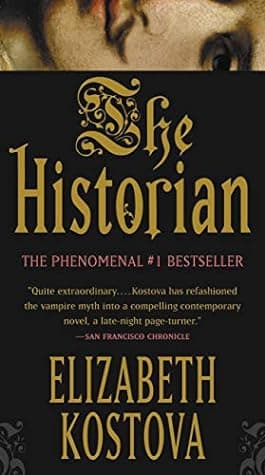
- The Historian
Elizabeth Kostova
3.8 (242k) average on GoodreadsThrillerBlends historical mystery, ancient texts, and a hunt for an elusive, almost supernatural evil.
- The Da Vinci Code
Dan Brown
3.9 (1.9M) average on GoodreadsThrillerFeatures a blend of religious history, secret societies, cryptic clues, and a fast-paced hunt for a killer.
- Still Life
Louise Penny
3.9 (2k) average on GoodreadsLiterary FictionWhen comparing The Mephisto Club to Louise Penny's Chief Inspector Gamache series, specifically Still Life, we see a divergence in the approach to mystery and character. Penny's work is celebrated for its character-driven narratives, exploration of community, and a more contemplative, psychological unraveling of crime, often set in the tranquil, picturesque village of Three Pines. Gerritsen, conversely, plunges her characters into high-octane, often gruesome scenarios with a relentless pace. While both authors excel at creating compelling protagonists, Gerritsen's Rizzoli and Isles are frequently in direct physical danger and grapple with existential threats, whereas Gamache's battles are often more internal or societal. The 'scholar and the suspect' theme in Gerritsen is about uncovering ancient evils, while Penny's mysteries, though complex, remain firmly within the realm of human motivation and small-town secrets. Gerritsen's focus on forensic detail and medical horror is also a sharp contrast to Penny's more atmospheric and emotionally resonant crime solving.
- Angels & Demons
Dan Brown
3.9 (2.7M) average on GoodreadsThrillerA Harvard symbologist races through Rome's ancient sites, deciphering cryptic clues to unmask the Illuminati and stop a vengeful plot to destroy the Vatican with a stolen antimatter weapon.
- Gone Girl
Gillian Flynn
4.1 (2.3M) average on GoodreadsThrillerA wife's sudden disappearance on her fifth anniversary reveals a web of lies and psychological warfare, exposing the secrets within a seemingly perfect marriage.
- The Girl on the Train
Paula Hawkins
3.9 (2.1M) average on GoodreadsThrillerA woman’s fascination with a seemingly perfect couple she watches from her daily train commute leads her into a dark investigation when she witnesses something that shatters their idyllic image.





Enjoyed the summary?
A summary gives you the shape of the book. The book itself has the detail, the examples and the voice.
Find The Mephisto Club on AmazonAs an Amazon Associate, BookBrief earns from qualifying purchases. How we're funded