

Synopsis
Covers the whole plot, including the ending.
- Difficulty
- Medium
- Pacing
- Moderate
- Mood
- Dramatic, Witty, Controversial, Romantic
- Read it if
- You enjoy classic plays with themes of justice, mercy, prejudice, and love, and appreciate complex characters and witty dialogue.
- Skip it if
- You are sensitive to historical antisemitism or find the resolution for Shylock too harsh.
The Merchant of Venice Plot Summary
Covers the whole plot, including the ending.
Antonio's Melancholy and Bassanio's Plea
The play starts in Venice with Antonio, a rich merchant, telling his friends Salarino and Solanio that he feels an unexplained sadness, even with his successful business. His relative and close friend, Bassanio, then arrives and admits he is in deep financial trouble, having spent all his inheritance. Bassanio wants to marry the wealthy heiress Portia of Belmont, believing her money could solve his problems. He needs funds to present himself as a suitable suitor. Antonio, whose own money is invested in his ships at sea, agrees to guarantee a loan for Bassanio, telling him to find a lender in Venice using Antonio's credit.
Portia's Predicament and Suitors
In Belmont, Portia talks with her waiting-woman, Nerissa, about her father's will. The will states that Portia can only marry a suitor who correctly chooses one of three caskets – gold, silver, or lead. If he chooses right, he wins her hand; if wrong, he must swear never to marry. Portia expresses her frustration with this lack of control and her dislike for the various European princes who have tried their luck. Nerissa reminds her of Bassanio, a Venetian scholar who once visited and impressed Portia, hinting at her preference for him.
The Bond with Shylock
Bassanio approaches Shylock, a Jewish moneylender, for a loan of three thousand ducats, with Antonio as the guarantor. Shylock holds deep resentment against Antonio for his anti-Semitic insults and for lending money without interest. He hesitates at first, recalling the many times Antonio has publicly scorned him. Despite this, Shylock agrees to the loan but proposes a 'merry bond': if Antonio fails to repay the sum on time, Shylock will be entitled to a pound of Antonio's flesh, to be cut from any part of his body. Antonio, confident his ships will return safely, foolishly agrees.
Jessica's Elopement and Shylock's Grief
Shylock's daughter, Jessica, secretly plans to elope with Lorenzo, a Christian friend of Bassanio and Antonio. Before leaving, she disguises herself as a boy and steals a large amount of her father's money and precious jewels, including a turquoise ring her mother Leah gave him. Shylock returns home to find his daughter and his wealth gone and is heartbroken. His grief is worsened by the anti-Semitic taunts of Salarino and Solanio, who mock his loss and show little sympathy, highlighting the prejudice he faces.
The Casket Trials: Morocco and Arragon
In Belmont, the Prince of Morocco arrives to try the casket challenge. He chooses the gold casket, believing that Portia, being so valuable, must be inside the most precious metal. Inside, he finds a skull and a scroll advising, 'All that glisters is not gold.' He leaves, disappointed. Soon after, the arrogant Prince of Arragon tries. He chooses the silver casket, sure of his own worth. He finds a 'blinking idiot's head' and a scroll criticizing his pride. Both suitors fail, leaving Portia still unmarried, much to her relief.
Bassanio's Choice and Love
Bassanio arrives in Belmont for the casket challenge. Portia, clearly in love with him, tries to delay his choice, fearing he might choose incorrectly. Bassanio, however, is eager to proceed. Unlike the previous suitors, he rejects the gold and silver caskets, seeing them as deceptive. He chooses the humble lead casket, reasoning that true worth often lies beneath a plain exterior. Inside, he finds Portia's portrait and a scroll confirming his success. Portia joyfully accepts him, and they immediately pledge their love, exchanging rings as a symbol of their commitment.
News of Antonio's Losses and the Bond
Just after Bassanio's triumph, news arrives from Venice that all of Antonio's merchant ships are lost at sea, leaving him bankrupt and unable to repay Shylock's loan. With the bond now forfeit, Shylock, still reeling from Jessica's elopement and driven by his deep hatred for Antonio, insists on enforcing the agreement: a pound of Antonio's flesh. Salarino and Solanio try to reason with Shylock, but he remains firm, declaring his intention to seek revenge for years of persecution.
Portia's Plan and Departure for Venice
Upon hearing of Antonio's trouble, Portia, now Bassanio's wife, is deeply upset. She insists that Bassanio immediately return to Venice with money to repay the debt, offering to pay it twenty times over. However, she also plans a clever strategy. She announces that she and Nerissa will pretend to go to a monastery for prayer while their husbands are away. Instead, they disguise themselves as male lawyers – Portia as 'Balthazar' and Nerissa as her clerk – and set off for Venice, intending to intervene in Antonio's trial and save his life.
The Trial in the Duke's Court
In the Duke's court in Venice, Shylock strongly demands his pound of flesh. The Duke, unable to find a legal way out, is about to rule in Shylock's favor when 'Balthazar' (Portia) arrives, claiming to be a skilled lawyer. Portia eloquently pleads for mercy, but Shylock refuses. She then concedes Shylock's right to the pound of flesh but adds a crucial condition: the bond specifies flesh, not blood. If Shylock sheds a single drop of Antonio's Christian blood, his property will be taken by the state. She further states he must cut exactly one pound of flesh, no more, no less.
Shylock's Defeat and Forced Conversion
Cornered by Portia's precise reading of the law, Shylock tries to retract his demand and accept the offered money. However, Portia declares that since he insisted on justice, he must have nothing but justice. She cites an ancient Venetian law stating that if an alien tries to harm a citizen, half his wealth goes to the state, and the other half to the injured party, with his life at the Duke's mercy. The Duke spares Shylock's life. Antonio then proposes that Shylock must convert to Christianity and leave his remaining wealth to Jessica and Lorenzo upon his death. Shylock, broken, accepts these terms and leaves.
The Ring Trick
After the trial, Bassanio, grateful to 'Balthazar,' offers him money, which Portia (still disguised) refuses. Instead, she asks for the ring Bassanio is wearing, the very ring she gave him and made him promise never to part with. Bassanio initially refuses, citing his wife's command, but Antonio persuades him. Later, Nerissa, disguised as Portia's clerk, also gets her ring from Gratiano, who had made a similar promise to her. The women then return to Belmont, arriving before their husbands.
Reunion and Revelation
Bassanio and Gratiano return to Belmont, and their wives immediately confront them about the missing rings. The men, caught in a lie, struggle to explain. Portia and Nerissa playfully accuse them of infidelity, pretending they slept with the lawyers to retrieve the rings. Finally, Portia reveals her true identity as 'Balthazar' and Nerissa as her clerk, producing a letter from Bellario confirming their legal roles. She also delivers news that three of Antonio's ships have miraculously returned to port, restoring his fortune. The play ends with joy and reconciliation for everyone except Shylock.
The Merchant of Venice Characters
Antonio
Protagonist
A wealthy but melancholic Venetian merchant.
Antonio is a respected and financially successful Venetian merchant, yet he is introduced as inexplicably sad. He is deeply devoted to his friends, especially Bassanio, for whom he is willing to risk his life and fortune. He is generous and lends money without interest, which puts him at odds with Shylock. Antonio harbors strong anti-Semitic prejudices, frequently insulting and persecuting Shylock. Despite his personal virtues, his intolerance is a significant flaw that ultimately brings him to the brink of disaster.
Relationships: Bassanio (Closest friend, a relationship bordering on romantic devotion from Antonio's side); Shylock (Bitter enemy due to religious and financial conflicts)
Portia
Protagonist
A wealthy, intelligent, and resourceful heiress of Belmont.
Portia is a beautiful and wealthy heiress bound by her deceased father's will to a unique marriage lottery involving three caskets. Initially presented as witty but frustrated by her lack of agency, she is highly intelligent, articulate, and quick-witted. She possesses remarkable legal acumen, which she demonstrates when disguised as the lawyer Balthazar. Portia is loyal and loving, deeply committed to Bassanio once he wins her hand. She is also pragmatic and capable of bold action, taking charge to save Antonio's life.
Relationships: Bassanio (Husband, whom she loves deeply); Nerissa (Confidante and lady-in-waiting); Antonio (Saves his life out of love for Bassanio)
Shylock
Antagonist
A wealthy Jewish moneylender in Venice, driven by revenge.
Shylock is a Jewish moneylender who has endured severe anti-Semitic persecution and humiliation from the Christian community in Venice, particularly Antonio. He is a complex character, portrayed as both a victim of prejudice and a vengeful, avaricious figure. His insistence on the 'pound of flesh' bond stems from a deep-seated desire for revenge and justice against those who have wronged him. He values money and possessions, partly as a means of survival and status in a hostile society. His humanity is revealed in his grief over his daughter's elopement and the loss of his ring.
Relationships: Antonio (Mortal enemy); Jessica (Daughter, whom he loves possessively but is ultimately betrayed by); Lorenzo (Son-in-law, whom he despises)
Bassanio
Protagonist
A young Venetian nobleman and Antonio's dearest friend, who seeks Portia's hand.
Bassanio is a young, charming, but financially irresponsible Venetian nobleman. He is deeply indebted and seeks to marry the wealthy Portia to restore his fortunes. While his initial motivations appear mercenary, he genuinely falls in love with Portia and proves to be a loyal friend to Antonio. He is somewhat naive and easily persuaded, as seen in his giving away Portia's ring. His character embodies the ideal of a Renaissance gentleman, albeit one with a penchant for extravagance.
Relationships: Antonio (Closest friend, for whom he feels immense gratitude and loyalty); Portia (Wife, whom he loves); Gratiano (Friend)
Gratiano
Supporting
A boisterous and outspoken friend of Bassanio and Antonio.
Gratiano is a lively, talkative, and often crude young man. He accompanies Bassanio to Belmont and falls in love with Portia's lady-in-waiting, Nerissa. He is known for his wit, though it can sometimes be insensitive or boorish, especially in his taunting of Shylock. He is fiercely loyal to his friends and provides comic relief throughout the play. His impulsiveness is highlighted when he gives away Nerissa's ring.
Relationships: Bassanio (Close friend); Nerissa (Husband); Antonio (Friend)
Nerissa
Supporting
Portia's witty and loyal lady-in-waiting.
Nerissa is Portia's intelligent and loyal confidante. She offers advice and companionship to Portia, sharing her mistress's wit and sharp observations. She is a practical and supportive friend, willing to participate in Portia's bold schemes, including disguising herself as a lawyer's clerk. She mirrors Portia's journey in love and marriage, falling for and marrying Gratiano. Nerissa is also instrumental in the ring trick, helping to test the husbands' loyalty.
Relationships: Portia (Mistress and close friend); Gratiano (Husband)
Jessica
Supporting
Shylock's daughter, who elopes with Lorenzo.
Jessica is Shylock's daughter, who feels trapped and unhappy in her father's household. She secretly converts to Christianity and elopes with Lorenzo, taking a significant portion of her father's wealth and precious jewels, including her deceased mother's ring. She expresses shame for her father's behavior and seems to assimilate into Christian society, though her actions contribute significantly to Shylock's despair. Her character highlights the generational and religious divides within the play.
Relationships: Shylock (Father, whom she betrays and abandons); Lorenzo (Husband)
Lorenzo
Supporting
A friend of Antonio and Bassanio, who elopes with Jessica.
Lorenzo is a Venetian Christian gentleman and a friend to Antonio and Bassanio. He is in love with Shylock's daughter, Jessica, and orchestrates her elopement. He is portrayed as romantic and poetic, particularly in his scenes with Jessica in Belmont. While he gains wealth through Jessica's inheritance, his character is generally presented positively within the Christian circle, contrasting with Shylock's perceived villainy.
Relationships: Jessica (Wife); Antonio (Friend); Bassanio (Friend)
Duke of Venice
Supporting
The presiding authority in Antonio's trial.
The Duke of Venice is the chief magistrate of the Venetian state. He is depicted as a figure of authority who values justice and the law, but also shows compassion. He is initially sympathetic to Antonio's plight and tries to persuade Shylock to show mercy. However, he is bound by the strict laws of Venice and cannot legally alter the terms of the bond, highlighting the inflexibility of the legal system until Portia's intervention.
Relationships: Antonio (Citizen whose case he presides over); Shylock (Citizen whose case he presides over)
The Merchant of Venice Themes
Justice vs. Mercy
This theme is central to the trial scene, where Shylock demands strict adherence to the law ('justice') through his bond, while Portia eloquently argues for 'mercy.' Portia's 'quality of mercy' speech highlights compassion over rigid legalism. However, the play's ending complicates this, as Shylock is denied mercy and forced to convert, raising questions about whether true justice or mercy is served. This conflict explores the limits of law without humanity and the hypocrisy of those who preach mercy but deny it to others.
“The quality of mercy is not strain'd, / It droppeth as the gentle rain from heaven / Upon the place beneath: it is twice bless'd; / It blesseth him that gives and him that takes.”
Prejudice and Anti-Semitism
The widespread anti-Semitism in Venetian society is a dominant theme. Shylock constantly faces insults, discrimination, and violence from the Christian characters, especially Antonio. This prejudice is a main reason for Shylock's vengeful actions, as he seeks revenge for the wrongs he and his people have suffered. The play makes the audience confront the effects of such bigotry, even as it arguably reinforces some stereotypes. Shylock's famous 'Hath not a Jew eyes?' speech powerfully expresses the shared humanity denied to him by his persecutors. Shylock's forced conversion at the end further shows the intolerance of the Christian community.
“Hath not a Jew eyes? Hath not a Jew hands, organs, dimensions, senses, affections, passions? Fed with the same food, hurt with the same weapons, subject to the same diseases, healed by the same means, warmed and cooled by the same winter and summer, as a Christian is?”
Appearance vs. Reality
This theme appears in various parts of the play. The casket lottery is a clear example, where the valuable exteriors of the gold and silver caskets hide worthless contents, while the humble lead casket contains Portia's portrait. This teaches Bassanio that true worth is not always obvious. Similarly, Portia and Nerissa's disguises as male lawyers allow them to act effectively in a male-dominated society, showing that outward appearance can hide true identity and power. The 'merry bond' also initially seems harmless but hides a deadly reality. This theme warns against judging by superficial impressions and highlights how appearances can deceive.
“So may the outward shows be least themselves: / The world is still deceived with ornament.”
Love and Friendship
The play explores different sides of love and friendship. The strong bond between Antonio and Bassanio is a central relationship, with Antonio willing to risk his life for Bassanio showing deep loyalty. Romantic love is shown through Bassanio and Portia's courtship, which ends in genuine affection after the casket trial, and the parallel romance between Gratiano and Nerissa. Jessica and Lorenzo's elopement also represents a form of romantic love, though it causes pain to Shylock. The giving and taking of rings symbolize commitment and faithfulness in these relationships, which are later tested through playful deception.
“I love thee, and it is my love that speaks: / There are some shrewd contents in yond same paper / That steal the colour from Bassanio's cheek: / Some dear friend dead; else nothing in the world / Could turn so much the constitution / Of any constant man.”
Wealth and Value
Money and wealth are fundamental to the plot, driving many characters' actions. Bassanio needs money to woo Portia, leading to Antonio's bond with Shylock. Shylock's profession as a moneylender and his focus on financial gain are central to his character and his conflict with Antonio, who lends without interest. The play also explores different kinds of 'value': the monetary value of ducats and jewels, the inherent value of a person's life, and the symbolic value of rings as pledges of love. The casket lottery directly questions whether true value lies in outward display or inner worth, and Jessica's theft of her father's wealth further complicates the moral implications of money.
“Three thousand ducats; well.”
Plot Devices & Literary Techniques
The Casket Lottery
A magical test designed by Portia's father to determine her husband.
The casket lottery is a fantastical plot device that dictates Portia's marriage. It comprises three caskets—gold, silver, and lead—each with an inscription. Suitors must choose one; the correct choice (lead) wins Portia's hand, while an incorrect choice means they must swear never to marry. This device creates suspense, introduces various characters, and allows Portia to be won by Bassanio, who values inner worth over outward show. It also serves as a symbolic representation of the theme of appearance versus reality.
The Bond
A legal contract with a gruesome penalty.
The 'merry bond' between Antonio and Shylock is the central inciting incident and conflict driver of the play. For a loan of three thousand ducats, Antonio agrees to forfeit a pound of his flesh if he fails to repay on time. This device establishes the high stakes, fuels Shylock's desire for revenge, and sets up the dramatic courtroom scene. It highlights the rigid nature of Venetian law and the dangerous implications of literal interpretation, ultimately serving as the catalyst for Portia's heroic intervention.
Disguise
Portia and Nerissa adopt male identities to influence events.
The use of disguise, specifically Portia and Nerissa dressing as male lawyers (Balthazar and his clerk), is a crucial plot device. It allows them to enter the male-dominated legal sphere, where women would otherwise have no voice or authority. This enables Portia to outwit Shylock in court and save Antonio's life. The disguise also facilitates the 'ring trick,' a comedic element that tests the loyalty of their husbands upon their return to Belmont, adding layers of irony and wit to the resolution of the play.
Foreshadowing (Antonio's ships)
Early mentions of Antonio's ships hint at future financial peril.
From the very beginning of the play, Antonio's wealth is explicitly tied to his merchant ships at sea. His friends discuss their potential perils, and Antonio himself states his fortunes are 'ventured in the seas.' This repeated mention of his ships, coupled with Antonio's unexplained melancholy, subtly foreshadows the eventual news of their loss. This device builds suspense and makes Antonio's later bankruptcy believable, creating the critical condition for Shylock's bond to be enforced.
The Merchant of Venice Quotes
“If you prick us, do we not bleed? If you tickle us, do we not laugh? If you poison us, do we not die? And if you wrong us, do we not revenge?”
“The quality of mercy is not strained. It droppeth as the gentle rain from heaven Upon the place beneath. It is twice blest: It blesseth him that gives and him that takes.”
“All that glisters is not gold; Often have you heard that told: Many a man his life hath sold But my outside to behold: Gilded tombs do worms enfold.”
“I like not fair terms and a villain's mind.”
“Hath not a Jew eyes? Hath not a Jew hands, organs, dimensions, senses, affections, passions?”
“Thus hath the candle singed the moth.”
“I hold the world but as the world, Gratiano—A stage where every man must play a part, And mine a sad one.”
“How far that little candle throws his beams! So shines a good deed in a naughty world.”
“In sooth, I know not why I am so sad: It wearies me; you say it wearies you; But how I caught it, found it, or came by it, What stuff 'tis made of, whereof it is born, I am to learn.”
“To bait fish withal: if it will feed nothing else, it will feed my revenge.”
“The devil can cite Scripture for his purpose.”
“Love is blind, and lovers cannot see The pretty follies that themselves commit.”
“A Daniel come to judgment! yea, a Daniel!”
“I am a tainted wether of the flock, Meetest for death: the weakest kind of fruit Drops earliest to the ground.”
Quiz
10 questions on the plot and the characters. Each answer comes with a short explanation.
Question 1
Why does Bassanio need money at the beginning of the play?
- To invest in Antonio's shipping ventures.
- To repay his existing debts to various merchants.
- To travel to Belmont and woo the wealthy heiress Portia.
- To buy new clothes and attend a lavish Venetian feast.
Show answer
C. To travel to Belmont and woo the wealthy heiress Portia. Bassanio explicitly states his desire to go to Belmont to win Portia and needs funds for the journey and to present himself appropriately.
Question 2
What is the specific condition Shylock demands in his bond with Antonio?
- Antonio must work for Shylock for a year if he defaults.
- Antonio must pay double the interest if he defaults.
- Antonio must forfeit a pound of his flesh if he defaults.
- Antonio must give Shylock one of his merchant ships.
Show answer
C. Antonio must forfeit a pound of his flesh if he defaults. The central conflict of the play revolves around Shylock's demand for a 'pound of flesh' as stipulated in the bond.
Question 3
Which of the following is NOT one of the caskets from which Portia's suitors must choose?
- Gold
- Silver
- Bronze
- Lead
Show answer
C. Bronze Portia's suitors choose between a gold, silver, and lead casket, not a bronze one.
Question 4
What is Jessica's relationship to Shylock?
- She is his niece.
- She is his daughter.
- She is his servant.
- She is his wife.
Show answer
B. She is his daughter. Jessica is Shylock's daughter, who later elopes with Lorenzo.
Question 5
What disguise does Portia adopt to act as a lawyer in the court scene?
- She dresses as a male doctor of law, named Balthazar.
- She dresses as a male merchant, named Portio.
- She dresses as a female advocate, named Justice.
- She dresses as a male clerk, named Stephano.
Show answer
A. She dresses as a male doctor of law, named Balthazar. Portia disguises herself as a young male lawyer named Balthazar to defend Antonio in court.
Question 6
What does Shylock primarily lose besides his bond and money after the trial?
- His house in Venice.
- His right to practice moneylending.
- His identity as a Jew, by being forced to convert to Christianity.
- His ability to reside in Venice.
Show answer
C. His identity as a Jew, by being forced to convert to Christianity. As part of the court's judgment, Shylock is forced to convert to Christianity, a profound loss of his religious identity.
Question 7
What is the significance of the rings that Portia and Nerissa give to their husbands?
- They are family heirlooms that Bassanio and Gratiano must protect.
- They symbolize the wives' dominance in the marriage, as the husbands must never part with them.
- They represent the bond of love and fidelity, testing the husbands' loyalty when the wives are disguised.
- They are magical rings that bring good fortune to the wearers.
Show answer
C. They represent the bond of love and fidelity, testing the husbands' loyalty when the wives are disguised. The rings are given with strict instructions never to part with them, setting up a comedic test of loyalty when Portia and Nerissa, disguised as men, demand them as payment.
Question 8
Portia's 'quality of mercy' speech is directed at whom, and what is its primary argument?
- Directed at Antonio, arguing he should show mercy to Shylock by paying his debt.
- Directed at the Duke, arguing he should overrule the law to save Antonio.
- Directed at Shylock, arguing that mercy is a divine attribute that benefits both giver and receiver, transcending strict justice.
- Directed at Bassanio, arguing he should be merciful in his pursuit of Portia's hand.
Show answer
C. Directed at Shylock, arguing that mercy is a divine attribute that benefits both giver and receiver, transcending strict justice. Portia's famous speech is a direct plea to Shylock to choose mercy over his strict legalistic demand for the bond, emphasizing its divine nature.
Question 9
How does Portia ultimately save Antonio from Shylock's bond in court?
- She pays Shylock three times the amount of the bond, which he accepts.
- She argues that Shylock cannot take a pound of flesh without shedding blood, which is not stipulated in the bond.
- She declares the bond illegal under Venetian law due to its cruel nature.
- She convinces the Duke to pardon Antonio due to his good character.
Show answer
B. She argues that Shylock cannot take a pound of flesh without shedding blood, which is not stipulated in the bond. Portia's clever legal loophole is that the bond allows for a pound of flesh, but makes no mention of blood, and taking flesh without shedding blood is impossible.
Question 10
What is a major theme explored through the character of Shylock and the Venetian society's treatment of him?
- The importance of friendship and loyalty among men.
- The complexities of justice versus mercy, and the dangers of prejudice and religious intolerance.
- The pursuit of romantic love and the challenges of marriage.
- The role of fate versus free will in determining one's destiny.
Show answer
B. The complexities of justice versus mercy, and the dangers of prejudice and religious intolerance. Shylock's character and his treatment by the Christian characters highlight themes of prejudice, religious intolerance, and the tension between strict legal justice and compassionate mercy.
The Merchant of Venice FAQ
What is the central conflict that drives the plot of 'The Merchant of Venice'?
The central conflict arises from Antonio's inability to repay the loan from Shylock, secured with a 'pound of flesh' bond, after his ships are lost at sea. This financial crisis forces a confrontation in court, where Shylock demands the literal fulfillment of the gruesome bond, threatening Antonio's life.
How does Portia contribute to the resolution of the main legal dispute?
Portia, disguised as the young male lawyer Balthazar, cleverly interprets the bond's wording during the trial. She argues that Shylock is entitled to a pound of flesh but not a single drop of Christian blood, and that cutting less or more than exactly a pound would result in forfeiture of his lands and goods, effectively nullifying his claim.
What is the significance of the casket lottery in Belmont?
The casket lottery is the mechanism by which Portia's father dictates her marriage. Suitors must choose between gold, silver, and lead caskets, with the correct choice (lead) revealing Portia's portrait. This plot device ensures Portia's eventual marriage to Bassanio, who chooses wisely.
What is the ultimate fate of Shylock at the end of the play?
Shylock is stripped of half his wealth, with the other half to go to Lorenzo and Jessica upon his death. He is also forced to convert to Christianity, a severe punishment in the context of the play, losing his religious identity and financial independence.
How do Lorenzo and Jessica's actions impact Shylock?
Jessica, Shylock's daughter, elopes with Lorenzo, a Christian, and steals a significant amount of her father's money and jewels, including a precious turquoise ring given to him by his deceased wife, Leah. This betrayal deeply wounds Shylock emotionally and financially, fueling his desire for revenge against Antonio.
Are there any subtle hints about Portia's intelligence before she appears in court?
Yes, Portia's wit and sharp observations are evident in her initial conversations with Nerissa about her various suitors, where she cleverly critiques their flaws. She also expresses frustration with the casket lottery, indicating a desire for agency and a keen mind capable of strategic thought, foreshadowing her courtroom performance.
What is the significance of the rings exchanged between Portia/Nerissa and Bassanio/Gratiano?
The rings serve as a test of loyalty and love, given by Portia and Nerissa to their husbands with strict instructions never to part with them. When Bassanio and Gratiano give them to 'Balthazar' and 'his clerk' (Portia and Nerissa in disguise) as payment, it sets up a humorous conflict and reveals the men's priorities, highlighting the women's cleverness.
Is there any deeper meaning to Antonio's initial melancholy?
Antonio's unexplained sadness at the play's opening has led to various interpretations. Some scholars suggest it hints at unrequited love for Bassanio, a premonition of his impending misfortune, or a general melancholic temperament. It establishes his character as somewhat detached from worldly joys, making his later plight more poignant.
How does Shakespeare use the Venetian setting to comment on society?
Venice, a hub of commerce and law, symbolizes a society governed by contracts and money, where religious tolerance is outwardly proclaimed but not always practiced. The play uses this setting to explore the tension between strict legalism and mercy, and the societal pressures and prejudices faced by minority groups like the Jews.
What psychological motivations drive Shylock's pursuit of the bond?
Shylock's motivation is a complex mix of revenge for past humiliations and anti-Semitic abuse, a deep-seated desire for justice as defined by the law, and grief over his daughter's betrayal. His famous 'Hath not a Jew eyes?' speech reveals his profound sense of dehumanization and his desperate need to assert his humanity through retaliation.
Analyze Antonio's character beyond his role as Bassanio's benefactor.
Antonio is portrayed as a generous friend and a successful merchant, but also as a proud, somewhat austere, and deeply prejudiced individual, particularly towards Shylock. His willingness to sacrifice himself for Bassanio highlights his profound loyalty, yet his own bigotry complicates his portrayal as a purely sympathetic victim.
How does Portia's character evolve throughout the play?
Initially, Portia is presented as a wealthy heiress constrained by her father's will, expressing frustration with her lack of agency. Her transformation into the decisive, intelligent lawyer Balthazar demonstrates her remarkable intellect and courage, allowing her to take control of her destiny and save Antonio, revealing a strong, capable woman beneath the societal expectations.
Discuss the psychological impact of forced conversion on Shylock.
The forced conversion to Christianity is a devastating blow to Shylock, stripping him of his identity, faith, and community. Psychologically, it represents the ultimate subjugation and humiliation, leaving him spiritually broken and utterly defeated, effectively silencing his voice and eliminating his presence from Venetian society.
Is 'The Merchant of Venice' an anti-Semitic play?
This is a long-standing debate. While the play features deeply anti-Semitic characters and a portrayal of Shylock that aligns with historical prejudices, some argue Shakespeare intended to expose, rather than endorse, this bigotry. Others contend that the play's ending, where Shylock is severely punished, reinforces negative stereotypes, making it problematic from a modern perspective.
What is the play's stance on justice versus mercy?
The play profoundly explores the tension between strict, literal justice (Shylock's demand for the bond) and the concept of Christian mercy (Portia's appeal in court). While mercy is ultimately championed, it is denied to Shylock, suggesting a complex and perhaps hypocritical application of these values by the Venetian Christians.
How do the themes of love and money intertwine in the play?
Love and money are inextricably linked. Bassanio needs money to win Portia, Antonio risks his life for Bassanio's financial needs, and Jessica elopes with Lorenzo for love, taking her father's money. The play suggests that while money can facilitate love and social standing, it also exposes greed, prejudice, and the corrupting influence of wealth.
To what extent is Shylock a villain or a victim?
Shylock is a complex character who can be seen as both. He is undeniably a victim of relentless anti-Semitic prejudice and abuse, which fuels his desire for revenge. However, his unyielding demand for Antonio's flesh and his lack of mercy also portray him as a villain, making his character deeply ambiguous and a subject of continuous debate.
What is the significance of the play being categorized as a 'comedy'?
Despite its dark themes and Shylock's tragic fate, 'The Merchant of Venice' is considered a comedy because it ends with multiple marriages (Bassanio-Portia, Gratiano-Nerissa, Lorenzo-Jessica) and the restoration of order and happiness for the Christian characters. The genre classification highlights the often-unsettling nature of Shakespearean comedy, which can include significant suffering for some characters.
About the author
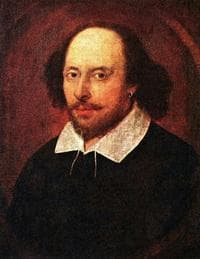
William Shakespeare was an English playwright, poet and actor. He is widely regarded as the greatest writer in the English language and the world's pre-eminent dramatist. He is often called England's national poet and the "Bard of Avon". His extant works, including collaborations, consist of some 39 plays, 154 sonnets, three long narrative poems, and a few other verses, some of uncertain authorship. His plays have been translated into every major living language and are performed more often than those of any other playwright. Shakespeare remains arguably the most influential writer in the English language, and his works continue to be studied and reinterpreted.
Similar books
- Othello
William Shakespeare
3.9 (315k) average on GoodreadsFictionExplores themes of jealousy, betrayal, and tragic consequences in a classic play format.
- Romeo and Juliet
William Shakespeare
3.8 (2.1M) average on GoodreadsRomanceA well-known Shakespearean play focusing on love, conflict, and societal pressures.
- A Midsummer Night's Dream
William Shakespeare
4.0 (443k) average on GoodreadsFantasyAnother Shakespearean comedy featuring intertwined love stories and witty dialogue.
- Nineteen Eighty-Four
George Orwell
4.2 (5.5M) average on GoodreadsFictionWinston Smith dreams of truth and rebellion in a world where Big Brother watches all, but he confronts the terrifying power of a regime that controls not just actions, but thoughts.
- The Frozen River
Ariel Lawhon
4.4 (600k) average on GoodreadsFictionIn 1789 Maine, a heroic midwife's diary helps her expose a murder and get justice in a town that wants to silence her.
- A Man Called Ove
Fredrik Backman
4.4 (569k) average on GoodreadsFictionA stubborn widower, who lives by strict rules, finds his quiet world changed by a lively new family next door, making him face his past and find happiness in human connection.





Enjoyed the summary?
A summary gives you the shape of the book. The book itself has the detail, the examples and the voice.
Find The Merchant of Venice on AmazonAs an Amazon Associate, BookBrief earns from qualifying purchases. How we're funded