“When Gregor Samsa awoke one morning from troubled dreams, he found himself transformed into a monstrous insect.”
— The opening sentence of the novella, describing Gregor's sudden and inexplicable transformation.

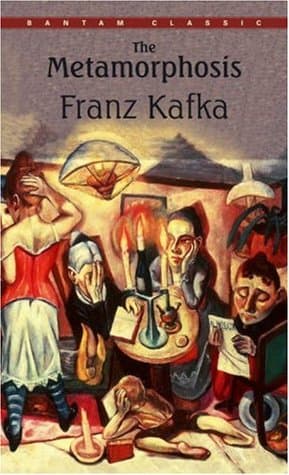
Franz Kafka (2015)
Goodreads Rating
3.82/ 5(643,254 reviews)
Genre
Summary Read
11 min
Book Length
120 min
Sign in to track this book
Awakening as a monstrous insect, Gregor Samsa struggles with family disappointment and his own growing isolation, not with the horror of his new form.
Ask anything about The Metamorphosis and get instant answers grounded in the summary.
Gregor Samsa, a traveling salesman, wakes up as a gigantic insect. He lies on his back, unable to move his new body easily, noticing his many thin legs and hard, segmented belly. He worries about missing his train for work, as his family depends on his income to pay off his father's debt. His mother, father, and sister Grete grow anxious when he does not leave his room. The chief clerk from Gregor's company arrives to check on his absence, adding pressure. Despite his attempts to speak, only strange sounds come from his insect mouth. When he finally opens his door, his family and the chief clerk are horrified by his appearance. The clerk leaves quickly, and his mother faints.
After his transformation, Gregor finds it hard to move in his room; even simple actions like turning over or opening the door are difficult. His sister, Grete, at first cares for him, bringing him food and cleaning his room. She finds he prefers spoiled food and hides under the couch when she enters. However, his family soon dislikes his appearance and the smell from his room. His father, in particular, is hostile, once forcing Gregor back into his room with a cane and hissing. The family, now without Gregor's income, must find jobs, and their financial problems and resentment toward Gregor increase.
Grete's initial care for Gregor lessens as his care becomes a burden. She starts to neglect his room, leaving it dirty, and gives him food less often and with less care. One day, Grete and her mother decide to remove all furniture from Gregor's room, thinking it would give him more space to crawl and climb. Gregor, however, sees this as losing the last parts of his human life and past. He holds onto a picture on his wall – a framed image of a woman in furs – trying to protect it. This act further upsets his mother, who faints when she sees him, and angers his father.
After his mother faints during the furniture removal, Gregor's father comes home. Misunderstanding the situation and angered by seeing Gregor outside his room, he attacks him. Mr. Samsa throws apples at Gregor, and one gets stuck deep in Gregor's back, causing a serious and lasting injury. This wound leaves Gregor in constant pain and greatly limits his movement, keeping him in his room. The family, though shocked by the father's actions, does not get medical help for Gregor, showing how they have abandoned him. The apple stays in his back, a constant physical and symbolic reminder of his family's cruelty and his irreversible decline.
With Gregor unable to work and his father's business having failed, the Samsa family faces serious money problems. They take in three male lodgers to make more money. This decision makes Gregor's life harder, as his room, once private, becomes an obstacle. The family tries hard to hide Gregor from the lodgers, keeping his door closed and his presence a secret. Meals are eaten in the living room, and Gregor, left in his dark, neglected room, often listens to their talks through the door, feeling more and more isolated and like an unwanted secret. His family focuses entirely on keeping up appearances for the lodgers and ensuring their financial stability.
One evening, the three lodgers listen to Grete play the violin in the living room. Drawn by the music, Gregor, though weak, crawls out of his room, hoping to connect with his sister's music and maybe impress the lodgers. The lodgers see him and are horrified, immediately saying they will leave without paying rent. This event destroys the family's last hope for financial stability and pushes their anger toward Gregor to its limit. Grete, who had been his only caretaker, says they cannot live with 'this monster' anymore and must get rid of him, agreeing with her father's earlier hostility and showing the family's full decision to abandon him.
After Grete's harsh statement and the lodgers' departure, Gregor goes back to his room, completely broken and accepting his fate. He stops eating, growing weaker. He thinks about his family's situation, feeling responsible and loving them, even in his last moments. He reflects on his past life and current state, accepting what is happening. One morning, the cleaning woman finds Gregor's lifeless body, shriveled and flat, having died during the night. She tells the family about his death, and they react with relief and a brief feeling of sadness.
After Gregor's death, the Samsa family feels an immediate sense of freedom. They feel a great weight has been lifted, and they show no grief, only relief. Mr. Samsa dismisses the lodgers with unexpected authority, and the three family members take a tram ride to the countryside. During the trip, they talk about their new jobs and future plans. They notice Grete has become an attractive young woman, full of life, and think about finding a suitable husband for her. The story ends with the family looking forward to a promising future, completely free from Gregor's memory, embracing their new freedom and hope.
The Protagonist
From a responsible, human breadwinner, Gregor transforms into an isolated, dehumanized insect, gradually losing his will to live as his family rejects him.
The Supporting
Grete evolves from a compassionate caregiver to an increasingly burdened and resentful individual, ultimately becoming the one who pronounces Gregor's fate.
The Supporting
From a dependent, idle father, Mr. Samsa transforms into an authoritative, financially stable, and violently hostile patriarch.
The Supporting
Mrs. Samsa remains largely static, unable to overcome her physical and emotional frailty to truly help Gregor, ultimately succumbing to the family's collective rejection.
The Mentioned
The Chief Clerk's brief appearance serves to establish the harsh reality of Gregor's professional life and the immediate impact of his transformation.
The Supporting
The Cleaning Woman remains largely unchanged, serving as an objective, unsentimental observer and executor of Gregor's final removal.
The Supporting
The lodgers serve as a plot device, their presence and subsequent departure acting as a catalyst for the family's final decision regarding Gregor.
Isolation is central to 'The Metamorphosis.' Gregor's transformation immediately separates him from human society and, more painfully, from his family. He becomes an 'outsider' in his own home, unable to communicate, work, or interact as before. The family's increasing disgust and neglect further isolate him, turning his room into a prison. This isolation is not just physical but also psychological, as Gregor keeps his human thoughts but is trapped in a monstrous form, leading to deep loneliness. The story shows the torment of being completely cut off from human connection, like when Gregor tries to listen to his family from behind his closed door, longing to be included.
“He was a tool of the boss, without brains or backbone. If he were not to exert himself to the utmost for his parents, he would be dismissed at a moment's notice.”
Kafka's work shows the absurd, and Gregor's unexplained transformation is a clear example. There is no logical reason for his change, nor is one sought. The family's reaction, though shocked at first, quickly moves to practical concerns and resentment, rather than looking for a cure or explanation. This absurdity highlights the irrationality and lack of meaning that can exist in human life, where people can be thrown into strange, uncontrollable situations without reason or fairness. Gregor's struggle to find purpose or dignity in his new, illogical state emphasizes this existential problem.
“As Gregor Samsa awoke one morning from uneasy dreams he found himself transformed in his bed into a gigantic insect.”
Before his transformation, Gregor supports his family, burdened by his father's debt and the expectation to provide for them. His metamorphosis changes this burden from financial to physical and emotional care. The story explores how family love can be conditional, showing how Gregor's family, once dependent on him, quickly sees him as a repulsive burden. Their resentment grows with their financial problems, showing how family duty can become resentment when one member becomes a liability. The family's relief at Gregor's death shows the transactional nature of their relationships and the weight of perceived obligation.
“If he were not to exert himself to the utmost for his parents, he would be dismissed at a moment's notice, and then he would have to face the fact that his parents' debt was not yet paid off.”
Gregor's physical change into an insect is a literal loss of his humanity, but the story also explores the psychological and social parts of this process. Though he keeps his human thoughts and feelings, Gregor is treated as a monstrous, non-human by his family. His identity is taken away, first by his physical form, then by the removal of his personal items, and finally by his family's refusal to acknowledge his inner self. He loses his name, his role, and his self-worth as he is reduced to a repulsive creature. This idea questions what truly makes someone human and how outside views can shape a person's identity.
“He was a tool of the boss, without brains or backbone.”
Before his transformation, Gregor's life is defined by his demanding job as a traveling salesman. He works long hours, endures difficult conditions, and faces constant pressure from his employer. His main goal is to pay off his father's debt, showing a lack of personal control and a life driven by financial need. Even after he changes, his first concern is his job and his family's reliance on his income. The story criticizes how capitalist society can make people less human, where a person's worth is only tied to their productivity and economic contribution, and those who cannot contribute are cast aside.
“To be a chief clerk, to have a master, to be a slave to the chief clerk, to be a slave to the master, and to be a chief clerk in a firm, and to be a chief clerk in a firm, and to be a chief clerk in a firm...”
Gregor's transformation as a physical manifestation of his internal state and societal alienation.
Gregor's literal transformation into a giant insect serves as the central symbolic device. It externalizes his internal feelings of alienation, worthlessness, and the dehumanizing effects of his oppressive job and family responsibilities. The insect form, repulsive and non-communicative, mirrors his inability to connect with his family and society. It also symbolizes the family's perception of him as a burden and a 'bug' to be squashed. The lack of a rational explanation for the change emphasizes its symbolic rather than literal significance, forcing the reader to interpret its meaning in the context of Gregor's life and his family's reactions.
A potent symbol of betrayal, injury, and the family's violent rejection.
The apple, thrown by Mr. Samsa and lodged in Gregor's back, is a powerful symbol. It represents the ultimate act of betrayal and violence from his own father, a brutal rejection. The apple, traditionally a symbol of temptation or knowledge, here becomes an instrument of pain and permanent injury. Its rotting in Gregor's back signifies his incurable wound, both physical and emotional, and the irreversible damage inflicted by his family's cruelty. It is a constant reminder of his suffering and his family's active role in his decline, contributing to his eventual death.
A microcosm of Gregor's diminishing world and increasing isolation.
Gregor's room initially represents his private sanctuary and the last vestige of his human identity. As the story progresses, it transforms into a prison, reflecting his increasing isolation. The removal of his furniture further strips him of his humanity, turning the room into a bare, insect-like habitat. It becomes a space where he is hidden from the world, a symbol of his family's shame and his own confinement. The state of the room, from relatively clean to utterly neglected, mirrors the family's declining care and Gregor's physical and emotional decay, ultimately becoming his tomb.
A fleeting symbol of human connection, beauty, and Gregor's last attempt at emotional resonance.
Grete's violin playing, particularly the scene where Gregor is drawn out of his room by her music, symbolizes a brief, poignant moment of potential human connection and aesthetic appreciation. For Gregor, the music represents beauty and a longing for the human world he has lost. It is a desperate attempt to bridge the gap between his insect form and his human soul, to feel understood or recognized. However, this moment is shattered by the lodgers' discovery of him, leading to his final rejection, thus turning the symbol of hope into a catalyst for his ultimate despair and the family's decisive action against him.
“When Gregor Samsa awoke one morning from troubled dreams, he found himself transformed into a monstrous insect.”
— The opening sentence of the novella, describing Gregor's sudden and inexplicable transformation.
“What's happened to me? he thought. It was no dream.”
— Gregor's immediate reaction and realization of his new reality.
“He was a commercial traveler, and if he wasn't going to get up now and get on his way, he was going to be in trouble.”
— Gregor's initial concern, despite his transformation, is his job and the consequences of missing work.
“He had to go, he thought, and he had to go to the office.”
— Gregor's persistent focus on his work obligations even as he struggles with his new form.
“Even if he wasn't sick, he was bound to be late.”
— Gregor's internal monologue, highlighting his anxiety about his job even before fully processing his transformation.
“He must be very careful, and for the moment, he must be quiet.”
— Gregor's early attempts to hide his new form from his family, reflecting a sense of shame and fear.
“He felt himself integrated into the family once again, even if only in a passive role.”
— Gregor's fleeting sense of belonging when his family briefly shows concern, despite his inability to communicate.
“He was a tool of the boss, without a will of his own, without a voice of his own.”
— Gregor's reflection on his life as a traveling salesman, foreshadowing his loss of identity.
“He was a monster, a vermin, something to be gotten rid of.”
— Gregor's self-perception as his family's disgust and neglect grow.
“The apple, still lodged in his flesh, remained there as a visible reminder of his suffering.”
— The apple thrown by his father becomes a symbol of his injury and the family's cruelty.
“He thought of his family with tenderness and love.”
— Gregor's final thoughts before his death, showing his enduring affection despite their mistreatment.
“Then he slowly turned his head to the window and looked out at the street.”
— Gregor's quiet observation of the outside world, a symbol of his longing for freedom.
“And it was as if he had been set free.”
— The narrator's description of Gregor's death, implying liberation from his suffering and existence.
“His sister, who had become quite a young woman, stretched her young body and thought of the good life that awaited her.”
— The family's reaction after Gregor's death, particularly Grete's transformation and their optimism for the future.
Ready to see how well you understood this book? Take our interactive quiz with 10 questions.
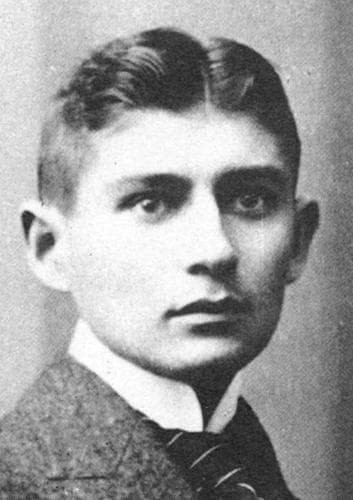
Franz Kafka was a German-speaking Bohemian novelist and short-story writer based in Prague, who is widely regarded as one of the major figures of 20th-century literature. His work fuses elements of realism and the fantastic. It typically features isolated protagonists facing bizarre or surrealistic predicaments and incomprehensible socio-bureaucratic powers. It has been interpreted as exploring themes of alienation, existential anxiety, guilt, and absurdity. His best known works include the novella The Metamorphosis and novels The Trial and The Castle. The term Kafkaesque has entered English to describe absurd situations like those depicted in his writing.
Support the author — grab the full book.
As an Amazon Associate, BookBrief earns from qualifying purchases, at no extra cost to you. How we're funded.