
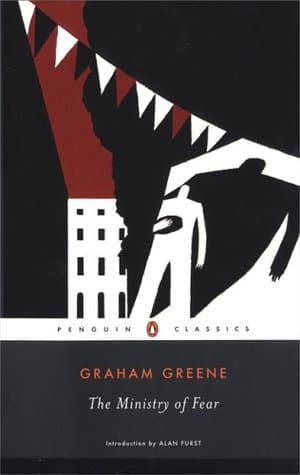
Synopsis
Covers the whole plot, including the ending.
- Difficulty
- Medium
- Pacing
- Moderate
- Mood
- Atmospheric, Suspenseful, Paranoid, Melancholy, Psychological
- Read it if
- You enjoy classic espionage thrillers with a strong psychological element, set against the backdrop of WWII, and don't mind a protagonist who is deeply flawed and often confused.
- Skip it if
- You prefer fast-paced action-driven thrillers with clear-cut heroes and villains, or find unreliable narrators frustrating.
The Ministry of Fear Plot Summary
Covers the whole plot, including the ending.
A Fête, a Cake, and a Fatal Error
Arthur Rowe, a man haunted by the mercy killing of his terminally ill wife, attends a village fête in the countryside, seeking peace away from Blitz-torn London. He wins a cake in a guessing game, a prize he later realizes was intended for someone else. During the fête, he overhears a conversation that seems harmless but starts a chain of unsettling events. An elderly woman, Mrs. Bellairs, tries to discreetly give him a different cake, but Rowe, confused, sticks with his prize. This incident is his entry into a sinister world of espionage, as the cake contains microfilm, and he becomes a target for a Nazi spy ring operating in wartime Britain.
The Seance and the Shooting
Intrigued by the odd circumstances surrounding the cake, Rowe decides to investigate. He attends a spiritualist seance hosted by a Mrs. Prentice, hoping to find answers. During the seance, a man named Willi Hilfe is present, whom Rowe recognizes from the fête. The seance turns violent when shots are fired, killing Mrs. Prentice. Rowe himself is wounded but manages to escape. He realizes he is no longer an innocent bystander but directly involved in a dangerous game. The incident confirms his suspicion that the fête and the cake were part of a larger, more menacing conspiracy, and that his life is in danger.
On the Run to London
After the shooting at the seance, Rowe is convinced he is being hunted. He makes his way back to London, seeking refuge and trying to understand who is after him and why. He attempts to contact the police but finds himself caught in a web of deceit, where even those who seem to be on his side might be compromised. He meets Anna Hilfe, Willi's sister, who is initially suspicious of him but eventually becomes his confidante and ally. Their shared predicament brings them closer, as they both try to put together the fragments of the conspiracy. Rowe's paranoia grows as he realizes the enemy's reach extends far beyond the quiet village fête.
The Ministry of Fear and the Asylum
Rowe, disoriented and suffering from a traumatic head injury, begins to experience amnesia and hallucinations, particularly about his wife's death. He is eventually admitted to a private asylum, 'The Ministry of Fear,' run by Dr. Forester and Dr. Travers. He believes he is being treated for a nervous breakdown, but the asylum is a front for the spy ring, used to interrogate and manipulate individuals who stumble upon their operations. While there, he meets a sympathetic patient, Dr. Travers, who is an undercover agent for British intelligence. Rowe's memories are tampered with, and he is fed false information, deepening his confusion about his past and his current predicament.
Escape and Revelation
Anna Hilfe, concerned about Rowe's disappearance and suspicious of the asylum, manages to visit him. She realizes he is being held against his will and that the institution is not what it seems. With her help, Rowe escapes the asylum. As his memories slowly begin to return, fragments of the conspiracy become clearer. He recalls details about the fête, the cake, and the individuals involved. He also remembers the true circumstances of his wife's death, confirming his guilt but also providing an anchor to his fractured identity. His escape is a turning point, as he moves from being a passive victim to an active participant in uncovering the spy ring.
The Hunt for Hilfe
Rowe and Anna, now working together, decide to track down Willi Hilfe, believing he holds key information about the spy ring and its leader. Their pursuit takes them across London, leading them into dangerous encounters and near-misses. They discover that Willi is involved with the enemy and is a ruthless operative. Along the way, they encounter various members of the spy network, including the Mrs. Bellairs, who reveals herself to be a cold and calculating agent. The lines between friend and foe become blurred, and Rowe struggles with his returning memories and the moral ambiguities of the war.
The Confrontation and the Betrayal
Rowe and Anna finally corner Willi Hilfe, leading to a tense confrontation. Willi, under pressure, reveals more about the spy network and its true leader. They discover that the mastermind behind the entire operation is a Dr. Forester, who had been posing as the director of the asylum. The revelation is shocking, but the danger escalates when Willi attempts to betray them. In a desperate struggle, Willi is killed. This event affects Anna, who must confront her brother's villainy. Rowe, despite his returning memories, still struggles with trust and his own perception of reality.
The Unmasking of the Leader
With Willi dead, Rowe and Anna gather the remaining pieces of the puzzle. They realize that Dr. Forester is the true head of the spy ring, using his position at the asylum as a cover for his operations. They manage to gather enough evidence to expose him. In a dramatic confrontation, Forester's true identity and his sinister role are revealed. The British intelligence agents, who had been lurking in the background, finally move in to dismantle the network. Rowe, though still grappling with his past, finds a sense of purpose in having helped to bring down the enemy.
Aftermath and Lingering Scars
The Nazi spy ring is broken up, and Dr. Forester is apprehended. The immediate threat is neutralized, but the experience leaves scars on both Arthur Rowe and Anna Hilfe. Rowe is still haunted by the memory of his wife's death and the trauma of his ordeal. His amnesia is largely resolved, but the psychological impact remains. Anna is left to grieve her brother, Willi, and reconcile herself with his betrayal. The war continues, and while they have played a part in a small victory, the larger conflict rages on. Their relationship, forged in fear and danger, offers a glimmer of hope amidst the darkness.
The Ministry of Fear Characters
Arthur Rowe
Protagonist
A man haunted by a past crime, thrust into a Nazi espionage plot.
Arthur Rowe is a seemingly ordinary man, a survivor of the Blitz, who carries the heavy burden of having mercy-killed his terminally ill wife. This act of compassion, which he sees as a crime, defines his internal world, leading to guilt and a detached approach to life. He is initially passive, swept into the espionage plot by accident, but gradually develops a sense of agency and determination. His amnesia, caused by a head injury, forces him to reconstruct his identity and confront his past, making him a complex figure grappling with moral ambiguity. He is driven by a desire for truth and a yearning for peace.
Relationships: Anna Hilfe (love interest and ally); Willi Hilfe (initial acquaintance, later antagonist); Dr. Forester (antagonist, his 'doctor' at the asylum); Mrs. Rowe (deceased wife, the source of his guilt)
Anna Hilfe
Supporting
Sister of a spy, who becomes Rowe's ally and love interest.
Anna Hilfe is a German refugee living in London, initially suspicious of Rowe due to her brother Willi's involvement in the spy ring. She is intelligent, resourceful, and possesses a strong moral compass. Despite her brother's actions, she is loyal to her own sense of justice and eventually helps Rowe escape the asylum and uncover the truth. She provides a grounding presence for Rowe amidst his confusion and fear, and their developing relationship offers a counterpoint to the pervasive darkness of the war. She struggles with the betrayal of her own family and the moral complexities of the conflict.
Relationships: Arthur Rowe (love interest and ally); Willi Hilfe (brother, a Nazi spy); Dr. Forester (antagonist)
Willi Hilfe
Antagonist
Anna's brother, a ruthless and manipulative Nazi agent.
Willi Hilfe is Anna's brother and a key operative in the Nazi spy ring. He is ruthless, cunning, and seemingly without conscience, driven by his commitment to the Nazi cause. He is initially encountered by Rowe at the fête and later at the seance, where he is involved in the shooting. Willi is a master of deception, able to blend into British society while orchestrating dangerous operations. His betrayal of his own sister and his willingness to sacrifice anyone for his mission highlight the insidious nature of the enemy. His actions serve as a constant threat to Rowe and Anna.
Relationships: Anna Hilfe (sister, whom he betrays); Arthur Rowe (target and later adversary); Dr. Forester (superior in the spy ring)
Dr. Forester
Antagonist
The seemingly benign director of the asylum, secretly the mastermind of the spy ring.
Dr. Forester presents himself as a compassionate and professional psychiatrist, the director of 'The Ministry of Fear' asylum. In reality, he is the cold, calculating mastermind behind the Nazi spy ring, using the asylum as a front for interrogation, manipulation, and information gathering. His calm demeanor and intellectual facade hide a deep malevolence. He skillfully exploits Rowe's amnesia and guilt, attempting to break him down and extract information. Forester embodies the insidious nature of the enemy, operating within the very institutions meant to provide care and safety.
Relationships: Arthur Rowe (patient and victim); Willi Hilfe (subordinate in the spy ring); Dr. Travers (subordinate, later revealed as British agent)
Mrs. Bellairs
Supporting
An elderly woman at the fête, a deceptive member of the spy ring.
Mrs. Bellairs is an elderly, seemingly harmless woman Rowe encounters at the fête. She attempts to give him a different cake, an action that initially confuses him but later proves to be a crucial piece of the puzzle. She is a member of the spy ring, demonstrating how ordinary individuals can be complicit in extraordinary evil. Her outwardly genteel appearance masks a ruthless and calculating mind, making her a chilling example of the enemy's ability to blend in. She is one of the first clear signs to Rowe that something is deeply wrong.
Relationships: Arthur Rowe (initial contact, part of the deception); Willi Hilfe (colleague in the spy ring)
Dr. Travers
Supporting
An undercover British intelligence agent posing as a patient in the asylum.
Dr. Travers is initially presented as a fellow patient in 'The Ministry of Fear' asylum, who shows some sympathy towards Rowe. However, it is later revealed that he is an undercover agent for British intelligence, working to expose the spy ring from within. He acts as a subtle guide and source of information for Rowe, helping him to piece together the truth without directly revealing his identity. Travers represents the hidden forces working to counter the enemy, offering a glimpse of the larger intelligence battle being fought beneath the surface.
Relationships: Arthur Rowe (confidante and ally); Dr. Forester (undercover opposition)
Mrs. Prentice
Mentioned
The spiritualist medium murdered at the seance.
Mrs. Prentice is the spiritualist medium who hosts the seance attended by Rowe. She is an unwitting participant in the spy ring's activities, likely used for her ability to gather people discreetly. Her murder during the seance is a pivotal moment, escalating the danger for Rowe and confirming the deadly nature of the conspiracy. Her death serves as a stark warning and propels Rowe further into his investigation, making him realize the true stakes involved.
Relationships: Arthur Rowe (acquaintance at the seance); Willi Hilfe (involved in her death)
Digby
Supporting
A minor character who briefly helps Rowe, later revealed to be a spy.
Digby is a seemingly helpful individual whom Rowe encounters in London. He offers assistance and seems to be a friendly face in a confusing world. However, like many characters in the novel, Digby is revealed to be another agent of the spy ring, tasked with monitoring or manipulating Rowe. His betrayal further reinforces Rowe's paranoia and the pervasive nature of the enemy. Digby exemplifies how trust is a dangerous commodity in the world of espionage Greene depicts.
Relationships: Arthur Rowe (brief helper, later adversary)
The Ministry of Fear Themes
Guilt and Redemption
Arthur Rowe's guilt over the mercy killing of his wife is central to the novel. This guilt makes him vulnerable to manipulation and contributes to his initial passivity. His amnesia, while a plot device, also represents his psychological struggle to escape his past. The journey through the espionage plot forces him to confront his actions and ultimately accept them, not as an act of evil, but of love. His fight against the Nazi spies becomes a form of penance, and his survival a fragile redemption, allowing him to find a new purpose and even love with Anna.
“One could bear guilt, but not the memory of a love that was a crime.”
Identity and Memory
Rowe's amnesia is a significant thematic element, forcing him to reconstruct his identity from fragmented memories and external clues. The spies exploit his memory loss, feeding him false narratives to control him. This theme explores how memory shapes who we are and the fragility of self in the face of trauma and manipulation. As Rowe slowly recovers his memories, he not only recalls the plot details but also grapples with the truth of his past, including his wife's death, leading to a more complete, albeit painful, understanding of himself.
“He tried to remember, but the past was a wall, smooth and impenetrable.”
The Banality of Evil
Greene explores how evil can appear in ordinary people and settings. The spy ring operates not just in shadowy alleyways but at a village fête, in a spiritualist's parlor, and within a respectable asylum. Characters like Mrs. Bellairs and Dr. Forester appear benign, even kindly, yet are ruthless agents of a dangerous ideology. This theme shows the insidious nature of fascism and espionage, suggesting that the greatest threats often come from within, disguised in the everyday fabric of society, making them all the more terrifying.
“It was difficult to believe that this kindly, gentle old woman was part of the machinery of fear.”
Paranoia and Disorientation
The novel creates an atmosphere of paranoia and disorientation, largely through Rowe's subjective experience. His amnesia, coupled with the constant threat and betrayal, makes it impossible for him to distinguish friend from foe, or reality from delusion. The London Blitz provides a chaotic backdrop, mirroring Rowe's internal state and the breakdown of social order. This theme emphasizes the psychological toll of war and espionage, where trust is a luxury and every encounter is a trap, leaving characters constantly on edge and questioning their perceptions.
“The world was a house of mirrors, and he was lost in it.”
Love and Compassion in Wartime
Amidst the darkness of war and espionage, the love between Arthur Rowe and Anna Hilfe offers a glimmer of hope and humanity. Their relationship is forged through shared danger and mutual trust, providing a contrast to the pervasive betrayal and violence. Rowe's act of mercy killing his wife, though a source of guilt, was also an act of compassion, hinting at his capacity for love. This theme suggests that even in the most brutal circumstances, human connection and empathy can endure, offering a fragile sense of peace and a reason to fight for survival.
“He had killed his wife out of love, and now, in this terrible world, he was finding love again.”
Plot Devices & Literary Techniques
Amnesia
Rowe's memory loss as a catalyst for plot and character development.
Arthur Rowe's amnesia, resulting from a head injury, is a central plot device. It not only creates suspense and mystery, as Rowe (and the reader) must piece together the events, but also serves a deeper psychological purpose. It allows Greene to explore themes of identity, guilt, and the reconstruction of self. The spy ring exploits Rowe's memory loss, manipulating his perceptions and feeding him false information, making him a vulnerable and disoriented protagonist. As his memories return, the plot unfolds, and Rowe confronts his past, both personal and political.
The MacGuffin (The Cake/Microfilm)
The seemingly innocuous object that triggers the entire plot.
The cake won by Arthur Rowe at the fête acts as a classic MacGuffin. It is an object of seemingly little intrinsic value (a cake) that contains vital secret information (microfilm) and serves to drive the entire plot forward. Its true contents and significance are initially unknown to Rowe, but it makes him a target and sets off the chain of events. The cake's ordinary nature, contrasted with its extraordinary importance, perfectly encapsulates the theme of the banality of evil and how danger can lurk in the most unexpected places.
The False Asylum ('The Ministry of Fear')
A seemingly benevolent institution used as a front for malevolent activities.
The private asylum, ironically named 'The Ministry of Fear,' is a significant plot device. It functions as a deceptive setting, appearing to be a place of healing and care, but actually serving as a covert interrogation and manipulation center for the Nazi spy ring. This device highlights the theme of how evil can infiltrate and corrupt institutions of trust. It also serves to further disorient Rowe, blurring the lines between sanity and madness, and making him question his own perceptions and reality while under the control of Dr. Forester.
The Blitz as Backdrop
The constant bombing of London reflecting internal and external chaos.
The ongoing London Blitz is more than just a historical setting; it functions as a powerful atmospheric and thematic device. The constant threat of bombing, the destruction, and the pervasive fear mirror Arthur Rowe's internal chaos, his guilt, and his psychological breakdown. The external world is as fragmented and dangerous as Rowe's fractured memory. It heightens the sense of paranoia and makes the spy ring's actions seem even more insidious, operating amidst the already present terror and confusion of wartime Britain, exploiting the very chaos they contribute to.
The Ministry of Fear Quotes
“One can't go on living in the past, whatever that past was. It's a waste of the only life we have.”
“Innocence always calls mutely for protection when we would be so much wiser to guard ourselves against it: innocence is like a dumb leper who has lost his bell, wandering the world, spreading contagion.”
“Hate is a kind of love, too, because it's passionate. If you don't care, then you're dead.”
“The sense of being watched, of being followed, clung to him like a smell.”
“It was impossible to believe in peace, or in safety, or in anything but the immediate, terrifying present.”
“There was a kind of beauty in the destruction, in the raw gashes of the bombs, the twisted girders, the sky showing through what had been roofs.”
“He had a sense of being perpetually on the edge of something, a precipice or a discovery, he couldn't tell which.”
“Memory was a strange thing, a kind of dark attic where things were stored, some clear and bright, others shrouded in dust and cobwebs.”
“The truth was not a single, clear light, but a collection of shadows, shifting and deceiving.”
“One felt oneself to be a tiny chip of wood in a vast, unpredictable current.”
“There was no cure for anything, only a temporary anaesthetic.”
“The greatest cruelty is to have one's hope kindled and then snuffed out.”
“He felt like a man walking through a landscape of paper, where everything might tear or crumble at a touch.”
“Fear was a smell, a taste, a constant companion.”
Quiz
10 questions on the plot and the characters. Each answer comes with a short explanation.
Question 1
What event initially draws Arthur Rowe into the espionage plot?
- He witnesses a secret meeting between suspicious individuals.
- He discovers a coded message hidden in a library book.
- He wins a cake at a charity fête.
- He overhears a conversation about a planned sabotage.
Show answer
C. He wins a cake at a charity fête. Arthur Rowe's winning of a cake at the charity fête is the seemingly innocuous event that quickly spirals into his involvement with Nazi agents and the Ministry of Fear.
Question 2
What deeply personal and traumatic event from Arthur Rowe's past is frequently referenced?
- His accidental involvement in a wartime bombing raid.
- His experience as a prisoner of war.
- His mercifully murdering his sick wife.
- His betrayal by a close friend during the Blitz.
Show answer
C. His mercifully murdering his sick wife. The memory and guilt of having mercifully murdered his sick wife is a central theme and source of Arthur's internal torment, shaping his character and actions throughout the novel.
Question 3
Who does Arthur initially believe is behind the attempts on his life after the fête?
- A rival spy organization.
- Nazi agents.
- Criminals seeking revenge.
- His own government testing his loyalty.
Show answer
B. Nazi agents. The synopsis explicitly states that 'he is ruthlessly hunted by Nazi agents' after winning the cake, making them the initial and primary antagonists.
Question 4
What is the significance of the title 'The Ministry of Fear' in the context of the novel's themes?
- It refers to a real government department established during WWII.
- It symbolizes the pervasive anxiety and paranoia experienced by individuals during wartime, both from external threats and internal guilt.
- It is the codename for the network of Nazi spies operating in London.
- It represents Arthur Rowe's personal struggle with agoraphobia.
Show answer
B. It symbolizes the pervasive anxiety and paranoia experienced by individuals during wartime, both from external threats and internal guilt. The title 'The Ministry of Fear' reflects the novel's exploration of pervasive fear, paranoia, and psychological terror, both as a weapon used by the enemy and as a personal burden for characters like Arthur Rowe, particularly in wartime London.
Question 5
What role does the Blitz play in shaping the atmosphere and plot of the novel?
- It serves merely as a historical backdrop without direct plot influence.
- It provides cover for the spies' activities and contributes to the general sense of chaos and danger.
- It directly causes Arthur Rowe's memory loss at a critical moment.
- It is the primary reason Arthur Rowe is targeted by the Nazi agents.
Show answer
B. It provides cover for the spies' activities and contributes to the general sense of chaos and danger. The Blitz is not just a backdrop; its chaos, destruction, and constant threat of air raids provide ideal cover for espionage, heighten the sense of danger, and contribute to the characters' psychological states, making it integral to the plot's atmosphere.
Question 6
Arthur Rowe's initial state of mind before winning the cake is described as trying to forget the nightmare of the Blitz and the guilt of his past. What does this suggest about his character at the outset?
- He is an ambitious and proactive individual.
- He is a man seeking escape and quiet solitude, burdened by trauma.
- He is actively involved in counter-espionage efforts.
- He is a cynical and untrusting person.
Show answer
B. He is a man seeking escape and quiet solitude, burdened by trauma. The description highlights his desire to 'forget the nightmare' and 'aching guilt,' indicating he is trying to distance himself from past traumas and live a quiet life, rather than being actively engaged or ambitious.
Question 7
How does Arthur Rowe's past act as both a vulnerability and a potential strength in his encounters with the 'malign and shadowy forces'?
- His past makes him easily manipulated, but his guilt drives him to seek redemption through fighting the enemy.
- His past makes him a target for blackmail, but also gives him unique skills for espionage.
- His past isolates him from allies, but also makes him invisible to his enemies.
- His past causes him to trust the wrong people, but his memory loss protects him from revealing secrets.
Show answer
A. His past makes him easily manipulated, but his guilt drives him to seek redemption through fighting the enemy. Arthur's profound guilt over his wife's death makes him emotionally vulnerable and susceptible to manipulation or self-doubt. However, this same internal struggle often fuels his determination and moral compass when confronted with the clear evil of the Nazi agents, providing a twisted form of strength.
Question 8
The book is described as a thriller, historical fiction, and mystery. Which element primarily contributes to the 'mystery' aspect of the narrative?
- The unknown identity of the cake baker.
- The ambiguous nature of who Arthur can trust and the true extent of the conspiracy.
- The puzzle of deciphering wartime codes.
- The search for a hidden treasure connected to the war effort.
Show answer
B. The ambiguous nature of who Arthur can trust and the true extent of the conspiracy. The mystery in the novel stems from Arthur's confusion and paranoia regarding who is friend or foe, the shifting alliances, and the true motives and scope of the 'malign and shadowy forces' hunting him, making it difficult for him (and the reader) to discern the full picture.
Question 9
How does the phrase 'surviving alone, outside the war' contrast with Arthur's eventual situation?
- It highlights his initial detachment from wartime struggles, which is immediately shattered when he becomes a direct target of the war's espionage.
- It suggests he was a pacifist who later joined the military.
- It implies he was a spy operating independently, which remains true throughout the book.
- It refers to his physical isolation, which he overcomes by finding a community.
Show answer
A. It highlights his initial detachment from wartime struggles, which is immediately shattered when he becomes a direct target of the war's espionage. The phrase emphasizes Arthur's initial attempt to remain separate from the direct conflict of the war, focusing on his personal survival and guilt. This starkly contrasts with his immediate plunge into the heart of wartime espionage and danger after the fête, demonstrating how the war inevitably consumes even those trying to avoid it.
Question 10
What kind of moral ambiguity is characteristic of Arthur Rowe's character, as hinted by the description of his past?
- He struggles with whether to report minor crimes or let them go.
- He committed a 'merciful murder,' suggesting a complex ethical dilemma where an act considered wrong by law was done out of compassion.
- He is unsure whether to betray his country for personal gain.
- He is conflicted about using violence, even against enemies.
Show answer
B. He committed a 'merciful murder,' suggesting a complex ethical dilemma where an act considered wrong by law was done out of compassion. The phrase 'mercifully murdered his sick wife' immediately establishes a deep moral ambiguity. It presents an act that is legally murder but is qualified by 'mercifully,' indicating a complex ethical choice driven by compassion rather than malice, and a central internal conflict for Arthur.
The Ministry of Fear FAQ
What is "The Ministry of Fear" about?
"The Ministry of Fear" follows Arthur Rowe, a man haunted by the mercy killing of his wife and the Blitz, who inadvertently stumbles into a web of Nazi espionage after winning a cake at a charity fête. He becomes the unwitting target of a shadowy organization, blurring the lines between reality, paranoia, and his own fractured memories as he tries to uncover the truth.
Why should I read "The Ministry of Fear"?
You should read "The Ministry of Fear" for its masterful blend of suspense, psychological depth, and atmospheric portrayal of wartime London. Greene expertly explores themes of guilt, memory, and the fragility of identity, drawing readers into Arthur Rowe's disorienting journey where trust is a luxury and danger lurks in unexpected corners.
What is the background/setting of "The Ministry of Fear"?
The novel is set in London during the height of the Blitz in World War II, a city scarred by bombings and pervaded by a sense of fear and uncertainty. This backdrop of wartime chaos perfectly mirrors Arthur Rowe's internal disarray and the pervasive paranoia of espionage, where ordinary life is constantly disrupted by hidden threats.
What writing style does Graham Greene use in "The Ministry of Fear"?
Greene employs a lean, precise, and atmospheric prose style, characteristic of his 'Greeneland' novels. He uses vivid imagery to convey the grim reality of wartime London and Arthur Rowe's internal turmoil, often shifting between objective narration and Rowe's subjective, sometimes unreliable, perspective, creating a pervasive sense of anxiety and moral ambiguity.
What minor details add significant meaning in "The Ministry of Fear"?
The repeated motif of childhood memories, like the schoolboy's pocket-knife or the innocent games, often juxtaposed with the brutal realities of espionage, highlights Arthur Rowe's regression and his desperate attempt to find solace in a simpler past. The seemingly innocuous cake, the catalyst for the entire plot, also underscores how ordinary objects can hide extraordinary danger.
What are some subtle foreshadowing moments in "The Ministry of Fear"?
Arthur Rowe's initial, almost detached, reaction to the violence he encounters, as well as his recurring memory of mercy-killing his wife, subtly foreshadows his later mental breakdown and the blurring of his own moral compass. The casual way characters discuss 'accidents' early on also hints at the calculated nature of the 'Ministry's' operations.
What unexpected character connections exist in "The Ministry of Fear"?
The most significant unexpected connection is that of Dr. Forester, Rowe's psychiatrist, who is later revealed to be a key figure in the very spy network hunting him. This twist profoundly shatters Rowe's trust and highlights the deep infiltration of the 'Ministry' into seemingly benign aspects of society, directly impacting his mental state and sense of reality.
What are unspoken character motivations in "The Ministry of Fear"?
Arthur Rowe's deepest unspoken motivation is his profound guilt over his wife's mercy killing, which drives his passive acceptance of danger and his almost suicidal pursuit of truth. He seems to be seeking a form of atonement or punishment, even as he tries to solve the mystery around him.
What psychological complexities do characters exhibit in "The Ministry of Fear"?
Arthur Rowe exhibits significant psychological complexity, struggling with amnesia, paranoia, and a profound sense of guilt. His mind becomes a battleground where reality and delusion intertwine, making him an unreliable narrator and a deeply sympathetic figure grappling with his own sanity amidst external threats.
What are the major emotional turning points in "The Ministry of Fear"?
One major emotional turning point is when Arthur Rowe realizes his psychiatrist, Dr. Forester, is part of the enemy network, leading to a profound sense of betrayal and a complete breakdown of his trust. Another is his growing affection for Anna Hilfe, which offers him a fragile hope and a reason to fight for his life beyond mere survival.
How do relationship dynamics evolve in "The Ministry of Fear"?
Arthur Rowe's relationship with Anna Hilfe evolves from initial suspicion and necessity to genuine affection and mutual reliance, offering him a semblance of human connection in a world of deceit. Conversely, his relationship with characters like Dr. Forester transforms from trust to profound betrayal, highlighting the novel's theme that no one can be truly trusted.
Which parts of "The Ministry of Fear" remain ambiguous or open-ended?
The true extent of Arthur Rowe's complicity in certain events, particularly during his amnesiac periods, remains somewhat ambiguous. While the spy network is exposed, the long-term psychological recovery for Rowe and the full impact of his experiences on his future are left open to interpretation, reflecting Greene's focus on internal rather than external resolution.
What are controversial scenes or decisions in "The Ministry of Fear"?
Arthur Rowe's decision to mercy-kill his sick wife is a central, controversial act that defines his character and fuels much of his internal conflict. Another point of debate is the effectiveness of his amnesia as a plot device, with some readers finding it a compelling exploration of trauma and others questioning its convenience in driving the mystery.
"The Ministry of Fear" ending explained: how it ends & what it means
The novel ends with Arthur Rowe recovering from his amnesia and finally understanding the full extent of the spy network's machinations, including Dr. Forester's betrayal. He finds a fragile peace with Anna Hilfe, but the ending is not entirely triumphant; Rowe is left with the scars of his experiences, suggesting that while the immediate threat is neutralized, the 'ministry of fear' has left an indelible mark on his soul and the world.
About the author
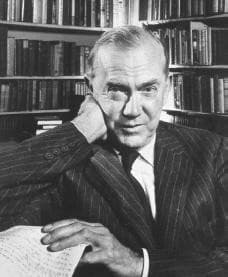
Henry Graham Greene was an English writer and journalist regarded by many as one of the leading English novelists of the 20th century.
Similar books
- The Spy Who Came in from the Cold
John le Carré
4.1 (77k) average on GoodreadsThrillerA gritty, realistic spy novel that delves into the moral complexities and human cost of espionage.
- Angels & Demons
Dan Brown
3.9 (2.7M) average on GoodreadsThrillerA Harvard symbologist races through Rome's ancient sites, deciphering cryptic clues to unmask the Illuminati and stop a vengeful plot to destroy the Vatican with a stolen antimatter weapon.
- Gone Girl
Gillian Flynn
4.1 (2.3M) average on GoodreadsThrillerA wife's sudden disappearance on her fifth anniversary reveals a web of lies and psychological warfare, exposing the secrets within a seemingly perfect marriage.
- The Girl on the Train
Paula Hawkins
3.9 (2.1M) average on GoodreadsThrillerA woman’s fascination with a seemingly perfect couple she watches from her daily train commute leads her into a dark investigation when she witnesses something that shatters their idyllic image.
- The Da Vinci Code
Dan Brown
3.9 (1.9M) average on GoodreadsThrillerA symbologist and a cryptologist race through European landmarks, deciphering ancient codes and uncovering a conspiracy that could rewrite the foundations of Christianity.
- The Guest List
Lucy Foley
3.8 (1.3M) average on GoodreadsThrillerOn a remote Irish island, a glamorous wedding descends into a deadly whodunnit when a guest is found murdered, trapping everyone with their secrets as a storm rages.






Enjoyed the summary?
A summary gives you the shape of the book. The book itself has the detail, the examples and the voice.
Find The Ministry of Fear on AmazonAs an Amazon Associate, BookBrief earns from qualifying purchases. How we're funded