

Synopsis
Covers the whole plot, including the ending.
- Difficulty
- Easy
- Pacing
- Fast
- Mood
- Suspenseful, Creepy, Mysterious, Frightening
- Read it if
- You enjoy spooky, mystery-filled thrillers with a touch of fantasy, perfect for a younger audience.
- Skip it if
- You prefer realistic fiction or find scary themes and body horror unsettling.
The Nightmarys Plot Summary
Covers the whole plot, including the ending.
The First Nightmare and Abigail's Arrival
Abigail's Strange Behavior and Stuart's Transformation
The Specimen Jar Incident
Stuart's Descent into Madness
Timothy's Brother Appears
Abigail's Confession and the Nightmarys
The Search for the Dreamcatcher
Confronting the Fears at the Hospital
The Truth About the Nightmarys' Origin
The Old House and the Dreamcatcher's Location
The Final Confrontation and Sacrifice
Jake's Awakening and the Aftermath
The Nightmarys Characters
Timothy July
Protagonist
A sensitive boy whose nightmares begin to manifest in reality, forcing him to confront a supernatural threat.
Timothy is a thoughtful and somewhat anxious middle schooler who is deeply affected by his brother Jake's coma. He is initially a passive observer of the strange events unfolding around him but is driven by a strong sense of loyalty to his friends and family. He possesses an innate empathy that allows him to connect with Abigail and understand the source of her pain, even as he is terrified by her nature. His journey forces him to develop courage and resourcefulness.
Relationships: Abigail (Initial suspicion and fear, evolving into a deep, trusting friendship and alliance.); Stuart (Best friend whose deteriorating condition fuels Timothy's determination to find a solution.); Jake July (Beloved older brother, whose comatose state is a central source of Timothy's personal anguish and nightmares.); Ms. Periwinkle (Teacher who shares a terrifying experience with Timothy regarding the specimen jars, briefly linking them in fear.)
Abigail
Supporting/Anti-hero
A mysterious new girl who is a Nightmary, a being capable of bringing nightmares to life, and seeks to control her destructive nature.
Abigail is an enigmatic and often unsettling figure. She is quiet, carries a strange scent, and displays unusual knowledge of the supernatural. As a Nightmary, she is a living embodiment of fear and trauma, constantly battling her innate urge to feed on fear and manifest nightmares. Despite her frightening abilities, she is burdened by her power and seeks a way to contain it, showing a deep desire for redemption and control over her own nature. She is driven by a longing for normalcy and to prevent harm.
Relationships: Timothy July (Her only confidante and ally in her quest to control her powers; a bond of mutual understanding and trust.)
Stuart
Supporting
Timothy's best friend, who becomes a victim of the Nightmarys' influence, exhibiting violent and erratic behavior.
Stuart is introduced as Timothy's loyal and fun-loving best friend. However, he quickly falls under the influence of the manifesting nightmares, becoming increasingly aggressive, paranoid, and cruel. His transformation is a key indicator of the growing supernatural threat and serves as a significant motivator for Timothy. Stuart's descent into madness highlights the terrifying power of the Nightmarys and the vulnerability of ordinary people to their influence. His plight makes the threat feel very personal and immediate for Timothy.
Relationships: Timothy July (Best friend, though their bond is severely tested by Stuart's possession and subsequent recovery.)
Jake July
Supporting/Mentioned
Timothy's older brother, serving in Iraq and in a coma, whose condition is a catalyst for Timothy's initial nightmares.
Jake is Timothy's older brother, serving in Iraq. His severe injury and subsequent coma are the underlying trauma that triggers Timothy's first vivid and unsettling nightmares. While largely absent physically, Jake's presence is powerfully felt through Timothy's emotional connection to him and the manifestations of his comatose state in Timothy's dreams. He represents the real-world anxieties and fears that can be exploited by the Nightmarys, and his eventual awakening signifies a partial triumph over the supernatural forces.
Relationships: Timothy July (Beloved younger brother who deeply cares for Jake and is haunted by his condition.)
Ms. Periwinkle
Supporting
Timothy's biology teacher who experiences a shared terrifying incident with the specimen jars.
Ms. Periwinkle is Timothy's biology teacher. She is initially presented as a normal, if somewhat eccentric, educator. Her shared experience with Timothy regarding the animated specimen jars serves as crucial validation for Timothy that the strange occurrences are real and not just in his head. Her fear and inability to explain the phenomenon further underscore the supernatural nature of the threat. She is a minor character, but her reaction helps to ground the fantastical elements in a relatable human response.
Relationships: Timothy July (Student-teacher relationship, briefly bonded by a shared, terrifying supernatural experience.)
The Nightmarys (Collective)
Antagonist
Supernatural entities born from fear and trauma, capable of manifesting nightmares into reality.
The Nightmarys are the primary antagonists, though Abigail is one of them. They are not a single entity but a collective force, or rather, a type of being that feeds on and embodies fear. They are responsible for the escalating horrors Timothy experiences, from the animated specimen jars to Stuart's possession and Jake's ghostly appearance. They represent the personification of psychological terror and the insidious ways fear can consume individuals and communities. Their existence highlights the book's exploration of mental and emotional vulnerability.
Relationships: Abigail (Abigail is one of them but seeks to escape or control her nature, putting her at odds with her own kind.); Timothy July (The primary target and victim of their manifestations, though he ultimately fights against their influence.)
The Nightmarys Themes
The Power of Fear
The novel shows how fear, both personal and shared, can become real and destructive. Timothy's worry about his brother's coma, Stuart's hidden insecurities, and the town's general unease all add to the Nightmarys' power. The book demonstrates how fear can corrupt people, as seen in Stuart's change, and how it can be used to create a terrifying reality. The characters must confront their fears directly, rather than letting them build up, to defeat the supernatural threat.
“Nightmares feed on fear. They grow stronger when you’re afraid.”
The Nature of Reality and Perception
The line between dreams and reality blurs throughout the story. Timothy's nightmares begin to enter his waking life, making it hard for him to tell what is real. This theme highlights how perception is subjective and how mental states can greatly affect one's experience of the world. The appearances of Jake, the specimen jars, and Stuart's monsters challenge Timothy's understanding of what is possible, forcing him to accept a reality stranger than he imagined.
“You can’t always tell the difference between what’s real and what’s not, especially when you’re scared.”
Friendship and Loyalty
Despite the terrifying events, friendship and loyalty are central to the story. Timothy's constant concern for Stuart, even when his friend becomes aggressive and scary, drives much of his actions. His willingness to trust and help Abigail, despite her frightening nature and the danger she brings, forms the main alliance against the Nightmarys. These relationships provide strength and motivation against overwhelming fear, suggesting that human connection protects against dark forces.
“I couldn’t leave him. He was my best friend, no matter what was happening to him.”
Trauma and Healing
The book touches on the impact of trauma, both personal and shared. Jake's war injury and coma are significant personal trauma for Timothy and his family, which feeds the nightmare cycle. Abigail herself results from shared trauma and fear, showing how unresolved pain can appear destructively. The story suggests that facing and understanding the source of trauma, rather than hiding it, is necessary for healing, both for individuals like Timothy and for beings like Abigail.
“Some fears are so old, so deep, they create something else entirely.”
Plot Devices & Literary Techniques
The Manifesting Nightmare
Nightmares become tangible realities, blurring the line between dream and wakefulness.
This device is central to the plot. Timothy's personal fears, such as his brother's decaying image or Stuart's monstrous transformation, are not confined to his sleep but appear in the real world. This creates a constant sense of dread and confusion, making it difficult for Timothy to trust his own senses. It serves to externalize internal psychological states, giving the abstract concept of fear a horrifying physical presence and driving the conflict forward.
The Unreliable Narrator (Situational)
Timothy's perception of reality is constantly challenged, making him question what is real.
While Timothy is the protagonist, his experiences are so bizarre and terrifying that he himself doubts their veracity. The reader experiences the events through his confused and fearful perspective, which enhances the mystery and suspense. This device is particularly effective in the early stages of the story, making the audience wonder if Timothy is hallucinating or if a supernatural threat is truly at play, mirroring Timothy's own internal struggle.
The Catalyst Character (Abigail)
Abigail's arrival precipitates and explains the supernatural events.
Abigail serves as the primary catalyst for both the escalating horror and the eventual understanding of the threat. Her presence seems to amplify the nightmares, but she also holds the key to explaining their origin and offering a potential solution. Without her, Timothy would be lost in a world of inexplicable terror. She acts as both a source of danger and a guide, propelling Timothy into the supernatural conflict and providing the necessary exposition for the reader.
The MacGuffin (The Dreamcatcher)
A mythical object sought to contain Abigail's powers and stop the nightmares.
The dreamcatcher acts as a classic MacGuffin, providing a clear objective for Timothy and Abigail's quest. Its existence gives them a tangible goal in a world of abstract fear. While its specific properties are crucial to the plot, its primary function is to drive the characters' journey, giving them purpose and direction as they navigate the dangerous landscape of manifesting nightmares. Its eventual use provides a resolution to the immediate threat.
The Nightmarys Quotes
“The wind howled a mournful song around the old house, a prelude to the terrors within.”
“Nightmares aren't just bad dreams; they're echoes from another place, trying to break through.”
“Fear has a smell, a metallic tang that fills your mouth even before you know why you're afraid.”
“Sometimes the things you try hardest to forget are the very things that come back to haunt you.”
“The shadows in this house weren't just the absence of light; they were alive, watching.”
“A dream is a fragile thing, easily shattered, but a nightmare leaves scars.”
“The truth isn't always comforting. Sometimes it's a monster in itself.”
“You can't outrun what's already inside your head.”
“The house breathed around them, a slow, creaking inhale and exhale of ancient wood and forgotten secrets.”
“Not all monsters hide under the bed. Some wear familiar faces.”
“Hope is a dangerous thing in a place like this. It makes the fall so much harder.”
“The line between reality and nightmare was blurring, smudged by exhaustion and terror.”
“Sometimes, the only way to defeat a monster is to understand what it truly fears.”
“The past isn't just history; it's a living thing, waiting to grab you if you let it.”
Quiz
10 questions on the plot and the characters. Each answer comes with a short explanation.
Question 1
What is Timothy July's brother's current medical condition at the beginning of the story?
- He is missing in action.
- He is in a coma after being wounded in Iraq.
- He is recovering from a minor injury.
- He has returned home safely.
Show answer
B. He is in a coma after being wounded in Iraq. The synopsis clearly states that Timothy's brother is 'in a coma after being wounded in Iraq,' which is a central plot point for Timothy's nightmares.
Question 2
Which of the following is NOT a source of Timothy's nightmares mentioned in the synopsis?
- His brother's decaying face.
- His best friend, Stuart, behaving like a jerk.
- The school principal.
- The old biology specimens in jars.
Show answer
C. The school principal. The synopsis lists his brother, Stuart, the biology specimens, and Abigail as sources of his nightmares, but does not mention the school principal.
Question 3
What happens to Stuart, Timothy's best friend, as the nightmares begin to come true?
- He becomes a suspect in a local mystery.
- He moves away to another town.
- He ends up in the hospital, terrified of monsters.
- He starts having vivid dreams himself.
Show answer
C. He ends up in the hospital, terrified of monsters. The synopsis states, 'Stuart ends up in the hospital, terrified that monsters are stalking him,' indicating a direct consequence of the nightmares becoming reality.
Question 4
Who is Abigail in relation to Timothy?
- She is his long-lost sister.
- She is the new girl who seems to be a magnet for trouble.
- She is a doctor treating his brother.
- She is his elementary school teacher.
Show answer
B. She is the new girl who seems to be a magnet for trouble. The synopsis introduces Abigail as 'the new girl who seems to be a magnet for trouble. Or perhaps she is the cause.'
Question 5
What specific detail about Timothy's brother's appearance in his nightmare coming true is mentioned?
- He is wearing his military uniform.
- His face is decaying.
- He is speaking in a foreign language.
- He appears much younger than he should.
Show answer
B. His face is decaying. The synopsis describes Timothy's brother appearing on the street with 'his face decaying,' a vivid and disturbing detail from the nightmares becoming real.
Question 6
What is the primary mystery Timothy needs to solve to stop his nightmares from becoming deadly realities?
- The identity of the person who wounded his brother.
- The secret in Abigail’s past.
- How to wake his brother from his coma.
- The origin of the biology specimens.
Show answer
B. The secret in Abigail’s past. The synopsis explicitly states, 'What is the secret in Abigail’s past that is the key to these horrors? And can Timothy figure it out before his nightmares become a deadly reality?'
Question 7
Besides Timothy, who else is tormented by the specimen jars?
- Stuart's parents.
- Abigail's family.
- His teacher.
- His brother's doctors.
Show answer
C. His teacher. The synopsis mentions that 'the specimen jars are tormenting not only Timothy but his teacher as well,' indicating a wider impact of the nightmare phenomena.
Question 8
What literary genre does 'The Nightmarys' primarily fall under, according to the provided information?
- Historical Fiction
- Romantic Comedy
- Thriller, Fantasy, Children's, Mystery, Young Adult
- Science Fiction
Show answer
C. Thriller, Fantasy, Children's, Mystery, Young Adult The genres 'Thriller, Fantasy, Children's, Mystery, Young Adult' are explicitly listed at the very beginning of the provided book information.
Question 9
What is the implied consequence if Timothy fails to uncover Abigail's secret?
- His brother will remain in a coma indefinitely.
- His nightmares will become a deadly reality.
- He will be expelled from school.
- Abigail will leave town.
Show answer
B. His nightmares will become a deadly reality. The final sentence of the synopsis poses the question, 'And can Timothy figure it out before his nightmares become a deadly reality?', strongly implying that failure will lead to fatal consequences.
Question 10
What previous novel by Dan Poblocki is 'The Nightmarys' described as a follow-up to?
- The Shadow House
- The Stone Child
- The Ghost of Graylock
- The Secret of the Hidden Scrolls
Show answer
B. The Stone Child The synopsis explicitly states, 'A follow-up to the well-received Stone Child, Dan Poblocki’s second novel will have his readers mesmerized.'
The Nightmarys FAQ
What is the central premise of 'The Nightmarys'?
The Nightmarys follows Timothy July as his terrifying nightmares begin to manifest in reality. These include visions of his comatose brother, Stuart's strange behavior, and the unsettling biology specimens in his classroom, all seemingly connected to the mysterious new girl, Abigail.
Who is Timothy July and what are his main struggles at the beginning of the book?
Timothy July is the protagonist, a young boy burdened by nightmares. He is particularly distressed by his brother being in a coma after an injury in Iraq, his best friend Stuart acting erratically, and the unsettling presence of Abigail, the new girl.
How does Timothy's brother's condition impact the story?
Timothy's brother, wounded in Iraq and in a coma, is a significant source of Timothy's nightmares. His decaying appearance in Timothy's waking visions suggests a deeper connection to the supernatural events unfolding and raises the stakes for Timothy's emotional well-being.
What role does Stuart, Timothy's best friend, play in the narrative?
Stuart initially acts like a jerk, adding to Timothy's stress. He later ends up in the hospital, terrified of monsters, indicating that the nightmare phenomenon extends beyond Timothy's personal experience and directly affects those close to him.
Who is Abigail and why is her arrival significant?
Abigail is the enigmatic new girl in Timothy's life, described as a 'magnet for trouble' or possibly its cause. Her mysterious past is explicitly stated to be the key to understanding and potentially resolving the horrors Timothy is experiencing.
How do the biology specimens in jars contribute to the horror?
The old biology specimens in jars are not merely background details; they become active tormentors for Timothy and his teacher. This suggests a malevolent force capable of animating inanimate objects and spreading its influence to others.
Is there a specific historical or local legend that influences the plot?
While the synopsis doesn't explicitly state a historical legend, the nature of 'The Nightmarys' and Abigail's 'secret past' strongly imply a supernatural origin tied to a specific event or entity. This could be a local legend or a curse passed down through generations.
How does 'The Nightmarys' connect to Dan Poblocki's previous novel, 'Stone Child'?
The synopsis describes 'The Nightmarys' as a 'follow-up to the well-received Stone Child.' This suggests either a shared universe, recurring themes, or perhaps even subtle character cameos or background lore that fans of the previous book would recognize.
Are the 'monsters' Stuart fears literal creatures or manifestations of psychological trauma?
Stuart's fear of 'monsters stalking him' while in the hospital blurs the line between literal creatures and psychological manifestations. Given that Timothy's nightmares are coming true, it's highly probable these 'monsters' are literal, tangible threats, though their origin might be rooted in psychological fear.
How does Timothy's guilt or anxiety about his brother manifest in his nightmares?
Timothy's deep-seated anxiety and potential guilt over his brother's coma are visually represented by his brother's decaying face in his nightmares. This disturbing imagery reflects Timothy's internal struggle and fear of loss, projecting his deepest anxieties into waking reality.
What psychological impact does Abigail's presence have on Timothy?
Abigail's presence creates a complex psychological impact on Timothy, as she is both a potential cause of his torment and the key to its solution. This creates a push-pull dynamic of fear and desperate hope, forcing Timothy to confront his anxieties about trust and danger.
How does the story explore the theme of reality versus illusion through the nightmares?
The story directly tackles the theme of reality versus illusion by having Timothy's nightmares literally come true. This blurs the boundaries of his perception, forcing him to question what is real and what is a product of his imagination, leading to increased psychological distress.
What is the psychological significance of the biology specimens tormenting Timothy and his teacher?
The biology specimens, often symbols of scientific detachment and death, becoming active tormentors signifies a breakdown of order and the intrusion of the unnatural into the mundane. Psychologically, it represents the inescapable nature of the horror, affecting even figures of authority like the teacher.
Is Abigail a victim, a villain, or something more ambiguous?
Abigail's role is intentionally ambiguous; she is presented as either a 'magnet for trouble' or 'the cause.' This ambiguity suggests she might be an unwitting catalyst, a cursed individual, or even unknowingly wielding a power, making her character ripe for reader interpretation.
What could be the nature of Abigail's 'secret past' and how might it relate to the nightmares?
Abigail's 'secret past' likely involves a supernatural encounter, a generational curse, or a forgotten pact that inadvertently unleashed the 'Nightmarys.' It could be tied to a specific location or an object she possesses, making her the focal point for the malevolent forces.
Does the book suggest that Timothy's own fears are empowering the nightmares, or are they external forces?
While Timothy's fears fuel the intensity, the fact that his brother's decaying face appears and Stuart is hospitalized suggests the nightmares are external forces with tangible effects. However, Timothy's emotional state might be a conduit or amplifier for these external entities.
How might the ending resolve the conflict between the nightmare world and reality?
The ending will likely involve Timothy uncovering Abigail's secret and finding a way to sever the connection between the nightmare world and reality. This could mean breaking a curse, defeating a specific entity, or perhaps even making a sacrifice to restore order and protect his loved ones.
What kind of 'monsters' can readers expect to encounter, given the premise?
Given the premise, readers can expect monsters that are direct manifestations of fears and anxieties, such as the decaying visage of Timothy's brother or whatever terrifies Stuart. These are likely not traditional creatures but rather psychological horrors made flesh, unique to the characters' deepest fears.
Similar books
- Coraline
Neil Gaiman
4.0 (23k) average on GoodreadsFantasyFeatures a child protagonist encountering a dark, fantastical world and confronting their fears.
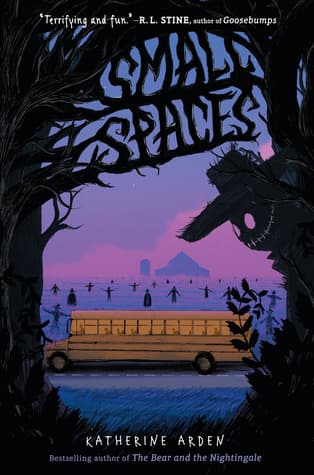
- Small Spaces
Katherine Arden
4.0 (12k) average on GoodreadsFantasyA middle-grade mystery with a spooky, atmospheric setting and supernatural threats.
- Angels & Demons
Dan Brown
3.9 (2.7M) average on GoodreadsThrillerA Harvard symbologist races through Rome's ancient sites, deciphering cryptic clues to unmask the Illuminati and stop a vengeful plot to destroy the Vatican with a stolen antimatter weapon.
- Gone Girl
Gillian Flynn
4.1 (2.3M) average on GoodreadsThrillerA wife's sudden disappearance on her fifth anniversary reveals a web of lies and psychological warfare, exposing the secrets within a seemingly perfect marriage.
- The Girl on the Train
Paula Hawkins
3.9 (2.1M) average on GoodreadsThrillerA woman’s fascination with a seemingly perfect couple she watches from her daily train commute leads her into a dark investigation when she witnesses something that shatters their idyllic image.
- The Da Vinci Code
Dan Brown
3.9 (1.9M) average on GoodreadsThrillerA symbologist and a cryptologist race through European landmarks, deciphering ancient codes and uncovering a conspiracy that could rewrite the foundations of Christianity.





Enjoyed the summary?
A summary gives you the shape of the book. The book itself has the detail, the examples and the voice.
Find The Nightmarys on AmazonAs an Amazon Associate, BookBrief earns from qualifying purchases. How we're funded