
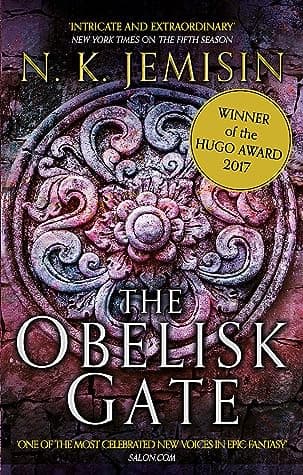
Synopsis
Covers the whole plot, including the ending.
- Difficulty
- Medium
- Pacing
- Moderate
- Mood
- Dark, Epic, Thought-provoking, Intense, Revelatory
- Read it if
- You want a groundbreaking fantasy with unique world-building, deep themes of oppression and survival, and a complex magic system.
- Skip it if
- You prefer lighthearted fantasy, simple plots, or stories without significant moral ambiguity and grim stakes.
The Obelisk Gate Plot Summary
Covers the whole plot, including the ending.
A New Beginning in Castrima
After Tirimo's destruction, Essun, carrying Hoa's petrified body, arrives at Castrima, a hidden underground geode city. Ykka, the city's leader and a powerful orogene, welcomes her. Castrima is a sanctuary where orogenes live openly, free from fear or servitude, and learn to use their powers. Essun is wary at first, having been betrayed before, but the immediate acceptance and the sight of children learning orogeny freely begin to change her mind. She learns that Castrima runs on a large orogenic engine, sustained by its inhabitants, and is a key stronghold against the worsening Season.
Alabaster's Revelation
Essun is surprised to find Alabaster Tenring, her former lover and the 'world-crusher,' alive in a hidden chamber in Castrima. He is very ill, his body turning to stone from the power he uses, but his mind is clear. Alabaster reveals the obelisks' true nature: they are pieces of a shattered moon, full of immense power. He is trying to reassemble them to create a 'gate' to restore Earth's orbit. He explains that the moon was broken thousands of years ago to save humanity from a greater threat, and the Seasons are a direct result of its absence. He plans to teach Essun how to use the Obelisk Gate.
The Nature of Stone Eaters
Hoa, whom Essun thought was a petrified man, reveals himself to be a Stone Eater, an ancient, sentient being made of rock. He explains that Stone Eaters protect the Earth, created by the ancient 'Guardians' to protect humanity and the planet. He reveals he has watched Essun for a long time, guiding her indirectly, and returned to her as a 'petrified' form to be near her. Hoa's revelation is a major moment, as Essun gains a powerful, if mysterious, ally and starts to understand her world's deeper history and the forces at play.
Nassun's Journey with Schaffa
Meanwhile, Essun's daughter, Nassun, travels with Schaffa, her former Guardian, who rescued her after Jija killed Uche. Schaffa, though badly hurt and dying, cares deeply for Nassun and believes she is essential to the world's survival. During their journey, Nassun's orogenic powers awaken with terrifying strength, far beyond Essun's. She discovers she can 'tune' into the obelisks and draw power directly from them, a skill even Alabaster struggles with. Schaffa guides her, helping her control her dangerous abilities, and teaches her about the world and orogenes' role, though from a Guardian's viewpoint.
Training with Alabaster
Under Alabaster's increasingly urgent guidance, Essun begins her training to use the Obelisk Gate. Alabaster teaches her about the 'silver thread' – the invisible network connecting all obelisks – and how to access its power. This training is hard and dangerous, as Essun must learn to sense and manipulate the obelisks' immense energies without destroying herself or others. Alabaster stresses the need for 'tuning' and 'alignment,' concepts beyond mere brute force orogeny. He pushes her to understand the gate's deeper purpose and the sacrifices needed to achieve their goal.
The Nature of Magic
As Essun trains, she starts to understand that orogeny and using the Obelisk Gate are not just about raw power, but about a deep connection to the Earth and its energies. Alabaster reveals that the obelisks' 'magic' is linked to the Earth's spirit, a sentient entity. Essun learns to listen, to feel the planet's vibrations and intentions, rather than just forcing her will on it. This deeper understanding changes how she sees her abilities and the world, moving her away from the destructive ways of her past training as a sessapinae.
Nassun's Growing Power and Doubt
Nassun's power continues to grow, allowing her to 'tune' obelisks with an ease that amazes Schaffa. She can feel their song, their purpose, and manipulate them with a precision Essun and Alabaster struggle to achieve. However, Nassun also starts to question Schaffa's true intentions and the Guardians' nature. She senses a hidden agenda, a deeper, more manipulative purpose behind their actions. Her bond with Schaffa is strong, but her natural distrust of authority, from her traumatic past, makes her wary of his ultimate goals, especially when he speaks of 'saving humanity' in a way that feels conditional.
The Guardians' True Purpose
Through their journey and Schaffa's fragmented memories, Nassun learns more about the Guardians' ancient history. She learns they are not just overseers of orogenes, but were created by the original civilization to manage the consequences of the moon's destruction. Their purpose was to stop humanity from destroying itself and the planet without the moon's stabilizing influence. This revelation complicates Nassun's view of them; they are both oppressors and protectors, their methods harsh but born from an ancient, desperate need. Schaffa's own internal conflict shows this duality.
The Attack on Castrima
Castrima is attacked by the Sanctorate, who have found its location. The battle is brutal, with the Sanctorate using advanced weapons and their own sessapinae. Essun must use her training with Alabaster, using the silver thread to defend the city. She manipulates the Earth's crust, creating barriers and causing small quakes, but the strain is immense. The attack shows Castrima's weakness despite its defenses and the growing desperation of the outside world. Essun's connection to the Obelisk Gate becomes a critical, yet draining, weapon.
Alabaster's Sacrifice
As his body quickly turns to stone and he nears death, Alabaster makes a final, great sacrifice. He uses his last immense power to fully connect Essun to the Obelisk Gate, completing her 'tuning' and ensuring she can use its full potential. This act is both a transfer of power and a passing of responsibility. Alabaster dies peacefully, having trained his successor and set the stage for the moon's return. His death is a deep loss for Essun, but also a trigger, strengthening her resolve to finish their shared task.
Essun's Full Awakening
With Alabaster's sacrifice, Essun fully realizes her potential. She understands she is not just using the Obelisk Gate, but that she *is* the Gate – a conduit for the Earth's power, connected to every obelisk across the Stillness. She can feel the entire network, the planet's pulse, and the whisper of the moon's shattered pieces. This change is both empowering and terrifying, as she now has the immense responsibility of bringing the moon back. She is no longer just an orogene, but something more, something ancient and powerful, embodying the very forces she seeks to control.
Nassun's Choice
Nassun, having learned the truth about the Guardians and the moon, makes a firm choice. She rejects the Guardians' long-standing plan of control, believing their methods have only caused suffering. Instead, she seeks her own way to end the Seasons, one that might involve destroying the source of the world's pain, even if it means destroying the world itself. Her immense, intuitive power and deep empathy for orogenes' suffering drive her towards a radical solution, setting her on a path that will collide with Essun's mission to restore the moon.
The Two Paths Diverge
The novel ends with Essun and Nassun, mother and daughter, now immensely powerful orogenes, on very different paths. Essun, now the living Obelisk Gate, is committed to Alabaster's plan of restoring the moon and ending the Seasons by re-establishing the planet's orbit. Nassun, however, guided by her own pain and a different view of the world's problems, seeks to use her power to permanently cut off humanity from the Earth's pain, possibly by destroying the planet's ability to suffer altogether. Their separate journeys, driven by love and loss, are set to clash in the final book.
Principal Figures
Essun
Protagonist
A powerful orogene seeking her lost daughter and a way to save the world.
Essun is a fiercely protective and deeply traumatized orogene, having endured immense loss and betrayal throughout her life. She is driven by the desperate hope of finding her daughter, Nassun, and a profound weariness with the destructive cycles of the Stillness. Initially distrustful and hardened, she slowly opens up to the community of Castrima and the revelations about the true nature of orogeny and the world. Her power is immense, but her strength lies equally in her resilience and her growing understanding of connection and empathy.
Relationships: Nassun (Daughter, primary motivation, eventually an opposing force); Alabaster Tenring (Former lover, mentor, co-conspirator in saving the world); Hoa (Mysterious companion, protector, Stone Eater); Ykka (Leader of Castrima, ally, friend)
Nassun
Secondary Protagonist
Essun's daughter, an incredibly powerful and intuitive orogene.
Nassun is Essun's daughter, a young girl with an almost terrifyingly potent and intuitive grasp of orogeny, far surpassing her mother's. She is deeply scarred by her father's murder of her brother and her mother's subsequent departure, leading to a profound sense of abandonment and a burning desire to understand and control her own destiny. She is intelligent, observant, and fiercely independent, but also vulnerable and deeply empathetic to suffering. Her unique ability to 'tune' obelisks sets her apart, and she seeks a radical solution to the world's pain.
Relationships: Essun (Mother, source of both love and pain, eventual opposing force); Schaffa (Guardian, protector, mentor, complex parental figure); Jija (Father, murderer of her brother, source of trauma)
Alabaster Tenring
Supporting Character / Mentor
The madman 'world-crusher' who reveals the truth of the Stillness.
Alabaster is Essun's former lover and mentor, a legendary orogene who shattered the continent of the Stillness in the previous book. In 'The Obelisk Gate,' he is gravely ill, his body slowly turning to stone from his immense use of power. Despite his condition, he is brilliant, driven, and possesses an unparalleled understanding of the Earth, the obelisks, and the true history of the world. He acts as Essun's final, crucial mentor, guiding her towards understanding and wielding the Obelisk Gate, even as he faces his own imminent demise. His motivations are complex, driven by a deep love for the Earth and a desperate desire to end the Seasons.
Relationships: Essun (Former lover, protégé, successor); Innon (Young orogene, companion, caretaker)
Hoa
Supporting Character / Mystical Guide
A mysterious Stone Eater who accompanies Essun.
Hoa is initially presented as a petrified man Essun carries, but he is revealed to be a Stone Eater – an ancient, sentient being made of living rock. He is quiet, observant, and possesses vast, ancient knowledge about the Earth, the obelisks, and the history of the world. Hoa acts as a silent guardian and occasional guide for Essun, his true motivations often obscured by his enigmatic nature. He has a deep, unspoken connection to Essun and the fate of humanity, hinting at a long history of observation and intervention.
Relationships: Essun (Companion, protector, ancient observer)
Schaffa
Supporting Character / Antagonist (ambiguous)
Nassun's Guardian, a conflicted figure with a hidden agenda.
Schaffa is Nassun's Guardian, a member of the ancient, powerful order tasked with controlling orogenes. He is deeply devoted to Nassun, having rescued her, but his loyalty is divided between his love for her and his ancient programming/duty to the Guardians. He is gravely wounded and slowly dying, his memories fragmented, yet he possesses immense power and knowledge. Schaffa guides Nassun, training her and revealing aspects of the Guardians' history, but his actions are often driven by a complex, ancient agenda that might not align with Nassun's best interests.
Relationships: Nassun (Charge, protégé, object of affection and duty); Guardians (other) (Former brethren, part of his ancient programming/loyalty)
Ykka
Supporting Character
The powerful and compassionate leader of Castrima.
Ykka is the pragmatic and compassionate leader of Castrima, the hidden geode city that serves as a sanctuary for orogenes. She is a powerful orogene herself, skilled in both combat and community building. Ykka provides a safe haven for Essun and her people, offering acceptance and a sense of belonging that Essun has long been denied. She is a strong, capable leader who prioritizes the survival and well-being of her community, working tirelessly to protect Castrima from the dangers of the escalating Season and external threats. She represents hope for a different way of life for orogenes.
Relationships: Essun (Ally, friend, leader of her community)
Innon
Supporting Character
A young, skilled orogene who serves as Alabaster's caretaker.
Innon is a young, talented orogene who serves as Alabaster's caretaker in Castrima. He is quiet, observant, and deeply loyal to Alabaster, understanding the immense burden and pain his mentor carries. Innon is a skilled healer, using his orogeny to alleviate Alabaster's suffering. He represents the younger generation of orogenes, free from the direct oppression Essun experienced, and his presence provides a sense of continuity and hope for the future.
Relationships: Alabaster Tenring (Mentor, patient, object of loyalty)
The Earth (Father Earth)
Mentioned / Antagonist / Elemental Force
The sentient planet, a powerful and often destructive entity.
The Earth, often referred to as Father Earth, is revealed to be a sentient entity, a powerful and complex 'being' whose moods and actions directly cause the Seasons and other geological catastrophes. It is not merely a passive planet but an active force, capable of immense anger and destruction, particularly towards humanity, whom it perceives as a parasite. Its suffering and rage are the underlying cause of the world's plight, and its interaction with the obelisks and the shattered moon is central to the plot. It is a character in its own right, albeit an elemental and often malevolent one.
Relationships: Humanity (Perceived as a parasitic nuisance, object of its wrath); Orogenes (Its children, conduits for its power, often used and abused)
Themes & Insights
The Nature of Power and Control
The novel explores the various forms of power – personal, political, elemental – and the dangers of trying to control it. Orogenes have great power over the Earth, yet society controls and oppresses them. The Guardians try to control orogenes, and the Sanctorate tries to control the world. Alabaster and Essun aim to control the Obelisk Gate to restore the moon, while Nassun seeks to control her own power to end suffering. The story asks if true power lies in domination or in understanding and working with natural forces, as seen in Essun's 'tuning' with the silver thread compared to brute force orogeny.
“You don't just use the Obelisk Gate, child. You become it.”
Motherhood and Sacrifice
The mother-daughter bond is central, driving both Essun and Nassun's actions. Essun's search for Nassun fuels her survival and her willingness to learn from Alabaster. Nassun's trauma from her family's destruction and her desire for security shape her own powerful journey. Both mothers (Essun, and implicitly the Guardians who act as parental figures) make sacrifices for their children, but also cause pain, showing the complex, often contradictory nature of parental love. Alabaster's sacrifice for Essun also reflects this theme, as he gives his life to empower his 'successor' to complete their shared mission.
“There are some things that are worse than death. Betrayal is one of them. Abandonment is another.”
Trauma and Healing
Both Essun and Nassun carry deep, unhealed trauma from their pasts – Essun from losing her children and husband, and Nassun from her father's violence and her mother's perceived abandonment. The novel explores how trauma shapes their identities, relationships, and how they try to save the world. Castrima offers Essun a place for healing and acceptance, while Nassun's journey with Schaffa forces her to face her pain and turn it into immense power. The book suggests that true healing might not mean forgetting, but integrating pain into a new understanding of self and purpose.
“You can't fix what you don't acknowledge. And you can't heal what you don't feel.”
The Price of Survival
The Stillness is a world always on the edge of extinction, and characters must make impossible choices to survive. Castrima, a refuge for orogenes, shows the will to survive, but it is always threatened. The Guardians' ancient decision to break the moon, while saving humanity, led to thousands of years of suffering. Essun and Alabaster's plan to restore the moon requires great sacrifice, and Nassun's alternative path also comes with a huge cost. The novel constantly questions what 'survival' means and if any price is too high to pay for it.
“This is the way the world ends... for the last time.”
Environmentalism and Planetary Sentience
The main conflict of the series is rooted in the relationship between humanity and the Earth. The revelation of Father Earth as a sentient, suffering entity changes 'natural disasters' into acts of a conscious, vengeful planet. Orogeny is not just magic, but a direct link to this planetary consciousness. The novel criticizes humanity's exploitation and disregard for its environment, showing the Seasons as the Earth's furious reaction. The protagonists' ultimate goal is to restore balance, highlighting themes of ecological responsibility and the deep connection of all life with the planet.
“The Earth is not a silent, unthinking thing. It feels. It remembers. And it is angry.”
Plot Devices & Literary Techniques
The Obelisk Gate
A network of floating obelisks that can be wielded by powerful orogenes.
The Obelisk Gate is the central plot device, revealed to be a system of ancient, powerful obelisks that are fragments of the shattered moon. These obelisks are connected by an invisible 'silver thread' and can be 'tuned' by exceptionally powerful orogenes like Alabaster, Essun, and Nassun. They serve as conduits for immense geostrophic energy, capable of controlling geological events on a massive scale. The ultimate goal is to reassemble them into a 'gate' to restore the moon's orbit, thus ending the Seasons. The Gate represents both a weapon of immense destruction and the potential for salvation.
The Stillness
The name of the continent and the world, perpetually ravaged by 'Seasons' of geological catastrophe.
The Stillness is not merely a setting but a plot device that drives the entire narrative. Its constant geological instability, known as 'Seasons,' creates an urgent, existential threat that forces humanity to adapt, evolve, and make desperate choices. The Seasons are revealed to be a direct consequence of the moon's absence, making the restoration of the moon the ultimate solution to the world's plight. The harsh environment and constant danger shape the characters' resilience, resourcefulness, and their understanding of the planet's sentience.
Stone Eaters
Ancient, sentient beings made of rock who observe and occasionally intervene.
Stone Eaters are mysterious, ancient beings composed of rock and mineral, capable of moving through the earth and manipulating geological forces. They are revealed to be guardians of the Earth, created by an ancient civilization, and possess vast knowledge of the world's history and the Obelisk Gate. Hoa is the primary Stone Eater, acting as a silent observer and occasional guide for Essun. Their enigmatic nature and hidden agendas contribute to the story's sense of ancient mystery and the deeper forces at play, often providing crucial information or subtle assistance at pivotal moments.
Guardians
An ancient order tasked with controlling orogenes and maintaining societal order.
The Guardians are an ancient, powerful order responsible for 'managing' orogenes, often through brutal training and servitude. They are revealed to be an ancient construct, created by the civilization that broke the moon, to prevent humanity from destroying itself in the absence of the moon's stabilizing influence. Schaffa is the primary Guardian character. While seemingly antagonists, their true purpose is complex and rooted in a desperate attempt to preserve humanity, albeit through morally ambiguous and oppressive means. Their existence highlights themes of control, historical burden, and the ethical dilemmas of power.
The Obelisk Gate Quotes
“All you can do is all you can do. And sometimes, all you can do isn't enough. But it's still all you can do.”
“This is what you must remember: the ending of one thing is the beginning of another. You have been broken, but you are not unmade.”
“Power is not a thing to be hoarded. It is a thing to be used. And sometimes, to be given away.”
“The world is not a safe place for anyone, but it is especially unsafe for those who are different.”
“Sometimes, the only way to save something is to break it first.”
“There are no monsters, only people. And sometimes, people do monstrous things.”
“Survival is not enough. Not when you have something to fight for.”
“The past is a wound that never truly heals. But it can be stitched up, and learned from.”
“Love is a dangerous thing. It makes you weak, and it makes you strong.”
“You cannot fight a force of nature. You can only learn to redirect it.”
“Hope is a choice, not a given. And sometimes, it's the hardest choice to make.”
“The greatest prison is the one you build for yourself, out of fear and regret.”
“Every act of creation is first an act of destruction.”
“Sometimes, the greatest strength lies in admitting you need help.”
Quiz
10 questions on the plot and the characters. Each answer comes with a short explanation.
Question 1
What is the primary goal Alabaster Tenring returns to achieve with Essun?
- To destroy the remaining obelisks.
- To train Essun as his successor to seal the fate of the Stillness.
- To find Nassun and reunite her with Essun.
- To activate a new Gate to another dimension.
Show answer
B. To train Essun as his successor to seal the fate of the Stillness. Alabaster's return is explicitly stated as being to train Essun as his successor to 'seal the fate of the Stillness forever'.
Question 2
Which character is described as a 'lost daughter, found by the enemy'?
- Syenite
- Antimony
- Nassun
- Yumenes
Show answer
C. Nassun The synopsis directly mentions 'It continues with a lost daughter, found by the enemy.' referring to Nassun, Essun's daughter, who is with Schaffa.
Question 3
What entity or concept is the 'Stillness' described as in the synopsis?
- A powerful, sentient obelisk.
- The wall which stands against the flow of tradition and a spark of hope.
- A secret society of orogenes.
- The name of the current Season of endings.
Show answer
B. The wall which stands against the flow of tradition and a spark of hope. The synopsis states: 'The Stillness is the wall which stands against the flow of tradition, the spark of hope long buried under the thickening ashfall.'
Question 4
What is the 'season of endings' growing darker, as mentioned in the synopsis?
- The end of a specific calendar year.
- A period of prolonged geological and societal catastrophe.
- A metaphorical phase of personal despair for Essun.
- The final stage of Alabaster's plan.
Show answer
B. A period of prolonged geological and societal catastrophe. The 'season of endings' refers to the ongoing cataclysmic events that threaten civilization, a long-running theme in the Broken Earth series.
Question 5
What role does Alabaster Tenring play, according to the description?
- A benevolent leader of a hidden community.
- A madman, world-crusher, and savior.
- The primary antagonist trying to stop Essun.
- A guardian of the ancient obelisks.
Show answer
B. A madman, world-crusher, and savior. Alabaster is directly described as 'madman, world-crusher, savior' in the provided text, highlighting his complex and controversial nature.
Question 6
What is converging on answers at last, according to the synopsis?
- The location of the lost daughter.
- The ancient mystery surrounding the obelisks.
- The true identity of the Stillness.
- The reason for the current Season.
Show answer
B. The ancient mystery surrounding the obelisks. The text states: 'It continues with the obelisks, and an ancient mystery converging on answers at last.' This refers to the long-standing mystery of the obelisks.
Question 7
What is the 'long cold night' that civilization is fading into?
- A literal extended period of darkness caused by a solar eclipse.
- A metaphorical collapse of society and prolonged harsh conditions.
- The name of a specific geographical region.
- A period of peace and quiet after the Season.
Show answer
B. A metaphorical collapse of society and prolonged harsh conditions. The 'long cold night' is a metaphorical description of the societal collapse and the harsh, prolonged conditions resulting from the catastrophic 'season of endings'.
Question 8
What is implied about the nature of 'tradition' in the context of 'The Stillness is the wall which stands against the flow of tradition'?
- Tradition is a positive force that the Stillness seeks to preserve.
- Tradition represents oppressive or harmful societal norms that the Stillness resists.
- Tradition refers to ancient magical practices that the Stillness protects.
- Tradition is a neutral concept, merely describing the past.
Show answer
B. Tradition represents oppressive or harmful societal norms that the Stillness resists. If the Stillness 'stands against the flow of tradition' and is a 'spark of hope', it implies that the 'tradition' is something detrimental or oppressive that needs to be resisted or changed for a better future.
Question 9
Given the description of Alabaster and Essun's mission, what overarching theme is strongly suggested for the novel's direction?
- A quest for personal revenge against a past wrong.
- The inevitable and irreversible destruction of the world.
- The transfer of immense power and responsibility to shape the world's future.
- The discovery of a new, untouched land for humanity.
Show answer
C. The transfer of immense power and responsibility to shape the world's future. Alabaster's mission 'to train his successor, Essun, and thus seal the fate of the Stillness forever' strongly suggests a theme of the transfer of power and responsibility to Essun to determine the world's future, rather than just destruction or personal quests.
Question 10
The phrase 'This is the way the world ends... for the last time' suggests what about the nature of the world's catastrophes?
- The current 'ending' is merely one of many cyclical catastrophes the world has faced.
- This particular ending is unique and has no precedent in history.
- The world is literally physically dissolving out of existence.
- It implies a sudden, unforeseen event rather than a prolonged one.
Show answer
A. The current 'ending' is merely one of many cyclical catastrophes the world has faced. The phrase 'for the last time' implies that the world has 'ended' or faced cataclysms before, making the current one the final iteration of a recurring cycle of destruction.
The Obelisk Gate FAQ
What is the primary goal of Alabaster Tenring in 'The Obelisk Gate'?
Alabaster's primary goal is to train Essun to master the Obelisks and the magical energy of the Rifting, specifically to connect with the Obelisk Gate itself. He believes this is the only way to stop the current Season of global destruction and prevent the complete fracturing of the Stillness, essentially ending the world's cycle of destruction for good.
Where does Essun spend most of her time during the events of this book?
Essun spends most of her time in a geode, a massive underground cavern, where she is tutored by Alabaster and his Guardian, Steel. This location provides access to a large cluster of obelisks and is strategically chosen for its stability and proximity to the Earth's core, which is crucial for their training.
Who is Nassun and what is her role in the story?
Nassun is Essun's daughter, who was taken by her father, Jija, at the end of the previous book. In 'The Obelisk Gate,' she is traveling with Jija and a Guardian named Schaffa, learning to control her own powerful orogenic abilities and grappling with the trauma of her past. She is on a parallel journey to find a way to stop the Seasons.
What are the Obelisks and how do they function?
The Obelisks are ancient, floating crystalline structures that can absorb and channel immense amounts of magical energy, or 'Rifting.' They are remnants of a forgotten civilization and act as a vast, interconnected network. Orogenes can interface with them, using them to control geological forces on a colossal scale, though doing so is incredibly dangerous and draining.
What is the significance of the 'Obelisk Gate' itself?
The 'Obelisk Gate' refers to a theoretical central nexus of all the obelisks, a point where their collective power can be directed to achieve a singular, world-altering purpose. It is essentially the ultimate control point for the entire network and is believed to be the key to either destroying the world or saving it from the Seasons.
What is the true nature of the Guardians and their connection to the Obelisks?
The Guardians are revealed to be constructs created by the Earth itself, specifically by a sentient entity referred to as 'Father Earth,' to prevent humans from fully accessing or misusing the Obelisk network. They are designed to control and suppress orogenes, ensuring that the planet's core remains intact and its energy isn't fully siphoned away.
How does Essun's 'stone arm' develop and what does it signify?
Essun's 'stone arm' is a consequence of her repeated and extreme use of orogeny, particularly her absorption of energy from Alabaster and the Obelisks. It signifies her deepening connection to the Earth's raw power and her transformation into something more than human, literally becoming part of the geological forces she wields. It is also a physical manifestation of her growing power and sacrifice.
What is the secret history of the Obelisks and their original purpose?
The Obelisks were originally created by an ancient civilization, implied to be the 'Stone Eaters,' as a means to extract and store energy from Father Earth. Their ultimate purpose was to power a massive 'ark' or escape vessel to leave the dying planet, but the plan failed, leading to the fracturing of the moon and the beginning of the Seasons.
What is the significance of the 'Fifth Season' that Alabaster describes?
Alabaster reveals that the 'Fifth Season' is not just another period of environmental catastrophe, but the perpetual state of the world caused by the moon's absence and Father Earth's constant retaliation. It's the baseline of existence in the Stillness, a constant, low-level apocalypse that humanity has adapted to, rather than an infrequent event.
How does Essun's past trauma, particularly the loss of her children, influence her actions in this book?
Essun's trauma fuels her relentless pursuit of Nassun and her determination to end the Seasons, driven by a desperate need to protect her last remaining child. Her grief and anger also make her more ruthless and willing to take extreme risks, as she feels she has nothing left to lose and is deeply scarred by the violence inflicted upon her family.
Discuss the psychological impact of having one's orogenic abilities 'dampened' or controlled by Guardians, as seen with Schaffa and Nassun.
The dampening of orogenic abilities by Guardians creates a profound psychological dependency and often a sense of internal conflict. For Schaffa, it's a constant struggle between his core programming and his developing humanity, leading to immense internal pain. For Nassun, it initially provides a sense of safety and control, but also fosters resentment and a desire for true freedom, shaping her trust issues.
How does Alabaster's 'madness' serve as a coping mechanism or a catalyst for his knowledge?
Alabaster's 'madness' is less a mental illness and more a consequence of bearing immense, forbidden knowledge and the physical toll of his abilities. It acts as a coping mechanism by allowing him to disconnect from the overwhelming horror of his past actions and the world's true state. Simultaneously, it grants him a unique perspective, free from conventional societal constraints, making him a catalyst for radical change.
Explore the theme of motherhood as presented through Essun and Nassun's separate journeys.
Motherhood is a central theme, explored through Essun's fierce, protective love and her willingness to sacrifice everything for Nassun, contrasted with Nassun's complex feelings of abandonment and betrayal. Both characters, despite their separation, are driven by a need to create a safer world for children, even if their methods and understanding of 'safety' diverge significantly.
Is Father Earth truly malevolent, or simply acting out of self-preservation?
Father Earth is not inherently malevolent but acts out of extreme self-preservation, reacting to the existential threat posed by humanity's past and present use of its energy. Its actions, like creating Guardians and causing Seasons, are responses to being 'bled dry' and prevent its own destruction, making it a force of nature rather than a moral agent.
How does the narrative challenge the traditional hero's journey through Essun's character?
Essun challenges the traditional hero's journey by presenting a protagonist who is deeply flawed, driven by grief and anger, and whose 'heroic' actions often involve immense destruction and morally ambiguous choices. She is not seeking glory or personal triumph, but rather a desperate, brutal solution to an intractable problem, often at great personal cost, blurring the lines between savior and destroyer.
What is the ultimate debate or philosophical question posed by the existence of the Obelisk Gate and its potential use?
The ultimate debate is whether humanity has the right to exploit a sentient planet for its own survival, and what constitutes true 'salvation.' Is it better to end the cycle of destruction by forcing the moon back into orbit, even if it means further traumatizing Father Earth, or to allow the planet to continue its slow destruction of humanity to protect itself? It questions the morality of using immense power for a perceived greater good.
How do the varying perspectives of Essun, Alabaster, and Nassun on saving the world differ?
Essun seeks to end the Seasons and bring the moon back, believing it's the only way for humanity to survive. Alabaster agrees on the moon's return but understands the deeper, painful truths about Father Earth. Nassun, however, influenced by Schaffa and her own trauma, leans towards a more radical solution: destroying the world to end its suffering, believing that if humanity can't be saved, perhaps it should be ended to stop the pain.
What role does the theme of 'found family' play in the geode community and with Essun's interactions?
The geode community, including characters like Tonkee and even Steel, represents a form of 'found family' for Essun, offering her a degree of acceptance and support she lost with her biological family. This contrasts with the rigid, often cruel societal structures outside, highlighting the importance of chosen bonds in a world that frequently rejects and persecutes orogenes.
About the author

N.K. Jemisin is an American author known for her speculative fiction, particularly in the realm of fantasy. Her notable works include The Fifth Season, The Obelisk Gate, The Stone Sky, and The Broken Kingdoms, which explore complex themes of culture, oppression, and resilience. Jemisin has received multiple prestigious awards for her writing, including the Hugo Award.
Similar books
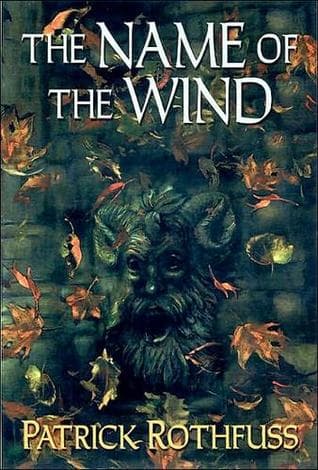
- The Name of the Wind
Patrick Rothfuss
4.5 (716k) average on GoodreadsFantasyFeatures a complex magic system and a deep, immersive world.
- A Wizard of Earthsea
Ursula K. Le Guin
4.0 (241k) average on GoodreadsFantasyExplores themes of power, responsibility, and the natural world with profound depth.
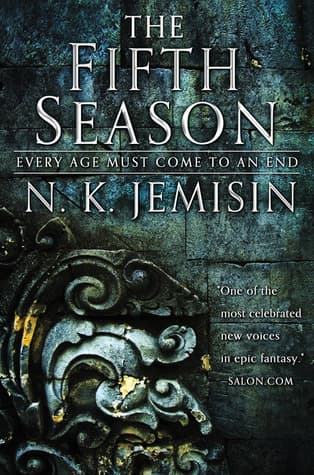
- The Fifth Season
N.K. Jemisin
It is the direct prequel and shares the same unique world, characters, and thematic intensity.
- Harry Potter and the Sorcerer's Stone
J.K. Rowling
4.5 (7M) average on GoodreadsFantasyRescued from a miserable life under the stairs, an orphaned boy discovers he's a wizard destined for a magical school, where he uncovers a dangerous secret tied to the dark wizard who murdered his parents.
- The Hunger Games
Suzanne Collins
4.3 (6.4M) average on GoodreadsFantasyIn a future where children fight to the death on live television, Katniss Everdeen volunteers for the arena, turning a death sentence into a fight for survival and a spark of rebellion.
- 1984
George Orwell
4.2 (3.1M) average on GoodreadsPoliticsIn a future where surveillance and thought control are absolute, a man's search for truth clashes with the Party, showing that hope can be a form of rebellion.




Enjoyed the summary?
A summary gives you the shape of the book. The book itself has the detail, the examples and the voice.
Find The Obelisk Gate on AmazonAs an Amazon Associate, BookBrief earns from qualifying purchases. How we're funded