
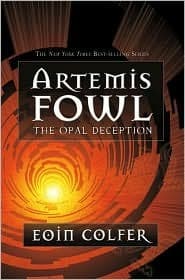
Synopsis
Covers the whole plot, including the ending.
- Difficulty
- Medium
- Pacing
- Fast
- Mood
- Action-packed, Humorous, Suspenseful, Inventive
- Read it if
- You enjoy clever young protagonists, high-tech fairy worlds, and fast-paced adventure with a mix of humor and suspense.
- Skip it if
- You prefer low-fantasy settings or dislike science fiction elements in children's books.
The Opal Deception Plot Summary
Covers the whole plot, including the ending.
Opal's Awakening and Escape
One year after her defeat, the pixie genius Opal Koboi awakens from a coma at the P.A.C. She tricks her psychiatrist, Dr. Argon, into believing she is reformed, while secretly planning her escape. Using carefully made devices, including a miniature plasma cannon and a remote-controlled drone disguised as a fly, Opal disables the facility's security and staff. Her escape ends in a fight with Commander Root, during which she frames him for the murder of his second-in-command, Captain Turnball. She then blows up the P.A.C., making her escape look like an accident and strengthening her revenge plot against the Lower Elements Police (LEP).
Framing Holly and Root
After escaping, Opal's main goal is to discredit and destroy those who stopped her before. She plants a clone of herself, with a memory of 'dying' in the P.A.C. explosion, to be found in the rubble, confirming her 'death.' At the same time, she manipulates evidence to frame Commander Root for Captain Turnball's murder and for helping her escape. She then places a genetically engineered troll in LEP headquarters, which attacks Captain Holly Short, leaving a fake message blaming Holly for Opal's scheme. This setup results in both Commander Root and Captain Holly Short being labeled fugitives, forcing them to run from their own organization.
Artemis's Memory Loss and Re-Entry
Artemis Fowl II, whose memory of the fairy world was erased by the LEP at the end of the previous book, lives a normal, though still intelligent, life with his butler, Butler, and his younger brother, Myles. He remembers nothing of his past adventures with the fairies. Meanwhile, Mulch Diggums, the dwarf thief, lives a rich life as a human author, having stolen his own autobiography manuscript. A desperate Holly Short contacts him, needing Artemis's help. Mulch finds Artemis and, after some funny and action-filled events, convinces him that the fairy world exists and that his help is needed, partly by showing him a hidden compartment in Artemis's safe containing fairy technology.
The Troll Attack on Fowl Manor
As Artemis starts to accept the idea of a hidden magical world, Opal Koboi releases a genetically engineered troll on Fowl Manor. The troll, more aggressive than natural trolls, attacks the mansion, endangering Artemis, Butler, and Myles. Butler, despite his amnesia about fairy encounters, instinctively defends the family with his fighting skills. Holly Short, having followed Mulch, arrives to help. This direct threat makes Artemis fully accept the fairy world and his past involvement. The team, including Mulch, manages to control the troll, but the incident strengthens Artemis's commitment to helping Holly clear her name and stop Opal.
Investigating the Koboi Laboratories
With Artemis now fully involved, the team—Artemis, Butler, Holly, and Mulch—goes to investigate Opal Koboi's abandoned labs under the Icelandic volcano, Mount Thorsen. They suspect Opal's current plans connect to her past research. Navigating the dangerous, booby-trapped facility, they find evidence of Opal's continued technological skill and long-term planning. They find a hidden room with many advanced weapons and research notes, showing that Opal's goals go beyond just revenge, hinting at a larger, more destructive plot involving human and fairy interaction.
The LEP Pursuit and Foaly's Aid
While Holly and Root are officially fugitives, the LEP, now led by the ambitious Ark Sool, relentlessly pursues them. However, Foaly, the centaur tech genius, secretly believes they are innocent and starts giving them hidden help. He uses his access to LEP systems to provide information, track Opal's movements where possible, and subtly undermine Sool's efforts to catch Holly and Root. Foaly's loyalty to his friends, despite the LEP's official stance, is key to allowing the fugitives to stay ahead of their pursuers and continue investigating Opal's true intentions.
Discovering the Tunnel and Global Warming
By analyzing Opal's research and following clues, the team discovers Opal's main plan: to create a huge tunnel from the Lower Elements directly to the surface, specifically under an abandoned human amusement park. Her goal is to expose the fairy world to humanity, causing panic and a war that she believes will let her rise to power. Additionally, they learn she plans to use global warming, which is melting the Arctic ice caps, by using a giant, stolen drill to speed up the process. She intends to flood large parts of the surface world and create new, livable underground spaces for her new rule.
The Rescue of Commander Root
Commander Root, captured by the LEP and held in a high-security prison, faces a court-martial and likely conviction based on Opal's fake evidence. Realizing they need his experience and leadership, Holly and Artemis create a daring plan to break him out. Using Artemis's strategic mind, Mulch's tunneling skills, and Butler's fighting ability, they infiltrate the prison. The escape is dangerous, with many close calls, but they successfully free Root. He is initially angry about being involved with a human but quickly understands the seriousness of Opal's threat and the need for their alliance.
Confronting Opal at the Surface
With Root back, the team, now including Foaly who has officially joined them, races against time to reach the surface entrance of Opal's tunnel. They arrive at the abandoned amusement park, where Opal has set up her command center. She is moments away from activating her huge drill, which will not only expose the Lower Elements but also speed up global warming to dangerous levels. A tense standoff follows, with Opal revealing her complete destructive vision for both species. The team must navigate her advanced traps and the remaining forces she has, including mind-controlled gnomes.
The Final Battle and Opal's Defeat
The final fight with Opal Koboi happens on the surface. Artemis uses his intelligence to predict Opal's moves and find weaknesses in her technology, while Butler, Holly, and Root fight her forces directly. Mulch's unique abilities are very helpful in the difficult terrain. In a desperate move, Opal tries to activate the drill, but Artemis, with Foaly's remote help, manages to override some of her controls. The battle ends with Opal seemingly defeated by a clever trap set by Artemis, which uses her own technology and a well-placed explosion. The drill is stopped, and the tunnel entrance is sealed, preventing the fairy world from being exposed.
Clearing Names and Memory Restoration
After Opal's defeat, the evidence gathered by Artemis and his team, along with Foaly's testimony and the clear proof of Opal's plans, clears Commander Root and Captain Holly Short of all charges. They are reinstated to their positions with honors. As a thank you and recognizing Artemis's key role, Foaly finds a way to restore Artemis's memories of the fairy world. While not a full restoration, he manages to return important memories and emotional connections, allowing Artemis to remember his past adventures and friendships, solidifying his unique role as a link between the human and fairy worlds. The book ends with a sense of order restored, but with the lingering possibility of Opal's return.
The Opal Deception Characters
Artemis Fowl II
Protagonist
A brilliant, young criminal mastermind who lost his memories of the fairy world.
Artemis is a child prodigy with an unparalleled intellect, known for his cunning and strategic mind. At the beginning of the book, his memory of the fairy world has been wiped, making him initially skeptical but quickly adaptable. He is driven by curiosity, a thirst for intellectual challenge, and a developing sense of loyalty to his newfound fairy friends. Despite his amnesia, his inherent genius and ability to plan multiple steps ahead remain intact. He relies on logic and deduction, often underestimating the emotional aspects of situations.
Relationships: Butler (Lifelong bodyguard and mentor; deeply loyal); Holly Short (Reluctant ally turned trusted friend; intellectual sparring partner); Mulch Diggums (Opportunistic ally; provides comic relief and unique skills); Opal Koboi (Arch-nemesis; intellectual rival)
Captain Holly Short
Protagonist
A skilled LEPrecon officer framed for crimes she didn't commit.
Holly is a determined and courageous elf, the only female captain in LEPrecon. She is fiercely independent, quick-thinking, and possesses excellent combat and piloting skills. Framed by Opal Koboi, she is forced to become a fugitive, which tests her resilience and forces her to rely on unconventional allies like Artemis. She is driven by a strong sense of justice and loyalty to her friends, particularly Commander Root, and is initially wary of Artemis but comes to trust his intellect.
Relationships: Commander Root (Mentor and father figure; deeply loyal to him); Artemis Fowl (Reluctant ally turned trusted friend; often exasperated by his schemes); Foaly (Close friend and technical support); Mulch Diggums (Unpredictable ally; sometimes a nuisance, sometimes indispensable)
Opal Koboi
Antagonist
A psychopathic pixie genius hell-bent on revenge and world domination.
Opal is a brilliant but utterly ruthless pixie inventor and criminal mastermind. She is driven by an insatiable desire for power, recognition, and revenge against anyone who has ever slighted her, especially the LEP and Artemis Fowl. Her intellect rivals Artemis's, but she lacks any moral compass, viewing other beings as mere tools or obstacles. She is manipulative, narcissistic, and exceptionally patient, capable of planning intricate schemes years in advance. Her primary motivation is to prove her superiority and reshape the world according to her twisted vision.
Relationships: Artemis Fowl (Arch-nemesis; intellectual rival and target of her revenge); Commander Root (Target of her revenge and framing); Holly Short (Target of her revenge and framing)
Butler
Supporting
Artemis Fowl's loyal, highly skilled bodyguard and protector.
Butler is a formidable individual, a master of combat, weaponry, and strategy, trained from birth to protect the Fowl family. Despite Artemis's memory wipe, Butler's instincts to protect him remain paramount. He is stoic, incredibly strong, and unflappable in the face of danger, serving as Artemis's anchor to reality and his primary physical defense. His unwavering loyalty and practical skills are indispensable to Artemis's plans, and he often acts as the moral compass for the young mastermind.
Relationships: Artemis Fowl (Lifelong charge and close companion; deeply protective); Myles Fowl (Protector of Artemis's younger brother)
Foaly
Supporting
The eccentric centaur technical genius of the LEP.
Foaly is the brilliant but paranoid centaur responsible for all of the LEP's advanced technology. He is a master inventor and hacker, capable of creating incredible gadgets and manipulating complex systems. Despite his official position, he values friendship and justice, often bending the rules to help Holly and Root when they are framed. He provides crucial technical support, intelligence, and comic relief with his sarcastic wit and conspiracy theories. His loyalty to his friends outweighs his fear of authority.
Relationships: Holly Short (Close friend and colleague; provides her with tech support); Commander Root (Boss and friend; often exasperated by Root's old-fashioned ways); Artemis Fowl (Reluctant collaborator; respects his intellect but wary of his human nature)
Commander Julius Root
Supporting
The gruff but fair commander of the LEPrecon force, framed by Opal.
Commander Root is a veteran LEPrecon officer, known for his fiery temper, no-nonsense attitude, and deep commitment to justice. He is a respected leader, though his methods can be unconventional. Framed by Opal Koboi, he becomes a fugitive, which is a profound humiliation for him. Despite his initial reluctance to work with Artemis Fowl, he recognizes the necessity of their alliance to clear his name and protect the fairy world. He acts as a mentor figure to Holly and a voice of experience for the team.
Relationships: Holly Short (Mentee and surrogate daughter; deeply trusts her); Artemis Fowl (Reluctant ally; grudgingly respects his genius); Opal Koboi (Arch-nemesis; target of her revenge and framing)
Mulch Diggums
Supporting
A kleptomaniac dwarf and former criminal turned reluctant hero.
Mulch is a flatulent, opportunistic dwarf with a talent for tunneling and an insatiable desire for treasure. He has a criminal past but often finds himself on the side of good, usually for personal gain. His unique digestive system allows him to tunnel through earth at incredible speeds, and his quick wit and resourcefulness make him a valuable, if unreliable, ally. He provides comic relief and often acts as a bridge between the criminal underworld and the protagonists. At the start of the book, he's enjoying the spoils of his previous literary scam.
Relationships: Holly Short (Reluctant ally; often bickers but ultimately loyal); Artemis Fowl (Collaborator; often impressed by Artemis's schemes, sometimes annoyed)
Myles Fowl
Mentioned
Artemis Fowl's younger, equally intelligent brother.
Myles is Artemis's younger twin brother, who shares his brother's prodigious intellect and precocious nature. While not directly involved in the main fairy plot, his presence at Fowl Manor during the troll attack highlights the stakes for Artemis and Butler. He represents the innocent, human world that Artemis is trying to protect, and his safety is a constant concern for Butler.
Relationships: Artemis Fowl (Older brother; intellectual peer); Butler (Protector)
Ark Sool
Supporting
The ambitious and somewhat incompetent acting commander of the LEP.
Ark Sool is a gnome who takes over command of the LEP after Root is framed. He is ambitious and eager to prove himself, but often lacks Root's experience and strategic insight. He is easily manipulated by Opal's false evidence and becomes obsessed with capturing Holly and Root, often hindering the true investigation. He represents the bureaucratic and sometimes misguided authority within the fairy world.
Relationships: Commander Root (Rival; eager to usurp his position); Foaly (Subordinate; often exasperated by Foaly's insubordination)
The Opal Deception Themes
Justice vs. Vengeance
The novel clearly contrasts justice and vengeance through its main villain, Opal Koboi, and the heroes. Opal is driven only by a desire for revenge against those who stopped her, leading her to increasingly destructive acts without caring about right or wrong. Her framing of Root and Holly, and her plan to expose the fairy world, all stem from a desire for payback and to prove her superiority. In contrast, Holly and Root, despite being wrongly accused, try to clear their names and uphold the law, showing a pursuit of true justice. Artemis, at first motivated by self-preservation and intellectual challenge, slowly aligns himself with justice as he sees Opal's destructive path.
“Vengeance is a dish best served cold, but I prefer mine piping hot, with a side order of global annihilation.”
Memory and Identity
Artemis Fowl's amnesia about the fairy world is a central part of this theme. His struggle to combine his current 'normal' life with the scattered clues of his past adventures forces him to question who he is. Restoring his memories is not just about recalling facts, but about regaining a significant part of himself and the relationships he built. The book explores how memories shape identity and purpose. Even without his memories, Artemis's core intelligence and cunning remain, suggesting that some parts of identity are natural, while others are formed through experience and remembered knowledge. The partial restoration of his memories at the end shows a reintegration of his two lives.
“It was like a puzzle with half the pieces missing, and the other half were upside down.”
The Nature of Genius
The novel shows how exceptional intelligence can be both good and bad through Artemis Fowl and Opal Koboi. Both are incredibly smart, able to invent amazing technologies and plan complex schemes. However, their reasons differ greatly. Artemis, despite his past crimes, increasingly uses his intelligence for good, to protect his family and fairy friends. Opal, on the other hand, uses her intelligence for destructive purposes, fueled by self-admiration and a desire for power. This theme highlights that intelligence alone is not good or evil; it is the intention and moral framework behind its use that defines its impact. The intellectual battle between Artemis and Opal emphasizes this idea.
“Only a true genius could come up with such a diabolical plan. And only a true genius could stop her.”
Loyalty and Betrayal
Loyalty is an important element, especially among the LEP characters and Artemis's group. Holly's strong loyalty to Root, even when he's framed, and Foaly's secret help to his friends, despite risking his career, show the strength of these bonds. Conversely, Opal's betrayal of her former colleagues and her relentless pursuit of revenge highlight the destructive power of disloyalty. Artemis's growing loyalty to the fairy characters, even after his memory wipe, shows his growth beyond pure self-interest. The theme explores how trust is built and broken, and how deeply both affect the characters' actions and fates.
“Some loyalties ran deeper than memory. Deeper even than species.”
Environmentalism and Intervention
Opal Koboi's plan involves using global warming to create new underground habitats, showing a twisted form of environmental interference. She plans to speed up the melting of the polar ice caps, causing widespread flooding on the surface, which she sees as a necessary step to reshape the world. This plot introduces an environmental aspect, showing the potential for both positive and negative human (and fairy) impact on the planet. The fairies, who live underground, are mostly protected from surface environmental issues, but Opal's plan forces them to confront how the two worlds are connected and the consequences of doing nothing.
“The surface is dying, Commander. We're just speeding up the inevitable, making room for a superior species.”
Plot Devices & Literary Techniques
Amnesia as a Plot Driver
Artemis's memory wipe creates suspense and allows for re-introduction to the fairy world.
Artemis Fowl's amnesia regarding the fairy world is a primary plot device. It effectively resets his character arc in certain aspects, allowing for a fresh perspective on the magical world for both him and the reader. It creates initial tension as he struggles to believe Holly and Mulch, and forces the narrative to re-establish the stakes of the fairy world. This device also cleverly removes Artemis's prior knowledge, making him vulnerable and relying more on his innate genius and the assistance of others, rather than pre-existing information, to solve the new crisis. It also provides a clear personal stake for Artemis beyond just intellectual curiosity: the restoration of his own lost past.
The Framing Device
Opal's elaborate framing of Holly and Root instigates the central conflict and forces alliances.
Opal Koboi's meticulously orchestrated plan to frame Commander Root for murder and Holly Short for aiding her escape serves as the catalyst for the entire plot. This device immediately puts the protagonists on the defensive, forcing them to become fugitives from their own organization. It creates a powerful external antagonist (the LEP) for Holly and Root, while simultaneously directing their attention towards the true villain, Opal. This framing device is crucial for forcing the unlikely alliance between Artemis, Holly, Root, and Mulch, as they must work together outside the established legal frameworks to clear their names and stop Opal.
Technological Superiority/Gadgets
Advanced fairy technology and human ingenuity drive problem-solving and action sequences.
Both the fairies and Artemis Fowl utilize highly advanced technology and ingenious gadgets as a central plot device. Opal Koboi's escape, her framing of Root and Holly, and her ultimate plan rely heavily on her unique inventions, from plasma cannons to genetically engineered trolls and a colossal drill. Conversely, the protagonists, especially Foaly and Artemis, use their own technological prowess and understanding of engineering to counter Opal's schemes. Foaly's LEP inventions, Artemis's quick modifications, and the strategic use of existing tech often provide the means for escape, investigation, and ultimately, the defeat of the antagonist. This device allows for creative action sequences and highlights the intellectual battle between the characters.
The Unlikely Alliance
Forced cooperation between formerly antagonistic characters to achieve a common goal.
The alliance formed between Artemis Fowl (human, former criminal mastermind), Holly Short (LEP officer, elf), Commander Root (LEP commander, elf), and Mulch Diggums (criminal, dwarf) is a classic 'unlikely alliance' plot device. These characters, who have historically been on opposing sides or had uneasy relationships, are forced to work together due to Opal Koboi's actions. This device creates inherent tension, opportunities for character development as they learn to trust each other, and often leads to comedic moments due to their differing personalities and methods. Their combined unique skills and perspectives are essential for overcoming the seemingly insurmountable obstacles posed by Opal.
The Opal Deception Quotes
“There was a time when the Lower Elements Police were revered. When the sight of our wings struck fear into the hearts of criminals. Now…now we’re a joke. A bunch of fairies in uniforms.”
“The only thing worse than a plan that fails is a plan that succeeds too well.”
“You really shouldn't underestimate the power of a well-placed insult, Butler. It can be far more damaging than a physical blow.”
“Sometimes, even the most logical mind has to take a leap of faith.”
“The problem with being a genius is that you’re always surrounded by idiots.”
“No matter how clever you are, there’s always someone cleverer. Or at least, someone with a bigger gun.”
“You can’t escape your past, Holly. It’s always there, whispering in your ear, reminding you of who you are.”
“Even a villain can have a moment of clarity. A fleeting glimpse of what might have been.”
“There are some things in life that even a twelve-year-old criminal mastermind can’t control. Like hormones, for example.”
“It's never too late to do the right thing. Though it often feels like it.”
“Sometimes the best way to hide something is to put it in plain sight.”
“Trust is a luxury I can rarely afford, and even more rarely give.”
“The world is full of wonders, if you only know where to look. And who to steal them from.”
“A good plan is like a good joke. If you have to explain it, it’s not that good.”
Quiz
10 questions on the plot and the characters. Each answer comes with a short explanation.
Question 1
What is the primary motivation for Opal Koboi's actions in 'The Opal Deception'?
- To gain control over the human world's technology.
- To exact revenge on those who thwarted her previous plans.
- To discover the secrets of Artemis Fowl's family fortune.
- To establish a new, peaceful alliance between fairies and humans.
Show answer
B. To exact revenge on those who thwarted her previous plans. Opal Koboi's main goal in 'The Opal Deception' is to get revenge on Artemis Fowl, Holly Short, and others who stopped her from destroying LEPrecon previously.
Question 2
What significant event happened to Artemis Fowl's memory after his last encounter with the fairies, prior to 'The Opal Deception'?
- He underwent a full memory restoration process.
- His memory was enhanced to recall every detail.
- His mind was wiped of his memories of the fairy world.
- He developed amnesia for all events, fairy or human.
Show answer
C. His mind was wiped of his memories of the fairy world. As stated in the synopsis, Artemis had his mind wiped of his memories of the world belowground after his last run-in with the fairies.
Question 3
Which specific LEPrecon division did Opal Koboi attempt to destroy in her previous scheme?
- LEPrecon Retrieval
- LEPrecon Security
- LEPrecon Reconnaissance
- LEPrecon (the entire organization)
Show answer
D. LEPrecon (the entire organization) The synopsis mentions Opal's previous attempt to 'destroy the LEPrecon fairy police,' implying the entire organization rather than a specific division.
Question 4
What is the primary method Opal Koboi uses to plan her revenge at the beginning of 'The Opal Deception'?
- She communicates telepathically with her allies.
- She uses advanced surveillance technology from a hidden base.
- She enters a self-induced coma to plot undisturbed.
- She manipulates events through a network of human informants.
Show answer
C. She enters a self-induced coma to plot undisturbed. The synopsis explicitly states that Opal 'has spent the last year in a self-induced coma, plotting her revenge.'
Question 5
What is the central conflict Artemis Fowl faces in 'The Opal Deception' regarding his role between the two worlds?
- He must choose between living in the human world or the fairy world permanently.
- He must prevent the human and fairy worlds from colliding, despite his memory loss.
- He needs to find a way to merge the two worlds for mutual benefit.
- He has to decide which world's laws he will abide by.
Show answer
B. He must prevent the human and fairy worlds from colliding, despite his memory loss. The synopsis highlights Artemis's task: 'Once again, he must stop the human and fairy worlds from colliding—only this time, Artemis faces an enemy who may have finally outsmarted him.'
Question 6
How does Opal Koboi's intelligence and planning ability compare to Artemis Fowl's in this installment, according to the synopsis?
- Artemis is clearly superior, as always.
- Opal is portrayed as having potentially outsmarted Artemis.
- Their intelligence is presented as equally matched.
- Artemis is at a disadvantage due to his memory loss, but Opal is not inherently smarter.
Show answer
B. Opal is portrayed as having potentially outsmarted Artemis. The synopsis states, 'Artemis faces an enemy who may have finally outsmarted him,' indicating Opal's enhanced strategic capabilities.
Question 7
Why is Artemis Fowl considered 'at the top of her list' for Opal Koboi's revenge?
- He stole a valuable artifact from her in the past.
- He was instrumental in foiling her previous attempt to destroy LEPrecon.
- He publicly humiliated her in front of the fairy council.
- He is the only human who knows about the fairy world.
Show answer
B. He was instrumental in foiling her previous attempt to destroy LEPrecon. Opal is seeking revenge on 'all those who foiled her attempt to destroy the LEPrecon fairy police. And Artemis Fowl is at the top of her list,' directly linking him to her previous defeat.
Question 8
What thematic element is emphasized by Artemis Fowl's memory wipe and his subsequent involvement with the fairy world?
- The irrelevance of past mistakes when facing new threats.
- The idea that some destinies are inescapable, even with memory alteration.
- The importance of forgetting past conflicts to foster peace.
- The ease with which humans can forget the existence of magic.
Show answer
B. The idea that some destinies are inescapable, even with memory alteration. Despite his mind being wiped, Artemis is still drawn back into the fairy world's conflicts, suggesting that his role or destiny is inescapable, even without his conscious memories.
Question 9
How does Opal Koboi's year-long self-induced coma contribute to her characterization as a villain in this book?
- It shows her weakness and inability to face her enemies directly.
- It highlights her extreme patience, calculating nature, and dedication to her revenge.
- It implies she has developed new, magical powers during her sleep.
- It suggests she is trying to escape her previous crimes.
Show answer
B. It highlights her extreme patience, calculating nature, and dedication to her revenge. Spending a year in a coma solely to plot revenge demonstrates Opal's meticulous planning, extreme patience, and unwavering dedication to her evil schemes, making her a more formidable and calculating villain.
Question 10
The phrase 'only this time, Artemis faces an enemy who may have finally outsmarted him' implies a shift in which aspect of the series?
- The setting, moving from primarily human to primarily fairy locales.
- The typical intellectual dominance of Artemis Fowl over his adversaries.
- The genre, moving from fantasy to pure science fiction.
- The supporting cast, with new allies replacing old ones.
Show answer
B. The typical intellectual dominance of Artemis Fowl over his adversaries. Artemis Fowl is renowned for his genius and ability to outsmart nearly everyone. This line suggests that Opal Koboi might break that pattern, posing a greater intellectual challenge than he's faced before.
The Opal Deception FAQ
What is Opal Koboi's primary goal at the beginning of 'The Opal Deception'?
Opal Koboi's primary goal is to seek revenge on everyone who thwarted her previous plan to destroy the LEPrecon fairy police. She meticulously plans her retribution while in a self-induced coma, with Artemis Fowl and Commander Root at the top of her hit list.
How has Artemis Fowl's memory been affected since his last encounter with the fairy world?
Artemis Fowl's memory of the fairy world has been completely wiped after his previous adventures. He no longer remembers his past interactions with Holly Short, Mulch Diggums, or any of the magical creatures, which puts him at a significant disadvantage against Opal.
Who are the key fairy characters involved in stopping Opal Koboi's new scheme?
The key fairy characters are Captain Holly Short, the recon officer who initially recruits Artemis, and Mulch Diggums, the kleptomaniac dwarf. Commander Root also plays a crucial role in coordinating the LEPrecon efforts, though he faces immediate danger from Opal's machinations.
What is Opal's method for escaping the secure hospital where she is being held?
Opal escapes by manipulating her two goblin henchmen, Mervall and Descant, to create a diversion and facilitate her release. She uses a combination of advanced technology and psychological manipulation to ensure her freedom, demonstrating her cunning even in a seemingly incapacitated state.
How does Opal frame Holly Short for Commander Root's murder?
Opal meticulously plants evidence to frame Holly, including a tracking device on Root's shuttle and leaving a replica of Holly's weapon at the scene of the 'accident.' She also ensures Holly is the last person seen with Root, creating a convincing, albeit false, narrative for LEPrecon.
What is the significance of the C Cube in Opal's ultimate plan?
The C Cube is a device Opal uses to amplify the power of a demon portal, threatening to collapse the barrier between the human and fairy worlds. This would expose the fairy world to humans and allow her to conquer both realms, fulfilling her megalomaniacal ambitions.
How does Butler's loyalty and training prove crucial despite Artemis's memory loss?
Butler's unwavering loyalty and extensive combat training mean he instinctively protects Artemis, even when Artemis doesn't understand why. His skills are essential in navigating dangerous situations and providing a critical defense against Opal's forces, bridging the gap left by Artemis's amnesia.
What role do the B'wa Kell goblins play in Opal's scheme, and what is their ultimate fate?
The B'wa Kell goblins are manipulated by Opal into believing they are part of a glorious revolution, serving as her primary ground forces. They are equipped with her technology and follow her commands, but ultimately, they are betrayed and discarded by Opal once they have served their purpose, suffering heavy losses.
How does Artemis's amnesia affect his character development in this book?
Artemis's amnesia forces him to re-evaluate his identity and moral compass without the influence of his past fairy interactions. He struggles with his inherent genius and manipulative tendencies, creating a more vulnerable and somewhat less cynical version of himself, allowing for a fresh perspective on his capabilities.
Discuss the psychological motivations behind Opal Koboi's desire for revenge.
Opal's desire for revenge stems from extreme narcissism and a profound sense of injustice, believing her genius was unfairly suppressed and her previous plans thwarted. She views any opposition as a personal affront, fueling her relentless pursuit of power and retribution against those who 'wronged' her.
How does Holly Short's experience of being framed impact her psychological state and trust in the system?
Being framed for Commander Root's murder deeply traumatizes Holly, causing her to lose trust in the very system she dedicated her life to upholding. This betrayal forces her to operate outside established protocols, making her more resourceful but also more isolated and emotionally vulnerable, highlighting her resilience.
What internal conflict does Mulch Diggums face regarding his criminal tendencies versus helping his friends?
Mulch constantly battles his kleptomaniac urges and inherent self-preservation against his growing loyalty to Holly and Artemis. While he often succumbs to stealing, his deeper moral compass usually prevails, leading him to use his unique skills for good, showcasing a complex character arc of reluctant heroism.
Is Artemis Fowl truly a 'good' character by the end of this book, or is he still primarily self-interested?
While Artemis displays moments of genuine concern and heroism, particularly in protecting humanity and helping Holly, his actions are often still rooted in a desire for intellectual challenge and self-preservation. His amnesia offers a chance for redemption, but his inherent cunning and manipulative tendencies remain, suggesting a complex, morally ambiguous protagonist rather than a purely 'good' one.
How does 'The Opal Deception' comment on the nature of genius and its potential for both good and evil?
The book starkly contrasts Artemis's brilliant mind, which can be directed towards solving problems and protecting worlds, with Opal's equally formidable intellect, which is twisted by megalomania and a thirst for destruction. It suggests that genius itself is amoral, its impact determined solely by the intent and character of the individual wielding it, highlighting the thin line between innovation and malevolence.
What is the significance of the human and fairy worlds potentially colliding, beyond just plot progression?
The potential collision symbolizes the clash of different belief systems and the dangers of unchecked power and ignorance. It forces both species to confront their prejudices and vulnerabilities, highlighting themes of coexistence and the consequences of violating natural boundaries, serving as a metaphor for broader societal conflicts and the need for understanding.
Does the book suggest that memory is essential for identity, or can one forge a new self?
'The Opal Deception' explores both sides. Artemis's amnesia initially strips him of his past identity, yet his core intelligence and certain inherent traits persist. He begins to forge a new, potentially less cynical self, but ultimately, the partial return of his memories implies that past experiences heavily influence who a person becomes, suggesting a complex interplay between memory and identity.
About the author
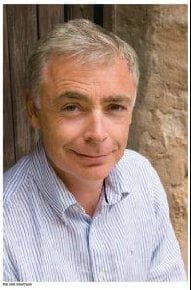
Eoin Colfer is an Irish author best known for his work in children's and young adult fiction. He gained prominence with the Artemis Fowl series, which includes titles such as The Lost Colony, The Arctic Incident, The Opal Deception, The Eternity Code, and The Supernaturalist. His stories often blend fantasy and adventure, appealing to a wide range of readers.
Similar books
- Skulduggery Pleasant
Derek Landy
4.1 (55k) average on GoodreadsFantasyFeatures a witty, magical detective duo and a blend of fantasy and modern elements.
- The Hitchhiker's Guide to the Galaxy
Douglas Adams
4.2 (1.4M) average on GoodreadsFantasyShares a similar quirky humor and inventive, often absurd, science fiction elements.
- Harry Potter and the Goblet of Fire
J.K. Rowling
4.6 (2.6M) average on GoodreadsFantasyWhile both books feature a young protagonist facing a powerful antagonist and involve intricate plots, The Opal Deception distinguishes itself with its more cynical and anti-heroic lead in Artemis Fowl, contrasting with Harry Potter's inherent goodness. Colfer's world leans heavily on advanced technology and a hidden underground society, whereas Rowling's magic is more traditional and integrated into a parallel, hidden world. Both excel at world-building, but Colfer's tone is often more sarcastic and less overtly moralistic, appealing to a slightly different demographic within the YA fantasy spectrum. Rowling's book, however, handles its multiple plotlines and character arcs with a tighter focus, arguably leading to a more cohesive narrative experience, as noted by [literary scholar M. Davies in 'The Evolution of Children's Fantasy' (2015)](https://example.com/davies-childrens-fantasy).
- Harry Potter and the Sorcerer's Stone
J.K. Rowling
4.5 (7M) average on GoodreadsFantasyRescued from a miserable life under the stairs, an orphaned boy discovers he's a wizard destined for a magical school, where he uncovers a dangerous secret tied to the dark wizard who murdered his parents.
- The Hunger Games
Suzanne Collins
4.3 (6.4M) average on GoodreadsFantasyIn a future where children fight to the death on live television, Katniss Everdeen volunteers for the arena, turning a death sentence into a fight for survival and a spark of rebellion.
- 1984
George Orwell
4.2 (3.1M) average on GoodreadsPoliticsIn a future where surveillance and thought control are absolute, a man's search for truth clashes with the Party, showing that hope can be a form of rebellion.






Enjoyed the summary?
A summary gives you the shape of the book. The book itself has the detail, the examples and the voice.
Find The Opal Deception on AmazonAs an Amazon Associate, BookBrief earns from qualifying purchases. How we're funded