

Synopsis
Covers the whole plot, including the ending.
- Difficulty
- Medium
- Pacing
- Moderate
- Mood
- Mysterious, Suspenseful, Classic
- Read it if
- You enjoy classic British mysteries with a touch of the supernatural, clever plotting, and a determined amateur sleuth.
- Skip it if
- You prefer fast-paced thrillers with graphic violence or supernatural elements that are actually real.
The Pale Horse Plot Summary
Covers the whole plot, including the ending.
Father Gorman's Murder and the Mysterious List
The story begins with the murder of Father Gorman, a Catholic priest, in a London fog. Before his death, he had visited a dying woman, Mrs. Davis, who confessed her fear that she was being 'stopped' and gave him a list of names to investigate. Father Gorman hid the list in his shoe, where the police later found it. Mark Easterbrook, a young historian and writer, learns of the priest's murder and the strange list at a party. He is interested, especially by the random nature of the names, and feels a personal connection to the unfolding mystery. The police, initially confused by the list, do not know its sinister meaning, but Mark's curiosity leads him to find the truth behind the names.
Mark's Investigation and the First Connection
Mark Easterbrook, driven by a growing sense of unease, starts investigating the names on Father Gorman's list. He learns that one of the names, a man named Osborne, has recently died. His investigation leads him to a small village called Much Deeping, where he meets Ginger Corrigan. Ginger, independent, is also investigating a death — that of her godmother, who was also on the list. Their paths meet, and they decide to work together. Mark also visits the 'Pale Horse' inn in Much Deeping, a place rumored to be associated with dark practices and a group of witches. This location immediately seems important to him, hinting at the supernatural or at least a very unusual criminal enterprise.
The Pale Horse and its 'Witches'
Mark and Ginger continue their investigation, focusing on the people at the Pale Horse. They meet Thyrza Grey, a striking and intelligent woman who claims to be a white witch, and her associate, Sybil Stamfordis, who has psychic abilities. A third woman, Bella Webb, is a village herbalist and fortune-teller, adding to the mystical atmosphere of the place. Mark observes their practices, which include séances and predictions, and tries to figure out if they are genuine practitioners of the occult or orchestrators of a more ordinary, yet deadly, scheme. He is suspicious of Thyrza's intellect and control, sensing a calculated evil under her calm exterior. The village itself seems to hold a strange power, with many residents believing in the 'witches' abilities.
The Nature of the 'Curse'
Through his persistent inquiries and observation, Mark eventually uncovers the true nature of the 'Pale Horse' operation. It is not about genuine witchcraft, but rather a sophisticated and untraceable method of murder-for-hire. Clients pay the 'witches' to 'curse' individuals, who then mysteriously die from seemingly natural causes or accidents. The 'witches' act as intermediaries, arranging for the actual killings to be carried out by a network of operatives, making it very difficult to trace back to the original client or the Pale Horse itself. This realization horrifies Mark, as he understands the terrifying efficiency and deniability of the scheme. He now knows that the names on Father Gorman's list are not victims of a curse, but of a carefully planned murder syndicate.
The Police's Skepticism and Mark's Frustration
Mark tries to share his findings with the police, especially Inspector Lejeune, but struggles to be taken seriously. The police are skeptical of his theories, especially given the seemingly supernatural elements surrounding the Pale Horse and the lack of solid evidence linking the deaths directly to the 'witches.' The victims' deaths appear to be natural, making it difficult for the police to pursue a murder investigation. Mark grows frustrated by their inability to understand the clever nature of the crime. He realizes he needs clear proof, not just suspicion, to expose the syndicate and stop further deaths. This forces him to take more risks and investigate the criminal underworld further.
The Plan to Expose the Killers
Realizing the police need more than just his word, Mark, with the help of Ginger Corrigan and his friend Ariadne Oliver, a crime novelist, makes a daring plan. They decide to create a 'target' for the Pale Horse, a person whose death would clearly be suspicious and could be directly linked to the organization. This plan involves setting up a carefully arranged trap, hoping to expose the methods and perpetrators of the murders. Mark understands the immense danger involved, as he would be directly challenging a ruthless criminal enterprise. The success of their plan depends on the 'witches' taking the bait and performing their 'service' on the chosen victim, providing the necessary evidence for the police.
Ariadne Oliver's Role and the Chosen Victim
Ariadne Oliver, with her understanding of criminal psychology and plot construction, helps greatly in devising the trap. She helps Mark create a convincing scenario for a 'client' to approach the Pale Horse with a request for a murder. The chosen 'victim' for their scheme is Poppy Stirling, a young woman who works at a hair salon, chosen for her seemingly ordinary background, which would make her death appear natural to outsiders, yet suspicious to those who know. The plan is to have a 'client' (one of Mark's contacts) approach the Pale Horse, requesting Poppy's death. This would allow them to observe the process and gather evidence, hoping to catch the real perpetrators or at least establish a pattern.
The Trap is Set and the Unexpected Victim
The trap is set. Mark's contact approaches the Pale Horse, requesting the 'removal' of Poppy Stirling. However, the cunning of the Pale Horse operatives is underestimated. Instead of Poppy, it is Ginger Corrigan, who has been working closely with Mark, who suddenly falls gravely ill. This unexpected event causes Mark to panic. He realizes that the 'witches' have either seen through their deception or cleverly manipulated the situation to target someone who was genuinely investigating them. Ginger's life is in danger, and Mark is gripped by fear and guilt, knowing his plan has backfired in the most devastating way possible. He must now race against time to save Ginger and still expose the killers.
The True Mastermind Revealed
As Ginger lies critically ill, Mark, with a desperate surge of insight, finally understands the puzzle. He realizes that the 'witches' are merely a front, and the true mastermind behind the murders is not one of them, but rather a seemingly harmless character he has encountered: Mr. Venables. Venables, a physically disabled man confined to a wheelchair, uses a subtle, untraceable poison administered through a seemingly innocent touch or object. The 'witches' merely provide the psychological cover and misdirection, making victims believe they are cursed, thus hiding the real method of death. The poison causes symptoms mimicking various natural illnesses, making it impossible for doctors to detect foul play. Mark also discovers that the 'client' who initiated the 'curse' on Ginger was actually a pawn, unknowingly manipulated by Venables.
Confrontation and Resolution
Armed with his newfound knowledge, Mark confronts Mr. Venables, presenting the evidence and explaining the ingenious method of poisoning, which involves thallium, a heavy metal that causes symptoms mimicking various diseases. Venables, realizing he has been exposed, tries to escape but is apprehended by the police, who have finally been convinced by Mark's careful detective work and the specific details of the poison. Ginger Corrigan, who was indeed suffering from thallium poisoning, receives the correct medical treatment and slowly recovers. The Pale Horse syndicate is dismantled, and justice is served. Mark reflects on the terrifying cleverness of the crime and the fine line between belief and manipulation. He and Ginger, having faced death together, develop a deeper bond.
Principal Figures
Mark Easterbrook
Protagonist
A young historian and writer who investigates the mysterious deaths.
Mark Easterbrook is an intelligent and curious academic who finds himself embroiled in a complex murder mystery. Initially drawn in by a sense of duty and intellectual curiosity, he becomes personally invested as he uncovers the sinister nature of the Pale Horse. He is analytical, persistent, and possesses a strong moral compass. His background as a historian gives him a keen eye for patterns and connections, which proves invaluable in solving the case. He is brave enough to put himself in danger to uncover the truth, despite the police's initial skepticism.
Relationships: Ginger Corrigan (Investigative partner and romantic interest); Ariadne Oliver (Friend and confidante, offering advice); Inspector Lejeune (Police contact, initially skeptical but eventually cooperative)
Ginger Corrigan
Supporting
Feisty young woman who partners with Mark in the investigation.
Ginger Corrigan is an independent, spirited young woman who, like Mark, is investigating a suspicious death (that of her godmother). She is practical, resourceful, and possesses a strong sense of justice. Her initial skepticism about the supernatural elements surrounding the Pale Horse makes her a grounded counterpart to Mark's more academic approach. She is brave and willing to take risks, even becoming a target herself, which deepens her bond with Mark. Her near-death experience highlights the real danger they face.
Relationships: Mark Easterbrook (Investigative partner and romantic interest); Poppy Stirling (Acquaintance used in the trap)
Thyrza Grey
Antagonist
The enigmatic leader of the 'witches' at the Pale Horse.
Thyrza Grey is a highly intelligent, sophisticated, and manipulative woman who presents herself as a white witch with psychic powers. She is the public face of the Pale Horse operation, using her calm demeanor and intellectual prowess to create an aura of mystical power and control. She is not the ultimate mastermind but plays a crucial role in the deception, convincing clients and victims of a supernatural curse, thereby diverting suspicion from the real method of murder. Her cold, calculating nature makes her a formidable opponent.
Relationships: Sybil Stamfordis (Associate and fellow 'witch'); Bella Webb (Associate and village herbalist)
Sybil Stamfordis
Supporting
One of the 'witches' at the Pale Horse, possessing claimed psychic abilities.
Sybil Stamfordis is one of the women living at the Pale Horse, known for her purported psychic abilities and trance states. She appears more fragile and less outwardly assertive than Thyrza Grey, often acting as a medium during séances. Her role is to enhance the illusion of supernatural involvement, making the 'curse' seem more credible to clients. She is a pawn in the larger scheme, perhaps believing in her own powers to some extent, but ultimately serving the more calculating minds behind the murders.
Relationships: Thyrza Grey (Associate and fellow 'witch'); Bella Webb (Associate and village herbalist)
Bella Webb
Supporting
Village herbalist and fortune-teller associated with the Pale Horse.
Bella Webb is a local village woman who works as an herbalist and fortune-teller, further contributing to the mystical atmosphere of Much Deeping and the Pale Horse. She uses traditional remedies and superstitions, which blend seamlessly with the 'witches'' more elaborate claims. Her presence helps ground the supernatural illusion in local folklore, making it more believable to the villagers and clients. She is depicted as somewhat earthy and cunning, another layer in the deception.
Relationships: Thyrza Grey (Associate); Sybil Stamfordis (Associate)
Mr. Venables
Antagonist
The true, unassuming mastermind behind the Pale Horse murders.
Mr. Venables is initially introduced as a seemingly harmless, physically disabled man confined to a wheelchair, which makes him appear utterly incapable of committing violent crimes. This facade is a crucial part of his deception. He is the brilliant and cold-blooded mastermind behind the entire murder-for-hire scheme, using his intellect to devise the untraceable poisoning method (thallium) and manipulating the 'witches' as a front. His unassuming appearance and disability make him the least suspected person, highlighting his cunning and the insidious nature of his evil.
Relationships: Mark Easterbrook (His eventual exposer)
Ariadne Oliver
Supporting
Famous crime novelist and Mark's friend, offering insights.
Ariadne Oliver is a well-known crime novelist and a friend of Mark Easterbrook. She is intelligent, observant, and possesses a cynical understanding of human nature and criminal methods, often using her fictional plotting experience to help Mark with his real-life investigation. She provides valuable insights and helps devise the trap to catch the murderers. Her presence adds a meta-commentary on detective fiction and helps to lighten the tone at times, though she is serious about helping her friend.
Relationships: Mark Easterbrook (Close friend and confidante)
Father Gorman
Mentioned
The murdered priest whose list initiates the investigation.
Father Gorman is a Catholic priest whose murder kickstarts the entire plot. Before his death, he received a list of names from a dying woman, Mrs. Davis, who believed she was being 'stopped'. He hid this list in his shoe, where it was discovered by the police. Although he is killed early in the story, his actions and the list he carried are the catalysts for Mark Easterbrook's investigation, making him a pivotal figure despite his brief appearance.
Relationships: Mrs. Davis (Parishioner who gave him the list)
Inspector Lejeune
Supporting
The police inspector investigating Father Gorman's murder.
Inspector Lejeune is the police officer in charge of investigating Father Gorman's murder and the subsequent deaths. He represents the official arm of the law, initially skeptical of Mark Easterbrook's theories, especially those hinting at the supernatural or an organized murder ring. He is methodical and relies on tangible evidence, which makes it difficult for him to accept Mark's more speculative deductions. However, he is ultimately open to persuasion when presented with concrete proof, demonstrating a commitment to justice.
Relationships: Mark Easterbrook (His main informant and eventual collaborator)
Themes & Insights
Deception and Appearance vs. Reality
This theme is central to 'The Pale Horse', as almost every aspect of the crime relies on elaborate deception. The 'witches' at the Pale Horse create an illusion of supernatural power to mask ordinary, yet deadly, poisoning. Mr. Venables, the true mastermind, uses his physical disability and unassuming demeanor as a disguise, appearing harmless while orchestrating multiple murders. Mark Easterbrook's struggle to convince the police shows how readily people accept superficial explanations over darker truths. The entire plot is a gradual removal of layers of deception to reveal the grim reality beneath.
“The whole point of it, you see, is that it looks like something else.”
The Nature of Evil
The book explores how evil can appear in subtle, insidious ways, rather than overt violence. The murders are not brutal acts but carefully orchestrated poisonings designed to look like natural deaths, showing a cold, calculating form of malevolence. The 'witches' use fear and superstition, while the true killer, Mr. Venables, is chilling in his detached, intellectual approach to murder. The theme questions whether evil is inherent or a product of opportunity and cunning, suggesting that the most dangerous evil can hide behind the most harmless appearances, making it particularly difficult to detect and combat.
“Wickedness...such wickedness....Stopped....It must be stopped....”
Superstition vs. Science
A significant tension in the novel comes from the clash between ancient superstitions and modern scientific understanding. The Pale Horse actively creates an atmosphere of witchcraft and curses, playing on people's fears and beliefs in the supernatural. This is a brilliant misdirection, making the victims and even investigators attribute deaths to mystical forces. However, Mark Easterbrook, with his scientific and rational mind, eventually uncovers the scientific truth: a sophisticated method of poisoning (thallium) that cleverly mimics natural diseases. The book shows how belief in the supernatural can be used to hide highly rational, yet evil, criminal acts, making it harder for conventional law enforcement to intervene.
“They don't kill people by witchcraft. They kill them by poison. And the poison is thallium.”
Justice and Accountability
The pursuit of justice for the victims on Father Gorman's list drives Mark Easterbrook's relentless investigation. The initial inability of the police to identify the deaths as murders, because they appeared natural, shows a loophole in the justice system that the criminals exploit. Mark's determination to bring the perpetrators to account, even when facing skepticism and personal danger, shows the importance of individual moral responsibility. The ultimate resolution, with the unmasking and arrest of Mr. Venables, reinforces the idea that even the most cunning and untraceable crimes can eventually be brought to light and punished, restoring order and accountability.
“It was a beautiful crime, so simple and so ingenious that it could hardly fail.”
Plot Devices & Literary Techniques
The List of Names
A crucial macguffin that initiates the entire investigation.
Father Gorman's list of seemingly unconnected names serves as the primary macguffin of the story. It is the catalyst for Mark Easterbrook's investigation and the central mystery that he must unravel. The list's randomness initially baffles the police, but Mark's persistence in finding connections between the names ultimately leads him to the Pale Horse and the truth behind the murders. It is a classic Christie device: a seemingly innocuous object or piece of information that holds the key to a vast criminal enterprise, driving the plot forward and giving the protagonist a concrete goal.
The 'Witch's Coven' as Misdirection
An elaborate red herring designed to mislead investigators and victims.
The presence of Thyrza Grey, Sybil Stamfordis, and Bella Webb, operating as a 'witch's coven' at the Pale Horse, is a masterful red herring. Their séances, predictions, and talk of curses are designed to make victims believe they are dying from supernatural causes, thus diverting any suspicion of foul play. This misdirection also initially confuses the police and Mark, making them consider occult explanations before he uncovers the scientific truth. It plays on human superstition and fear, proving an effective smokescreen for the real, much more mundane, yet deadly, method of murder.
Thallium Poisoning
The scientific, untraceable method of murder that mimics natural causes.
The use of thallium poisoning is the ingenious plot device that makes the Pale Horse murders so difficult to detect. Thallium, a heavy metal, causes a range of symptoms—hair loss, neurological issues, gastrointestinal problems—that closely mimic various natural illnesses and diseases. This makes it almost impossible for doctors to diagnose as poisoning, allowing the perpetrators to commit murder without leaving obvious forensic evidence. It's a key element that bridges the gap between the supernatural appearance of the deaths and their scientific reality, showcasing Christie's cleverness in integrating scientific detail into her mysteries.
The Unassuming Villain
The killer's appearance as a harmless, physically disabled man.
Mr. Venables's character is a classic example of the 'unassuming villain' trope. His physical disability and quiet demeanor make him the least suspected character, effectively hiding his true nature as a brilliant and ruthless mastermind. This device creates a shocking reveal, challenging the reader's assumptions and demonstrating how appearances can be profoundly deceiving. It highlights that evil does not always manifest in obvious, physically threatening forms, but can reside in the most unexpected and seemingly vulnerable individuals, making them all the more dangerous.
The Pale Horse Quotes
“The Pale Horse is a place of evil, a place where the dead walk.”
“There is no such thing as a coincidence in a murder case.”
“People see what they expect to see, and that is the greatest danger of all.”
“The past is never dead. It's not even past.”
“In every village, there is a pale horse, waiting.”
“Fear is a weapon, and some know how to wield it better than others.”
“The truth is often a stranger thing than fiction.”
“A name on a list is a death sentence, if you know how to read it.”
“Evil does not always wear a monstrous face; sometimes it smiles and offers tea.”
“The dead have their secrets, and the living are left to uncover them.”
“In the end, it is not the weapon but the mind that commits the crime.”
“A village is a microcosm of the world, with all its virtues and vices.”
“The pale horse rides when justice sleeps.”
Quiz
10 questions on the plot and the characters. Each answer comes with a short explanation.
Question 1
What does Father Gorman do with the list of names given to him by the dying woman?
- He burns it immediately
- He hides it in his shoe
- He gives it to the police right away
- He memorizes it and destroys the paper
Show answer
B. He hides it in his shoe In the opening scene, Father Gorman tucks the list into his shoe for safekeeping after the dying woman gives it to him, which shows his attempt to protect this mysterious information.
Question 2
Who is the main protagonist investigating the list after Father Gorman's murder?
- Hercule Poirot
- Miss Marple
- Mark Easterbrook
- Inspector Japp
Show answer
C. Mark Easterbrook Mark Easterbrook is the character who takes up the investigation into the people on the list, discovering the ominous pattern connecting them.
Question 3
What is the common fate of the people on the list that Mark Easterbrook discovers?
- They are all wealthy benefactors
- They are either dead or marked for murder
- They are all members of the same family
- They are all priests like Father Gorman
Show answer
B. They are either dead or marked for murder As Mark investigates, he realizes that every name on the list is either already deceased or, he suspects, targeted for murder, revealing a sinister pattern.
Question 4
Why does the dying woman give the list to Father Gorman?
- To confess her own crimes
- To ask him to deliver it to the police
- To warn him about a dangerous cult
- To urge him to stop the wickedness connected to the names
Show answer
D. To urge him to stop the wickedness connected to the names The woman's dying words, "Stopped....It must be stopped....You will....", indicate she wants Father Gorman to intervene and halt the evil associated with the list.
Question 5
What initially makes the list seem meaningless to Father Gorman?
- The names are written in code
- The people have nothing in common
- It is written in a foreign language
- It contains only fictional characters
Show answer
B. The people have nothing in common The book states that the list appeared meaningless because the names were of people who had nothing in common, which adds to the mystery.
Question 6
How does Father Gorman's murder impact the investigation?
- It halts the investigation completely
- It leads the police to find the list and Mark Easterbrook to investigate
- It reveals the killer's identity immediately
- It causes the list to be destroyed
Show answer
B. It leads the police to find the list and Mark Easterbrook to investigate Father Gorman's murder allows the police to discover the list he had hidden, which then prompts Mark Easterbrook to look into the people named, advancing the plot.
Question 7
What theme is highlighted by the dying woman's plea to stop the wickedness?
- The power of friendship
- The inevitability of fate
- The struggle between good and evil
- The importance of wealth
Show answer
C. The struggle between good and evil The woman's urgent request to stop the wickedness sets up a central theme of morality, with characters like Father Gorman and Mark Easterbrook confronting evil.
Question 8
What is the significance of the title 'The Pale Horse' in relation to the plot?
- It refers to a literal horse owned by a suspect
- It symbolizes death and the supernatural elements in the story
- It is the name of a pub where the characters meet
- It represents Mark Easterbrook's fear of horses
Show answer
B. It symbolizes death and the supernatural elements in the story In the book, 'The Pale Horse' is tied to themes of death and the occult, referencing the Four Horsemen of the Apocalypse, which aligns with the murder plot.
Question 9
Which of the following best describes the connection Mark Easterbrook uncovers between the people on the list?
- They are all victims of the same disease
- They are linked through a secret society that arranges murders
- They are all related by blood to Father Gorman
- They are competitors in a business venture
Show answer
B. They are linked through a secret society that arranges murders Mark's investigation reveals that the people are connected through a sinister organization or cult that orchestrates deaths, central to the mystery.
Question 10
What role does Father Gorman's reassurance play in the story's opening?
- It shows his overconfidence leading to his downfall
- It establishes his character as trustworthy and sets up the moral stakes
- It reveals he is secretly involved in the wickedness
- It is a red herring to mislead the reader
Show answer
B. It establishes his character as trustworthy and sets up the moral stakes Father Gorman's promise to do what is necessary and his trustworthy demeanor highlight his integrity, making his murder more impactful and emphasizing the story's moral conflict.
The Pale Horse FAQ
What is 'The Pale Horse' about?
The novel follows Mark Easterbrook as he investigates a mysterious list of names found on the murdered priest Father Gorman. The list connects seemingly unrelated people who are either dead or targeted for murder, leading Mark to uncover a sinister organization called 'The Pale Horse' that arranges deaths for profit through supernatural or psychological means.
Why should I read 'The Pale Horse'?
This Agatha Christie mystery stands out for its blend of traditional detective work with supernatural elements, exploring themes of superstition versus rationality. It features an unconventional investigation led by amateur sleuth Mark Easterbrook rather than a famous detective like Poirot or Marple, offering a fresh perspective on Christie's signature puzzle plots.
What is the background/setting of 'The Pale Horse'?
Set in 1960s England, the story moves between London and the fictional village of Much Deeping. Key locations include the eerie 'Pale Horse' inn run by three women suspected of witchcraft, and various urban settings where the victims on the list lived, reflecting the contrast between modern society and ancient superstitions.
What are the most memorable quotes?
Notable quotes include the dying woman's plea to Father Gorman: 'Wickedness...such wickedness....Stopped....It must be stopped....' and Mark Easterbrook's realization: 'Every name of that list was either already dead or, he suspected, marked for murder.' These lines encapsulate the novel's themes of evil and urgency.
What writing style does the author use?
Agatha Christie employs a straightforward, suspenseful narrative with multiple perspectives, including Mark Easterbrook's first-person investigation and third-person scenes. The style builds tension through gradual revelations and red herrings, characteristic of her mid-career mysteries that experiment with psychological and supernatural elements.
What minor details add significant meaning?
Father Gorman hiding the list in his shoe underscores its critical importance and his fear of interception. The seemingly random names on the list—like Thomasina Tuckerton and Corrigan—initially appear unrelated, but their common thread as wealthy individuals targeted for inheritance reveals the plot's financial motive.
What are some subtle foreshadowing moments?
Early mentions of 'The Pale Horse' inn and its association with witchcraft hint at the supernatural facade used to mask the murders. The dying woman's fragmented speech to Father Gorman foreshadows a widespread conspiracy, and minor characters' casual references to unexplained deaths subtly point to the organization's reach.
What unexpected character connections exist?
Mark Easterbrook's friend, the psychologist Corrigan, is on the list, linking the investigation personally to Mark. The three women at The Pale Horse—Thyrza Grey, Bella, and Sybil—are connected to a network of accomplices including the chemist Mr. Venables, revealing a collaborative criminal enterprise rather than isolated actors.
What are unspoken character motivations?
Mark Easterbrook is driven not just by curiosity but by a moral compulsion to stop the killings, influenced by his guilt over initially dismissing the list. The killers at The Pale Horse are motivated by greed, using superstition to exploit victims' fears, while some accomplices like Mr. Venables participate out of scientific curiosity or financial need.
What psychological complexities do characters exhibit?
Mark Easterbrook grapples with skepticism versus belief as he encounters supernatural claims, reflecting the era's tension between rationality and tradition. The villains manipulate psychology by making victims believe in curses, exploiting human suggestibility, while characters like Father Gorman show unwavering faith and courage in the face of danger.
What are the major emotional turning points?
Key emotional moments include Father Gorman's murder, which shocks Mark into taking the list seriously; Mark's realization that his friend Corrigan is targeted, adding personal stakes; and the climax where Mark confronts the killers at The Pale Horse, blending fear with determination to expose the truth.
How do relationship dynamics evolve?
Mark's relationship with his girlfriend, Hermia, strains as his obsession with the case grows, but she ultimately supports his investigation. His interactions with the police shift from skepticism to collaboration as evidence mounts. The bond between the three women at The Pale Horse deteriorates under pressure, revealing cracks in their criminal alliance.
Which parts remain ambiguous or open-ended?
The exact methods of the murders—whether through poison, suggestion, or supernatural means—are left somewhat ambiguous, inviting debate. The fate of minor accomplices after the climax is not fully resolved, and the extent of the organization's past crimes is hinted at but not detailed, leaving room for speculation.
What are controversial scenes or decisions?
Some readers debate the ethics of Mark's amateur investigation, which puts him and others at risk. The use of superstition to manipulate victims raises questions about exploitation, and the ending's focus on rational explanation over supernatural elements can be divisive among fans expecting a more mystical resolution.
'The Pale Horse' ending explained: how it ends & what it means
Mark Easterbrook exposes the killers at The Pale Horse as frauds using poison and psychological manipulation to murder for profit, with Mr. Venables as the chemist providing the means. The ending emphasizes that the 'witchcraft' was a cover for greed, reinforcing Christie's theme that human evil, not the supernatural, is the real threat.
About the author

Dame Agatha Mary Clarissa Christie, Lady Mallowan, was an English writer known for her 66 detective novels and 14 short story collections, particularly those revolving around fictional detectives Hercule Poirot and Miss Marple. She also wrote the world's longest-running play, the murder mystery The Mousetrap, which has been performed in the West End since 1952. A writer during the "Golden Age of Detective Fiction", Christie has been called the "Queen of Crime". She also wrote six novels under the pseudonym Mary Westmacott. In 1971, she was made a Dame (DBE) by Queen Elizabeth II for her contributions to literature. Guinness World Records lists Christie as the best-selling fiction writer of all time, her novels having sold more than two billion copies.
Similar books
- And Then There Were None
Agatha Christie
4.3 (822k) average on GoodreadsThrillerFeatures a group of seemingly unrelated deaths and a clever, intricate plot.
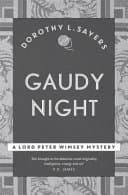
- Gaudy Night
Dorothy L. Sayers
4.2 (23k) average on GoodreadsHistorical FictionA classic mystery where an intellectual sleuth uncovers a complex and sinister plot in an academic setting.
- Angels & Demons
Dan Brown
3.9 (2.7M) average on GoodreadsThrillerA Harvard symbologist races through Rome's ancient sites, deciphering cryptic clues to unmask the Illuminati and stop a vengeful plot to destroy the Vatican with a stolen antimatter weapon.
- Gone Girl
Gillian Flynn
4.1 (2.3M) average on GoodreadsThrillerA wife's sudden disappearance on her fifth anniversary reveals a web of lies and psychological warfare, exposing the secrets within a seemingly perfect marriage.
- The Girl on the Train
Paula Hawkins
3.9 (2.1M) average on GoodreadsThrillerA woman’s fascination with a seemingly perfect couple she watches from her daily train commute leads her into a dark investigation when she witnesses something that shatters their idyllic image.
- The Da Vinci Code
Dan Brown
3.9 (1.9M) average on GoodreadsThrillerA symbologist and a cryptologist race through European landmarks, deciphering ancient codes and uncovering a conspiracy that could rewrite the foundations of Christianity.





Enjoyed the summary?
A summary gives you the shape of the book. The book itself has the detail, the examples and the voice.
Find The Pale Horse on AmazonAs an Amazon Associate, BookBrief earns from qualifying purchases. How we're funded