
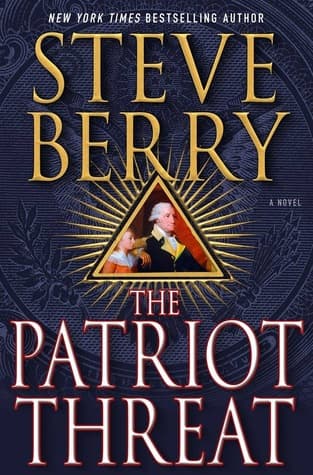
Synopsis
Covers the whole plot, including the ending.
- Difficulty
- Medium
- Pacing
- Fast
- Mood
- Suspenseful, Conspiratorial, Action-packed, Historically intriguing
- Read it if
- You enjoy thrillers that blend historical facts with high-stakes conspiracy and non-stop action, especially if you're fascinated by American history and government secrets.
- Skip it if
- You prefer character-driven narratives over plot-driven ones, or if you dislike thrillers that heavily rely on historical speculation and intricate conspiracies.
The Patriot Threat Plot Summary
Covers the whole plot, including the ending.
A Plea in Venice
Cotton Malone, a former Magellan Billet agent now running a rare bookshop in Copenhagen, receives an urgent call from his former boss, Stephanie Nelle. She needs his help tracking a North Korean operative, Hoang, who has stolen sensitive Treasury Department files. The trail leads Cotton to Venice, Italy, where he becomes involved in a dangerous pursuit through the city's canals and historic sites. Hoang is not just a thief; he possesses information that could destabilize the American financial system, potentially exposing a flaw in the 16th Amendment and the legality of federal income tax. Cotton reluctantly agrees to help, driven by duty and the serious implications of Hoang's actions.
The Stolen Files and a Cryptic Clue
Cotton's pursuit of Hoang in Venice quickly turns violent, with multiple agencies and shadowy figures also seeking the Treasury files. Cotton learns that Hoang is not working for North Korea but is a defector trying to reveal a truth. The files contain evidence suggesting that the ratification of the 16th Amendment, which established the federal income tax, was flawed, potentially making it unconstitutional. Hoang has a key piece of this puzzle, a clue within the files themselves, which points to a historical conspiracy involving President Franklin D. Roosevelt and former Treasury Secretary Andrew Mellon. Cotton realizes the stakes are higher than he first imagined, involving the foundation of American finance.
Brussels and the Search for Evidence
Following leads from the stolen files and Hoang's clues, Cotton and Stephanie Nelle travel to Brussels, Belgium. Their investigation focuses on the historical context of the 16th Amendment's ratification in 1913. They uncover evidence of irregularities and possible manipulation during the amendment's passage through various state legislatures. The main issue is whether the states truly ratified the amendment as presented, or if discrepancies in wording or process could invalidate its legality. They face resistance and attempts to obstruct their research, indicating powerful forces want to keep these historical secrets hidden. Cotton begins to understand the depth of the conspiracy.
The Mellon Connection
The investigation focuses on Andrew Mellon, a prominent industrialist and former Secretary of the Treasury. His financial dealings and political influence during the early 20th century are central to the conspiracy. Cotton and Stephanie discover that Mellon may have played a role in orchestrating the flawed ratification of the 16th Amendment, possibly benefiting from its implementation. They examine historical archives, letters, and financial records, trying to understand Mellon's motives and methods. The story includes historical flashbacks, showing Mellon's interactions with President Roosevelt and other figures, revealing his desire to protect his wealth and influence, even at the cost of legal integrity.
The National Gallery of Art
A painting in the National Gallery of Art in Washington D.C. becomes a critical piece of the puzzle. Cotton and Stephanie realize that the painting, chosen by Mellon, contains a subtle but significant clue related to the 16th Amendment. Through careful analysis and research, they decipher the hidden message within the artwork, which further supports the theory of a flawed ratification process. This discovery shows the intricate planning of those involved in the original conspiracy, using art to preserve a secret truth. The painting acts as a silent record of the historical deception, waiting for someone to understand its meaning.
The One Dollar Bill Mystery
Further investigation leads Cotton and Stephanie to examine the design of the one-dollar bill. They uncover symbolic elements and subtle alterations made to the bill around the 16th Amendment's ratification. These serve as another layer of the hidden message. When combined with information from the stolen files and the painting, these elements create a compelling story of a deliberate effort to obscure the truth about the income tax. The dollar bill, a symbol of American finance, ironically carries the clues to its potential undoing, acting as a historical trail for those astute enough to follow it.
Croatia and the Final Confrontation
The twenty-four-hour chase ends in the remote highlands of Croatia. Cotton, Stephanie, and their adversaries converge on a secluded location where the final pieces of the puzzle are expected. Hoang, still alive and determined to expose the truth, makes a final stand against those who want to silence him. The Croatian landscape becomes the setting for a violent confrontation, with gunfire and close-quarters combat. Cotton must protect Hoang and the evidence while fending off government agents and shadowy operatives who will stop at nothing to prevent the information from becoming public. The stakes are immense, potentially affecting every American citizen.
The Truth Revealed?
In the chaotic climax in Croatia, Cotton secures the crucial evidence Hoang had been protecting. This evidence, a combination of historical documents, eyewitness accounts, and deciphered clues from the painting and the dollar bill, strongly suggests that the 16th Amendment was not properly ratified according to constitutional requirements. The implications are staggering: if true, the federal income tax, as it has existed for decades, could be deemed illegal. Cotton and Stephanie face the task of deciding how to release this information, knowing that it could cause widespread panic and undermine the American financial system. The truth, however, is now clear.
The Aftermath and Loose Ends
After the events in Croatia, information about the 16th Amendment's flawed ratification slowly surfaces, creating a ripple effect across the United States. While the full legal and political consequences are unknown, doubt has been sown. Cotton Malone returns to his quiet life in Copenhagen, but the experience changes him, making him aware of the forces that shape history and protect secrets. Stephanie Nelle navigates the political fallout within the Justice Department, facing pressure to either suppress or investigate the claims. The book concludes with the unsettling realization that a fundamental aspect of American life might be built on a constitutional lie.
Principal Figures
Cotton Malone
Protagonist
A retired Magellan Billet agent and rare bookshop owner.
Cotton Malone is a former elite intelligence operative for the Justice Department's Magellan Billet, now seeking a quieter life as a rare book dealer in Denmark. He is highly intelligent, resourceful, and possesses a strong moral compass, often reluctantly drawn back into dangerous missions by his former boss, Stephanie Nelle. Despite his desire for peace, his sense of duty and justice compels him to confront complex conspiracies. He is skilled in combat, analysis, and historical research, making him an ideal protagonist for unraveling historical mysteries.
Relationships: Stephanie Nelle (Former boss and trusted colleague)
Stephanie Nelle
Supporting
Head of the Magellan Billet and Cotton's former boss.
Stephanie Nelle is the shrewd, determined, and highly capable head of the Justice Department's Magellan Billet. She is a master manipulator of intelligence and political maneuvering, often using her charm and intellect to achieve her objectives. Stephanie is fiercely loyal to her country and her agents, especially Cotton Malone, whom she frequently calls upon for his unique skills. She is pragmatic and willing to bend rules when necessary, but ultimately driven by a desire to protect the United States, even if it means uncovering uncomfortable truths.
Relationships: Cotton Malone (Former subordinate and trusted operative); Hoang (Initial target, later an ally)
Hoang
Supporting
A rogue North Korean defector with crucial information.
Hoang is initially presented as a rogue North Korean operative who has stolen sensitive Treasury Department files. However, he is soon revealed to be a defector, driven by a desire to expose a profound truth about the American income tax system. He is intelligent, resourceful, and highly motivated, willing to risk his life to bring this information to light. Hoang serves as the catalyst for the entire plot, possessing the initial fragmented clues that set Cotton and Stephanie on their dangerous quest.
Relationships: Cotton Malone (Pursued, then protected by); Stephanie Nelle (Initial target, later an ally)
Andrew Mellon
Historical Antagonist/Mentioned
Former Secretary of the Treasury, involved in the 16th Amendment's alleged fraud.
Andrew Mellon was a powerful industrialist, banker, and Secretary of the Treasury under three presidents. In the context of the novel, he is depicted as a central figure in the historical conspiracy surrounding the ratification of the 16th Amendment. His immense wealth and political influence are suggested to have played a role in manipulating the process, potentially to his own financial benefit. He represents the historical forces that sought to obscure the truth about the income tax's legality.
Relationships: Franklin D. Roosevelt (Political contemporary)
Franklin D. Roosevelt
Historical Figure/Mentioned
Former U.S. President, whose era is tied to the conspiracy.
Franklin D. Roosevelt, the 32nd President of the United States, appears in historical flashbacks and is referenced throughout the investigation. While not directly complicit in the alleged fraud of the 16th Amendment's ratification, his administration and the political climate of his era are intertwined with the events that led to the concealment of the truth. His interactions with Andrew Mellon and other key figures provide historical context for the conspiracy, highlighting the political power dynamics at play.
Relationships: Andrew Mellon (Political contemporary)
Ramzi
Antagonist
A ruthless operative pursuing Hoang and the files.
Ramzi is a dangerous and highly skilled operative, initially working for an unknown entity but consistently pursuing Hoang and the stolen Treasury files. He is relentless, violent, and shows no qualms about eliminating anyone who stands in his way. Ramzi represents the immediate physical threat to Cotton and Stephanie, acting as a pawn for the shadowy forces determined to keep the truth about the 16th Amendment hidden. His motivations are primarily professional, driven by the orders of his superiors.
Relationships: Cotton Malone (Adversary)
Themes & Insights
The Corrupting Influence of Power and Wealth
This theme explores how power and wealth can lead individuals and institutions to manipulate systems for personal gain, even at the expense of legal and constitutional integrity. The novel suggests that figures like Andrew Mellon may have used their influence to orchestrate a flawed ratification of the 16th Amendment, ensuring a system that benefited them. This manipulation shows the dangers of unchecked power and the lengths powerful entities will go to protect their interests, as seen in the shadowy forces trying to silence Hoang and Cotton.
“History is written by the victors, and sometimes, the powerful ensure that certain truths are never allowed to win.”
The Search for Truth and Its Consequences
The novel focuses on the pursuit of a historical truth – the potential illegality of the federal income tax. Cotton Malone, Stephanie Nelle, and Hoang are driven to uncover and expose this truth, despite the dangers and potential for societal upheaval. The story shows that truth, once revealed, can have far-reaching and unpredictable consequences, challenging established norms and institutions. The characters grapple with the ethical dilemma of exposing a truth that could destabilize the nation, highlighting the weight of such revelations.
“Some secrets are best left buried, not because they are inherently evil, but because their unearthing can shatter foundations.”
The Fragility of Constitutional Law
A core theme is that even fundamental constitutional laws can be vulnerable to historical manipulation and bureaucratic oversight. The entire premise rests on the possibility that the 16th Amendment, the basis for federal income tax, was not properly ratified. This raises questions about the legal system's integrity and the importance of adhering to constitutional procedures. The novel makes readers consider how easily foundational laws could be undermined and how a nation's financial structure could be built on a flawed legal basis.
“The law is only as strong as the process by which it was forged.”
Historical Revisionism and Conspiracy
The book examines historical revisionism, suggesting that official narratives can be incomplete or deliberately misleading. It proposes a historical conspiracy dating back to the early 20th century, where key figures allegedly concealed the flawed ratification of the 16th Amendment. This theme explores how powerful individuals and institutions can shape historical understanding to serve their own ends, and how the 'official' version of events may hide a more complex and unsettling truth. The use of hidden clues in paintings and currency further emphasizes the secret nature of this historical deception.
“History is not what happened, but what people remember. And sometimes, what they are allowed to remember.”
Plot Devices & Literary Techniques
The MacGuffin
The stolen Treasury files containing evidence of the 16th Amendment's flawed ratification.
The stolen Treasury Department files, initially possessed by Hoang, serve as the primary MacGuffin. These files are the central object of desire and pursuit for nearly all factions in the story – Cotton Malone, Stephanie Nelle, and various antagonists. While the specific contents are gradually revealed, their initial importance lies in driving the plot forward and instigating the chase across Europe. The files represent the tangible evidence of the historical conspiracy, making them invaluable to both those seeking to expose the truth and those wishing to suppress it.
Historical Flashbacks
Interspersed scenes depicting past events related to the 16th Amendment.
The novel frequently employs historical flashbacks, transporting the reader to the early 20th century, particularly the period surrounding the ratification of the 16th Amendment. These flashbacks show interactions between figures like Andrew Mellon and Franklin D. Roosevelt, providing crucial context and revealing the alleged machinations behind the amendment's passage. This device allows Berry to weave his signature blend of historical fact and speculation, gradually unveiling the layers of the conspiracy and demonstrating how the past directly impacts the present-day stakes.
Cryptic Clues and Symbolism
Hidden messages in objects like a painting and the one-dollar bill.
A significant plot device involves the use of cryptic clues and symbolism embedded in seemingly innocuous objects. The painting in the National Gallery of Art and the design elements of the one-dollar bill are revealed to contain hidden messages related to the 16th Amendment's flawed ratification. These clues require careful deciphering by Cotton Malone, adding a puzzle-solving element to the thriller. This device heightens the mystery and underscores the long-term planning and secrecy of the historical conspiracy, making the discovery of truth a process of intricate interpretation.
The Patriot Threat Quotes
“The past is never really gone. It just waits for the opportune moment to reappear.”
“Sometimes the greatest truths are hidden in plain sight, obscured by the very obviousness of their existence.”
“Trust is a fragile thing, easily shattered and almost impossible to fully repair.”
“Power, unchecked, invariably corrupts. And absolute power corrupts absolutely.”
“History is written by the victors, but the truth often lies with the vanquished.”
“The greatest weapon in any conflict is not a gun or a bomb, but information.”
“Every secret has a shelf life, and eventually, all will be revealed.”
“Fear is a powerful motivator, capable of driving people to acts of both courage and cowardice.”
“The lines between patriotism and extremism can blur, especially when fueled by righteous indignation.”
“Sometimes you have to break the rules to uphold justice.”
“The past holds the keys to the future, if only we know how to unlock its secrets.”
“There are no coincidences in a world driven by power and ambition, only meticulously planned events.”
“The most dangerous lies are the ones we tell ourselves.”
“Freedom is not a gift, but a constant struggle, requiring vigilance and sacrifice.”
Quiz
10 questions on the plot and the characters. Each answer comes with a short explanation.
Question 1
Which US Constitutional Amendment is central to the plot of 'The Patriot Threat' regarding income taxes?
- 13th Amendment
- 16th Amendment
- 19th Amendment
- 22nd Amendment
Show answer
B. 16th Amendment The 16th Amendment is explicitly mentioned as the reason Americans pay income taxes and the focus of the book's central mystery.
Question 2
What is Cotton Malone's profession after retiring from the Magellan Billet?
- Art restorer in Rome
- Antiquarian in London
- Bookshop owner in Denmark
- Private investigator in Paris
Show answer
C. Bookshop owner in Denmark Cotton Malone owns an old bookshop in Denmark after his retirement, which is where Stephanie Nelle finds him.
Question 3
Who is Stephanie Nelle in relation to Cotton Malone?
- His sister
- His former-boss
- A rival agent
- A Treasury Department official
Show answer
B. His former-boss Stephanie Nelle is described as Cotton Malone's former-boss who enlists his help in the plot.
Question 4
Where does the twenty-four hour chase in 'The Patriot Threat' begin?
- On the streets of Copenhagen
- In the canals of Venice
- At a museum in Washington D.C.
- In a secure facility in North Korea
Show answer
B. In the canals of Venice The chase is explicitly stated to begin on the canals in Venice.
Question 5
What type of files is the rogue North Korean suspected of acquiring?
- Top secret State Department files on nuclear weapons
- Top secret Treasury Department files on the income tax
- Classified CIA documents on covert operations
- Proprietary financial data from Wall Street banks
Show answer
B. Top secret Treasury Department files on the income tax The North Korean is after 'top secret Treasury Department files' that could 'bring the United States to its knees', related to the income tax.
Question 6
Which historical figure is mentioned as appearing in the book alongside Andrew Mellon?
- Thomas Jefferson
- Abraham Lincoln
- Franklin Roosevelt
- George Washington
Show answer
C. Franklin Roosevelt Franklin Roosevelt is listed as making an appearance in the narrative, along with Andrew Mellon.
Question 7
What percentage of 'The Patriot Threat' is described as historical fact by Steve Berry?
- 50%
- 75%
- 90%
- 100%
Show answer
C. 90% The description states the book is '90% historical fact, 10% exciting speculation'.
Question 8
Where does the twenty-four hour chase ultimately conclude?
- In the bustling markets of Istanbul
- In the remote highlands of Croatia
- At a secret bunker in Switzerland
- On a deserted island in the Adriatic Sea
Show answer
B. In the remote highlands of Croatia The chase 'ends in the remote highlands of Croatia'.
Question 9
What common item is mentioned as holding 'eye-opening revelations' in the book?
- The US Constitution
- A painting in the National Gallery of Art
- The $1 bill
- An old map of Washington D.C.
Show answer
C. The $1 bill The description mentions 'some eye-opening revelations from the $1 bill'.
Question 10
The central provocative question posed by 'The Patriot Threat' is:
- What if the US never entered World War II?
- What if the Federal income tax is illegal?
- What if North Korea successfully hacks the US Treasury?
- What if the Magellan Billet never existed?
Show answer
B. What if the Federal income tax is illegal? The summary explicitly states the book poses the question: 'What if the Federal income tax is illegal?'
The Patriot Threat FAQ
What is the central premise of 'The Patriot Threat' regarding the 16th Amendment?
The novel explores the shocking possibility that the 16th Amendment, which authorizes federal income tax, may have been improperly ratified or contains legal defects, making decades of income tax collection potentially illegal. This central mystery drives Cotton Malone's investigation into top-secret Treasury files.
Who is Cotton Malone and what is his role in the story?
Cotton Malone is a retired member of the Justice Department's elite Magellan Billet, now a bookseller in Denmark. He is drawn back into action when his former boss, Stephanie Nelle, tasks him with tracking a rogue North Korean who has acquired highly sensitive Treasury Department files linked to the 16th Amendment.
What kind of information does the rogue North Korean possess that is so dangerous?
The rogue North Korean, Kim Yong-jin, has acquired top-secret Treasury Department files that allegedly contain evidence of irregularities or legal flaws in the ratification of the 16th Amendment. This information, if revealed, could destabilize the entire U.S. financial system and bring the country to its knees.
Where does the initial chase begin and end in the novel?
The harrowing twenty-four hour chase for the crucial files begins on the canals of Venice, Italy, with Cotton Malone pursuing Kim Yong-jin. The chase ultimately culminates in the remote, rugged highlands of Croatia, where the final confrontation and revelations unfold.
Which historical figures make appearances or are central to the historical mystery?
The novel intricately weaves in historical figures such as President Franklin Roosevelt and Treasury Secretary Andrew Mellon. Their actions and decisions during the early 20th century are crucial to understanding the alleged irregularities surrounding the 16th Amendment's ratification and the subsequent cover-up.
How does a specific painting in the National Gallery of Art tie into the plot?
A curious painting hanging in the National Gallery of Art serves as a key clue or repository of hidden information related to the 16th Amendment's secrets. Its imagery or historical context provides a vital link that Cotton Malone must decipher to understand the full scope of the conspiracy.
What 'eye-opening revelations' are uncovered from the $1 bill?
The $1 bill, specifically its intricate design and symbolism, holds hidden clues or historical references that Malone deciphers. These revelations from the bill are connected to the origins and alleged flaws of the federal income tax system, adding another layer to the historical conspiracy.
What is the significance of the 'Magellan Billet' in Cotton Malone's past?
The Magellan Billet was an elite intelligence division within the Justice Department, known for handling sensitive and unconventional cases. Cotton's past involvement with this unit explains his specialized skills, network, and the trust placed in him by Stephanie Nelle to tackle a threat of this magnitude.
How does Cotton Malone's internal conflict about his past influence his decisions?
Cotton Malone's internal conflict stems from his desire for a quiet retirement versus his ingrained sense of duty and loyalty to his former colleagues and country. This struggle influences his willingness to re-enter a dangerous world, often pushing him to take risks he might otherwise avoid, despite the personal cost.
What psychological motivations drive Kim Yong-jin, the North Korean antagonist?
Kim Yong-jin is driven by a complex mix of geopolitical ambition and personal grievance. He seeks to exploit the financial vulnerability of the United States to benefit North Korea, likely fueled by a desire for power, revenge, or a belief in his country's ideological superiority.
How does Stephanie Nelle's leadership style impact the mission's progression?
Stephanie Nelle's leadership is characterized by her pragmatism, strategic thinking, and willingness to make tough decisions, often putting her trust in Cotton Malone. Her ability to navigate bureaucratic hurdles and provide critical support from afar is crucial to Cotton's success, despite the immense pressure she faces.
What ethical dilemmas are presented by the potential illegality of the 16th Amendment?
The novel raises profound ethical questions about the legitimacy of government power, the rights of citizens, and the potential for a massive historical deception. It forces characters, and readers, to confront the implications of overturning decades of established law and the chaos that could ensue.
How does the book balance '90% historical fact' with '10% exciting speculation'?
Steve Berry meticulously researches historical documents, figures, and events, using them as a factual foundation for the narrative. The '10% speculation' involves weaving a compelling fictional conspiracy and mystery around these facts, imagining the 'what if' scenarios that could connect historical anomalies to a modern-day threat.
What is the broader commentary the book makes about government transparency and hidden truths?
The book serves as a commentary on the potential for governments to conceal inconvenient truths or make decisions that have far-reaching, unforeseen consequences, even if initially well-intentioned. It questions the extent to which historical narratives are shaped and sometimes manipulated to maintain order or power.
Does the novel offer a definitive answer on the legality of the 16th Amendment, or leave it open to debate?
While the novel presents compelling fictional evidence and arguments for the 16th Amendment's potential illegality, it ultimately operates within the realm of speculative fiction. It aims to provoke thought and debate rather than provide a definitive legal ruling, leaving readers to ponder the implications of its premise.
How does the setting of Venice contribute to the initial tension of the story?
Venice's labyrinthine canals, narrow alleys, and unique architecture provide a visually rich and inherently suspenseful backdrop for the opening chase. The city's confined spaces and reliance on water transport heighten the tension and make for dynamic, visually engaging pursuit sequences.
What specific challenges does the remote Croatian highlands present to Cotton Malone?
The remote Croatian highlands introduce a stark, rugged, and isolated environment, contrasting sharply with Venice. This setting presents challenges like difficult terrain, limited resources, and the potential for hidden dangers, forcing Cotton to rely on his survival skills and adaptability during the climactic final confrontation.
How do the historical figures Franklin Roosevelt and Andrew Mellon interact with the central conspiracy?
Roosevelt and Mellon are depicted as key players in the historical events surrounding the 16th Amendment's ratification and its aftermath. Their political maneuvering, decisions, and potential knowledge of the alleged irregularities form the historical backbone of the conspiracy, suggesting that critical information was deliberately suppressed or manipulated during their time in power.
About the author

Steve Berry is an American author known for his historical thrillers. His notable works include The Templar Legacy, The Charlemagne Pursuit, The Jefferson Key, and The Patriot Threat, which often blend real historical events with fiction. Berry's writing typically features intricate plots and a focus on historical mysteries.
Similar books
- The Da Vinci Code
Dan Brown
3.9 (1.9M) average on GoodreadsThrillerFeatures a blend of historical mystery, art, and a race against time to uncover a hidden truth.
- Ice Station Zebra
Alistair MacLean
4.0 (17k) average on GoodreadsThrillerInvolves a high-stakes, geographically diverse chase for critical intelligence with Cold War undertones.
- The Lincoln Lawyer
Michael Connelly
4.2 (193k) average on GoodreadsThrillerWhile legal, it shares the intricate plotting and the uncovering of deep-seated secrets within the American system.
- Angels & Demons
Dan Brown
3.9 (2.7M) average on GoodreadsThrillerA Harvard symbologist races through Rome's ancient sites, deciphering cryptic clues to unmask the Illuminati and stop a vengeful plot to destroy the Vatican with a stolen antimatter weapon.
- Gone Girl
Gillian Flynn
4.1 (2.3M) average on GoodreadsThrillerA wife's sudden disappearance on her fifth anniversary reveals a web of lies and psychological warfare, exposing the secrets within a seemingly perfect marriage.
- The Girl on the Train
Paula Hawkins
3.9 (2.1M) average on GoodreadsThrillerA woman’s fascination with a seemingly perfect couple she watches from her daily train commute leads her into a dark investigation when she witnesses something that shatters their idyllic image.





Enjoyed the summary?
A summary gives you the shape of the book. The book itself has the detail, the examples and the voice.
Find The Patriot Threat on AmazonAs an Amazon Associate, BookBrief earns from qualifying purchases. How we're funded