
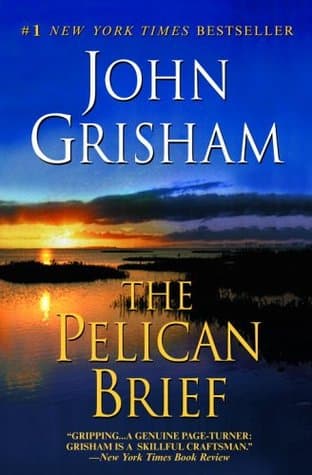
Synopsis
Covers the whole plot, including the ending.
- Difficulty
- Medium
- Pacing
- Fast
- Mood
- Suspenseful, Tense, Urgent, Conspiratorial
- Read it if
- You enjoy fast-paced legal thrillers with a strong female protagonist, government conspiracies, and a race against time.
- Skip it if
- You prefer character-driven dramas over plot-heavy thrillers or find political intrigue uninteresting.
The Pelican Brief Plot Summary
Covers the whole plot, including the ending.
The Assassination of Two Supreme Court Justices
Justice Rosenberg, an elderly liberal, is found dead in his Georgetown home, apparently of natural causes. Hours later, the younger, conservative Justice Jensen is also found dead in a Washington D.C. porno theater, garroted. The deaths of two Supreme Court Justices, one liberal and one conservative, on the same night, immediately cause national alarm and a large FBI investigation. The President, facing re-election, worries about the implications and how the public will see the security of the nation's highest judicial figures. The FBI mobilizes, but with no clear motive or connection between the victims, the case remains a mystery.
Darby Shaw's 'Pelican Brief'
Darby Shaw, a law student at Tulane University, is disturbed by the assassinations. Driven by curiosity and her relationship with her law professor, Thomas Callahan, she begins to research possible motives. After weeks of study, she writes a speculative legal brief, called the 'Pelican Brief,' outlining a theory for the murders. Her brief suggests the assassinations were not random, but planned by a powerful individual seeking to use a specific Supreme Court case about oil drilling in Louisiana wetlands, a case that would soon go before the court. She shares this brief with Callahan, who then gives it to his friend, Gavin Verheek, an FBI lawyer.
Callahan's Murder and Darby's Escape
Soon after receiving the brief, Gavin Verheek is killed by a car bomb in Washington D.C. This death is initially thought to be random violence. Back in New Orleans, Darby Shaw and Thomas Callahan go out to dinner. As they leave, Callahan's car explodes, killing him instantly and injuring Darby. Realizing the brief must be the cause, Darby flees the scene in shock and terror. She understands that someone powerful wants her dead because of her theory. She goes into hiding, using her legal knowledge and quick thinking to avoid the authorities and the unknown killers pursuing her, cutting off all ties to her previous life.
Contacting Gray Grantham
Recognizing the danger and that she cannot trust the authorities, who she suspects are involved, Darby contacts Gray Grantham, an investigative reporter for The Washington Post. She remembers reading his articles and believes he is trustworthy and determined enough to find the truth. Using a burner phone and coded messages, she contacts Grantham, hinting at a major story about the Supreme Court assassinations. Grantham, initially skeptical, becomes interested by her warnings and the urgency in her voice, sensing a story bigger than he could imagine.
Grantham's Investigation and the 'Pelican Brief'
Grantham, prompted by Darby's calls, begins his own investigation, looking into the assassinations and Gavin Verheek's mysterious death. He interviews various sources, piecing together information. Eventually, Darby agrees to meet him, under very careful conditions. During their secret meeting, she gives him the 'Pelican Brief,' detailing her theory about Victor Mattiece, a wealthy oil magnate who stands to lose billions if the Supreme Court rules against his drilling interests in the Louisiana wetlands. Grantham is shocked by the brief's detailed and incriminating content, realizing the immense danger they are both in.
Unmasking the Conspiracy
As Grantham checks the information in the 'Pelican Brief,' he and Darby discover that Mattiece hired Khamel, an international assassin, to kill Justices Rosenberg and Jensen. They also find evidence that the President's Chief of Staff, Fletcher Coal, and even the President, know about Mattiece's involvement and are actively covering it up to protect the President's re-election and avoid a national scandal. The FBI director, Denton Voyles, also knows about the cover-up and is being pressured by the White House to control the story and hide the truth.
The Hunt for Khamel
Darby and Grantham realize that Khamel is the key to proving Mattiece's involvement. They use their combined resources to track the assassin's movements and identify his network. They discover that Khamel is a professional and elusive killer, making him very difficult to find. Their search leads them through various leads and dead ends, always aware that Khamel is also hunting them. The stakes rise as they get closer to finding the assassin, knowing that one wrong move could cost them their lives.
The White House Cover-up Intensifies
As Darby and Grantham get closer to the truth, the White House, especially Fletcher Coal, increases its efforts to discredit them and stop the story. They leak false information to the press, portray Darby as a mentally unstable fugitive, and pressure the FBI to shut down Grantham's investigation. The President, fearing political fallout, becomes more paranoid and desperate to control the story. Denton Voyles, the FBI Director, is caught between his duty and pressure from the Oval Office, making Darby and Grantham's efforts to expose the truth harder.
The Confrontation and Exposure
Darby and Grantham gather enough clear evidence, including proof of Mattiece's financial transactions and Khamel's involvement, to confirm the 'Pelican Brief.' Grantham prepares to publish the story in The Washington Post, knowing it will cause a political earthquake. Darby, still a wanted fugitive, remains in hiding, constantly changing her appearance and location. She understands that even after the story breaks, her life will be in danger until Mattiece and his network are dismantled. The tension builds as Grantham finishes his article, knowing the huge consequences of its release.
Publication and Aftermath
Grantham's article, detailing the entire conspiracy, is published, causing shockwaves through Washington D.C. and the nation. The President's approval ratings drop, Fletcher Coal resigns, and a special prosecutor is appointed to investigate. Victor Mattiece's empire begins to crumble under scrutiny, and Khamel is eventually located and killed by federal agents. While justice begins, Darby Shaw's personal safety remains a concern. With her identity compromised and her life still in danger, she is secretly helped to disappear, finding refuge in a tropical paradise, where she can finally live without fear. Her role in uncovering the truth changes her life forever.
Principal Figures
Darby Shaw
Protagonist
Brilliant and tenacious law student who uncovers a deadly conspiracy.
Darby Shaw is a highly intelligent and observant law student at Tulane University. Driven by an innate curiosity and a sharp legal mind, she compiles the 'Pelican Brief,' a speculative document that accurately identifies the motive and perpetrator behind the Supreme Court assassinations. After her mentor, Thomas Callahan, is murdered and she barely escapes an attempt on her own life, Darby transforms from an academic into a resourceful fugitive. She demonstrates remarkable resilience, courage, and cunning, using her wits to evade capture and eventually contact Gray Grantham to expose the truth. Her determination to seek justice, despite the immense personal risk, is her defining trait.
Relationships: Thomas Callahan (Mentor and lover); Gray Grantham (Journalistic partner and confidant); Victor Mattiece (The target of her investigation)
Gray Grantham
Supporting
Ambitious and ethical investigative reporter for The Washington Post.
Gray Grantham is a seasoned and respected investigative reporter for The Washington Post, known for his relentless pursuit of truth. Initially skeptical of Darby's cryptic calls, he quickly recognizes the magnitude of her story. Grantham is driven by a strong journalistic integrity and a desire to expose corruption, even when it involves the highest levels of government. He is brave, intelligent, and methodical in his investigation, acting as Darby's primary ally and the conduit through which the 'Pelican Brief' is brought to public attention. His commitment to the truth puts his own life and career at risk.
Relationships: Darby Shaw (Informant and investigative partner); Fletcher Coal (Antagonist and subject of investigation)
Victor Mattiece
Antagonist
Reclusive and ruthless oil magnate who orchestrates the assassinations.
Victor Mattiece is the immensely wealthy and reclusive oil tycoon at the heart of the conspiracy. He is a man of vast resources and no moral compass, willing to commit unspeakable acts to protect his financial interests. His motivation stems from a Supreme Court case that threatens to halt his lucrative oil drilling operations in the Louisiana wetlands, costing him billions. Mattiece operates from the shadows, employing a highly skilled assassin, Khamel, to remove any obstacles. He represents the corrupting influence of unchecked power and greed, and his actions set the entire plot in motion.
Relationships: Khamel (Hired assassin); Darby Shaw (Unwitting adversary)
Khamel
Antagonist
Highly skilled and elusive international assassin employed by Mattiece.
Khamel is the professional assassin hired by Victor Mattiece to murder the two Supreme Court Justices, Justice Rosenberg and Justice Jensen, and later to eliminate Darby Shaw and anyone else who gets too close to the truth. He is a ghost-like figure, highly trained, methodical, and without remorse. Khamel leaves little trace, making him incredibly difficult to track. His cold efficiency and ability to disappear after each kill make him a formidable and terrifying antagonist, embodying the direct physical threat to Darby and Grantham.
Relationships: Victor Mattiece (Employer); Darby Shaw (Target)
Thomas Callahan
Supporting
Darby's law professor and lover, the first victim of the conspiracy.
Thomas Callahan is Darby Shaw's law professor and her romantic partner. He is a respected academic and a kind, supportive figure in Darby's life. Darby shares her 'Pelican Brief' with him, and he, believing it to be a harmless academic exercise, passes it on to his friend at the FBI, Gavin Verheek. His innocent action inadvertently seals his fate, as he becomes one of the first victims of the conspiracy when his car explodes, killing him and severely injuring Darby. His death serves as the catalyst for Darby's flight and her realization of the brief's deadly implications.
Relationships: Darby Shaw (Lover and mentor); Gavin Verheek (Friend and colleague)
Fletcher Coal
Antagonist
The President's Chief of Staff, deeply involved in the cover-up.
Fletcher Coal is the President's shrewd and ruthless Chief of Staff. He is a highly influential figure within the White House, primarily concerned with protecting the President's image and re-election prospects at all costs. Coal becomes instrumental in orchestrating the cover-up of Mattiece's involvement, pressuring the FBI, leaking disinformation, and attempting to discredit Darby Shaw and Gray Grantham. He embodies the political corruption and moral compromises made at the highest levels of government, prioritizing power and political survival over justice and truth.
Relationships: The President (Superior and co-conspirator); Denton Voyles (Adversary/pressure point)
The President
Supporting
The unnamed U.S. President, complicit in the cover-up.
The President of the United States, though unnamed, is a significant character. He is portrayed as a man primarily concerned with his re-election and the public perception of his administration. Upon learning of the conspiracy, he allows Fletcher Coal to orchestrate a cover-up, fearing the political fallout more than he values justice. He pressures the FBI Director, Denton Voyles, and attempts to control the flow of information. His actions reveal a deep-seated fear of scandal and a willingness to compromise ethical principles for political gain.
Relationships: Fletcher Coal (Chief of Staff and co-conspirator); Denton Voyles (FBI Director under his authority)
Denton Voyles
Supporting
The conflicted Director of the FBI.
Denton Voyles is the Director of the FBI, a man caught between his duty to uphold the law and the immense political pressure from the White House to control the narrative surrounding the assassinations. He is initially unaware of the full extent of the conspiracy but eventually discovers the truth. While he is pressured to cover up the President's involvement, he secretly respects Grantham's pursuit of the truth and subtly aids him by not fully obstructing the investigation. Voyles represents the internal struggle within institutions when faced with high-level corruption.
Relationships: The President (Superior and source of pressure); Fletcher Coal (Antagonistic colleague); Gray Grantham (Unofficial ally)
Gavin Verheek
Mentioned
FBI lawyer and friend of Callahan, who receives the 'Pelican Brief'.
Gavin Verheek is an FBI lawyer and a close friend of Thomas Callahan. He receives the 'Pelican Brief' from Callahan, intending to review it as a courtesy. However, Verheek is tragically killed by a car bomb shortly after receiving the brief, a death initially dismissed as unrelated. His death is the first direct consequence of the brief's existence, confirming to Darby that her theory is dangerously accurate and that powerful forces are at play. Though his role is brief, his death is crucial in escalating the stakes and confirming the conspiracy.
Relationships: Thomas Callahan (Friend and colleague)
Themes & Insights
Corruption of Power
The novel shows how power, especially political and corporate power, can corrupt individuals and institutions. Victor Mattiece's wealth lets him arrange the assassination of Supreme Court Justices to protect his financial empire. At the same time, the President and his Chief of Staff, Fletcher Coal, actively cover up to protect the President's re-election, showing how seeking political power can lead to moral compromises. The FBI, pressured by the White House, must also navigate these corrupting influences, showing how fragile justice is when faced with established power.
“The White House knew. They had to know. And they had chosen to bury it, to protect the President.”
Justice vs. Self-Preservation
A central theme is the tension between seeking justice and the instinct for self-preservation. Darby Shaw, after seeing her mentor murdered and narrowly escaping death, must leave her normal life and go into hiding. Despite the danger and constant threat, she chooses to seek justice by exposing the truth, rather than just disappearing. Gray Grantham also risks his career and safety to publish the story. This theme explores the moral courage needed to fight for what is right, even when it means sacrificing personal safety and comfort.
“She wanted to disappear, to vanish, but a stronger force pulled her toward justice, a dangerous, relentless current.”
The Power of the Press
The novel highlights the role of investigative journalism in holding power accountable. When Darby Shaw cannot trust official channels, she turns to Gray Grantham and The Washington Post. Through Grantham's investigation and the publication of his article, the truth about the assassinations and the government cover-up is revealed. This theme shows the press's role in a democracy, demonstrating how a free and determined press can expose corruption and ensure transparency, even under great pressure and danger.
“The truth, once published, had a way of cutting through all the lies.”
Identity and Anonymity
Darby Shaw's journey explores identity and anonymity. After attempts on her life, she must shed her former identity, adopting disguises, new names, and constantly changing locations to evade her pursuers. This transformation shows the loss of self that comes with being a fugitive and the psychological cost of living in constant fear. Her struggle to remain anonymous while trying to expose the truth highlights the paradox of her situation: she must remain unseen to survive, yet she must reveal a dangerous truth to achieve justice.
“Darby Shaw was dead. A new person, a shadow, had taken her place.”
The Law and its Loopholes
Given that Darby is a law student and the plot involves a Supreme Court case, the novel explores the legal system's complexities and vulnerabilities. Mattiece uses the potential outcome of a Supreme Court ruling to justify murder, showing how the law, meant to ensure justice, can become a battleground for powerful interests. Darby's 'Pelican Brief' is a legal analysis, showing how a deep understanding of the law can uncover truths, but also how the system can be manipulated or violently bypassed by those who consider themselves above it.
“The law, she knew, was a fragile thing, easily bent by money and power.”
Plot Devices & Literary Techniques
The 'Pelican Brief'
A speculative legal document that serves as the central MacGuffin and catalyst for the plot.
The 'Pelican Brief' is a legal document compiled by Darby Shaw, outlining a highly speculative, yet ultimately accurate, theory for the Supreme Court assassinations. It serves as the central MacGuffin of the story, the object that everyone is either trying to find or suppress. Its existence triggers the entire chain of events: Callahan's death, Darby's flight, and the subsequent hunt for her. The brief is not merely a piece of paper; it embodies the dangerous truth that threatens to expose a vast conspiracy, driving the actions of both the protagonists and antagonists throughout the novel.
The Unseen Assassin (Khamel)
A mysterious and highly effective killer who represents the direct, ever-present threat.
Khamel, the professional assassin, functions as a personification of the direct and deadly threat looming over Darby Shaw. For much of the novel, he is an unseen, almost mythical figure whose presence is felt through the murders he commits and the constant fear he instills. This device heightens the suspense and sense of vulnerability for Darby, as she knows a highly skilled killer is relentlessly pursuing her. Khamel's anonymity and efficiency make him a terrifying force, symbolizing the ruthless power of Victor Mattiece and the conspiracy's willingness to eliminate any obstacle.
The Corrupt White House
A powerful institutional antagonist that adds layers of political intrigue and systemic betrayal.
The White House, specifically the President and his Chief of Staff, Fletcher Coal, serves as a powerful institutional antagonist, providing a secondary layer of conflict beyond Mattiece and Khamel. This device introduces themes of political corruption, cover-ups, and the abuse of power at the highest levels of government. It complicates Darby and Grantham's efforts, as they cannot simply rely on official channels for justice. The White House's involvement elevates the stakes from a criminal conspiracy to a national scandal, making the exposure of the truth far more difficult and dangerous.
Clandestine Meetings and Communications
A recurring narrative technique that emphasizes the danger and secrecy of the protagonists' mission.
Throughout the novel, Darby Shaw and Gray Grantham rely heavily on clandestine meetings, burner phones, and coded messages to communicate and exchange information. This narrative device effectively conveys the constant danger they face and the necessity of secrecy. It builds suspense, as each meeting or phone call carries the risk of exposure and death. This technique also highlights Darby's resourcefulness and Grantham's journalistic cunning, as they navigate a world where trust is scarce and every interaction could be their last, reinforcing the high stakes of their investigation.
The Pelican Brief Quotes
“The law is a business, not a profession.”
“Justice is blind, but it can still smell money.”
“Fear is a great motivator, but it's a lousy companion.”
“In Washington, the truth is whatever you can make people believe.”
“Sometimes the only way to stay alive is to disappear.”
“Power doesn't corrupt; it reveals.”
“The truth is like a diamond; it has many facets, and everyone sees a different one.”
“In the end, it's not about who's right, but who's left.”
“A good lawyer knows the law; a great lawyer knows the judge.”
“The most dangerous lies are the ones we tell ourselves.”
“When you're chasing the truth, be careful not to become the prey.”
“In the shadows of power, the innocent are often the first to fall.”
“Trust is a luxury you can't afford when your life is on the line.”
“The system is designed to protect itself, not the people in it.”
Quiz
10 questions on the plot and the characters. Each answer comes with a short explanation.
Question 1
What is Darby Shaw's profession at the beginning of the novel?
- A journalist for a major newspaper
- A law student at Tulane University
- A Supreme Court clerk
- A private investigator
Show answer
B. A law student at Tulane University Darby Shaw is introduced as a law student at Tulane University in New Orleans who writes the legal brief that becomes central to the plot.
Question 2
What event triggers the main plot of the novel?
- A corporate scandal involving oil companies
- The assassination of two Supreme Court justices
- A presidential election fraud
- A terrorist attack on the White House
Show answer
B. The assassination of two Supreme Court justices The story begins with the simultaneous assassinations of Supreme Court Justices Rosenberg and Jensen, which prompts Darby Shaw to investigate and write her legal brief.
Question 3
What is the title of Darby Shaw's legal brief that becomes central to the conspiracy?
- The Pelican Brief
- The Supreme Conspiracy
- The Bayou Report
- The Washington Memo
Show answer
A. The Pelican Brief Darby's speculative legal brief is titled 'The Pelican Brief,' which gives the novel its name and outlines her theory about the motives behind the justices' murders.
Question 4
Why does Darby Shaw go underground and become a fugitive?
- She is accused of stealing government documents
- She witnesses a murder intended for her
- She is fired from her law firm
- She is being blackmailed by a politician
Show answer
B. She witnesses a murder intended for her After her boyfriend and law professor Thomas Callahan is killed in a car bomb meant for her, Darby realizes she is a target and goes into hiding to survive.
Question 5
Who is the ambitious reporter that Darby Shaw eventually trusts to help her expose the conspiracy?
- Bob Woodward
- Gray Grantham
- Carl Bernstein
- Matt Cooper
Show answer
B. Gray Grantham Gray Grantham is a reporter for the Washington Post who teams up with Darby to investigate the conspiracy, drawing parallels to real-life investigative journalism.
Question 6
What is the primary motive behind the assassinations of the Supreme Court justices according to Darby's brief?
- To influence a case about presidential powers
- To manipulate a case involving environmental regulations and oil interests
- To cover up a political bribery scheme
- To prevent the justices from ruling on a tax law
Show answer
B. To manipulate a case involving environmental regulations and oil interests Darby theorizes that the justices were killed to affect the outcome of a case involving environmental regulations that would impact oil companies in Louisiana's wetlands.
Question 7
How does Darby Shaw initially share her brief with authorities, leading to the danger she faces?
- She publishes it anonymously online
- She gives it to her boyfriend Thomas Callahan, who shares it with the FBI
- She mails it directly to the White House
- She presents it at a law school conference
Show answer
B. She gives it to her boyfriend Thomas Callahan, who shares it with the FBI Darby gives her brief to her boyfriend, law professor Thomas Callahan, who passes it to an FBI contact, inadvertently setting off the chain of events that makes her a target.
Question 8
What key piece of evidence does Darby and Gray discover that helps confirm the conspiracy?
- A secret recording of the assassins
- Documents linking the killings to a wealthy industrialist named Victor Mattiece
- A confession from a White House aide
- Surveillance footage from the murder scenes
Show answer
B. Documents linking the killings to a wealthy industrialist named Victor Mattiece They uncover evidence connecting the assassinations to Victor Mattiece, a billionaire with oil interests in Louisiana who stands to benefit from the Supreme Court case.
Question 9
What role does the character Gavin Verheek play in the story?
- He is Darby's defense attorney when she is arrested
- He is an FBI agent who initially investigates the brief but later becomes a target
- He is the editor of the Washington Post
- He is a hitman hired to eliminate Darby
Show answer
B. He is an FBI agent who initially investigates the brief but later becomes a target Gavin Verheek is an FBI lawyer who receives the brief from Thomas Callahan. He becomes involved in the investigation and is ultimately killed for his knowledge of the conspiracy.
Question 10
How does the novel ultimately resolve the conspiracy?
- The president publicly confesses and resigns
- Darby and Gray publish their findings, leading to arrests but no major convictions
- The Supreme Court rules in favor of the environmental regulations
- Victor Mattiece is assassinated by his own associates
Show answer
B. Darby and Gray publish their findings, leading to arrests but no major convictions Darby and Gray expose the conspiracy through newspaper articles, resulting in some arrests, but powerful figures like Mattiece avoid full justice, highlighting themes of corruption and the limits of accountability.
The Pelican Brief FAQ
What is 'The Pelican Brief' about?
The novel follows Tulane law student Darby Shaw, who writes a speculative legal brief theorizing that an oil tycoon named Victor Mattiece orchestrated the assassinations of two Supreme Court justices to protect his drilling interests in Louisiana. When her brief reaches powerful Washington figures, it triggers a violent conspiracy that forces Darby to go underground with investigative reporter Gray Grantham to expose the truth.
Why should I read 'The Pelican Brief'?
It's a masterfully paced political thriller that combines legal intrigue with relentless action. Grisham creates genuine tension through Darby's transformation from naive student to fugitive, while exploring themes of corporate corruption, government complicity, and journalistic integrity in a way that feels both entertaining and thought-provoking.
What is the background/setting of 'The Pelican Brief'?
The story moves between New Orleans (where Darby studies at Tulane), Washington D.C. (where the political conspiracy unfolds), and various locations along the Gulf Coast. The Louisiana bayou setting is particularly important as it's where Victor Mattiece's environmentally destructive drilling operations threaten an endangered pelican habitat—the ecological concern that initially motivates Darby's investigation.
What are the most memorable quotes?
Key quotes include Darby's realization 'They're killing people over a bird' highlighting the absurd danger, and Gray Grantham's journalistic mantra 'The truth has no agenda' contrasting with the political manipulation throughout. The opening line about the killer's Reeboks whispering on the floor also establishes Grisham's signature attention to chilling detail.
What writing style does the author use?
Grisham employs a crisp, procedural style with short chapters that alternate between Darby's perilous journey and the Washington conspiracy. He uses precise legal terminology when discussing the brief itself, but shifts to visceral action descriptions during chase sequences, creating a compelling contrast between intellectual puzzle-solving and physical survival.
What minor details add significant meaning?
The endangered brown pelican species that gives the brief its name represents both the environmental stakes and Darby's vulnerability—both are collateral in a larger power struggle. Another telling detail is how Darby's professor/lover Thomas Callahan initially dismisses her theory as 'cockamamie,' underestimating both her intellect and the conspiracy's reach until it costs him his life.
What are some subtle foreshadowing moments?
Early scenes where Darby notices being watched around Tulane's campus foreshadow the surveillance state she's up against. The casual mention of Justice Rosenberg's environmental rulings before his assassination hints at the motive. Also, Callahan's connections to Washington insiders—initially presented as professional networking—later reveal how the brief leaked to dangerous parties.
What unexpected character connections exist?
FBI Director Denton Voyles is secretly cooperating with the White House to contain the scandal, despite appearing to investigate it. More surprisingly, Darby's ally Gavin Verheek—the FBI lawyer who helps her—is ultimately killed because of his access, showing how the conspiracy penetrates even supposed safe institutions. The connection between Mattiece's oil interests and presidential political donations reveals the corruption's scale.
What are unspoken character motivations?
President Fletcher Coal's chief motivation isn't just protecting his presidency, but concealing his campaign's illegal acceptance of Mattiece's donations. Gray Grantham's drive for the story mixes professional ambition with genuine outrage at the corruption. Darby's initial motivation is intellectual curiosity about the justices' deaths, but after Callahan's murder, it becomes personal survival and vengeance.
What psychological complexities do characters exhibit?
Darby evolves from a relatively sheltered student to a resourceful fugitive who learns to trust no one—her paranoia becomes a survival tool. Gray struggles with balancing journalistic ethics against protecting Darby, particularly when using her as a source endangers her. The assassins, like Khamel, display chilling professionalism, treating murder as contractual work rather than personal malice.
What are the major emotional turning points?
The murder of Thomas Callahan—blown up in his car—transforms Darby's academic exercise into personal trauma. Her decision to trust Gray Grantham after being betrayed by others marks a shift from isolation to partnership. The climax where she confronts the conspiracy's evidence in the bayou combines fear with determined resolve, while the aftermath leaves her permanently changed by the violence she witnessed.
How do relationship dynamics evolve?
Darby and Gray's relationship begins as purely transactional—source and reporter—but develops into genuine trust and partnership as they survive multiple assassination attempts. Darby's relationship with her mentor Callahan shifts from student/professor romance to her being his avenger after his death. Her interactions with government figures like Gavin Verheek show how initial institutional trust deteriorates into suspicion of all authority.
Which parts remain ambiguous or open-ended?
The novel doesn't fully reveal whether President Coal faces consequences beyond the scandal's exposure—his political fate is left uncertain. The ultimate environmental outcome for the pelican habitat is unresolved, emphasizing that legal victories don't guarantee ecological salvation. Darby's future after the events is also open, suggesting she may never fully return to normal life.
What are controversial scenes or decisions?
Darby's decision to steal evidence from a crime scene—the brief from Callahan's office—raises ethical questions about vigilante justice versus legal procedure. Gray's newspaper publishing the story while Darby remains in danger could be seen as prioritizing journalism over her safety. The assassinations of justices, while fictional, provoked discussion about the vulnerability of judicial independence.
'The Pelican Brief' ending explained: how it ends & what it means
Darby and Gray survive multiple assassination attempts and expose the conspiracy through a front-page Washington Post story. Victor Mattiece is indicted, but Darby disappears into a new identity, suggesting that even 'winning' costs her normal life. The ending implies systemic corruption persists despite individual accountability, and that truth-tellers often pay a personal price the powerful avoid.
What makes Darby's brief so dangerous to powerful interests?
The brief correctly identifies that oil tycoon Victor Mattiece arranged the assassinations to eliminate Supreme Court justices who might rule against his drilling in protected pelican habitats. It exposes not just murder, but the illegal campaign contributions Mattiece made to the president's election—threatening both a billionaire's profits and the presidency itself with scandal.
How does Grisham portray institutional corruption?
He shows corruption as systemic rather than individual—spanning the White House (covering up donations), the FBI (director cooperating with the cover-up), and corporate power (Mattiece's manipulation). Even the legal system is compromised, as Darby cannot rely on police or courts once the brief is exposed. This layered portrayal suggests corruption is most dangerous when it becomes institutionalized.
What role does journalism play in the story?
Gray Grantham's investigative reporting serves as the only institution Darby can trust to expose the truth when legal and government systems fail. The novel presents journalism as both powerful (breaking the story) and risky (getting sources killed). The tension between publishing immediately versus protecting Darby highlights ethical dilemmas in investigative journalism.
How does the pelican symbolism work throughout the novel?
The endangered brown pelican represents both the environmental stakes (its habitat threatened by drilling) and Darby's own vulnerability—both are caught in a conflict between corporate greed and preservation. Like the pelicans, Darby must navigate dangerous territory where powerful forces want her eliminated. The title itself suggests that what appears to be a minor legal document can have unexpected, far-reaching consequences.
What survival strategies does Darby employ while underground?
She uses cash only to avoid electronic trails, constantly changes appearances and locations, employs pay phones instead of personal devices, and trusts virtually no one—including initially refusing to contact her family. Her legal training helps her analyze threats logically, but she also develops street-smart instincts, like recognizing surveillance patterns and using crowded public spaces for meetings.
About the author
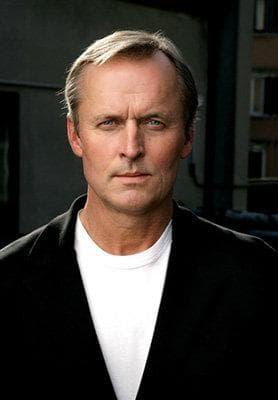
John Grisham is an American author known for his legal thrillers. His notable works include A Time to Kill, The Client, The Pelican Brief, The Runaway Jury, The Rainmaker, and The Chamber. Grisham's novels often explore themes of justice and morality within the legal system.
Similar books
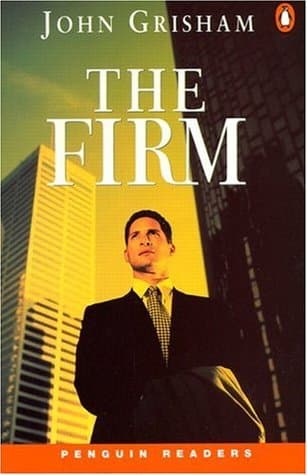
- The Firm
John Grisham
4.1 (43k) average on GoodreadsThrillerAnother early Grisham legal thriller with an innocent protagonist on the run from a powerful, dangerous organization.
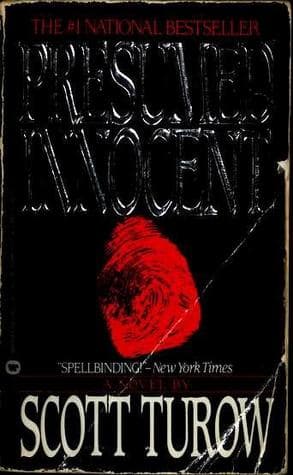
- Presumed Innocent
Scott Turow
4.1 (107k) average on GoodreadsThrillerA legal thriller focused on a complex murder investigation and the unraveling of a conspiracy within the legal system.
- Angels & Demons
Dan Brown
3.9 (2.7M) average on GoodreadsThrillerA Harvard symbologist races through Rome's ancient sites, deciphering cryptic clues to unmask the Illuminati and stop a vengeful plot to destroy the Vatican with a stolen antimatter weapon.
- Gone Girl
Gillian Flynn
4.1 (2.3M) average on GoodreadsThrillerA wife's sudden disappearance on her fifth anniversary reveals a web of lies and psychological warfare, exposing the secrets within a seemingly perfect marriage.
- The Girl on the Train
Paula Hawkins
3.9 (2.1M) average on GoodreadsThrillerA woman’s fascination with a seemingly perfect couple she watches from her daily train commute leads her into a dark investigation when she witnesses something that shatters their idyllic image.
- The Da Vinci Code
Dan Brown
3.9 (1.9M) average on GoodreadsThrillerA symbologist and a cryptologist race through European landmarks, deciphering ancient codes and uncovering a conspiracy that could rewrite the foundations of Christianity.




Enjoyed the summary?
A summary gives you the shape of the book. The book itself has the detail, the examples and the voice.
Find The Pelican Brief on AmazonAs an Amazon Associate, BookBrief earns from qualifying purchases. How we're funded