

Synopsis
Covers the whole plot, including the ending.
- Difficulty
- Medium
- Pacing
- Slow
- Mood
- Philosophical, Detached, Bleak, Reflective
- Read it if
- You are interested in existentialist philosophy, exploring themes of absurdity, alienation, and the human condition, or enjoy a character study of an emotionally detached protagonist.
- Skip it if
- You prefer fast-paced thrillers, clear moral lessons, or emotionally resonant narratives with relatable characters and conventional plot structures.
The Stranger Plot Summary
Covers the whole plot, including the ending.
Maman's Death and the Funeral
The novel begins with Meursault, a young man in Algiers, receiving a telegram about his mother's death at the Marengo old people's home. He takes a two-hour bus ride to the home, where he refuses to see his mother's body. He smokes a cigarette and drinks coffee during the vigil. He notices the heat and his discomfort more than any grief. During the funeral procession the next day, under the hot sun, he watches the other mourners, including the home's director and Thomas Perez, his mother's close friend, but feels no strong emotions. He returns to Algiers, feeling only tired and wanting to sleep.
A Day at the Beach and Marie's Reappearance
The day after his mother's funeral, Meursault goes to the public beach and meets Marie Cardona, a former typist from his office. They swim, flirt, and Marie comes to his apartment that evening. They make love, then go to the cinema to watch a comedy, laughing together. Marie is surprised by his mother's recent death, but Meursault finds her presence comforting. He feels no remorse or grief about his mother's death, simply enjoying the present moment with Marie, despite the recent solemn event.
Raymond Sintès and the Beating
Meursault's neighbor, Raymond Sintès, a man known as a pimp, invites Meursault to dinner. During the meal, Raymond says he found his mistress cheating and then beat her. He asks Meursault to write a letter to his mistress, meant to lure her back so he can publicly humiliate her. Meursault, feeling indifferent and having no strong opinion against it, agrees to write the letter. He feels no moral judgment about Raymond's actions or plans, simply doing what was asked.
The Police and Salamano's Loss
After Raymond sends the letter, his mistress's brother confronts him, leading to a fight where Raymond is hurt. Meursault acts as a witness for Raymond with the police, saying the woman had been unfaithful. Later, Meursault sees his elderly neighbor, Salamano, who often abuses his old dog but is upset when the dog goes missing. Salamano's real grief over his lost pet contrasts with Meursault's lack of emotion about his mother's death, a detail Meursault notes without much thought.
A Weekend at the Beach House
Raymond invites Meursault and Marie to spend Sunday at a beach house owned by his friend, Masson, and his wife. The four swim and have lunch. Afterward, while walking on the beach, they see a group of Arabs, including the brother of Raymond's mistress. A fight starts, and Raymond is cut with a knife. Masson and Meursault help Raymond. The tension stays high, and later, Raymond, with a gun, returns to the beach alone, followed by Meursault.
The Murder on the Beach
Meursault, having taken Raymond's gun to stop more violence, walks back to the beach alone. He sees one of the Arabs, Raymond's mistress's brother, by a spring. The sun is very hot, and Meursault feels overwhelmed by the glare and heat. The Arab moves slightly, and Meursault, feeling a sudden, almost involuntary urge from the oppressive heat and light, fires the gun. He then fires four more shots into the still body. The murder happens without clear motive or emotion from Meursault, mostly because of the physical discomfort of the sun.
Arrest and Imprisonment
Meursault is arrested and jailed for the murder. During questioning, he describes the events factually, without showing remorse or giving a usual motive beyond the sun and his discomfort. He finds prison life boring but manageable, focusing on routines and physical feelings. His lawyer finds him hard to defend because he shows no emotion, especially about his mother's death. Meursault's main concern seems to be losing his freedom and his cigarettes, rather than the seriousness of his crime.
The Trial Begins
The trial begins, attracting public and media attention. The prosecution, led by the zealous Public Prosecutor, quickly moves from the murder itself to Meursault's character, especially his behavior at his mother's funeral. Witnesses, including the director of the old people's home and Céleste, the restaurant owner, are asked about Meursault's lack of tears and his smoking during the vigil. Marie testifies about their relationship, but her testimony is twisted to make Meursault seem like a heartless person, further emphasizing his perceived lack of morality.
The Verdict and Condemnation
The Public Prosecutor gives an emotional closing argument, portraying Meursault as a soulless monster who threatens society. He highlights Meursault's emotional detachment and connects his mother's death to the murder. He argues that Meursault's lack of remorse is more dangerous than the act itself. Meursault's lawyer tries to argue for less severe circumstances, blaming the act on the sun, but his defense is weak against the prosecution's emotional attack. The jury finds Meursault guilty of premeditated murder, and he is sentenced to be publicly guillotined.
The Chaplain's Visit and Meursault's Revelation
A chaplain visits Meursault in his cell several times, urging him to turn to God and find comfort in faith. Meursault consistently refuses, stating his disbelief and his satisfaction with his current life. During the chaplain's last visit, Meursault has an outburst, grabbing the chaplain and angrily rejecting his beliefs. At this moment, Meursault realizes the meaninglessness of life and the 'benign indifference of the universe.' He accepts this truth, finding a strange peace and freedom in it, and wishes for a large, hostile crowd to witness his execution.
Principal Figures
Meursault
Protagonist
An emotionally detached and indifferent clerk in Algiers.
Meursault is a young man who works as a shipping clerk in French Algiers. He is characterized by his profound indifference to conventional social norms, emotional expectations, and the human condition itself. He lives entirely in the present moment, reacting to physical sensations and immediate circumstances rather than deep emotional states or moral considerations. He struggles to understand or conform to societal expectations of grief, love, or remorse, which ultimately leads to his condemnation. His actions are often driven by habit, physical discomfort (like the sun), or a simple lack of opposition.
Relationships: Maman (his mother) (Distant, though he cared for her physically, he showed no emotional grief at her death.); Marie Cardona (Casual lover, providing physical comfort and companionship without deep emotional attachment.); Raymond Sintès (Acquaintance and neighbor, whom Meursault passively aids without judgment.); Salamano (Neighbor, observed with a degree of detached curiosity, noting his grief for his dog.)
Marie Cardona
Supporting
Meursault's casual lover, who attempts to understand him.
Marie is a former typist from Meursault's office with whom he begins a casual relationship the day after his mother's funeral. She is vivacious, enjoys physical intimacy, and seems genuinely fond of Meursault. She is puzzled by his emotional detachment, particularly his lack of grief over his mother's death, but she accepts him for who he is, at least initially. During the trial, she testifies on his behalf, though her words are twisted by the prosecution. She represents a connection to normal human relationships and desires that Meursault experiences on a superficial level.
Relationships: Meursault (Casual lover, she cares for him, but he remains emotionally distant.)
Raymond Sintès
Supporting
Meursault's neighbor, a pimp with a violent streak.
Raymond is a morally ambiguous character, a pimp who lives in Meursault's building. He is prone to violence and seeks revenge against his mistress for her infidelity. He befriends Meursault, perhaps drawn to his lack of judgment, and involves him in his scheme to humiliate his mistress. Raymond is possessive and quick-tempered, but also fiercely loyal to those he considers his friends. He is the catalyst for the events leading to the murder, as he brings Meursault into contact with the Arab brother.
Relationships: Meursault (Neighbor and acquaintance, Meursault passively assists him.)
Salamano
Supporting
Meursault's elderly neighbor, who abuses and then mourns his dog.
Salamano is an old man who lives in Meursault's building and frequently abuses his old, scabby dog. Despite his harsh treatment, he is utterly distraught when the dog goes missing, revealing a deep, if complicated, affection. His overt display of grief over his pet provides a stark contrast to Meursault's lack of emotional response to his mother's death. Salamano's character highlights the complexity of human emotions and the way they are expressed, even in seemingly contradictory ways.
Relationships: Meursault (Neighbor, observed by Meursault with detached interest.); His dog (Abusive yet deeply attached owner.)
The Public Prosecutor
Antagonist
The zealous lawyer who seeks to condemn Meursault.
The Public Prosecutor is the chief legal adversary to Meursault during his trial. He is a passionate and articulate speaker who skillfully manipulates the narrative to portray Meursault as a cold, calculating, and soulless monster. He focuses relentlessly on Meursault's lack of grief at his mother's funeral and his indifferent demeanor, using these as evidence of his moral depravity and a threat to societal order. He represents the societal need for meaning, order, and conventional morality, which Meursault inherently challenges.
Relationships: Meursault (Legal adversary, seeking his condemnation.)
The Chaplain
Supporting
The prison priest who attempts to bring Meursault to God.
The Chaplain visits Meursault in prison after his death sentence, attempting to guide him towards spiritual salvation and a belief in God. He represents religious faith, hope, and the conventional search for meaning in the face of death. His persistent efforts to convert Meursault are met with firm, though initially polite, resistance. His final confrontation with Meursault is the catalyst for Meursault's ultimate philosophical awakening and acceptance of the absurd.
Relationships: Meursault (Spiritual guide, whose attempts to convert Meursault are rejected.)
Celeste
Supporting
The owner of the restaurant Meursault frequents, who testifies for him.
Celeste is the owner of the local restaurant where Meursault frequently eats. He is a simple, kind man who considers Meursault a friend. During the trial, he testifies on Meursault's behalf, trying to convey his positive impression of Meursault as a good man, albeit a quiet one. His testimony, however, is easily dismissed by the prosecution, as he cannot articulate a specific reason for Meursault's goodness beyond an intuitive feeling. He represents the common person's perspective on Meursault, which contrasts sharply with the court's judgment.
Relationships: Meursault (Friend and regular customer.)
Masson
Supporting
Raymond's friend, who owns the beach house.
Masson is Raymond's friend who owns the beach house where Meursault, Marie, and Raymond spend a Sunday. He is a hospitable and good-natured man who enjoys simple pleasures like swimming and eating. He is present during the initial confrontation with the Arabs on the beach and helps Raymond after he is injured. Masson represents a conventional, uncomplicated life, enjoying the present moment without the philosophical depth or emotional detachment of Meursault.
Relationships: Raymond Sintès (Friend.); Meursault (Acquaintance.)
The Examining Magistrate
Mentioned
The judge who tries to understand Meursault's lack of remorse.
The Examining Magistrate is the first legal figure Meursault encounters after his arrest. He is deeply disturbed by Meursault's apparent lack of remorse and his inability to provide a conventional motive for the murder. He tries to appeal to Meursault's religious conscience, even waving a crucifix at him, but Meursault remains unmoved. The Magistrate is baffled and frustrated by Meursault's indifference, viewing it as evidence of a profound moral failing or even inhumanity.
Relationships: Meursault (Interrogator and judge.)
Themes & Insights
The Absurdity of Life
The central idea of 'The Stranger' is the philosophical concept of the absurd: the basic conflict between humanity's search for meaning and the universe's quiet indifference. Meursault shows this absurdity through his emotional detachment and his lack of typical reactions to important life events, like his mother's death or his own murder. His actions often come from immediate physical sensations rather than reason or moral concern. The trial itself highlights this, as society tries to put a rational, moral framework on Meursault's irrational and amoral life. He is condemned not for the murder, but for failing to meet expected emotional and social norms. His final realization, accepting the 'benign indifference of the universe,' is his ultimate embrace of this absurd state.
“For the first time, in that night alive with signs and stars, I opened myself to the gentle indifference of the world.”
Emotional Detachment and Indifference
Meursault's key trait is his deep emotional detachment and indifference to events that would usually cause strong reactions in others. He shows no grief at his mother's funeral, feels no special love for Marie, and commits murder without clear remorse or motive. This indifference extends to his own fate during the trial and his upcoming execution. This theme looks at human emotion and society's demands for people to feel and show certain emotions. Meursault's inability or refusal to show these expected emotions truly separates him from society and leads to his condemnation, more so than the murder itself.
“Maman died today. Or yesterday maybe, I don't know.”
The Injustice of Society and the Legal System
The novel questions the unfair and often contradictory nature of societal judgment and the legal system. Meursault's trial quickly becomes an attack on his character, where he is condemned not for his crime but for failing to meet societal norms of grief and remorse. The prosecution creates a story of a heartless monster, using Meursault's indifference at his mother's funeral as the main proof of his moral failing. This shows how society demands meaning and conventional emotional responses, and how those who differ are quickly judged and punished, even if their actions are not evil but simply indifferent.
“I was accused of burying my mother with the heart of a criminal.”
The Significance of the Physical World
For Meursault, the physical world and its sensory experiences are most important, often outweighing emotional or intellectual thoughts. The intense heat and bright sun are often described as major influences on his mind and actions, especially in the murder scene where the sun's glare is a direct cause. He lives through his senses – the feel of sand, the taste of coffee, Marie's warmth, the discomfort of heat. This focus on the tangible and immediate shows his detachment from abstract ideas like morality, justice, or future results, grounding his life in the present, sensory reality.
“The sun was the same as on the day I'd buried Maman, and like then, my forehead especially was hurting me, all the veins throbbing under the skin.”
Freedom and Acceptance
Despite his imprisonment and upcoming execution, Meursault eventually finds a deep sense of freedom and acceptance. This freedom comes not from escape, but from his final talk with the chaplain and his defiant acceptance of the universe's indifference. By rejecting false hope, religious comfort, and societal expectations, Meursault finds liberation in accepting life's meaninglessness and death's certainty. This acceptance turns his fear into a calm, almost joyful, anticipation of his fate, as he aligns himself with the 'benign indifference' of the world, making him truly free from society's psychological demands.
“For everything to be consummated, for me to feel less alone, I had only to wish that there be a large crowd of spectators the day of my execution and that they greet me with cries of hate.”
Plot Devices & Literary Techniques
First-Person Narration
The story is told entirely from Meursault's perspective.
The novel is narrated in the first person by Meursault, offering direct insight into his thoughts and perceptions. This device is crucial for understanding his emotional detachment and his unique way of experiencing the world. Readers are privy only to what Meursault observes and feels, often presented in a factual, almost journalistic style, devoid of deep emotional introspection or moral judgment. This perspective forces the reader to confront Meursault's indifference directly, mirroring society's struggle to understand him, and highlighting the subjective nature of reality.
Pathetic Fallacy (The Sun)
The extreme heat and sun often reflect or influence Meursault's emotional state and actions.
The relentless heat and blinding sun are recurring motifs and act as a form of pathetic fallacy, reflecting and influencing Meursault's physical and psychological state. The sun is consistently presented as an oppressive force that causes discomfort, irritation, and even exhaustion. It is explicitly cited by Meursault as a primary factor in his decision to shoot the Arab, serving as a physical manifestation of the overwhelming, irrational forces that govern his actions, and underscoring his sensory-driven existence over logical or emotional reasoning.
Juxtaposition
Contrasting elements are placed side-by-side to highlight differences.
Camus frequently uses juxtaposition to emphasize Meursault's unique perspective and the absurd nature of existence. For example, Meursault's indifference at his mother's funeral is sharply contrasted with Salamano's intense grief over his lost dog. Similarly, the mundane details of Meursault's daily life are juxtaposed with the gravity of his crime and trial. This device highlights the disconnect between Meursault's internal world and societal expectations, forcing the reader to recognize the inherent contradictions and arbitrary nature of human values.
Symbolism (The Cross)
The crucifix represents societal and religious attempts to impose meaning.
The crucifix, particularly when brandished by the Examining Magistrate, symbolizes the conventional religious and societal frameworks that attempt to impose meaning, morality, and hope onto human existence. Meursault's repeated rejection of the cross and the chaplain's pleas for faith underscore his defiance against these imposed meanings and his embrace of the absurd. The cross represents the very comfort and structure that Meursault finds meaningless, serving as a physical representation of the forces he ultimately rebels against in his final moments.
The Stranger Quotes
“Mother died today. Or maybe yesterday; I don't know.”
“I looked up at the sky. The sun was almost at its zenith and pressing down on the beach.”
“I had understood that I was guilty.”
“It was then that I realized that you could either shoot or not shoot.”
“I opened myself to the gentle indifference of the world.”
“The sun was like a hammer on my head.”
“I had been right, I was still right, I was always right.”
“To feel it so like myself, at last, to feel so brotherly, I had only to wish that there should be a large crowd of spectators the day of my execution and that they should greet me with cries of hate.”
“I didn't think anything.”
“It occurred to me that I might be able to find some kind of happiness in a routine.”
“What did it matter if Raymond was my pal or Céleste was my friend?”
“I had always wanted to know what it was like to be a bird.”
“Man is mortal, and that may be; but let us die in our own beds, and let us not be killed by the sun.”
Quiz
10 questions on the plot and the characters. Each answer comes with a short explanation.
Question 1
What is Meursault's reaction to his mother's death at the beginning of the novel?
- He weeps uncontrollably and expresses deep sorrow.
- He shows little to no emotion, reflecting on practicalities like the heat.
- He immediately seeks comfort from his girlfriend, Marie.
- He feels a profound sense of relief and liberation.
Show answer
B. He shows little to no emotion, reflecting on practicalities like the heat. Meursault famously feels little emotion at his mother's wake and funeral, observing the heat and the people around him with detachment.
Question 2
Why does Meursault shoot the Arab man on the beach?
- The Arab man attacked him first with a knife.
- He was defending Raymond Sintès from the Arab's brother.
- The intense heat and the sun's glare overwhelmed him.
- He had a long-standing feud with the Arab man.
Show answer
C. The intense heat and the sun's glare overwhelmed him. Meursault repeatedly attributes his actions to the overwhelming heat and the sun's glare, not to any personal animosity or self-defense.
Question 3
What is the primary charge for which Meursault is prosecuted in court?
- Assault and battery.
- Premeditated murder.
- Manslaughter.
- Disturbing the peace.
Show answer
B. Premeditated murder. Despite the circumstances, the prosecution successfully paints Meursault's act as premeditated murder, largely based on his perceived lack of remorse.
Question 4
During his trial, what aspect of Meursault's character does the prosecution heavily emphasize to condemn him?
- His violent tendencies and criminal record.
- His lack of emotional response to his mother's death and general indifference.
- His past conflicts with the Arab community.
- His affair with Marie Cardona.
Show answer
B. His lack of emotional response to his mother's death and general indifference. The prosecution constructs a narrative around Meursault's perceived heartlessness, particularly his behavior at his mother's funeral, to portray him as a monster devoid of human feeling.
Question 5
What is the significance of the crucifix offered to Meursault by the chaplain?
- It symbolizes the chaplain's personal friendship and support for Meursault.
- It represents society's attempt to impose meaning and religious comfort onto Meursault's absurd existence.
- It is a sign of Meursault's eventual conversion to Christianity.
- It is a legal requirement for all prisoners facing execution.
Show answer
B. It represents society's attempt to impose meaning and religious comfort onto Meursault's absurd existence. The crucifix represents the conventional societal and religious attempts to provide comfort and meaning, which Meursault vehemently rejects in his final outburst, affirming his embrace of life's inherent meaninglessness.
Question 6
How does Meursault react to the prospect of his own execution?
- He is filled with terror and tries to appeal his sentence repeatedly.
- He finds peace and acceptance, hoping for a large crowd of spectators to greet him with cries of hate.
- He plans an escape with the help of his friends.
- He expresses deep regret for his actions and seeks forgiveness.
Show answer
B. He finds peace and acceptance, hoping for a large crowd of spectators to greet him with cries of hate. In his final moments, after his confrontation with the chaplain, Meursault fully embraces the 'benign indifference of the universe' and hopes for a hostile crowd at his execution, which would make him feel 'less alone'.
Question 7
What is the philosophical concept most strongly associated with Meursault's character and the novel as a whole?
- Existentialism, emphasizing individual freedom and responsibility.
- Nihilism, the belief that life is without objective meaning, purpose, or intrinsic value.
- Absurdism, the conflict between humanity's search for inherent meaning and the universe's indifference.
- Hedonism, the pursuit of pleasure as the highest good.
Show answer
C. Absurdism, the conflict between humanity's search for inherent meaning and the universe's indifference. Camus's 'The Stranger' is a quintessential exploration of absurdism, portraying Meursault's struggle to find meaning in a world that offers none, and his ultimate acceptance of this absurd condition.
Question 8
How does the sun function as a symbolic element in the novel, particularly in relation to Meursault's actions?
- It represents divine judgment and condemnation.
- It symbolizes clarity and truth, helping Meursault see his path.
- It acts as an oppressive, almost physical force that contributes to his detachment and the murder.
- It signifies warmth, comfort, and the simple pleasures of life.
Show answer
C. It acts as an oppressive, almost physical force that contributes to his detachment and the murder. The sun is consistently depicted as an oppressive, blinding force that contributes to Meursault's discomfort, his lack of feeling, and even directly influences his decision to shoot the Arab.
Question 9
What is the significance of the title 'The Stranger' ('L'Étranger') in relation to Meursault?
- It refers to Meursault being a foreigner in Algeria.
- It highlights Meursault's alienation from societal norms and expectations, making him a stranger to himself and others.
- It suggests that the Arab man he killed was a stranger to him.
- It refers to the unknown witnesses who testify against him.
Show answer
B. It highlights Meursault's alienation from societal norms and expectations, making him a stranger to himself and others. The title emphasizes Meursault's profound alienation – he is a stranger to the conventional emotional and social codes that govern human behavior, and thus a stranger to himself in the eyes of society.
Question 10
In the final chapter, after his argument with the chaplain, what realization does Meursault come to about his own life and the universe?
- He realizes the importance of faith and repentance.
- He understands that he made a mistake in killing the Arab and regrets his indifference.
- He accepts the 'benign indifference of the universe' and finds a sense of peace in the meaninglessness of existence.
- He believes he has been unjustly condemned and plans to fight for his innocence.
Show answer
C. He accepts the 'benign indifference of the universe' and finds a sense of peace in the meaninglessness of existence. Meursault's outburst against the chaplain culminates in his acceptance of the universe's indifference, which paradoxically brings him a profound sense of peace and liberation, making him feel that he is 'happy, and happy again'.
The Stranger FAQ
What is the central premise of 'The Stranger' and who is the protagonist?
'The Stranger' follows the story of Meursault, an indifferent and emotionally detached Frenchman living in Algiers. The narrative begins with his mother's death, which he reacts to with a striking lack of grief, setting the stage for his subsequent actions and philosophical journey.
What significant event leads to Meursault's arrest and trial?
Meursault commits a murder on a beach, shooting an Arab man. This act is seemingly unprovoked and is described as being influenced by the intense heat and the blinding glare of the sun, rather than any personal animosity or premeditation.
How does Meursault's relationship with Marie Cardona evolve throughout the story?
Marie Cardona is a former typist from Meursault's office with whom he begins a casual physical relationship shortly after his mother's funeral. She expresses a desire to marry him, which he agrees to with indifference, seeing no particular reason not to, highlighting his emotional detachment.
What role does Raymond Sintès play in Meursault's life and the events leading to the murder?
Raymond Sintès is Meursault's neighbor, a pimp with a violent streak who enlists Meursault's help to get revenge on his mistress's brother. Meursault's passive agreement to help Raymond ultimately leads him to the beach where he encounters and kills the Arab man.
What is the primary focus of Meursault's trial?
Meursault's trial largely focuses not on the murder itself, but on his perceived lack of remorse and his unconventional behavior, particularly his indifference at his mother's funeral. The prosecutor uses his emotional detachment to paint him as a monstrous, soulless individual.
Are there any subtle indications of Meursault's internal state before his mother's death?
While Meursault appears largely indifferent, his narrative occasionally hints at a deep connection to sensory experiences, like the feel of the sun or the taste of coffee. These moments, though not emotional, suggest a profound engagement with the immediate physical world that contrasts with his social detachment.
What is the significance of the sun and heat in the novel, particularly during the murder scene?
The oppressive heat and blinding sun are recurring motifs, almost acting as a character in themselves. During the murder, Meursault explicitly states that the sun's glare, not personal hatred, was a primary trigger for pulling the trigger, highlighting the irrationality and sensory overload of the moment.
How does the magistrate's attempt to introduce Christianity to Meursault reveal a deeper conflict?
The magistrate's fervent attempts to convert Meursault to Christianity, showing him a crucifix and speaking of God, highlight a clash between Meursault's atheistic worldview and society's need for meaning and redemption. Meursault's refusal to engage with faith deeply frustrates the magistrate.
What is the implied fate of Salamano's dog, and what might it symbolize?
Salamano's abused dog runs away, and despite Salamano's initial harshness, he deeply misses it. The dog's escape and Salamano's grief could symbolize the loss of companionship and the inherent loneliness in the human condition, mirroring Meursault's own isolation.
How does Meursault's emotional flatness reflect a psychological state rather than just a moral failing?
Meursault's consistent lack of emotional response, even to significant life events, can be interpreted as a psychological state of anhedonia or extreme alexithymia. He genuinely doesn't feel the expected emotions, rather than deliberately suppressing them, which society misinterprets as callousness.
What psychological impact does his imprisonment have on Meursault?
Initially, Meursault struggles with the loss of freedom and sensory deprivation in prison. However, he gradually adapts, finding ways to pass the time and even experiencing moments of peace, suggesting a psychological resilience or further detachment from external circumstances.
How does the concept of 'the absurd' manifest in Meursault's psychology?
Meursault embodies the absurd hero by confronting the meaningless of existence without succumbing to despair or seeking false comfort in religion or societal norms. His indifference is a passive acceptance of the universe's silence and humanity's futile search for inherent meaning.
What is the psychological significance of Meursault's final outburst against the chaplain?
Meursault's violent outburst against the chaplain is a pivotal moment where he fully embraces the indifference of the universe and his own impending death. It's a psychological release, a furious affirmation of his worldview and a rejection of any imposed meaning or hope.
Is Meursault a 'bad' person, or simply misunderstood by society?
This is a central debate. Meursault is not inherently malicious, but his inability to conform to societal expectations of emotional display makes him appear morally reprehensible. He acts without malice, yet his actions (like the murder) have severe consequences, forcing readers to question the nature of 'good' and 'bad.'
How does the novel challenge conventional notions of justice?
The trial highlights the absurdity of a justice system that prioritizes emotional performance and societal norms over the actual facts of a crime. Meursault is condemned more for his existential indifference than for the murder itself, exposing the arbitrary nature of 'justice' when applied to an 'outsider.'
What is the ultimate meaning of Meursault's acceptance of death at the end of the novel?
Meursault's acceptance of death, and his wish for a crowd of spectators to greet him with cries of hatred, signifies his profound liberation. He embraces the indifferent universe and his own fate, achieving a unique form of freedom and peace by fully accepting the absurd.
Could Meursault's actions be seen as a form of rebellion against societal hypocrisy?
While Meursault doesn't actively rebel, his very existence and refusal to feign emotions can be interpreted as a passive rebellion. He refuses to participate in the 'game' of social pretense, thus exposing the hypocrisy of those who judge him for not conforming to their expected emotional scripts.
Does the novel offer any hope or resolution for the human condition?
Camus's 'The Stranger' doesn't offer conventional hope or easy resolutions. Instead, it suggests that hope lies in the conscious acceptance of life's inherent meaninglessness and the embrace of one's own freedom in the face of the absurd, finding peace in that very indifference.
About the author

Albert Camus was a French-Algerian philosopher, author, dramatist, and journalist. He was the recipient of the 1957 Nobel Prize in Literature at the age of 44, the second-youngest recipient in history. His works include The Stranger, The Plague, The Myth of Sisyphus, The Fall, and The Rebel.
Similar books
- Nausea
Jean-Paul Sartre
3.9 (86k) average on GoodreadsPhilosophyExplores similar themes of existential angst and meaninglessness through a first-person philosophical narrative.
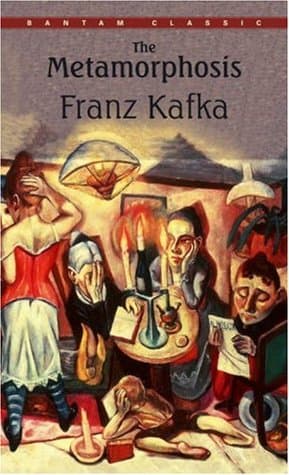
- The Metamorphosis
Franz Kafka
3.8 (643k) average on GoodreadsFantasyFeatures an alienated protagonist facing an absurd and incomprehensible reality, leading to social isolation.
- The Trial
Franz Kafka
4.0 (235k) average on GoodreadsLiterary FictionKafka's "The Trial" shares thematic similarities with "The Stranger" in its depiction of an individual caught in an inexplicable and oppressive legal system. Both Josef K. and Meursault are confronted by a justice system that operates on principles opaque to them, leading to their condemnation. However, the nature of their predicament differs significantly. Kafka's world is characterized by an pervasive, almost dreamlike bureaucracy and an inescapable sense of guilt without a clear crime, reflecting themes of alienation and powerlessness in modern society. Meursault's trial, while absurd in its focus on his emotional state rather than the facts of the murder, is rooted in a more tangible, albeit distorted, reality. Kafka's narrative evokes a sense of nightmarish anxiety and the futility of resistance, whereas Camus's focuses on Meursault's gradual acceptance of the universe's indifference in the face of societal judgment.
- Harry Potter and the Sorcerer's Stone
J.K. Rowling
4.5 (7M) average on GoodreadsFantasyRescued from a miserable life under the stairs, an orphaned boy discovers he's a wizard destined for a magical school, where he uncovers a dangerous secret tied to the dark wizard who murdered his parents.
- The Hunger Games
Suzanne Collins
4.3 (6.4M) average on GoodreadsFantasyIn a future where children fight to the death on live television, Katniss Everdeen volunteers for the arena, turning a death sentence into a fight for survival and a spark of rebellion.
- 1984
George Orwell
4.2 (3.1M) average on GoodreadsPoliticsIn a future where surveillance and thought control are absolute, a man's search for truth clashes with the Party, showing that hope can be a form of rebellion.





Enjoyed the summary?
A summary gives you the shape of the book. The book itself has the detail, the examples and the voice.
Find The Stranger on AmazonAs an Amazon Associate, BookBrief earns from qualifying purchases. How we're funded