
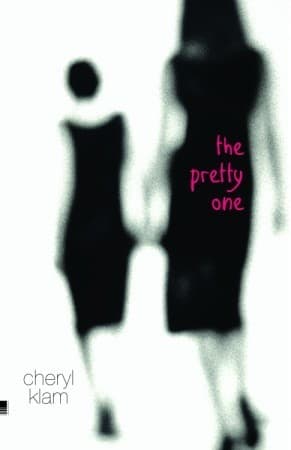
Synopsis
Covers the whole plot, including the ending.
- Difficulty
- Easy
- Pacing
- Moderate
- Mood
- Thought-provoking, Romantic, Emotional, Reflective
- Read it if
- You enjoy YA romance with a focus on self-discovery, identity, and the complexities of sibling relationships.
- Skip it if
- You prefer fantasy or sci-fi, or dislike stories centered around physical transformation and its social implications.
The Pretty One Plot Summary
Covers the whole plot, including the ending.
Life in Lucy's Shadow
Megan Fletcher is a quiet, artistic student at the Chesapeake School for Performing Arts. She specializes in set design with her best friend, Simon. Her older sister, Lucy, is the school's star actress, admired for her beauty and talent. Megan feels invisible and unattractive next to Lucy, often focusing on her work. She longs for the attention Lucy gets, wishing she had her sister's charm and looks. This creates a quiet tension between them, as Megan's insecurity grows with Lucy's successes.
The Fateful Accident
One evening, driving home with Lucy after a school event, they are in a severe car accident. Both sisters go to the hospital. Lucy has injuries, but Megan's are more serious, especially to her face. The accident leaves her with extensive facial trauma, needing complex reconstructive surgery. Doctors are unsure about the damage and her recovery, clouding Megan's future and sense of self. This event changes everything, forcing Megan to face a new reality that challenges her already fragile self-perception.
A New Face Emerges
After weeks of surgeries and recovery, it's time to remove Megan's facial bandages. Her family, especially her parents and Lucy, are worried, expecting the worst. But to everyone's surprise, when the bandages come off, Megan's new face is beautiful, even more so than Lucy's. The surgeons, while repairing the damage, have created a stunningly perfect face. This unexpected change shocks Megan, who looks at her reflection with disbelief, wonder, and a new sense of power she's never felt.
The Shift in Dynamics
Megan's return to the Chesapeake School for Performing Arts brings immediate attention. Students and staff are captivated by her new beauty. The spotlight, once on Lucy, now shines on Megan. She receives compliments, invitations, and romantic interest from popular boys, including Lucy's crush, Ryan. This sudden shift is exciting for Megan, who finally gets the adoration she wanted. However, it creates tension with Lucy, who, for the first time, feels overshadowed and shows signs of jealousy toward her sister's new popularity and beauty.
Simon's Discomfort
While others are amazed by Megan's physical change, her best friend, Simon, reacts differently. He is supportive at first but soon worries about the changes he sees in her. Simon, who valued Megan for her wit, creativity, and real personality, finds her increasingly focused on her looks and the attention they bring. He notices a superficiality in her interactions and a growing distance between them. Simon struggles to see the 'new' Megan as the girl he knew, feeling like he's losing his best friend to vanity and the superficial world she's now in.
A Newfound Confidence, a Growing Rift
Megan enjoys her new confidence and the chances her beauty gives her. She starts auditioning for acting roles, something she never would have done before, and easily gets lead parts. This directly affects Lucy, whose opportunities decrease and whose performances are overshadowed. The sisters' relationship, once marked by Megan's quiet admiration and Lucy's easy dominance, becomes an open rivalry. Lucy's jealousy shows in sharp words and passive-aggressive behavior. Megan, still insecure under her beautiful facade, sometimes uses her new power to subtly assert dominance, widening the gap between them.
The Pressure of Perfection
As Megan's popularity grows, she feels immense pressure to keep her flawless image. She becomes very aware of her appearance, constantly checking her reflection and worrying about any imperfection. The attention, at first exciting, also brings new anxiety. She fears losing her beauty, or that people will see the 'old' Megan underneath. This inner struggle contrasts with her outward confidence, showing that her happiness still depends on outside approval. The burden of being 'the pretty one' starts to weigh on her.
Ryan's Affection
Megan is pursued by Ryan, a popular and charming boy Lucy has had a crush on for years. Despite initial hesitation, Megan is drawn to Ryan's attention and the validation he gives. Their relationship quickly develops, upsetting Lucy and making her resentful. This romance becomes a major point of conflict between the sisters, solidifying Lucy's feelings of betrayal and deepening the rift. Megan, while enjoying the relationship, also feels guilt, knowing she's hurting her sister, but her desire for love and acceptance often wins over her conscience.
A Glimpse of the Past
Despite her outward success and popularity, Megan starts to feel an emptiness inside. The superficiality of her new relationships makes her miss the real connection she had with Simon. She misses their easy friendship, their shared love for set design, and his acceptance of her before her change. She realizes that while she gained popularity, she lost a part of herself and the most important relationship in her life. This growing disappointment makes her question if her new beauty truly brought her happiness or just a different kind of loneliness.
Simon's Confrontation
Unable to stand the distance and changes in Megan, Simon finally confronts her. He expresses his disappointment and sadness about her transformation, both physical and emotional. He tells her she's become someone he barely knows, consumed by her looks and the shallow world of popularity. Simon's honest words break through Megan's facade, making her face the truth about her actions and the sacrifices she made for outside approval. This confrontation is a turning point, making Megan deeply reflect on her choices and the person she has become.
The Truth Beneath the Surface
After Simon's confrontation and her own struggles, Megan has a realization. She understands that her new beauty, while giving her the superficial attention she wanted, has not removed her underlying insecurities. Instead, it introduced new worries and pushed away the people who loved her for who she was, not just her looks. She sees how her chase for popularity hurt Lucy, strained her relationship with Simon, and left her feeling more alone than ever. This moment of clarity starts Megan's path toward self-acceptance and true happiness.
Mending Fences
With her new understanding, Megan tries to fix her broken relationships. She apologizes to Lucy for her insensitive behavior and acknowledges the pain she caused. While the reconciliation isn't immediate, it's a first step toward healing their sisterly bond. Megan also seeks out Simon, expressing her regret and her wish to reconnect as her true self. She begins to focus less on outside approval and more on rekindling genuine connections, prioritizing authenticity over superficial popularity.
Reclaiming Her Identity
Megan steps back from acting and rediscovers her love for set design, working with Simon again. This return to her artistic roots helps her ground herself and reconnect with the talents and interests that define her beyond her looks. She finds joy and fulfillment in her creative work, proving to herself and others that her worth goes beyond her beautiful face. This period is important for Megan's growth, as she actively works to redefine her identity and build self-worth independent of external validation and beauty standards.
A New Kind of Beauty
By the end of the story, Megan has a more mature understanding of beauty. She realizes that true beauty comes from within, from kindness, talent, and real connections, not just physical attractiveness. While her face remains beautiful, she no longer lets it define her. She has learned to appreciate herself for her talents, friendships, and character. Her relationship with Lucy is improving, and her bond with Simon is stronger than ever, built on honesty and mutual respect. Megan ultimately finds lasting confidence rooted in self-acceptance.
Principal Figures
Megan Fletcher
Protagonist
A formerly insecure set designer who becomes stunningly beautiful after an accident, only to learn the true meaning of beauty and self-worth.
Before the accident, Megan is a quiet, artistic, and deeply insecure girl, constantly comparing herself to her popular sister, Lucy. She finds solace and expression in set design, often hiding behind her work. Post-accident, she transforms into an outwardly stunning individual, which initially grants her immense popularity and confidence. However, this newfound beauty also leads her down a path of superficiality and insecurity, as she grapples with the pressures of maintaining her image and the loss of genuine connections. Her journey is one of self-discovery, learning to value her inner qualities over external appearance.
Relationships: Lucy Fletcher (Sisterly rivalry, evolving from admiration to jealousy to eventual reconciliation.); Simon (Best friend and confidante, whose unwavering loyalty and honesty challenge Megan's superficiality.); Ryan (Romantic interest, initially pursued for validation, but ultimately part of Megan's journey of self-discovery.)
Lucy Fletcher
Supporting/Antagonist (initially)
Megan's older sister, a popular and talented actress who struggles with jealousy when Megan's beauty surpasses her own.
Lucy is initially portrayed as the epitome of popularity and beauty at the Chesapeake School for Performing Arts, effortlessly commanding attention and admiration. She is a talented actress, used to being the center of attention. When Megan's transformation eclipses her own beauty and popularity, Lucy experiences deep-seated jealousy and resentment, leading to a strained relationship with her sister. Her character arc involves grappling with her own insecurities and learning to share the spotlight, ultimately leading to a more complex and human understanding of her sister.
Relationships: Megan Fletcher (Sisterly rivalry, initially dominant, then jealous, eventually working towards reconciliation.); Ryan (Long-time crush, whose interest shifts to Megan, intensifying Lucy's jealousy.)
Simon
Supporting
Megan's loyal best friend and fellow set designer, who sees beyond her physical transformation to her true self.
Simon is Megan's best friend and creative partner in set design. He is astute, observant, and values Megan for her intelligence, creativity, and inner qualities, not her appearance. He is initially supportive of Megan's recovery but becomes increasingly uncomfortable and saddened by her superficiality after her transformation. Simon serves as Megan's moral compass and the voice of reason, challenging her to look beyond external validation. His unwavering loyalty and honest critiques are crucial to Megan's journey of self-discovery.
Relationships: Megan Fletcher (Best friend and confidante, his honesty and loyalty are crucial to her growth.)
Ryan
Supporting
A popular boy who shifts his romantic interest from Lucy to the transformed Megan, contributing to the sisters' conflict.
Ryan is a popular and charming student at the performing arts school, initially the object of Lucy's affection. After Megan's transformation, he is captivated by her new beauty and begins a romantic relationship with her. While his interest in Megan is genuine to a degree, it is largely driven by her stunning physical appearance and the social currency it brings. He represents the superficial appeal of Megan's new life and inadvertently fuels the rivalry between the sisters. He is less developed than the other main characters, serving primarily as a catalyst for conflict and Megan's exploration of her new social standing.
Relationships: Megan Fletcher (Romantic interest, driven by her physical beauty.); Lucy Fletcher (Former crush, whose rejection contributes to Lucy's feelings of being overshadowed.)
Megan's Parents
Mentioned
Supportive but somewhat overwhelmed by their daughters' transformations and shifting dynamics.
Megan and Lucy's parents are loving and supportive, though they are often caught in the middle of their daughters' evolving relationship. They are deeply concerned after Megan's accident and relieved by her recovery, but also somewhat bewildered by her dramatic physical change and the subsequent shift in family dynamics. They represent the adult perspective, trying to navigate the complexities of their daughters' teenage lives and the unexpected challenges that arise from Megan's transformation.
Relationships: Megan Fletcher (Loving parents, concerned for her well-being.); Lucy Fletcher (Loving parents, also concerned for her well-being and happiness.)
School Faculty/Students
Mentioned
The collective group at the Chesapeake School who react to Megan's transformation, reflecting societal views on beauty.
This group represents the broader social environment of the performing arts school. Initially, they adore Lucy, but after Megan's accident, they are quick to shift their admiration to her. Their reactions highlight the superficiality of a world that prioritizes physical beauty above all else. They are quick to praise Megan's new looks and offer her opportunities, often overlooking her past talents and personality. Their collective gaze and opinions contribute to Megan's initial embrace of her new identity and the pressure she feels to maintain it.
Themes & Insights
The Nature of Beauty
The novel explores what beauty means, asking if it is only physical or if true beauty comes from within. Megan first believes beauty is external, a source of power, like Lucy. Her own transformation makes her popular, but also shows the superficiality of such attention. Through her journey, Megan learns that outside beauty can be fleeting and isolating. Inner beauty—kindness, talent, authenticity—builds real connections and lasting happiness. This is clear when Simon, her true friend, struggles to connect with her new, more superficial self, making Megan face what truly matters.
“'It wasn't just her face that had changed. It was everything. And sometimes, everything wasn't enough.'”
Identity and Self-Worth
The story looks at how people build their identity and where they get their self-worth. Megan first bases her identity on feeling less beautiful than Lucy, finding comfort in her behind-the-scenes role. After her accident, her identity becomes tied to her stunning new looks. She struggles with the pressure to maintain this new identity, realizing that outside approval is a weak foundation for self-worth. Her story is about separating her self-concept from her physical appearance, understanding that her talents, friendships, and character are her true strengths. Her return to set design with Simon shows her reclaiming an identity based on her innate abilities and passions.
“'She had wanted to be seen, to be noticed. But now that she was, she felt more invisible than ever.'”
Sisterly Rivalry and Love
The complex relationship between Megan and Lucy is a central theme, showing sisterly rivalry, jealousy, and underlying love. Before the accident, Megan admired Lucy, while Lucy enjoyed her status without thinking much about Megan's insecurity. After the transformation, their roles reverse, leading to intense jealousy from Lucy and a test of Megan's new power. The story explores the pain and resentment that competition can cause, but it aims for reconciliation and understanding. Their journey highlights the strong, though sometimes difficult, bond between sisters, and the need for empathy and forgiveness to heal wounds.
“'Before, she had wanted to be Lucy. Now, she just wanted Lucy to be happy for her. But that seemed to be the hardest thing of all.'”
The Illusions of Popularity
The novel examines the appeal and ultimate emptiness of popularity, especially when it's based on superficial traits. Megan's transformation brings her instant popularity, attention from desirable boys like Ryan, and lead roles in school plays. She first enjoys this, believing it will bring her happiness. However, she soon finds that this popularity is unstable and brings immense pressure and loneliness. The 'friends' she gains are often superficial, and she loses her real connection with Simon. This theme shows that true fulfillment comes from authentic relationships and self-acceptance, rather than the fleeting admiration of a crowd.
“'The cheers were loud, but they echoed in an empty space inside her.'”
Plot Devices & Literary Techniques
The Physical Transformation
Megan's accident and subsequent reconstructive surgery, resulting in her becoming more beautiful than before.
This is the central plot device, serving as the catalyst for the entire story. The unexpected outcome of Megan's surgery – her becoming stunningly beautiful – immediately shifts the narrative from a story of recovery to one of identity, social dynamics, and the nature of beauty. It provides a tangible external change that drives all subsequent internal and relational conflicts. This device allows the author to explore the 'what if' scenario of an insecure person suddenly gaining the physical attributes they once envied, and the unforeseen consequences that follow, both positive and negative.
Role Reversal
The shift in social standing and admiration between Megan and Lucy post-accident.
The role reversal is a key structural device. Initially, Lucy is the adored star, and Megan is her overlooked, insecure sister. After Megan's transformation, the spotlight dramatically shifts, making Megan the 'pretty one' and Lucy the one struggling with being overshadowed. This device effectively highlights the theme of sisterly rivalry and the challenges of identity. It forces both characters to experience the other's former position, leading to deeper introspection and eventual growth. It creates immediate conflict and tension, driving much of the interpersonal drama in the story.
The Unwavering Best Friend
Simon's consistent and honest perspective, serving as Megan's moral compass.
Simon functions as a crucial plot device by providing an external, yet deeply personal, perspective that contrasts with the superficiality Megan encounters. His unwavering friendship and his willingness to confront Megan about her changed personality force her to look beyond her new appearance. Simon represents authenticity and unconditional love, anchoring Megan to her true self. His presence and eventual confrontation are essential for Megan's realization that external validation is not true happiness, thus directly influencing her character arc and the resolution of her internal conflict.
The Pretty One Quotes
“He looked at me like I was the prettiest thing he'd ever seen, and for a second, I almost believed him.”
“Sometimes, the hardest person to forgive is yourself.”
“Love isn't about finding someone perfect, it's about seeing the perfection in someone imperfect.”
“The quietest moments often hold the loudest truths.”
“Being brave isn't about not being scared, it's about doing what you have to do even when you are.”
“Some secrets are like heavy stones; you carry them until you can't anymore.”
“He didn't just see me; he saw into me. And that was both terrifying and wonderful.”
“Home wasn't a place; it was the people who made you feel safe enough to be yourself.”
“The future was a blank page, and for the first time, I felt like I could write my own story.”
“Every goodbye is a chance to say hello to something new.”
“It wasn't about being 'the pretty one' anymore. It was about being the real one.”
“Sometimes, the biggest mess is just a prelude to a beautiful beginning.”
“He taught me that scars aren't flaws; they're stories.”
“The truth had a way of setting you free, even if it hurt first.”
“Being loved wasn't about being perfect; it was about being seen, flaws and all, and still being cherished.”
Quiz
10 questions on the plot and the characters. Each answer comes with a short explanation.
Question 1
What was Megan's primary role or interest at the Chesapeake School for Performing Arts before her accident?
- Lead actress in plays
- Stage director
- Designing and creating set designs
- Writing scripts
Show answer
C. Designing and creating set designs Before her accident, Megan was involved in creating set designs with her best friend Simon, preferring to stay out of the spotlight.
Question 2
Who is Lucy in relation to Megan?
- Her best friend
- Her rival at school
- Her older sister
- Her cousin
Show answer
C. Her older sister The description states that Megan had always wanted to be like her sister Lucy, indicating their sibling relationship.
Question 3
What was Lucy's main talent or role at the Chesapeake School for Performing Arts?
- A star actress
- A talented musician
- A gifted painter
- A brilliant writer
Show answer
A. A star actress The text explicitly states that Lucy was 'a star actress with lots of fans'.
Question 4
What event caused Megan's face to become disfigured?
- A fire backstage
- A car accident
- A fall from the stage
- An allergic reaction
Show answer
B. A car accident The description states, 'Megan was in an accident that disfigured her face'. While the specific type isn't detailed, 'accident' is the direct cause.
Question 5
Who is Simon in relation to Megan?
- Her boyfriend
- Her classmate and rival
- Her best friend and collaborator on set designs
- Her drama teacher
Show answer
C. Her best friend and collaborator on set designs Simon is introduced as Megan's 'best friend' with whom she created set designs.
Question 6
What was Megan's initial desire regarding her appearance and social standing compared to Lucy's?
- To be more talented than Lucy in acting
- To be as beautiful, thin, and adored as Lucy
- To surpass Lucy academically
- To be completely different from Lucy in every way
Show answer
B. To be as beautiful, thin, and adored as Lucy The opening sentence clearly states, 'All Megan Fletcher had wanted was to be like her sister Lucy: a beautiful, thin girl whom everyone at the Chesapeake School for Performing Arts worshipped and adored.'
Question 7
What surprising outcome occurred after Megan's plastic surgery?
- She chose to remain hidden, despite her new appearance.
- Her face was restored to exactly how it was before the accident.
- She became even more beautiful than Lucy.
- The surgery was unsuccessful, leaving her disfigured still.
Show answer
C. She became even more beautiful than Lucy. The text reveals the twist: 'Only no one would have thought that when the bandages came off, Megan would be even more beautiful than Lucy...'
Question 8
Before the accident, what was Megan's general attitude towards being noticed at school?
- She actively sought attention and recognition.
- She preferred to be unnoticed and hidden behind the scenes.
- She only wanted attention for her academic achievements.
- She was indifferent to whether she was noticed or not.
Show answer
B. She preferred to be unnoticed and hidden behind the scenes. The text states Megan 'had always been hiding behind the set designs... hoping that no one would notice her.'
Question 9
What is the primary conflict introduced by Megan's transformation in the story's premise?
- Megan's struggle to adjust to her new acting career.
- The external conflict of Megan facing bullying due to her disfigurement.
- The internal and relational conflict arising from Megan surpassing her sister's beauty, after previously desiring to be like her.
- The challenge of Megan mastering new set design techniques.
Show answer
C. The internal and relational conflict arising from Megan surpassing her sister's beauty, after previously desiring to be like her. The core conflict stems from Megan achieving, and then exceeding, the very beauty she envied in Lucy, which will undoubtedly create complex internal and relational dynamics.
Question 10
What aspect of Megan's identity is most directly challenged or altered by the accident and subsequent surgery?
- Her academic performance.
- Her passion for set design.
- Her physical appearance and, by extension, her self-perception and social standing.
- Her friendship with Simon.
Show answer
C. Her physical appearance and, by extension, her self-perception and social standing. The entire premise revolves around her disfigured face being restructured and becoming 'even more beautiful', directly impacting her physical identity and how she is perceived.
The Pretty One FAQ
What is the central premise of 'The Pretty One'?
'The Pretty One' centers on Megan Fletcher, a seemingly invisible set designer at the Chesapeake School for Performing Arts, who idolizes her beautiful, popular sister Lucy. After a tragic accident disfigures Megan's face, she undergoes reconstructive surgery, only to emerge with a beauty surpassing even Lucy's, fundamentally altering her life and relationships.
Who are the main characters in the story?
The main characters are Megan Fletcher, the protagonist who transforms from an overlooked girl to a stunning beauty; Lucy Fletcher, Megan's older sister, a celebrated actress whom Megan initially envies; and Simon, Megan's best friend and fellow set designer, who provides a grounded perspective amidst her changing life.
What kind of accident does Megan experience?
The book describes Megan being involved in an accident that causes significant facial disfigurement, necessitating extensive plastic surgery. While the specific nature of the accident isn't detailed, its impact is profound, leading to her physical transformation.
How does Megan's relationship with her sister Lucy change after the surgery?
After Megan's surgery, their dynamic shifts dramatically. Lucy, once the worshipped and adored sister, finds herself overshadowed by Megan's new beauty, leading to complex feelings of jealousy, resentment, and a re-evaluation of their sibling bond. Megan, in turn, grapples with newfound attention and the impact it has on Lucy.
What role does Simon play in Megan's life, both before and after her transformation?
Simon is Megan's best friend and creative partner in set design, a constant and supportive presence before her accident. After her transformation, Simon represents a link to her past self and offers a perspective that values her inner qualities over her new physical appearance, challenging her to see beyond superficiality.
Are there any subtle hints about Megan's inner strength or potential before her physical transformation?
Yes, Megan's dedication to set design with Simon and her quiet observation of others suggest an artistic sensibility and an introspective nature. While she feels invisible, her commitment to her craft and her deep admiration for Lucy indicate a capacity for passion and loyalty that exists independently of her looks.
Does the book explore the reactions of characters who knew Megan before the accident vs. those who only know her after?
The narrative significantly explores this contrast. Characters like Simon and Lucy struggle to reconcile the 'new' Megan with the 'old,' experiencing confusion and altered perceptions. New acquaintances, however, are drawn solely to her striking beauty, highlighting the superficiality of their initial interactions and Megan's internal conflict.
Is there any symbolism in Megan's work as a set designer?
Megan's work behind the scenes, creating the backdrop for others' performances, directly symbolizes her initial feeling of being overlooked and supporting roles. Her transformation into the 'star' mirrors a shift from being a background character to the center stage of her own life, literally and metaphorically.
How does Megan's self-perception evolve throughout the story, beyond just her physical appearance?
Initially, Megan's self-perception is tied to her perceived lack of beauty and her sister's shadow. After her transformation, she grapples with an identity crisis, learning to distinguish her inner self from her outward beauty. She must redefine her worth and understand that true value extends beyond superficial looks.
What psychological impact does the sudden shift in attention have on Megan?
The sudden surge of attention profoundly impacts Megan, leading to a mix of exhilaration, confusion, and isolation. She experiences the objectification of her new beauty, struggles to trust intentions, and questions whether people genuinely like her or just her appearance, causing anxiety and a re-evaluation of relationships.
How does Lucy's psychological state deteriorate or change as Megan becomes more beautiful?
Lucy, accustomed to being the center of attention, likely experiences a deep blow to her ego and self-worth. Her initial adoration for Megan might morph into intense jealousy and insecurity, potentially leading to resentment, competitive behavior, or even a reclusive withdrawal as her identity as 'the pretty one' is challenged.
Does the book suggest that true beauty lies within, or does it endorse the power of physical attractiveness?
The book explores both, initially presenting the undeniable power of physical attractiveness through Megan's transformation and the resulting societal reactions. However, it ultimately pushes Megan to understand that genuine connections and self-worth stem from her character, intelligence, and kindness, suggesting a deeper, more enduring form of beauty.
Is 'The Pretty One' a cautionary tale about superficiality, or a story of self-discovery?
It functions as both. It's a cautionary tale by showing the isolating and confusing aspects of sudden, unearned physical beauty and the superficiality of those drawn to it. Simultaneously, it's a story of self-discovery as Megan navigates her new reality, learns to value her inner self, and seeks genuine connections beyond her appearance.
How does the author use the setting of a performing arts school to enhance the themes?
The performing arts school setting perfectly amplifies themes of appearance, performance, and identity. It highlights the constant pressure to 'perform' and be seen, contrasting Megan's initial invisibility with Lucy's celebrity status, and later, Megan's struggle to find authenticity amidst her own 'performance' of beauty.
What is the ultimate message about identity that Megan learns by the end of the book?
By the story's conclusion, Megan learns that true identity is not defined by external beauty or others' perceptions, but by one's character, values, and genuine connections. She understands that while beauty can open doors, it's her authentic self that sustains meaningful relationships and provides lasting happiness.
Does the book offer a resolution for Lucy's feelings of displacement and jealousy?
The book likely explores Lucy's struggle with her sister's newfound beauty, potentially showing her coming to terms with her own insecurities and the changing dynamics of their relationship. A full resolution might involve a difficult but necessary reconciliation, where both sisters acknowledge their complex feelings.
Are there any romantic subplots, and how do they interact with Megan's transformation?
Given it's a YA Romance, there are likely romantic subplots. These would be heavily influenced by Megan's transformation, as she navigates suitors drawn to her looks versus those who appreciate her true self, potentially including a deeper connection with Simon or a new love interest who sees beyond the superficial.
What literary devices does the author use to convey Megan's internal struggle?
The author likely employs first-person narration to provide direct insight into Megan's thoughts and emotions, internal monologues reflecting her confusion and self-doubt, and vivid descriptions of her interactions with others that highlight the disparity between her inner and outer worlds.
About the author

Cheryl Klam is the author of the novel "The Pretty One." A writer of fiction, her work often explores complex characters and relationships within compelling narratives. Klam's writing is noted for its insightful prose and engaging storytelling.
Similar books
- Uglies
Scott Westerfeld
3.9 (560k) average on GoodreadsFantasyExplores themes of beauty, societal pressure, and identity through physical transformation.
- Speak
Laurie Halse Anderson
4.0 (485k) average on GoodreadsPsychologyWhile both books deal with a protagonist's internal struggle and transformation, Speak offers a significantly deeper and more psychologically raw exploration of trauma, voice, and identity. Anderson's work delves into the complexities of internal suffering and the arduous path to reclaiming self, making "The Pretty One" seem less nuanced in its portrayal of emotional depth and character introspection. Speak prioritizes internal monologue and the slow, painful process of healing over external plot developments and romantic subplots.
- The Fault in Our Stars
John Green
4.2 (3.6M) average on GoodreadsYoung AdultBoth novels are YA romances, but Green's The Fault in Our Stars tackles profound themes of life, death, and meaning with greater philosophical depth and emotional complexity. While "The Pretty One" uses a physical transformation to explore identity, Green's characters grapple with existential questions against the backdrop of illness, leading to a more mature and emotionally resonant narrative. Green's dialogue and character development are often cited by literary critics (e.g., Dr. Sara K. Day on YA literature) as providing more intellectual engagement and emotional realism than typically found in more trope-driven YA romances like Klam's.
- Harry Potter and the Sorcerer's Stone
J.K. Rowling
4.5 (7M) average on GoodreadsFantasyRescued from a miserable life under the stairs, an orphaned boy discovers he's a wizard destined for a magical school, where he uncovers a dangerous secret tied to the dark wizard who murdered his parents.
- The Hunger Games
Suzanne Collins
4.3 (6.4M) average on GoodreadsFantasyIn a future where children fight to the death on live television, Katniss Everdeen volunteers for the arena, turning a death sentence into a fight for survival and a spark of rebellion.
- To Kill a Mockingbird
Harper Lee
4.3 (4.5M) average on GoodreadsHistorical FictionIn the 1930s Jim Crow South, Harper Lee writes about racial injustice, moral growth, and the quiet courage of a lawyer father, Atticus Finch, as seen through his young daughter's eyes.






Enjoyed the summary?
A summary gives you the shape of the book. The book itself has the detail, the examples and the voice.
Find The Pretty One on AmazonAs an Amazon Associate, BookBrief earns from qualifying purchases. How we're funded