
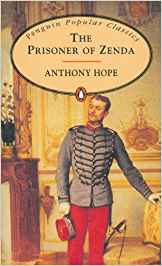
Synopsis
Covers the whole plot, including the ending.
- Difficulty
- Easy
- Pacing
- Fast
- Mood
- Adventurous, Romantic, Heroic, Regal
- Read it if
- You enjoy classic swashbuckling adventures with romance, political intrigue, and a dash of mistaken identity.
- Skip it if
- You prefer modern prose, complex character development, or stories without clear-cut heroic ideals.
The Prisoner of Zenda Plot Summary
Covers the whole plot, including the ending.
Rudolf Rassendyll's European Holiday
Rudolf Rassendyll, a rich English gentleman, decides to vacation in Ruritania, a small European kingdom. His family jokes about his strong resemblance to the Ruritanian royal family, especially King Rudolf Elphberg, who is about to be crowned. Rassendyll's brother, Robert, encourages him to do something with his life, and his sister-in-law, Rose, is interested in the family history. Curious for adventure, Rassendyll travels to Ruritania. He plans to see the coronation and explore the capital, Strelsau. He meets Colonel Sapt and Fritz von Tarlenheim, loyal subjects of the King, who are shocked by his likeness to Rudolf Elphberg, including a shared birthmark.
The King's Abduction
The night before the coronation, Rassendyll, Sapt, and Fritz find King Rudolf Elphberg at a hunting lodge. He had a farewell supper and was drugged by Black Michael, the King's half-brother and rival, who bribed the cook. The King is unconscious and cannot wake for the coronation. Facing a political disaster if the King is absent, Sapt creates a bold plan: Rassendyll, because of his resemblance and shared birthmark, must impersonate the King. Rassendyll, at first unsure, agrees to the dangerous deception, understanding the seriousness of the situation and the threat to Ruritanian stability. The real King is hidden in the lodge while Rassendyll prepares to take his place.
The Coronation and Royal Deception
Rudolf Rassendyll, pretending to be King Rudolf Elphberg, successfully completes the coronation ceremony in Strelsau. His charm and intelligence win over the Ruritanian public, who do not know the truth. He also meets Princess Flavia, the King's cousin and intended bride. Flavia is drawn to this 'new' Rudolf, finding him more engaging and responsible than the King she knew. The deception continues, but Rassendyll gets more involved in Ruritanian court politics. Colonel Sapt and Fritz von Tarlenheim remain his loyal allies, guiding him and keeping the secret, while the real King's fate is still unknown.
The King's Imprisonment in Zenda
After the coronation, Rassendyll, Sapt, and Fritz return to the hunting lodge for the real King. To their dismay, they find that Black Michael's men, led by Rupert of Hentzau, have kidnapped the unconscious King and taken him to Castle of Zenda, Michael's fortress. This confirms Michael's full intention to take the throne. Rassendyll realizes his temporary impersonation must continue to prevent civil war and keep order in Ruritania. The immediate goal becomes rescuing the true King, but the task is dangerous. Michael has loyal henchmen, 'the Six,' guarding his secret and the King.
Life as the 'King' and Growing Affection
Rassendyll fully takes on the role of King Rudolf, living in the palace and handling state affairs. He impresses the court with his new diligence and wisdom, especially Princess Flavia, who falls deeply in love with this changed man. Rassendyll, in turn, develops strong feelings for Flavia, creating a moral problem. He knows he is living a lie and that his love for Flavia is based on deceit. Despite the danger, he enjoys the power and adoration. However, the weight of the secret and the true King's situation constantly remind him of his temporary status and the impossible nature of his growing romance.
Intrigue and Confrontation with Michael's Men
Rassendyll and his allies, Sapt and Fritz, start trying to find and rescue the true King. They go on dangerous scouting missions around Castle of Zenda. During one trip, Rassendyll has a close call with Rupert of Hentzau and his men, showing his courage and sword skills. He learns the King is held in the castle dungeon, likely in poor health from the conditions and Michael's cruel treatment. Michael's mistress, Antoinette de Mauban, a French noblewoman who feels betrayed by Michael, becomes an unwilling informant. She provides important details about the King's imprisonment and Michael's plans.
The Trap at Strelsau
Black Michael, increasingly annoyed by Rassendyll's successful impersonation and public acceptance, plans to expose the fraud. He lures Rassendyll to a remote part of Strelsau, intending to ambush and kill him. Then he plans to show the real King's weakened body to the public, claiming Rassendyll was a usurper. However, Rassendyll, warned by Antoinette de Mauban, is ready. A fierce street fight breaks out between Rassendyll's small group and Michael's men. Rassendyll shows great bravery and fighting skill, barely escaping with his life and further strengthening his reputation among loyalists.
Antoinette de Mauban's Sacrifice
Antoinette de Mauban, disgusted by Michael's cruelty and his plans to marry Flavia, decides to fully help Rassendyll. She sends a letter to Rassendyll, luring Rupert of Hentzau to her residence outside the castle walls, pretending it is a romantic meeting. This gives Rassendyll and his men a short chance to enter the castle. During the fight, Antoinette is killed by Rupert, but her distraction is vital. Her sacrifice gives Rassendyll a chance to get closer to the King, showing the dangerous world of political intrigue and its personal costs.
The Assault on Zenda Castle
With the information gathered and Antoinette's sacrifice, Rassendyll, Sapt, Fritz, and a small group of loyal men launch a full attack on Zenda Castle. They face strong resistance from Michael's 'Six.' During the chaotic battle, several of Michael's men are killed. Rassendyll confronts Black Michael in a dramatic duel, ultimately killing him. Rupert of Hentzau, always a survivor, escapes the castle, but not before severely wounding the real King and injuring Rassendyll. The castle is secured, and the true King Rudolf Elphberg is finally freed, though very ill.
The King's Recovery and Rupert's Escape
The true King Rudolf Elphberg is found in terrible condition, weakened by imprisonment and Rupert's wound. He is carefully moved to a more comfortable spot in the castle and slowly nursed back to health. Rassendyll, also wounded, makes sure the King gets the best care. Rupert of Hentzau, having escaped, is now a dangerous fugitive. His escape adds a lingering threat and shows his cunning and ruthless nature. The immediate crisis of the King's rescue is over, but the long-term effects of the deception and remaining dangers are still present.
The Bitter Farewell
As the true King slowly recovers, Rassendyll must give up his royal role. He has one final, sad talk with Princess Flavia. They admit their deep love for each other, but both know their union is impossible. Flavia, as future Queen, must marry the true King to ensure Ruritanian stability. Rassendyll accepts his duty to step aside and return to his own life. Their farewell is full of sorrow and sacrifice. They choose duty and honor over personal happiness, solidifying Flavia's commitment to her kingdom and Rassendyll's integrity.
Departure and Aftermath
Rudolf Rassendyll makes his final departure from Ruritania, leaving the crown, the country, and the woman he loves. The true King Rudolf Elphberg eventually recovers completely and takes his rightful place on the throne, marrying Princess Flavia. The secret of Rassendyll's impersonation is kept by Sapt, Fritz, and a few others, becoming a legendary tale for those involved. Rassendyll returns to England, a changed man. He receives a rose from Flavia each year, a symbol of their lasting, unfulfilled love. The adventure gave his life purpose but also left him with a sense of loss and a deep understanding of duty and sacrifice.
The Prisoner of Zenda Characters
Rudolf Rassendyll
Protagonist
An English gentleman who impersonates the King of Ruritania.
Rudolf Rassendyll is a charming, intelligent, and somewhat aimless English gentleman of noble birth. He possesses a keen wit, excellent swordsmanship, and a striking physical resemblance to King Rudolf Elphberg of Ruritania. Initially driven by curiosity and a desire for adventure, he quickly adapts to the responsibilities of kingship. He is honorable and courageous, often putting his life at risk for the sake of Ruritania and its true King. His greatest internal struggle is his burgeoning love for Princess Flavia, which conflicts with his duty to the real monarch.
Relationships: King Rudolf Elphberg (Doppelgänger and the person he impersonates and ultimately saves.); Princess Flavia (His true love, whom he cannot be with due to duty.); Colonel Sapt (Loyal confidant and co-conspirator.); Fritz von Tarlenheim (Loyal confidant and co-conspirator.); Black Michael (Antagonistic half-brother of the King and his primary enemy.)
King Rudolf Elphberg
Supporting
The true King of Ruritania, imprisoned by his half-brother.
King Rudolf Elphberg is the rightful monarch of Ruritania. He is known for his dissolute lifestyle, indulgence in pleasure, and a lack of serious commitment to his royal duties. He is physically identical to Rudolf Rassendyll, save for a more dissipated appearance. His weakness and carelessness lead to his abduction by Black Michael, setting the entire plot in motion. He is largely a passive character throughout the main conflict, suffering greatly during his imprisonment, but his existence is the central motivation for Rassendyll's actions.
Relationships: Rudolf Rassendyll (Doppelgänger and his savior.); Princess Flavia (His intended bride and eventual Queen.); Black Michael (His ambitious and treacherous half-brother.); Colonel Sapt (Loyal subject and protector.); Fritz von Tarlenheim (Loyal subject and protector.)
Princess Flavia
Supporting
The King's cousin and intended bride, who falls in love with Rassendyll.
Princess Flavia is a beautiful, noble, and deeply principled woman, destined to become Queen of Ruritania. She is initially engaged to King Rudolf Elphberg but is disheartened by his irresponsible behavior. When Rassendyll impersonates the King, she is captivated by his newfound vigor, intelligence, and kindness, falling deeply in love with him. She represents duty and honor, ultimately choosing the welfare of her country over her personal happiness. Her emotional journey highlights the tragic consequences of Rassendyll's deception.
Relationships: Rudolf Rassendyll (Her true love, tragically separated by circumstance.); King Rudolf Elphberg (Her cousin and intended, later actual, husband.); Black Michael (Her suitor, whom she dislikes and distrusts.)
Colonel Sapt
Supporting
The King's fiercely loyal and pragmatic aide.
Colonel Sapt is an old, grizzled, and utterly devoted Ruritanian nobleman and military officer. He is fiercely loyal to the Elphberg dynasty and possesses a pragmatic, no-nonsense attitude. Sapt is the mastermind behind the impersonation plan and Rassendyll's most trusted advisor. He is often gruff but deeply cares for Rassendyll's safety and the stability of Ruritania. His unwavering dedication and strategic thinking are crucial to the success of the deception and the rescue efforts. He embodies the old guard of Ruritanian loyalty.
Relationships: Rudolf Rassendyll (His trusted confederate and 'acting King'.); King Rudolf Elphberg (His true monarch, whom he protects.); Fritz von Tarlenheim (His fellow loyalist and companion.)
Fritz von Tarlenheim
Supporting
A younger, more sensitive loyalist to the King.
Fritz von Tarlenheim is a younger Ruritanian nobleman, loyal to the King and a close associate of Colonel Sapt. He is more emotional and sensitive than Sapt, often showing distress and worry during their dangerous escapades. Despite his anxieties, Fritz is brave and committed, providing steadfast support to Rassendyll and Sapt. He acts as a foil to Sapt's stoicism, highlighting the human cost and tension of their mission. His loyalty to the crown is unwavering, and he becomes a crucial part of the conspiracy.
Relationships: Rudolf Rassendyll (His trusted confederate and 'acting King'.); King Rudolf Elphberg (His true monarch, whom he protects.); Colonel Sapt (His senior loyalist and companion.)
Duke Michael (Black Michael)
Antagonist
The King's ambitious half-brother and usurper.
Duke Michael, often called 'Black Michael' due to his dark nature, is the King's younger half-brother and the primary antagonist. He is cunning, ruthless, and consumed by ambition to seize the throne. He commands a formidable group of henchmen, 'the Six,' and orchestrates the King's abduction and imprisonment. Michael is driven by a lust for power and a desire to marry Princess Flavia, thereby legitimizing his claim. He is a formidable opponent, whose treachery and cruelty drive much of the plot's conflict and danger.
Relationships: King Rudolf Elphberg (His half-brother and rival for the throne.); Princess Flavia (His desired bride, whom he seeks to marry for power.); Rupert of Hentzau (His most dangerous and rebellious henchman.); Antoinette de Mauban (His mistress, whom he later betrays.)
Rupert of Hentzau
Antagonist
Black Michael's most dangerous and charismatic henchman.
Rupert of Hentzau is a young, handsome, and utterly amoral Ruritanian nobleman, serving as Black Michael's most formidable henchman. He is a skilled swordsman, cunning, and enjoys violence and intrigue. Rupert is fiercely independent and often acts on his own impulses, even defying Michael at times. His charisma and reckless bravery make him a particularly dangerous adversary for Rassendyll. He embodies a wild, untamed evil, often driven by a sense of sport and self-preservation rather than loyalty.
Relationships: Black Michael (His employer, whom he ultimately betrays and disrespects.); Rudolf Rassendyll (His primary adversary and a worthy opponent.); Antoinette de Mauban (He has a flirtatious and manipulative relationship with her.)
Antoinette de Mauban
Supporting
A French noblewoman and Black Michael's disillusioned mistress.
Antoinette de Mauban is a beautiful and sophisticated French noblewoman, initially Black Michael's mistress. She is intelligent and observant, but her loyalty to Michael wanes as she witnesses his cruelty and ambition, particularly his desire to marry Princess Flavia. Feeling betrayed and seeking revenge, she becomes a crucial, albeit reluctant, informant for Rassendyll. Her courage and ultimate sacrifice are pivotal in aiding the rescue of the King, highlighting the complex loyalties and personal stakes within the Ruritanian court.
Relationships: Black Michael (Her former lover, whom she betrays due to his cruelty.); Rudolf Rassendyll (An ally whom she helps out of a sense of justice and revenge.); Rupert of Hentzau (She uses him in a trap, leading to her death.)
The Prisoner of Zenda Themes
Duty vs. Desire
This theme is central to Rassendyll's inner struggle and Flavia's final choice. Rassendyll, despite falling in love with Flavia and enjoying kingship, understands his duty to restore the true King and keep Ruritania stable. He must put aside his personal desires for love and power. Similarly, Flavia, though she loves Rassendyll deeply, chooses her duty to her country and marries the true King. This theme highlights that true nobility means sacrificing for the greater good, even if it costs personal happiness. This is clear in Rassendyll's sad farewell and his yearly rose from Flavia.
“I must go. It is my duty. And yours is here.”
Appearance vs. Reality
The novel's entire plot relies on the physical resemblance between Rudolf Rassendyll and King Rudolf Elphberg. This allows Rassendyll to impersonate the King, fooling the whole nation, including Princess Flavia. The theme explores how easily appearances can be manipulated and how hard it is to know the truth. Rassendyll's 'performance' as King is so good that he is seen as a better monarch than the real one. This questions whether leadership is about substance or outward show. The deception shows how superficial public perception can be and the hidden truths beneath the surface.
“He was the King, and I was but a shadow; yet the shadow had for a moment usurped the substance.”
Heroism and Self-Sacrifice
Rassendyll's journey explores heroism. He starts on an adventure but quickly takes on huge responsibility. His decision to impersonate the King, his repeated acts of courage against Black Michael and Rupert of Hentzau, and his ultimate surrender of the crown and the woman he loves, all show his deep capacity for self-sacrifice. He risks his life not for personal gain, but for a foreign kingdom's stability and its true monarch's honor. This theme also appears in loyal characters like Colonel Sapt, Fritz, and even Antoinette de Mauban, who gives her life.
“God save the King! No, God save Ruritania!”
The Nature of Kingship and Leadership
The novel subtly questions what makes a good king. The real King Rudolf Elphberg is irresponsible, while Rassendyll, an outsider, proves to be a capable, courageous, and loved leader during his impersonation. Rassendyll's actions and decisions, driven by duty and genuine care for the people, contrast sharply with the true King's character. This suggests that true leadership comes from character, integrity, and a willingness to serve, not just birthright. The story implies that Ruritania was better served by the 'imposter' than by its rightful, but flawed, monarch.
“It's a fine thing to be a King, but it's a finer thing to be a man.”
Political Intrigue and Power Struggles
Ruritania is a land full of political schemes, mainly driven by Black Michael's ambition to take the throne from his half-brother. The story is full of plots, counter-plots, assassinations, and betrayals. This shows how dangerous and cutthroat power struggles are. Michael's network of 'the Six' and his use of deception highlight the cunning needed to navigate such a world. The kingdom's stability constantly hangs in the balance, depending on Rassendyll's successful deception and the defeat of Michael's group. This shows how fragile political order can be when faced with ruthless ambition.
“In Ruritania, treachery is a fashion, and loyalty a forgotten art.”
Plot Devices & Literary Techniques
The Doppelgänger
The uncanny physical resemblance between Rudolf Rassendyll and King Rudolf Elphberg.
The doppelgänger motif is the foundational plot device, enabling the entire narrative. Rassendyll's exact likeness to King Rudolf Elphberg, including a distinctive family birthmark, makes the impersonation plausible. This device creates immediate conflict and sets the stage for the deception, allowing an ordinary man to step into extraordinary circumstances. It also raises questions about identity, fate, and the superficiality of appearance in determining one's role and destiny. Without this uncanny resemblance, the plot could not exist, and the central themes of duty and sacrifice would lack their dramatic catalyst.
The MacGuffin (The Imprisoned King)
The true King's abduction and imprisonment, serving as the central objective.
The imprisoned King Rudolf Elphberg functions as a classic MacGuffin, a plot device that drives the story forward without necessarily being the central focus of the audience's emotional investment. While Rassendyll's primary goal is to rescue the King, the audience's attention is often drawn to Rassendyll's personal struggles, his love for Flavia, and his confrontations with Michael and Rupert. The King's rescue is the overarching mission, but the journey to achieve it, and the moral dilemmas encountered along the way, are where the true narrative weight lies. His state of being provides constant urgency and motivation.
The Secret Identity
Rudolf Rassendyll's assumption and maintenance of the King's persona.
Rassendyll's secret identity as the 'acting King' is a crucial plot device that generates suspense, dramatic irony, and moral conflict. The constant threat of exposure adds tension to every interaction he has, particularly with Princess Flavia and Black Michael. This device allows for the exploration of themes like appearance versus reality and the burdens of leadership. The maintenance of this secret requires cleverness, courage, and the unwavering loyalty of Sapt and Fritz, making the deception a high-stakes gamble that shapes Rassendyll's character and actions throughout the story.
The Loyal Companions (Sapt and Fritz)
The steadfast support and guidance provided by Colonel Sapt and Fritz von Tarlenheim.
Colonel Sapt and Fritz von Tarlenheim serve as essential plot devices, acting as Rassendyll's guides, protectors, and moral compasses within the unfamiliar Ruritanian court. Their unwavering loyalty to the true King, and by extension to Rassendyll as the 'acting King,' is crucial for the success of the deception and the rescue mission. They provide exposition, strategic advice, and often rescue Rassendyll from perilous situations. Their presence grounds Rassendyll's fantastical adventure in a sense of duty and provides emotional support, highlighting the importance of trust and camaraderie in times of crisis.
The Prisoner of Zenda Quotes
“I looked at myself in the glass, and I was, to a hair, the living image of the King.”
“He who rides a tiger is afraid to dismount.”
“Honour has its claims, and the King's honour is the honour of the kingdom.”
“She was a woman to die for, and a woman to kill for.”
“If I am to be a sham King, I'll be a good sham King.”
“God save the King!”
“The game is played out, and I must go.”
“We sell our souls for a price, but the price is not always in coin.”
“The King may do no wrong, but he can suffer much.”
“A man who has two lives to live is a man who knows how to live neither.”
“The path of honour is often a lonely one.”
“It is not every day that a man has the chance to be a king, even for a few weeks.”
“The heart of a woman is a great mystery, and her love is a greater.”
“We are but puppets in the hands of fate.”
Quiz
10 questions on the plot and the characters. Each answer comes with a short explanation.
Question 1
Why is Rudolf Rassendyll initially in Ruritania?
- He is there to meet his long-lost relatives.
- He is on a hunting trip in the Ruritanian forests.
- He is on holiday, curious to see the coronation of the new King, to whom he bears a resemblance.
- He was invited by Duke Michael to participate in courtly events.
Show answer
C. He is on holiday, curious to see the coronation of the new King, to whom he bears a resemblance. Rassendyll, aware of a distant family connection to the Elphbergs and his own resemblance to the King, travels to Ruritania out of curiosity to witness the coronation.
Question 2
What is the primary reason Rudolf Rassendyll is persuaded to impersonate King Rudolf Elphberg?
- He wants to usurp the throne for himself.
- Duke Michael blackmails him into doing so.
- The King has been drugged and kidnapped, and his impersonation is crucial for the coronation and political stability.
- Princess Flavia requests his help to avoid a scandal.
Show answer
C. The King has been drugged and kidnapped, and his impersonation is crucial for the coronation and political stability. The King is drugged by Duke Michael's agents and then kidnapped, forcing Rassendyll to impersonate him to prevent a crisis and ensure the coronation proceeds, thereby thwarting Michael's plans.
Question 3
Who is Black Michael?
- The loyal captain of the Ruritanian Royal Guard.
- The King's half-brother and rival for the throne.
- A foreign ambassador trying to destabilize Ruritania.
- The chief minister of Ruritania.
Show answer
B. The King's half-brother and rival for the throne. Black Michael is Rudolf Elphberg's half-brother and the primary antagonist, seeking to seize the throne for himself.
Question 4
Where is the real King Rudolf Elphberg imprisoned after his kidnapping?
- The Royal Palace in Strelsau.
- The Castle of Zenda.
- A remote hunting lodge in the mountains.
- A dungeon beneath Duke Michael's city residence.
Show answer
B. The Castle of Zenda. The real King is taken to the Castle of Zenda, Duke Michael's stronghold, where he is held captive.
Question 5
What is the primary internal conflict Rudolf Rassendyll faces during his impersonation?
- His desire to return to his comfortable life in London versus his duty to Ruritania.
- His growing love for Princess Flavia versus his loyalty to the rightful King.
- His fear of Rupert of Hentzau versus his courage to fight him.
- His struggle to remember the details of the King's life.
Show answer
B. His growing love for Princess Flavia versus his loyalty to the rightful King. Rassendyll's most significant internal struggle is the development of genuine affection and love for Princess Flavia, which conflicts with his understanding that she is destined for the real King and his duty to restore the rightful monarch.
Question 6
Who is Rupert of Hentzau?
- A loyal supporter of the King.
- A member of the Ruritanian Parliament.
- One of Duke Michael's most dangerous and charismatic henchmen.
- Princess Flavia's personal guard.
Show answer
C. One of Duke Michael's most dangerous and charismatic henchmen. Rupert of Hentzau is a prominent villain, one of Michael's most skilled and ruthless henchmen, known for his cunning and swordsmanship.
Question 7
What physical characteristic distinguishes the Elphberg family, including both Rudolfs?
- A distinctive birthmark on their left hand.
- Bright red hair.
- Unusually tall stature.
- A specific family crest tattooed on their arm.
Show answer
B. Bright red hair. Both Rudolf Rassendyll and King Rudolf Elphberg share the distinctive red hair characteristic of the Elphberg family, which is key to Rassendyll's ability to impersonate the King.
Question 8
What significant event occurs during the rescue attempt of the King at the Castle of Zenda that complicates the situation for Rassendyll?
- Princess Flavia is also captured and held hostage.
- Duke Michael is killed, and Rupert of Hentzau escapes.
- The King dies from his captivity, leaving Rassendyll as the de facto ruler.
- Rassendyll's true identity is publicly revealed to the Ruritanian people.
Show answer
B. Duke Michael is killed, and Rupert of Hentzau escapes. During the final confrontation at Zenda, Duke Michael is killed, but Rupert of Hentzau manages to escape, posing a continued threat and leaving an unresolved loose end for the characters.
Question 9
What is the ultimate decision Rudolf Rassendyll makes regarding Princess Flavia and the throne?
- He marries Flavia and usurps the throne, becoming the new King.
- He convinces Flavia to elope with him to England.
- He restores the real King and, despite their love, bids farewell to Flavia, returning to his own life.
- He stays in Ruritania as a trusted advisor to the King and Flavia.
Show answer
C. He restores the real King and, despite their love, bids farewell to Flavia, returning to his own life. Despite their deep mutual affection, Rassendyll understands his duty and the political necessity. He restores the rightful King, makes his farewells to Flavia, and returns to England, choosing honor and duty over personal desire.
Question 10
Which character is responsible for initially drugging the King, leading to Rassendyll's impersonation?
- Rupert of Hentzau.
- Madame de Mauban.
- Josef, the King's servant, under Michael's orders.
- Duke Michael's servant, Max Holf, under Michael's direct command.
Show answer
D. Duke Michael's servant, Max Holf, under Michael's direct command. Max Holf, one of Duke Michael's trusted men, is the one who poisons the King's wine at the hunting lodge, making him unconscious and enabling his kidnapping.
The Prisoner of Zenda FAQ
What is the central premise that sets Rudolf Rassendyll's adventure in motion?
Rudolf Rassendyll, an English gentleman, travels to Ruritania and discovers his uncanny resemblance to Rudolf Elphberg, the soon-to-be-crowned King. This striking likeness becomes crucial when King Elphberg is drugged and kidnapped by his half-brother, Duke Michael, forcing Rassendyll to impersonate him to prevent a political crisis and ensure the coronation proceeds.
Who are the primary antagonists in the story, and what are their motivations?
The main antagonists are Duke Michael, the King's ambitious half-brother, who seeks the throne for himself, and his ruthless henchman, Rupert of Hentzau. Michael's motivation is pure power and the crown, while Rupert, though loyal to Michael, is primarily driven by a love for mischief, violence, and self-preservation, often acting on his own treacherous impulses.
What is the significance of the Castle of Zenda in the plot?
The Castle of Zenda is where the real King Rudolf Elphberg is secretly imprisoned by Duke Michael. It serves as the primary location for the climactic rescue attempts and confrontations, becoming a symbol of the King's captivity and the challenge Rassendyll faces in restoring the legitimate monarch to power.
How does the romance between Rudolf Rassendyll and Princess Flavia develop?
Their romance develops under the guise of Rassendyll's impersonation of the King. Flavia, initially wary, grows to admire and love the 'King' for his changed demeanor, courage, and genuine affection, unaware of his true identity. Their bond deepens through shared peril and mutual respect, creating a profound emotional dilemma for both.
What is the ultimate resolution of Rassendyll's impersonation and his relationship with Flavia?
Rassendyll successfully rescues the true King and restores him to the throne, but he must then relinquish his royal facade and his love for Flavia. He returns to England, leaving Flavia to marry the true King, securing Ruritania's stability. They maintain a bittersweet, distant connection, sacrificing personal happiness for duty.
Are there any subtle hints about Rassendyll's distant familial connection to the Elphbergs early in the story?
Yes, a key hidden detail is mentioned early on: Rassendyll's great-great-grandmother had an affair with a Rudolf Elphberg several generations prior. This ancestral connection explains his striking resemblance to the royal family, providing a genetic basis for the central plot device.
How does Colonel Sapt's character evolve, particularly regarding his loyalty?
Sapt, initially fiercely loyal to the true King and suspicious of Rassendyll, gradually shifts his allegiance and trust. He comes to respect Rassendyll's courage and dedication to duty, becoming his most steadfast ally in the rescue mission, even prioritizing the stability of Ruritania over the letter of the law.
What is the significance of Rupert of Hentzau's repeated escapes?
Rupert's repeated escapes, even after being cornered or wounded, highlight his cunning, ruthlessness, and almost supernatural survival skills. It also serves to prolong the sense of danger and uncertainty, ensuring he remains a formidable and unpredictable threat until the very end, underscoring his chaotic nature.
How does the novel subtly comment on the nature of kingship and the 'divine right'?
The novel suggests that true kingship is less about birthright and more about character, courage, and the ability to inspire loyalty and govern justly. Rassendyll, an imposter, embodies these qualities far more effectively than the real King, challenging the notion that lineage alone qualifies one to rule.
What moral dilemma does Rassendyll face throughout his impersonation?
Rassendyll grapples with the profound moral dilemma of maintaining a deception for the greater good while simultaneously falling in love with the woman destined for the real King. He constantly balances his duty to Ruritania and the Elphberg dynasty against his burgeoning personal desires and affections.
How does Princess Flavia's perception of the 'King' change, and what does this reveal about her character?
Flavia initially sees the King as a somewhat dissolute and irresponsible figure, but under Rassendyll's impersonation, she perceives him as brave, honorable, and deeply caring. This transformation reveals her capacity for deep love and loyalty, and her ability to recognize and value genuine character over superficial appearances or reputation.
Discuss the psychological impact of the 'double life' on Rassendyll.
Rassendyll experiences immense psychological strain from constantly maintaining his royal facade, fearing exposure, and suppressing his true identity. He lives in a state of heightened vigilance and emotional conflict, torn between the person he is pretending to be and his true self, especially in his interactions with Flavia.
What is the significance of the ending, where Rassendyll and Flavia choose duty over personal happiness?
The ending reinforces the theme of duty and sacrifice, particularly in the context of monarchy and national stability. Their choice emphasizes that the well-being of the kingdom and the upholding of the legitimate succession outweigh individual desires, cementing the novel's romantic ideal of selflessness.
Could the true King Rudolf Elphberg have been a better ruler if he hadn't been kidnapped?
It's debatable. The novel portrays the true King as somewhat weak, pleasure-loving, and less decisive than Rassendyll. While his kidnapping certainly prevented him from maturing, the narrative implies he lacked the inherent strength of character Rassendyll possessed, suggesting he might never have been as effective a monarch.
How does the novel explore themes of identity and self-discovery through Rassendyll's journey?
Rassendyll, initially an aimless gentleman, discovers his own courage, leadership abilities, and sense of purpose through his impersonation. He grapples with the question of whether his actions as 'King' define his true self, ultimately realizing his inherent capacity for heroism, even if he must return to his ordinary life.
Is the novel's depiction of Ruritanian politics realistic, or more of a romanticized backdrop?
The Ruritanian political landscape is largely a romanticized backdrop, serving primarily to facilitate the adventure and romance rather than offer a deep, realistic political analysis. Its intrigues and power struggles are heightened for dramatic effect, creating a suitable stage for swashbuckling heroism and moral dilemmas.
How does the character of Antoinette de Mauban contribute to the plot and themes?
Antoinette de Mauban, Duke Michael's mistress, is crucial for both plot advancement and thematic complexity. Her jealousy and desire for revenge against Michael lead her to betray him, providing vital information to Rassendyll. She introduces a layer of moral ambiguity and tragic love, highlighting the dangerous world of Ruritanian court intrigue.
What role do the 'Six Men' (Michael's henchmen) play beyond simple villainy?
Michael's 'Six Men' are more than just thugs; they represent varying degrees of loyalty, ruthlessness, and moral decay, with figures like Rupert of Hentzau standing out. They underscore the pervasive corruption and danger surrounding Michael, and their individual fates often serve as benchmarks for the progression of the conflict.
About the author

Anthony Hope was an English novelist best known for his adventure novels, particularly 'The Prisoner of Zenda' (1894) and its sequel 'The Heart of Princess Osra' (1896). His works often featured dashing heroes, romantic entanglements, and exotic settings, establishing him as a prominent figure in the late Victorian and Edwardian adventure fiction genre.
Similar books
- Scaramouche
Rafael Sabatini
4.1 (8k) average on GoodreadsHistorical FictionFeatures a dashing hero, sword fights, and a romantic plot set against a historical backdrop.
- The Three Musketeers
Alexandre Dumas
4.1 (274k) average on GoodreadsHistorical FictionA classic adventure with camaraderie, political maneuvering, and heroic deeds.
- A Tale of Two Cities
Charles Dickens
3.9 (810k) average on GoodreadsHistorical FictionInvolves mistaken identity and heroic sacrifice for love amidst historical upheaval.
- Harry Potter and the Sorcerer's Stone
J.K. Rowling
4.5 (7M) average on GoodreadsFantasyRescued from a miserable life under the stairs, an orphaned boy discovers he's a wizard destined for a magical school, where he uncovers a dangerous secret tied to the dark wizard who murdered his parents.
- The Hunger Games
Suzanne Collins
4.3 (6.4M) average on GoodreadsFantasyIn a future where children fight to the death on live television, Katniss Everdeen volunteers for the arena, turning a death sentence into a fight for survival and a spark of rebellion.
- 1984
George Orwell
4.2 (3.1M) average on GoodreadsPoliticsIn a future where surveillance and thought control are absolute, a man's search for truth clashes with the Party, showing that hope can be a form of rebellion.




Enjoyed the summary?
A summary gives you the shape of the book. The book itself has the detail, the examples and the voice.
Find The Prisoner of Zenda on AmazonAs an Amazon Associate, BookBrief earns from qualifying purchases. How we're funded