
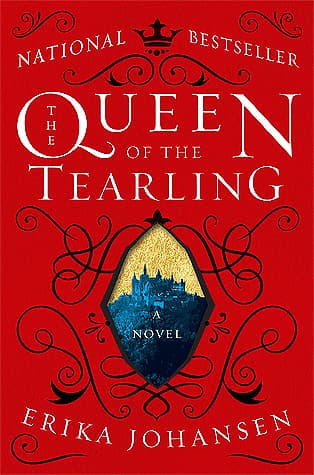
Synopsis
Covers the whole plot, including the ending.
- Difficulty
- Medium
- Pacing
- Moderate
- Mood
- Gritty, Political, Determined, Adventurous
- Read it if
- You enjoy a strong female protagonist who leads with intellect and moral conviction, political intrigue, and a world with a unique blend of medieval fantasy and subtle post-apocalyptic elements.
- Skip it if
- You prefer high-magic fantasy with extensive world-building upfront, or are looking for a light, romantic read.
The Queen of the Tearling Plot Summary
Covers the whole plot, including the ending.
The Journey to the Keep
On her nineteenth birthday, Princess Kelsea Raleigh Glynn, who has lived in exile with her adoptive parents, Carlin and Bartholemew, is retrieved by the Queen's Guard. Lazarus, stoic and formidable, leads the Guard as they escort Kelsea from the secluded cottage in the deep woods towards the Keep, the capital of the Tearling. Kelsea, an avid reader with a plain appearance and a strong will, faces the immense responsibility ahead. She wears the Tearling sapphire, a magical jewel from her mother, Queen Elyssa, which pulses with an unknown power. The journey is dangerous, as Mortmesne assassins, in crimson capes, try to kill her.
Assassination Attempts and the Queen's Guard
During the journey to the Keep, Kelsea and the Queen's Guard are ambushed several times by Mortmesne assassins. These encounters are brutal and show the ruthlessness of their enemies and the Guard's dedication. Kelsea sees the violence and sacrifice needed to protect her, strengthening her resolve. She begins to bond with Lazarus and other Guard members, including the skilled Pen. These early battles force Kelsea to confront her dangerous position and the constant threat from the Red Queen of Mortmesne, who clearly does not want Kelsea to take the throne.
Arrival at the Keep and Initial Disillusionment
Upon arriving at the Keep, Kelsea finds a shocking reality. The palace is run-down, the court is corrupt, and her people are poor and oppressed. Her uncle William, the regent, is weak, and powerful noble houses, like the Rowes and Dempseys, compete for power. Kelsea is disappointed by her kingdom's state, which is far from the idealized version she read about. She quickly realizes her mother, Queen Elyssa, was not a beloved ruler but a vain and incompetent one, whose policies led to the kingdom's decline and its tribute payments to Mortmesne.
The Coronation and First Decrees
Kelsea is crowned Queen of the Tearling in a grand but unsettling ceremony. Immediately after, she shocks the court by issuing several radical decrees. Her most significant act is ending the annual 'Crossing,' the tribute of young Tearling citizens sent as slaves to Mortmesne. This bold move, a direct defiance of the Red Queen, sends shockwaves through the kingdom. She also begins to address corruption in her court and the dire economic situation of her people, showing a fierce determination to rule justly, even if it means making powerful enemies.
Confronting Corruption and the Church
Kelsea faces much resistance from the established powers within the Keep, especially the corrupt nobles and the influential Church of the Celestial Mother. She discovers that the Church, led by Father Tyler, has been involved in the kingdom's decline and profits from the people's suffering. Kelsea confronts Father Tyler, challenging his authority and exposing the Church's hypocrisy. She also works to expose and punish corrupt officials, including William, her uncle and former regent, and the Dempseys, who profit from illegal activities and the Crossing.
The Fetch and the Red Queen's Vengeance
Kelsea's decision to end the Crossing immediately draws the Red Queen of Mortmesne's wrath. In retaliation for the defiance and the loss of her tribute, the Red Queen sends her feared assassin, The Fetch. The Fetch is a shadowy figure, rumored to have dark magic, and is known for never failing a mission. His arrival in the Tearling means a new level of danger for Kelsea, as the Red Queen intends to make an example of the young queen and reassert her dominance over the Tearling.
The Tearling Sapphire's Power
As Kelsea faces increasing threats, she begins to understand the true power of the Tearling sapphire she wears. The jewel reacts to her emotions and intentions, glowing and sometimes projecting a protective force. It seems to have a mind of its own, occasionally guiding her or warning her of danger. She experiences visions and flashes of memory that are not her own, hinting at a deeper connection to the sapphire's past and the origins of the Tearling itself. This growing connection to the sapphire is both a source of strength and a mystery she must unravel.
The Capture of the Crossing Ships
Despite Kelsea's decree, the last ships carrying Tearling citizens for the Crossing have already departed. Determined to save them, Kelsea, along with Lazarus and a contingent of her Guard, embarks on a mission to intercept the ships before they reach Mortmesne. This operation is dangerous, requiring Kelsea to make difficult tactical decisions and put herself in direct danger. The successful rescue of these citizens is a victory, establishing Kelsea as a courageous and compassionate ruler, but further infuriating the Red Queen.
Confrontation with the Fetch
The Fetch finally acts, orchestrating an attack that targets Kelsea directly. This confrontation tests Kelsea's resolve and the Guard's loyalty. The Fetch shows his formidable skills and dark magic, pushing Kelsea and her protectors to their limits. During the battle, Kelsea's connection to the Tearling sapphire intensifies, allowing her to use its power in new ways. The encounter leaves a lasting impact on Kelsea, showing the personal cost of her defiance and the immense power of her enemies.
The Discovery of the Crossing's Origin
Through her investigations and the visions from the sapphire, Kelsea begins to understand the truth behind the Crossing. She learns that the tribute was not merely a political concession but a consequence of a pact made by her ancestors, and that the Red Queen uses the Tearling citizens for dark, magical purposes, draining their life force. This revelation deepens Kelsea's commitment to protecting her people and fuels her hatred for the Red Queen, changing her fight from one of justice to one of survival against an unspeakable evil.
The Red Queen's Demand and Kelsea's Sacrifice
The Red Queen, enraged by Kelsea's continued defiance and the loss of her tribute, sends an ultimatum: surrender Kelsea, or Mortmesne will attack the Tearling. This puts Kelsea in an impossible position, forcing her to choose between her own life and the safety of her kingdom. She struggles with this decision, seeking counsel from Lazarus and her trusted advisors. The Red Queen's demand is a strategic move to break Kelsea's will and reclaim her power over the Tearling.
The Alliance and the Path Forward
Facing the Red Queen's threat, Kelsea makes a difficult and strategic decision, choosing a path that requires personal sacrifice but offers a chance for her kingdom's survival. She forms an alliance with Mace, a former soldier and rebel leader, using his knowledge of Mortmesne and his military experience. This alliance shows Kelsea's growth as a leader, willing to put aside personal prejudices for the greater good. The book ends with Kelsea preparing for the inevitable war with Mortmesne, having solidified her position as queen and earned her people's loyalty, but facing an uncertain and dangerous future.
Principal Figures
Kelsea Raleigh Glynn
Protagonist
The nineteen-year-old exiled princess who becomes Queen of the Tearling.
Kelsea is initially a sheltered, bookish, and somewhat insecure young woman, raised in isolation. She is plain in appearance, contrasting sharply with her beautiful but vain mother. Driven by a strong sense of justice and duty, Kelsea demonstrates remarkable courage and an unyielding will to protect her people. She is intelligent, observant, and quickly adapts to the harsh realities of leadership, often surprising her advisors with her shrewdness and determination. She is deeply moral and struggles with the compromises and violence inherent in ruling.
Relationships: Lazarus (Mentor and protector, her most trusted Guard captain.); Carlin and Bartholemew (Adoptive parents who raised her in exile.); The Red Queen (Primary antagonist, mortal enemy.); William (Her uncle and corrupt regent.); Elyssa (Her biological mother, whose legacy she struggles to overcome.)
Lazarus
Supporting
The enigmatic and fiercely loyal captain of the Queen's Guard.
Lazarus is a formidable warrior, intensely loyal to the Tearling crown and, specifically, to Kelsea. He is stoic, disciplined, and rarely shows emotion, making him seem cold at times, but his dedication to Kelsea's safety is absolute. He serves as Kelsea's primary protector, advisor, and a moral compass, often challenging her decisions but always ultimately supporting her. He is a skilled strategist and fighter, deeply respected by his men and feared by enemies. His past remains largely a mystery, hinting at a complex history and motivations.
Relationships: Kelsea Raleigh Glynn (Protector, advisor, and loyal captain.); Pen (Fellow member of the Queen's Guard, subordinate.)
The Red Queen
Antagonist
The powerful and malevolent sorceress ruling Mortmesne.
The Red Queen is the tyrannical ruler of the neighboring kingdom of Mortmesne, a powerful sorceress who uses dark blood magic. She is ruthless, cruel, and driven by a desire for power and control. She has held the Tearling in thrall for generations through the annual 'Crossing,' a tribute of young citizens. Her motivations are deeply sinister, tied to her dark magical practices. She is an omnipresent threat throughout the story, often acting through her agents like The Fetch, and her power seems almost limitless, making her a truly formidable adversary.
Relationships: Kelsea Raleigh Glynn (Mortal enemy, target of her wrath.); The Fetch (Her deadliest assassin and enforcer.)
The Fetch
Antagonist
The Red Queen's most feared and magically enhanced assassin.
The Fetch is a shadowy and highly effective assassin in the employ of the Red Queen. He is rumored to possess dark magic, making him exceptionally dangerous and seemingly unstoppable. He operates with ruthless efficiency, always completing his missions. His presence in the Tearling signifies the Red Queen's escalating vengeance against Kelsea. The Fetch is a mysterious figure, devoid of apparent emotion, and represents the ultimate physical threat Kelsea and her Guard must overcome. He embodies the Red Queen's raw power and willingness to use extreme violence.
Relationships: The Red Queen (Master and employer.); Kelsea Raleigh Glynn (Target.)
Pen
Supporting
A skilled and observant member of the Queen's Guard.
Pen is one of Kelsea's personal Guardsmen, a quiet but highly skilled warrior. He is observant, perceptive, and deeply loyal to Kelsea. He often serves as Kelsea's eyes and ears among the Guard and in the palace, noticing details others miss. Despite his reserved nature, he is fiercely protective of the Queen and proves to be a valuable asset in both combat and intelligence gathering. He represents the dedication and integrity within the ranks of the Queen's Guard.
Relationships: Kelsea Raleigh Glynn (Protector and loyal Guardsman.); Lazarus (Fellow member of the Queen's Guard.)
William
Supporting
Kelsea's uncle and the corrupt former regent of the Tearling.
William is Kelsea's uncle and served as regent during her exile. He is weak-willed, easily manipulated, and deeply corrupt, having allowed the Tearling to fall into disrepair and profiting from the tribute to Mortmesne. He represents the entrenched corruption Kelsea must fight within her own court. He is a symbol of the old, decadent regime Kelsea seeks to dismantle, and his actions highlight the dire state of the kingdom before her arrival.
Relationships: Kelsea Raleigh Glynn (Niece, whom he tried to undermine.); Elyssa (Sister.)
Father Tyler
Supporting
The manipulative and corrupt leader of the Church of the Celestial Mother.
Father Tyler is a powerful and influential figure within the Tearling, leading the Church of the Celestial Mother. He is cunning, manipulative, and deeply entrenched in the kingdom's corruption, using his religious authority for personal gain and to maintain the status quo. He initially attempts to undermine Kelsea's authority, viewing her as a threat to his power. He represents the hypocrisy and moral decay that Kelsea must confront within the kingdom's institutions.
Relationships: Kelsea Raleigh Glynn (Opponent to her reforms and a challenge to his authority.)
Mace
Supporting
A former soldier and leader of a rebel group in the Tearling.
Mace is a hardened and pragmatic former soldier who leads a group of rebels operating outside the traditional power structures of the Tearling. He is cynical but deeply cares about the plight of his people. Initially wary of Kelsea, he gradually comes to respect her determination and principles. He possesses valuable knowledge of Mortmesne and military tactics, making him a crucial ally as Kelsea prepares for the inevitable conflict with the Red Queen. He represents the grassroots resistance against oppression.
Relationships: Kelsea Raleigh Glynn (Initially skeptical, later a crucial ally.)
Themes & Insights
The Burden of Leadership and Moral Compromise
Kelsea's journey highlights the weight of ruling and the difficult moral choices leaders face. She grapples with the need for violence, the reality of corruption, and the sacrifices required to protect her people. Her decision to end the Crossing, while morally right, immediately puts her kingdom in danger, forcing her to consider the practical consequences of her ideals. The theme explores whether a just ruler can maintain principles in a brutal world, as Kelsea must learn to be both compassionate and ruthless to survive.
“A ruler's life was not her own. Her body, her heart, her will—all belonged to the Tearling.”
Corruption vs. Justice
The novel portrays the widespread corruption within the Tearling's government, nobility, and even the Church. Kelsea's reign is defined by her fight against this systemic decay. From her uncle William's profiteering to Father Tyler's manipulation of faith, Kelsea confronts various forms of injustice. Her actions to end the Crossing and redistribute wealth show her commitment to justice, even when it means challenging deeply entrenched powers and risking her life. This theme shows the difficulty of reforming a broken system.
“Justice was a cold, hard thing, and sometimes it made you feel like a monster.”
Identity and Self-Discovery
Kelsea starts as an insecure, bookish girl who feels unprepared for her role. Her journey is one of self-discovery, as she sheds her youthful naivety and embraces her inner strength and developing magical abilities. She grapples with the legacy of her mother, Queen Elyssa, and strives to create her own identity as a ruler. The Tearling sapphire plays a role in this, revealing its power and Kelsea's connection to her lineage and the kingdom's history, shaping her understanding of who she is.
“She was not her mother. She was not the girl who had left the cottage. She was Queen.”
The Power of Sacrifice
Sacrifice is a recurring idea, from the annual 'Crossing' of citizens to Mortmesne, to Kelsea's personal sacrifices as queen. The Queen's Guard members sacrifice their lives to protect Kelsea, and Kelsea herself continually puts her kingdom's well-being above her own desires and safety. The book's climax involves Kelsea making a personal sacrifice to save her people from the Red Queen's wrath, showing that true leadership often demands personal cost for the greater good.
“The crown was not a gift, but a burden. A burden she would carry, even if it broke her.”
Plot Devices & Literary Techniques
The Tearling Sapphire
A magical jewel Kelsea wears that grants her power and visions.
The Tearling Sapphire is a central magical artifact that Kelsea wears around her neck. It is inherited from her mother and is a source of immense, yet largely unknown, power. The sapphire glows in response to Kelsea's emotions and intentions, provides protective bursts of energy, and grants her visions of the past and future. It serves as a mystical link to the Tearling's history and a growing source of Kelsea's own strength, hinting at a deeper connection between the monarch and the land. Its powers are gradually revealed throughout the story, often in moments of dire need.
The Crossing
The annual tribute of Tearling citizens sent as slaves to Mortmesne.
The Crossing is a brutal and long-standing tradition where the Tearling sends a quota of its young citizens as slaves to Mortmesne each year. This plot device establishes the Red Queen's tyrannical power over the Tearling and the depths of the previous regime's corruption and weakness. Kelsea's immediate and unwavering decision to end the Crossing serves as her defining act as queen, setting the main conflict in motion and demonstrating her moral conviction. It also reveals the horrifying, magical purpose behind the tribute, deepening the stakes.
The Queen's Guard
Kelsea's loyal cadre of protectors, led by Lazarus.
The Queen's Guard is Kelsea's personal escort and military force, responsible for her protection and the enforcement of her will. Led by the formidable Lazarus, the Guard represents loyalty, discipline, and the potential for honorable service within the Tearling. They are instrumental in Kelsea's survival during her perilous journey to the Keep and her subsequent reign. Their unwavering dedication provides a contrast to the corrupt court and offers Kelsea her first true allies, solidifying the idea that her power rests on the loyalty of her people.
Visions and Prophecy
Flashes of past and future events experienced by Kelsea, often through the sapphire.
Kelsea experiences vivid visions, sometimes through the Tearling sapphire, which provide glimpses into the Tearling's past, particularly the time of the Crossing and the origin of the Red Queen's power, as well as potential future events. These visions serve to unravel the mysteries of the kingdom's history, provide crucial information about her enemies, and hint at the deeper magical underpinnings of her world. They also act as a form of foreshadowing, building suspense and indicating the larger destiny that Kelsea is stepping into.
The Queen of the Tearling Quotes
“Power is not a thing to be hoarded. It is a thing to be shared.”
“Mercy is a strength, not a weakness.”
“A good ruler does not seek to be loved, but to be just.”
“The past is a stubborn thing. It refuses to stay buried.”
“Fear is a poison, and it spreads quickly.”
“Sometimes, the only way to save a thing is to break it first.”
“Knowledge is a weapon, and ignorance is a shield for the powerful.”
“There are no easy choices, only necessary ones.”
“A crown is a heavy burden, even for those born to it.”
“The truth has a way of revealing itself, no matter how deeply it's hidden.”
“Loyalty is earned, not given.”
“Even a monster can be broken, if you find the right leverage.”
“Beauty is a fleeting thing, but character endures.”
“To lead, one must first be willing to serve.”
Quiz
10 questions on the plot and the characters. Each answer comes with a short explanation.
Question 1
On what significant birthday does Princess Kelsea Raleigh Glynn begin her journey back to the castle to claim her throne?
- Sixteenth
- Eighteenth
- Nineteenth
- Twenty-first
Show answer
C. Nineteenth The synopsis explicitly states that Kelsea sets out on her journey on her nineteenth birthday.
Question 2
What is the name of the powerful magical jewel that Kelsea wears around her neck?
- The Mortmesne Ruby
- The Tearling Sapphire
- The Glynn Emerald
- The Raleigh Diamond
Show answer
B. The Tearling Sapphire Kelsea wears 'the Tearling sapphire, a jewel of immense magical power' around her neck.
Question 3
Who leads the Queen's Guard, the cadre of knights accompanying Kelsea?
- The Red Queen
- Lazarus
- Elyssa
- Glynn
Show answer
B. Lazarus The synopsis states that the Queen's Guard is 'led by the enigmatic and dedicated Lazarus'.
Question 4
How does Kelsea's personality and appearance generally compare to her mother, Queen Elyssa?
- Kelsea is vain and frivolous, much like her mother.
- Kelsea is plain and serious, loving books, unlike her vain and frivolous mother.
- Kelsea is a skilled sorceress, a trait inherited from her mother.
- Kelsea is an experienced ruler, having learned much from her mother's reign.
Show answer
B. Kelsea is plain and serious, loving books, unlike her vain and frivolous mother. The text describes Kelsea as 'Plain and serious, a girl who loves books and learning', bearing 'little resemblance to her mother, the vain and frivolous Queen Elyssa'.
Question 5
What is the primary motivation of the Red Queen, the tyrannical ruler of Mortmesne?
- To form an alliance with the Tearling.
- To reclaim the Tearling Sapphire for herself.
- To destroy Kelsea and her kingdom.
- To establish trade routes with the Tearling.
Show answer
C. To destroy Kelsea and her kingdom. The Red Queen is described as 'a powerful and malevolent sorceress determined to destroy her' and her 'vengeance' is unleashed upon Kelsea's kingdom.
Question 6
What types of threats does Kelsea face from her enemies, according to the synopsis?
- Only political intrigue and gossip.
- Crimson-caped assassins and the darkest blood magic.
- Economic sanctions and trade blockades.
- Inexperienced guards and internal rebellions.
Show answer
B. Crimson-caped assassins and the darkest blood magic. The synopsis details that enemies will use 'every weapon—from crimson-caped assassins to the darkest blood magic—to prevent her from wearing the crown'.
Question 7
Despite her royal blood, what is Kelsea's initial internal perception of herself as she begins her reign?
- A confident and experienced leader.
- A powerful sorceress ready to use her magic.
- An insecure girl, a child called upon to lead.
- A legend in the making, fully aware of her destiny.
Show answer
C. An insecure girl, a child called upon to lead. The text states, 'Despite her royal blood, Kelsea feels like nothing so much as an insecure girl, a child called upon to lead a people and a kingdom about which she knows almost nothing.'
Question 8
What is the ultimate consequence of Kelsea's 'act of singular daring' in the capital?
- It leads to an immediate peace treaty with Mortmesne.
- It solidifies her popularity among the aristocracy.
- It throws her kingdom into tumult and unleashes the Red Queen's vengeance.
- It reveals a secret alliance between her mother and the Red Queen.
Show answer
C. It throws her kingdom into tumult and unleashes the Red Queen's vengeance. The synopsis reveals that 'An act of singular daring will throw Kelsea’s kingdom into tumult, unleashing the vengeance of the tyrannical ruler of neighboring Mortmesne: the Red Queen'.
Question 9
What overarching theme is highlighted by Kelsea's journey and her internal struggles, as described in the synopsis?
- The inevitability of fate and destiny.
- The corrupting influence of power.
- Self-discovery and the trial by fire of leadership.
- The importance of inherited wealth and status.
Show answer
C. Self-discovery and the trial by fire of leadership. The synopsis concludes by stating her quest is 'a wondrous journey of self-discovery and a trial by fire that will make her a legend', emphasizing these themes.
Question 10
What specific feature is mentioned that will be included in the physical book design to enhance the reader's experience?
- A bonus short story.
- A glossary of terms and characters.
- Illustrated endpapers, a map, and a ribbon marker.
- Author's notes and an interview.
Show answer
C. Illustrated endpapers, a map, and a ribbon marker. The description states, 'This book will be a beautifully designed package with illustrated endpapers, a map of the Tearling, and a ribbon marker.'
The Queen of the Tearling FAQ
What is the central conflict Kelsea must face upon returning to the Tearling?
Kelsea's immediate challenge is to reclaim her throne in a corrupt kingdom, navigate treacherous politics, and stop the annual tribute of Tearling citizens to the neighboring kingdom of Mortmesne, ruled by the malevolent Red Queen. This tribute has been a long-standing, horrifying tradition that Kelsea immediately seeks to end.
Who is Lazarus and what is his role in Kelsea's journey?
Lazarus is the stoic and highly skilled leader of the Queen's Guard, tasked with protecting Kelsea during her perilous journey from the Keep to the Tearling capital. He serves as her primary protector and a trusted, if initially distant, advisor, crucial in training her and ensuring her survival against numerous assassination attempts.
How does Kelsea differ from her mother, Queen Elyssa, and why is this significant?
Kelsea is depicted as plain, serious, and scholarly, prioritizing her people's welfare and justice, contrasting sharply with her mother, Queen Elyssa, who was known for her vanity, frivolity, and neglect of the kingdom. This difference is significant because Kelsea actively works to undo her mother's harmful policies and establish a more just rule.
What is the significance of the Tearling sapphire that Kelsea wears?
The Tearling sapphire is a powerful magical artifact Kelsea wears around her neck, providing her with a connection to an ancient magic and enhancing her abilities. It serves as a source of protection and power, crucial in moments of extreme danger, though Kelsea doesn't fully understand its capabilities initially.
What is the 'tribute' Kelsea learns about, and how does she react to it?
The tribute is an annual offering of Tearling citizens, often young and healthy, to the Red Queen of Mortmesne, where they face a terrible, unknown fate. Kelsea is horrified by this practice and, despite the immense political and military risks, immediately vows to end it, marking her first major act of defiance against Mortmesne.
What is the true nature of the Red Queen's power, beyond mere sorcery?
The Red Queen's power is deeply rooted in dark blood magic, requiring the sacrifice of others to maintain her youth and strength. Her sorcery is not simply spell-casting but a sinister, life-draining force that makes her a formidable and terrifying antagonist, explaining her need for the Tearling tribute.
Are there any hints about Kelsea's father or her true lineage in this first book?
While Kelsea's father is not explicitly revealed in this first book, there are subtle hints and mysteries surrounding her birth and origins. The narrative suggests a deeper, perhaps magical, connection to her heritage that goes beyond Queen Elyssa, implying her father might be someone of significant power or hidden identity.
What role does the 'Crossing' play in the history of the Tearling, and how might it relate to Kelsea?
The 'Crossing' refers to a historical event where people from another world or time arrived in the Tearling, establishing the current society and its rules. While not fully explored, this event hints at a complex backstory for the Tearling and its magic, potentially connecting to Kelsea's unique abilities and the sapphire's power.
How does Kelsea's isolation during her upbringing impact her initial approach to ruling?
Kelsea's isolated upbringing, away from court politics and the realities of her kingdom, initially leaves her naive and unprepared for the corruption she encounters. However, this isolation also fostered her strong moral compass and love for books, allowing her to approach problems with an unjaded perspective and a desire for justice.
Discuss Kelsea's internal struggle between her personal insecurities and her public role as queen.
Kelsea constantly battles her deep insecurities about her appearance, inexperience, and perceived unworthiness, contrasting with the strength and authority she must project as queen. This internal conflict is a central theme, as she learns to reconcile her private doubts with the demands of her public duty, often drawing strength from her conviction to protect her people.
How does Kelsea's relationship with the Queen's Guard evolve, particularly with Lazarus?
Initially, Kelsea views the Guard with suspicion due to their past loyalty to her mother, and Lazarus is a distant, imposing figure. As they face dangers together, mutual trust and respect develop, with Lazarus becoming her most steadfast protector and advisor, and Kelsea earning the Guard's loyalty through her courage and integrity.
What psychological impact does witnessing the kingdom's corruption have on Kelsea?
Witnessing the widespread corruption, poverty, and brutality under her mother's reign deeply scars Kelsea, fueling her determination to reform the kingdom. It forces her to confront harsh realities, hardening her resolve but also burdening her with the immense responsibility of rectifying years of injustice, leading to moments of profound despair and fierce anger.
Is Kelsea's decision to end the tribute to Mortmesne a sign of strength or naivety?
Kelsea's decision to immediately end the tribute is a complex mix of both. It demonstrates immense moral strength and unwavering conviction, but also a degree of political naivety given the immediate and severe repercussions it triggers from the Red Queen. It's a defining act that asserts her rule but plunges the kingdom into direct conflict.
How does the book challenge traditional fantasy tropes, particularly regarding its protagonist?
The book challenges traditional fantasy tropes by presenting a protagonist, Kelsea, who is explicitly described as plain, serious, and bookish, rather than conventionally beautiful or naturally charismatic. Her strength comes from her intellect, moral compass, and fierce determination, subverting expectations of a 'chosen one' princess.
What is the thematic significance of Kelsea's love for books and learning in a world seemingly dominated by magic and warfare?
Kelsea's love for books and learning is thematically significant as it represents her reliance on knowledge, history, and reasoned thought over brute force or inherited privilege. It underscores her intellectual approach to governance and problem-solving, suggesting that wisdom and understanding are as crucial as magic or military might in leadership.
Does the novel suggest that Kelsea's strict moral code is sustainable for a ruler in a morally ambiguous world?
The novel explores whether Kelsea's strict moral code is sustainable, showing her frequently grappling with difficult choices that test her principles, such as her decision regarding the Duke of the Reach. While her code drives her actions, the narrative hints at the compromises and harsh realities that may challenge its absolute application in a corrupt world.
How does the depiction of the Tearling's society reflect or comment on real-world issues?
The depiction of the Tearling's corrupt aristocracy, widespread poverty, and the horrifying tribute system offers a commentary on issues such as social inequality, political corruption, and exploitation of the vulnerable. It mirrors real-world concerns about leadership accountability and the consequences of moral decay within a society.
About the author

Erika Johansen is an author known for her work in fiction, particularly the fantasy genre. She is the creator of "The Queen of the Tearling" and its sequel, "The Invasion of the Tearling," which explore themes of power and identity in a richly imagined world.
Similar books
- Graceling
Kristin Cashore
4.1 (385k) average on GoodreadsFantasyFeatures a strong, independent female protagonist with a unique power navigating a politically complex world.
- Throne of Glass
Sarah J. Maas
4.2 (596k) average on GoodreadsFantasyFollows a young woman fighting for her place and uncovering conspiracies in a royal court.
- Uprooted
Naomi Novik
4.1 (167k) average on GoodreadsFantasyOffers a fairytale-like atmosphere with a powerful, mysterious sorceress antagonist and a young woman discovering her own magic.
- Harry Potter and the Sorcerer's Stone
J.K. Rowling
4.5 (7M) average on GoodreadsFantasyRescued from a miserable life under the stairs, an orphaned boy discovers he's a wizard destined for a magical school, where he uncovers a dangerous secret tied to the dark wizard who murdered his parents.
- The Hunger Games
Suzanne Collins
4.3 (6.4M) average on GoodreadsFantasyIn a future where children fight to the death on live television, Katniss Everdeen volunteers for the arena, turning a death sentence into a fight for survival and a spark of rebellion.
- 1984
George Orwell
4.2 (3.1M) average on GoodreadsPoliticsIn a future where surveillance and thought control are absolute, a man's search for truth clashes with the Party, showing that hope can be a form of rebellion.





Enjoyed the summary?
A summary gives you the shape of the book. The book itself has the detail, the examples and the voice.
Find The Queen of the Tearling on AmazonAs an Amazon Associate, BookBrief earns from qualifying purchases. How we're funded