
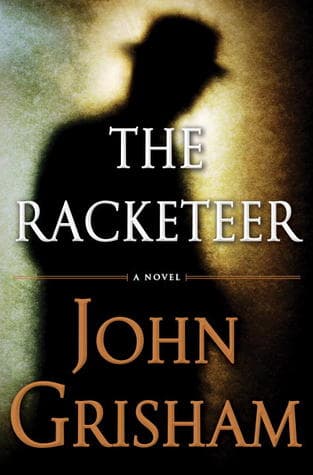
Synopsis
Covers the whole plot, including the ending.
- Difficulty
- Easy
- Pacing
- Fast
- Mood
- Suspenseful, Clever, Manipulative, Intriguing
- Read it if
- You enjoy intricate legal thrillers with a clever, morally ambiguous protagonist who outsmarts everyone, featuring twists and turns until the very end.
- Skip it if
- You prefer straightforward crime narratives where justice is served conventionally, or if you dislike stories where the 'bad guy' seemingly gets away with it.
The Racketeer Plot Summary
Covers the whole plot, including the ending.
The Murder of Judge Fawcett
Federal Judge Raymond Fawcett and his young secretary, Jeanette, are found dead in his secluded lakeside cabin in Virginia. There is no sign of forced entry or struggle, suggesting they knew their killer. The most puzzling detail is that Judge Fawcett's secure, advanced safe, known to hold sensitive materials, has been expertly opened and completely emptied. The FBI, led by Agent Hamner, begins an intense investigation, but they are puzzled by the lack of clues and a clear motive. The missing contents of the safe are particularly concerning, indicating a carefully planned operation rather than random violence. This shocking event sets up a complex legal thriller.
Malcolm Bannister's Offer
Malcolm Bannister, a former attorney serving time in a federal prison camp in Frostburg, Maryland, for a minor racketeering charge he denies, sees the news of Judge Fawcett's murder. He immediately contacts the FBI, specifically Agent Hamner, claiming he knows who killed the judge and why. His offer comes with a major condition: he will only share this information if he is immediately released from prison and enters the witness protection program. Malcolm's unexpected claim adds an intriguing element to the stalled investigation, forcing the FBI to consider a convicted felon's credibility, especially one who wants a deal.
Negotiating Freedom
After much internal debate and pressure from above, the FBI, desperate for a breakthrough, agrees to Malcolm Bannister's terms. He is released from prison and placed under the protection of the U.S. Marshals Service, entering the witness protection program as 'Max Reed.' Malcolm begins to give the FBI carefully chosen information, describing a large, hidden network of corrupt judges, lawyers, and criminals. He explains a system where judges are blackmailed and compromised, implying that Fawcett's murder was a result of his involvement or knowledge of this network. The FBI is cautious but interested in the details Malcolm provides.
The Blackmail Network
Malcolm describes a sophisticated blackmail operation run by a mysterious person known only as 'The Racketeer.' This operation involves finding federal judges with hidden secrets – such as gambling debts, affairs, or illegal financial dealings – and then using this information to force them to rule favorably for certain clients or leak sensitive information. He explains that Judge Fawcett was likely part of this network, either as a victim or a participant, and his murder was a consequence of his connection. Malcolm's story is detailed and convincing, making the FBI believe they are close to uncovering a major judicial corruption scandal. He mentions how information was kept in secure places, including safes.
The Missing Documents
Following Malcolm's guidance, the FBI eventually concludes that the contents of Judge Fawcett's safe were not just valuables but important documents and evidence related to the blackmail scheme. These documents, Malcolm suggests, contained incriminating information on other judges and powerful figures, making their disappearance a national security issue. The FBI realizes the killer's main motive was to get these documents, not just to commit murder. This revelation strengthens their belief in Malcolm's story and increases their efforts to find 'The Racketeer' and recover the missing evidence, unaware that they are being skillfully manipulated.
A New Identity and a New Life
As 'Max Reed,' Malcolm moves to a quiet, average town, given a new identity, financial support, and a fresh start. He keeps in touch with Agent Hamner, giving her just enough information to keep the investigation going and to confirm his perceived value. Malcolm uses this time to carefully plan his next moves, showing his careful and strategic thinking. He appears to be a model informant, but underneath, he is planning a much more elaborate scheme, using his new freedom and resources to carry out his true agenda, which is slowly unfolding, unknown to the authorities.
The Truth Revealed: Malcolm's Master Plan
In a surprising turn, Malcolm Bannister, now fully settled in his new identity, reveals his true motive and the extent of his elaborate plan. He confesses that he was 'The Racketeer' all along. Judge Raymond Fawcett was the judge who unfairly sentenced Malcolm to prison for a crime he did not commit, destroying his career and reputation. The racketeering charge Malcolm was convicted of was a setup. Malcolm arranged Fawcett's murder, not for blackmail, but as a carefully planned act of revenge. He arranged for two professional killers, whom he had previously helped with legal trouble, to commit the murder and empty the safe.
The Safe's True Contents
Malcolm explains that the contents of Judge Fawcett's safe were not blackmail materials on other judges, but the very evidence that proved Malcolm's innocence in the original racketeering case. He had carefully placed this evidence in the judge's safe years before, knowing that one day he would need it. The purpose of emptying the safe was to make it seem as though valuable information had been stolen, diverting the FBI's attention and creating the perfect bargaining chip for his release. This revelation shows Malcolm's cunning and his long-term strategy for clearing his name and getting revenge, making the FBI realize they were outsmarted.
The Hitmen and the Setup
Malcolm reveals that he hired two professional hitmen, known as the 'Lakeside Killers,' to kill Judge Fawcett and his secretary. These killers owed Malcolm a favor from his time as a lawyer when he had helped them avoid serious prison time. He arranged the entire crime scene to look like a professional hit related to a blackmail scheme, knowing the FBI would be desperate for an informant. He then used his made-up story of 'The Racketeer' and the blackmail network to manipulate the FBI into granting him immunity and a new identity, effectively using the judicial system to escape the very system that wronged him.
Justice Served (Malcolm's Way)
With his revenge complete and his freedom secured under a new identity, Malcolm Bannister, now 'Max Reed,' lives a comfortable and anonymous life. He has gained not only his freedom but also a significant amount of money he had hidden, which he now uses to live luxuriously. He considers the irony of the situation: he committed murder, but the system that wronged him ultimately helped him escape and start a new life. He shows no regret for Fawcett's death, believing he delivered a form of justice that the legal system failed to provide for him. The FBI, meanwhile, must deal with the humiliation of being outwitted by a man they set free.
The Racketeer Characters
Malcolm Bannister
Protagonist/Anti-hero
A brilliant, vengeful former attorney who manipulates the legal system to exact revenge.
Malcolm Bannister is a highly intelligent, meticulous, and patient former federal prosecutor and defense attorney. Wrongfully convicted of racketeering due to a corrupt judge, he spends six years in prison meticulously planning his revenge. He possesses an exceptional understanding of the legal system, human psychology, and the art of manipulation. His calm demeanor belies a deep-seated desire for justice and retribution. He is resourceful, fearless, and capable of executing a complex, long-term scheme with precision.
Relationships: Judge Raymond Fawcett (Victim of Malcolm's revenge, the judge who wrongly convicted him.); Agent Hamner (FBI agent Malcolm manipulates to gain his freedom.); Lakeside Killers (Two hitmen Malcolm hires to carry out Fawcett's murder, owing him a past favor.)
Judge Raymond Fawcett
Antagonist/Victim
A corrupt federal judge whose murder triggers the novel's events.
Judge Raymond Fawcett is a federal judge with a reputation, at least publicly, for integrity. Privately, he is revealed to be deeply corrupt, having accepted bribes and engaged in illicit activities, including framing Malcolm Bannister. He is a key figure in the blackmail network Malcolm fabricates. His murder is the catalyst for the entire plot, and his safe's contents are central to Malcolm's scheme. Fawcett represents the flawed and corruptible elements within the judicial system that Malcolm seeks to expose and punish.
Relationships: Malcolm Bannister (His wrongful conviction of Malcolm leads to his eventual murder.)
Agent Hamner
Supporting
The diligent, but ultimately outwitted, FBI agent investigating Judge Fawcett's murder.
Agent Hamner is a dedicated and by-the-book FBI agent tasked with leading the investigation into Judge Fawcett's murder. She is intelligent, persistent, and genuinely committed to solving the crime. Despite her sharp instincts, she is ultimately outmaneuvered by Malcolm Bannister's elaborate deception. She represents the earnest but fallible nature of law enforcement when faced with a truly cunning adversary. Her frustration and eventual realization of Malcolm's manipulation are key emotional beats in the story.
Relationships: Malcolm Bannister (Her primary informant, whom she trusts and is subsequently outsmarted by.)
Lakeside Killers (Jimmy and Carl)
Mentioned/Supporting
Professional hitmen hired by Malcolm to murder Judge Fawcett.
Jimmy and Carl are two professional hitmen, referred to as the 'Lakeside Killers,' who execute Judge Fawcett and his secretary. They are ruthless and efficient, owing a favor to Malcolm Bannister from his past legal work. They follow Malcolm's precise instructions to make the murder appear to be a professional hit related to a larger criminal enterprise, emptying the safe as part of the deception. Their brief but critical appearance facilitates Malcolm's intricate plan, showcasing his extensive network and foresight.
Relationships: Malcolm Bannister (Their former lawyer, now their employer, to whom they owe a favor.)
Jeanette
Mentioned/Victim
Judge Fawcett's young secretary, murdered alongside him.
Jeanette is Judge Fawcett's young and innocent secretary, who is tragically murdered alongside him in his cabin. Her death is a collateral casualty of Malcolm's revenge plot, highlighting the ruthless efficiency and moral ambiguity of his actions. She serves primarily as a plot device to emphasize the severity and cold calculation behind the murders, further deepening the mystery surrounding the initial crime and the true nature of the killer's motives.
Relationships: Judge Raymond Fawcett (His secretary, present at the scene of his murder.)
The Racketeer Themes
Justice vs. Revenge
The main theme explores the unclear line between seeking justice and taking revenge. Malcolm Bannister believes he was unfairly imprisoned and sees his elaborate plan as a form of justice, even if it involves murder and manipulating the legal system. His actions raise questions about whether true justice can be found outside normal legal channels, and if the outcome justifies the methods. The story asks the reader to consider if Malcolm's revenge against Judge Fawcett is morally right given the judge's own corruption, as Malcolm details Fawcett's past wrongdoings.
“I wasn’t seeking justice. I was seeking revenge. There’s a difference.”
Manipulation and Deception
The entire plot depends on Malcolm Bannister's skillful manipulation of the FBI, the legal system, and various individuals. He builds a complex web of lies and partial truths, using his knowledge of the law and human behavior to achieve his goals. The FBI, despite its resources, is completely outmaneuvered, showing how easily even complex institutions can be tricked. This theme is clear in every interaction Malcolm has with Agent Hamner, where he carefully shares information to keep her trust while moving his true agenda forward, such as inventing 'The Racketeer' and the blackmail network.
“The trick was not to lie, but to tell the truth in such a way that it became a lie.”
Corruption of the Legal System
The novel criticizes the flaws and potential for corruption within the American legal system. Judge Raymond Fawcett's wrongful conviction of Malcolm, his involvement in a made-up blackmail scheme, and the ease with which Malcolm manipulates the FBI, all point to a system that can be compromised. Malcolm's ability to use the system against itself for his own benefit highlights this theme, suggesting that justice is not always fair and can be influenced or corrupted. The very reason for Malcolm's revenge comes from the system's initial failure to provide him justice.
“The law, in its majestic equality, forbids rich and poor alike to sleep under bridges, to beg in the streets, and to steal bread.”
Identity and Reinvention
After entering the witness protection program, Malcolm Bannister takes on the new identity of 'Max Reed.' This theme explores the psychological and practical aspects of leaving one's past behind and starting a new life. Malcolm's smooth change into his new identity, complete with a new history and persona, is vital to his success. It shows that identity can be created, and with enough cleverness, one can completely reinvent themselves, escaping the results of their past actions or seeking a fresh start. His ability to become 'Max Reed' allows him to live freely and enjoy the results of his revenge.
“He was Max Reed now, and Malcolm Bannister was a ghost, useful only for the lies he could tell.”
Plot Devices & Literary Techniques
Red Herring
Misleading clues and information designed to distract the reader and FBI from the true plot.
The primary red herring in 'The Racketeer' is the elaborate story Malcolm Bannister feeds the FBI about 'The Racketeer,' a shadowy figure running a blackmail operation targeting federal judges. This fabricated narrative, complete with details about corrupt judges and a stolen list of secrets from Judge Fawcett's safe, successfully diverts the FBI's investigation for most of the book. It leads them on a wild goose chase, allowing Malcolm to secure his freedom and execute his true revenge plot without suspicion. The existence of a vast, systemic judicial corruption network is a complete fabrication designed solely to mislead.
Unreliable Narrator
The protagonist, Malcolm Bannister, selectively reveals information, manipulating the reader's perception of events.
Malcolm Bannister serves as an unreliable narrator, as the story is told primarily from his perspective, but he deliberately withholds crucial information and presents a skewed version of events. He allows the reader to believe his fabricated story about 'The Racketeer' and his innocence, only to reveal his true motives and the extent of his manipulation in the latter part of the book. This device creates suspense and a shocking twist, forcing the reader to re-evaluate everything they thought they knew about the plot and Malcolm's character, just as the FBI is forced to do.
The MacGuffin (The Safe's Contents)
An object or plot device that drives the story, but whose true nature is less important than its effect.
The contents of Judge Fawcett's emptied safe act as a MacGuffin. Initially, the FBI believes it contains sensitive blackmail material on other judges, making its recovery a top priority and a key driver of the plot. This perceived importance fuels their desperation to deal with Malcolm Bannister. However, the true contents of the safe – evidence of Malcolm's innocence – are only revealed much later. The actual nature of the contents is less important than the role they play in motivating the characters and advancing Malcolm's elaborate plan to gain his freedom and exact revenge.
Foreshadowing
Subtle hints and clues throughout the narrative that suggest future plot developments.
While much of the book relies on deception, there are subtle instances of foreshadowing that, in retrospect, hint at Malcolm's true intentions. His unusual calm and detailed knowledge of the legal system, even from prison, suggest a deeper involvement than a mere informant. His insistence on specific, seemingly minor details in his fabricated story, which he later reveals were based on his own meticulous planning, also serves as foreshadowing. For example, his precise description of how a safe could be opened without force subtly hints at his direct involvement and knowledge of the crime scene.
The Racketeer Quotes
“My name is Malcolm Bannister, and I am a lawyer. Or at least I was until I was disbarred and sent to federal prison for a crime I did not commit.”
“The racketeer, as the FBI so cleverly dubbed him, was a man named Teague. He was dead. And I was the only one who knew who killed him.”
“There are no innocent men in federal prison, only those who haven't been caught for their other crimes.”
“The truth is a powerful weapon, but only if you know how to wield it.”
“I had a plan, a desperate, convoluted, brilliant plan. And it all hinged on one simple fact: I knew something no one else did.”
“Justice, in my experience, was not blind. It was often bought, sold, or simply ignored.”
“The federal government, with all its power and resources, was remarkably easy to manipulate if you knew which buttons to push.”
“Freedom is a luxury few truly appreciate until it's taken away.”
“Every secret has a price, and sometimes that price is your life.”
“You can never truly escape your past, no matter how far you run.”
“The key to a successful deception is making your target believe they are in control.”
“Sometimes, the best way to hide something is in plain sight.”
“Revenge, they say, is a dish best served cold. I preferred mine with a side of justice, however tainted.”
“The world is full of sharks, and if you don't learn to swim with them, you'll drown.”
Quiz
10 questions on the plot and the characters. Each answer comes with a short explanation.
Question 1
What is Malcolm Bannister's profession at the beginning of the story?
- Federal Judge
- FBI Agent
- Former Attorney
- Lakeside Cabin Caretaker
Show answer
C. Former Attorney Malcolm Bannister is introduced as a former attorney, currently residing in a federal prison camp.
Question 2
Where was Judge Raymond Fawcett's body discovered?
- In his courthouse office
- At his remote lakeside cabin
- In a downtown hotel
- At the federal prison camp
Show answer
B. At his remote lakeside cabin The judge's body was found in his remote lakeside cabin, along with his young secretary.
Question 3
What other person was found dead alongside Judge Fawcett?
- His wife
- A rival attorney
- His young secretary
- A federal agent
Show answer
C. His young secretary The text states that two dead bodies were found: Judge Fawcett and his young secretary.
Question 4
What key item was found opened and emptied at the murder scene?
- A locked briefcase
- A state-of-the-art safe
- A hidden compartment in the wall
- The judge's personal computer
Show answer
B. A state-of-the-art safe The description of the scene mentions 'one large, state-of-the-art, extremely secure safe, opened and emptied.'
Question 5
How many active federal judges have been murdered in the history of the country, including Judge Fawcett?
- Three
- Four
- Five
- Six
Show answer
C. Five The opening paragraph states, 'in the history of this country only four active federal judges have been murdered. Judge Raymond Fawcett has just become number five.'
Question 6
What is Malcolm Bannister's current residence?
- A private estate in Maryland
- The Federal Prison Camp near Frostburg, Maryland
- A safe house provided by the FBI
- His former law office
Show answer
B. The Federal Prison Camp near Frostburg, Maryland Malcolm Bannister's current residence is specified as 'The Federal Prison Camp near Frostburg, Maryland.'
Question 7
What is Malcolm Bannister's 'ace up his sleeve'?
- He has a hidden fortune
- He knows who killed Judge Fawcett and why
- He has powerful political connections
- He has evidence of FBI corruption
Show answer
B. He knows who killed Judge Fawcett and why The text explicitly states, 'he’s got an ace up his sleeve. He knows who killed Judge Fawcett, and he knows why.'
Question 8
What is the FBI's primary interest regarding the murder scene?
- The identity of the secretary
- The motive for the judge's murder
- What was in the emptied safe
- The lack of forced entry
Show answer
C. What was in the emptied safe The text states, 'What was in the safe? The FBI would love to know.' This indicates their primary interest.
Question 9
What condition does Malcolm Bannister imply for sharing his information about the murder?
- He wants a book deal
- He wants to become a federal judge
- Everything has a price, especially explosive information
- He wants to personally interrogate the killer
Show answer
C. Everything has a price, especially explosive information Malcolm's perspective is highlighted with the line, 'But everything has a price—especially information as explosive as the sequence of events that led to Judge Fawcett’s death.'
Question 10
What characteristic is used to describe the nature of events and appearances in the novel?
- Predictable and straightforward
- Nothing is as it seems and everything’s fair game
- Relying on traditional legal procedures
- Focused solely on forensic evidence
Show answer
B. Nothing is as it seems and everything’s fair game The concluding sentence of the synopsis states, 'Nothing is as it seems and everything’s fair game in this wickedly clever new novel from John Grisham.'
The Racketeer FAQ
What is the central mystery that kicks off the plot of 'The Racketeer'?
The story begins with the murder of federal judge Raymond Fawcett and his young secretary in his remote lakeside cabin. The FBI is baffled by the lack of forced entry, struggle, and the fact that a sophisticated safe was found open and emptied, prompting a search for the killer and the contents of the safe.
Who is Malcolm Bannister and what is his initial role in the story?
Malcolm Bannister is a former attorney currently imprisoned in a federal prison camp. He claims to know who killed Judge Fawcett and why, making him a crucial informant for the FBI, though he demands a steep price for his information.
What is Malcolm Bannister's primary motivation for offering information to the FBI?
Malcolm's primary motivation is to secure his release from prison. He leverages his knowledge of Judge Fawcett's murder as a bargaining chip, aiming to cut a deal that will grant him freedom and a new life, rather than out of pure civic duty.
What was Malcolm Bannister imprisoned for, and how does it relate to his current situation?
Malcolm was imprisoned for a seemingly minor, fabricated charge of racketeering related to a case he handled as an attorney. This wrongful conviction fuels his deep resentment towards the legal system and motivates his elaborate plan to seek revenge and freedom.
What was the significance of the emptied safe found at Judge Fawcett's cabin?
The emptied safe at Judge Fawcett's cabin contained highly sensitive and incriminating information, specifically a 'black book' detailing various illegal activities, bribes, and blackmail schemes involving powerful figures. Its contents were the true target of the murder and critical to Malcolm's master plan.
How did Malcolm Bannister acquire knowledge of Judge Fawcett's murder and the contents of his safe?
Malcolm, while in prison, meticulously pieced together information from various sources, including prison gossip, news reports, and his own extensive network of contacts. He used his legal acumen and deductive reasoning to connect seemingly unrelated events and anticipate the motives behind the crime.
Who is the 'Racketeer' referred to in the title, and how does this evolve throughout the book?
Initially, the Racketeer is Malcolm Bannister, due to his prison conviction. However, as the story unfolds, the title becomes ironic, revealing that Malcolm is a master manipulator who outwits the true racketeers and corrupt figures within the legal system, effectively turning the tables on them.
What role does the character of Quinn play in Malcolm's elaborate scheme?
Quinn is a crucial accomplice and trusted confidante to Malcolm. She is instrumental in executing various parts of his plan, including retrieving the 'black book' from the safe and managing the intricate financial and logistical aspects of his escape and new identity.
How does Malcolm Bannister's experience of wrongful imprisonment affect his psychological state and actions?
His wrongful imprisonment instills in Malcolm a profound sense of injustice, bitterness, and a burning desire for retribution. This fuels his meticulous planning and ruthlessness, transforming him from a wronged attorney into a calculating mastermind determined to reclaim his life and expose corruption.
What psychological traits allow Malcolm Bannister to outmaneuver both the FBI and the criminals involved?
Malcolm possesses exceptional intelligence, foresight, patience, and a remarkable ability to read people and anticipate their moves. His calm demeanor under pressure, coupled with his willingness to take calculated risks, allows him to maintain control and stay several steps ahead of everyone.
Discuss the theme of justice in 'The Racketeer' from Malcolm's perspective.
For Malcolm, justice is not found within the official legal system that wrongfully imprisoned him. Instead, he orchestrates his own form of justice, using deception and manipulation to expose corruption and secure his freedom, believing that the ends justify his unconventional means.
How does the author use Malcolm's internal monologue to build suspense and reveal his character?
Grisham uses Malcolm's internal monologue to provide insight into his complex thoughts, intricate plans, and hidden motivations. This technique builds suspense by gradually revealing Malcolm's true intentions and the depth of his deception, making the reader question his every move.
Is Malcolm Bannister a hero or an anti-hero? Discuss the moral ambiguity of his actions.
Malcolm is largely an anti-hero. While he seeks to expose corruption and reclaim his life after a wrongful conviction, his methods involve elaborate deception, manipulation, and exploiting the legal system. His actions, though ultimately leading to a form of justice, are morally ambiguous, blurring the lines between right and wrong.
To what extent does 'The Racketeer' critique the American justice system?
'The Racketeer' offers a strong critique of the American justice system, portraying it as flawed, susceptible to corruption, and capable of unjustly imprisoning innocent individuals. Malcolm's story highlights the system's bureaucratic inefficiencies, political influences, and the ease with which powerful figures can manipulate it.
How does the ending of the novel challenge conventional notions of justice and resolution?
The ending challenges conventional notions by allowing Malcolm to successfully escape and live a free, prosperous life, rather than facing further legal repercussions for his deceptions. It suggests that true justice, for Malcolm, was found outside the system, and that sometimes a clean slate requires extraordinary, ethically questionable measures.
What is the significance of the various identities Malcolm assumes throughout the book?
Malcolm's assumption of multiple identities (e.g., 'Malcolm Bannister,' 'Max') is crucial for his survival and the execution of his plan. Each identity serves a specific purpose, allowing him to evade detection, manipulate different parties, and ultimately disappear into a new life, symbolizing his complete break from his past.
Could Judge Fawcett have been an unwitting pawn in a larger scheme, or was he actively corrupt?
Judge Fawcett was actively corrupt. His 'black book' and involvement in various illicit dealings, including taking bribes and engaging in blackmail, confirm his deep-seated corruption. He was not merely a pawn but a key player in the web of illegal activities that Malcolm sought to expose and exploit.
How does Grisham use misdirection and red herrings to keep the reader guessing?
Grisham masterfully employs misdirection by initially presenting Malcolm as a simple informant with limited knowledge, while slowly revealing his true mastermind role. Red herrings, such as the initial focus on the judge's personal life or the FBI's misguided theories, divert attention from Malcolm's meticulously planned scheme, keeping the reader constantly surprised.
About the author

John Grisham is an American author known for his legal thrillers. His notable works include A Time to Kill, The Client, The Pelican Brief, The Runaway Jury, The Rainmaker, and The Chamber. Grisham's novels often explore themes of justice and morality within the legal system.
Similar books
- The Firm
John Grisham
4.1 (43k) average on GoodreadsThrillerFeatures a lawyer in witness protection, outsmarting powerful adversaries.
- The Lincoln Lawyer
Michael Connelly
4.2 (193k) average on GoodreadsThrillerA lawyer protagonist with a morally grey compass, navigating complex legal and criminal schemes.
- Presumed Innocent
Scott Turow
4.1 (107k) average on GoodreadsThrillerTurow's novel offers a deeper psychological exploration of its protagonist, Rusty Sabich, and more profound moral ambiguities within the legal system. The Racketeer is more plot-driven and less focused on internal character conflict.
- Angels & Demons
Dan Brown
3.9 (2.7M) average on GoodreadsThrillerA Harvard symbologist races through Rome's ancient sites, deciphering cryptic clues to unmask the Illuminati and stop a vengeful plot to destroy the Vatican with a stolen antimatter weapon.
- Gone Girl
Gillian Flynn
4.1 (2.3M) average on GoodreadsThrillerA wife's sudden disappearance on her fifth anniversary reveals a web of lies and psychological warfare, exposing the secrets within a seemingly perfect marriage.
- The Girl on the Train
Paula Hawkins
3.9 (2.1M) average on GoodreadsThrillerA woman’s fascination with a seemingly perfect couple she watches from her daily train commute leads her into a dark investigation when she witnesses something that shatters their idyllic image.





Enjoyed the summary?
A summary gives you the shape of the book. The book itself has the detail, the examples and the voice.
Find The Racketeer on AmazonAs an Amazon Associate, BookBrief earns from qualifying purchases. How we're funded