
Synopsis
Covers the whole plot, including the ending.
- Difficulty
- Hard
- Pacing
- Variable
- Mood
- Surreal, Mysterious, Thrilling, Melancholy, Inventive
- Read it if
- You enjoy mind-bending thrillers with elements of fantasy, mystery, and sci-fi, exploring unique conceptual worlds and the nature of memory and grief.
- Skip it if
- You prefer straightforward narratives, dislike experimental prose, or get easily confused by abstract concepts and unreliable narration.
The Raw Shark Texts Plot Summary
Covers the whole plot, including the ending.
The Awakening and the Note
Eric Sanderson awakens in an unfamiliar house, disoriented and with no memory of his past or identity. He finds a note, seemingly from himself, instructing him to visit a Dr. Randle. The note explains his memory loss is a recurring condition. Following the instructions, Eric makes his way to Dr. Randle's office, a place that feels both strange and vaguely familiar. Dr. Randle confirms Eric's amnesia, explaining it as a symptom of a severe dissociative disorder that began two years prior after the tragic death of his girlfriend, Clio, in the Greek islands. Eric is told he has been under Dr. Randle's care for this period, a revelation that leaves him feeling hollow and disconnected from his supposed past.
The First Eric Sanderson's Legacy
Back at the house, Eric explores, finding hidden messages and a collection of documents left by 'the first Eric Sanderson.' These texts, which include letters, diagrams, and cryptic warnings, suggest a far more sinister explanation for his memory loss than Dr. Randle's diagnosis. The first Eric warns of a predatory entity, a 'conceptual shark' known as a Ludovician, that preys on memories and thoughts. This entity is responsible for 'eating' Eric's past. The discovery shatters Eric's understanding of his situation, introducing a world where literal predators of thought exist and his amnesia is not a disorder, but a consequence of being hunted.
Meeting Scout and the Conceptual World
Driven by the first Eric's warnings, Eric tries to understand this new reality. He soon meets Scout, a mysterious and resourceful woman who seems to be an expert in navigating the 'conceptual world.' Scout is initially wary but becomes Eric's guide and protector. She explains the Ludovician, a shark-like entity that exists in the conceptual ocean of human thought and memory, feeding on minds. She introduces him to 'conceptual energy' and how certain objects and places can be imbued with it, making them dangerous or useful. Scout also reveals that the first Eric Sanderson had been researching these phenomena extensively, leaving a complex trail for the current Eric to follow.
The Ludovician's Pursuit
As Eric looks deeper into the first Eric's research and Scout's explanations, he begins to experience the tangible effects of the Ludovician's pursuit. He feels dread and emptiness, and his memories continue to fragment. Objects around him sometimes display strange, ephemeral effects, hinting at the conceptual world bleeding into reality. These encounters escalate, culminating in direct attacks where the Ludovician's 'presence' is almost physical, causing disorientation and further memory erosion. These terrifying experiences solidify Eric's belief in the conceptual shark, confirming that he is indeed being hunted and that his identity is at stake.
Clio's Story and the Underwater Library
Through the first Eric's notes and Scout's insights, Eric uncovers the true story of Clio, his lost love. He learns that Clio was not merely a victim of a tragic accident but was deeply involved in the conceptual world, possibly even possessing an innate connection to it. Her death was not accidental but a consequence of her research or involvement with these hidden forces, perhaps even a sacrifice. The first Eric's quest to understand and avenge Clio led him to the 'underwater library'—a conceptual space where memories and knowledge are stored, and where Clio's remaining essence might reside. This revelation changes Eric's amnesia from a personal tragedy into a piece of a larger, cosmic mystery directly linked to Clio.
The Conceptual Journey
With a clearer understanding of Clio's fate and the threat of the Ludovician, Eric, guided by Scout, embarks on a dangerous journey. Their quest involves navigating various 'conceptual spaces'—places where the boundary between physical and mental reality blurs. These spaces are often represented by physical locations imbued with significant meaning or conceptual energy, such as a specific bookstore or a forgotten alley. They use the first Eric's meticulously crafted 'conceptual maps' and 'conceptual weapons'—items designed to interact with the conceptual world. Their journey is fraught with danger, as the Ludovician continues its relentless pursuit, forcing them to constantly adapt and use their wits to survive its attacks.
Meeting the Mycroft
During their journey, Eric and Scout encounter the Mycroft, a benevolent conceptual entity described as a 'conceptual cat.' Unlike the predatory Ludovician, the Mycroft is a creature of information and connection, capable of navigating and understanding the intricate pathways of the conceptual ocean. The Mycroft recognizes Eric's unique connection to the first Eric and Clio. Sensing his pure intentions, it becomes a powerful ally. Its presence provides crucial guidance and protection, offering insights into the Ludovician's weaknesses and the nature of the conceptual world that Eric and Scout desperately need to continue their quest and confront the conceptual shark.
The Confrontation and Clio's Return
Armed with new knowledge and the Mycroft's assistance, Eric and Scout prepare for a final confrontation with the Ludovician. Their path leads them to the deepest parts of the conceptual ocean, specifically the conceptual underwater library where Clio's fragmented consciousness is believed to be held. The battle is not physical but a clash of wills and conceptual energy, with Eric using the first Eric's 'weapons' and his own growing understanding of the conceptual world. The goal is not to destroy the Ludovician outright, but to retrieve Clio's essence from its grasp, a delicate and dangerous operation that risks Eric's remaining memories and sanity.
The Aftermath and Eric's New Self
Following the intense confrontation, Eric is profoundly changed. He has not fully recovered all of his original memories, but he has integrated the experiences of both the original Eric and his own journey. Clio is partially recovered, existing in a new, conceptual form, a sign of the enduring power of their love. Eric now possesses a unique understanding of the conceptual world, a blend of his past self's knowledge and his current self's experiences. He is no longer just a victim of amnesia but a survivor and a new kind of being, forever altered by his encounter with the Ludovician and his quest to reclaim Clio. He has found a new purpose in understanding and navigating the conceptual ocean.
Living in the Conceptual World
In the aftermath, Eric and the partially recovered Clio learn to live in their new reality, understanding that their existence is now linked to the conceptual world. Clio, in her fragmented but sentient conceptual form, remains a constant presence, a living embodiment of the struggle and triumph. Eric continues to explore and understand the conceptual ocean, using the knowledge from the first Eric and his own experiences to navigate its complexities. Their journey is ongoing, a sign of enduring love and the resilience of the human spirit in the face of the incomprehensible. They find a new kind of peace, accepting their changed forms and their place within the vast, unseen ocean of thought.
Principal Figures
Eric Sanderson
Protagonist
A man who wakes with amnesia, hunted by a conceptual predator.
Eric Sanderson begins as a blank slate, a man devoid of his past due to acute memory loss. He is initially confused and vulnerable, reliant on external information to define himself. As he uncovers the truth about the Ludovician and the 'first Eric Sanderson,' he transforms into a determined, resourceful individual, driven by the desire to understand his past and save Clio. He possesses a latent sensitivity to the conceptual world, which grows throughout his journey.
Relationships: Clio (His lost love, the driving force behind his quest.); Scout (His resourceful guide and protector in the conceptual world.); The First Eric Sanderson (His past self, who left behind crucial instructions and warnings.); Mycroft (A benevolent conceptual ally.)
Clio
Central Figure/Love Interest
Eric's lost love, whose memory and essence are central to the plot.
Clio is initially presented as the tragic victim whose death triggered Eric's amnesia. However, she is revealed to be a brilliant and deeply connected individual, intimately involved with the conceptual world. Her 'death' was not an accident but a conceptual event, leaving her essence fragmented within the conceptual ocean. She represents the profound impact of love and loss, and her recovery becomes Eric's primary motivation. She is intelligent, adventurous, and unknowingly powerful.
Relationships: Eric Sanderson (Her great love, who embarks on a quest to save her.); The First Eric Sanderson (Her partner in understanding the conceptual world.)
Scout
Supporting
A pragmatic and knowledgeable guide in the conceptual world.
Scout is a tough, resourceful, and enigmatic woman who operates on the fringes of society, deeply aware of the conceptual world and its dangers. She is practical, cynical, but ultimately loyal to Eric, recognizing his unique situation. She acts as Eric's mentor, providing crucial information, conceptual tools, and protection. Her past is hinted at, suggesting her own experiences with the conceptual ocean have made her wary but highly skilled.
Relationships: Eric Sanderson (His guide and ally.); The First Eric Sanderson (Known to her, implicitly or explicitly, through his work.)
The First Eric Sanderson
Supporting/Mentor (Posthumous)
The original Eric, whose research and warnings guide the current Eric.
The first Eric Sanderson is not a physically present character but his intellect, research, and personality permeate the narrative through his extensive notes, letters, and conceptual maps. He was a brilliant, obsessive, and deeply loving individual, driven by his grief for Clio and his determination to understand and combat the Ludovician. He is a meticulous planner, anticipating his future self's amnesia and laying a complex trail of breadcrumbs for Eric to follow.
Relationships: Eric Sanderson (His future self, for whom he prepared.); Clio (His great love, whose loss motivated his research.); Scout (Likely acquainted with his work or himself.)
Dr. Randle
Supporting/Antagonistic (Unknowing)
Eric's psychiatrist, who provides a conventional, but incorrect, diagnosis.
Dr. Randle is Eric's psychiatrist, initially presented as a benevolent figure providing a medical explanation for Eric's amnesia. He represents the conventional, rational world's inability to comprehend the conceptual reality. While not malicious, his diagnosis of dissociative disorder inadvertently obscures the true danger Eric faces, making him an unwitting obstacle to Eric's understanding of his situation. He is well-meaning but limited by his scientific worldview.
Relationships: Eric Sanderson (His patient.)
The Ludovician
Antagonist
A conceptual shark that preys on memories and consciousness.
The Ludovician is the primary antagonist, a terrifying, shark-like entity that exists in the conceptual ocean, feeding on human memories, thoughts, and consciousness. It is not a sentient being in the traditional sense, but a force of nature driven by instinct. Its presence causes amnesia, disorientation, and a profound sense of loss. It represents the ultimate threat to identity and the fragility of human memory. It is relentless, silent, and incredibly dangerous, leaving behind only emptiness.
Relationships: Eric Sanderson (Its prey.); Clio (Its past victim/host.)
Mycroft
Supporting
A benevolent conceptual entity, a 'conceptual cat' of information.
Mycroft is a unique conceptual entity, described as a 'conceptual cat' that helps Eric and Scout navigate the conceptual ocean. Unlike the predatory Ludovician, Mycroft is a creature of knowledge, guidance, and connection. It can traverse conceptual spaces and provide insights into the workings of the conceptual world. Its presence offers comfort and crucial assistance, acting as a beacon in the often-perilous conceptual depths. It represents the helpful, positive aspects of the conceptual realm.
Relationships: Eric Sanderson (His conceptual guide and protector.); Scout (An ally.)
Themes & Insights
The Nature of Memory and Identity
The novel explores how memory shapes identity. Eric's amnesia initially leaves him a blank slate, showing that without memory, a person loses their sense of self. The Ludovician's consumption of memories literally erases who Eric is. The first Eric's plan to restore memory highlights its importance. The journey to reclaim Clio's fragmented consciousness also speaks to memory as the essence of a person, even beyond physical form. The book suggests that identity is not static but an evolving narrative built from our experiences and recollections.
“What is a man without his memories? A ghost, a shadow, an echo.”
The Enduring Power of Love and Loss
Love, particularly the love between Eric and Clio, drives the narrative. Clio's 'death' and the subsequent grief are the catalysts for both Eric's initial amnesia and the first Eric's research into the conceptual world. Eric's entire quest is motivated by his love for Clio and his desire to rescue her, even in a fragmented, conceptual form. The story portrays love as something that transcends physical existence and even memory, remaining a powerful, motivating force against the ultimate predator of the mind. Loss is depicted as a wound so deep it can reshape reality.
“Love is the only language that can cross the conceptual divide.”
The Reality of the Unseen World
The novel posits the existence of a hidden 'conceptual ocean' that underlies our perceived reality, populated by entities like the Ludovician and Mycroft. This theme challenges conventional notions of reality, suggesting that what we experience is only a fraction of what truly exists. The 'raw shark texts' themselves are a form of conceptual communication, showing that information and thought can have a tangible, predatory, or benevolent existence. The book invites readers to question the boundaries of the known and consider the vast, unseen forces that might influence our minds and lives.
“There are oceans beneath our minds, and things swim in them.”
The Struggle for Self-Preservation and Meaning
Eric's journey is a desperate fight for self-preservation, not just physically, but existentially. The Ludovician threatens to erase his very being, forcing him to confront the fragility of his existence. Beyond mere survival, Eric seeks meaning in his fragmented life and in Clio's fate. His quest to understand his past and reclaim Clio is a search for purpose and an assertion of his will against the forces of oblivion. This theme highlights the human drive to create meaning even in the face of overwhelming, incomprehensible threats.
“To be forgotten is to truly die.”
Plot Devices & Literary Techniques
Amnesia as a Catalyst
Eric's memory loss initiates the mystery and his journey.
Eric's amnesia is not merely a plot point but the central mystery from which the entire narrative unfolds. It prevents him from understanding his situation, forcing him to rely on the 'first Eric's' clues and Scout's explanations. This device allows for a gradual reveal of the complex conceptual world, as Eric (and the reader) learns alongside him. It also heightens the stakes, as his very identity is vulnerable to the Ludovician, making his quest for memory a fight for his selfhood.
The 'Raw Shark Texts'
Conceptual messages and diagrams that reveal the hidden world.
The 'raw shark texts' are the primary method through which the first Eric communicates with his future self and the reader. These are not conventional written documents but often include diagrams, specific word patterns, and even conceptual 'traps' designed to convey information about the Ludovician and the conceptual world. This device is highly creative, mirroring the conceptual nature of the story, and serves as a literal 'map' for Eric's journey, making the act of reading the book itself an immersive experience that blurs the lines between fiction and reality.
Conceptual Entities (Ludovician, Mycroft)
Personified forces that interact with the conceptual ocean of thoughts and memories.
The conceptual entities, primarily the Ludovician and Mycroft, are personifications of forces within the conceptual ocean. The Ludovician embodies conceptual predation and entropy, literally 'eating' memories. Mycroft, in contrast, represents conceptual connection, knowledge, and guidance. These entities provide tangible antagonists and allies in a world that is otherwise abstract, giving the conceptual realm a sense of living, breathing danger and potential aid, making the struggle more immediate and relatable despite its fantastical nature.
The 'First Eric Sanderson'
A past self who meticulously prepared for the current Eric's arrival.
The 'first Eric Sanderson' is a brilliant manipulation of narrative perspective. He is not a separate character but a past iteration of the protagonist, whose foresight and meticulous planning drive the current Eric's actions. This device creates a unique form of self-mentorship, as the protagonist is guided by his own past intellect. It adds layers of psychological depth and mystery, as the current Eric must piece together the motivations and knowledge of his previous self, effectively making him a detective of his own lost life.
The Raw Shark Texts Quotes
“It was only a story, of course, but it was a story about stories and, in some ways, that made it more real.”
“The past is a foreign country; they do things differently there.”
“You are reading this. You are in my head. You are part of the story.”
“Every thought, every memory, every word you've ever read, every image you've ever seen, every sound you've ever heard… all of it is bait.”
“The things that make us human are the very things that make us vulnerable.”
“There are things that exist between the words, between the lines, between the thoughts. And those are the things that are truly alive.”
“When you lose your memory, you don't just lose your past. You lose yourself.”
“Love is a dangerous thing. It can make you do things you never thought you were capable of.”
“The absence of something can be just as powerful, just as real, as its presence.”
“Sometimes the only way to find yourself is to get lost first.”
“We are all just stories in the end. And the best we can hope for is to be a good one.”
“The world isn't always what it seems. Sometimes it's a lot stranger, a lot more beautiful, and a lot more terrifying.”
“Every time you read a word, you feed something. Every time you think a thought, you feed something.”
“To forget is to die a little. To remember is to live again.”
Quiz
10 questions on the plot and the characters. Each answer comes with a short explanation.
Question 1
What is the primary symptom Eric Sanderson experiences when he first wakes up?
- Intense physical pain
- Complete memory loss
- Hallucinations
- Aphasia (loss of speech)
Show answer
B. Complete memory loss Eric Sanderson wakes up with no idea who or where he is, indicating complete memory loss.
Question 2
Who is Dr. Randle, and what does he initially tell Eric about his condition?
- A detective investigating Clio's death, who tells Eric he's a suspect.
- Eric's lawyer, informing him he has inherited a fortune.
- Eric's therapist, explaining he has severe dissociative disorder with memory loss episodes.
- A friend of Clio's, who tells Eric she faked her death.
Show answer
C. Eric's therapist, explaining he has severe dissociative disorder with memory loss episodes. Dr. Randle is Eric's therapist, who explains Eric's memory loss is a symptom of his severe dissociative disorder.
Question 3
What tragic event does Dr. Randle link to Eric's memory loss episodes?
- A car accident Eric was involved in.
- The loss of his job.
- The death of his great love, Clio.
- A severe allergic reaction.
Show answer
C. The death of his great love, Clio. Dr. Randle states Eric has been in his care since the tragic death of Clio, linking it to his condition.
Question 4
What is the significance of the letters and papers left by 'the first Eric Sanderson'?
- They contain recipes for his favorite meals.
- They provide a completely different, alternate explanation for Eric's condition.
- They are love letters from Clio.
- They are instructions for maintaining the house.
Show answer
B. They provide a completely different, alternate explanation for Eric's condition. The 'first Eric Sanderson's' notes reveal a 'staggeringly different explanation' for what is happening to Eric, diverging from Dr. Randle's diagnosis.
Question 5
What type of forces are described as 'remorseless predatory' and threatening to devour Eric?
- Financial creditors seeking payment.
- Literal wild animals in the house.
- Metaphorical or fantastical entities related to his memory and identity.
- Rival researchers trying to steal his work.
Show answer
C. Metaphorical or fantastical entities related to his memory and identity. The 'remorseless predatory forces' are central to the novel's fantastical and science fiction elements, representing threats to Eric's memory and existence rather than literal, mundane dangers.
Question 6
Where were Eric and Clio vacationing when she died?
- The Caribbean islands.
- The Greek islands.
- The Hawaiian islands.
- The Canary islands.
Show answer
B. The Greek islands. The tragic death of Clio occurred while the two vacationed in the Greek islands.
Question 7
What is the central quest Eric embarks on after discovering the 'first Eric Sanderson's' notes?
- To find a new love interest.
- To recover the truth and escape predatory forces.
- To publish a book about his experiences.
- To confront Dr. Randle about his diagnosis.
Show answer
B. To recover the truth and escape predatory forces. Eric and the reader 'embark on a quest to recover the truth and escape the remorseless predatory forces that threatens to devour him.'
Question 8
The novel is described as 'kaleidoscopic' and about 'the magnitude of love and the devastating effect of losing that love.' What does this imply about the narrative style and core themes?
- It suggests a simple, linear plot focused solely on romance.
- It implies a fragmented, multi-faceted narrative exploring profound emotional and existential themes.
- It means the book is written entirely in poetry.
- It indicates a strictly scientific and detached approach to memory.
Show answer
B. It implies a fragmented, multi-faceted narrative exploring profound emotional and existential themes. A 'kaleidoscopic' novel implies a complex, shifting, and multi-layered narrative. Coupled with themes of love and loss, it points to a deep exploration of emotional and existential states.
Question 9
Considering the genres listed (Thriller, Fantasy, Mystery, Science Fiction), what unique blend might readers expect from the 'predatory forces' that threaten Eric?
- Standard criminal antagonists like robbers or murderers.
- An interplay of psychological terror, supernatural entities, and scientific concepts of information or memory.
- Only mundane, everyday stressors and anxieties.
- Strictly political adversaries.
Show answer
B. An interplay of psychological terror, supernatural entities, and scientific concepts of information or memory. The combination of Thriller, Fantasy, Mystery, and Science Fiction genres suggests that the 'predatory forces' would be more complex than typical antagonists, blending psychological, supernatural, and conceptual threats related to information or memory loss.
Question 10
What is the primary conflict Eric faces that drives the plot, beyond just his memory loss?
- Struggling to pay his bills and maintain his house.
- Trying to choose between two different romantic interests.
- Reconciling two conflicting realities about his past and identity, while fighting for his very existence.
- Deciding whether to trust Dr. Randle or 'the first Eric Sanderson'.
Show answer
C. Reconciling two conflicting realities about his past and identity, while fighting for his very existence. The core conflict is Eric's struggle to understand and reconcile the 'staggeringly different explanation' from 'the first Eric Sanderson' with Dr. Randle's diagnosis, all while facing 'remorseless predatory forces' threatening his being.
The Raw Shark Texts FAQ
What is the core premise of 'The Raw Shark Texts' regarding Eric Sanderson's memory loss?
Eric Sanderson wakes up with no memory, initially diagnosed by Dr. Randle as acute dissociative disorder stemming from the grief over his girlfriend Clio's death. However, he soon discovers letters from 'the first Eric Sanderson' suggesting his memory loss is not psychological but the result of a conceptual predator, a 'Ludovician,' that consumes memories and identity.
Who is Clio and what is her significance to Eric's predicament?
Clio is Eric Sanderson's great love, whose death in the Greek islands two years prior is initially presented as the trauma triggering his memory loss. Her memory, or the lack thereof, becomes a central quest for Eric, as he believes recovering her story and their shared past is key to understanding and combating the Ludovician.
What are 'Ludovicians' and how do they function within the book's world?
Ludovicians are conceptual sharks that exist in the 'information ocean,' feeding on thoughts, memories, and consciousness. They are attracted to strong emotional currents and information density, manifesting as a form of amnesia or a complete erasure of self. The most dangerous is the 'raw shark,' which targets the very concept of a person.
Who are Scout and the other 'text-hunters' Eric encounters?
Scout is a resourceful and enigmatic woman who helps Eric navigate the dangers of the information ocean and combat the Ludovicians. She is part of a wider network of individuals, 'text-hunters,' who are aware of these conceptual predators and possess specialized knowledge and tools, like 'vocabularies,' to fight them.
What is the significance of the 'first Eric Sanderson' and his letters?
The 'first Eric Sanderson' is the original, pre-memory-loss version of Eric, who anticipated his own consumption by a Ludovician. He meticulously left behind letters and instructions, acting as a guide and a warning to the 'second Eric Sanderson,' providing crucial information about the conceptual world and the nature of his predicament.
How does the book's unique formatting and visual elements contribute to the narrative?
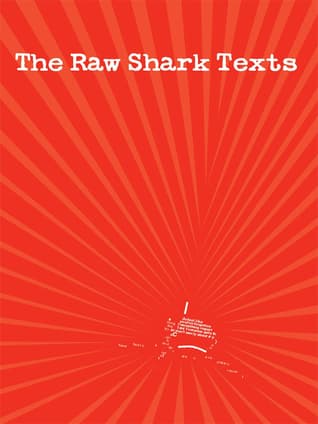
The book uses 'typographical illustrations' where text itself forms shapes, such as a shark, a cat, or a boat, to visually represent the conceptual entities and events in Eric's world. This innovative formatting blurs the line between text and image, immersing the reader in the 'information ocean' and making the abstract threats tangible.
What is the 'conceptual cat' and what is its role in the story?
The 'conceptual cat' is a recurring entity that seems to be a benign, if sometimes mischievous, presence in Eric's world, often appearing when he is in danger or needs guidance. It is implied to be a construct formed from shared human affection for cats, existing as a helpful, albeit non-verbal, ally in the information ocean.
What is the meaning behind the 'Dr. Randle' character and her true intentions?
Dr. Randle initially appears to be a conventional psychiatrist, but she is revealed to be an agent of the Ludovician, a 'feeder' who prepares victims for consumption. Her role is to keep Eric isolated and prevent him from understanding the true nature of his condition, thereby making him an easier target for the conceptual predator.
How does Eric's struggle with identity relate to real-world dissociative disorders?
Eric's initial diagnosis of dissociative disorder provides a familiar framework for his memory loss, grounding the fantastical elements in a relatable human experience of trauma and fragmentation of self. His journey mirrors the psychological process of reconstructing identity after severe loss, even as the cause is revealed to be supernatural.
What psychological impact does the concept of a 'Ludovician' have on Eric?
The Ludovician's threat forces Eric to confront the fragility of his own consciousness and the impermanence of memory. This external threat amplifies his internal struggle for selfhood, pushing him to actively fight for his existence and rebuild his identity from scattered fragments, fostering immense resilience and determination.
How does the book explore the psychological concept of love and grief?
The novel portrays love for Clio as the foundational element of Eric's identity, and her loss as the catalyst for his entire ordeal. His grief is not just an emotion but a force that attracts the Ludovician, yet also a powerful motivator for his survival and his quest to reclaim his past and, ultimately, Clio's memory.
In what ways does Eric's journey represent a psychological battle for self-preservation?
Eric's entire quest is a profound battle for self-preservation, not just physically but conceptually. He must actively construct and defend his sense of self against a force that seeks to erase him entirely, highlighting the psychological effort required to maintain identity and meaning in the face of overwhelming loss and existential threat.
Is the 'information ocean' a literal or metaphorical construct within the novel?
The 'information ocean' functions as both literal and metaphorical. While it represents the abstract space of shared consciousness and data, it also has tangible 'currents,' 'sharks,' and 'boats' within the novel's internal logic, making it a real, dangerous environment that Eric and others navigate.
How does the ending resolve Eric's quest and the threat of the Ludovician?
The ending sees Eric confronting the ultimate Ludovician, the 'raw shark,' in a climactic battle within the depths of the information ocean. While he doesn't fully 'destroy' it, he achieves a form of understanding and integration, accepting that the 'self' is constantly evolving and that love, even in memory, can sustain existence against erasure.
What philosophical questions does 'The Raw Shark Texts' raise about consciousness and reality?
The novel prompts questions about what constitutes identity when memories are fluid, and whether consciousness exists independently of a physical body. It explores the idea that our shared thoughts and stories form a tangible, albeit conceptual, reality, challenging conventional notions of existence and perception.
Could the entire narrative be interpreted as a metaphor for mental illness or the grieving process?
While the novel presents a fantastical explanation for Eric's condition, it can certainly be interpreted metaphorically as a powerful allegory for mental illness, particularly severe trauma-induced amnesia or dissociative states. The Ludovician could represent the destructive force of overwhelming grief or psychological breakdown, while the struggle to remember and connect represents the arduous path to recovery.
What is the significance of the 'vocabularies' used by text-hunters?
Vocabularies are conceptual tools or weapons used by text-hunters like Scout to interact with and defend against entities in the information ocean. They are essentially specialized forms of language or understanding that allow manipulation of conceptual reality, highlighting the power of words and thought in this unique universe.
How does the book challenge the reader's perception of narrative reliability?
From the very beginning, with Eric's memory loss and the conflicting explanations for his condition, the book constantly questions what is real and what is not. The letters from the 'first Eric,' the fantastical elements, and the unreliable nature of memory itself force the reader to actively piece together the truth alongside Eric, mirroring his own uncertainty.
About the author

Steven Hall is a British author known for his work in fiction. His notable novel, The Raw Shark Texts, explores themes of identity and memory through a unique narrative style. Hall's writing often blends elements of surrealism and adventure, engaging readers with imaginative concepts.
Similar books
- House of Leaves
Mark Z. Danielewski
4.1 (131k) average on GoodreadsThrillerBoth feature experimental typography and an unfolding mystery that blurs the line between reality and fiction.
- Piranesi
Susanna Clarke
4.4 (10k) average on GoodreadsLiterary FictionExplores a unique, isolated world and a protagonist with amnesia trying to piece together their past.
- Neverwhere
Neil Gaiman
4.2 (430k) average on GoodreadsFantasyBoth books feature protagonists thrust into a hidden, fantastical world coexisting with our own. Gaiman's "Neverwhere" explores 'London Below' as a literal, tangible underworld populated by mythical creatures and forgotten people, whereas Hall's 'conceptual world' is a more abstract, psychological landscape where ideas and memories take form. While both are urban fantasies, "The Raw Shark Texts" leans more into science fiction and philosophical inquiry regarding consciousness, while "Neverwhere" is a more traditional quest narrative rooted in folklore and urban myth (Clute & Grant, 1997). Hall's approach is arguably more conceptually daring, while Gaiman excels in character-driven storytelling and world-building that feels ancient and lived-in.
- Angels & Demons
Dan Brown
3.9 (2.7M) average on GoodreadsThrillerA Harvard symbologist races through Rome's ancient sites, deciphering cryptic clues to unmask the Illuminati and stop a vengeful plot to destroy the Vatican with a stolen antimatter weapon.
- Gone Girl
Gillian Flynn
4.1 (2.3M) average on GoodreadsThrillerA wife's sudden disappearance on her fifth anniversary reveals a web of lies and psychological warfare, exposing the secrets within a seemingly perfect marriage.
- The Girl on the Train
Paula Hawkins
3.9 (2.1M) average on GoodreadsThrillerA woman’s fascination with a seemingly perfect couple she watches from her daily train commute leads her into a dark investigation when she witnesses something that shatters their idyllic image.



Enjoyed the summary?
A summary gives you the shape of the book. The book itself has the detail, the examples and the voice.
Find The Raw Shark Texts on AmazonAs an Amazon Associate, BookBrief earns from qualifying purchases. How we're funded