
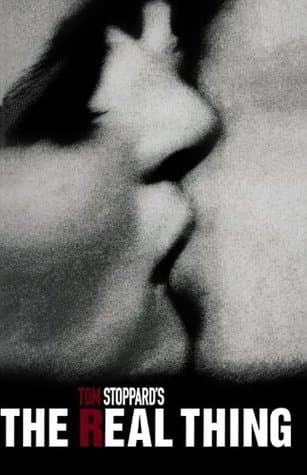
Synopsis
Covers the whole plot, including the ending.
- Difficulty
- Medium
- Pacing
- Moderate
- Mood
- Witty, Intellectual, Romantic, Philosophical, Melancholy
- Read it if
- You enjoy intellectual comedies, sharp dialogue, plays about plays, and complex explorations of love and fidelity.
- Skip it if
- You prefer straightforward narratives, dislike meta-theatrical elements, or are looking for a light, uncomplicated romance.
The Real Thing Plot Summary
Covers the whole plot, including the ending.
A Play Within a Play
The play begins with a tense domestic scene between Max and Charlotte. Max accuses Charlotte of cheating, suspecting a relationship with Henry. He examines a train ticket stub and a scarf as proof, leading to a heated argument about trust. Charlotte admits to the affair, revealing complicated emotions. This entire scene, however, is quickly revealed to be a play called 'House of Cards,' written by Henry and starring Charlotte and Max. The audience is immediately disoriented, as the opening's 'reality' is exposed as a performance, setting up the play's main themes of truth and artifice.
Henry and Annie's Affair Begins
After the play-within-a-play, the audience meets Henry, a playwright, and Annie, an actress married to Max. They are in the early stages of an affair, meeting secretly and discussing their relationship. Henry, good at witty talk, tries to define their love using literary comparisons. Annie, more practical, challenges his intellectualizing. Their talks show the excitement and guilt of their new connection, contrasting with the 'performance' of infidelity seen earlier and establishing the actual romantic conflict.
The Unveiling of Truth
Henry's wife, Charlotte, an actress who often acts in his plays, confronts him about his affair. She has found proof of his affair with Annie, much like Max's character did in the opening scene. Charlotte's reaction is a mix of anger, hurt, and a surprising intellectual detachment, similar to Henry's tendency to analyze emotions. Their conversation is sharp and revealing, looking at their marriage and the effects of Henry's betrayal. This confrontation is a turning point, as the secret affair becomes public, changing both marriages forever.
Max's Confrontation and Breakdown
Max, Annie's husband and Charlotte's acting partner, eventually finds out about Annie's affair with Henry. His confrontation with Annie is deeply emotional and raw, unlike the more intellectual discussions of Henry and Charlotte. Max is heartbroken and struggles to understand Annie's betrayal, feeling a 'real' emotional wound. Their marriage falls apart, leading to their painful separation. This scene shows the devastating impact of infidelity on the betrayed partner, revealing a different side of love and loss.
Henry and Annie's New Life
After their marriages end, Henry and Annie move in together, starting a new life as a couple. Their initial happiness is soon affected by the realities of living together and the lingering shadows of their past relationships. Henry, used to a certain domestic order, finds Annie's more relaxed lifestyle challenging. Annie, meanwhile, struggles with Henry's intellectualizing and occasional insensitivity. They try to build a 'real' relationship, but their different personalities and expectations create friction, showing that love, even "the real thing," requires constant effort beyond initial passion.
Annie's Political Activism
Annie becomes deeply involved in a political campaign to free Brodie, a soldier jailed for damaging a war memorial during a protest. She is passionate about his cause, believing he is a political prisoner, and asks Henry to help rewrite Brodie's poorly written play. This commitment adds a new dimension to Annie's character and creates tension with Henry, who initially dismisses Brodie's talent and the political cause. Henry's intellectual snobbery clashes with Annie's heartfelt activism, forcing him to face the limits of his own view and the importance of causes beyond art.
The Brodie Play
At Annie's request, Henry reluctantly agrees to help rewrite Brodie's play, which is amateurish and politically charged. Henry, a careful writer, struggles with the poor quality of the original text, finding it hard to balance artistic merit with political intent. He tries to improve the play while keeping Brodie's voice, leading to heated discussions with Annie about the purpose of theater and the value of different forms of expression. This collaboration highlights Henry's artistic principles and his struggle to engage with art that doesn't meet his high standards, even for a cause Annie believes in.
Debates on Love and Art
Throughout their relationship, Henry and Annie have many witty debates about love, language, and art. Henry, with his love for wordplay and intellectual analysis, often tries to define their love, while Annie prefers a more intuitive and emotional understanding. These discussions, often with Stoppard's wit, explore the play's main themes. They show the different ways people see and express love, and how language can both clarify and obscure true emotion, revealing the complexities of human connection.
Annie's Growing Independence
As Annie's involvement with Brodie's cause deepens, she develops a close, even flirtatious, relationship with him. Henry observes this with a mix of jealousy and intellectual curiosity, analyzing her reasons and his own reactions. Annie's growing independence and her willingness to connect with others outside Henry's circle challenge his sense of security in their relationship. This tension forces Henry to confront his own possessiveness and the vulnerability of love, showing that even "the real thing" is not immune to outside pressures and the changing needs of individuals in a partnership.
A New Play, A New Perspective
Towards the end of the play, Henry begins writing a new play, inspired by his own experiences with Annie, Brodie, and the complexities of love and infidelity. This new work shows a change in his perspective; he is no longer just an observer, but a participant whose emotions have been deeply involved. The play suggests growth in Henry's understanding of love, moving beyond just intellectualizing to a more deeply felt experience. This meta-theatrical element brings the story full circle, showing how art can both imitate and inform life, ultimately revealing a deeper "real thing" in his own heart.
The Real Thing Characters
Henry
Protagonist
A witty and intellectual playwright who struggles with the emotional realities of love.
Henry is a highly articulate and intellectually sophisticated playwright. He possesses a sharp wit and a profound love for language, often using it to dissect and analyze emotions rather than simply feel them. He is initially detached from the messier aspects of human relationships, preferring the controlled world of his plays. His worldview is deeply rooted in literary and artistic principles, making him somewhat of a snob when it comes to less polished forms of expression. Despite his intellectual prowess, he is emotionally vulnerable and often struggles to connect genuinely with others, especially Annie.
Relationships: Charlotte (His first wife; an actress. Their marriage is intellectual and competitive, lacking deep emotional intimacy.); Annie (His lover and second wife; an actress. Their relationship is passionate but fraught with intellectual and emotional clashes.); Max (Charlotte's acting partner and Annie's first husband; a rival and a foil.); Brodie (A soldier whose cause Annie champions; Henry reluctantly helps him with his play, challenging his artistic principles.)
Annie
Protagonist/Love Interest
An actress who values emotional authenticity and political conviction over intellectual games.
Annie is an actress, initially married to Max, who falls in love with Henry. She is more direct and emotionally grounded than Henry, often challenging his intellectualizations with her pragmatic and heartfelt responses. Annie possesses a strong sense of social justice and becomes deeply involved in political activism, particularly the campaign to free Brodie. She is passionate, sometimes impulsive, and values genuine connection and action over eloquent words. Her honesty and emotional depth often expose Henry's vulnerabilities and force him to confront his own limitations.
Relationships: Max (Her first husband; their marriage crumbles due to her affair with Henry.); Henry (Her lover and second husband; their relationship is central to the play's exploration of love and authenticity.); Brodie (A soldier she champions; her close relationship with him causes tension with Henry.)
Charlotte
Supporting
Henry's first wife and an actress, equally witty but more emotionally resilient.
Charlotte is Henry's first wife and an accomplished actress. She shares Henry's intellectual sharpness and wit, often engaging in clever banter. Her marriage to Henry is characterized by a certain intellectual sparring and a shared professional life, but it lacks profound emotional intimacy. When she discovers Henry's affair, her reaction is surprisingly composed, almost analytical, reflecting her own detached nature. She is pragmatic and self-possessed, demonstrating a resilience that contrasts with Max's more overt emotional pain.
Relationships: Henry (Her first husband; their marriage is intellectual and ultimately unfulfilling.); Max (Her acting partner; they have a professional and somewhat flirtatious relationship that mirrors the play's opening scene.)
Max
Supporting
Annie's first husband and an actor, deeply wounded by her betrayal.
Max is Annie's first husband and an actor. He is portrayed as less intellectually sophisticated than Henry or Charlotte, but more emotionally transparent. When he discovers Annie's affair, his pain is raw and visceral, representing a more conventional and relatable reaction to betrayal. He struggles to comprehend the loss and is deeply wounded by Annie's infidelity, serving as a poignant contrast to the more intellectualized responses of the other characters. His suffering underscores the 'real' human cost of the characters' romantic entanglements.
Relationships: Annie (His first wife; their marriage ends due to her affair with Henry.); Charlotte (His acting partner; they share a professional relationship that opens the play.)
Brodie
Supporting/Mentioned
A soldier imprisoned for protest, whose cause becomes central to Annie's life.
Brodie is a young soldier imprisoned for defacing a war memorial during an anti-war protest. He writes a play from prison, which Annie champions, believing him to be a political prisoner. His character is mostly seen through his poorly written play and the discussions surrounding his cause. Brodie represents a more visceral, unpolished form of expression and political activism, challenging Henry's aesthetic sensibilities. His perceived injustice fuels Annie's passion and introduces a significant political dimension to the play, forcing Henry to confront different forms of truth and value.
Relationships: Annie (She passionately advocates for his release and helps him with his play.); Henry (He reluctantly helps rewrite Brodie's play, struggling with its quality.)
Debbie
Mentioned
Henry's daughter from his first marriage.
Debbie is Henry's teenage daughter from his marriage to Charlotte. She appears briefly, offering a younger perspective on her father's relationships and his intellectualizing tendencies. Her observations are often sharp and insightful, cutting through the adult complexities with a youthful directness. She represents the next generation and provides a glimpse into Henry's role as a father, adding another layer to his character beyond his romantic entanglements.
Relationships: Henry (Her father; she has a candid relationship with him.); Charlotte (Her mother.)
The Real Thing Themes
The Nature of Love and Authenticity
The main theme explores what makes love 'real' versus infatuation, performance, or an idea. Stoppard contrasts the passionate, often messy, love between Henry and Annie with the more intellectual love between Henry and Charlotte. The play asks the audience to tell the difference between true emotion and cleverly spoken sentiment, especially through Henry's tendency to analyze rather than simply feel. The opening scene, a play within a play, immediately blurs the lines between acted and authentic emotion, setting up this core question. Annie often pushes Henry to engage with the 'real thing' emotionally, beyond his words.
“What is it about the real thing that makes you want to cry?”
Art vs. Life (and Art as Life)
The play constantly blurs the lines between art and life. Henry, as a playwright, sees life through the lens of literature and theater, often trying to express his emotions in eloquent ways. The opening scene is a prime example, where a seemingly real marital crisis is revealed to be a play. This theme questions whether art can truly capture the complexity of human experience or if it merely provides a stylized imitation. Conversely, it also explores how life itself can be a performance, and how artistic expression can be a deeply personal and 'real' act, especially seen through Henry's eventual writing of a play inspired by his own experiences.
“I don't think art is a mirror. It's a hammer. It smashes the world into pieces and then puts it back together in a new way.”
The Power and Limitations of Language
Stoppard, a master of wordplay, uses language as both a tool for connection and a barrier to true understanding. Henry's witty, articulate dialogue often serves to intellectualize his feelings, preventing him from fully experiencing them. He believes in the precision and beauty of words, often dismissing less articulate forms of expression. Annie, however, values emotional truth over linguistic skill, highlighting the limits of words to convey the full range of human emotion. The debate over Brodie's poorly written play further emphasizes this, questioning whether eloquence is always necessary for a message to be 'real' or impactful.
“Words are for the writer. For the actor, there's just the truth.”
Fidelity and Betrayal
The play explores different forms of loyalty—not just marital, but also loyalty to oneself, to one's art, and to one's political beliefs. The multiple instances of infidelity (Charlotte and Henry, Henry and Annie, Annie and Brodie's flirtation) drive the plot and force characters to face the results of their choices. It examines the pain of betrayal, as seen in Max's reaction, and the complex reasons people create for their actions. Beyond romantic loyalty, Henry's struggle with Brodie's play questions his loyalty to artistic standards versus Annie's loyalty to a political cause, showing that 'betrayal' can appear in many forms.
“Infidelity is a betrayal of trust. Not love.”
Plot Devices & Literary Techniques
Play Within a Play
A theatrical device where a play is performed as part of the narrative of a larger play.
The play opens with a scene that appears to be the main plot, only to reveal it's a performance from Henry's play 'House of Cards,' starring Charlotte and Max. This device immediately establishes the central theme of artifice versus reality, blurring the lines between what is 'real' and what is 'acted.' It forces the audience to question the authenticity of emotions and situations presented throughout the entire play, setting a meta-theatrical tone and constantly reminding them of the constructed nature of storytelling and human interaction.
Witty Dialogue and Wordplay
Extensive use of clever, articulate, and often philosophical conversations.
Stoppard's signature witty dialogue and intricate wordplay are prominent throughout the play, especially in Henry's lines. This device serves multiple functions: it showcases the characters' intelligence, provides comedic relief, and, most importantly, highlights the theme of language's power and limitations. The characters often use words to intellectualize emotions, dissect relationships, and engage in philosophical debates, sometimes using language as a shield or a means to control a situation rather than genuinely connect. It's a key element in exploring how people articulate, or fail to articulate, 'the real thing.'
Parallel Relationships
The mirroring of romantic and marital dynamics between different couples.
The play features parallel relationships, most notably the two marriages that dissolve (Henry/Charlotte and Max/Annie) and the new relationship formed (Henry/Annie). These parallels allow for a comparative study of love, fidelity, and betrayal. The 'affair' in Henry's play mirrors the actual affair between Henry and Annie, and Max's discovery of Annie's infidelity parallels Charlotte's discovery of Henry's. This device deepens the exploration of the themes, showing how similar situations can elicit different emotional responses and challenging the audience to consider the nuances of each relationship.
Meta-theatricality
Self-referential elements that acknowledge the play as a theatrical production.
Beyond the 'play within a play,' the entire structure of 'The Real Thing' is meta-theatrical. Characters frequently discuss acting, playwriting, and the nature of theatre. Henry, as a playwright, constantly analyzes life as if it were a script, and the actors within the play often comment on their craft. This device keeps the audience aware that they are watching a constructed reality, intensifying the examination of authenticity and performance. It invites reflection on how we perform roles in our own lives and how art can both reflect and shape our understanding of reality.
The Real Thing Quotes
“I'm not a writer, I'm a man of the theatre. I want to write plays, not just words.”
“Words are innocent, it is the person who uses them who is not.”
“If you are a writer, you are a writer. If you are not, you are not. And if you are not, you can't be made into one.”
“It's like love. You don't know what it is until you're in it. And then you don't know what it is until you're out of it.”
“Being clever is like being good at tennis. If you're clever, you can hit the ball. If you're a writer, you can make it bounce.”
“I don't think I'm a good person. I think I'm a person who tries to be good.”
“The thing about art is that it's not a democracy. It's a monarchy. It's about what the artist says, not what the audience wants.”
“It's not enough to be in love. You have to be in love with the right person.”
“If you're going to write about love, you have to write about the real thing. Not just the idea of it.”
“You can't just throw words at a problem and expect it to go away. You have to choose them.”
“Marriage is like a long conversation that you keep having over and over again.”
“It's not about being right or wrong, it's about being true.”
“The only thing that's real is what you feel. Everything else is just words.”
“A writer is someone who can make a sentence sing.”
“Love is not a matter of choice, it's a matter of destiny.”
Quiz
10 questions on the plot and the characters. Each answer comes with a short explanation.
Question 1
At the very beginning of the play, what is the marital status of the couple we first observe, Max and Charlotte?
- They are happily married and discussing their anniversary.
- They are married, but their relationship seems to be on the verge of collapsing.
- They are engaged to be married.
- They are divorced and meeting for the first time in years.
Show answer
B. They are married, but their relationship seems to be on the verge of collapsing. The play opens with Max and Charlotte, and the synopsis explicitly states their marriage 'seems about to rupture,' indicating it's troubled.
Question 2
What is Charlotte's profession in the play's opening scenario?
- She is a novelist.
- She is a playwright.
- She is an actress.
- She is a director.
Show answer
C. She is an actress. The synopsis states Charlotte 'is an actress who has been appearing in a play about marriage by her husband, Henry.'
Question 3
Who is the playwright of the play that Charlotte and Max are performing in at the beginning?
- Max
- Henry
- Annie
- Tom Stoppard
Show answer
B. Henry Charlotte is acting in 'a play about marriage by her husband, Henry.'
Question 4
What is the central question the play poses regarding the burgeoning relationship between Henry and Annie?
- Is their relationship financially viable?
- Is their love 'the real thing'?
- Will their careers suffer because of their affair?
- Are they truly compatible as actors?
Show answer
B. Is their love 'the real thing'? The synopsis directly asks, 'But is it the real thing?' in reference to Henry and Annie's love, highlighting the play's core theme.
Question 5
Which two characters are married to each other at the play's initial presentation of their relationships, before the affairs are revealed?
- Henry and Annie
- Max and Henry
- Max and Charlotte, and Henry and Annie
- Charlotte and Annie
Show answer
C. Max and Charlotte, and Henry and Annie The synopsis states: 'Charlotte is an actress... by her husband, Henry. Max, her leading man, is also married to an actress, Annie.' This establishes two distinct married couples initially.
Question 6
The synopsis mentions that 'nothing one sees on a stage is the real thing.' What specific aspect of the play does this statement refer to initially?
- The set design and props.
- The initial scene between Max and Charlotte, which is revealed to be a play-within-a-play.
- The costumes worn by the actors.
- The audience's perception of reality.
Show answer
B. The initial scene between Max and Charlotte, which is revealed to be a play-within-a-play. The description immediately follows the introduction of Max and Charlotte's 'rupturing' marriage with 'But nothing one sees on a stage is the real thing, and some things are less real than others,' implying the initial scene is not what it seems, which it then reveals to be a play.
Question 7
What common profession do Annie and Charlotte share?
- Playwright
- Director
- Actress
- Literary critic
Show answer
C. Actress The synopsis states Charlotte 'is an actress' and Max 'is also married to an actress, Annie,' confirming both are actresses.
Question 8
Tom Stoppard's signature style, as mentioned in the synopsis, combines brilliant wordplay and wit with what other key element?
- Extensive use of stage combat.
- Flashes of insight that illuminate the nature of love.
- Minimalist staging and design.
- Frequent breaking of the fourth wall.
Show answer
B. Flashes of insight that illuminate the nature of love. The synopsis states Stoppard 'combines his characteristically brilliant wordplay and wit with flashes of insight that illuminate the nature--and the mystery--of love.'
Question 9
The play is described as 'multi-toned.' How does this characteristic contribute to its overall effect, according to the synopsis?
- It makes the play confusing and hard to follow.
- It challenges the mind while searching out the innermost secrets of the heart.
- It primarily focuses on historical accuracy.
- It means the play can be performed in any genre.
Show answer
B. It challenges the mind while searching out the innermost secrets of the heart. The synopsis states it's 'creating a multi-toned play that challenges the mind while searching out the innermost secrets of the heart.'
Question 10
What is the primary catalyst for the 'point of rupture' in both Max and Charlotte's marriage and Annie's marriage (to Max)?
- A disagreement over their acting careers.
- Financial difficulties faced by both couples.
- Henry and Annie falling in love.
- A shared desire to move to a different country.
Show answer
C. Henry and Annie falling in love. The synopsis clearly states: 'Both marriages are at the point of rupture because Henry and Annie have fallen in love.'
The Real Thing FAQ
What is the central premise of 'The Real Thing' regarding love and reality?
The play explores the authenticity of love and relationships, contrasting theatrical representations with lived experience. It questions whether emotions felt by characters, both on stage and in real life, are 'the real thing' or merely performances, especially through Henry's struggle to differentiate between eloquent words and genuine feeling.
Who are the primary couples at the beginning of the play, and how are their relationships intertwined?
Initially, Henry is married to Charlotte, and Max is married to Annie. Charlotte and Max are also performing together in a play written by Henry. The plot quickly reveals that Henry and Annie are having an affair, leading to the dissolution of their respective marriages and the formation of a new couple.
What is Henry's profession, and how does it influence his perspective on love and language?
Henry is a playwright, known for his witty and articulate dialogue. His profession makes him acutely aware of the power of words and their potential to both express and obscure genuine emotion, often leading him to prioritize linguistic elegance over raw, unadorned feeling, which he later struggles to overcome.
How does the play within a play structure contribute to the theme of reality versus illusion?
The initial scene, which appears to be Max and Charlotte's failing marriage, is revealed to be a scene from Henry's play. This immediate subversion of audience expectations establishes the central theme, forcing viewers to constantly question the authenticity of every subsequent interaction and emotional display.
What is the significance of the song 'You've Lost That Lovin' Feelin'' in the play?
The song serves as a recurring motif, symbolizing the decline of love and the emotional disconnect within relationships. Henry's initial dismissal of its artistic merit, contrasted with Annie's emotional connection to it, highlights their differing perspectives on art, emotion, and authenticity, later shifting as Henry comes to appreciate its directness.
How does the character of Brodie, the soldier, challenge Henry's views on writing and political activism?
Brodie, an uneducated soldier imprisoned for protesting, writes a clumsy, impassioned play that Annie champions. His raw, politically charged writing directly contrasts with Henry's polished, intellectually detached style, forcing Henry to confront the idea that genuine emotion and conviction can exist outside of eloquent expression, even if poorly written.
What is the metaphorical significance of the cricket bat in Henry's study?
The cricket bat symbolizes tradition, Englishness, and a certain kind of masculine, perhaps even emotionally repressed, identity. Henry's attachment to it and his explanation of its proper use, compared to Annie's disinterest, subtly reflects their differing values and approaches to life and relationships.
How does the evolution of Henry's understanding of love and language change throughout the play?
Initially, Henry believes love is best expressed through witty, articulate language, often valuing form over substance. By the end, through his struggles with Annie and his encounter with Brodie's writing, he begins to realize the importance of raw, sometimes inarticulate, emotion and the limitations of language to fully capture the 'real thing'.
Analyze Annie's motivations for her affair with Henry and her subsequent commitment to him.
Annie is drawn to Henry's intellect and wit, finding him a stimulating contrast to Max. Her commitment to Henry stems from a desire for intellectual and emotional depth, but also a need for authenticity, which she believes Henry's eloquent words initially promise, even as she later pushes him to connect more genuinely.
How does Max cope with the dissolution of his marriage to Annie, and what does this reveal about his character?
Max initially struggles with disbelief and anger, feeling betrayed by Annie and Henry. He later attempts to rationalize the situation, but his vulnerability reveals a man who, despite his stage presence, is deeply hurt and less articulate about his emotions than Henry, underscoring the pain beneath the performance.
What role does Charlotte play in challenging Henry's worldview, even after their divorce?
Even after their divorce, Charlotte remains a sharp, intelligent presence in Henry's life. She often acts as a witty foil, challenging his intellectualizing and forcing him to confront uncomfortable truths about his own emotional detachment and the performative aspects of his personality, often with a cutting honesty.
Is Henry's love for Annie ultimately 'the real thing,' or is it another performance?
This is a central interpretive question. While Henry initially struggles with authenticity, his increasing vulnerability, his efforts to understand Annie's perspective, and his growing discomfort with purely intellectualizing love suggest a genuine shift. However, his inherent theatricality means a complete shedding of performance is debatable, leaving room for interpretation.
To what extent does Stoppard suggest that all relationships are, to some degree, a performance?
Stoppard heavily implies that elements of performance are inherent in human interaction, especially in romantic relationships, where people present curated versions of themselves. The play blurs the lines between acting and living, suggesting that even genuine emotion often requires a certain 'staging' or expression that can resemble performance.
Does the play offer a definitive answer to what 'the real thing' in love truly is?
No, the play deliberately avoids a definitive answer. Instead, it offers a nuanced exploration, suggesting that 'the real thing' is complex, multifaceted, and often elusive, involving a blend of intellectual connection, raw emotion, vulnerability, and mutual understanding, rather than a single, easily definable quality.
How does the play critique or celebrate the power of language in expressing love?
The play both critiques and celebrates language. It critiques its potential for obfuscation and performance, showing how witty words can mask true feelings. However, it also celebrates language's power to articulate profound emotion, connect individuals, and shape understanding, ultimately advocating for language used with genuine intent.
What is the significance of Henry rewriting Brodie's play?
Henry rewriting Brodie's play symbolizes his evolving understanding of art and authenticity. Initially dismissive, he later commits to making Brodie's raw message more articulate, not to diminish its truth, but to give it more effective voice. This reflects his own journey towards finding a balance between form and genuine feeling in his personal life.
How does the character of Debbie, Henry's daughter, provide an outside perspective on her father's relationships?
Debbie offers a youthful, often cynical, and direct perspective on her father's romantic entanglements. Her blunt observations and lack of theatrical pretense cut through Henry's intellectualizing, forcing him to confront the emotional realities and hypocrisy in his life, particularly regarding his affair and subsequent marriage to Annie.
Discuss the symbolic importance of the record player and Henry's musical tastes.
The record player and Henry's preference for classical music, particularly opera, reflect his intellectual and somewhat detached approach to emotion. His initial disdain for Annie's pop music choices, like 'You've Lost That Lovin' Feelin',' highlights their differing emotional landscapes and his journey towards appreciating simpler, more direct expressions of feeling.
About the author
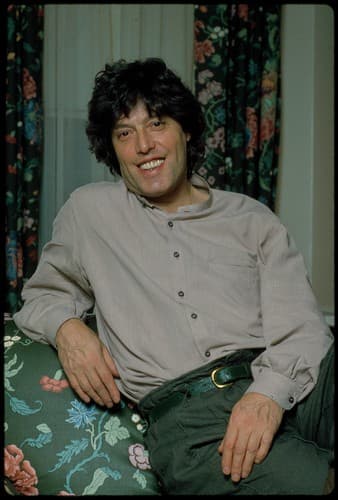
Tom Stoppard is a British playwright and screenwriter known for his sharp wit and exploration of philosophical themes. His notable works include "Arcadia," which intertwines themes of science and literature, and "The Real Thing," a play that examines love and fidelity. Stoppard's contributions to theater have earned him multiple awards, including Tony Awards and an Academy Award for Best Original Screenplay.
Similar books
- Arcadia
Tom Stoppard
3.9 (5k) average on GoodreadsFantasyFeatures Stoppard's signature wit, intellectual themes, and complex structure.
- Nineteen Eighty-Four
George Orwell
4.2 (5.5M) average on GoodreadsFictionWinston Smith dreams of truth and rebellion in a world where Big Brother watches all, but he confronts the terrifying power of a regime that controls not just actions, but thoughts.
- The Frozen River
Ariel Lawhon
4.4 (600k) average on GoodreadsFictionIn 1789 Maine, a heroic midwife's diary helps her expose a murder and get justice in a town that wants to silence her.
- A Man Called Ove
Fredrik Backman
4.4 (569k) average on GoodreadsFictionA stubborn widower, who lives by strict rules, finds his quiet world changed by a lively new family next door, making him face his past and find happiness in human connection.
- The Art of Racing in the Rain
Garth Stein
4.2 (452k) average on GoodreadsFictionThrough the eyes of Enzo, a wise and observant dog, a race car driver's family navigates a journey of love, loss, and resilience, learning that life's most important lessons often come in the curves, not just on the straightaways.
- The Colour of Magic
Terry Pratchett
4.0 (425k) average on GoodreadsFictionOn a discworld hurtling through space on the back of a giant turtle, an inept wizard and his naive, walking-luggage-toting tourist embark on a chaotic, belief-fueled journey to the very edge of their flat planet, encountering dragons that only exist if you believe in them.





Enjoyed the summary?
A summary gives you the shape of the book. The book itself has the detail, the examples and the voice.
Find The Real Thing on AmazonAs an Amazon Associate, BookBrief earns from qualifying purchases. How we're funded