
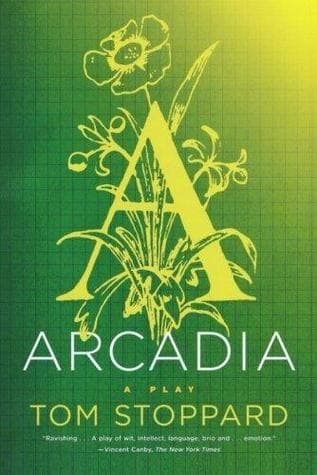
Synopsis
Covers the whole plot, including the ending.
- Difficulty
- Hard
- Pacing
- Variable
- Mood
- Intellectual, Witty, Poignant, Mysterious, Romantic
- Read it if
- You enjoy intellectually stimulating plays that blend complex scientific and philosophical ideas with witty dialogue, historical mystery, and emotional depth.
- Skip it if
- You prefer straightforward narratives without temporal shifts or dense intellectual discussions, or if you dislike plays that require close attention to detail.
Arcadia Plot Summary
Covers the whole plot, including the ending.
September 1809: The Tutor and the Prodigy
The play opens in Sidley Park, September 1809. Thirteen-year-old Thomasina Coverly is receiving a Latin lesson from her tutor, Septimus Hodge. Their conversation quickly moves to mathematics and physics. Thomasina has observed that the simple iteration of an equation never precisely returns to its starting point, leading to a concept she calls 'carnal embrace' of numbers. She is grappling with irreversible processes and the arrow of time, anticipating the second law of thermodynamics. Septimus, meanwhile, is trying to deflect her inquiries while also dealing with an affair with Mrs. Chater, the wife of a minor poet. He is also tasked with reviewing Mr. Chater's poetry for publication, a task he finds boring.
April 1993: The Researchers Arrive
In the present day, April 1993, Hannah Jarvis, a landscape historian, is researching the history of Sidley Park's garden, particularly its change from classical formal design to the romantic, picturesque style. She is staying at the estate, working in the same room where Thomasina and Septimus once talked. Bernard Nightingale, a literary academic, also arrives at Sidley Park, convinced that Lord Byron, a contemporary of Septimus Hodge, was involved in a duel on the estate and murdered an obscure poet. Bernard wants to find evidence to support his theory, hoping to elevate the poet Chater and himself. Their research often clashes, creating tension.
The Hermit and the Algorithm
Back in 1809, Thomasina continues her mathematical ideas, drawing patterns and developing an iterative algorithm to model natural forms, like artichoke leaves. She is close to discovering fractal geometry. Septimus, though initially dismissive, becomes intrigued by her insights. In 1993, Hannah's research focuses on the mysterious hermit who lived on the estate in the early 19th century. She finds evidence that suggests the hermit was a mathematician who burned his papers, possibly due to disillusionment or a tragic event. She believes the hermit may have been Septimus Hodge, driven to reclusion after Thomasina's death.
Byron's Shadow and Literary Speculation
Bernard, in 1993, finds a letter he believes confirms Byron's presence at Sidley Park and his involvement in a fatal duel. He presents his findings with drama, much to Hannah's skepticism. Meanwhile, Valentine Coverly, a descendant of Thomasina and a chaotician, becomes interested in Thomasina's old notebooks. He recognizes the mathematical skill in her drawings and calculations, realizing she was exploring chaos theory and iteration long before they were understood. He tries to use her incomplete equations to model the population dynamics of grouse on the estate, finding a correlation between her ideas and the unpredictable behavior of natural systems.
The Entropy of Tea and the End of the World
In 1812, Thomasina, now a young woman, further refines her understanding of irreversible processes. She uses the example of stirring jam into rice pudding, noting that it's impossible to perfectly separate them again. She extends this concept to the universe, predicting its eventual 'heat death' – a state of uniform temperature where all energy is evenly distributed and nothing more can happen. Septimus, though still struggling to grasp the full meaning, recognizes the nature of her discovery. He tries to comfort her, but Thomasina remains focused on the bleak implications of her mathematical prophecy, envisioning a cold, dark end to all things.
The Dinner Party and the Duel
A dinner party at Sidley Park in 1809 brings together the key characters of that era: Septimus, Thomasina, Lady Croom, Mr. Chater, and Captain Brice. The conversation touches on landscape design, poetry, and scientific ideas. Septimus's past indiscretions with Mrs. Chater are alluded to, and Mr. Chater's jealousy is clear. This scene provides context for Bernard's later theories about Byron and a duel. The social dynamics and discussions of this evening become material for future interpretations by the present-day characters, showing the subjective nature of historical truth.
The Fire and the Missing Papers
In 1812, a fire breaks out at Sidley Park, tragically claiming Thomasina's life on the eve of her seventeenth birthday. Her mathematical papers are believed to have been lost in the blaze. This event becomes a central mystery for Hannah in 1993. Meanwhile, Hannah, examining historical records, finds inconsistencies in Bernard's theory about Byron's duel. She uncovers evidence that suggests the duel, if it happened, involved a different person and that Byron was likely not present at Sidley Park when Bernard claims. Her skepticism challenges Bernard's increasingly dramatic academic claims.
The Hermit's Identity Revealed
As the play progresses, Hannah and Valentine piece together the puzzle of the hermit. They discover that the hermit was Septimus Hodge, who, after Thomasina's death, retreated to the hermitage on the estate. He spent the rest of his life trying to understand and complete Thomasina's mathematical work, burning his papers in frustration or as a symbolic act of mourning for the lost genius. This revelation affects Hannah, confirming her suspicions about the hermit's intellectual depth and his connection to Thomasina's mathematical genius. It also shows the tragedy of lost knowledge.
The Overlapping Timelines
In the final act, the timelines of 1812 and 1993 begin to overlap more clearly. Characters from both periods occupy the stage simultaneously, sometimes interacting indirectly or observing events from the other era. Septimus is seen working in the hermitage, while in the present, Hannah and Valentine discuss his fate. This staging emphasizes the play's themes of time, memory, and the enduring presence of the past. The audience witnesses Thomasina's last night and the present-day investigations in a unified, yet temporally distinct, dramatic space. The past influences the present, and the present tries to reconstruct the past.
The Waltz and the Revelation
On the night of her seventeenth birthday in 1812, Thomasina dances a waltz with Septimus. This moment has tender affection and a sense of impending loss. As the characters from 1993 observe, the truth about Thomasina's death is revealed: she was not murdered, but died in the fire that consumed her room, likely an accident. Her mathematical genius, though lost to history for nearly two centuries, is finally appreciated by Valentine. The play concludes with Septimus, now the hermit, trying to reconstruct Thomasina's equations, a poignant and futile attempt to preserve her legacy against the irreversible flow of time and entropy.
Arcadia Characters
Thomasina Coverly
Protagonist
A brilliant and precocious teenage mathematical prodigy of the early 19th century.
Thomasina is an extraordinarily intelligent and curious girl, far ahead of her time. At thirteen, she is already grappling with concepts like iteration, chaos theory, and the second law of thermodynamics, which would not be formally discovered for decades. She is inquisitive, challenging, and possesses a profound, almost melancholic, understanding of the universe's eventual heat death. Her intellectual drive is matched by a youthful innocence and a growing awareness of the world around her, including her affection for Septimus.
Relationships: Septimus Hodge (Student-tutor; later, a deep intellectual and affectionate bond, unrequited on her part.); Lady Croom (Grandmother, somewhat dismissive of Thomasina's intellectual pursuits.)
Septimus Hodge
Protagonist/Supporting
Thomasina's witty and intelligent tutor, a former friend of Lord Byron.
Septimus is a Cambridge-educated scholar with a sharp wit, a cynical streak, and a penchant for romantic dalliances. He is initially dismissive of Thomasina's radical mathematical ideas but gradually comes to recognize her genius. He serves as a foil to her innocent curiosity, often using clever wordplay and misdirection. Despite his initial flippancy, he develops a deep affection and respect for Thomasina, becoming her intellectual confidant and, after her death, the reclusive hermit who dedicates his life to her work.
Relationships: Thomasina Coverly (Tutor-student; deep intellectual and affectionate bond, evolving into a lifelong devotion.); Lord Byron (Former university friend, though Byron never appears.); Mrs. Chater (Brief romantic affair.); Lady Croom (Employer, with whom he has a strained, witty relationship.)
Hannah Jarvis
Protagonist
A meticulous and skeptical landscape historian researching Sidley Park.
Hannah is a pragmatic and intellectually rigorous historian. She is dedicated to uncovering factual truth, often clashing with Bernard's more sensational and speculative approach. Her research focuses on the transition of Sidley Park's garden and the identity of the mysterious hermit. She is observant, intelligent, and driven by a genuine desire to understand the past, rather than to fabricate dramatic narratives. She develops a respectful, though sometimes exasperated, rapport with Valentine.
Relationships: Bernard Nightingale (Academic rival and intellectual sparring partner.); Valentine Coverly (Intellectual collaborator and potential romantic interest.); Lady Croom (descendant) (Host, with whom she has a civil but sometimes tense relationship.)
Bernard Nightingale
Antagonist/Supporting
A flamboyant and self-aggrandizing literary academic.
Bernard is a highly theatrical and ambitious professor of literature, obsessed with gaining academic fame. He arrives at Sidley Park convinced that Lord Byron was involved in a fatal duel on the estate, and he aggressively pursues evidence to support his sensational theory, often distorting facts to fit his narrative. He is arrogant, charming, and a master of rhetorical flourish, but ultimately more interested in his own celebrity than in genuine historical inquiry. He serves as a comedic foil to Hannah's rigorous methodology.
Relationships: Hannah Jarvis (Academic rival, whose skepticism he largely ignores or dismisses.); Valentine Coverly (Initially dismissive of Valentine's scientific pursuits.)
Valentine Coverly
Supporting Protagonist
A descendant of the Coverly family and a chaotician researching grouse populations.
Valentine is a quiet, intelligent, and somewhat socially awkward mathematician and chaotician. He is interested in the unpredictable patterns of nature, particularly the grouse population on the estate. He is initially skeptical of Thomasina's old notebooks but quickly recognizes the profound mathematical insights within them, connecting her work to modern chaos theory. He represents the scientific pursuit of truth, contrasting with Bernard's literary speculation. He develops a tentative intellectual and romantic connection with Hannah.
Relationships: Hannah Jarvis (Intellectual collaborator and potential romantic interest.); Chloë Coverly (Sister, with whom he has a typical sibling dynamic.); Gus Coverly (Brother, who is non-verbal but observant.); Lady Croom (descendant) (Mother, with whom he has a respectful but somewhat distant relationship.)
Lady Croom (1809)
Supporting
The formidable and opinionated mistress of Sidley Park in the early 19th century.
Lady Croom is a woman of strong opinions, particularly regarding aesthetics and the proper order of things. She is a staunch advocate for the classical, formal garden style and views the emerging romantic, picturesque style with disdain. She is witty, articulate, and often expresses her views with dramatic flair, providing much of the comedic relief in the 1809 scenes. She is largely oblivious to Thomasina's mathematical genius, focusing more on social decorum and the appearance of her estate.
Relationships: Septimus Hodge (Employer, with whom she engages in witty banter.); Thomasina Coverly (Grandmother, somewhat dismissive of her granddaughter's unconventional pursuits.)
Chloë Coverly
Supporting
Valentine's sister, a modern young woman with a cynical view of love and relationships.
Chloë is a sharp-witted and somewhat jaded young woman in the present day. She observes the romantic entanglements and intellectual pursuits around her with a detached, often cynical, perspective. She has a particular interest in the 'carnal embrace' of human relationships, often making pointed observations about sex and fidelity. Her frankness and modern sensibilities provide a contrast to the more formal and restrained characters of the past.
Relationships: Valentine Coverly (Sister, with whom she has a typical sibling dynamic.); Bernard Nightingale (Brief flirtation/affair.); Gus Coverly (Sister, caring for her non-verbal brother.)
Gus Coverly
Supporting
Valentine's non-verbal younger brother, who possesses an uncanny artistic and intuitive understanding.
Gus is a silent, observant character in the present day. Though he doesn't speak, he communicates through his actions, drawings, and an almost psychic intuition. He has a profound connection to the past, often drawing accurate depictions of historical events or characters, including Thomasina and Septimus. He represents a different way of knowing and understanding the world, one that transcends logical reasoning and verbal communication. His presence adds a touch of mystery and poignancy to the modern scenes.
Relationships: Valentine Coverly (Brother, cared for by Valentine.); Chloë Coverly (Brother, cared for by Chloë.)
Richard Noakes
Mentioned
The landscape architect responsible for the 'picturesque' garden at Sidley Park.
Noakes is the landscape architect hired by the Coverly family to transform the classical garden at Sidley Park into the fashionable picturesque style. His work is a central point of discussion for Hannah Jarvis in the present day, as she studies the transition of garden aesthetics. He represents the Romantic movement in landscape design, which Lady Croom so vehemently opposes. His blueprints and letters provide key evidence for Hannah's historical research.
Relationships: Lady Croom (Employer, whose artistic tastes he clashes with.)
Ezra Chater
Mentioned
A minor poet whose work is reviewed by Septimus and whose wife has an affair with him.
Mr. Chater is an obscure poet whose work is being reviewed by Septimus Hodge. He is a somewhat pathetic figure, whose wife has an affair with Septimus, leading to a challenge to a duel. His mediocrity as a poet and the circumstances surrounding him become the basis for Bernard Nightingale's exaggerated theories about Byron. He represents the kind of historical footnote that academics like Bernard might inflate for personal gain.
Relationships: Septimus Hodge (Reviewed by Septimus; cuckolded by Septimus.); Mrs. Chater (Husband, whose wife has an affair with Septimus.)
Arcadia Themes
The Nature of Truth and History
The play constantly questions how history is built and understood. Bernard Nightingale shows the fabrication of history to fit a sensational story, while Hannah Jarvis carefully seeks verifiable facts. The overlapping timelines show how easily facts can be distorted or lost, such as the true circumstances of Thomasina's death or the hermit's identity. Stoppard suggests that history is less about objective fact and more about interpretation, often colored by personal biases, romanticism, or academic ambition, as seen in Bernard's desperate attempts to link Byron to a duel based on weak evidence.
“It's all trivial, isn't it? Compared to what we could know.”
Order and Disorder (Classical vs. Romantic)
This theme is explored through landscape design, mathematics, and human temperament. The classical ideal of order, symmetry, and reason is represented by Lady Croom and the formal garden, while the romantic ideal of wildness, emotion, and unpredictability is embodied by the picturesque garden and characters like Bernard. Thomasina's mathematical discoveries, particularly her work on iteration and chaos, connect these two worlds, showing how complex, seemingly disordered systems can arise from simple rules. The second law of thermodynamics, predicting the universe's eventual heat death, represents the triumph of disorder (entropy) over order.
“We are all doomed to a heat death, which is a state of perfect disorder.”
Science vs. Art/Humanities
The play contrasts scientific inquiry with artistic and literary interpretation. Thomasina and Valentine represent the scientific mind, seeking objective patterns and universal laws through mathematics and physics. Bernard and, to some extent, Lady Croom, represent the humanities, focusing on narrative, aesthetics, and human drama. Stoppard highlights both the strengths and limitations of each approach. Science can reveal underlying truths about the universe, but art can provide meaning and emotional resonance. The play suggests that both are essential for a full understanding of the human experience, and often, they intersect in unexpected ways, as when Thomasina's equations describe natural beauty.
“The attraction of the apple to the earth is the same as the attraction of the earth to the apple. You have to think of it as a pair of apples.”
Time and Entropy
Time is not simply a linear progression in Arcadia but a complex, multi-layered phenomenon. The alternating scenes between 1809-1812 and 1993, and their eventual overlap, emphasize the idea that the past is always present, influencing subsequent generations. Thomasina's understanding of the second law of thermodynamics, or entropy, is central to this theme. She foresees the irreversible decline of the universe towards a state of 'heat death' – a concept that shows the inevitable loss of information, order, and life itself. This scientific principle mirrors the human experience of memory, loss, and the difficulty of perfectly reconstructing the past.
“It's all a matter of the heat death of the universe.”
Sex and Desire
The 'disruptive influence of sex' is a recurring idea, particularly in the 1809 scenes. Septimus's various affairs, including his affair with Mrs. Chater and his flirtations with other women, show how primal desires can interrupt intellectual pursuits and social order. The present-day characters also engage in their own romantic and sexual entanglements, mirroring the past. This theme highlights the enduring, often chaotic, force of human passion across centuries, reminding us that despite intellectual pursuits, humans remain driven by fundamental biological urges, which can lead to both creation and destruction, love and betrayal.
“The only reason for sex is to make people laugh.”
Plot Devices & Literary Techniques
Alternating Timelines
The play shifts between two distinct periods: early 19th century and late 20th century.
This device is central to the play's structure and themes. By presenting events from 1809-1812 and 1993 in parallel, Stoppard allows the audience to witness both the original events and their later interpretations, highlighting the subjective nature of history. It creates dramatic irony, as the audience often knows more than the characters in the present. The eventual overlapping of these timelines in the final act emphasizes the enduring presence of the past and the cyclical nature of human experience and inquiry.
The Hermit of Sidley Park
A mysterious figure from the past whose identity and purpose are a central enigma.
The hermit serves as a focal point for Hannah Jarvis's research and a symbolic link between the two eras. His reclusive life and the burning of his papers raise questions about lost knowledge, genius, and the emotional toll of tragedy. The eventual revelation that the hermit is Septimus Hodge, attempting to reconstruct Thomasina's work, provides a poignant resolution to the mystery and underscores the themes of enduring love, intellectual devotion, and the irreversible loss of information due to entropy.
Thomasina's Notebooks/Equations
Mathematical notes from the 19th century that contain groundbreaking scientific theories.
These notebooks are a crucial plot device, representing lost genius and the acceleration of scientific discovery. They are initially dismissed by Septimus but later recognized by Valentine as containing precursors to chaos theory and the second law of thermodynamics. They drive Valentine's research and provide concrete evidence of Thomasina's extraordinary intellect, allowing her ideas to transcend time and influence the present. Their incompleteness and the mystery of their fate (lost in the fire) heighten their significance.
The Sidley Park Garden
The estate's landscape, transitioning from classical to picturesque, reflects broader aesthetic and philosophical shifts.
The garden is more than a setting; it's a living metaphor for the play's themes of order vs. disorder, classical vs. romantic. Hannah's research into its transformation provides a tangible, visual representation of the changing intellectual and artistic currents between the two centuries. The contrast between the rigid, geometric classical design and the wild, 'natural' picturesque style mirrors the scientific shift from deterministic Newtonian physics to the unpredictable nature of chaos theory and entropy.
Arcadia Quotes
“The irregular is only the regular seen from far away.”
“We shed as we pick up, like travellers who must lighten every stage of their journey, and the knowledge we gain, the truth we learn, is dropped by the wayside, for the next traveller to find.”
“It’s all the same plot, isn’t it? The garden of perfect innocence and the serpent. Only this time, the serpent is Newton.”
“When we have found all the mysteries and lost all the meaning, we will be all alone, on an empty shore.”
“It is not the fashion to be sentimental.”
“The improved landscape is an improvement only because the other has gone.”
“We are all doomed to the heat death of the universe.”
“The true genius of the place is that it is a wilderness of mathematical order.”
“If you stir your tea and allow it to cool, you cannot afterwards stir it again and expect it to get hot.”
“We are, none of us, in a position to be dogmatic.”
“It's what happens to information. It gets degraded, changed, lost.”
“The future is a hot place, and the past is a cold one.”
“Everything is flux, everything changes, everything is connected.”
“Compared to a hundred and eighty years ago, we are as gods.”
Quiz
10 questions on the plot and the characters. Each answer comes with a short explanation.
Question 1
In the 1809 scenes, what is Septimus Hodge tutoring Thomasina Coverly in?
- Latin and Greek
- Mathematics and the Classics
- Poetry and Botany
- Music and Etiquette
Show answer
B. Mathematics and the Classics Septimus is Thomasina's tutor in mathematics and classical subjects, which forms the basis for their intellectual discussions and her groundbreaking theories.
Question 2
What scientific concept does Thomasina begin to grasp and articulate in the early 19th century, predating its formal discovery?
- The theory of relativity
- The second law of thermodynamics (entropy)
- Quantum mechanics
- Plate tectonics
Show answer
B. The second law of thermodynamics (entropy) Thomasina discusses how 'heat goes to cold' and that 'everything is running down,' articulating the principle of entropy long before its formal recognition.
Question 3
What is Hannah Jarvis's primary area of research in the present-day scenes?
- The life and work of Lord Byron
- The hermitage in the Sidley Park garden
- The architectural history of Sidley Park
- The mathematical theories of Thomasina Coverly
Show answer
B. The hermitage in the Sidley Park garden Hannah is researching the history of the hermitage and the identity of the hermit who lived there, which leads her to cross paths with Bernard.
Question 4
Which character in the present day is obsessed with proving Lord Byron's presence at Sidley Park and his involvement in a duel?
- Valentine Coverly
- Bernard Nightingale
- Chloë Coverly
- Gus Coverly
Show answer
B. Bernard Nightingale Bernard Nightingale is the pompous academic who fabricates a theory about Byron's duel and scandalous affair at Sidley Park, much to Hannah's chagrin.
Question 5
What significant event occurs to Thomasina on her seventeenth birthday?
- She publishes her first mathematical paper.
- She elopes with a stable boy.
- She dies in a fire.
- She leaves Sidley Park to study at university.
Show answer
C. She dies in a fire. On her seventeenth birthday, Thomasina tragically dies in a fire, which is a major plot point and source of sadness for Septimus and the family.
Question 6
What is the 'game' that Thomasina devises and Septimus continues, involving iterated equations?
- A method for calculating planetary orbits
- A system for predicting the stock market
- An early form of fractals, demonstrating chaotic behavior
- A code for secret messages
Show answer
C. An early form of fractals, demonstrating chaotic behavior Thomasina's 'game' of iterating equations, particularly the one for the population of grouse, is a precursor to the study of fractals and chaotic systems.
Question 7
Which architectural and landscape design movement is associated with the 'picturesque' style of the Sidley Park garden in the 19th century?
- Neoclassical
- Formal French
- Romantic Gothic
- Baroque
Show answer
C. Romantic Gothic Lady Croom's embrace of the 'picturesque' involves transforming the garden into a Romantic Gothic landscape, complete with a hermitage and 'groves of oak and ash.'
Question 8
What is the ultimate fate of Septimus Hodge, as revealed in the play?
- He moves to London and becomes a famous writer.
- He becomes the hermit in the garden.
- He marries Lady Croom and inherits Sidley Park.
- He dies fighting in the Napoleonic Wars.
Show answer
B. He becomes the hermit in the garden. It is revealed that Septimus Hodge, heartbroken by Thomasina's death, eventually becomes the hermit in the garden, living out his days among her books and calculations.
Question 9
What does Valentine Coverly, a present-day mathematician, discover about Thomasina's work?
- She correctly predicted the orbit of an unknown planet.
- Her calculations were based on faulty premises.
- She was on the verge of discovering iterated algorithms and chaos theory.
- She had developed a working model of a steam engine.
Show answer
C. She was on the verge of discovering iterated algorithms and chaos theory. Valentine analyzes Thomasina's notebooks and realizes she was working with iterated algorithms and was on the cusp of understanding chaos theory and fractals, far ahead of her time.
Question 10
The play juxtaposes two main philosophical temperaments. What are they?
- Idealism and Materialism
- Empiricism and Rationalism
- Classical and Romantic
- Existentialism and Absurdism
Show answer
C. Classical and Romantic A central theme of Arcadia is the contrast between the Classical temperament, valuing order and reason, and the Romantic temperament, valuing emotion, wildness, and the sublime, particularly evident in the garden's transformation.
Arcadia FAQ
What is the central mystery surrounding Septimus Hodge and Lord Byron?
The play explores whether Septimus Hodge was the tutor who accompanied Lord Byron on his travels after Thomasina's death. Modern researchers Hannah Jarvis and Bernard Nightingale debate whether Byron killed Chater or if Septimus was involved, with Bernard particularly invested in proving Byron's presence at Sidley Park.
Who is Thomasina Coverly and what is her significance?
Thomasina Coverly is a precocious mathematical genius in the early 19th century who, at just 13, grapples with concepts like iteration, fractals, and the Second Law of Thermodynamics. Her notebooks, discovered in the present day, hold profound insights that predate established scientific theories, making her a tragic figure whose brilliance was unrecognized in her time.
What is the relationship between Septimus Hodge and Thomasina Coverly?
Septimus Hodge is Thomasina's tutor, and their relationship is a blend of intellectual mentorship, playful banter, and unacknowledged affection. He recognizes her extraordinary intellect and encourages her pursuits, while also being the object of her youthful crush and the only one privy to her groundbreaking mathematical explorations.
How do the two timelines in the play connect and interact?
The two timelines, early 19th century and present day, are intricately linked through the setting of Sidley Park and the surviving artifacts like Thomasina's notebooks and garden designs. The present-day characters, Hannah, Bernard, and Valentine, attempt to reconstruct the past based on these fragments, often misinterpreting or partially understanding the events of the 19th century.
What is the 'hermit's' role in the play and his connection to the Coverly family?
The hermit, an eccentric figure living on the Sidley Park grounds, is revealed to be Septimus Hodge in his later years. After Thomasina's death, he dedicates his life to trying to prove her theories and solve her equations, living in isolation and accumulating a vast, disorganized collection of papers, which are later discovered by Valentine.
What is the significance of the shift from Classical to Romantic garden design?
The shift in garden design from the ordered, symmetrical Classical style to the wilder, picturesque Romantic style mirrors the intellectual and emotional shifts in the play. It represents the move from Newtonian determinism to a more chaotic, entropic view of the universe, and from reasoned order to passionate, often destructive, emotion.
How does the 'game of carnal embrace' metaphor relate to the characters' actions?
The 'game of carnal embrace' is a recurring metaphor, particularly in the 19th century, highlighting the constant, often discreet, sexual liaisons among the characters. It underscores the disruptive, unpredictable force of desire on intellectual pursuits and social order, revealing how passion often overrides reason, leading to intricate and sometimes humorous entanglements.
What is the 'missing' page from Thomasina's notebook, and why is it important?
The 'missing' page from Thomasina's notebook is not physically missing but rather undecipherable due to a coffee stain, symbolizing the inherent gaps and lost information when trying to reconstruct the past. Bernard misinterprets this gap as evidence for his theories about Byron, while the actual content, as later revealed by Valentine, concerns the Second Law of Thermodynamics.
How does Thomasina's early understanding of the Second Law of Thermodynamics impact the play's themes?
Thomasina's grasp of the Second Law of Thermodynamics, particularly her realization that 'the heat will all leak out of the universe,' introduces the concept of entropy and the inevitable decay of order into disorder. This scientific principle underpins the play's themes of loss, the irreversible nature of time, and the difficulty of preserving knowledge and meaning.
Analyze the intellectual rivalry and emotional undercurrents between Bernard Nightingale and Hannah Jarvis.
Bernard Nightingale is driven by ambition and a desire for fame, often sacrificing academic rigor for sensationalism, which is evident in his pursuit of the Byron-Chater theory. Hannah Jarvis, in contrast, is meticulous and dedicated to truth, seeking to understand the hermit and the gardens. Their rivalry is fueled by Bernard's dismissiveness of Hannah's work and Hannah's frustration with Bernard's ego, yet there's a subtle intellectual attraction.
How does Septimus Hodge's character embody both intellectual brilliance and emotional vulnerability?
Septimus demonstrates intellectual brilliance through his conversations with Thomasina and his deep understanding of mathematics and philosophy. However, he is emotionally vulnerable, particularly in his unrequited love for Lady Croom and his profound grief and dedication to Thomasina after her death, which leads him to a life of isolation as the hermit.
Discuss the psychological impact of unrequited love and missed connections on the characters.
Unrequited love permeates both timelines: Septimus for Lady Croom, Thomasina for Septimus, and potentially Hannah for Gus. These missed connections and unspoken affections contribute to a sense of melancholy and regret, highlighting how personal desires and emotional attachments often remain unfulfilled or misunderstood across time, leading to solitary pursuits.
To what extent is 'Arcadia' a celebration of human intellect versus a lament for its ultimate futility?
'Arcadia' celebrates human intellect through Thomasina's groundbreaking insights and Septimus's dedication to knowledge, showing the profound capacity for understanding. However, it also laments its futility, as Thomasina's genius goes unrecognized, Septimus's life ends in obscurity, and the inevitable triumph of entropy suggests that all human endeavor will ultimately decay into disorder.
How does the play challenge traditional notions of historical truth and academic research?
The play challenges historical truth by showing how present-day researchers, like Bernard, often project their own desires and biases onto the past, leading to sensationalized and incorrect conclusions. It highlights the fragmentary nature of historical evidence and the difficulty of truly knowing the past, suggesting that 'truth' is often constructed rather than simply discovered.
What is the significance of the final scene where characters from both timelines are present on stage?
The final scene, with characters from both centuries dancing and interacting, symbolizes the interconnectedness of past and present and the cyclical nature of human experience – love, loss, intellectual pursuit. It creates a poignant moment where the audience witnesses the full arc of the characters' lives and the echoes of their passions across time, blurring the lines of reality.
Is Thomasina's death an accident, or is there a deeper, symbolic meaning?
Thomasina's death by fire on the eve of her 17th birthday is presented as an accident, a tragic and arbitrary event that cuts short her extraordinary potential. Symbolically, it reinforces the play's themes of entropy and the fragility of order, as her brilliant mind is extinguished prematurely, representing the loss of potential knowledge and the unpredictable nature of existence.
How does the play use humor to explore profound philosophical and scientific ideas?
Stoppard employs witty dialogue, clever wordplay, and ironic situations to make complex ideas accessible and engaging. The characters' eccentricities, Bernard's bombast, and the misinterpretations between timelines provide comic relief, allowing the audience to grapple with themes like thermodynamics, determinism, and the nature of truth without being overwhelmed by their gravity.
What role does Gus Coverly play in bridging the gap between the two time periods?
Gus Coverly, a silent and autistic character in the present day, acts as an intuitive bridge between the past and present. He possesses an unspoken understanding of the estate's history and its former inhabitants, particularly Thomasina and Septimus, often communicating through drawings or actions that subtly guide Hannah's research or reveal hidden truths, suggesting a deeper, non-verbal connection to the past.
About the author
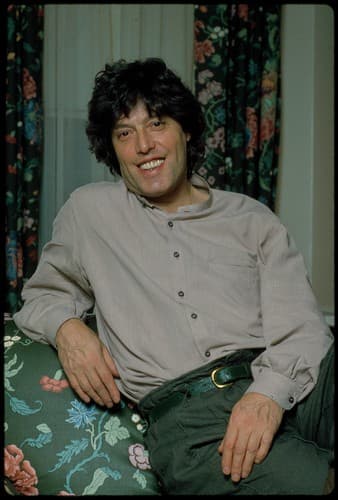
Tom Stoppard is a British playwright and screenwriter known for his sharp wit and exploration of philosophical themes. His notable works include "Arcadia," which intertwines themes of science and literature, and "The Real Thing," a play that examines love and fidelity. Stoppard's contributions to theater have earned him multiple awards, including Tony Awards and an Academy Award for Best Original Screenplay.
Similar books
- The Glass Menagerie
Tennessee Williams
3.7 (112k) average on GoodreadsFictionFeatures a blend of past and present, exploring memory, regret, and the passage of time, though with a different thematic focus.
- Angels in America
Tony Kushner
4.3 (16k) average on GoodreadsFantasyBoth plays utilize parallel narratives and explore grand themes, but Angels in America is more overtly political, emotionally raw, and critiques American society and identity through a lens of historical trauma and social change. Arcadia maintains a more intellectual and detached, albeit deeply curious, stance on humanity's quest for understanding, with less emphasis on direct social commentary and more on the nature of knowledge itself.
- Harry Potter and the Sorcerer's Stone
J.K. Rowling
4.5 (7M) average on GoodreadsFantasyRescued from a miserable life under the stairs, an orphaned boy discovers he's a wizard destined for a magical school, where he uncovers a dangerous secret tied to the dark wizard who murdered his parents.
- The Hunger Games
Suzanne Collins
4.3 (6.4M) average on GoodreadsFantasyIn a future where children fight to the death on live television, Katniss Everdeen volunteers for the arena, turning a death sentence into a fight for survival and a spark of rebellion.
- 1984
George Orwell
4.2 (3.1M) average on GoodreadsPoliticsIn a future where surveillance and thought control are absolute, a man's search for truth clashes with the Party, showing that hope can be a form of rebellion.
- Divergent
Veronica Roth
4.2 (2.9M) average on GoodreadsFantasyIn a society divided by virtues, a sixteen-year-old's difference from the norm starts a rebellion that threatens her world.




Enjoyed the summary?
A summary gives you the shape of the book. The book itself has the detail, the examples and the voice.
Find Arcadia on AmazonAs an Amazon Associate, BookBrief earns from qualifying purchases. How we're funded