
Synopsis
Covers the whole plot, including the ending.
- Difficulty
- Easy
- Pacing
- Moderate
- Mood
- Melancholy, Witty, Suspenseful, Morbid
- Read it if
- You enjoy dark humor, clever mysteries, and stories where intelligent children outsmart incompetent adults, even if it means a bittersweet ending.
- Skip it if
- You prefer lighthearted stories with clear happy endings, or are sensitive to themes of child endangerment and injustice.
The Reptile Room Plot Summary
Covers the whole plot, including the ending.
A New Guardian and a Reptilian Welcome
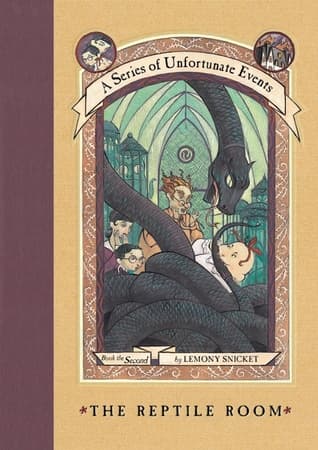
After a fire destroyed their home and killed their parents, the Baudelaire orphans — Violet, Klaus, and Sunny — are taken by Mr. Poe to live with their closest relative, Dr. Montgomery Montgomery, known as Uncle Monty. They travel in Mr. Poe's unreliable car to Uncle Monty's large, isolated house. They notice the smell of cake and a garden. Uncle Monty, a kind and eager herpetologist, welcomes them. He shows them his many reptiles in the 'Reptile Room,' a large conservatory full of snakes, lizards, and other scaled creatures. This includes the Incredibly Deadly Viper, a venomous but gentle snake he says is harmless if treated well. The children feel hopeful and comfortable for the first time since their parents died, believing they have found a safe place.
The Arrival of Stephano
Uncle Monty plans to take the children on a trip to Peru to study a new snake species. However, his previous assistant, Gustav, suddenly resigned, so he needs to hire someone new. As the children look forward to the trip, a man named Stephano arrives, saying he is the new assistant. The Baudelaires immediately recognize Stephano's single eyebrow, shiny eyes, and an eye tattoo on his ankle. These are signs of Count Olaf, their evil guardian who tried to steal their fortune. Stephano has a detailed disguise, including shaved eyebrows and a new accent. The children are scared and try to warn Uncle Monty, but he dismisses their worries, thinking Stephano is just a strange but harmless man.
Unheeded Warnings and Suspicious Behavior
The Baudelaire children watch Stephano and gather proof to show Uncle Monty his real identity. Violet sees Stephano sharpening a long knife. Klaus finds a hidden trunk with stage makeup and a disguise kit. Sunny bites Stephano, leaving a clear mark. They show their findings to Uncle Monty, explaining that Stephano is Count Olaf and wants their inheritance. But Uncle Monty, who understands reptile behavior better than villains, thinks Stephano's actions are innocent. He believes the knife is for cutting food, the trunk belongs to a theater group, and Sunny's bite is just a toddler's play. He even suggests Stephano might be a spy from another herpetological group but never sees him as a threat to the children.
A Deadly Discovery
The night before their Peru trip, a loud noise wakes the children. They run to Uncle Monty's room and find him dead on the floor with two small marks on his face. Stephano immediately points to a Mamba du Mal cage, one of Uncle Monty's most venomous snakes, saying it must have bitten him. He insists the snake bit Uncle Monty in his sleep and that the children should not touch anything. The children are suspicious. Klaus notes that the Mamba du Mal is a night snake and usually does not bite unless provoked. Its venom also causes different discoloration than what they see on Uncle Monty's face. They realize Stephano, as Count Olaf, killed their kind guardian.
Mr. Poe's Arrival and a Flawed Investigation
Mr. Poe arrives at the house, followed by the police and an ambulance, to investigate Uncle Monty's death. Stephano, still in disguise, sticks to his story that the Mamba du Mal bit Uncle Monty. The Baudelaires try to tell Mr. Poe that Stephano is Count Olaf and killed their uncle. Klaus points out the Mamba du Mal's behavior and the wounds' nature are inconsistent with Stephano's story. Violet tries to show Mr. Poe the hidden trunk of disguises, but Stephano has already removed the evidence. Mr. Poe, always unaware and focused on rules, dismisses the children's claims as fantasies caused by grief. He believes Stephano's calm manner and logical explanation. He even scolds the children for their 'imagination.'
The Autopsy and the Children's Deduction
During the autopsy, done by a local doctor who also believes Stephano, the children get a closer look at Uncle Monty's body. Klaus sees a purple discoloration around the marks on Uncle Monty's face, which is not consistent with Mamba du Mal venom. He remembers seeing similar discoloration on his own ankle after Sunny bit Stephano. This makes him realize that Stephano injected Uncle Monty with a strong, fast-acting venom, then used the Mamba du Mal's fangs to make the two marks, making it look like the snake was responsible. The purple discoloration is a side effect of the injected venom, not the snake's bite. The children now have clear proof of Olaf's crime.
Exposing the Imposter
With new resolve, Violet plans to expose Stephano. Knowing the children's words alone are not enough, she decides to use a scientific demonstration. She asks for a strong light and a magnifying glass, which she uses to examine Stephano's ankle. Under the bright light, she shows the eye tattoo, partly hidden by makeup but still visible. She also points out the single, bushy eyebrow Stephano tried to shave but was now growing back. Faced with this clear physical evidence, Mr. Poe finally has to admit that Stephano is Count Olaf. The deception is over, and Olaf's murder plot is revealed.
Olaf's Escape and the Incredibly Deadly Viper
Exposed, Count Olaf drops his disguise and tries to run away. As he rushes out, he tries to grab the cage with the Incredibly Deadly Viper, a rare and valuable snake, likely to sell it. The children stop him. In the struggle, the snake's cage opens, and the Incredibly Deadly Viper slithers out. Despite its name, the snake is, as Uncle Monty always said, completely harmless. It playfully wraps itself around Sunny's arm, showing it is gentle. Count Olaf, seeing his plan ruined, escapes into the night in his car. The Baudelaires are again without a guardian and face an uncertain future.
Another Journey, Another Loss
With Count Olaf gone, the Baudelaires process losing Uncle Monty, who gave them the closest thing to a loving home since their parents died. Mr. Poe, feeling bad for his earlier doubt, apologizes to the children. The police start looking for Count Olaf, but the children know he is clever and hard to catch. The Reptile Room, once a place of wonder, now feels sad. The children pack their few things, understanding that their time with Uncle Monty, though short and tragic, gave them a brief break from their sadness. They prepare to move to another guardian, their future as unsure and dangerous as ever, knowing Count Olaf is still free.
The Reptile Room Characters
Violet Baudelaire
Protagonist
The eldest Baudelaire sibling, a brilliant inventor and problem-solver.
Violet is the fifteen-year-old eldest Baudelaire orphan. She possesses an extraordinary talent for inventing and engineering, a skill she often utilizes by tying her hair back with a ribbon when deep in thought. In 'The Reptile Room,' she is crucial in piecing together the clues about Stephano's true identity and devising a way to expose Count Olaf. She often takes on a maternal role for her younger siblings, ensuring their safety and well-being. Her practical intelligence and quick thinking are invaluable in their desperate attempts to convince adults of the danger they are in.
Relationships: Klaus Baudelaire (Younger brother, intellectual partner); Sunny Baudelaire (Youngest sister, protected by Violet); Dr. Montgomery Montgomery (Kind guardian, object of affection and protection); Count Olaf/Stephano (Antagonist, source of constant threat)
Klaus Baudelaire
Protagonist
The middle Baudelaire sibling, an avid reader with an encyclopedic memory.
Klaus is the twelve-year-old middle Baudelaire, known for his love of books and his photographic memory. He can recall almost any fact he has read, a skill that proves vital in understanding the intricacies of Uncle Monty's reptile collection and the true nature of the Mamba du Mal. His keen observational skills allow him to notice inconsistencies in Stephano's story and the details of Uncle Monty's death, providing crucial evidence. Klaus's intellect often provides the logical framework for the children's investigations and deductions.
Relationships: Violet Baudelaire (Older sister, collaborator in problem-solving); Sunny Baudelaire (Youngest sister, protected by Klaus); Dr. Montgomery Montgomery (Kind guardian, shared intellectual curiosity); Count Olaf/Stephano (Antagonist, subject of Klaus's intellectual deductions)
Sunny Baudelaire
Protagonist
The infant Baudelaire sibling, known for her sharp teeth and unique vocalizations.
Sunny is the youngest Baudelaire sibling, a baby whose contributions are often overlooked by adults but are invaluable to her siblings. She communicates through a series of babbles and shrieks, which her siblings understand perfectly. Her four extremely sharp teeth prove useful in various situations, including biting Stephano's ankle, leaving a mark that later becomes a crucial piece of evidence. Despite her age, Sunny is brave and resourceful, often using her unique abilities to assist her siblings in their perilous situations.
Relationships: Violet Baudelaire (Older sister, caretaker); Klaus Baudelaire (Older brother, caretaker); Dr. Montgomery Montgomery (Kind guardian, source of comfort); Count Olaf/Stephano (Antagonist, target of Sunny's bite)
Dr. Montgomery Montgomery (Uncle Monty)
Supporting
The Baudelaire's kind and eccentric herpetologist uncle.
Uncle Monty is a renowned herpetologist, the Baudelaire children's closest living relative, and their second guardian. He is a kind, jovial, and somewhat naive man who genuinely cares for the children, offering them a brief period of happiness and security. His passion for reptiles is immense, and he maintains a vast collection in his Reptile Room. He is planning an expedition to Peru to study a new snake species and intends to take the children with him. Unfortunately, his innocence and trust make him an easy target for Count Olaf, leading to his untimely death.
Relationships: Baudelaire children (Guardian, loving uncle); Count Olaf/Stephano (Murderer, perceived as a peculiar assistant)
Count Olaf (Stephano)
Antagonist
The villainous actor who relentlessly pursues the Baudelaire fortune.
Count Olaf is the primary antagonist of the series, a greedy and cruel man determined to steal the Baudelaire orphans' vast inheritance. In 'The Reptile Room,' he disguises himself as Stephano, a bald, one-eyebrowed assistant, to infiltrate Uncle Monty's household. He is cunning and manipulative, attempting to murder Uncle Monty and frame a snake to get his hands on the children's fortune. Despite his elaborate disguises, his distinctive eye tattoo and cruel demeanor often give him away to the astute children, though rarely to the oblivious adults.
Relationships: Baudelaire children (Relentless persecutor, would-be murderer); Dr. Montgomery Montgomery (Murder victim)
Mr. Poe
Supporting
The well-meaning but utterly incompetent banker in charge of the Baudelaire fortune.
Mr. Poe is the executor of the Baudelaire parents' estate and is responsible for finding suitable guardians for the children. He is well-meaning but incredibly obtuse, often suffering from a persistent cough and consistently failing to recognize Count Olaf in his various disguises. In 'The Reptile Room,' he dismisses the children's warnings about Stephano and blindly accepts Olaf's fabricated story about Uncle Monty's death, highlighting his bureaucratic incompetence and his inability to protect the children from clear dangers. He represents the well-intentioned but ultimately ineffectual adult world.
Relationships: Baudelaire children (Ineffectual guardian, estate executor); Count Olaf/Stephano (Unwitting enabler, easily deceived)
The Incredibly Deadly Viper
Mentioned
A large, misnamed snake in Uncle Monty's collection.
The Incredibly Deadly Viper is a large, green snake in Uncle Monty's Reptile Room. Despite its ominous name, it is actually one of the most docile and friendly snakes in the world, a fact Uncle Monty delights in explaining. It plays a minor but significant role when Count Olaf attempts to steal it, and later when it playfully wraps itself around Sunny, demonstrating its harmless nature and subtly reinforcing Uncle Monty's expertise against Olaf's lies.
Relationships: Dr. Montgomery Montgomery (Beloved pet, subject of study); Sunny Baudelaire (Playful interaction)
The Mamba du Mal
Mentioned
A highly venomous snake used by Olaf to frame his murder.
The Mamba du Mal is a genuinely deadly snake in Uncle Monty's collection. It is a nocturnal and highly venomous creature, whose fangs are used by Count Olaf to create the false impression that Uncle Monty died from a snakebite. Klaus's knowledge of its behavior and venom characteristics helps the children deduce that it could not have been the true cause of death, making it a crucial element in exposing Olaf's murder plot.
Relationships: Dr. Montgomery Montgomery (Part of his collection); Count Olaf/Stephano (Tool for murder and framing)
The Reptile Room Themes
The Incompetence of Adults
A main theme is that adults consistently fail to protect or believe the Baudelaire orphans. Mr. Poe, despite his good intentions, often does not see Count Olaf's disguises and plans. He dismisses the children's smart observations as childish. Uncle Monty, while kind, is too trusting to see the danger in Stephano. This theme shows the children's isolation and how they must rely on their own intelligence in a world where adults are either bad or unable to help.
“There are many, many reasons to be afraid of a snake. If it is a venomous snake, for instance, it could bite you and inject poison into your bloodstream. If it is a constrictor snake, it could squeeze you until all the bones in your body are broken. If it is a giant snake, it could simply swallow you whole. But if you are a Baudelaire orphan, you are afraid of a snake for a much simpler reason: it means that Count Olaf is nearby.”
Appearance vs. Reality
This theme is clear through Count Olaf's disguises and the reptiles. Stephano's shaved eyebrows, changed voice, and made-up story are meant to hide his identity as Olaf. Likewise, the Incredibly Deadly Viper, despite its name, is harmless, while the Mamba du Mal is blamed for a murder it did not commit. The children struggle to convince adults of these hidden truths. This shows that appearances can be very misleading, and real danger often hides behind something that looks normal or misleads.
“It is a curious thing, the death of a loved one. It's like walking into a house and turning on all the lights. Only to find that no one is home.”
The Power of Knowledge and Observation
The Baudelaire children use their skills to find the truth. Klaus's knowledge of reptiles helps him see problems in Stephano's story about the Mamba du Mal. Violet's creative mind helps her find a way to show Stephano's tattoo. Sunny's sharp teeth leave an important mark. Their ability to notice details, connect information, and use their specific talents is their main defense against Count Olaf's plans and the adults' ignorance. This proves that knowledge and careful thinking are strong tools against lies.
“Knowledge is like a library, with countless books of facts, some of which are true and some of which are false.”
Grief and Resilience
The children are still dealing with the loss of their parents, and their short time of hope with Uncle Monty ends badly. This repeated experience of loss and betrayal forces them to become very strong. Despite their fear and sadness, they keep fighting for their safety and for justice, never giving up on exposing Count Olaf. Their ability to handle many sad events, while still grieving, shows their inner strength and their commitment to each other, even as their world falls apart.
“It is a sad truth in life that when one is in a new place, one can often feel very lonely.”
Plot Devices & Literary Techniques
Dramatic Irony
The audience (and children) know Count Olaf's identity, but most adults do not.
Dramatic irony is a pervasive device in 'The Reptile Room.' The reader, along with the Baudelaire children, immediately recognizes Stephano as Count Olaf, but Uncle Monty and Mr. Poe remain oblivious throughout much of the story. This creates tension and frustration, as the audience is privy to information that the characters desperately need, highlighting the incompetence of the adults and the children's isolation in their struggle against evil. This device also builds suspense as the audience anticipates when and how Olaf's true identity will finally be revealed to the ignorant adults.
Disguise and Deception
Count Olaf's primary method of manipulation.
Count Olaf's disguise as Stephano is central to the plot. His shaved head, single eyebrow, and fabricated backstory are designed to deceive, and they successfully fool the adults. The children, however, see through the facade, recognizing his distinctive eye tattoo and cruel demeanor. This device underscores the theme of appearance versus reality and highlights the children's superior observational skills compared to the adults. Olaf's reliance on disguise demonstrates his cunning and his theatrical nature, while also serving as a recurring challenge for the Baudelaires to overcome.
The Reptile Room
A symbolic setting and source of critical plot elements.
Uncle Monty's Reptile Room is more than just a setting; it's a symbolic space. It initially represents a haven of wonder and knowledge for the children, filled with fascinating creatures. However, it quickly becomes the scene of Uncle Monty's murder and the site of Olaf's attempted frame-up using the Mamba du Mal. The reptiles themselves, from the harmless Incredibly Deadly Viper to the truly venomous Mamba du Mal, are not only plot devices for Olaf's scheme but also serve to illustrate the theme of appearance versus reality and the importance of scientific knowledge (Klaus's expertise) in discerning truth.
Red Herring
The Mamba du Mal is initially presented as the cause of death.
The Mamba du Mal serves as a classic red herring in the murder mystery. Count Olaf deliberately places the highly venomous snake near Uncle Monty's body and claims it was the cause of death. This misdirection is intended to mislead Mr. Poe and the authorities. However, Klaus's knowledge of the snake's behavior and the specific characteristics of its venom allows the children to see through the deception, demonstrating that the obvious explanation is not always the correct one, and forcing them to look deeper for the truth behind the staged accident.
The Reptile Room Quotes
“Fate is like a strange, unpopular restaurant filled with odd little waiters who bring you things you never asked for and don't always like.”
“It is very useful, when one is young, to learn the difference between 'literally' and 'figuratively.' If something happens literally, it actually happens; if something happens figuratively, it feels like it's happening.”
“A good library will never be too neat, or too dusty, because somebody will always be in it, taking books off the shelves and staying up late reading them.”
“Sometimes words are not enough.”
“It is a curious thing, the death of a loved one. We all know that our time in this world is limited, and that eventually all of us will end up underneath some sheet, never to wake up. And yet it is always a surprise when it happens to someone we know.”
“Wicked people never have time for reading. It's one of the reasons for their wickedness.”
“The way sadness works is one of the strangest riddles of the world.”
“If you are allergic to a thing, it is best not to put that thing in your mouth, particularly if the thing is cats.”
“It is always sad when someone leaves home, unless they are simply going around the corner and will return in a few minutes with ice-cream sandwiches.”
“A library is like an island in the middle of a vast sea of ignorance, particularly if the library is very tall and the surrounding area has been flooded.”
“There are some things in this world that are too terrible to think about, and so we don't.”
“It is a well-known fact that reality is much more frightening than fiction.”
“The only thing worse than a lie is a lie that is believed to be the truth.”
“Miracles are like meatballs, because nobody can exactly agree on what they are made of, where they come from, or how often they should appear.”
Quiz
10 questions on the plot and the characters. Each answer comes with a short explanation.
Question 1
What is the name of the uncle who initially takes in the Baudelaire children in 'The Reptile Room'?
- Uncle Monty
- Uncle Olaf
- Uncle Jacques
- Uncle Jerome
Show answer
A. Uncle Monty Uncle Monty (short for Montgomery Montgomery) is the herpetologist who becomes the children's guardian at the start of the book. He is cheerful and kind, unlike Count Olaf who appears later.
Question 2
What type of animal is Uncle Monty's primary interest and the focus of his collection?
- Birds
- Reptiles
- Insects
- Mammals
Show answer
B. Reptiles Uncle Monty is a herpetologist, meaning he studies reptiles and amphibians. His home features the 'Reptile Room' where he keeps his collection, which gives the book its title.
Question 3
What disguise does Count Olaf use to infiltrate Uncle Monty's household?
- A traveling salesman
- A new assistant named Stephano
- A police officer
- A reptile expert from Peru
Show answer
B. A new assistant named Stephano Count Olaf poses as Stephano, claiming to be a new assistant sent to help Uncle Monty with his upcoming expedition to Peru. This allows him to get close to the children and carry out his evil plans.
Question 4
How does Uncle Monty die in the story?
- He is poisoned by a snake bite
- He is stabbed with a long knife
- He dies in a car accident
- He succumbs to a terrible odor
Show answer
B. He is stabbed with a long knife Count Olaf (disguised as Stephano) murders Uncle Monty by stabbing him with a long knife, then tries to frame the deadly serpent, the Incredibly Deadly Viper, for the crime.
Question 5
What is the name of the supposedly deadly snake that is actually harmless and friendly to the Baudelaire children?
- The Mamba Du Mal
- The Incredibly Deadly Viper
- The Serpent of Sorrow
- The Viper of Vile
Show answer
B. The Incredibly Deadly Viper The Incredibly Deadly Viper is misnamed by Uncle Monty as a joke—it is actually gentle and befriends the children. Count Olaf tries to use it as a scapegoat for Uncle Monty's murder.
Question 6
Why does Count Olaf want to take the Baudelaire children on a trip to Peru?
- To continue Uncle Monty's research
- To find more reptiles for the collection
- To marry Violet and gain control of their fortune
- To escape the authorities
Show answer
C. To marry Violet and gain control of their fortune Count Olaf's ultimate goal is to marry Violet Baudelaire, as the children's inheritance will go to their guardian if they are all together. He plans to do this in Peru where he thinks he can avoid interference.
Question 7
What evidence do the Baudelaire children find that helps prove Count Olaf's guilt in Uncle Monty's murder?
- A torn piece of his disguise
- A note in his handwriting
- A tattoo of an eye on his ankle
- A secret compartment in his suitcase
Show answer
C. A tattoo of an eye on his ankle The children discover Count Olaf's distinctive eye tattoo on his ankle, which he cannot hide even in disguise. This is key evidence linking Stephano to Count Olaf and implicating him in the crime.
Question 8
What theme is highlighted by the Baudelaire children's repeated encounters with adults who fail to believe or protect them?
- The joy of childhood adventures
- The importance of scientific curiosity
- The failure of adult authority and institutions
- The power of friendship among siblings
Show answer
C. The failure of adult authority and institutions Throughout the book, adults like Mr. Poe dismiss the children's warnings about Count Olaf, showing a theme of institutional incompetence and the children's need to rely on their own wits in a hostile world.
Question 9
How do the Baudelaire children ultimately prevent Count Olaf from taking them to Peru?
- They hide in the Reptile Room until he leaves
- They cause a car accident to delay the trip
- They expose his identity using the tattoo evidence
- They get help from a friendly neighbor
Show answer
C. They expose his identity using the tattoo evidence By revealing Count Olaf's eye tattoo to Mr. Poe, the children prove that Stephano is actually Count Olaf, leading to his arrest and preventing the trip to Peru, though he escapes justice once again.
Question 10
What literary device does Lemony Snicket frequently use in the narrative to foreshadow or comment on the story's tragic events?
- Rhyming couplets
- Direct address to the reader with warnings
- Flashbacks to happier times
- Comic relief through slapstick humor
Show answer
B. Direct address to the reader with warnings Snicket often breaks the fourth wall to speak directly to readers, offering grim warnings and definitions of words like 'miserable' or 'unfortunate,' which reinforces the book's darkly humorous and foreboding tone.
The Reptile Room FAQ
What is 'The Reptile Room' about?
The story follows the three Baudelaire orphans—Violet, Klaus, and Sunny—as they move in with their Uncle Monty, a herpetologist who cares for them in his home filled with reptiles. Their hopeful new life is disrupted when Count Olaf, their villainous former guardian, disguises himself as Stephano, Monty's new assistant, and murders Monty to steal the Baudelaire fortune. The children must uncover the truth and escape Olaf's schemes while navigating the dangerous reptile collection.
Why should I read 'The Reptile Room'?
This book combines dark humor, clever wordplay, and a gripping mystery that appeals to both children and adults. It explores themes of resilience, intelligence, and the persistence of evil through the Baudelaires' resourcefulness, such as Violet inventing a lockpick from a hairpin or Klaus researching snake venom. The narrative's unique tone—blending tragedy with wit—makes it a memorable and thought-provoking read in Lemony Snicket's 'A Series of Unfortunate Events'.
What is the background/setting of 'The Reptile Room'?
The story is set primarily at Uncle Monty's house in the countryside, which features the Reptile Room—a large chamber filled with exotic snakes, lizards, and other reptiles from Monty's expeditions. The setting shifts from the Baudelaires' previous miserable home with Count Olaf to this initially hopeful environment, only to become a scene of crime and danger as Olaf infiltrates it. The rural isolation adds to the suspense, trapping the children with the villain.
What are the most memorable quotes?
Notable quotes include Lemony Snicket's warning: 'If you have picked up this book with the hope of finding a simple and cheery tale, I'm afraid you have picked up the wrong book altogether,' highlighting the series' dark tone. Another is Uncle Monty's advice: 'There is always something to invent, to read, or to bite,' reflecting each Baudelaire's talents. Count Olaf's menacing line, 'I am your new assistant, Stephano,' underscores his deceptive nature.
What writing style does the author use?
Lemony Snicket employs a formal, melancholic, and metafictional style, directly addressing the reader with warnings and definitions of uncommon words (e.g., 'herpetologist'). The prose blends dark humor with tragic events, using repetition and irony to emphasize the Baudelaires' misfortunes. This creates a unique voice that both engages young readers and offers deeper commentary on adversity and storytelling.
What minor details add significant meaning?
Small details like the label 'Incredibly Deadly Viper'—a harmless snake misnamed by Monty—symbolize how appearances can deceive, mirroring Olaf's disguise. The car accident at the start foreshadows the disruption of the children's brief happiness. Monty's planned trip to Peru represents lost opportunities and the fragility of hope, while the brass reading lamp, used as evidence, highlights the Baudelaires' attention to detail in solving the mystery.
What are some subtle foreshadowing moments?
Early mentions of Monty's excitement about his 'new assistant' hint at Olaf's arrival, and the children's initial unease around Stephano foreshadows his true identity. The description of the Reptile Room as both fascinating and dangerous prefigures the murder scene. Snicket's warnings in the narrative, like 'pleasant events lead down the same road to misery,' directly foreshadow the tragic turn of events, preparing readers for the inevitable misfortune.
What unexpected character connections exist?
Uncle Monty's connection to the Baudelaires' parents is hinted at through shared interests in science and adventure, suggesting a deeper network of allies against Olaf. The Incredibly Deadly Viper's loyalty to the children contrasts with Olaf's betrayal, showing that not all 'dangerous' beings are harmful. Mr. Poe's continued incompetence as the banker overseeing the orphans links back to the series' theme of negligent adults failing to protect the vulnerable.
What are unspoken character motivations?
Count Olaf's greed drives his murder of Monty and pursuit of the Baudelaire fortune, but his deeper motivation is a cruel desire for power and control over the children. Uncle Monty's kindness stems from guilt or loyalty to the Baudelaires' parents, though this is only subtly implied. The Baudelaires' determination to expose Olaf is fueled by a need for justice and safety, beyond just survival, reflecting their growing resilience against a world that often ignores their plight.
What psychological complexities do characters exhibit?
Violet shows analytical thinking under pressure, using her inventing skills to solve problems like picking locks. Klaus demonstrates emotional depth through his research-driven anxiety and protectiveness over Sunny. Count Olaf exhibits psychopathic traits, such as lack of empathy and manipulative charm as Stephano. Uncle Monty's optimism contrasts with his naivety, making him a tragic figure who underestimates the danger until it's too late.
What are the major emotional turning points?
The children's joy upon meeting Uncle Monty and exploring the Reptile Room marks a hopeful high, shattered by Olaf's arrival as Stephano. Monty's murder is a devastating low, plunging them back into grief and danger. Their successful use of evidence—like the venomous snake and reading lamp—to expose Olaf provides a cathartic moment of agency, though it's tempered by Mr. Poe's disbelief and their forced move to another guardian, continuing their cycle of misfortune.
How do relationship dynamics evolve?
The Baudelaires' sibling bond strengthens as they collaborate to outsmart Olaf, with Violet and Klaus taking on more protective roles for Sunny. Their relationship with Uncle Monty evolves from hopeful trust to tragic loss, highlighting the fleeting nature of safety. Olaf's dynamic shifts from overt cruelty in the first book to subtle deception here, showing his adaptability as a villain. Mr. Poe's persistent incompetence strains the children's trust in adults, reinforcing their self-reliance.
Which parts remain ambiguous or open-ended?
The exact nature of the Baudelaire parents' connection to Monty and other allies is left unclear, hinting at a larger mystery. Olaf's escape and Mr. Poe's continued dismissal of the children's warnings leave the threat unresolved, setting up future books. The fate of the Incredibly Deadly Viper and other reptiles is ambiguous, symbolizing the unresolved chaos in the Baudelaires' lives. Snicket's narration often leaves moral questions open, such as why good people like Monty suffer.
What are controversial scenes or decisions?
Monty's murder by Olaf using the Mamba du Mal snake is controversial for its dark tone in a children's book, depicting violence off-screen but with clear implications. Mr. Poe's refusal to believe the children about Olaf's identity frustrates readers, highlighting themes of adult negligence. Some debate the Baudelaires' decision to not flee immediately upon suspecting Stephano, viewing it as a plot device to increase tension, though it reflects their hope and limited options.
'The Reptile Room' ending explained: how it ends & what it means
The book ends with the Baudelaires exposing Olaf as Stephano using evidence like the snake venom and reading lamp, but Mr. Poe remains skeptical and sends Olaf away without arrest. The children are forced to leave the Reptile Room and move to another guardian, Aunt Josephine. This ending underscores the series' themes of injustice and persistence of evil, as the Baudelaires' small victory is overshadowed by continued adult failure, setting the stage for further misfortunes in their journey.
About the author
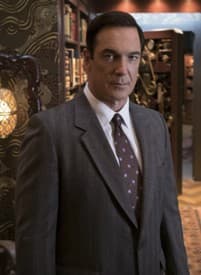
Lemony Snicket is the pen name of author Daniel Handler, known for his children's books featuring dark humor and whimsical storytelling. His series "A Series of Unfortunate Events" includes titles such as The Bad Beginning, The Reptile Room, The Wide Window, The Miserable Mill, The Austere Academy, and The Ersatz Elevator, which follow the misadventures of the Baudelaire orphans. Snicket's work has garnered a significant following and has been adapted into various media, including films and television.
Similar books
- Coraline
Neil Gaiman
4.0 (23k) average on GoodreadsFantasyFeatures a brave child protagonist facing a sinister, disguised villain in a gothic setting.
- Miss Peregrine's Home for Peculiar Children
Ransom Riggs
3.9 (977k) average on GoodreadsFantasyInvolves orphaned children, a mysterious guardian, and dark, fantastical elements.
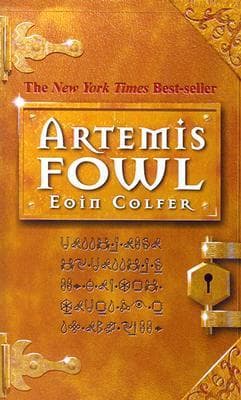
- Artemis Fowl
Eoin Colfer
3.9 (496k) average on GoodreadsFantasyShowcases brilliant young protagonists using their intellect to navigate dangerous situations.
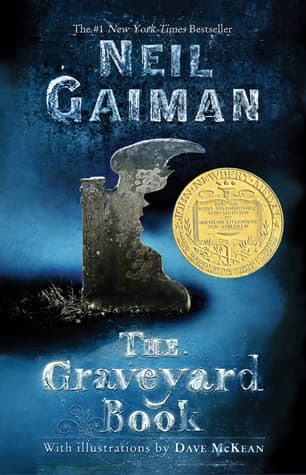
- The Graveyard Book
Neil Gaiman
4.1 (438k) average on GoodreadsFantasyGaiman's The Graveyard Book shares with "The Reptile Room" a focus on orphaned children facing danger and a unique, slightly macabre setting (a graveyard versus a reptile-filled mansion). Both authors excel at creating distinct narrative voices and imaginative worlds. However, Gaiman's narrative, while acknowledging loss and danger, is ultimately a story of belonging, finding family in unexpected places, and the protagonist's growth and eventual independence. Snicket, conversely, emphasizes the orphans' persistent isolation and the cyclical nature of their misfortune. While Gaiman imbues his world with a sense of wonder and eventual resolution, Snicket's world is one of relentless, often absurd, tragedy where true resolution remains elusive.
- Harry Potter and the Sorcerer's Stone
J.K. Rowling
4.5 (7M) average on GoodreadsFantasyRescued from a miserable life under the stairs, an orphaned boy discovers he's a wizard destined for a magical school, where he uncovers a dangerous secret tied to the dark wizard who murdered his parents.
- The Hunger Games
Suzanne Collins
4.3 (6.4M) average on GoodreadsFantasyIn a future where children fight to the death on live television, Katniss Everdeen volunteers for the arena, turning a death sentence into a fight for survival and a spark of rebellion.




Enjoyed the summary?
A summary gives you the shape of the book. The book itself has the detail, the examples and the voice.
Find The Reptile Room on AmazonAs an Amazon Associate, BookBrief earns from qualifying purchases. How we're funded