
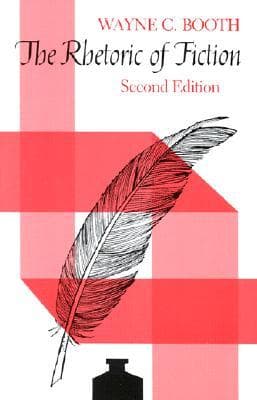
Core Idea
- Difficulty
- Hard
- Read it if
- You are a serious student of literature, a writer seeking to understand the mechanics of reader engagement, or anyone interested in the philosophical underpinnings of narrative persuasion.
- Skip it if
- You prefer light reading, are looking for a simple guide to writing, or have little interest in dense literary theory and analysis.
Key Takeaways from The Rhetoric of Fiction
The Implied Author: Fiction's Unseen Architect
Beyond the real author, an ideal persona guides our reading.
Booth presents the 'implied author' is an important idea, different from the actual writer. This is not the real person, but the 'second self' the writer creates, the voice and values the reader understands from the text. This implied author sets the norms and choices in the story, shaping our moral and intellectual involvement. Understanding this lets us discuss the author's aims and effects without focusing on their life. It is the source of the work's unity and its ethical view, even if the work tries to be 'objective.' This idea influences how we interpret characters, plot, and themes, acting as a guide to the story's meaning and emotional effect.
“Even the most rigorously impersonal writer in effect creates an implied version of himself, who is more or less different from the real man who sits at his desk and writes.”
In the book: Booth analyzes various narrative styles, from Fielding's intrusive narration in 'Tom Jones' to Flaubert's more 'objective' approach, demonstrating how an implied author's presence is felt even in works aiming for authorial invisibility. He argues that even Flaubert's meticulous selection of detail in 'Madame Bovary' reveals an implied authorial judgment.
Try this: When analyzing a text, distinguish between the actual writer and the 'implied author.' Consider what kind of moral, intellectual, and aesthetic persona the text itself constructs. Ask: What values does this narrator implicitly endorse? How does the narrative structure guide my judgment of characters and events? This helps in understanding the author's rhetorical strategy.
Related ideas: implied-author, authorial-persona, narrative-theory
The Unreliable Narrator: When Trust is Broken
Narrators can mislead, challenging readers to discern truth.
Booth's idea of the unreliable narrator is a lasting contribution, giving a way to understand stories where the teller's view is off, biased, or even misleading. An unreliable narrator is one whose account of events, character interpretations, or moral judgments do not match the implied author's values. This unreliability makes the reader an active interpreter, requiring them to question the narrator and put together a 'true' version of events or character reasons. This narrative method increases tension, creates irony, and often explores ideas of perception, deception, and the subjective nature of reality. It helps readers use their critical and moral judgment.
“For lack of better terms, I have called a narrator reliable when he speaks for or acts in accordance with the norms of the work (which is to say, the implied author's norms), unreliable when he does not.”
In the book: Booth discusses examples like Huck Finn, whose innocent perspective often reveals profound moral truths despite his own (and society's) limited understanding, and the narrator in Henry James's 'The Turn of the Screw,' whose sanity and interpretation of events are constantly in question, leading to ambiguous and unsettling readings.
Try this: When encountering a first-person narrator, always ask: Is this narrator trustworthy? What are their biases, limitations, or hidden agendas? Look for discrepancies between what the narrator says and what the narrative shows. Consider how the implied author might be subtly signaling the narrator's unreliability through other characters' reactions or plot developments. This enhances your understanding of irony and complex characterization.
Related ideas: unreliable-narrator, narrative-voice, reader-response
Rhetoric is Inescapable: Every Story Persuades
Fiction, like all communication, aims to move and shape its audience.
Booth states that rhetoric is not an extra detail but a natural part of all fiction writing. Every choice an author makes—from plot structure and character development to word choice and point of view—is a rhetorical choice, meant to persuade the reader in some way. This persuasion might be intellectual, emotional, or moral, aiming to shape the reader's beliefs, feelings, or judgments. Even authors who say they are 'objective' or 'impersonal' still make rhetorical choices that guide the reader's experience. To deny rhetoric in fiction is to misunderstand the basic communication of storytelling. This view questions the idea of 'art for art's sake' by showing literature's function and persuasive side.
“The author cannot choose to use rhetoric or not. He can only choose what kind of rhetoric he will use.”
In the book: Booth extensively critiques the 'rhetoric of silence' prevalent in modernist literature, exemplified by authors like Flaubert and Joyce, who sought to remove overt authorial presence. He demonstrates how even their meticulous selection of detail and narrative distancing are rhetorical strategies designed to evoke specific reader responses and judgments.
Try this: Instead of asking if a novel uses rhetoric, ask *how* it uses rhetoric. Identify specific narrative techniques (e.g., direct address, interior monologue, descriptive detail, plot twists) and analyze their intended persuasive effect on the reader. How does the author want me to feel about this character? What moral lesson is being subtly conveyed? This helps uncover deeper layers of meaning and authorial intent.
Related ideas: rhetoric-of-fiction, authorial-intent, persuasion-in-fiction
The Postulated Reader: The Author's Ideal Audience
Authors write for a specific kind of reader they implicitly construct.
Along with the implied author, Booth introduces the 'postulated reader' (often called 'implied reader' in his work, though he later clarified the difference). This is not the actual person reading the book, but the ideal, 'competent' reader that the implied author expects and addresses. The author's choices in language, allusion, and narrative complexity are all made with this imagined reader in mind. If the reader does not match the postulated reader, misunderstandings can happen. This idea shows that reading is a transaction, where the text shapes its audience. Authors implicitly or explicitly invite readers to take on certain attitudes, share knowledge, and make specific moral judgments, creating the audience they want to address.
“The author creates not only an ideal, superior reader but also an 'implied reader' who is sometimes far from ideal.”
In the book: Booth illustrates this with examples of authors like Jane Austen, who assumes a reader familiar with specific social conventions and moral sensibilities, or experimental modernists who postulate a reader willing to engage with fragmented narratives and intellectual puzzles, often excluding those seeking conventional storytelling.
Try this: When reading, consider who the author seems to be talking to. What knowledge, values, or sensitivities does the text assume you possess? If you find yourself struggling, consider if you are aligning with the 'postulated reader' the text is trying to create. This can help you understand why certain narrative choices were made and how they aim to shape your experience.
Related ideas: implied-reader, reader-response, authorial-strategy
Showing vs. Telling: A False Dichotomy
Effective fiction balances direct statement with vivid depiction.
Booth criticizes the strict 'show, don't tell' rule, saying it is too simple and misleads writers and critics. He shows that 'telling' (direct author commentary, summary, or judgment) is not bad and can be a strong rhetorical tool, often more efficient and effective than 'showing' (dramatizing scenes, dialogue, and action). The point is not to remove telling, but to use it well. Authors who understand rhetoric know when to step back and when to intervene directly to guide the reader's interpretation or give context. Sticking strictly to 'showing' can lead to boring writing, while good 'telling' can improve clarity, pace, and moral weight. The best fiction combines both.
“The author is always present, no matter how he may try to hide himself. It is simply that some authors have chosen to do their telling more indirectly than others.”
In the book: Booth contrasts the direct, often humorous, authorial interventions in Fielding's 'Tom Jones' with the more indirect methods of Henry James. He argues that Fielding's explicit moralizing and summaries are not flaws but integral to the novel's rhetorical effect and charm, engaging the reader in a shared moral universe.
Try this: As a writer, don't be afraid to 'tell' when it serves your purpose, especially for exposition, summarizing complex information, or making direct moral statements. As a reader, recognize that authorial commentary isn't always a weakness; it's a deliberate rhetorical choice. Analyze its effect: does it clarify, persuade, or create irony? When does the author choose to 'show' versus 'tell,' and why?
Related ideas: showing-telling, narrative-technique, authorial-intervention
The Ethics of Fiction: Moral Engagement is Inevitable
Stories inherently shape our moral understanding and judgment.
Booth states that fiction is never morally neutral. Every story, through its choices of character, plot, and perspective, addresses ethical questions and shapes the reader's moral understanding. Even works that try to be 'objective' or 'realistic' make value judgments through what they include, exclude, emphasize, and how they show consequences. The implied author presents norms against which characters are judged and actions are evaluated. To ignore the ethical part of fiction is to miss a key aspect of its power and purpose. This does not mean fiction should preach, but that its persuasive nature involves moral shaping, asking readers to think about human behavior and values.
“Our judgment of the characters, our response to the plot, our acceptance or rejection of the implied beliefs—all are shaped by the author's rhetorical choices.”
In the book: Booth examines the moral dilemmas presented in works like Flaubert's 'Madame Bovary,' where the implied author's subtle judgments of Emma's romantic delusions and the provincial society are crucial to the novel's ethical impact, despite Flaubert's personal claims of artistic detachment.
Try this: When reading, actively consider the moral implications of the story. What values are being upheld or challenged? How does the narrative guide your judgment of characters' actions? Reflect on how the story might be subtly (or overtly) influencing your own moral framework. As a writer, be conscious of the ethical weight of your narrative choices; even seemingly minor details can carry moral resonance.
Related ideas: ethics-in-fiction, moral-imagination, value-judgment
Distance and Sympathy: Mastering Emotional Connection
Authors control our emotional closeness to characters and events.
Booth explores how authors use 'distance' to control a reader's emotional and intellectual involvement. This distance can be intellectual (how much we understand), moral (how much we approve), or emotional (how much we sympathize). Authors can create sympathy by letting us access a character's thoughts and feelings, or they can create distance through irony, detached narration, or by showing morally bad characters. Controlling distance lets authors achieve complex effects, such as making us pity a villain or be critical of a heroic figure. This control is a rhetorical tool, shaping our view and judgment of the fictional world and its people. It is about managing the reader's emotional experience.
“The author may choose to increase or decrease the distance between himself, his reader, and his characters.”
In the book: Booth contrasts the deep sympathy evoked for Stephen Dedalus through interior monologue in Joyce's 'A Portrait of the Artist as a Young Man' with the intellectual distance created by the highly ironic and detached narration in Swift's 'A Modest Proposal,' where the reader is forced to critically evaluate the narrator's shocking propositions.
Try this: Pay attention to how the narrative positions you in relation to characters. Do you feel close and empathetic, or distant and critical? What narrative techniques (e.g., direct thought, limited perspective, authorial commentary, irony) contribute to this distance? How does this distance affect your moral judgment or emotional response? As a writer, consciously choose your narrative distance to achieve specific emotional and intellectual effects.
Related ideas: narrative-distance, sympathy-in-fiction, irony
The Author's Voice: Beyond the Narrator
Even 'objective' works carry the author's imprint and personality.
Booth argues that the 'author's voice' is always present, even if it is not the narrator's voice. This idea goes beyond the implied author to include the actual writer's unique style and themes, as seen in the text. While an author might use a narrator with a distinct voice, the personality, values, and artistic choices of the person behind the text shape the work. This 'voice' is not a direct statement but an overall aesthetic and moral feeling that fills the story. Recognizing this helps us understand that even 'impersonal' works are personal creations, with the author's way of seeing and shaping the world. It is about the signature style and worldview that appears.
“Even the most self-effacing authors still speak through their works, making their presence felt through every choice of word and structure.”
In the book: Booth discusses how authors like Flaubert, despite striving for 'impersonality,' still possess a distinctive voice and worldview that can be discerned in their meticulous descriptions, ironic tone, and underlying moral judgments, which differ markedly from, say, Tolstoy or Dickens.
Try this: When reading, try to discern the author's unique 'voice' beyond the narrator. What stylistic patterns, recurring themes, or characteristic attitudes emerge across their works? How does this 'voice' contribute to the overall experience and meaning of the text? This deepens appreciation for the craftsmanship and individuality of writers.
Related ideas: authorial-voice, style-in-fiction, aesthetic-choice
The Pleasure of Reading: A Collaborative Act
Reading is not passive reception but an active co-creation with the author.
Booth redefines reading as an active, shared process rather than passive reception. The author, through rhetorical choices, builds an 'implied reader' and guides their experience, but the reader actively interprets, judges, and 're-creates' the text. Reading enjoyment often comes from successfully following these authorial cues, understanding the implied author's intentions, and engaging with the moral and intellectual challenges in the story. When authors and readers align in this rhetorical dance, the experience is rewarding. Misunderstandings can happen when the actual reader does not take on the role of the 'postulated reader,' showing the dynamic and sometimes challenging nature of literary communication. It is a dialogue, not a monologue.
“The author can never escape the rhetorical task of building his readers' beliefs, or their sense of reality, or their judgments.”
In the book: Booth argues that the pleasure derived from works like 'Pride and Prejudice' comes from the reader's active participation in discerning irony, judging characters' social blunders, and ultimately aligning with the implied author's moral vision, rather than simply absorbing a story.
Try this: Approach reading as an active engagement. Don't just follow the plot; question, analyze, and infer. Consider how the author is trying to shape your experience and what kind of reader they expect you to be. Embrace the challenge of interpreting ambiguity and irony, and recognize that your active participation is essential to the text's meaning and your enjoyment.
Related ideas: reader-response-theory, active-reading, literary-engagement
The Limits of Relativism: Some Interpretations are Better
While subjective, interpretation isn't boundless; authorial intent matters.
In his Afterword and throughout the book, Booth pushes back against extreme relativism, especially views that deny any way to know authorial intent or that treat all interpretations as equally valid. While acknowledging the complexities of interpretation and the reader's role, he insists that an 'implied author' exists whose intentions, in the text, guide understanding. To fully appreciate a work, one must try to understand what the implied author meant to communicate, even if that intention is subtle or ironic. Ignoring this leads to readings that lessen a work's power or distort its meaning. This does not mean a single, clear reading, but it does mean recognizing limits and seeking a 'good' reading that respects the work's logic and rhetorical design. It is a detailed argument for responsible interpretation.
“Though we may never know the 'real' author's full intention, to deny the existence of a discoverable, implied authorial intention is to make literary communication meaningless.”
In the book: Booth grapples with criticisms from post-structuralist theories that declared the 'death of the author.' He clarifies that while the biographical author might be irrelevant, the 'implied author' is essential for coherent critical discourse, otherwise, any reading becomes arbitrary, destroying the possibility of meaningful literary discussion.
Try this: While exploring your own interpretations, always consider if your reading aligns with the 'implied author's' apparent design. Are you respecting the internal logic and rhetorical strategies of the text? Engage in critical dialogue, but also strive for interpretations that are robustly supported by textual evidence and acknowledge the work's persuasive aims. This helps avoid arbitrary readings and fosters richer literary understanding.
Related ideas: authorial-intent, interpretation, literary-criticism, hermeneutics
The Rhetoric of Fiction Quotes
“The author's judgment is always present, always in some sense our guide.”
“The most successful narratives are those in which the created beliefs of the reader are most nearly in harmony with the implied author's beliefs.”
“The author's voice is never truly absent, no matter how rigorously he may exclude himself from overt comment.”
“Every author, no matter how objective he may try to be, writes a kind of secret autobiography.”
“The implied author is always distinct from the real man who wrote the book.”
“Irony is a device that can be used to achieve intimacy or to maintain distance.”
“The novelist creates not simply an imitation of life but an imitation of an action; and that action is always in some sense a moral one.”
“To interpret a work is to discover a meaning which the author intended.”
“The author's rhetoric is the art of communicating with the reader, whether directly or indirectly.”
“Even the most seemingly neutral choice of words carries some implication of judgment.”
“The most effective rhetoric is that which most fully engages the reader's moral and intellectual sympathies.”
“Narrators, like authors, can be more or less reliable.”
“The author's choices about what to tell and what to withhold are profoundly rhetorical.”
“Our aesthetic pleasure is often deeply intertwined with our ethical judgments.”
“No author can write a story without implying a judgment on the events he narrates.”
Quiz
10 questions on the main ideas. Each answer comes with a short explanation.
Question 1
Which concept, coined by Wayne C. Booth, refers to the author's second self, distinct from the real person, who is implied by the work itself?
- The omniscient narrator
- The implied author
- The unreliable narrator
- The postulated reader
Show answer
B. The implied author Booth introduced 'the implied author' to describe the persona or 'second self' that an author creates through the act of writing, which guides the reader's experience of the text.
Question 2
According to Booth, what is the primary function of 'rhetoric' in fiction?
- To persuade the reader of the narrator's trustworthiness.
- To entertain the reader with stylistic flourishes.
- To shape the reader's beliefs, attitudes, and emotional responses.
- To reveal the author's personal biography.
Show answer
C. To shape the reader's beliefs, attitudes, and emotional responses. Booth argues that rhetoric in fiction is about the author's art of communicating with and influencing the reader, shaping their perceptions and judgments, not just about stylistic embellishments.
Question 3
Which of the following terms, central to Booth's work, describes a narrator whose account of events the reader cannot fully trust?
- The objective narrator
- The omniscient narrator
- The postulated narrator
- The unreliable narrator
Show answer
D. The unreliable narrator The 'unreliable narrator' is a key concept introduced by Booth, denoting a narrator whose credibility has been seriously compromised, often leading to ironic interpretations by the reader.
Question 4
What significant addition did Wayne C. Booth make to the new edition of 'The Rhetoric of Fiction'?
- A new chapter on postmodern narrative techniques.
- An extensive Afterword clarifying misunderstandings and correcting errors.
- Interviews with contemporary fiction writers.
- A foreword by a different literary critic.
Show answer
B. An extensive Afterword clarifying misunderstandings and correcting errors. The new edition features an 'extensive Afterword' written by Booth himself, where he revisits his original arguments, addresses criticisms, and shares his updated thinking.
Question 5
How does Booth's concept of 'the postulated reader' relate to the actual reader?
- It refers to the average person who buys the book.
- It is the ideal reader imagined by the implied author, who possesses specific knowledge and values.
- It is a reader who actively rewrites parts of the text.
- It describes the demographic target for the novel's marketing.
Show answer
B. It is the ideal reader imagined by the implied author, who possesses specific knowledge and values. The 'postulated reader' (or 'implied reader') is the ideal reader that the implied author constructs and addresses, who is capable of understanding and responding to the text in the intended way. This is distinct from any actual, individual reader.
Question 6
Booth's work is credited with transforming the criticism of fiction by emphasizing what aspect of narrative?
- The purely aesthetic qualities of language.
- The socio-economic background of the author.
- The ethical and persuasive dimensions of author-reader communication.
- The psychological profiles of fictional characters.
Show answer
C. The ethical and persuasive dimensions of author-reader communication. Booth's central argument is that fiction, like other forms of communication, is inherently rhetorical, involving an author attempting to persuade or influence a reader, thereby giving ethical and persuasive dimensions to literary analysis.
Question 7
What is the purpose of the Supplementary Bibliography prepared by James Phelan in the new edition?
- To list all of Booth's other publications.
- To provide a list of the greatest novels written in the past twenty years.
- To document important critical works related to the rhetoric of fiction from the past two decades.
- To offer a guide for creative writing students.
Show answer
C. To document important critical works related to the rhetoric of fiction from the past two decades. The Supplementary Bibliography, prepared by James Phelan with Booth's consultation, aims to list important critical works from the two decades following the first edition, reflecting the 'richest in the history of the subject' period.
Question 8
Booth's 'The Rhetoric of Fiction' implicitly argues against which critical approach that tends to ignore the author's deliberate choices and effects on the reader?
- Reader-response criticism
- Structuralism
- New Criticism (or formalist criticism)
- Deconstruction
Show answer
C. New Criticism (or formalist criticism) Booth's work reasserts the importance of the author's role and the rhetorical effect on the reader, which was often downplayed or explicitly rejected by New Criticism's focus on the text as an autonomous object, independent of authorial intention or reader reception.
Question 9
How does Booth distinguish between 'showing' and 'telling' in fiction, and what is his stance on their relative value?
- He argues 'showing' is always superior to 'telling' for greater realism.
- He contends that both 'showing' and 'telling' are rhetorical tools, and their effectiveness depends on the author's purpose and context.
- He asserts 'telling' is a sign of an amateur writer and should be avoided.
- He claims 'showing' is only appropriate for first-person narratives, while 'telling' is for third-person.
Show answer
B. He contends that both 'showing' and 'telling' are rhetorical tools, and their effectiveness depends on the author's purpose and context. Booth famously challenged the dogma that 'showing' is always superior to 'telling.' He demonstrated that 'telling' (direct authorial commentary) is a legitimate and often necessary rhetorical strategy, and that both are forms of communication chosen by the implied author for specific effects.
Question 10
The book explores how authors make novels 'accessible' and how readers 'recreate texts.' What does this imply about the relationship between author and reader?
- The reader passively receives the author's message without any active interpretation.
- The author is solely responsible for meaning, and the reader's role is merely to decode it.
- It's a dynamic, interactive process where the author guides, and the reader actively participates in constructing meaning.
- The reader's interpretation is entirely subjective and independent of authorial intention.
Show answer
C. It's a dynamic, interactive process where the author guides, and the reader actively participates in constructing meaning. Booth emphasizes that reading is an active process of 'recreation' where the reader, guided by the author's rhetorical choices, constructs the meaning of the text. This highlights a dynamic, collaborative relationship in the communication of fiction.
The Rhetoric of Fiction FAQ
What is 'The Rhetoric of Fiction' about?
'The Rhetoric of Fiction' by Wayne C. Booth explores how authors use rhetorical techniques to shape fictional narratives, influence reader perception, and make novels accessible. It examines the intricate relationship between author, text, and reader in the creation and interpretation of meaning in fiction.
Does 'The Rhetoric of Fiction' provide practical advice for writers?
While primarily a work of literary criticism and theory, the book offers profound insights into how fictional forms work and how authors engage readers. Understanding its concepts can indirectly inform writers about effective narrative strategies and reader engagement.
What is the 'implied author' concept in Booth's theory?
The 'implied author' is a key concept referring to the idealized, reconstructed image of the author that a reader infers from the text itself, distinct from the real-life author. This inferred persona guides the reader's interpretation and understanding of the narrative's values and intentions.
How does 'The Rhetoric of Fiction' define 'unreliable narrator'?
An 'unreliable narrator' is a character whose credibility is compromised, often due to their lack of knowledge, bias, or moral failings, leading the reader to question their account of events. Booth's work helped formalize this concept, highlighting how authors use it to create complex narrative effects.
How is 'The Rhetoric of Fiction' different from structuralist literary theory?
'The Rhetoric of Fiction' emphasizes the ethical and persuasive dimensions of narrative, focusing on the author's intentional communication and the reader's interpretive role, which contrasts with some structuralist approaches that prioritize the inherent structures of language and text over authorial intent or reader response.
Who should read 'The Rhetoric of Fiction'?
This book is essential reading for students and scholars of literary criticism, fiction writers interested in the mechanics of storytelling, and anyone deeply invested in understanding how fictional narratives persuade, engage, and influence readers.
What is the significance of the new edition's Afterword?
The Afterword in the new edition provides Booth's updated reflections, clarifying previous misunderstandings, correcting his earlier views, and presenting his latest thoughts on the rhetoric of fiction. It offers valuable insights into the evolution of his ideas and the field.
Does the book address different genres of fiction?
While focusing broadly on fictional form, 'The Rhetoric of Fiction' provides a framework applicable across various genres by analyzing universal rhetorical strategies authors employ. Its principles can be used to understand the persuasive aspects of diverse fictional works.
What is the 'postulated reader'?
The 'postulated reader,' also known as the 'implied reader,' is the ideal audience imagined by the implied author, whose beliefs and understanding are assumed or shaped by the text's rhetoric. This reader is distinct from any actual reader, serving as a textual construct.
About the author

Wayne C. Booth was an American literary critic and theorist, known for his influential work in the field of rhetoric and narrative theory. His notable book, "The Rhetoric of Fiction," explores the relationship between authors and readers, examining how narrative techniques shape the reader's experience. Booth's contributions have significantly impacted literary criticism and the understanding of fiction.
Similar books
- The Old Man and the Sea
Ernest Hemingway
3.8 (831k) average on GoodreadsLiterary FictionA Cuban fisherman's long struggle with a giant marlin becomes a story of endurance and dignity, now retold for young adults with illustrations, phonetic guides, and writing prompts in Traditional Chinese.
- One Hundred Years of Solitude
Gabriel García Márquez
4.1 (753k) average on GoodreadsLiterary FictionThrough the multi-generational story of the Buendía family, a mythical town deals with the repeating patterns of time, love, and solitude, as the extraordinary mixes with the ordinary.
- The Goldfinch
Donna Tartt
3.9 (720k) average on GoodreadsLiterary FictionHaunted by a tragic explosion and clutching a stolen Dutch masterpiece, a young orphan navigates the opulent drawing rooms of New York and the gritty underbelly of the art world, desperately seeking connection and redemption amidst a life spiraling into crime and obsession.
- Little Fires Everywhere
Celeste Ng
4.1 (713k) average on GoodreadsLiterary FictionIn Shaker Heights, an artist and her daughter move in, and their free-spirited lives clash with a rule-bound matriarch, revealing hidden conflicts beneath a perfect surface.
- Eleanor Oliphant Is Completely Fine
Gail Honeyman
4.3 (708k) average on GoodreadsLiterary FictionA lonely woman's structured life changes when an IT guy and an elderly man help her learn to open her heart.
- The Poisonwood Bible
Barbara Kingsolver
4.1 (659k) average on GoodreadsLiterary FictionA zealous missionary's rigid faith clashes with the Belgian Congo's wilderness and people, unraveling his family through the eyes of his five unforgettable women.


Enjoyed the summary?
A summary gives you the shape of the book. The book itself has the detail, the examples and the voice.
Find The Rhetoric of Fiction on AmazonAs an Amazon Associate, BookBrief earns from qualifying purchases. How we're funded