

Synopsis
Covers the whole plot, including the ending.
- Difficulty
- Medium
- Pacing
- Moderate
- Mood
- Suspenseful, Adventurous, Patriotic, Nautical
- Read it if
- You enjoy classic espionage thrillers with a strong nautical theme and historical significance.
- Skip it if
- You prefer fast-paced modern thrillers or dislike detailed sailing descriptions.
The Riddle of the Sands Plot Summary
Covers the whole plot, including the ending.
A Yachting Invitation
Arthur Carruthers, a junior clerk in the Foreign Office in London, receives a puzzling letter from an old Oxford friend, Davies. The letter invites him on a yachting trip in the Baltic Sea, vague about the purpose but hinting at an 'affair of the utmost importance.' Though initially skeptical, Carruthers is intrigued by the mystery and the chance to escape London's routine. He accepts, curious about Davies's sudden interest in yachting and the nature of the 'affair.' He prepares for a relaxing cruise, unaware of the serious implications of his decision.
Arrival in Flensburg and Initial Discomfort
Carruthers travels to Flensburg, Germany, and finds Davies aboard his small, poorly kept yacht, the *Dulcibella*. Davies is unexpectedly gruff and quiet, and the yacht is far from the luxurious vessel Carruthers had imagined. Carruthers dislikes the cramped space and Davies's almost obsessive focus on sailing and the German coastline. Davies reveals he has been searching for a sunken yacht and hints at a past incident involving a collision and a mysterious German official named Dollmann. Carruthers feels increasingly uneasy, sensing more to Davies's activities than simple yachting.
The Search for the Medusa
Davies confides in Carruthers, explaining his search for the *Medusa*, a yacht believed to have sunk in a storm. He suspects the sinking was not accidental and that Dollmann, the German official, was involved. Davies believes Dollmann tried to drown him during a previous meeting, and that the *Medusa* holds a secret connected to Dollmann's actions. Carruthers, at first doubtful, begins to listen as Davies describes the strange circumstances and the odd behavior of locals, especially in the Frisian Islands. Davies's certainty slowly convinces Carruthers, pulling him deeper into the mystery.
Infiltrating the Frisian Islands
Under Davies's expert navigation, the *Dulcibella* enters the complex and often dangerous waterways of the Frisian Islands. They carefully map the shifting sands and observe German naval activity. Carruthers, initially a beginner, quickly learns sailing and navigation, becoming an active part of their reconnaissance. They see several German warships and notice unusual dredging and surveying. The remote, desolate nature of the islands adds to their isolation and the growing suspicion that they are uncovering something important. Their observations contradict official German statements about the area's use.
The Discovery of the Secret Harbour
Through careful observation and bold exploration, Davies and Carruthers discover a large, secretly built harbor hidden among the sandbanks and tidal flats of the Frisian Islands. This discovery is a major breakthrough, confirming their fears that Germany is preparing for something far more sinister than naval exercises. The harbor can hold a large invasion fleet, and its location near the British coast is alarming. They realize that the sunken *Medusa* and Dollmann's actions are directly connected to this secret military project. The implications of their discovery are huge, pointing to a possible German invasion of England.
Encountering Dollmann and Clara
During a reconnaissance mission, Carruthers meets Dollmann, the German official Davies suspects, and his daughter, Clara. Dollmann is outwardly charming, but Carruthers senses a dangerous intelligence beneath the surface. Clara, however, is a captivating young woman who immediately catches Carruthers's eye. He feels drawn to her, creating a personal problem as he balances his duty to uncover Dollmann's secrets with his growing feelings for Clara. This meeting adds personal stakes and moral complexity to their espionage, as Carruthers struggles with trust and betrayal.
Dollmann's Revelation
Dollmann eventually tells Carruthers his true identity: he is a renegade Englishman, a former British naval officer, who has defected to Germany and is now a key planner of the invasion. He chillingly describes the detailed German plan to invade England by stealth, using a large fleet of barges and transports hidden in the secret harbor. Dollmann justifies his betrayal by citing British complacency and what he sees as a lack of national strength. This confession shocks Carruthers, confirming the seriousness of their discovery and putting them in extreme danger as they now have critical, highly sensitive information.
Clara's Confession and Alliance
Clara, deeply troubled by her father's treachery and the terrible implications of his plan, confesses to Carruthers that she knew about her father's activities, though not the full extent until recently. She expresses deep regret and a desperate wish to stop the invasion. Clara reveals she has been secretly watching her father and gathering information, and offers to help Carruthers and Davies expose the plot. Her help is crucial, as she knows Dollmann's movements and German operations well, providing the Englishmen with an invaluable inside source and a way to escape.
The Escape and the Chase
With the full German plot revealed, Davies, Carruthers, and Clara must escape the Frisian Islands with their lives and their vital information. They begin a dangerous journey aboard the *Dulcibella*, navigating treacherous sandbanks and avoiding German patrol boats. The chase is tense and dangerous, showing Davies's excellent seamanship and Carruthers's new courage. Clara's knowledge of the local waters and German naval procedures proves invaluable in their escape. They face constant threats from German authorities, who are now fully aware of their espionage and determined to stop them from reaching England.
Return to England and Reporting the Plot
Against all odds, Davies, Carruthers, and Clara successfully cross the North Sea and reach the English coast. They immediately contact British authorities, specifically the Admiralty, to report the serious German invasion plot. Carruthers, using his Foreign Office connections, ensures their astonishing story is taken seriously. Despite initial skepticism, the detailed evidence, including charts and observations, and Clara's confirmation, convinces naval intelligence officials of the immediate danger. The information they provide is a catastrophic revelation, forcing the British government to face the severe threat to national security and re-evaluate its coastal defenses.
Aftermath and Public Response
The intelligence from Davies, Carruthers, and Clara prompts the British government to act. While the immediate details of the official response remain secret, the story suggests a significant strengthening of naval defenses and a re-evaluation of strategic weaknesses in the North Sea. The book ends with a powerful, direct message to the reader, stressing that the events are a fictional warning based on real geographical and strategic concerns. It calls for vigilance and preparedness against potential foreign aggression, especially from Germany. The book greatly influenced British naval policy.
Principal Figures
Arthur Carruthers
Protagonist
A conventional Foreign Office clerk who transforms into a resourceful spy.
Initially a rather dull, conventional, and complacent junior clerk in the Foreign Office, Carruthers is a product of his comfortable Edwardian upbringing. He values order, propriety, and the predictable routines of London life. His early skepticism and discomfort aboard the *Dulcibella* highlight his lack of adventurous spirit. However, as he becomes embroiled in Davies's mysterious quest, Carruthers demonstrates a surprising capacity for courage, quick thinking, and adaptability. He gradually sheds his urban sensibilities, learning to sail, navigate, and conduct espionage with increasing proficiency. His intellectual curiosity and strong sense of duty drive him to uncover the truth.
Relationships: Davies (University acquaintance turned spy partner; Carruthers initially finds Davies peculiar but grows to respect and rely on him.); Clara Dollmann (Romantic interest and a conflicted ally; Carruthers is drawn to her despite her father's treachery.); Dollmann (Antagonist; Carruthers is initially deceived by his charm but quickly recognizes his dangerous intellect.)
Davies
Protagonist
An eccentric but brilliant yachtsman and the instigator of the espionage mission.
Davies is an enigmatic and unconventional character, a former university acquaintance of Carruthers who has seemingly abandoned a conventional life for an obsessive pursuit in the Baltic Sea. He is a master sailor, intimately familiar with the treacherous North Sea and Frisian Islands. His unkempt appearance, gruff demeanor, and single-minded focus often make him seem eccentric, but beneath this exterior lies a sharp intellect, an unwavering sense of duty, and an almost intuitive understanding of naval strategy. He is driven by a profound suspicion of German activities and a deep loyalty to England, which he expresses through action rather than words.
Relationships: Carruthers (University acquaintance and spy partner; Davies initially withholds information but comes to trust and depend on Carruthers.); Clara Dollmann (Ally; Davies is wary but accepts her help in their mission.)
Dollmann (formerly Herr Dollmann)
Antagonist
A renegade Englishman and the mastermind behind the German invasion plot.
Dollmann is the primary antagonist, a highly intelligent and charismatic former British naval officer who has defected to Germany. He is sophisticated, articulate, and possesses a chillingly rational justification for his betrayal. He believes England has grown complacent and decadent, and that a German invasion is both inevitable and, in a twisted sense, beneficial for the future of Europe. He is a master manipulator, capable of charming those around him while secretly orchestrating a massive military operation. His deep understanding of both British and German naval capabilities makes him a formidable and dangerous foe, embodying the intellectual and strategic threat posed by the German Empire.
Relationships: Clara Dollmann (Daughter; he uses her, but she ultimately betrays him.); Carruthers (Adversary; he attempts to deceive and manipulate Carruthers.); Davies (Adversary; he attempted to silence Davies in the past.)
Clara Dollmann
Supporting
Dollmann's conflicted daughter who ultimately helps the protagonists.
Clara is Dollmann's daughter, a young woman caught between her loyalty to her father and her growing horror at his treasonous activities. She is intelligent, observant, and possesses a strong moral compass. Initially, she is complicit through silence, but as the true scale of her father's plot becomes clear, she is wracked with guilt and fear. Her affection for Carruthers and her deep-seated patriotism compel her to betray her father and assist the Englishmen. She provides crucial intelligence and guidance, demonstrating bravery and resourcefulness in a perilous situation. She represents the human cost and moral dilemmas inherent in espionage.
Relationships: Dollmann (Father; she is deeply conflicted by his actions and ultimately betrays him for the greater good.); Carruthers (Romantic interest and ally; she trusts him and works with him to expose her father's plot.); Davies (Ally; she aids him and Carruthers in their escape.)
The German Emperor (Wilhelm II)
Mentioned
The implied figurehead of Germany's expansionist ambitions.
Though never directly appearing, the German Emperor is a powerful, unseen presence, representing the imperial ambitions and military might of Germany. He is the ultimate authority behind the clandestine invasion plot, and his desire for naval dominance and territorial expansion drives Dollmann's actions. The Emperor symbolizes the perceived threat to British security and the rising geopolitical tensions of the early 20th century. His influence underscores the urgency and gravity of the protagonists' mission, as they are not just fighting a rogue agent but a powerful nation-state.
Relationships: Dollmann (His actions are in service to the Emperor's perceived will and Germany's imperial ambitions.)
The Foreign Office
Supporting
Carruthers's employer and the initial recipient of the espionage intelligence.
The Foreign Office represents the British establishment and the bureaucratic world from which Carruthers hails. It embodies both the strengths and weaknesses of British governance: its potential for diligence and its susceptibility to complacency. Initially, it's portrayed as somewhat detached from the realities of international intrigue, but it ultimately serves as the official channel through which the crucial intelligence is processed. The Foreign Office's eventual acceptance of the threat highlights the book's direct appeal to the British government to take the German threat seriously.
Relationships: Carruthers (His employer; he uses his connection to the office to report the plot.)
The Admiralty
Supporting
The British naval authority that receives and acts upon the invasion intelligence.
The Admiralty is the supreme naval authority in Britain, responsible for the country's maritime defense. It is the ultimate destination for the intelligence gathered by Davies and Carruthers. While initially cautious, the Admiralty represents the essential institution capable of understanding the strategic implications of the German plot and mobilizing a defensive response. Its role underscores the book's purpose as a direct warning to those in power, emphasizing the need for robust naval vigilance and preparedness in the face of emerging threats. The Admiralty's actions, though not explicitly detailed, are implied to be swift and decisive.
Relationships: Davies (Receives his intelligence.); Carruthers (Receives his intelligence.)
Themes & Insights
National Security and Complacency
A main theme is Great Britain's vulnerability due to its perceived complacency regarding national defense, especially against a growing German naval threat. Dollmann's careful German invasion plan specifically targets Britain's unprotected east coast, showing how a lack of vigilance could lead to disaster. The book directly warns the British public and government, urging them to stop being complacent and invest in stronger defenses. Carruthers's initial comfortable ignorance, contrasted with the harsh reality Davies uncovers, and Dollmann's cynical reason for his betrayal based on Britain's perceived weakness, show this.
“What was it that Davies had said? 'It's a huge thing, this. It's the whole future of England.'”
The Nature of Espionage and Sacrifice
The novel explores the raw, unglamorous reality of espionage, far from romanticized ideas. Davies and Carruthers do dangerous, lonely, and often uncomfortable work, carefully mapping waterways and watching enemy movements. Their mission requires personal sacrifice, risking their lives and comfort for the greater good. Clara Dollmann's choice to betray her father for her country highlights the moral complexities, showing the deep personal cost of such actions. The theme emphasizes that protecting national security often falls to individuals willing to operate in secret, making difficult ethical decisions.
“We were spies, no doubt about it. It was a nasty word, but there it was.”
The Power of Observation and Deduction
A key theme is the importance of sharp observation and logical thinking in discovering hidden truths. Davies, with his deep knowledge of sailing and the sea, notices tiny details others miss – unusual dredging, subtle changes in buoy markers, and specific types of German vessels. Carruthers, initially relying on his intellect, learns to apply these skills to the physical world, putting together seemingly separate clues to form a clear picture of the invasion plot. The discovery of the secret harbor results directly from their careful and systematic way of gathering and interpreting evidence, showing that important intelligence often lies in plain sight for those who know how to look.
“It was not a question of 'if' but 'how.' How had this been done, and what was its purpose?”
Man vs. Nature (The Sea)
Beyond the political thriller, the novel also highlights the challenges and beauty of the sea. The dangerous waters of the Frisian Islands, with their shifting sands, hidden channels, and unpredictable weather, are a constant challenge. Davies's excellent seamanship and the *Dulcibella*'s toughness are central to their survival and success. The sea is not just a background but an active force, both helping and hindering their mission. It demands respect, skill, and deep understanding, showing how the natural environment can be a strong barrier or a strategic advantage, especially in naval warfare. The detailed descriptions of sailing and navigation immerse the reader in this struggle.
“The North Sea, with its fickle moods and treacherous sands, was a formidable ally to those who knew its secrets, and a deadly enemy to those who did not.”
Betrayal and Loyalty
Betrayal is a central theme, exemplified by Dollmann, an Englishman who defects to Germany and actively plots against his homeland. His betrayal is not just political but personal, affecting his daughter, Clara. Conversely, Clara's struggle between loyalty to her father and loyalty to her country creates a poignant subplot, ultimately leading her to betray her father for the greater good. Davies and Carruthers's loyalty to England, despite their different backgrounds and initial reasons, drives their dangerous mission. The novel explores the complex reasons behind these choices and their deep consequences.
“He was an Englishman, yes, but an Englishman who had chosen to serve another flag, and to strike at his own.”
Plot Devices & Literary Techniques
The MacGuffin (The Medusa)
An initial mystery that drives the plot and leads to a larger revelation.
The sunken yacht *Medusa* functions as an early MacGuffin. Davies's obsession with finding it and understanding its mysterious sinking initially drives the plot. It serves as a seemingly simple mystery that gradually unravels to reveal the much larger and more significant German invasion plot. The *Medusa* itself isn't the ultimate goal, but the pursuit of its secrets leads the protagonists directly to the core of the espionage, effectively hooking the reader and the characters into the unfolding drama.
The Unreliable Narrative (Initial Impressions)
Carruthers's initial misjudgment of Davies and the situation creates suspense and character development.
Carruthers's initial impressions of Davies as eccentric and the yachting trip as a mere lark serve as a form of unreliable narrative. His conventional worldview means he misinterprets Davies's urgency and the seriousness of their situation, creating a sense of dramatic irony for the reader. This device allows for gradual revelation, as Carruthers (and the reader) slowly come to understand the true gravity of the mission. It also highlights Carruthers's character development from a naive observer to an informed participant, as his perception of events becomes more accurate.
The 'Call to Action' Narrative
The entire novel functions as a direct warning and plea to the British public and government.
The novel itself is a plot device designed as a 'call to action.' Childers wrote *The Riddle of the Sands* not merely as entertainment, but as a direct and urgent warning to the British government and public about the dangers of German naval expansion and the vulnerability of Britain's coastal defenses. The meticulous detail in describing German naval operations and the strategic geography of the Frisian Islands serves to make the fictional threat feel terrifyingly real, aiming to provoke a response in real-world policy and public awareness. The concluding address to the reader underscores this didactic purpose.
The Expert Mentor (Davies)
Davies's specialized knowledge and skills guide Carruthers and the investigation.
Davies acts as the expert mentor to Carruthers. His unparalleled knowledge of sailing, navigation, and the intricate waterways of the North Sea and Frisian Islands is crucial to the mission's success. He teaches Carruthers the practical skills needed for their reconnaissance, transforming the inexperienced clerk into a competent sailor and spy. Davies's expertise allows them to operate in dangerous and remote areas, providing the means to uncover the secret harbor and evade German patrols. Without his specialized skills, the investigation would be impossible, highlighting the importance of practical knowledge in espionage.
The Riddle of the Sands Quotes
“There are some men who are content to live their lives on the beaten track, to take their pleasures in the ordinary way, to follow the rules of the game.”
“The sea, the sea, the open sea! The blue, the fresh, the ever free!”
“There is a kind of fascination in watching the working of a mind that is subtly, profoundly, and perhaps unconsciously, dishonest.”
“It was a wild, lonely, desolate place, and just the sort of spot for a man who wanted to be forgotten.”
“If you want to understand a man, you must know his history.”
“The whole thing was a game, a grim, deadly game, played with human lives as pawns.”
“There are some things that are better left undisturbed, some riddles that are best left unsolved.”
“It is not the biggest ships that do the most damage, but the smallest, if they are handled with skill and daring.”
“The very simplicity of the scheme was its greatest safeguard.”
“We were playing with fire, and we knew it. But the fascination of the game was too strong to resist.”
“There is nothing so dangerous as a secret that is shared by too many people.”
“It was a conspiracy, a vast, far-reaching conspiracy, and we were only scratching the surface.”
“The sea holds many secrets, and sometimes it gives them up, sometimes it keeps them forever.”
“To neglect our defences is to invite disaster.”
Quiz
10 questions on the plot and the characters. Each answer comes with a short explanation.
Question 1
Which character initially invites Carruthers on the yachting trip in the Baltic Sea?
- Davies
- Dulcibella
- Clara Dollmann
- Arthur Davies
Show answer
D. Arthur Davies Carruthers receives a mysterious invitation from an old Oxford acquaintance, Arthur Davies, to join him on a yachting trip.
Question 2
What is the name of Davies' small sailing yacht?
- The Medusa
- The Dulcibella
- The Wanderer
- The Sea-Bird
Show answer
B. The Dulcibella Davies' yacht, the Dulcibella, is a small, shallow-draft boat that proves essential for navigating the intricate German coast.
Question 3
What is the primary motive behind the German activities that Carruthers and Davies uncover?
- To establish a new trade route to Scandinavia.
- To develop a new type of submarine for espionage.
- To prepare for a naval invasion of England.
- To smuggle contraband goods into the North Sea.
Show answer
C. To prepare for a naval invasion of England. The central plot revolves around the discovery of a secret German plan to rehearse a large-scale invasion of England.
Question 4
Which German official is revealed to be a key figure in the invasion plot, posing as a local sportsman?
- Herr Storch
- Captain von Bruning
- Herr Dollmann
- Admiral Tirpitz
Show answer
C. Herr Dollmann Herr Dollmann, posing as an English-speaking sportsman, is actually a German naval officer orchestrating the invasion rehearsals.
Question 5
What specific type of geographical feature do the Germans use to practice landing troops and supplies undetected?
- Deep-water fjords
- Large, open beaches
- Shallow, intricate tidal estuaries and sandbanks
- Rocky sea caves
Show answer
C. Shallow, intricate tidal estuaries and sandbanks The Germans utilize the complex network of shallow sands and estuaries along their coast to practice clandestine landings, replicating conditions for an invasion of England's East Coast.
Question 6
What is the relationship between Dollmann and Clara?
- They are siblings.
- They are distant cousins.
- Clara is Dollmann's daughter.
- Clara is Dollmann's governess.
Show answer
C. Clara is Dollmann's daughter. Clara Dollmann is Herr Dollmann's daughter, and her presence complicates the protagonists' mission, particularly for Davies.
Question 7
What critical piece of evidence do Carruthers and Davies retrieve from the German operation, confirming the invasion plot?
- A detailed map of the German naval fleet.
- A secret diary written by Herr Dollmann.
- A set of detailed charts and plans for the invasion landings.
- A coded message from the Kaiser.
Show answer
C. A set of detailed charts and plans for the invasion landings. They manage to steal the crucial charts and plans that detail the German invasion exercise, providing irrefutable proof of the scheme.
Question 8
The novel is often cited as a cautionary tale for which specific aspect of British defense policy at the time?
- The strength of its colonial army.
- The readiness of its air force.
- The vulnerability of its North Sea coastal defenses.
- The intelligence gathering capabilities of MI6.
Show answer
C. The vulnerability of its North Sea coastal defenses. Childers, having served in the Royal Navy, wrote the book specifically to highlight the alarming lack of preparedness and vulnerability of Britain's North Sea coast to a potential German invasion.
Question 9
How do Carruthers and Davies ultimately deliver their intelligence to the British authorities?
- They send a telegram from a neutral port.
- They are rescued by a British warship.
- They sail the Dulcibella back to England and present their findings in person.
- They entrust the documents to a British diplomat in Germany.
Show answer
C. They sail the Dulcibella back to England and present their findings in person. After their daring escape, they sail the Dulcibella across the North Sea to England, personally delivering the incriminating evidence to the Admiralty.
Question 10
What is the symbolic significance of the 'riddle of the sands' in the context of the novel's warning?
- It refers to the difficulty of navigating the complex German coastline.
- It symbolizes the hidden nature of German military intentions and the deceptive appearance of their coastal activities.
- It represents the challenge of understanding German naval codes.
- It describes the shifting political alliances in pre-WWI Europe.
Show answer
B. It symbolizes the hidden nature of German military intentions and the deceptive appearance of their coastal activities. The 'riddle of the sands' refers to the seemingly innocuous, shallow, and constantly shifting sandbanks and estuaries that hide the secret German military preparations, symbolizing the deceptive nature of the threat and Britain's ignorance of it.
The Riddle of the Sands FAQ
What is the central premise of 'The Riddle of the Sands'?
The novel follows two Englishmen, Carruthers and Davies, who embark on a yachting holiday in the German Frisian Islands. While there, they stumble upon a clandestine German operation involving a fleet of barges and a sophisticated plan to practice a surprise naval invasion of England, which they then work to expose.
Who are the two main protagonists and how do they meet?
The protagonists are Arthur Carruthers, a diligent Foreign Office clerk, and Davies, a more adventurous and experienced yachtsman. Carruthers is initially invited by Davies to join him on his yacht, the 'Dulcibella', for a sailing trip in the Baltic, setting the stage for their unexpected espionage.
What is the significance of the yacht 'Dulcibella' to the plot?
The 'Dulcibella' is Davies' small, unassuming yacht, which proves to be perfectly suited for navigating the shallow, intricate waterways of the Frisian Islands. Its size and maneuverability allow Carruthers and Davies to explore hidden creeks and observe German activities without drawing undue suspicion, making it crucial to their investigations.
Who is Clara Dollmann and what is her role in the story?
Clara Dollmann is the daughter of Herr Dollmann, a renegade Englishman working for the Germans. She initially appears as a mysterious figure, but Carruthers develops feelings for her, complicating his mission. She ultimately aids the protagonists, driven by her own moral compass and loyalty to her British heritage.
What is the ultimate German plot that Carruthers and Davies uncover?
They discover a meticulously planned German scheme to use a fleet of disguised barges to transport troops across the North Sea for a surprise invasion of England. This operation, spearheaded by Herr Dollmann and a German officer, was designed to exploit England's perceived naval vulnerabilities, especially in the shallow waters of the Frisian Islands.
How does the 'riddle of the sands' itself contribute to the German plan?
The 'riddle of the sands' refers to the treacherous, ever-shifting sandbanks and shallow channels of the German Frisian coast. The Germans intend to use these complex waterways to their advantage, training their invasion fleet in secrecy and relying on their intimate knowledge of the area to evade detection by the British navy.
What is the true identity and motivation of Herr Dollmann?
Herr Dollmann is actually an English traitor named Charles Dollmann, a former Royal Navy officer who defected to Germany due to disillusionment and personal grievances. He is driven by a desire for revenge against England and a belief in Germany's superior strategic planning, making him a formidable antagonist.
Are there any real-world historical figures or events that inspired the novel?
While the characters are fictional, the novel was directly inspired by Erskine Childers' own experiences sailing the North Sea and his deep concern about Britain's naval preparedness. It reflected widespread anxieties in Britain about German naval expansion and the potential for invasion prior to World War I, acting as a political warning.
How does Carruthers' initial skepticism evolve throughout the narrative?
Initially, Carruthers is a conventional, somewhat complacent Foreign Office clerk who views Davies' theories with suspicion. As he witnesses more evidence and experiences the dangers firsthand, his skepticism transforms into resolute determination and a profound understanding of the threat, marking his growth as a character.
Analyze Davies' character: Is he merely an adventurous yachtsman or something more profound?
Davies is more than just an adventurous yachtsman; he embodies a keen, intuitive understanding of the sea and an unwavering sense of duty. Despite his lack of formal espionage training, his practical skills, persistence, and almost obsessive focus on the German activities make him an effective, albeit unconventional, spy.
What psychological pressures do Carruthers and Davies face during their mission?
They face immense psychological pressure from constant surveillance, the isolation of their mission, and the knowledge that the fate of England might rest on their unproven theories. The threat of discovery, capture, or even death, coupled with the need to maintain secrecy, creates significant mental strain.
How does the relationship between Carruthers and Davies develop and change?
Their relationship evolves from initial skepticism and mutual annoyance to one of deep trust and camaraderie. Carruthers learns to respect Davies' instincts and nautical expertise, while Davies benefits from Carruthers' analytical mind. They become an effective, complementary team, bound by their shared dangerous secret.
In what ways does the novel critique British complacency or naval unpreparedness?
The novel serves as a stark critique of British complacency, particularly among the political elite, regarding national defense. It highlights the vulnerability of Britain's coastlines and the perceived lack of attention to potential threats from a rising Germany, urging for greater vigilance and investment in naval forces.
Is 'The Riddle of the Sands' primarily a spy thriller or a political commentary?
It is both, intricately woven. While functioning as a suspenseful spy thriller with thrilling nautical action and espionage, its underlying purpose is a powerful political commentary and a warning. Childers used the thrilling narrative to deliver a serious message about national security and the need for preparedness.
How does the novel's ending resolve the immediate threat and what is its broader implication?
The ending sees Carruthers and Davies successfully relaying their intelligence to the British authorities, leading to increased naval vigilance. While the immediate German invasion plan is thwarted, the broader implication is a call to ongoing alertness and the recognition that such threats are ever-present, requiring constant readiness.
What role does the natural environment, particularly the sea, play in the narrative?
The sea is not just a setting but an active character, shaping the plot and reflecting the characters' struggles. Its unpredictable nature, treacherous currents, and hidden channels are central to both the German invasion plan and the protagonists' efforts to uncover it, demanding respect and mastery from all involved.
How does the novel balance its thrilling elements with its detailed descriptions of sailing?
Childers masterfully blends high-stakes espionage with authentic, detailed descriptions of sailing and navigation. The technical aspects of seamanship are integral to the plot's realism and suspense, as the protagonists' survival and success often depend on their nautical skill, grounding the thriller in practical reality.
About the author
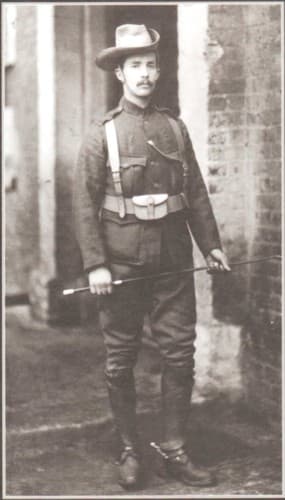
Erskine Childers was an Irish author and political activist known for his contributions to fiction in the early 20th century. His notable work, The Riddle of the Sands, is a spy novel that explores themes of espionage and adventure in the context of pre-World War I Europe. Childers' writing is recognized for its intricate plotting and detailed descriptions of sailing and navigation.
Similar books
- Kim
Rudyard Kipling
3.7 (33k) average on GoodreadsHistorical FictionFeatures espionage in a colonial setting, focusing on intelligence gathering and national security.
- Ice Station Zebra
Alistair MacLean
4.0 (17k) average on GoodreadsThrillerThriller with a strong sense of place and danger, involving naval operations and secret missions.
- The War of the Worlds
H.G. Wells
3.8 (245k) average on GoodreadsFantasyWhile both are cautionary tales of invasion, Wells's novel uses a fantastical alien threat to explore societal anxieties and the fragility of civilization, whereas Childers's work is grounded in geopolitical realism, focusing on a plausible human threat from a rival nation. Childers's realism gives his work a distinct political urgency that Wells's sci-fi lacks.
- The Secret Agent
Joseph Conrad
3.6 (19k) average on GoodreadsThrillerConrad's novel delves into the psychological complexities of anarchism, moral ambiguity, and the personal toll of espionage, offering a more introspective and darker exploration of human nature. Childers's The Riddle of the Sands, in contrast, maintains a more straightforward, patriotic narrative focused on external threat discovery and the mechanics of a counter-plot, prioritizing action and strategic implications over deep psychological analysis.
- Angels & Demons
Dan Brown
3.9 (2.7M) average on GoodreadsThrillerA Harvard symbologist races through Rome's ancient sites, deciphering cryptic clues to unmask the Illuminati and stop a vengeful plot to destroy the Vatican with a stolen antimatter weapon.
- Gone Girl
Gillian Flynn
4.1 (2.3M) average on GoodreadsThrillerA wife's sudden disappearance on her fifth anniversary reveals a web of lies and psychological warfare, exposing the secrets within a seemingly perfect marriage.






Enjoyed the summary?
A summary gives you the shape of the book. The book itself has the detail, the examples and the voice.
Find The Riddle of the Sands on AmazonAs an Amazon Associate, BookBrief earns from qualifying purchases. How we're funded