

Synopsis
Covers the whole plot, including the ending.
- Difficulty
- Hard
- Pacing
- Variable
- Mood
- Epic, Strategic, Heroic, Tragic, Historical
- Read it if
- You enjoy epic historical sagas with grand military strategy, intricate political maneuvering, and a large cast of memorable characters.
- Skip it if
- You prefer fast-paced, character-driven narratives with minimal historical detail or a small cast of characters.
The Romance of the Three Kingdoms Plot Summary
Covers the whole plot, including the ending.
The Oath of the Peach Garden
The Han Dynasty falls apart under the Yellow Turban Rebellion and corrupt officials. Three men from humble beginnings, Liu Bei, a royal descendant, Guan Yu, a great warrior, and Zhang Fei, a fierce fighter, meet in Zhuo County. They see the people's suffering and the empire's decay, which moves them to act. In a peach garden, they promise to be brothers, vowing to live and die together to bring back peace and the Han rule. This moment sets up the main bond that drives many of the novel's conflicts and moral questions, leading them to face warlords like Dong Zhuo and Cao Cao.
Dong Zhuo's Tyranny and Lu Bu's Betrayal
Dong Zhuo, a cruel warlord from the west, enters the capital Luoyang, seizes power, and replaces the young Emperor Shao with Emperor Xian, a puppet ruler. His rule is marked by cruelty and terror. A group of eighteen warlords, including Cao Cao, Yuan Shao, and Sun Jian, rises against him, but their efforts are mostly uncoordinated. Dong Zhuo's adopted son, Lu Bu, the 'Flying General,' is a powerful fighter. However, the clever minister Wang Yun sets up a plot using Diao Chan, who seduces both Dong Zhuo and Lu Bu, turning them against each other. Lu Bu, driven by jealousy, kills Dong Zhuo, ending his rule but starting a new period of chaos as warlords fight for power.
Cao Cao Rises
After Dong Zhuo's death, Cao Cao, a smart and ruthless politician, starts to gain power. He saves Emperor Xian from Dong Zhuo's remaining forces and makes a new capital in Xu Chang, putting the emperor under his control. He defeats many rivals, including Lu Bu, who is executed after betraying Liu Bei, and later, Yuan Shao at the Battle of Guandu. Through military skill, political moves, and a practical, often harsh, approach, Cao Cao becomes dominant in the north. This sets the stage for the Kingdom of Wei and makes him Liu Bei's main enemy.
Liu Bei's Wanderings and Zhuge Liang's Emergence
After the group against Dong Zhuo breaks up, Liu Bei and his sworn brothers face years of hardship, constantly moving and looking for safety from stronger warlords, especially Cao Cao. Despite his good intentions and public support, Liu Bei lacks a stable base and a clear plan. He suffers many losses, including his family. Needing advice, he hears about Zhuge Liang, a recluse known for his great wisdom. After three earnest visits to Zhuge Liang's home in Longzhong, Liu Bei convinces the planner to join him. Zhuge Liang, in his 'Longzhong Plan,' outlines a strategy for Liu Bei to establish a base in Jing Province and later conquer Sichuan, eventually forming the Kingdom of Shu Han and bringing back the Han Dynasty.
The Battle of Red Cliffs
Cao Cao, having united the north, launches a large invasion south, aiming to conquer Liu Bei and Sun Quan and unite all of China. Liu Bei, with Zhuge Liang's advice, forms an alliance with Sun Quan, the young ruler of the Wu territories in the south. Though greatly outnumbered, Zhuge Liang and Zhou Yu (Sun Quan's chief planner) create a clever plan. They use fire attacks, feigned surrenders, and a manipulated easterly wind to burn Cao Cao's linked ships on the Yangtze River. The Battle of Red Cliffs ends in a devastating loss for Cao Cao, forcing him north and keeping Liu Bei and Sun Quan's forces independent. This battle is important for establishing China's three-way split.
Jing Province Disputes and Guan Yu's Downfall
After the Battle of Red Cliffs, Jing Province, a vital area, causes much tension between Liu Bei and Sun Quan. Though first loaned to Liu Bei, Sun Quan demands its return, leading to complex talks and near-fights. Guan Yu, in charge of its defense, is an arrogant commander. While Liu Bei focuses on conquering Shu (Sichuan), Sun Quan, seeing a chance and angered by Guan Yu, secretly allies with Cao Cao. Lü Meng, Sun Quan's general, uses a deceptive plan to take Jing Province while Guan Yu fights Cao Cao's forces. Alone and outmaneuvered, Guan Yu is captured and killed by Sun Quan's forces. This is a big blow to Liu Bei and a turning point that deepens the hatred between Shu and Wu.
Liu Bei Becomes Emperor and the Battle of Yiling
After securing the rich lands of Shu and making a stable base, and in response to Cao Pi (Cao Cao's son) taking the Han throne and declaring the Wei Dynasty, Liu Bei declares himself Emperor of Shu Han, claiming to be the true successor to the Han Dynasty. Despite Zhuge Liang's advice to focus on defeating Wei, Liu Bei is filled with grief and a strong desire for revenge for Guan Yu's death. He launches a large invasion against Sun Quan's Wu. At the Battle of Yiling (or Xiaoting), Liu Bei's forces are drawn into a long campaign and then badly defeated by the young Wu general Lu Xun, who uses a fire attack like at Red Cliffs. Liu Bei retreats, heartbroken and shamed, and soon dies, leaving his son, Liu Shan, and Shu Han to Zhuge Liang.
Zhuge Liang's Northern Expeditions
After Liu Bei's death, Zhuge Liang works to fulfill his master's dream of bringing back the Han Dynasty by conquering Wei. He launches several Northern Expeditions, using his strategies against Wei's generals like Sima Yi. Despite some early wins, including taking key cities and the 'Empty Fort Strategy,' Zhuge Liang is hindered by supply problems, Wei's vast resources, and mistakes by his subordinates (like Ma Su at Jieting). His campaigns show his deep loyalty, careful planning, and sadness over the empire's state. Despite his efforts, he never achieves a clear victory, and his health worsens from the constant war.
The Death of Zhuge Liang
During his sixth and final Northern Expedition, Zhuge Liang is in a long standoff against Wei forces led by Sima Yi at the Wuzhang Plains. Despite his continued strategic skill, his health, already weak from years of effort and worry, begins to fail. He tries a ritual to extend his life, but Wei Yan accidentally interrupts it, sealing his fate. Knowing he will die soon, Zhuge Liang carefully plans for the Shu army's retreat and even creates a posthumous strategy to deter Sima Yi. He dies peacefully in his tent, looking north, his dream of uniting China unfinished. His death marks the end of a time of strategic genius and the start of Shu Han's slow decline.
The Fall of Shu Han
After Zhuge Liang's death, Shu Han, under the weak rule of Liu Shan (Liu Bei's son), slowly declines. While there are still capable generals and officials, internal conflicts, corrupt eunuchs, and a lack of a clear vision weaken the kingdom. The strong Wei state, now controlled by the Sima family, sees an opportunity. Sima Zhao, and later his son Sima Yan, launch a large invasion of Shu. Despite a brave defense by generals like Jiang Wei (Zhuge Liang's successor), the kingdom is overwhelmed. The final blow comes when Deng Ai, a Wei general, leads a daring cross-mountain march to take Chengdu, the capital. Liu Shan surrenders, and Shu Han falls, ending one of the Three Kingdoms and moving closer to China's eventual reunification under the Jin Dynasty.
The Rise of the Sima Clan and the Fall of Wei
Even as Wei fought Shu Han and Wu, an internal power struggle was happening. The Sima family, especially Sima Yi, had steadily gained power and influence in the Wei court, often serving as regents or military commanders for the Cao emperors. After Cao Rui's death, the young emperors were increasingly controlled by the Sima family. Sima Yi's sons, Sima Shi and Sima Zhao, continued this, removing rivals and strengthening their control through political moves and purges. They carried out several coups, making the Cao emperors mere figureheads. This internal takeover ended when Sima Yan, Sima Zhao's son, forced the last Wei emperor, Cao Huan, to give up his throne, establishing the Jin Dynasty and officially ending the Kingdom of Wei.
The Fall of Wu and the Unification of China
With Shu Han conquered and the Wei Dynasty replaced by the Jin Dynasty under Sima Yan (Emperor Wu of Jin), only the Kingdom of Wu remained. Wu, under a series of less capable rulers after Sun Quan's death, also experienced internal decay, corruption, and infighting. The Jin Dynasty, now a consolidated power with the resources of the former Wei and Shu territories, launched a large invasion against Wu. The Jin forces, led by capable generals, advanced by land and by the Yangtze River, overwhelming Wu's defenses. The last Wu emperor, Sun Hao, a cruel and extravagant ruler, was forced to surrender. With Wu's fall, China was finally reunited under the Jin Dynasty, ending the turbulent period of the Three Kingdoms, almost a century after the Yellow Turban Rebellion first brought chaos to the empire.
The Romance of the Three Kingdoms Characters
Liu Bei
Protagonist
The benevolent and righteous descendant of the Han imperial family.
Liu Bei is characterized by his deep compassion, unwavering loyalty, and a profound sense of righteousness. He genuinely cares for the common people and is driven by the ambition to restore the legitimate Han Dynasty. While not a brilliant strategist or a fearsome individual warrior, his charisma, benevolence, and ability to attract and retain loyal, talented individuals like Guan Yu, Zhang Fei, and Zhuge Liang are his greatest strengths. He often weeps in moments of despair or joy, which is portrayed as a sign of his deep humanity rather than weakness.
Relationships: Guan Yu (Sworn brother, fiercely loyal general); Zhang Fei (Sworn brother, impulsive but loyal general); Zhuge Liang (Devoted strategist and advisor, treated as a brother); Cao Cao (Primary rival, often respects Liu Bei's character but sees him as a threat)
Cao Cao
Antagonist/Central Figure
The brilliant, pragmatic, and ruthless warlord of the north.
Cao Cao is arguably the most complex and compelling character. He is a military genius, a skilled poet, and a shrewd politician, often quoted with the philosophy 'I would rather betray the world than let the world betray me.' He is ruthless and pragmatic, willing to commit atrocities for his long-term goals, yet also capable of showing generosity and valuing talent. He initially claims to be restoring the Han but ultimately uses the emperor as a puppet to consolidate his own power. His ambition is boundless, and he is a master of strategy and deception.
Relationships: Liu Bei (Primary rival, often respects but ultimately seeks to destroy); Xun Yu (Brilliant advisor, eventually clashes over loyalty to Han); Sima Yi (Future usurper, initially a trusted strategist)
Zhuge Liang
Supporting/Protagonist
The unparalleled strategist and advisor to Liu Bei.
Zhuge Liang is an embodiment of wisdom, foresight, and loyalty. Known as the 'Sleeping Dragon,' he is a master of military strategy, diplomacy, and meteorology, often appearing almost supernatural in his abilities. He is deeply devoted to Liu Bei's cause of restoring the Han Dynasty and tirelessly works towards this goal. Despite his brilliance, he is also portrayed as a tragic figure, burdened by the weight of his responsibilities and ultimately unable to achieve his grand vision due to fate and the limitations of his masters.
Relationships: Liu Bei (Devoted lord and master, treated as a brother); Guan Yu (Respected but sometimes arrogant general); Zhang Fei (Respected but impulsive general); Zhou Yu (Bitter rival and intellectual equal); Sima Yi (Brilliant rival strategist)
Guan Yu
Supporting
The 'God of War,' a loyal and formidable warrior.
Guan Yu is one of the most iconic figures, revered for his immense martial prowess, unwavering loyalty to Liu Bei, and strong sense of honor and righteousness. He wields the Green Dragon Crescent Blade and is known for his distinctive appearance (red face, long beard). However, his virtues are often balanced by his pride, arrogance, and occasional disdain for others, which ultimately contribute to his downfall. He embodies the ideal of the loyal warrior, even if his pride can be a fatal flaw.
Relationships: Liu Bei (Sworn brother, devoted lord); Zhang Fei (Sworn brother, fellow warrior); Cao Cao (Respected former captor, but ultimately an enemy); Sun Quan (Bitter rival, responsible for his death)
Zhang Fei
Supporting
The fierce, impulsive, and loyal sworn brother of Liu Bei.
Zhang Fei is a powerful, boisterous, and often impulsive warrior known for his booming voice, black beard, and fierce temper. He is incredibly loyal to Liu Bei and Guan Yu, willing to fight to the death for them. While sometimes reckless and prone to excessive drinking, he possesses a simple, straightforward sense of justice and courage that makes him a formidable presence on the battlefield. His impulsiveness can lead to trouble, but his heart is always in the right place, devoted to his sworn brothers.
Relationships: Liu Bei (Sworn brother, devoted lord); Guan Yu (Sworn brother, fellow warrior); Zhuge Liang (Respected but sometimes questioned strategist)
Sun Quan
Supporting
The shrewd and capable ruler of the southern kingdom of Wu.
Sun Quan inherits his family's domain in the south and proves to be a shrewd and patient ruler. He is less overtly ambitious than Cao Cao or Liu Bei, focusing on consolidating and defending his fertile territories. He is known for his ability to choose and trust capable advisors and generals, like Zhou Yu and Lu Xun. While he can be pragmatic and ruthless when necessary, he generally prefers diplomacy and strategic alliances to outright confrontation, but will fight fiercely to protect his interests, as seen in his rivalry with Liu Bei over Jing Province.
Relationships: Zhou Yu (Brilliant chief strategist and brother-in-law); Lu Xun (Later brilliant strategist and general); Liu Bei (Reluctant ally turned bitter rival); Cao Cao (Primary rival, often forming temporary alliances against him)
Lu Bu
Supporting/Antagonist
The 'Flying General,' an unparalleled but treacherous warrior.
Lu Bu is the most formidable individual warrior in the entire novel, capable of matching any opponent. His martial prowess is legendary, but it is matched only by his treachery and fickle nature. He repeatedly betrays his patrons, including his adopted father Ding Yuan and later Dong Zhuo, driven by self-interest and a lack of loyalty. Despite his undeniable strength, his lack of strategic acumen and his inability to secure lasting alliances ultimately lead to his downfall, making him a symbol of raw power without virtue.
Relationships: Dong Zhuo (Adopted father, later betrayed and murdered); Diao Chan (Love interest, used to manipulate him); Cao Cao (Eventually captured and executed by him); Liu Bei (Briefly allied, then betrayed and fought)
Dong Zhuo
Antagonist
The tyrannical warlord who first plunges the Han court into chaos.
Dong Zhuo is the epitome of a corrupt and ruthless tyrant. He seizes power in the capital, abuses the emperor, and rules through fear, intimidation, and extreme cruelty. His actions directly contribute to the collapse of the Han Dynasty and the rise of the warlords. He is gluttonous, debauched, and utterly devoid of moral compass, making him a universally reviled figure whose reign epitomizes the decay of the imperial system.
Relationships: Lu Bu (Adopted son, ultimately his murderer); Wang Yun (Minister who plots his downfall); Diao Chan (Used to manipulate him)
Zhou Yu
Supporting
The brilliant chief strategist of Wu and rival to Zhuge Liang.
Zhou Yu is a handsome, charismatic, and supremely confident strategist and general for Sun Quan. He is a formidable military mind, responsible for many of Wu's successes, most notably the victory at Red Cliffs. He is highly intelligent and proud, and views Zhuge Liang as his intellectual inferior and a threat. His constant attempts to outwit or eliminate Zhuge Liang often backfire, leading to his frustration and, ultimately, his premature death due to a combination of illness and bitter envy.
Relationships: Sun Quan (Loyal chief strategist and brother-in-law); Zhuge Liang (Bitter intellectual rival); Huang Gai (Veteran general under his command)
Sima Yi
Supporting/Antagonist
The patient and cunning strategist of Wei, Zhuge Liang's ultimate rival.
Sima Yi is a brilliant and patient strategist, often portrayed as Zhuge Liang's intellectual equal and ultimate foil. He is extremely cautious, calculating, and adept at playing the long game, often outlasting his opponents. While initially serving Cao Cao and his successors, he harbors deep personal ambition for his clan. He is known for his ability to endure and adapt, eventually leading his family to usurp the Wei throne and unify China, demonstrating that patience and political acumen can ultimately triumph over even the greatest military genius.
Relationships: Zhuge Liang (Primary intellectual and military rival); Cao Cao (Served as a strategist, but with underlying ambition); Cao Rui (Served as regent, but gained increasing power)
The Romance of the Three Kingdoms Themes
Loyalty and Brotherhood
Loyalty, especially the sworn brotherhood between Liu Bei, Guan Yu, and Zhang Fei, is central to the novel. Their Peach Garden Oath is the emotional core, showing strong commitment through hardship and sacrifice. Guan Yu's loyalty to Liu Bei, even when tempted by Cao Cao, is an example. However, the novel also looks at the limits of loyalty, such as Lu Bu's repeated betrayals or the changing alliances between warlords, showing how honor often conflicts with political gain and ambition.
“Though we were not born on the same day, we hope to die on the same day.”
The Cycle of Rise and Fall
The novel starts and ends with a thought on how power and empires repeat themselves, saying that 'the empire, long divided, must unite; long united, must divide.' It shows the fall of the Han Dynasty, the split into the Three Kingdoms, and their eventual reunification under the Jin Dynasty. This idea appears in the constant shifts of power, the rise and fall of heroes and villains, and the ultimate pointlessness of many personal struggles against history. It suggests that while people can affect events, they are part of a larger, unavoidable historical process.
“The empire, long divided, must unite; long united, must divide. This has been the case since antiquity.”
Righteousness vs. Pragmatism
This theme explores the conflict between sticking to moral rules (like Liu Bei's kindness and wish to restore the Han) and using ruthless, practical methods to gain power (like Cao Cao's 'I would rather betray the world'). Liu Bei's struggles often come from his unwillingness to compromise his ideals, while Cao Cao's successes are built on doing whatever is necessary. Zhuge Liang often has to deal with this, using clever strategies for a good cause. The novel does not always give a clear answer, showing the tragic results of both strict virtue and unchecked ambition.
“I would rather betray the world than let the world betray me.”
The Nature of Heroism
The novel shows different kinds of heroism: Liu Bei's righteous kindness, Guan Yu's fighting skill and loyalty, Zhuge Liang's strategic genius, and even Cao Cao's ruthless effectiveness. It celebrates military skill, strategic brilliance, and moral strength. However, it also quietly questions the limits of individual heroism against larger historical forces and the destructive nature of war. Heroes often meet tragic ends or must compromise their ideals, suggesting that even the greatest individuals cannot fully control their fate or stop the inevitable.
“To serve the Han and deliver the people from suffering is my sole desire.”
Fate and Destiny
Throughout the story, there is a strong sense of fate and destiny affecting events. Characters often consult oracles, observe signs, and refer to Heaven's will. Zhuge Liang's almost supernatural foresight, his ability to 'borrow the east wind' at Red Cliffs, or his attempts to extend his life through rituals, all highlight a belief in a predetermined order. Despite their strategic brilliance and fighting skill, characters often find their goals stopped by 'Heaven's will,' suggesting that while human effort is important, history is guided by forces beyond individual control, often leading to tragic outcomes for even the most virtuous or clever.
“Man proposes, Heaven disposes.”
Plot Devices & Literary Techniques
The Empty Fort Strategy
Zhuge Liang's deceptive tactic to ward off a superior enemy force.
This strategy involves opening the gates of a seemingly undefended fort and appearing calm and vulnerable, thus tricking the enemy into believing it's an ambush. Zhuge Liang famously uses this when Sima Yi's vast army approaches a lightly guarded city. By sitting calmly on the city wall, playing his guqin, and ordering the gates thrown open, he makes Sima Yi, known for his caution, suspect a trap and retreat. This device highlights Zhuge Liang's psychological warfare and ability to exploit an opponent's character, demonstrating that perception and reputation can be as powerful as brute force on the battlefield.
The Peach Garden Oath
A foundational oath of brotherhood that binds three heroes.
This is the pivotal moment where Liu Bei, Guan Yu, and Zhang Fei swear to be brothers, vowing to live and die together in pursuit of restoring the Han Dynasty. It establishes the unbreakable bond between the three, serving as a moral compass and a driving force for their actions throughout the novel. This device provides a powerful emotional core, explaining their unwavering loyalty and the profound impact of any threat or loss to one of them. It also sets a high moral standard for their cause, contrasting with the treachery and self-interest of other warlords.
Stratagems and Ruses
Clever deceptions and tactical maneuvers used to gain advantage.
The novel is replete with intricate stratagems, from 'borrowing' the east wind at Red Cliffs to 'borrowing' Jing Province, or the 'chaining of boats' by Pang Tong. These are not merely battlefield tactics but often involve elaborate psychological manipulation, espionage, and exploiting human nature. Zhuge Liang and Zhou Yu are masters of this, constantly trying to outwit each other. This device showcases the intellectual depth of the strategists and the importance of cunning over brute force, making the battles intellectual duels as much as physical ones. It emphasizes that warfare is as much about the mind as it is about the sword.
Omens and Prophecies
Supernatural signs and predictions that foreshadow future events.
Throughout the story, various characters, particularly Zhuge Liang, interpret celestial phenomena, dreams, and other mystical signs as indicators of future events or divine will. For example, Zhuge Liang's ability to 'borrow the east wind' or his attempts to prolong his life through ritual are tied to these beliefs. Omens often foreshadow major deaths or significant turning points, lending a sense of cosmic destiny to the narrative. This device reinforces the theme of fate, suggesting that human actions, while important, are often aligned with or constrained by larger, supernatural forces that shape the course of history.
The Romance of the Three Kingdoms Quotes
“The empire, long divided, must unite; long united, must divide. Thus it has ever been.”
“To conquer a country on horseback, you need not dismount.”
“Rather let me betray the world than let the world betray me.”
“A hero is one who has great ambitions, and a plan for carrying them out.”
“To die for the Emperor is a soldier's highest honor.”
“The dragon is a creature that can ascend to the heavens, or dive into the abyss. It can hide in the clouds, or manifest its form.”
“Even a journey of a thousand miles begins with a single step.”
“If you know yourself but not the enemy, for every victory gained you will also suffer a defeat.”
“Loyalty is the foundation of all good government.”
“To stand against the world for the sake of one's lord is true valor.”
“Cleverness in stratagem is not enough; one must also have the courage to execute it.”
“The truly great man is one who can make others work for him.”
“A man without a worthy opponent is like a sword without a whetstone.”
“The hearts of the people are the foundation of the state.”
Quiz
10 questions on the plot and the characters. Each answer comes with a short explanation.
Question 1
Which of the following sworn brothers are foundational figures in the early part of 'The Romance of the Three Kingdoms'?
- Cao Cao, Sun Quan, and Liu Bei
- Liu Bei, Guan Yu, and Zhang Fei
- Zhuge Liang, Zhou Yu, and Lu Su
- Dong Zhuo, Lu Bu, and Diao Chan
Show answer
B. Liu Bei, Guan Yu, and Zhang Fei Liu Bei, Guan Yu, and Zhang Fei famously swore an oath of brotherhood in the Peach Garden, forming a core alliance that drives much of the early narrative.
Question 2
What major battle saw Cao Cao's forces decisively defeated by the allied forces of Liu Bei and Sun Quan, largely due to a fire attack?
- The Battle of Guandu
- The Battle of Hulao Pass
- The Battle of Red Cliffs (Chibi)
- The Battle of Jieting
Show answer
C. The Battle of Red Cliffs (Chibi) The Battle of Red Cliffs (Chibi) is a pivotal moment where Zhuge Liang and Zhou Yu's combined strategies led to the burning of Cao Cao's fleet, preventing his unification of China.
Question 3
Which strategist is famously associated with the 'empty fort strategy' and serving Liu Bei?
- Sima Yi
- Zhou Yu
- Zhuge Liang
- Guo Jia
Show answer
C. Zhuge Liang Zhuge Liang is renowned for his brilliant strategies, including the 'empty fort strategy' where he bluffed an enemy by appearing undefended, leading them to suspect an ambush.
Question 4
What was the primary objective of the Yellow Turban Rebellion, which marked the beginning of the Han Dynasty's decline in the novel?
- To restore the previous Qin Dynasty
- To overthrow the corrupt Han government and establish a new dynasty based on Taoist principles
- To conquer lands from neighboring nomadic tribes
- To demand lower taxes for merchants
Show answer
B. To overthrow the corrupt Han government and establish a new dynasty based on Taoist principles The Yellow Turban Rebellion, led by Zhang Jiao, aimed to replace the Han Dynasty with a new order based on the Way of Great Peace (Taiping Dao), signifying the widespread discontent that weakened the central government.
Question 5
Which character is known as the 'God of War' and wields the Green Dragon Crescent Blade?
- Zhang Fei
- Lu Bu
- Guan Yu
- Zhao Yun
Show answer
C. Guan Yu Guan Yu, Liu Bei's sworn brother, is revered for his loyalty, bravery, and martial prowess, becoming deified as the 'God of War' in Chinese culture. His signature weapon is the Green Dragon Crescent Blade.
Question 6
The novel emphasizes the concept of 'righteousness' (yi). Which character is often portrayed as the embodiment of this virtue, despite his flaws?
- Cao Cao
- Liu Bei
- Dong Zhuo
- Lu Bu
Show answer
B. Liu Bei Liu Bei is consistently presented as a benevolent ruler who values his people and his sworn brothers, striving to restore the Han Dynasty out of a sense of righteousness and legitimacy, even if his military might is often lacking.
Question 7
What is the primary reason for Diao Chan's involvement in the plot against Dong Zhuo and Lu Bu?
- She was a spy sent by Yuan Shao to undermine Dong Zhuo.
- She genuinely loved Lu Bu and wanted to escape Dong Zhuo.
- She was a pawn in Wang Yun's 'chain stratagem' to turn Dong Zhuo and Lu Bu against each other.
- She sought personal power and influence within Dong Zhuo's court.
Show answer
C. She was a pawn in Wang Yun's 'chain stratagem' to turn Dong Zhuo and Lu Bu against each other. Diao Chan is a fictional character employed by Wang Yun in his 'chain stratagem' to cause a rift between the tyrannical Dong Zhuo and his formidable adopted son, Lu Bu, ultimately leading to Dong Zhuo's assassination.
Question 8
Which of the following events directly leads to Cao Cao's famous quote, 'I would rather betray the world than let the world betray me!'?
- His defeat at the Battle of Red Cliffs.
- His escape from Dong Zhuo and subsequent mistaken killing of Lü Boshe's family.
- The assassination attempt by Emperor Xian.
- His decision to execute Guan Yu.
Show answer
B. His escape from Dong Zhuo and subsequent mistaken killing of Lü Boshe's family. After escaping Dong Zhuo, Cao Cao and Chen Gong seek refuge with Lü Boshe. Due to a misunderstanding and paranoia, Cao Cao orders the killing of Lü Boshe's family. When Lü Boshe returns, Cao Cao kills him too, uttering this infamous line, revealing his ruthless pragmatism.
Question 9
The 'Three Visits to the Thatched Cottage' detail reflects what about Zhuge Liang's character and Liu Bei's perseverance?
- Zhuge Liang was easily persuaded to join Liu Bei's cause.
- Zhuge Liang was initially uninterested in politics, and Liu Bei demonstrated his respect and sincerity by repeatedly seeking him out.
- Liu Bei was testing Zhuge Liang's loyalty by making him wait.
- Zhuge Liang demanded a high price for his services, which Liu Bei eventually met.
Show answer
B. Zhuge Liang was initially uninterested in politics, and Liu Bei demonstrated his respect and sincerity by repeatedly seeking him out. Liu Bei's repeated visits, despite Zhuge Liang's initial reluctance or absence, highlight Liu Bei's earnestness and respect for talent, and Zhuge Liang's initial aloofness emphasizes his wisdom and the value of his eventual service.
Question 10
Which of the following is NOT one of the 'Three Kingdoms' that eventually emerged from the chaos of the late Han Dynasty?
- Shu Han (led by Liu Bei)
- Wei (led by Cao Cao's descendants)
- Wu (led by Sun Quan)
- Qin (restored by Dong Zhuo)
Show answer
D. Qin (restored by Dong Zhuo) The three kingdoms were Wei (north, founded by Cao Pi, Cao Cao's son), Shu Han (southwest, founded by Liu Bei), and Wu (southeast, founded by Sun Quan). The Qin Dynasty had ended centuries before, and Dong Zhuo never established a new dynasty.
The Romance of the Three Kingdoms FAQ
What is the central conflict that drives the narrative of The Romance of the Three Kingdoms?
The central conflict revolves around the collapse of the Han dynasty and the subsequent struggle for power among three major warlords: Cao Cao (founding the state of Cao Wei), Liu Bei (founding Shu Han), and Sun Quan (founding Eastern Wu). Each faction vies for ultimate control and the reunification of China under their own rule, leading to nearly a century of warfare and political intrigue.
Who are the three key figures representing the titular 'Three Kingdoms' and what are their defining characteristics?
The three key figures are Cao Cao, a brilliant but ruthless strategist; Liu Bei, a benevolent and righteous leader who champions the restoration of the Han; and Sun Quan, a young but capable ruler known for his patience and ability to manage a strong naval force. Their contrasting philosophies and leadership styles define their respective kingdoms and their interactions.
What role do strategists like Zhuge Liang and Sima Yi play in shaping the outcomes of major battles?
Strategists like Zhuge Liang, serving Liu Bei, and Sima Yi, serving Cao Wei, are instrumental in dictating the course of wars through their unparalleled intellect and foresight. They devise complex battle plans, predict enemy movements, and employ psychological warfare, often turning the tide of seemingly lost causes through their brilliant schemes, such as Zhuge Liang's Empty Fort Strategy.
Beyond military prowess, what other themes are explored through the relationships between characters like Liu Bei, Guan Yu, and Zhang Fei?
Beyond military prowess, the sworn brotherhood between Liu Bei, Guan Yu, and Zhang Fei exemplifies themes of loyalty, righteousness, and unwavering personal devotion. Their bond, forged in the Peach Garden Oath, serves as a moral compass for Liu Bei's faction and highlights the importance of personal honor and camaraderie amidst the chaos of war.
How does the novel depict the concept of 'Mandate of Heaven' and its influence on the legitimacy of rulers?
The novel frequently references the 'Mandate of Heaven' to legitimize or delegitimize rulers, particularly Liu Bei's claim to be the rightful successor to the Han dynasty. Portents, omens, and the success or failure of rulers in maintaining order are often interpreted as signs of divine favor or disapproval, influencing public perception and the morale of armies.
What is the significance of the Red Cliffs campaign beyond its immediate military outcome?
The Red Cliffs campaign is significant not just for its military outcome, which saw the allied forces of Liu Bei and Sun Quan decisively defeat Cao Cao, but also for establishing the tripartite division of China. It prevented Cao Cao from unifying China prematurely and cemented the foundations for the three separate kingdoms, fundamentally altering the course of the era.
Are there any subtle connections or foreshadowing regarding the eventual downfall of the Three Kingdoms, despite their initial successes?
Yes, subtle foreshadowing exists, particularly through the recurring theme of the cyclical nature of history ('The empire, long divided, must unite; long united, must divide'). The novel hints at the eventual demise of all three kingdoms through internal strife, the rise of new powers like the Sima clan, and the exhaustion of continuous warfare, even as they achieve their respective peaks.
How does the author use seemingly minor characters or events to reflect broader societal or philosophical ideas?
The author often uses seemingly minor characters or events, such as the stories of local officials or common people caught in the war, to reflect broader societal impacts of conflict, the suffering of the populace, or philosophical ideas about fate and human agency. These vignettes provide a grounded perspective amidst the grand narratives of heroes and battles.
What is the implied meaning behind Zhuge Liang's repeated predictions and seemingly supernatural abilities?
Zhuge Liang's repeated predictions and seemingly supernatural abilities, such as 'borrowing the east wind,' are often implied to be less about actual magic and more about his unparalleled understanding of astronomy, meteorology, psychology, and human nature. His 'magic' is a literary device to emphasize his extraordinary intellect and strategic genius, elevating him to a near-mythical status.
How does Cao Cao's 'better to wrong the world than let the world wrong me' philosophy reflect his psychological makeup and leadership style?
Cao Cao's philosophy reveals a deeply pragmatic, cynical, and self-preserving psychological makeup. It highlights his willingness to employ ruthless tactics, sacrifice others, and prioritize his own power and survival above conventional morality. This outlook defines his decisive, albeit often brutal, leadership style, making him both feared and effective.
Analyze the psychological burden on Liu Bei as he strives to uphold righteousness and restore the Han dynasty.
Liu Bei carries a heavy psychological burden as he constantly strives to uphold righteousness and restore the Han, often facing setbacks and moral compromises. His deep sense of duty and compassion, while inspiring, also makes him vulnerable to emotional distress and difficult decisions, such as when he weeps for his people or agonizes over the deaths of his sworn brothers, Guan Yu and Zhang Fei.
What psychological strategies do characters like Zhuge Liang employ to manipulate their opponents?
Zhuge Liang frequently employs psychological strategies such as feigned retreats, creating illusions of weakness, spreading rumors, and exploiting an opponent's pride or fear. His 'Empty Fort Strategy' is a prime example, where he used Sima Yi's cautious nature and knowledge of Zhuge Liang's reputation to trick him into believing a trap was set, thus avoiding an attack.
How does the novel explore the psychological impact of ambition and power on individuals, particularly as they gain more influence?
The novel explores the psychological impact of ambition and power by showing how it can corrupt, isolate, or even destroy individuals. Characters like Dong Zhuo become increasingly tyrannical, while even noble figures like Liu Bei face immense pressure and grief that test their resolve. Power often leads to paranoia, betrayal, and a dehumanizing focus on strategic advantage.
Is Liu Bei truly a benevolent and rightful ruler, or is his righteousness a calculated facade to gain support?
This is a debated point; while the novel generally portrays Liu Bei as genuinely benevolent and righteous, some interpretations suggest his 'righteousness' could also be viewed as a highly effective political strategy. His consistent moral stance and compassion undoubtedly garnered him immense loyalty and popular support, which were crucial assets in his struggle for power, whether purely altruistic or strategically advantageous.
To what extent does fate or destiny dictate the events in the novel versus individual choice and strategy?
The novel presents a complex interplay between fate and individual choice. While the opening line suggests a cyclical destiny for the empire, individual characters' choices, brilliant strategies, and even their flaws profoundly influence specific battles and turns of events. Fate often sets the stage, but human agency determines the details and timing of the unfolding drama.
How should readers reconcile the historical inaccuracies and legendary embellishments with the novel's claim to depict a historical period?
Readers should reconcile the historical inaccuracies and legendary embellishments by understanding that 'The Romance of the Three Kingdoms' is a historical novel, not a history textbook. It prioritizes dramatic narrative, moral lessons, and character development over strict historical accuracy. It aims to evoke the spirit of the era and its legendary figures, blending fact with popular folklore to create an enduring epic.
Does the novel ultimately glorify warfare and conflict, or does it offer a critique of its devastating consequences?
While the novel vividly portrays heroic battles and martial prowess, it ultimately offers a profound critique of warfare's devastating consequences. It repeatedly highlights the immense suffering of the common people, the loss of life, the toll on leaders, and the cyclical nature of conflict that leaves no true victors, suggesting that peace is the ultimate, albeit elusive, ideal.
What is the novel's stance on the concept of 'loyalty' and its potential conflicts with other virtues like 'filial piety' or 'righteousness'?
The novel highly values 'loyalty,' particularly to one's lord or sworn brothers, often elevating it as a supreme virtue exemplified by Guan Yu. However, it also subtly explores its potential conflicts, such as when loyalty to a failing dynasty clashes with the pragmatic need for new leadership, or when personal loyalties create divisions that hinder broader unity. It suggests that true loyalty must often be balanced with righteousness.
About the author

Luo Ben, better known by his courtesy name Guanzhong, was a Chinese writer who lived during the Ming dynasty. He is also known by his pseudonym Huhai Sanren. Luo is credited with writing Romance of the Three Kingdoms, one of the Four Great Classical Novels of Chinese literature.
Similar books
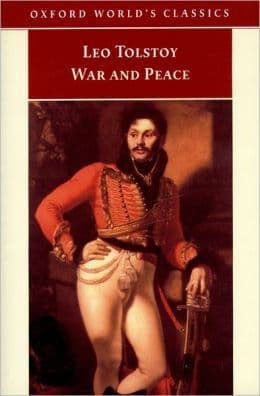
- War and Peace
Leo Tolstoy
4.1 (265k) average on GoodreadsHistorical FictionA sprawling historical epic blending fiction with real historical events and a vast array of characters during wartime.
- The Art of War
Sun Tzu
4.0 (330k) average on GoodreadsBusinessWhile not a fictional narrative, Sun Tzu's The Art of War serves as a foundational text on military strategy that deeply influenced the tactical depictions in Romance of the Three Kingdoms. ROTK often illustrates the principles laid out in The Art of War, such as deception, knowing oneself and the enemy, and the importance of terrain, through the actions of its strategists like Zhuge Liang and Cao Cao. The Art of War is a theoretical treatise, offering abstract principles of warfare, while ROTK provides concrete, narrative examples of these principles in action. ROTK can be seen as a grand fictional application of Sun Tzu's theories, demonstrating their practical (and often fictionalized) execution in historical conflicts.
- Nineteen Eighty-Four
George Orwell
4.2 (5.5M) average on GoodreadsFictionWinston Smith dreams of truth and rebellion in a world where Big Brother watches all, but he confronts the terrifying power of a regime that controls not just actions, but thoughts.
- The Frozen River
Ariel Lawhon
4.4 (600k) average on GoodreadsFictionIn 1789 Maine, a heroic midwife's diary helps her expose a murder and get justice in a town that wants to silence her.
- A Man Called Ove
Fredrik Backman
4.4 (569k) average on GoodreadsFictionA stubborn widower, who lives by strict rules, finds his quiet world changed by a lively new family next door, making him face his past and find happiness in human connection.
- The Art of Racing in the Rain
Garth Stein
4.2 (452k) average on GoodreadsFictionThrough the eyes of Enzo, a wise and observant dog, a race car driver's family navigates a journey of love, loss, and resilience, learning that life's most important lessons often come in the curves, not just on the straightaways.





Enjoyed the summary?
A summary gives you the shape of the book. The book itself has the detail, the examples and the voice.
Find The Romance of the Three Kingdoms on AmazonAs an Amazon Associate, BookBrief earns from qualifying purchases. How we're funded