

Synopsis
Covers the whole plot, including the ending.
- Difficulty
- Medium
- Pacing
- Fast
- Mood
- Gritty, Suspenseful, Bleak, Intense
- Read it if
- You enjoy high-octane dystopian thrillers with a strong social commentary, similar to 'The Hunger Games' but with a grittier, more adult edge.
- Skip it if
- You prefer lighthearted stories or are sensitive to graphic violence and bleak outcomes.
The Running Man Plot Summary
Covers the whole plot, including the ending.
A Desperate Father's Choice
In 2025, Ben Richards lives in Co-Op City with his wife Sheila and their daughter Cathy. Cathy has a severe case of the flu and a persistent cough. Ben has been blacklisted from all major corporations for refusing to fire striking workers, leaving him unemployed and unable to afford Cathy's medication. Desperate for money, Ben applies to the Games Network, a government-controlled television network that broadcasts violent game shows. He passes the initial physical and psychological tests, despite his distrust of the Network. He applies only to save Cathy's life.
The Gauntlet Begins: 'The Running Man'
Ben is selected for the popular game show, 'The Running Man.' The rules are simple: he is declared an enemy of the state and given a 12-hour head start. After that, a team of assassins, 'Hunters,' will pursue him. For every hour he survives, he earns 100 New Dollars, with a prize of one billion New Dollars if he survives for 30 days. He gets a tracking device in his arm, a small sum of money, and a Network credit card. The show's host, Dan Killian, publicizes Ben's story, portraying him as a dangerous criminal to gain public support for his televised execution.
Fleeing the City and the First Hunter
Ben begins his run in Co-Op City, immediately discarding his provided clothes and changing his appearance. He uses his initial money to buy new clothing and a wig, adopting a disguise. He learns that the public gets rewards for reporting his location. Ben uses public transportation to move around, avoiding direct confrontations. He eventually meets the first Hunter, Evan McCone, in a run-down area. Ben escapes McCone by causing a diversion and blending into a crowd, successfully leaving the city limits.
The Underground Network and the Free-Vees
Ben hitchhikes south, finding refuge in a poor, rural community. He meets people who are part of an underground resistance network, the 'Free-Vees,' who illegally watch television broadcasts without the Network's censoring. They recognize Ben from 'The Running Man' and offer him shelter, though they are cautious. Ben learns from them about the Network's manipulation of information and public perception. He realizes that the Network constantly broadcasts altered footage and propaganda to control society and demonize contestants.
Kidnapping and a Change of Strategy
As the Hunters close in, Ben realizes he needs a more drastic plan to survive. He kidnaps Amelia Williams, who lives in an affluent area, taking her hostage. He demands a car and safe passage to Boston, using Amelia as leverage. The Network, wanting to keep the show exciting, agrees to his demands, providing him with a powerful vehicle. This act makes him look like a dangerous criminal to the public, but it buys him time and mobility, allowing him to get far from the Hunters.
The Broadcast and Public Opinion
During his journey with Amelia, Ben hijacks a local television transmitter. He broadcasts a message directly to the public, trying to expose the Network's lies and his desperation. He asks for understanding and reveals the oppression faced by the poor. However, the Network quickly cuts his transmission and floods the airwaves with counter-propaganda, portraying Ben as a deranged liar and a dangerous psychopath. This further cements the public's negative perception of him. Amelia, initially terrified, starts to see Ben's humanity.
The Hunters Close In and Amelia's Sacrifice
The Hunters, led by McCone, corner Ben and Amelia in a remote area. A violent shootout follows. Amelia, having developed sympathy for Ben and understanding his situation, creates a diversion that allows Ben to escape the ambush, but she dies. Her death gives Ben the window he needed to continue his flight. He is deeply affected by her sacrifice, feeling a renewed purpose and a desire for revenge against the Network.
A Desperate Flight and Final Confrontation
Ben, now alone and with his health failing from the constant strain, continues his flight. He is injured and constantly pursued, surviving on his wits and the kindness of a few sympathetic strangers. He learns that he is the longest-surviving contestant in the show's history, but the odds are against him. Realizing he cannot win by simply outrunning the Hunters, Ben plans a final, suicidal action: to take down the entire Network, even if it means his own death. He plans to crash a plane into the Network's headquarters.
Killian's Offer and Ben's Refusal
With only a few hours left before the 30-day mark, Dan Killian, impressed by Ben's resilience, contacts him directly. Killian offers Ben a permanent position as a Hunter, promising him wealth and status if he betrays his principles and joins the system. Killian tries to appeal to Ben's survival instincts and offers to make his family wealthy. Ben, however, sees the offer as an attempt to dehumanize and control him. He refuses, reaffirming his commitment to fighting the Network's tyranny, even if it costs him his life.
The Ultimate Sacrifice
Ben secures a small, private plane and sets his course directly for the Games Network headquarters. The Network, anticipating his move, broadcasts the final moments of 'The Running Man' live, hoping to capture Ben's defeat. As Ben pilots the plane, he struggles against his failing health and the pursuing Hunters. In a final act of defiance, he bypasses the building's defenses and crashes the plane directly into the Network's highest floor, killing himself, Dan Killian, and several other Network executives. The explosion is broadcast live, showing a momentary, violent victory against the oppressive regime.
Principal Figures
Ben Richards
Protagonist
A desperate father fighting a dystopian system to save his family.
Ben Richards is a 28-year-old unemployed man living in extreme poverty in a dystopian future. His primary motivation is to earn money to pay for his daughter Cathy's medical bills, which drives him to participate in 'The Running Man.' He is intelligent, resourceful, and possesses an iron will, demonstrating incredible resilience and cunning throughout his ordeal. Despite the Network's attempts to paint him as a villain, Ben maintains a strong moral compass and a deep-seated hatred for the oppressive system. His journey transforms him from a desperate survivor into a symbol of rebellion.
Relationships: Sheila Richards (Wife, his primary motivation for entering the game); Cathy Richards (Daughter, whose illness fuels his desperation); Amelia Williams (Hostage who develops sympathy and helps him)
Dan Killian
Antagonist
The charismatic, manipulative host and director of the Games Network.
Dan Killian is the charming yet ruthless host and director of the Games Network, the mastermind behind 'The Running Man' and other deadly game shows. He embodies the corrupt and controlling nature of the dystopian government. Killian is a master manipulator of public opinion, using propaganda and carefully crafted narratives to maintain the Network's power and to dehumanize contestants like Ben Richards. He sees Ben not just as a player but as a ratings opportunity, and later, a potential asset, demonstrating his pragmatic and utterly amoral nature.
Relationships: Ben Richards (His target and a ratings commodity)
Sheila Richards
Supporting
Ben's devoted wife, struggling with poverty and fear for her family.
Sheila is Ben Richards's wife, a loving and supportive partner who shares his struggles in Co-Op City. Her presence, along with Cathy's illness, is a constant reminder of the stakes involved for Ben. She represents the innocent victims of the dystopian society, suffering from the government's indifference and the economic hardship it imposes. Though she doesn't actively participate in Ben's run, her well-being and the hope of providing for her are central to Ben's motivations, making her an emotional anchor for the protagonist.
Relationships: Ben Richards (Husband, her primary source of hope and fear); Cathy Richards (Daughter, their shared concern)
Cathy Richards
Supporting
Ben's sick daughter, whose illness drives his desperate actions.
Cathy is Ben and Sheila Richards's young daughter, suffering from a severe flu and cough that requires expensive medication. Her deteriorating health is the direct catalyst for Ben's decision to enter 'The Running Man.' She symbolizes the vulnerability of the innocent in this brutal society and the government's neglect of its poorest citizens. Though she has no active role in the plot, her existence and suffering are the ultimate stakes for Ben, making her a powerful emotional force that propels the narrative forward.
Relationships: Ben Richards (Father, who risks his life for her); Sheila Richards (Mother, who shares her concern)
Evan McCone
Supporting
The lead Hunter, a relentless assassin pursuing Ben Richards.
Evan McCone is the primary Hunter assigned to Ben Richards in 'The Running Man.' He is a professional assassin, highly skilled, relentless, and utterly dedicated to his job. McCone represents the operational arm of the Network's oppression, a seemingly emotionless agent of the state tasked with eliminating its 'enemies.' He is intelligent and methodical, often anticipating Ben's moves, making him a formidable antagonist. His pursuit is a constant, tangible threat that drives much of the plot's tension and action.
Relationships: Ben Richards (His primary target and adversary)
Amelia Williams
Supporting
A middle-class woman kidnapped by Ben, who eventually aids him.
Amelia Williams is a middle-class woman living in a comfortable suburb who is kidnapped by Ben Richards during his flight. Initially terrified and resentful, Amelia gradually begins to understand Ben's desperate situation and the oppressive nature of the Network through their interactions. Her perspective shifts from fear to a grudging sympathy, and eventually, to active assistance. Her character provides a glimpse into the lives of those not directly affected by extreme poverty but still subject to the Network's pervasive control. Her sacrifice highlights the potential for empathy and resistance even among the privileged.
Relationships: Ben Richards (Her kidnapper, who she eventually empathizes with and helps)
Bradley
Mentioned
A fellow contestant on 'The Running Man' who failed.
Bradley is a previous contestant on 'The Running Man' who is mentioned by the Network and other characters. His failure and capture are used as a cautionary tale and a benchmark for Ben's performance. He serves to illustrate the deadly nature of the game and the near-impossibility of survival, reinforcing the high stakes for Ben. Though never seen, Bradley's fate is a constant reminder of what awaits those who fail to outwit the Network and its Hunters.
Stacey
Supporting
A member of the Free-Vees who provides shelter to Ben.
Stacey is a young woman who is part of the 'Free-Vees,' an underground network of individuals who illegally watch uncensored television and resist the Network's control. She provides temporary shelter to Ben Richards during his flight. Stacey represents the pockets of resistance and dissent that exist beneath the Network's facade of total control. Her willingness to help Ben, despite the risks, demonstrates that not everyone is swayed by the Network's propaganda and that a spirit of rebellion still flickers.
Relationships: Ben Richards (Provides him temporary shelter and information)
Themes & Insights
Class Warfare and Economic Inequality
The novel shows a stark class divide where the poor are disposable, and the wealthy control all resources and media. Ben Richards's struggle is driven by his inability to afford basic healthcare for his daughter due to his unemployment, a direct result of this inequality. The 'Games Network' is a cruel example of this, offering the poor false hope of wealth through self-destruction, while entertaining the privileged. The contrast between Co-Op City and Amelia Williams's affluent neighborhood highlights this theme.
“'You're a poor man, Richards. You're just a cog in the machine that makes the rich richer.”
Media Manipulation and Propaganda
The Games Network is the central organ of propaganda in this dystopia, controlling information and shaping public perception. Dan Killian uses televised broadcasts to demonize Ben Richards, turning him into a public enemy and justifying his pursuit and potential death. The Network edits footage, fabricates stories, and incites public hatred against contestants, ensuring the audience supports the violence. Ben's attempt to hijack a broadcast to tell his truth is quickly stopped and countered. This shows the overwhelming power of state-controlled media to dictate reality.
“The truth doesn't matter, Richards. Only what people believe.”
Survival vs. Humanity
Ben Richards is forced to make morally compromising decisions in his desperate fight for survival, such as kidnapping Amelia Williams. This theme explores the limits of human endurance and the ethical dilemmas faced when basic needs are denied. While Ben never fully loses his humanity, the harsh realities of the game force him into actions he wouldn't normally consider. The novel questions how much one can sacrifice of their moral code before becoming like the brutal system they are fighting. It concludes that some things are worth dying for.
“You give me my life back, Killian! You give me back everything you've taken!”
Rebellion and Individual Resistance
Despite the Network's overwhelming power, Ben Richards chooses active resistance over passive acceptance. Initially driven by personal survival, his journey becomes a symbolic act of rebellion against the oppressive system. His refusal of Killian's offer to become a Hunter and his ultimate, suicidal attack on the Network headquarters are strong statements of individual defiance. The 'Free-Vees' further reinforce this theme, showing that even in a seemingly totalitarian society, pockets of resistance and the desire for freedom persist.
“I'm going to take you down, Killian. All of you.”
Plot Devices & Literary Techniques
The Games Network
The omnipresent media corporation that controls public perception and orchestrates violent game shows.
The Games Network is the primary antagonist and a crucial plot device. It functions as a tool of social control, distracting the populace with violent entertainment while reinforcing the government's authority and demonizing the poor. The Network dictates the rules of 'The Running Man,' broadcasts Ben's pursuit, and manipulates public opinion through propaganda. It's a symbol of unchecked corporate and governmental power, and its broadcasts serve as a constant reminder of Ben's precarious position and the system he's fighting against. Its headquarters becomes the ultimate target for Ben's final act.
Tracking Device
A surgically implanted device that ensures constant surveillance of the 'Running Man' contestant.
The tracking device implanted in Ben Richards's arm is a key plot device that creates constant tension and drives much of the narrative. It represents the pervasive surveillance and lack of privacy in the dystopian society. The device ensures that the Hunters and the Network always know Ben's approximate location, making escape incredibly difficult and forcing him to constantly innovate his evasion tactics. It symbolizes the state's ultimate control over the individual, making Ben's ability to briefly circumvent or hide from its signal a small, but significant, victory.
The Public Reward System
The incentive system that encourages citizens to report the 'Running Man' contestant's location.
The public reward system is a crucial plot device that turns ordinary citizens into complicit participants in 'The Running Man.' By offering monetary rewards for tips leading to Ben's capture or death, the Network effectively weaponizes the general populace against him. This device highlights the moral decay of society, where poverty drives people to betray one another for financial gain. It also creates a constant sense of paranoia for Ben, as he can trust virtually no one, even those who appear sympathetic. This broadens the scope of his adversaries beyond just the professional Hunters.
The 30-Day Survival Timer
The countdown to winning the grand prize, adding urgency and pressure to Ben's ordeal.
The 30-day survival timer is a central plot device that provides the overarching structure and builds relentless suspense in the narrative. It sets a clear, finite goal for Ben Richards, with immense stakes attached. Every passing day and hour is tracked, both for Ben's earnings and for the audience's anticipation. This timer creates an escalating sense of urgency and hopelessness as the days tick by, forcing Ben into increasingly desperate measures. It also becomes a symbol of the Network's control, as they set the impossible parameters for 'freedom.'
The Running Man Quotes
“The only thing you get for free in this world is hate.”
“Kill or be killed, eat or be eaten, that was the law.”
“The poor were always with us, but now they were the majority.”
“He had become a running man, and he would run until he dropped.”
“In this world, you had to be a wolf or a sheep.”
“The Network was the law, and the law was a joke.”
“He was a rat in a maze, but he was a smart rat.”
“Freedom was just another word for nothing left to lose.”
“The hunt was on, and he was the prey.”
“In the end, it was all about the ratings.”
“He had nothing to lose but his life, and that was cheap.”
“The game was rigged, but he was going to play it anyway.”
“Hope was a dangerous thing; it could get you killed.”
“They made a monster, and now they had to live with it.”
Quiz
10 questions on the plot and the characters. Each answer comes with a short explanation.
Question 1
What is the primary reason Ben Richards decides to participate in the game show 'The Running Man'?
- To escape the oppressive government and start a new life
- To gain fame and recognition in the dystopian society
- To earn money to pay for his daughter Cathy's medical bills
- To expose the corruption of the game show to the public
Show answer
C. To earn money to pay for his daughter Cathy's medical bills Ben Richards is driven by desperation to save his daughter Cathy, who is seriously ill, as medical care is unaffordable for the poor in this dystopian society. This personal motivation sets the plot in motion.
Question 2
In the dystopian society of 'The Running Man', how does the government view the poor?
- As valuable contributors to the economy
- As worrisome rodents rather than human beings
- As potential revolutionaries to be monitored closely
- As loyal citizens deserving of support
Show answer
B. As worrisome rodents rather than human beings The book depicts a harsh class divide where the government dehumanizes the poor, treating them as pests to be controlled, which fuels the oppressive setting and Ben's struggles.
Question 3
What is the main objective for contestants on the game show 'The Running Man'?
- To complete a series of physical challenges for points
- To merely stay alive while being hunted
- To solve puzzles to win cash prizes
- To entertain the audience with performances
Show answer
B. To merely stay alive while being hunted The show is a deadly reality game where contestants, like Ben, must evade hunters and survive for as long as possible, with survival being the sole goal to earn money.
Question 4
How does Ben Richards initially perceive the government and society in 'The Running Man'?
- He is a loyal supporter who believes in the system
- He is unaware of the injustices until later in the story
- He quickly realizes the dehumanization of the poor
- He actively protests against the government from the start
Show answer
C. He quickly realizes the dehumanization of the poor From early on, Ben is acutely aware of how the government treats the poor as less than human, especially as he struggles to care for his sick daughter, highlighting his critical perspective.
Question 5
What role does the game show 'The Running Man' play in the dystopian society?
- It serves as a form of entertainment that distracts from societal issues
- It is a government program to rehabilitate criminals
- It provides educational content for citizens
- It is a charity event to help the poor
Show answer
A. It serves as a form of entertainment that distracts from societal issues The show acts as a brutal spectacle that entertains the masses while reinforcing the power dynamics and diverting attention from the oppression of the poor, a key theme in the book.
Question 6
Which of the following best describes the setting of 'The Running Man'?
- A utopian future with advanced technology and equality
- A dystopian future where the poor are marginalized and dehumanized
- A historical period during a war
- A fantasy world with magical elements
Show answer
B. A dystopian future where the poor are marginalized and dehumanized The book is set in a grim, futuristic dystopia characterized by extreme class divisions, government control, and the exploitation of the poor through media like the game show.
Question 7
What motivates Ben Richards beyond just survival in the game show?
- A desire for revenge against the game show hosts
- The hope to reunite with his wife and daughter if he wins
- An ambition to become a celebrity in the society
- A plan to overthrow the government single-handedly
Show answer
B. The hope to reunite with his wife and daughter if he wins Ben's primary drive is to earn money for his daughter's medical care, but his deeper motivation is to return to his family and provide for them, adding emotional depth to his struggle.
Question 8
How does the book 'The Running Man' critique reality television and media?
- By showing it as a harmless form of entertainment
- By depicting it as a tool for social control and dehumanization
- By praising its ability to uplift the poor
- By ignoring its impact on society
Show answer
B. By depicting it as a tool for social control and dehumanization The novel uses the game show as a metaphor to criticize how media can exploit human suffering for profit and reinforce oppressive systems, a central theme in the dystopian narrative.
Question 9
What is a key detail about the game show's structure that adds to its brutality?
- Contestants are given weapons to defend themselves
- The show is broadcast live with hunters pursuing contestants
- It includes team-based challenges for cooperation
- Winners receive a guaranteed government job
Show answer
B. The show is broadcast live with hunters pursuing contestants The live broadcast aspect intensifies the danger and spectacle, as hunters actively track and kill contestants, making survival a public and gruesome event that highlights the society's cruelty.
Question 10
In what way does Ben Richards' participation in 'The Running Man' reflect the broader societal issues in the book?
- It shows how individuals can easily overcome systemic oppression
- It demonstrates the government's benevolence in providing opportunities
- It illustrates the desperation and exploitation of the poor in a dystopian system
- It highlights the importance of entertainment in uniting society
Show answer
C. It illustrates the desperation and exploitation of the poor in a dystopian system Ben's forced choice to risk his life for money underscores how the dystopian society pushes the poor into extreme situations, using them as pawns for entertainment and control, a core critique in the novel.
The Running Man FAQ
What is 'The Running Man' about?
'The Running Man' follows Ben Richards, a desperate man in a dystopian future where poverty-stricken citizens are dehumanized by the government. To pay for his daughter Cathy's life-saving medical treatment, he volunteers for a deadly reality game show called 'The Running Man,' where contestants must evade a nationwide manhunt to survive and win prize money.
Why should I read 'The Running Man'?
This novel offers a gripping, fast-paced thriller that critiques media sensationalism, class inequality, and government oppression. Its relentless tension and bleak, prophetic vision of reality TV gone mad make it a compelling and thought-provoking read, especially for fans of dystopian fiction and social commentary.
What is the background/setting of 'The Running Man'?
Set in a dystopian future America, the world is divided into extreme wealth and poverty, with the government and media corporations exploiting the poor. The story unfolds across urban slums, surveillance-heavy cities, and the open road as Ben Richards flees during the game show, highlighting a society where entertainment is built on violence and desperation.
What are the most memorable quotes?
Key quotes include Ben's grim realization: 'The poor were seen as worrisome rodents,' and his desperate motivation: 'For Cathy, I'll run.' The show's chilling slogan, 'Run for your life,' encapsulates the brutal stakes, while Ben's internal defiance, 'They think I'm just a rat in a maze, but I'll show them,' underscores his struggle against dehumanization.
What writing style does the author use?
Richard Bachman (Stephen King's pseudonym) employs a tight, urgent prose style with short, punchy sentences that mirror Ben Richards' frantic flight. The narrative is driven by action and internal monologue, creating a visceral, cinematic feel that immerses readers in the high-stakes chase and dystopian atmosphere.
What minor details add significant meaning?
Small details like the deteriorating condition of Ben's apartment and Cathy's worsening illness subtly emphasize the crushing poverty that drives his decisions. The constant presence of surveillance cameras and propaganda broadcasts reinforces the omnipresent control of the government and media, making Ben's rebellion feel both futile and heroic.
What are some subtle foreshadowing moments?
Early scenes of Ben watching game shows with violent themes hint at his eventual participation in 'The Running Man.' His initial distrust of authority and media foreshadows his later defiance, while mentions of past contestants' failures subtly build tension about his own slim chances of survival.
What unexpected character connections exist?
Ben's interactions with ordinary citizens during his run reveal unexpected alliances and betrayals, showing how the game pits the poor against each other. The show's host and hunters are later revealed to be complicit in a larger system of control, connecting Ben's personal struggle to a broader conspiracy of oppression.
What are unspoken character motivations?
Ben's primary motivation is unspoken love and guilt for his daughter Cathy, driving him to risk everything. The government and media's unstated goal is to maintain social order by scapegoating the poor, using the show as a distraction and tool of control, rather than merely entertainment.
What psychological complexities do characters exhibit?
Ben Richards grapples with desperation, paranoia, and a growing sense of nihilism as he runs, yet he clings to hope for Cathy's sake. The show's producers display a cold, calculating psychology, dehumanizing contestants for ratings, while viewers exhibit a mix of voyeuristic thrill and desensitization to violence.
What are the major emotional turning points?
Key emotional turns include Ben's decision to join the show out of love for Cathy, moments of near-capture that heighten his despair, and encounters with betrayals or brief kindnesses that challenge his trust. The climax, where he confronts the game's futility, marks a shift from survival to defiance.
How do relationship dynamics evolve?
Ben's relationship with Cathy is static but drives the plot, while his interactions shift from initial isolation to fleeting alliances with strangers during his run. His dynamic with the hunters and media evolves from fear to rage, culminating in a direct confrontation that exposes the system's cruelty.
Which parts remain ambiguous or open-ended?
The fate of secondary characters and the long-term impact of Ben's actions are left ambiguous, inviting readers to ponder whether his rebellion sparks change or is absorbed by the system. The true extent of the government's control and the show's viewership complicity are also open to interpretation.
What are controversial scenes or decisions?
Ben's choice to kill or harm innocents during his escape sparks debate about morality under extreme duress. The show's exploitation of poverty for entertainment and the government's blatant oppression raise ethical questions about complicity, making readers confront uncomfortable truths about society and media.
'The Running Man' ending explained: how it ends & what it means
Without spoiling specifics, the ending involves a dramatic confrontation that challenges the game's rules. It symbolizes Ben's ultimate rejection of dehumanization, suggesting that even in a corrupt system, individual defiance can carry profound, if costly, meaning, leaving readers to reflect on sacrifice and resistance.
About the author

Richard Bachman is a pseudonym used by Stephen King, primarily for his works of fiction. Among his notable books are "Thinner," a horror novel about a curse leading to rapid weight loss; "The Long Walk," a dystopian tale of survival; "The Running Man," a commentary on media and society; and "The Regulators," a parallel narrative to King's "Desperation."
Similar books
- The Hunger Games
Suzanne Collins
4.3 (6.4M) average on GoodreadsFantasyFeatures a dystopian society where individuals are forced to fight for survival in a televised game.
- 1984
George Orwell
4.2 (3.1M) average on GoodreadsPoliticsExplores themes of totalitarian control, surveillance, and rebellion against a powerful regime.
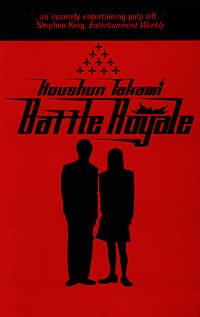
- Battle Royale
Koushun Takami
4.2 (59k) average on GoodreadsThrillerInvolves individuals being forced to kill each other in a survival game orchestrated by the government.
- Nineteen Eighty-Four
George Orwell
4.2 (5.5M) average on GoodreadsFictionWhile both The Running Man and Nineteen Eighty-Four depict totalitarian states, Bachman's novel focuses more on economic coercion and media spectacle as tools of control, whereas Orwell's classic emphasizes psychological manipulation, surveillance, and historical revisionism. The Running Man foregrounds the individual's desperate struggle for survival in a publicly consumed spectacle, contrasting with Winston Smith's intellectual rebellion against an omnipresent, unseen Party. Bachman's world feels more explicitly consumer-driven and entertainment-focused in its oppression.
- Angels & Demons
Dan Brown
3.9 (2.7M) average on GoodreadsThrillerA Harvard symbologist races through Rome's ancient sites, deciphering cryptic clues to unmask the Illuminati and stop a vengeful plot to destroy the Vatican with a stolen antimatter weapon.
- Gone Girl
Gillian Flynn
4.1 (2.3M) average on GoodreadsThrillerA wife's sudden disappearance on her fifth anniversary reveals a web of lies and psychological warfare, exposing the secrets within a seemingly perfect marriage.





Enjoyed the summary?
A summary gives you the shape of the book. The book itself has the detail, the examples and the voice.
Find The Running Man on AmazonAs an Amazon Associate, BookBrief earns from qualifying purchases. How we're funded