
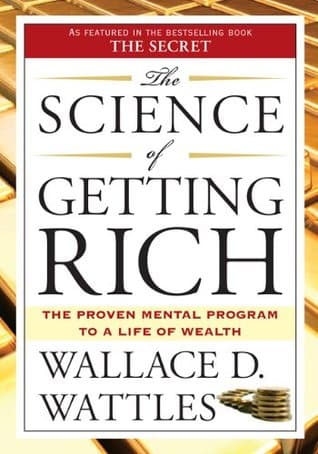
Core Idea
- Difficulty
- Easy
- Read it if
- You believe in the power of mind over matter and are looking for a philosophical, almost spiritual, framework for wealth creation that emphasizes gratitude, faith, and a specific mental approach.
- Skip it if
- You prefer practical, actionable financial advice based on modern economics, market analysis, or traditional investment strategies, and are skeptical of metaphysical or New Thought principles.
Key Takeaways from The Science of Getting Rich
The Thinking Stuff
All wealth originates from a fundamental, intelligent substance responsive to thought.
Wattles introduces the idea of 'Formless Stuff' or 'Thinking Stuff' as the first substance from which everything in the universe is made. This substance is intelligent, responsive, and always seeking to express more life. The main idea is that by holding a clear, consistent thought or image of what you want, this substance will begin to create that reality. This is not just wishful thinking; it is a scientific process where mental images, held with faith and purpose, activate the universe's creative power. It suggests that poverty is not a lack of resources, but a failure to align one's thoughts with this creative substance.
“There is a thinking stuff from which all things are made, and which, in its original state, permeates, penetrates, and fills the interspaces of the universe. A thought, in this substance, produces the thing that is imaged by the thought.”
In the book: The entire premise of the book rests on this foundational metaphysical concept, which Wattles presents as a 'scientific' truth, not a philosophical speculation. He doesn't cite external studies but rather presents it as a self-evident law of the universe, akin to gravity, once understood.
Try this: Cultivate a daily practice of clear visualization and affirmation of your desired financial state and specific wealth goals. Don't just wish for money; visualize yourself living the life money enables, experiencing the joy and purpose it brings. Hold this image steadfastly, believing in its eventual manifestation through the 'Thinking Stuff.'
Related ideas: formless-stuff, creative-substance, law-of-attraction
The Right to Be Rich
It is an inherent right and moral imperative to pursue and achieve wealth for a full life.
Wattles states that the desire for wealth is natural and good. He argues that a person cannot live a truly full life without enough money. He challenges the common spiritual idea that poverty is good, saying that true spiritual and intellectual growth is hindered by constant struggle. To live fully, one must be able to develop physically, mentally, and spiritually, and this requires material resources. So, pursuing wealth is not selfish; it is a necessary step towards self-improvement and helping the world more.
“You are right in wanting to be rich. If you are a normal man or woman you cannot help wanting to be rich. It is perfectly right that you should desire to live a life of comfort, luxury, and abundance.”
In the book: Wattles argues that 'man wants to live a full life, and this means the full exercise of all his faculties.' He illustrates that to develop intellectually, one needs books, travel, and leisure; to develop spiritually, one needs to give and experience beauty; and physically, one needs good food, comfortable surroundings, and rest. All these require money.
Try this: Release any guilt or shame associated with desiring wealth. Embrace your ambition to be rich as a natural and healthy drive toward a more complete existence. Articulate *why* you want to be rich beyond mere accumulation – what greater good, experience, or contribution will it enable?
Related ideas: abundance-mindset, spiritual-wealth, self-actualization
Creation, Not Competition
Wealth is generated through creative thought and action, not by taking from others.
A main idea in Wattles' philosophy is the difference between competing and creating. He strongly rejects the idea that wealth is a zero-sum game, where one person's gain means another's loss. Instead, he believes that true wealth is made by bringing new value into existence from the 'Formless Stuff.' By focusing on creation, you add to the overall abundance of the universe, making sure that as you get rich, you also enrich others. This view changes the mindset from scarcity and rivalry to one of infinite possibility and mutual benefit, making the pursuit of wealth an inherently good act.
“You are to become a creator, not a competitor. You are going to get what you want, but in such a way that when you get it every other man will have more than he has now.”
In the book: Wattles argues that the 'Formless Stuff' is inexhaustible, and there is no limit to the amount of wealth that can be created. He explains that if you make something better, or provide a superior service, you are not taking from someone else, but rather expanding the total good available to all.
Try this: Focus on how you can add unique value and create new opportunities through your work or business, rather than trying to outperform or undercut competitors. Seek ways to innovate, serve, and solve problems in a manner that benefits your customers and community, knowing that your prosperity will naturally follow.
Related ideas: abundance-principle, value-creation, non-zero-sum
The Exact Mental Image
A clear, detailed mental picture of your desired outcome is crucial for manifestation.
Vague desires lead to vague results. Wattles emphasizes the need to form a precise, clear, and detailed mental image of your desired future. This means not just wishing for 'more money,' but imagining the specific house, car, lifestyle, experiences, and even the feeling of having reached your goals. The 'Thinking Stuff' needs a clear plan to work with; an unclear image will not become real. This mental image must be held consistently, with strong faith, acting as a magnet that attracts the desired circumstances to you.
“You must form a clear and definite mental image of what you want to have, to do, or to be. It is not enough to have a general desire for more money; you must know exactly what you want to do with the money.”
In the book: Wattles emphasizes that 'the more distinct and definite your image, the more rapidly it will be clothed in objective form.' He uses the analogy of a sculptor needing a clear vision before carving a statue, or an architect needing blueprints before building a house.
Try this: Dedicate time daily to vividly visualize your ideal life, including specific details like colors, textures, sounds, and emotions. Create a vision board with precise images representing your goals. Write down detailed descriptions of your desired possessions and experiences, engaging all your senses in the mental rehearsal.
Related ideas: visualization, mental-blueprint, specific-intention
Act in a Certain Way
Thought must be coupled with purposeful, efficient action in the present moment.
While mental imagery and faith are very important, Wattles makes it clear they are not enough on their own. You must 'act in a Certain Way,' meaning taking efficient, purposeful action now, always in line with your bigger vision. This 'Certain Way' involves doing 'whatever your hands find to do' with excellence and with the firm belief that every action helps bring your wealth to life. It is about making the most of your current chances and doing more than required, while keeping the mental image of your desired future. Inaction, or acting without purpose, guarantees failure.
“You must make your thought a reality by acting in a Certain Way. You cannot get rich by thought alone; you must combine your thought with action.”
In the book: Wattles provides practical advice: 'Do not wait for an opportunity to be everything you want to be; act where you are and upon what you have.' He emphasizes doing 'more than your present place requires,' and giving 'every person more in use value than you take from him in cash value.'
Try this: Identify the most impactful actions you can take today in your current job or business, however small, that align with your ultimate vision. Execute these tasks with enthusiasm, excellence, and a sense of purpose, knowing they are steps towards your larger goal. Avoid procrastination and aimless activity.
Related ideas: purposeful-action, efficient-execution, present-moment-action
Gratitude and Faith
Maintaining a state of gratitude and unwavering faith accelerates the manifestation process.
Gratitude is more than just a pleasant feeling; it is a strong mental position that connects you with the universe's creative forces. By being truly grateful for what you have, and even for what is coming to you, you acknowledge the abundance that already exists and show you are ready for more. This state of gratitude builds strong faith, which is the belief that your desires are already on their way. Doubt, fear, and ingratitude, conversely, send mixed signals to the 'Formless Stuff,' delaying or preventing what you want. These are not just feelings; they are active forces that influence your reality.
“The grateful mind is constantly fixed upon the best; therefore it tends to become the best; it takes the form or character of the best, and will receive the best.”
In the book: Wattles explains that gratitude 'brings your mind into closer touch with the Source from which blessings flow.' He contrasts this with ingratitude, which 'disconnects you from the good' and focuses on lack.
Try this: Start and end each day by listing specific things you are grateful for, including aspects of your life that reflect your desired future, even if they haven't fully manifested yet. Practice expressing gratitude verbally and in writing. Cultivate an unwavering belief in the certainty of your success, even in the face of temporary setbacks.
Related ideas: gratitude-practice, unwavering-faith, positive-vibration
The Impression of Increase
Always convey a sense of growth and advancement in every interaction and transaction.
This is an important ethical and strategic rule. Wattles insists that to get rich, you must make everyone you deal with feel that they are benefiting and improving because of their connection to you. Whether it is an employee, customer, supplier, or friend, your presence should inspire a feeling of growth, opportunity, and a better life. This is not manipulation; it is about truly adding value and creating an environment where others succeed. This 'impression of increase' creates a strong ripple effect, naturally attracting more wealth and opportunities back to you, as people are drawn to those who uplift them.
“You must communicate the impression of increase to all with whom you come in contact, so that every person who deals with you will feel that he is advanced by doing so.”
In the book: Wattles states, 'Give every man more in use value than you take from him in cash value.' He suggests that 'if you are an employer, you must make sure that your employees advance, both personally and financially, by working for you.'
Try this: In every professional and personal interaction, ask yourself: 'How can I make this person feel better, more capable, or more prosperous through this exchange?' Always strive to deliver more value than expected, whether through your products, services, or even just your positive attitude and helpfulness.
Related ideas: value-exchange, mutual-benefit, positive-influence
Overcoming Mental Barriers
Conquer doubt, fear, and competitive thinking to maintain focus on your vision.
Wattles spends much time on the mental barriers that stop people from getting rich. He warns against focusing on poverty, sickness, or any form of lack, as these thoughts attract similar realities. The mind must be strictly trained to focus only on the desired outcome and the 'Formless Stuff's' ability to provide it. Doubt and fear are especially damaging, as they send mixed signals and weaken the faith needed for things to happen. Overcoming these barriers requires constant watchfulness, mental discipline, and consciously directing thoughts away from scarcity and towards abundance.
“Do not think for a moment that you can be rich by holding the thought of poverty. Do not permit your mind to dwell upon the disadvantages of poverty, or to picture yourself in a state of lack.”
In the book: Wattles explicitly states, 'You must never think or speak of yourself, or of your affairs, in terms of failure; you must not admit the possibility of failure.' He also advises against reading articles or engaging in conversations that focus on economic hardship or competitive struggles.
Try this: Actively challenge and reframe negative thoughts about money or your ability to get rich. Replace them immediately with affirmations of abundance and success. Limit exposure to news or conversations that foster a scarcity mindset. Practice mindfulness to observe your thoughts and consciously steer them towards your desired reality.
Related ideas: mindset-shift, limiting-beliefs, positive-affirmation
The Power of Decision
Make a firm, unwavering decision to be rich, and commit to the 'Certain Way'.
Wattles implies that the first, firm decision to get rich is a key turning point. It is not enough to just wish for wealth; you must make a strong, irreversible commitment to it. This decision acts as a powerful instruction to the 'Thinking Stuff' and yourself, aligning all your later thoughts and actions. A wavering purpose, indecision, or half-hearted effort will yield no results. Once the decision is made, the path to 'getting rich' becomes a 'science' — a series of definite steps that, when followed exactly, guarantee success.
“The moment you make a supreme decision to be rich, you set in motion a train of circumstances that will bring you to your goal. Wavering purpose is the one thing that will prevent you from getting what you want.”
In the book: Wattles reiterates throughout the book that 'there is a certain way of thinking and acting, the doing of which will infallibly bring riches.' He stresses that the 'science of getting rich' is exact, and success is guaranteed for those who follow its principles without deviation.
Try this: Formally declare your intention to become rich. Write it down, perhaps as a personal manifesto. Recommit to this decision daily, reminding yourself of your purpose and the 'Certain Way' you will follow. When faced with choices, always opt for the action that aligns with your ultimate decision to get rich.
Related ideas: definite-purpose, unwavering-commitment, intentional-living
Giving More in Use Value
Always provide more value than you receive in monetary terms to ensure sustained prosperity.
This rule is a practical use of the 'creation, not competition' philosophy. Wattles argues that for continuous prosperity, you must always offer more in terms of usefulness, benefit, or service than the monetary price you charge. This is not about underpricing your work, but about making sure the recipient feels they have received exceptional value. By doing so, you contribute positively to the economy, build trust and goodwill, and ensure that people will naturally want to do business with you again. This generosity of value creates a positive cycle, attracting more opportunities and wealth to you.
“You must give every man more in use value than you take from him in cash value; then you are adding to the life of the world by every business transaction.”
In the book: Wattles explains, 'You must get rid of the old idea that you must get rich by shrewd dealing or by bargaining.' Instead, he advocates for a system where 'every man who comes in contact with you should go away feeling that he has received more than he gave.'
Try this: Review your products, services, and even your daily interactions. Identify ways to consistently over-deliver on value. This could mean exceptional customer service, unexpected bonuses, higher quality than anticipated, or simply going the extra mile. Focus on solving problems and enhancing the lives of those you serve.
Related ideas: value-proposition, customer-centricity, ethical-wealth
The Science of Getting Rich Quotes
“There is a thinking stuff from which all things are made, and which, in its original state, permeates, penetrates, and fills the interspaces of the universe.”
“A man can get what he wants, but he must get it through faith and purpose.”
“The great secret of life is to put yourself in touch with the Formless Substance in such a way as to draw out of it what you want.”
“You must get rid of the idea that in order to get rich you must take things away from others.”
“Your thought, holding the vision of what you want, is the force which draws it to you.”
“You must make your thought a creative force, not a destructive one.”
“To think what you want to think is to think TRUTH, regardless of appearances.”
“Give every man more in use value than you take from him in cash value.”
“Gratitude is the attitude of the soul toward the Formless Substance.”
“You can never get rich by doing certain things unless you do them in a Certain Way.”
“Action is the necessary complement to thought; you must not only think, but you must act.”
“Do not wait for an opportunity to be all that you want to be; begin where you are and be all that you can be.”
“The purpose of life is growth, and everything that lives must be continually growing or else it will die.”
“The man who thinks only of himself, and plans only for his own advancement, cannot be rich.”
Quiz
10 questions on the main ideas. Each answer comes with a short explanation.
Question 1
According to Wallace D. Wattles, what is the fundamental 'stuff' from which all things are made?
- Physical matter
- Unmanifested energy
- Thinking Stuff
- Divine consciousness
Show answer
C. Thinking Stuff Wattles explicitly states, 'There is a thinking stuff from which all things are made.' This is the foundational concept of his philosophy.
Question 2
What does Wattles emphasize as the primary method for producing the things imaged by thought in the 'Thinking Stuff'?
- Intense physical labor
- Competition and shrewd business tactics
- Holding a clear mental image with unwavering faith and purpose
- Sacrifice and self-denial
Show answer
C. Holding a clear mental image with unwavering faith and purpose The book repeatedly stresses the importance of forming a clear mental image of what one desires and holding it with 'fixed purpose' and 'unwavering faith' to manifest it from the Thinking Stuff.
Question 3
Wattles argues that the path to wealth is primarily one of:
- Competition, where one must outperform others to secure resources.
- Creation, where one adds value and brings forth what did not previously exist.
- Accumulation, where one gathers existing resources through various means.
- Inheritance, where wealth is passed down through generations.
Show answer
B. Creation, where one adds value and brings forth what did not previously exist. Wattles explicitly states that 'creation and not competition is the hidden key to wealth attraction.' He emphasizes creating more than one consumes.
Question 4
According to Wattles, what is the crucial 'first step' in getting rich, after understanding the 'Thinking Stuff'?
- Investing in the stock market
- Forming a clear and definite mental image of what you want
- Finding a high-paying job
- Saving every penny you earn
Show answer
B. Forming a clear and definite mental image of what you want Wattles dedicates significant attention to the importance of having a 'clear and definite mental image' of the things one desires as the initial and crucial step in the process.
Question 5
Wattles advises against certain actions or states of mind that hinder the process of getting rich. Which of the following does he specifically warn against?
- Giving generously to others
- Feeling gratitude for what you already have
- Dwelling on poverty or injustice and comparing yourself to others
- Engaging in daily affirmations
Show answer
C. Dwelling on poverty or injustice and comparing yourself to others Wattles strongly discourages dwelling on poverty, injustice, or engaging in competitive thinking, as these thoughts impress images of lack upon the Thinking Stuff and hinder creation.
Question 6
What role does 'gratitude' play in Wattles's 'Science of Getting Rich'?
- It is a pleasant but ultimately unnecessary emotion.
- It is a vital practice that aligns the mind with the Creative Principle and attracts more good.
- It is a sign of contentment, which can prevent further striving for wealth.
- It is only important after one has already achieved significant wealth.
Show answer
B. It is a vital practice that aligns the mind with the Creative Principle and attracts more good. Wattles dedicates a chapter to gratitude, emphasizing its critical role in keeping the mind aligned with the source of all supply and attracting more of what one desires.
Question 7
Wattles asserts that to get rich, one must perform 'every action in a certain way.' What is the essence of this 'certain way'?
- Performing tasks with minimal effort to conserve energy.
- Doing everything with efficiency and speed, regardless of quality.
- Doing everything with the conviction that you are increasing life for everyone involved.
- Focusing solely on immediate monetary gain from each action.
Show answer
C. Doing everything with the conviction that you are increasing life for everyone involved. Wattles explains that 'every action, however small, must be performed in a certain way; that is, it must be performed with the purpose of making a success of that action, and of helping others to make a success of their actions.' This means acting with the purpose of increasing life.
Question 8
What specific advice does Wattles give regarding how one should approach their current employment or business, even if it seems unsatisfactory?
- Quit immediately and seek a new opportunity that aligns with your desired image.
- Perform the duties of your present calling in a certain way, giving more in value than you receive in cash.
- Delegate all undesirable tasks to others and focus only on what you enjoy.
- Minimize your effort until a better opportunity presents itself.
Show answer
B. Perform the duties of your present calling in a certain way, giving more in value than you receive in cash. Wattles stresses the importance of performing 'every action in a certain way' and giving 'to every person more in use value than you take from him in cash value.' This applies to one's current work to create advancement.
Question 9
Wattles argues that one must 'act upon' the mental image they hold. What does he mean by 'acting upon' it, beyond just thinking about it?
- Engaging in speculative investments without prior planning.
- Waiting patiently for opportunities to spontaneously appear without any effort.
- Doing, at the present moment, all that can be done to move toward the realization of the image.
- Discussing your desires with as many people as possible to gain support.
Show answer
C. Doing, at the present moment, all that can be done to move toward the realization of the image. Wattles emphasizes that while thought is primary, one must also 'act' in the present moment, doing 'today all that can be done today,' always moving forward with the conviction that their desired image is manifesting.
Question 10
In the context of wealth creation, how does Wattles define or describe 'Power'?
- The ability to dominate and control others.
- The capacity to impress thought upon the original substance, leading to creation.
- The amount of money one has accumulated.
- The influence one holds over political or economic systems.
Show answer
B. The capacity to impress thought upon the original substance, leading to creation. Wattles's entire premise is built on the idea that humans possess the 'power to get rich' by impressing their thoughts upon the 'Thinking Stuff' or Original Substance, which then manifests those thoughts into reality.
The Science of Getting Rich FAQ
What is the core principle of 'The Science of Getting Rich'?
The book posits that there is a 'thinking stuff' from which all things are made, and that by holding a clear mental image of what one desires, this substance will bring it into existence. It emphasizes the power of thought and intention in wealth creation.
Does 'The Science of Getting Rich' advocate for purely passive wealth attraction?
No, while the book stresses the importance of thought and intention, it also clearly outlines the need for definite action and 'doing things in a certain way.' It combines mental visualization with practical, purposeful effort.
What is the 'thinking stuff' mentioned in the book?
The 'thinking stuff' refers to a fundamental, intelligent, formless substance or energy that permeates the universe, from which all physical manifestations arise. It is the creative source responsive to thought.
How does 'The Science of Getting Rich' differ from other self-help books on wealth?
'The Science of Getting Rich' is distinct in its concise, direct approach, focusing on a precise 'science' or method rather than general advice. It emphasizes creation over competition and provides a detailed framework for applying its principles.
Is 'The Science of Getting Rich' related to 'The Secret'?
Yes, 'The Science of Getting Rich' is widely recognized as a foundational text and a significant influence on Rhonda Byrne's bestselling book 'The Secret,' particularly in its explanation of the Law of Attraction.
What role does gratitude play in Wattles' method for getting rich?
Gratitude is presented as a crucial component, as it aligns one's mind with the 'thinking stuff' and opens the way for more blessings to flow. It helps maintain a positive mental attitude and strengthens the creative process.
Does the book suggest that wealth can be attained without working?
The book does not suggest that one can attain wealth without working. Instead, it teaches how to make one's work more effective and purposeful by aligning it with clear intention and creative thought, leading to greater results.
What is the significance of 'creation, not competition' in the book?
Wattles argues that true wealth comes from creating value and expanding the universe's resources, rather than competing for existing ones. This mindset fosters abundance for all and eliminates the need to take from others.
Who was Wallace D. Wattles?
Wallace D. Wattles was an American New Thought writer who spent his life studying success principles from various philosophers. He is best known for 'The Science of Getting Rich,' a concise guide to wealth creation based on his findings.
About the author
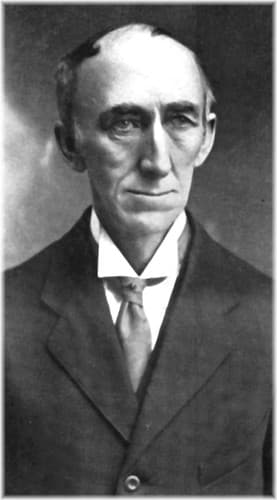
Wallace D. Wattles was an American author known for his work in the field of personal development and success philosophy. He is best known for "The Science of Getting Rich," which outlines principles for achieving wealth and success through positive thinking and visualization. His writings have influenced the self-help genre and continue to be referenced in discussions about prosperity and personal growth.
Similar books
- Think and Grow Rich
Napoleon Hill
4.2 (218k) average on GoodreadsBusinessExpands on similar principles of positive thinking, definite purpose, and faith for achieving wealth and success.
- Steve Jobs
Walter Isaacson
4.1 (957k) average on GoodreadsBusinessSteve Jobs was a visionary who fused creativity and technology to revolutionize six industries and shape our digital world.
- Freakonomics: A Rogue Economist Explores the Hidden Side of Everything
Steven D. Levitt
4.0 (709k) average on GoodreadsBusinessThis book uses economic principles to reveal the surprising incentives behind everything from drug dealing and real estate to cheating teachers and the decline of crime.
- The Tipping Point: How Little Things Can Make a Big Difference
Malcolm Gladwell
4.0 (690k) average on GoodreadsBusinessMalcolm Gladwell explains how small, targeted actions can start widespread changes in trends, behaviors, and ideas.
- Outliers: The Story of Success
Malcolm Gladwell
4.2 (556k) average on GoodreadsBusinessMalcolm Gladwell argues that true success is not just about individual talent, but about the hidden advantages of culture, opportunity, and unique experiences that shape extraordinary lives.
- The Subtle Art of Not Giving a F*ck: A Counterintuitive Approach to Living a Good Life
Mark Manson
3.9 (530k) average on GoodreadsBusinessEmbrace your flaws and stomach life's lemons, because true happiness isn't about relentless positivity, but about choosing what truly matters to give a f*ck about.





Enjoyed the summary?
A summary gives you the shape of the book. The book itself has the detail, the examples and the voice.
Find The Science of Getting Rich on AmazonAs an Amazon Associate, BookBrief earns from qualifying purchases. How we're funded