
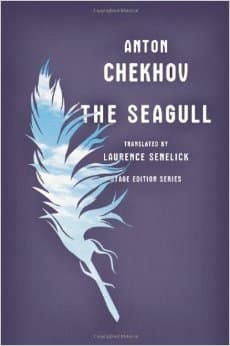
Synopsis
Covers the whole plot, including the ending.
- Difficulty
- Medium
- Pacing
- Slow
- Mood
- Melancholic, Reflective, Dramatic, Tragic
- Read it if
- You appreciate classic Russian drama, explore themes of unrequited love, artistic ambition, and the disillusionment of dreams, or enjoy character-driven plays with a melancholic tone.
- Skip it if
- You prefer fast-paced plots with clear resolutions, light-hearted narratives, or dislike stories with tragic endings and complex emotional subtexts.
The Seagull Plot Summary
Covers the whole plot, including the ending.
A Summer Evening by the Lake
The play starts at Sorin's country estate. Konstantin Treplev, a young writer, prepares to stage an experimental play he wrote. Nina Zarechnaya, an innocent young woman from a nearby estate and Konstantin's love interest, stars in it. The audience includes Konstantin's mother, the famous actress Irina Arkadina, her lover, the writer Boris Trigorin, and other residents like the sad Masha, the schoolteacher Medvedenko, and the estate manager Shamrayev with his wife Polina. Konstantin wants his mother's approval, but Arkadina's cynical remarks and Trigorin's disinterest interrupt the performance. Konstantin abruptly ends the play, frustrated and humiliated. Nina, however, is fascinated by Trigorin's literary fame.
Whispers of Love and Longing
After the disastrous play, the characters walk the grounds, showing their connected desires and unrequited loves. Masha tells Medvedenko, who loves her, that she loves Konstantin. She rejects Medvedenko, saying her heart belongs to Konstantin. Polina, Shamrayev's wife, expresses her long-standing affection for Dr. Dorn, who remains distant. Konstantin, still upset by his mother's criticism, tries to give Nina a dead seagull he shot, symbolizing his broken dreams and unrequited love. Nina, though, is increasingly drawn to Trigorin's charm and literary world, mostly ignoring Konstantin's gesture.
Trigorin's Allure
Nina actively seeks Trigorin, expressing her admiration for his writing and her own dream of becoming an actress. Trigorin, at first uninterested, is flattered by her youthful energy. He talks to her about how demanding and often unfulfilling a writer's life is, comparing it to a constant, inescapable obsession. This conversation further strengthens Nina's idealization of him. Meanwhile, Arkadina, aware of the growing connection, becomes subtly jealous and possessive of Trigorin, though she tries to act casual. Konstantin watches this developing bond with increasing despair and jealousy.
A Jealous Act
Overwhelmed by his mother's lack of support, Nina's growing affection for Trigorin, and his own perceived failures as a writer, Konstantin tries to kill himself by shooting himself. The shot is heard, causing panic. Dr. Dorn attends to him, revealing the wound is minor. This dramatic act shocks the characters, especially Arkadina, into momentary concern, but it does little to solve Konstantin's deep insecurities or change the romantic dynamics. Arkadina quickly returns to her self-absorbed nature, and Nina remains focused on Trigorin, seeing Konstantin's act as a sign of his instability.
Trigorin's Temptation
Trigorin, interested in Nina's youth and adoration, considers leaving Arkadina. He tells Nina his feelings and even thinks about staying at the estate. However, Arkadina, sensing his hesitation, uses her charm and their long relationship to persuade him to return to Moscow with her. She appeals to his loyalty and their shared professional life, reminding him of the comforts and stability she provides. Trigorin, though briefly tempted by Nina's fresh passion, lacks the will to break free and ultimately gives in to Arkadina's influence, promising to meet Nina in Moscow later.
Two Years Later: A Bleak Winter
Two years pass. The setting is now the inside of Sorin's house, in a bleak winter landscape, reflecting the characters' emotional state. Sorin's health has worsened; he is in a wheelchair, constantly complaining about his life. Masha married Medvedenko out of resignation but remains deeply unhappy and still longs for Konstantin. Konstantin has achieved some small literary success, but he is still troubled by self-doubt and loneliness. He continues to live on the estate, isolated and sad, finding little joy in his achievements.
Nina's Return
Nina unexpectedly returns to the estate. Her dreams of becoming a famous actress are gone; she is now a struggling, minor performer, often mocked. Her affair with Trigorin ended badly: he returned to Arkadina, and their child died. She is a shadow of her former self, matured and hardened by her experiences, but still holding on to her artistic hopes. She has suffered greatly, personally and professionally, and her return means a desperate search for comfort or a final goodbye to her past self.
A Final Encounter
Konstantin and Nina meet in the same room where his play was performed. Nina, though physically present, seems distant and somewhat confused, repeating lines from Konstantin's old play and insisting she is a seagull. She speaks of her suffering and her continued belief in art, despite her personal failures. Konstantin tries to offer comfort and renewed love, but Nina, though acknowledging his steady affection, remains focused on Trigorin and her own artistic struggles. Their conversation is full of unspoken regrets and the deep sadness of their separate paths, showing their inability to truly connect.
Nina's Departure
After their emotional meeting, Nina abruptly leaves the estate, disappearing into the winter night. Her departure leaves Konstantin in deep despair and loneliness. He must deal with his unrequited love, the failure of his artistic hopes, and the realization that Nina, despite her suffering, is still emotionally unavailable to him. Her final words and her continued attachment to Trigorin deal a final blow to his already fragile mind, pushing him further into his sad existence.
The Tragic End
Soon after Nina leaves, a gunshot is heard from Konstantin's study. Dr. Dorn, realizing what happened, quickly investigates. He returns to inform Trigorin, Arkadina, and the others, who are playing bingo, that Konstantin has shot himself. Dorn quietly tells Trigorin to find a way to get Arkadina out of the room so she doesn't immediately discover her son's suicide, sparing her the immediate shock and grief. The play ends with the characters' lives continuing, unaware of the full weight of the tragedy, showing life's indifference to individual suffering.
Principal Figures
Konstantin Treplev
Protagonist
An aspiring, experimental writer plagued by self-doubt and unrequited love.
Konstantin is a young, intelligent man desperate for artistic recognition, particularly from his famous actress mother, Irina Arkadina. He yearns to create new forms of theatre but is constantly undermined by his insecurities and his mother's dismissive attitude. He is deeply in love with Nina, who ultimately rejects him for Trigorin. His artistic ambition is closely tied to his emotional well-being, and both are fragile. His sensitivity makes him prone to extreme emotional reactions, including self-harm.
Relationships: Irina Arkadina (Son, seeking approval but often dismissed and criticized.); Nina Zarechnaya (Deeply in love with her, muse for his art, unrequited.); Boris Trigorin (Rival for Nina's affection, resented for his fame and conventional success.); Masha (Object of her unrequited love, oblivious or indifferent to it.)
Nina Zarechnaya
Protagonist/Love Interest
A naive young woman who dreams of becoming an actress, later disillusioned by life.
Nina is initially a vibrant, innocent young woman from a neighboring estate, captivated by the glamour of the theatre and the literary world. She dreams of becoming a famous actress and is drawn to Konstantin's artistic passion, but quickly falls under the spell of Trigorin's fame and charm. Her journey is one of disillusionment, as she experiences the harsh realities of the theatre, a failed affair, and the loss of her child. Despite her suffering, she retains a fragmented, almost delusional, belief in her artistic calling.
Relationships: Konstantin Treplev (Object of his love, initially a muse, later a source of his despair.); Boris Trigorin (Lover, idolized him, but was ultimately abandoned and heartbroken.); Irina Arkadina (Initially admired her, later a rival for Trigorin's affection.)
Irina Arkadina
Antagonist/Supporting
A famous, self-absorbed actress who prioritizes her career and lover over her son.
Arkadina is a celebrated actress, vain, selfish, and deeply insecure about her age. She is fiercely protective of her relationship with Trigorin and her own fading glamour. She is largely dismissive and critical of her son Konstantin's artistic endeavors, unable to see beyond her own conventional understanding of theatre. Her charm can be manipulative, and she often uses it to maintain control over Trigorin and to keep herself at the center of attention. She embodies the established, superficial world that Konstantin rebels against.
Relationships: Konstantin Treplev (Mother, critical and unsupportive, largely oblivious to his suffering.); Boris Trigorin (Long-term lover, possessive and manipulative to keep him.); Sorin (Brother, affectionate but often dismissive of his complaints.)
Boris Trigorin
Supporting
A famous, successful writer, charming but weak-willed and conventional.
Trigorin is a renowned writer, admired by many, including Nina. He is superficially charming and articulate about his craft, but he is also somewhat detached, passive, and prone to boredom. He is tied to Arkadina by habit and comfort, but easily swayed by Nina's youthful adoration. He lacks the moral conviction to truly commit to Nina or to break free from his established life, ultimately choosing the path of least resistance. He represents the kind of conventional, successful art that Konstantin despises.
Relationships: Irina Arkadina (Long-term lover, comfortable but often manipulated by her.); Nina Zarechnaya (Lover, seduced by her youth and admiration, but ultimately abandoned her.); Konstantin Treplev (Rival for Nina's affection, viewed as a symbol of conventional success.)
Yevgeny Dorn
Supporting
A philosophical and detached doctor, a keen observer of human nature.
Dr. Dorn is the local doctor, a man of worldly experience and a philosophical outlook. He is a keen observer of the human condition, often offering cynical yet insightful commentary on the characters' lives. He is generally detached from the emotional drama around him, though he occasionally shows flashes of genuine concern, particularly for Konstantin. He is admired by Polina and respected by many, but he maintains a certain distance, acting as a kind of chorus figure, witnessing the unfolding tragedies.
Relationships: Polina Andreyevna (Object of her unrequited affection, friendly but distant.); Konstantin Treplev (Offers some understanding and medical aid, but cannot prevent his downfall.)
Pyotr Sorin
Supporting
Arkadina's ailing brother, a former civil servant longing for a more fulfilling life.
Sorin is Arkadina's older brother, a retired civil servant who constantly laments his unfulfilled life and his lack of opportunities. He is often ill and uses his ailments to gain attention and sympathy. He has a kind heart and is one of the few characters who genuinely tries to understand Konstantin's artistic struggles, though he is often too weak-willed and self-pitying to offer substantial support. He dreams of a different life, always regretting the choices he made.
Relationships: Irina Arkadina (Brother, often complains to her, but also relies on her.); Konstantin Treplev (Uncle, one of the few who shows him genuine, if ineffectual, sympathy.)
Masha
Supporting
A melancholic woman dressed in black, hopelessly in love with Konstantin.
Masha is the daughter of Shamrayev and Polina. She is perpetually dressed in black, reflecting her melancholic disposition and her unrequited love for Konstantin. She openly expresses her unhappiness and her inability to love Medvedenko, whom she eventually marries out of resignation. Her life is a testament to unfulfilled desires and the quiet despair of accepting a fate she doesn't want. She uses snuff as a coping mechanism for her sadness.
Relationships: Konstantin Treplev (Hopelessly in love with him, but he is oblivious.); Semyon Medvedenko (Unwillingly marries him, does not love him.); Polina Andreyevna (Daughter, often at odds with her mother's views.)
Semyon Medvedenko
Supporting
A poor schoolteacher, hopelessly in love with Masha.
Medvedenko is a poor schoolteacher who is deeply and hopelessly in love with Masha. He constantly complains about his poverty and the difficulties of his profession. Despite Masha's clear rejection, he persists in his affections and eventually marries her. He is a rather pathetic figure, earnest in his love but lacking the charisma or agency to win Masha's heart. He represents the mundane and unromantic aspects of life that Masha tries to escape.
Relationships: Masha (Hopelessly in love with her, eventually marries her.); Konstantin Treplev (Acquaintance, sometimes discusses literature with him.)
Ilya Shamrayev
Supporting
The boorish estate manager, obsessed with theatre anecdotes.
Shamrayev is the manager of Sorin's estate and Masha's father. He is a loud, boorish man, often rude and insensitive, particularly towards his wife and Sorin. He is obsessed with theatre anecdotes and famous actors, often name-dropping and reminiscing about past performances, much to the annoyance of others. His practical, often stingy, nature frequently clashes with the artistic and emotional sensibilities of the other characters.
Relationships: Polina Andreyevna (Husband, often argues with and dismisses her.); Masha (Father, somewhat oblivious to her unhappiness.)
Themes & Insights
Unrequited Love and Unfulfilled Desires
Most characters in 'The Seagull' experience some form of unrequited love or deep unfulfilled desire, creating a constant sadness. Masha loves Konstantin, Konstantin loves Nina, Nina loves Trigorin, and Medvedenko loves Masha. Polina loves Dorn, and even Sorin regrets his unfulfilled dreams. This theme is central to the play's tragic core, as characters constantly yearn for what they cannot have, leading to suffering and resignation. Konstantin's desperate love for Nina, who is focused on Trigorin, is the clearest example, directly leading to his ultimate despair.
“I love, I love, I am in despair!”
The Nature of Art and Artistic Struggle
The play explores different views on art and the challenges artists face. Konstantin represents the new, seeking new forms, while Arkadina and Trigorin embody traditional, commercially successful art. Konstantin's fight for artistic acceptance, his mother's dismissal of his work, and Nina's disappointment with the harsh reality of theater show the often brutal nature of artistic life. The play questions what 'true' art is and the sacrifices artists make, often without recognition or success, as seen in Nina's sad journey.
“We need new forms. New forms are needed, and if there are no new forms, then it's better to have nothing at all.”
Generational Conflict and Changing Values
There is a tension between the older generation (Arkadina, Trigorin, Shamrayev) and the younger generation (Konstantin, Nina, Masha). The older characters are mostly happy with established artistic forms and social norms, often dismissing the younger generation's hopes. Konstantin's experimental play is met with Arkadina's scorn, symbolizing this clash. Nina's initial admiration for Trigorin, followed by her disappointment, also reflects a struggle to navigate the values of both generations. This conflict highlights the difficulty of creating new paths in a world resistant to change.
“I find these new forms quite incomprehensible. It's not that I don't want to understand them, but I just can't.”
The Illusion vs. Reality of Fame and Happiness
Many characters are drawn to the perceived glamour of fame and success, only to find it empty or out of reach. Nina's idealized view of Trigorin's life and her dream of becoming a famous actress are shattered by the harsh realities of her affair and the struggles of a provincial actress. Trigorin himself, despite his fame, talks about the burden and emptiness of his success. Arkadina holds on to her fading fame with vanity and insecurity. The play shows that outward success and public admiration often hide inner turmoil, loneliness, and a lack of true happiness, especially for those who pursue it blindly.
“My life is a continuous, unbroken chain of mistakes.”
The Indifference of Nature and Fate
The natural setting of the lake and changing seasons often serve as a background to the human drama, yet they remain mostly indifferent to the characters' suffering. The beautiful summer evening gives way to a bleak winter, reflecting the characters' emotional decline, but nature itself offers no comfort or help. The dead seagull, symbolizing Konstantin's broken spirit and Nina's tragic fate, is a stark image of vulnerability against an unfeeling world. This theme suggests that individual human suffering often happens within a larger, impersonal universe, highlighting the characters' powerlessness against their destinies.
“I am a seagull. No, that's not it. I am an actress.”
Plot Devices & Literary Techniques
The Seagull Symbol
A potent symbol of innocence, freedom, destruction, and artistic aspiration.
The dead seagull shot by Konstantin and presented to Nina is a central symbolic device. Initially, it represents Konstantin's love for Nina and his desire to capture and possess her, as well as his own artistic vulnerability. Later, Nina identifies herself as the seagull, first as a free spirit, then as one 'shot down' and ruined by Trigorin, mirroring her own tragic fate and the destruction of her innocence and dreams. It also symbolizes Konstantin's own artistic spirit, which is ultimately 'shot down' by his environment, leading to his suicide.
The Play-Within-A-Play
Konstantin's experimental play highlights generational conflict and artistic ideals.
Konstantin's experimental play, performed in Act I, serves several crucial functions. It immediately establishes his artistic aspirations and his desire to break from conventional forms, contrasting sharply with Arkadina's traditional views. The play's abstract, symbolic nature reflects Konstantin's inner turmoil and his yearning for a new artistic language. Its disastrous reception, primarily due to Arkadina's mocking, precipitates Konstantin's emotional breakdown and highlights the profound generational and artistic divide that drives much of the drama.
Unrequited Love Triangles (and Quadrangles)
A complex web of one-sided affections driving character motivations and conflict.
The pervasive network of unrequited love – Masha loves Konstantin, Konstantin loves Nina, Nina loves Trigorin, Medvedenko loves Masha, Polina loves Dorn – is a fundamental plot device. This intricate web ensures that characters are constantly yearning for someone who does not return their affection, creating perpetual tension, jealousy, and despair. It prevents any character from finding true happiness and directly fuels the tragic outcomes, particularly Konstantin's suicide, stemming from Nina's ultimate rejection and indifference to his love.
The Lake Setting
A symbolic backdrop reflecting emotional states and the vastness of nature.
The lake, visible from Sorin's estate, serves as a significant backdrop. In Act I, it represents a place of romantic possibility and artistic inspiration for Konstantin and Nina. However, as the play progresses and the characters' lives unravel, the lake takes on a more melancholic quality, reflecting the characters' isolation and the vast, indifferent nature of the world. It is the setting for Konstantin's play, the place where the seagull is shot, and a constant, unchanging presence against the turbulent human emotions unfolding beside it.
The Seagull Quotes
“Why do you always wear black?”
“People eat, drink, dress, and kill themselves.”
“One must paint life not as it is, not as it ought to be, but as it appears in dreams.”
“I am a seagull... No, that's not it. I am an actress.”
“I love him, I love him, I love him... I love him to despair!”
“My play is finished. I have written it.”
“I am dying of love for you.”
“The stage is holy ground.”
“We need new forms. New forms are needed, and if there are no new forms, then nothing is needed.”
“I will be a seagull... No, that's not it. I am an actress.”
“You can't be an artist without having a public.”
“Happiness does not exist, and there is no need for it.”
“I used to be so happy, but now I'm just an ordinary woman.”
“I am a perfectly ordinary, commonplace man.”
Quiz
10 questions on the plot and the characters. Each answer comes with a short explanation.
Question 1
Which character in 'The Seagull' is a successful, celebrated writer who becomes involved with Nina?
- Konstantin Treplev
- Boris Trigorin
- Yevgeny Dorn
- Semyon Medvendenko
Show answer
B. Boris Trigorin Boris Trigorin is the famous writer who is in a relationship with Arkadina but later captivates Nina, leading to a tragic outcome for Konstantin.
Question 2
What is the primary artistic ambition of Konstantin Treplev at the beginning of the play?
- To become a famous actor like his mother
- To write innovative, new forms of theatre
- To compose groundbreaking musical scores
- To paint revolutionary landscapes
Show answer
B. To write innovative, new forms of theatre Konstantin is deeply passionate about literature and theatre, aiming to break from traditional forms and create something new, as demonstrated by his experimental play.
Question 3
What animal is shot by Konstantin and presented to Nina, symbolizing her eventual fate?
- A dove
- A crow
- A seagull
- A swan
Show answer
C. A seagull Konstantin shoots a seagull and places it at Nina's feet, telling her he will soon kill himself the same way, foreshadowing both her broken dreams and his own tragic end.
Question 4
Which character is an aging, self-absorbed actress who struggles with her son's artistic ambitions?
- Masha
- Polina Andreyevna
- Nina Zarechnaya
- Irina Arkadina
Show answer
D. Irina Arkadina Irina Arkadina is Konstantin's mother, a famous actress who often dismisses his work and is preoccupied with her own career and image.
Question 5
What is the primary reason for the initial disastrous reception of Konstantin's play in Act 1?
- The audience was too small to appreciate it.
- Nina forgot her lines and ruined the performance.
- Arkadina's mocking interruptions and Konstantin's own insecurity.
- A sudden thunderstorm interrupted the outdoor performance.
Show answer
C. Arkadina's mocking interruptions and Konstantin's own insecurity. Arkadina's critical and mocking comments during the performance deeply upset Konstantin, leading him to abruptly stop the play.
Question 6
What is the most prominent theme explored through the relationships and aspirations of the characters in 'The Seagull'?
- The triumph of true love over adversity
- The pursuit of artistic innovation and its challenges
- The importance of social status and wealth
- The simple joys of rural life
Show answer
B. The pursuit of artistic innovation and its challenges The play extensively explores the struggles of artists (Konstantin, Trigorin, Nina) with their craft, recognition, and the clash between old and new forms of art.
Question 7
How does Nina's life change significantly after she leaves her home to pursue acting and her relationship with Trigorin?
- She becomes a celebrated actress and marries Trigorin.
- She achieves modest success but is abandoned by Trigorin and loses her child.
- She finds happiness in a quiet, domestic life away from the theatre.
- She returns home immediately after realizing her mistake.
Show answer
B. She achieves modest success but is abandoned by Trigorin and loses her child. Nina's dreams are shattered; she has a child with Trigorin who dies, he abandons her, and her acting career is largely unsuccessful, though she finds a sense of purpose in her suffering.
Question 8
What is the ultimate fate of Konstantin Treplev at the end of the play?
- He finally achieves literary success and recognition.
- He leaves the estate to pursue a new life in Moscow.
- He commits suicide by shooting himself.
- He marries Masha and finds contentment.
Show answer
C. He commits suicide by shooting himself. After his final, emotionally charged conversation with Nina and his continued struggles, Konstantin shoots himself, a sound that interrupts the card game, bringing the play to a tragic close.
Question 9
Which character persistently expresses unrequited love for Konstantin throughout the play?
- Polina Andreyevna
- Masha
- Nina Zarechnaya
- Irina Arkadina
Show answer
B. Masha Masha is deeply in love with Konstantin, despite his indifference to her and her own marriage to Medvendenko, a recurring source of her melancholy.
Question 10
Chekhov's own description of 'The Seagull' was 'A comedy - 3F, 6M, four acts, rural scenery (a view over a lake); much talk of literature, little action, five bushels of love'. How does the 'little action' aspect contribute to the play's overall effect?
- It makes the play feel fast-paced and exciting.
- It emphasizes the internal struggles and psychological drama over external events.
- It suggests a simple, straightforward plot without complex character development.
- It indicates that the play is primarily a farce with humorous physical comedy.
Show answer
B. It emphasizes the internal struggles and psychological drama over external events. Chekhov's plays are known for their subtext and psychological depth, where character development and emotional turmoil often unfold through dialogue and subtle interactions rather than grand, external events, making the 'little action' a key characteristic.
The Seagull FAQ
What is the central conflict driving the plot of 'The Seagull'?
The central conflict revolves around unrequited love, artistic ambition, and the clash between different generations and their approaches to art. Konstantin yearns for Nina and artistic recognition, but Nina is infatuated with Trigorin, who is in turn involved with Arkadina, Konstantin's mother. This creates a complex web of emotional dependency and artistic rivalry, particularly between Konstantin's experimental theatre and Arkadina's more conventional style.
Who are the main characters and what are their primary desires?
The main characters include Konstantin Treplev, a young aspiring writer desperate for artistic innovation and Nina Zarechnaya, a naive young woman dreaming of fame on the stage. Irina Arkadina is a celebrated, self-absorbed actress, and Boris Trigorin is a successful but weary writer. Each character longs for love, recognition, or a different life, often at odds with the desires of those around them.
What is the significance of the play-within-a-play performed by Konstantin in Act One?
Konstantin's experimental play, featuring Nina as the sole performer, is a bold statement of his artistic philosophy, rejecting traditional forms in favor of symbolism and new ideas. Its disastrous reception, particularly Arkadina's mocking laughter, deeply wounds Konstantin and highlights the generational divide in artistic taste, foreshadowing his later struggles and feelings of inadequacy.
How does the setting of the lakeside estate influence the characters and their interactions?
The isolated lakeside estate serves as a crucible for the characters' emotional lives, amplifying their desires and frustrations. Its pastoral beauty contrasts with the internal turmoil, while the limited social circle means characters are constantly interacting with those they love or resent, unable to escape their complex relationships. The lake itself becomes a symbol of longing and, tragically, death.
What happens to Nina by the end of the play, and what does the 'seagull' symbolize for her?
By the play's end, Nina has pursued an acting career, experienced a failed affair with Trigorin, lost her child, and endured significant hardship, but she returns with a newfound, albeit tragic, understanding of life and art. The 'seagull' symbolizes her initial innocence, her subsequent destruction (like the bird Konstantin shoots), and ultimately her resilience and acceptance of her difficult fate, despite her broken dreams.
What is the underlying connection between Konstantin's shooting of the seagull and his eventual suicide?
Konstantin's shooting of the seagull, which he then presents to Nina, is a symbolic act representing his destructive love and his own artistic frustration. He sees himself as a 'seagull' destroyed by circumstance and unrequited love. His suicide in the final act is the ultimate manifestation of this self-destructive pattern, fueled by his artistic failures, Nina's rejection, and his mother's emotional neglect.
How does Masha's constant wearing of black contribute to her characterization?
Masha's consistent wearing of black is a visual symbol of her perpetual mourning for her unrequited love for Konstantin. It highlights her melancholic and resigned disposition, indicating her awareness of her own unhappiness and her sense of being trapped in a life she doesn't desire. It also contrasts with the more vibrant, if troubled, aspirations of characters like Nina.
What subtle hints are given about Trigorin's true feelings or lack thereof for Nina, beyond his initial infatuation?
Trigorin's initial fascination with Nina is largely superficial, driven by a writer's curiosity and the flattery of her adoration. His confession to Arkadina about seeing Nina as 'a subject for a short story' reveals his detached, professional gaze. His later abandonment of Nina and his return to Arkadina confirm that his feelings for Nina were more a fleeting distraction than genuine love, reducing her to a literary muse rather than a true partner.
How does Sorin's constant complaining about his health and unfulfilled life serve a deeper thematic purpose?
Sorin's persistent laments about his health and his regrets about not having lived a 'full life' serve as a poignant reflection on the human condition of unfulfilled potential and the passage of time. His character highlights the theme of missed opportunities and the melancholy of old age, providing a parallel to the younger characters' struggles and foreshadowing the potential for their own future disappointments.
Analyze Arkadina's parenting style and its impact on Konstantin's psychological state.
Arkadina exhibits a highly narcissistic and emotionally neglectful parenting style, constantly belittling Konstantin's artistic efforts and prioritizing her own fame and romantic entanglements. Her public mockery of his play and her stinginess with money deeply wound Konstantin's fragile ego, fueling his feelings of inadequacy, resentment, and a desperate craving for her approval, which ultimately contributes to his despair.
How does Nina's idealization of Trigorin and the stage reflect a common psychological trap?
Nina's idealization of Trigorin and the glamour of the stage reflects a common psychological trap of projecting fantasies onto external figures and professions, rather than understanding the reality. She sees Trigorin as a romantic hero and acting as an escape from her mundane life, failing to perceive his superficiality or the harsh realities of theatrical life. This leads to her profound disillusionment when her dreams inevitably clash with reality.
Discuss the psychological motivations behind Trigorin's seemingly passive and melancholic disposition.
Trigorin's passive and melancholic disposition stems from a deep weariness with his own success and the relentless demands of his craft. He feels trapped by his fame and the constant pressure to produce, finding little joy in his achievements. This psychological exhaustion makes him susceptible to fleeting distractions like Nina, but ultimately he lacks the energy or will to truly change his life or commit deeply, leading him back to the comfort of Arkadina.
To what extent is Dorn a detached observer, and what psychological role does he play among the characters?
Dorn largely functions as a detached, cynical observer, often offering philosophical remarks or witty retorts that highlight the absurdity of others' passions. Psychologically, he serves as a confessor figure to whom characters like Masha and Konstantin often turn, yet he rarely intervenes directly. His detachment allows him to see the characters' flaws and predicaments with a certain clarity, but also underscores the pervasive sense of helplessness in their situations.
Is 'The Seagull' ultimately a tragedy or a dark comedy, and what evidence supports this interpretation?
While often categorized as a tragedy due to Konstantin's suicide and the pervasive unfulfilled desires, Chekhov himself labeled 'The Seagull' a comedy, which suggests a dark comedic interpretation. Evidence includes the absurdities of human behavior (e.g., Masha's constant black, Medvendenko's relentless complaining), the ironic contrasts between characters' aspirations and their realities, and the often farcical nature of their romantic entanglements. It's a comedy of human folly, albeit with tragic consequences.
How does the play critique or comment on the nature of art and artistic ambition?
'The Seagull' offers a multifaceted critique of art, showcasing the clash between traditional and experimental forms through Arkadina and Konstantin. It explores the painful struggle for originality, the perils of artistic ego, and the often-destructive pursuit of fame. The play suggests that true art requires suffering and sacrifice, but also that ambition can lead to self-destruction if not tempered by genuine talent or self-awareness, as seen in Konstantin's fate.
Debate: Was Nina's eventual return to the estate a sign of strength or continued delusion?
Nina's return can be debated as both. It shows strength in her resilience and acceptance of her painful experiences, stating she knows 'how to endure.' However, her continued repetition of Konstantin's lines and her lingering attachment to her past dreams, despite their shattering, could also suggest a form of delusion or an inability to fully move on. She has matured, but perhaps not entirely escaped her romanticized view of suffering for art.
What is the significance of the characters' constant discussion of literature and theatre within the play?
The characters' constant discussions about literature and theatre are not merely superficial chatter; they are central to the play's themes. These conversations reveal their artistic aspirations, their generational divides, and their differing philosophies on life and art. They expose the characters' egos, their insecurities, and their profound yearning for meaning and recognition, using art as a mirror for their own internal struggles.
Could Konstantin's suicide have been prevented, or was it an inevitable outcome of his psychological makeup and circumstances?
Konstantin's suicide, while tragic, appears largely inevitable given his deep-seated insecurities, his mother's emotional neglect, his artistic failures, and Nina's final rejection. His psychological makeup, characterized by extreme sensitivity and a lack of self-worth, made him vulnerable. While individual moments of support might have offered temporary reprieve, the cumulative weight of his circumstances and his internal predisposition made his despair almost inescapable.
About the author

Anton Pavlovich Chekhov was a Russian playwright and short-story writer who is considered to be one of the greatest writers of all time. His career as a playwright produced four classics, and his best short stories are held in high esteem by writers and critics. Along with Henrik Ibsen and August Strindberg, Chekhov is often referred to as one of the three seminal figures in the birth of early modernism in the theatre. Chekhov was a physician by profession. "Medicine is my lawful wife", he once said, "and literature is my mistress."
Similar books
- Three Sisters
Anton Chekhov
4.0 (12k) average on GoodreadsRomanceExplores similar themes of unfulfilled dreams, longing for a better life, and the passage of time within a Russian family setting.
- A Doll's House
Henrik Ibsen
3.7 (106k) average on GoodreadsFictionExamines societal expectations, personal freedom, and the tragic consequences of stifled lives.
- Miss Julie
August Strindberg
3.5 (11k) average on GoodreadsFictionStrindberg's Miss Julie also explores psychological conflict with naturalism but employs a more brutal and confrontational style, focusing sharply on class and gender struggles. "The Seagull" offers a more lyrical and melancholic portrayal of human fragility, where tragedy stems from the slow erosion of hope rather than overt conflict.
- Nineteen Eighty-Four
George Orwell
4.2 (5.5M) average on GoodreadsFictionWinston Smith dreams of truth and rebellion in a world where Big Brother watches all, but he confronts the terrifying power of a regime that controls not just actions, but thoughts.
- The Frozen River
Ariel Lawhon
4.4 (600k) average on GoodreadsFictionIn 1789 Maine, a heroic midwife's diary helps her expose a murder and get justice in a town that wants to silence her.
- A Man Called Ove
Fredrik Backman
4.4 (569k) average on GoodreadsFictionA stubborn widower, who lives by strict rules, finds his quiet world changed by a lively new family next door, making him face his past and find happiness in human connection.




Enjoyed the summary?
A summary gives you the shape of the book. The book itself has the detail, the examples and the voice.
Find The Seagull on AmazonAs an Amazon Associate, BookBrief earns from qualifying purchases. How we're funded