
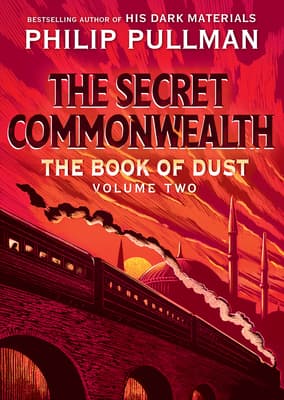
Synopsis
Covers the whole plot, including the ending.
- Difficulty
- Medium
- Pacing
- Variable
- Mood
- Philosophical, Expansive, Melancholy, Adventurous
- Read it if
- You loved the philosophical depth and world-building of 'His Dark Materials' and want to continue Lyra's story as an adult, exploring themes of consciousness, identity, and the nature of daemons.
- Skip it if
- You prefer a self-contained story or are looking for a lighthearted fantasy adventure, as this book delves into complex philosophical concepts and features a more mature, often darker tone.
The Secret Commonwealth Plot Summary
Covers the whole plot, including the ending.
A Fractured Connection and a Violent Attack
Seven years after 'His Dark Materials,' Lyra Silvertongue, now a 20-year-old student at St Sophia's College, Oxford, has a difficult relationship with her daemon, Pantalaimon. Their connection is now marked by frequent arguments and Pantalaimon's growing independence and cynicism, often as a polecat or pine marten. The main cause of their disagreement is Lyra's study of a paper on the Rose-Garden, a philosophical idea Pantalaimon finds cold. One evening, Lyra sees two unknown people brutally murder a botanist, Dr. Hanna Relf. Before dying, Relf whispers about 'the Rose-Garden' and a secret involving Lyra, starting a new mystery.
Pantalaimon's Flight and Lyra's Desperation
Dr. Relf's murder, with Lyra's interest in the Rose-Garden, makes the tension between Lyra and Pantalaimon worse. During a bitter argument about love and the human-daemon bond, Pantalaimon, angry and sad about Lyra's perceived emotional distance, leaves her. This separation is devastating and new for Lyra, as the bond between a human and their daemon is thought to be unbreakable. Upset and weak from the separation, Lyra asks her former guardian, Malcolm Polstead, now a professor and agent for the Oakley Street intelligence network, for advice. She also talks to Dr. Madek, a scholar of daemons, hoping for an explanation or a way to make up with Pantalaimon.
Malcolm's Mission and the Search for Olav
While Lyra deals with Pantalaimon's absence, Malcolm Polstead is asked by Oakley Street to investigate the disappearance of a young scholar named Olav Tryggvason, who was researching 'the Secret Commonwealth' and Dust. Malcolm goes to Geneva, where he learns Olav was last seen with a woman named Madame Rona and was involved with a group called the 'Magisterium's Office of Applied Theology' (MOAT). Malcolm's investigation finds a link between Olav's research, the Rose-Garden, and a powerful secret society controlling events, suggesting a global fight for knowledge and thought.
Lyra's Journey to Prague and the Refugee Camp
Following a clue from Dr. Relf and her own feelings, Lyra decides to go to Prague, thinking Pantalaimon might be drawn there by a shared interest in the Rose-Garden. She finds a world different from Oxford, with refugees escaping political problems and economic hardship. In Prague, Lyra meets a young Syrian refugee, Nour Huda, who becomes her guide. Lyra also sees the Magisterium's growing power and the persecution of those considered different. Her search for Pantalaimon mixes with her growing awareness of the suffering around her.
The Rose-Garden and the Alethiometer's Warnings
Lyra's research into the Rose-Garden increases as she travels. She learns it is not a physical place but a philosophical idea, a 'place beyond places' where pure thought and meaning exist, reachable through deep understanding and detachment. Her alethiometer, though harder to read without Pantalaimon, keeps giving her cryptic guidance, warning her of danger and the involvement of powerful, unseen forces. She realizes the Rose-Garden is central to the conflict and that both she and Pantalaimon are being drawn into a dangerous search related to its secrets and Dust.
Malcolm's Interrogation and Escape
Malcolm's investigation leads him to a Magisterium stronghold where he is captured and questioned by MOAT agents, including Olivier Bonneville. They believe Malcolm has information about Lyra and Dust. Despite their harsh methods, Malcolm resists, but he learns more about their goals: to control information and suppress any knowledge that challenges their authority, especially about daemons and the Rose-Garden. With help from an unexpected ally, Malcolm escapes, taking important information about the Magisterium's plans and their pursuit of Lyra.
Lyra's Encounter with Bonneville and the Desert
Lyra's journey takes her to a desert region where she meets Olivier Bonneville, the man who murdered Dr. Relf and a key figure in the Magisterium. Bonneville, with a twisted interest in Lyra and a desire to use her connection to Dust, tries to capture her. Lyra, using her intelligence and the limited guidance of her alethiometer, avoids him. She finds a hidden settlement in the desert, a community of scholars and mystics who also seek the Rose-Garden and have old knowledge about Dust and reality. Here, she finds temporary safety and a deeper understanding of her search.
Pantalaimon's Adventures and the Gyptian Network
After leaving Lyra, Pantalaimon travels through Europe, meeting different human and daemon communities. He struggles with his independence, missing Lyra but also enjoying his freedom. He joins a network of Gyptians, who know about the Magisterium's plans and secretly work against them. Through his interactions, Pantalaimon learns more about the political situation, the growing persecution of daemons, and the Magisterium's desire to control all knowledge. He also hears rumors of a 'city of daemons' and a place where the barrier between worlds is thin, which he thinks might explain his own identity and Lyra's.
Reunion and Revelation in the Desert
Lyra and Pantalaimon are reunited in the hidden desert settlement. Their reunion has tension but also great relief. They begin to fix their broken bond, understanding that their individual journeys have given them new ideas. Here, the wise elders of the community reveal the Rose-Garden: it is not a physical place but a state of being, a complete understanding of Dust and the connection of all things, available only to those who use both reason and emotion, the balance Lyra and Pantalaimon must find.
The Pursuit and the City of Daemons
As Lyra and Pantalaimon make up, Malcolm arrives, having tracked them through the desert. He brings news of the Magisterium's pursuit and their determination to capture Lyra, believing she holds the key to Dust and the Rose-Garden. The three, with some desert scholars, go on a dangerous journey, constantly avoiding Bonneville and his agents. Their path leads them to a 'city of daemons' – a place where daemons can exist without their humans, an idea that challenges everything they thought they knew about their world and themselves, setting up the next book.
The Secret Commonwealth Characters
Lyra Silvertongue
Protagonist
A university student grappling with a fractured daemon bond and a new mystery.
Now 20 years old, Lyra is studying at St Sophia's College, Oxford. Her youthful impulsiveness has been replaced by an intellectual curiosity, but also a growing emotional distance from her daemon, Pantalaimon. She is driven by a need to understand the Rose-Garden and to reconcile with Pantalaimon, a quest that inadvertently draws her into a global conspiracy. Her experiences in the refugee camps awaken her to the suffering of others and broaden her worldview beyond academia. She still possesses her innate courage and quick thinking, but she is also vulnerable and deeply affected by the loss of her daemon's constant presence.
Relationships: Pantalaimon (Her daemon, experiencing a strained and fractured bond); Malcolm Polstead (Her former guardian and trusted ally, now an Oakley Street agent); Will Parry (Her past love, a source of lingering emotional complexity); Nour Huda (A young Syrian refugee who becomes her companion and guide)
Pantalaimon
Supporting
Lyra's daemon, struggling with independence and a sense of betrayal.
Pantalaimon is Lyra's daemon, primarily manifesting as a polecat or pine marten. He is fiercely loyal but also deeply hurt by Lyra's intellectual detachment and her perceived disregard for their bond. His separation from Lyra is a painful yet transformative experience, forcing him to navigate the world independently and develop his own understanding of existence. He becomes more cynical and world-weary but also gains a deeper appreciation for the complexities of the human-daemon relationship. His journey involves encountering other daemons and humans, broadening his perspective beyond Lyra's immediate influence.
Relationships: Lyra Silvertongue (His human, with whom he has a strained but unbreakable bond); Gyptian community (Allies he encounters during his independent travels)
Malcolm Polstead
Supporting
Professor and Oakley Street agent, dedicated to protecting Lyra and fighting the Magisterium.
Malcolm, now a professor at Oxford and an agent for the secret Oakley Street intelligence network, is Lyra's steadfast protector and ally. He is a man of duty, intelligence, and deep moral conviction, driven by a desire to do what is right and to counter the oppressive influence of the Magisterium. His investigation into Olav Tryggvason's disappearance and the Secret Commonwealth intertwines with Lyra's quest, revealing a vast and dangerous conspiracy. He provides Lyra with support and information, often risking his own life to ensure her safety and the pursuit of truth.
Relationships: Lyra Silvertongue (Her former guardian and protector); Oakley Street (His employer and network of allies)
Olivier Bonneville
Antagonist
A ruthless Magisterium agent with a twisted fascination for Lyra.
Olivier Bonneville is a high-ranking and exceptionally cruel agent of the Magisterium's Office of Applied Theology (MOAT). He is responsible for the murder of Dr. Hanna Relf and relentlessly pursues Lyra, believing she holds the key to the secrets of Dust and the Rose-Garden. Bonneville is driven by a mix of fanatical zeal, personal ambition, and a disturbing, almost predatory, fascination with Lyra. He represents the oppressive and violent face of the Magisterium, willing to use any means necessary to achieve his goals, including torture and murder. His daemon is a venomous snake, reflecting his treacherous nature.
Relationships: Lyra Silvertongue (His primary target and object of obsession); Magisterium/MOAT (His organization)
Dr. Hanna Relf
Mentioned
The murdered botanist whose research sparks Lyra's quest.
Dr. Hanna Relf is a botanist whose murder is witnessed by Lyra at the beginning of the book. Before her death, she hints at the existence of the 'Rose-Garden' and a secret connected to Lyra, setting Lyra's journey in motion. Her research into rare plants and their connection to Dust is what draws the attention of the Magisterium and ultimately leads to her demise. Though her physical presence is brief, her death is a pivotal event, a catalyst for much of the plot and a symbol of the dangers inherent in pursuing forbidden knowledge.
Relationships: Lyra Silvertongue (Witness to her murder); Olivier Bonneville (Her murderer)
Nour Huda
Supporting
A young Syrian refugee who becomes Lyra's companion in Prague.
Nour Huda is a resourceful and resilient young Syrian refugee Lyra encounters in Prague. She has faced immense hardship and loss but maintains a spirited and pragmatic outlook. Nour acts as Lyra's guide through the complex and dangerous world of refugee camps and black markets, providing a stark contrast to Lyra's sheltered academic life. Her experiences open Lyra's eyes to the harsh realities of the world and foster a deeper sense of empathy in her. Nour's daemon is a small, quick-moving rodent, reflecting her survival instincts.
Relationships: Lyra Silvertongue (Her companion and friend during their travels)
Olav Tryggvason
Mentioned
A missing scholar whose research into the Secret Commonwealth draws Malcolm into the conspiracy.
Olav Tryggvason is a young scholar whose disappearance is investigated by Malcolm Polstead. His research into the 'Secret Commonwealth' and the nature of Dust is what initially connects him to the Magisterium's activities and the wider conspiracy. Though he is never physically present in the narrative, his work and his fate are central to Malcolm's storyline and reveal the extent of the Magisterium's control over information and its persecution of those who seek forbidden knowledge. He represents the countless individuals silenced by the oppressive forces at play.
Relationships: Malcolm Polstead (Malcolm investigates his disappearance); Madame Rona (Last seen with her)
Dr. Madek
Supporting
A scholar of daemons who provides Lyra with initial guidance.
Dr. Madek is a respected scholar specializing in the study of daemons. Lyra consults him after Pantalaimon leaves her, seeking scientific or philosophical explanations for their separation. He offers Lyra comfort and intellectual insights into the unique nature of the human-daemon bond and the mysteries surrounding it. While he cannot offer a simple solution, his knowledge helps Lyra process her grief and understand the deeper implications of her situation, suggesting that such separations, though rare, are not entirely unprecedented in the history of daemons.
Relationships: Lyra Silvertongue (Consulted by Lyra for advice on her daemon)
Madame Rona
Mentioned
A mysterious figure connected to Olav Tryggvason and the Magisterium.
Madame Rona is a shadowy figure encountered by Olav Tryggvason before his disappearance. She is connected to the Magisterium and is believed to have lured Olav into their clutches. Her true allegiances and motivations are not fully revealed, but she represents the deceptive and manipulative tactics employed by the Magisterium to ensnare scholars and control knowledge. Her role is to highlight the insidious nature of the Magisterium's influence, often operating through seemingly benign or academic fronts to achieve its oppressive ends.
Relationships: Olav Tryggvason (Last seen with her, involved in his disappearance)
The Secret Commonwealth Themes
The Nature of the Human-Daemon Bond
The main theme is the change and strain in the human-daemon connection. Lyra and Pantalaimon's difficult relationship shows the balance between independence and unity, and how emotional and intellectual differences affect them. Their separation forces both to think about their individual identities and what their existence together means. The book looks at the philosophical ideas of a daemon's freedom and the pain of a bond that, while unbreakable, can be hurt. It suggests that true connection needs mutual respect and emotional understanding, not just shared existence.
“They were two parts of one being, but they were not the same part, and their difference was causing them pain.”
Identity and Self-Discovery
Lyra, now an adult, deals with who she is outside of her past as a child of prophecy. Her studies and her daemon's absence make her question her beliefs, her emotions, and her place in the world. Pantalaimon also goes on a journey of self-discovery, learning what it means to be separate and how his identity is both linked to and different from Lyra's. The Rose-Garden, a 'place beyond places' of pure meaning, shows this search for deeper understanding of self and reality.
“She had been Lyra Silvertongue, the child of prophecy, but now she was just Lyra, a student, and a woman whose daemon had left her.”
Knowledge, Control, and Dogma
The conflict between seeking open knowledge and control by strict institutions is important. The Magisterium, through MOAT, stops information, persecutes scholars like Dr. Relf and Olav Tryggvason, and tries to control stories about Dust and the Secret Commonwealth. Lyra's curiosity and Malcolm's intelligence work represent the fight for truth and freedom of thought against an oppressive group that fears any challenge to its power. The Rose-Garden itself becomes a debated idea, representing a dangerous truth the Magisterium wants to hide.
“The Magisterium feared knowledge more than anything, especially knowledge that challenged their version of truth.”
Empathy and the Human Condition
Lyra's journey through refugee camps and her meetings with characters like Nour Huda show her the suffering and injustice in the world. Her academic distance is challenged by the realities of political instability, poverty, and persecution. This theme shows the importance of empathy and compassion, urging Lyra (and the reader) to look beyond personal concerns and engage with global humanitarian issues. Her growing awareness of these injustices strengthens her resolve and changes her understanding of her own responsibilities.
“She had read about suffering in books, but seeing it, feeling it, was a different thing entirely.”
The Search for Meaning and the Sacred
The book explores humanity's drive to find deeper meaning, often as a search for something sacred or beyond. The 'Rose-Garden' symbolizes this search for truth and understanding, a place where pure thought and meaning exist. Different groups interpret and pursue this idea in various ways, from Lyra's academic study to the desert mystics' old wisdom, and the Magisterium's desire to control it. It looks at the philosophical and spiritual aspects of Dust and the universe, questioning how meaning is made and seen.
“The Rose-Garden was not a place you could find on any map, but a place you found within yourself, or beyond yourself.”
Plot Devices & Literary Techniques
The Alethiometer
A truth-telling device that guides Lyra, albeit with difficulty.
The alethiometer, a golden compass-like device, remains Lyra's primary tool for seeking truth and guidance. However, in 'The Secret Commonwealth,' its function is complicated by Pantalaimon's absence. Lyra struggles to read it with the same clarity and speed she once possessed, symbolizing her emotional and intellectual disconnect. This difficulty reinforces the idea that the alethiometer's power is deeply intertwined with the human-daemon bond and requires a holistic understanding that Lyra temporarily lacks. It acts as a constant reminder of her fractured connection and the deeper truths she must uncover.
The Rose-Garden
A philosophical concept representing pure meaning and a contested truth.
The 'Rose-Garden' is a central plot device, initially presented as a mysterious concept that Dr. Relf was researching and that causes friction between Lyra and Pantalaimon. It evolves from a philosophical idea to a tangible object of pursuit for multiple factions, including the Magisterium and the desert mystics. It functions as a MacGuffin, driving the plot forward, but also as a profound symbol for the search for ultimate truth, pure thought, and the interconnectedness of Dust. Its elusive nature represents the difficulty of grasping profound truths.
Separation of Human and Daemon
The unprecedented physical and emotional split between Lyra and Pantalaimon.
The physical separation of Lyra and Pantalaimon is a groundbreaking plot device in the 'His Dark Materials' universe, challenging the fundamental understanding of the human-daemon bond. This separation not only creates immense emotional turmoil for both characters but also has physical and psychological consequences, weakening Lyra and forcing Pantalaimon to develop independence. It allows for dual narrative perspectives, with each character experiencing the world and evolving separately, ultimately leading to a more complex and mature understanding of their relationship upon reunion.
The Secret Commonwealth
A hidden world or state of being connected to Dust and daemons.
The 'Secret Commonwealth' is a mysterious concept that Olav Tryggvason was researching and that Malcolm Polstead is tasked to investigate. It refers to a hidden dimension or aspect of reality, possibly related to the true nature of Dust, consciousness, and the deeper interactions between humans and daemons. It functions as a crucial piece of lore that expands the universe, hinting at unseen forces and unknown possibilities. Its ambiguity builds suspense and suggests that there is much more to reality than what is commonly perceived, driving both Malcolm's and Lyra's quests.
The Secret Commonwealth Quotes
“The secret commonwealth is the world of the imagination, the world of the daemons, the world of the dead, the world of the spirits.”
“We are all subject to the fictions we create.”
“A scholar's job is to ask questions, not to provide answers.”
“The mind is a universe of its own, and we are only beginning to explore it.”
“Fear is a poison that distorts the truth.”
“Every story is a lie until someone believes it.”
“The world is full of invisible things, not all of them friendly.”
“To understand another, you must first understand yourself.”
“Power corrupts, but so does the lack of it.”
“The past is not dead; it is not even past.”
“Love is a kind of madness, but so is hate.”
“We are all stories in the end.”
“The truth is often a matter of perspective.”
“Courage is not the absence of fear, but the will to act despite it.”
Quiz
10 questions on the plot and the characters. Each answer comes with a short explanation.
Question 1
How old is Lyra in 'The Secret Commonwealth'?
- 17 years old
- 20 years old
- 25 years old
- 30 years old
Show answer
B. 20 years old The book explicitly states that Lyra is now twenty years old, marking her transition from childhood to adulthood in this second volume of The Book of Dust series.
Question 2
What is the primary conflict in Lyra's relationship with her daemon Pantalaimon in this book?
- They are physically separated by a magical barrier
- They are forced to navigate their relationship in a way they never imagined
- Pantalaimon wants to leave Lyra to find his own path
- Lyra can no longer hear Pantalaimon's thoughts
Show answer
B. They are forced to navigate their relationship in a way they never imagined The book description emphasizes that Lyra and Pantalaimon must navigate their relationship in unprecedented ways, reflecting the novel's exploration of maturity and the complexities of human-daemon bonds.
Question 3
Who is Malcolm in 'The Secret Commonwealth'?
- Lyra's childhood friend from Jordan College
- A scholar studying Dust at Oxford
- The boy who saved baby Lyra from the flood in 'La Belle Sauvage', now grown up
- A mysterious figure from the Magisterium
Show answer
C. The boy who saved baby Lyra from the flood in 'La Belle Sauvage', now grown up Malcolm is the protagonist from 'La Belle Sauvage: The Book of Dust Volume One', who as a boy rescued baby Lyra. In this book, he has grown into a man with a strong sense of duty and is pulled into his own journey.
Question 4
What geographical regions do Lyra and Pantalaimon travel through in their journey?
- Only within Oxford and its immediate surroundings
- Across Europe and into Asia
- To the Arctic and back to Oxford
- Through multiple parallel worlds
Show answer
B. Across Europe and into Asia The book description specifies that their journey takes them far beyond Oxford, across Europe and into Asia, expanding the scope of Pullman's world-building in this volume.
Question 5
What are Lyra and Pantalaimon searching for in their journey?
- A way to reunite with Will Parry
- The origins of Dust and a city haunted by daemons
- A magical artifact to restore their bond
- A new home away from the Magisterium
Show answer
B. The origins of Dust and a city haunted by daemons Their quest involves searching for 'what is lost' - specifically a city haunted by daemons, a secret at the heart of a desert, and the mystery of Dust, tying into the book's themes of knowledge and exploration.
Question 6
How does 'The Secret Commonwealth' relate temporally to the events of 'His Dark Materials'?
- It takes place before Lyra's journey to the North in 'The Golden Compass'
- It occurs simultaneously with Will's story in 'The Subtle Knife'
- It is set seven years after Lyra and Will parted on the bench in Oxford
- It happens twenty years before the events of 'La Belle Sauvage'
Show answer
C. It is set seven years after Lyra and Will parted on the bench in Oxford The book description clarifies that it's seven years since readers left Lyra and Will on the bench in Oxford's Botanic Gardens at the end of 'His Dark Materials', placing it firmly in the timeline after that trilogy.
Question 7
What major theme is introduced through Lyra's strained relationship with Pantalaimon?
- The loss of childhood innocence and the complexities of adulthood
- The dangers of scientific experimentation
- The conflict between religion and magic
- The importance of political revolution
Show answer
A. The loss of childhood innocence and the complexities of adulthood Lyra's difficult relationship with her daemon reflects the novel's exploration of growing up, as she navigates adult complexities that contrast with her childhood adventures in previous books.
Question 8
What does the 'secret commonwealth' referenced in the title likely symbolize in the context of the book?
- A hidden government controlling Oxford from behind the scenes
- The world of daemons and their mysterious connections to humans
- A secret society of Dust researchers
- The magical realm that exists parallel to our world
Show answer
B. The world of daemons and their mysterious connections to humans Given the book's focus on daemons, their relationship with humans, and the search for a 'city haunted by daemons,' the title likely refers to the hidden world and rules governing daemons - a 'commonwealth' being a political community.
Question 9
Why is Malcolm described as having 'a strong sense of duty and a desire to do what is right' in this book?
- Because he is now a Magisterium agent tasked with monitoring Lyra
- As a continuation of his character development from saving baby Lyra, now applied to broader moral challenges
- Because he regrets not being able to save more people during the flood
- As a contrast to Lyra's more rebellious nature in adulthood
Show answer
B. As a continuation of his character development from saving baby Lyra, now applied to broader moral challenges Malcolm's characterization builds on his heroic actions in 'La Belle Sauvage' where he risked everything to save Lyra. His grown-up sense of duty reflects how that formative experience shaped his adult moral compass.
Question 10
What makes the world in 'The Secret Commonwealth' both 'familiar and extraordinary' as described?
- It combines the known geography of Europe/Asia with the magical elements of daemons and Dust
- It features characters from previous books but in completely new settings
- It presents an alternate history where the Magisterium won complete control
- It shows Oxford exactly as it exists today but with hidden magic
Show answer
A. It combines the known geography of Europe/Asia with the magical elements of daemons and Dust The book maintains the recognizable elements of Pullman's world (Oxford, Europe, human-daemon bonds) while expanding into new, extraordinary territories like a city haunted by daemons and desert secrets, creating that dual quality.
The Secret Commonwealth FAQ
What is 'The Secret Commonwealth' about?
The novel follows Lyra Silvertongue, now twenty years old, and her daemon Pantalaimon as they navigate a fractured relationship while being drawn into dangerous factions across Europe and Asia. They search for what is lost, including a city haunted by daemons and the mystery of Dust, with Malcolm Polstead also embarking on his own mission from his past as Lyra's protector.
Why should I read 'The Secret Commonwealth'?
It offers a mature, philosophical exploration of Lyra's adulthood, delving into themes like rationality vs. imagination, the nature of consciousness, and political intrigue in Pullman's expanded multiverse. Fans of 'His Dark Materials' will appreciate seeing Lyra grapple with her past and the complex world-building that extends beyond Oxford.
What is the background/setting of 'The Secret Commonwealth'?
Set twenty years after 'La Belle Sauvage' and seven years after the events of 'His Dark Materials', the story begins in Lyra's Oxford but expands across a Europe-like continent and into Central Asia. It explores a world where daemons are integral to human identity, and secret societies like the Oakley Street and the Magisterium wield influence.
What are the most memorable quotes?
Key quotes include Lyra's reflection, 'The secret commonwealth is the world of the imagination,' highlighting the book's theme, and Pantalaimon's lament, 'We're not children anymore,' underscoring their strained relationship. Another is Malcolm's determination: 'I have to find her,' showing his protective role from her infancy.
What writing style does Philip Pullman use?
Pullman employs a dense, philosophical prose with rich world-building, blending fantasy elements with social commentary. The narrative alternates between Lyra's introspective journey and Malcolm's action-driven plot, creating a multi-layered story that explores adult themes like identity and belief.
What minor details add significant meaning?
Lyra's loss of her ability to read the alethiometer symbolizes her disconnect from imagination, while the recurring motif of roses—linked to her mother, Mrs. Coulter—hints at unresolved familial trauma. The mention of 'Dust' as consciousness ties back to earlier books, emphasizing its evolving philosophical importance.
What are some subtle foreshadowing moments?
Early tensions between Lyra and Pan foreshadow their physical separation later in the book, mirroring the theme of fractured selves. Malcolm's references to his past with baby Lyra hint at his ongoing protective role, and discussions about the 'secret commonwealth' of imagination prefigure the mystical elements they encounter in Asia.
What unexpected character connections exist?
Malcolm Polstead, now an academic, is revealed to have secretly protected Lyra since her infancy, creating a deep, unspoken bond. The reappearance of characters from 'His Dark Materials', like Lord Asriel's legacy, influences political factions, and new allies in Central Asia tie into broader conspiracies around Dust.
What are unspoken character motivations?
Lyra is driven by a guilt-ridden desire to reconcile with Pan and understand Dust, stemming from her unresolved trauma with Will. Malcolm acts out of a sense of duty and latent affection for Lyra, rooted in his childhood rescue mission. Pan's rebellion reflects his fear of Lyra's growing rationality eroding their bond.
What psychological complexities do characters exhibit?
Lyra grapples with depression and disenchantment, struggling to balance empirical reason with the magical beliefs of her youth. Pantalaimon embodies her suppressed emotions and imagination, leading to their conflict as separate entities. Malcolm shows a mix of scholarly detachment and deep-seated loyalty, complicating his actions.
What are the major emotional turning points?
The rift between Lyra and Pan, where they physically separate, marks a low point in their relationship. Lyra's decision to embark on a perilous journey to Central Asia represents her reclaiming agency. Malcolm's confrontation with threats to Lyra reignites his protective instincts, deepening his emotional investment.
How do relationship dynamics evolve?
Lyra and Pan's bond deteriorates from childhood unity to estrangement, forcing them to seek reconciliation externally. Malcolm and Lyra's relationship shifts from distant acquaintance to one of mutual reliance, with Malcolm becoming a surrogate guardian. Alliances with new characters in Asia introduce trust and betrayal themes.
Which parts remain ambiguous or open-ended?
The true nature of the 'secret commonwealth'—whether it's a literal place or metaphorical realm—is left ambiguous. The ultimate fate of Dust and its connection to human consciousness is unresolved, setting up for the next volume. Lyra's romantic future and her reconciliation with Pan are also pending.
What are controversial scenes or decisions?
Lyra's turn towards rationalism and rejection of her childhood beliefs sparks debate about losing wonder. Her separation from Pan, a core aspect of her identity, is seen as a traumatic break. Some readers critique the darker, more political tone as a departure from the adventure-focused earlier books.
'The Secret Commonwealth' ending explained: how it ends & what it means
The novel ends with Lyra and Pan still estranged but both journeying towards Central Asia, seeking answers about Dust and the secret commonwealth. Malcolm continues his mission to protect her, hinting at convergence in the next volume. It suggests that reconciliation and understanding require embracing both reason and imagination.
About the author

Sir Philip Nicholas Outram Pullman is an English writer. His books include the fantasy trilogy His Dark Materials and The Good Man Jesus and the Scoundrel Christ, a fictionalised biography of Jesus. In 2008, The Times named Pullman one of the "50 greatest British writers since 1945". In a 2004 BBC poll, he was named the eleventh most influential person in British culture. He was knighted in the 2019 New Year Honours for services to literature.
Similar books
- The Amber Spyglass
Philip Pullman
4.1 (298k) average on GoodreadsFantasyThe final book in the 'His Dark Materials' trilogy, sharing characters and thematic depth.
- A Darker Shade of Magic
V.E. Schwab
4.1 (201k) average on GoodreadsFantasyFeatures parallel worlds and complex magical systems, with a strong sense of adventure.
- Uprooted
Naomi Novik
4.1 (167k) average on GoodreadsFantasyCompared to Novik's Uprooted, which focuses on traditional fairy tale structures and a contained magical system with intense character relationships, The Secret Commonwealth delves into grander philosophical questions and a sprawling, multi-world cosmology. Pullman's strength is its allegorical power and critique of institutional thought, while Novik's lies in visceral magic and character intimacy.
- Harry Potter and the Sorcerer's Stone
J.K. Rowling
4.5 (7M) average on GoodreadsFantasyRescued from a miserable life under the stairs, an orphaned boy discovers he's a wizard destined for a magical school, where he uncovers a dangerous secret tied to the dark wizard who murdered his parents.
- The Hunger Games
Suzanne Collins
4.3 (6.4M) average on GoodreadsFantasyIn a future where children fight to the death on live television, Katniss Everdeen volunteers for the arena, turning a death sentence into a fight for survival and a spark of rebellion.
- 1984
George Orwell
4.2 (3.1M) average on GoodreadsPoliticsIn a future where surveillance and thought control are absolute, a man's search for truth clashes with the Party, showing that hope can be a form of rebellion.




Enjoyed the summary?
A summary gives you the shape of the book. The book itself has the detail, the examples and the voice.
Find The Secret Commonwealth on AmazonAs an Amazon Associate, BookBrief earns from qualifying purchases. How we're funded