
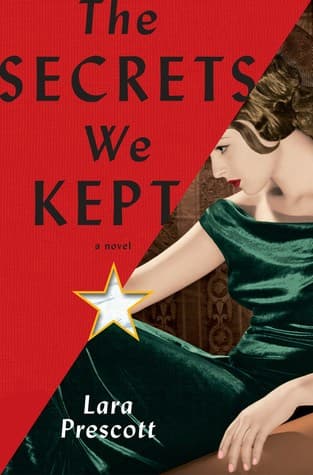
Synopsis
Covers the whole plot, including the ending.
- Difficulty
- Medium
- Pacing
- Moderate
- Mood
- Intriguing, Suspenseful, Thought-provoking, Historical
- Read it if
- You love historical thrillers with strong female leads, intricate spy plots, and a fascinating look into a real-life Cold War operation.
- Skip it if
- You prefer fast-paced action over character-driven historical narratives, or are not interested in Cold War politics and literary history.
The Secrets We Kept Plot Summary
Covers the whole plot, including the ending.
The Recruitment of Sally Forrester
In 1956, Sally Forrester, a former OSS agent with a troubled past and successful secret operations, lives a quiet life in Washington D.C. when the CIA calls her back. Her handler, Paul, tells her about a sensitive project: to help publish and distribute Boris Pasternak's novel, *Doctor Zhivago*, which the USSR banned as anti-Soviet. The CIA believes the book's themes of individual freedom and the human spirit will be a strong tool against communism. Sally's skills and experience in espionage make her a good choice for this delicate and dangerous task, requiring her to use her charm and intelligence in the high-stakes world of Cold War intelligence.
Irina's Entry into the CIA
Irina Drozdov, a young, smart typist in the CIA's secretarial pool in 1956, finds her routine changed when she is chosen for a new assignment. She first transcribes and translates parts of Russian literature, including *Doctor Zhivago*, a book she quickly loves. Her supervisor, Liz, a strict but observant woman, sees Irina's sharp mind and fluency in Russian as valuable. Irina does not know she is being prepared for a bigger role in the secret plan to spread Pasternak's novel, a mission far from her usual work of typing memos and reports. This is her first step into a world of secrets and international intrigue.
The Mission to Smuggle Zhivago
Sally and Irina are formally paired for their mission: to secretly move the *Doctor Zhivago* manuscript out of the Soviet Union and arrange its publication in the West. This involves a network of contacts, secret meetings, and the constant threat of being discovered by the KGB. Sally, with her espionage experience, guides Irina through spycraft, teaching her how to keep cover, do dead drops, and spot surveillance. Their first efforts focus on getting the original manuscript from Pasternak's contacts and then finding a publisher for such a political work, all while under the close watch of the Cold War.
Sally's Past and Personal Sacrifices
Through the story, flashbacks show Sally Forrester's past as an OSS agent during World War II, especially her dangerous missions in Nazi-occupied Europe. These glimpses into her history show her resourcefulness and bravery, but also the deep personal sacrifices she made for her country. We learn about her complex relationship with a fellow agent, a man she loved and lost, and the emotional scars that never healed. Her past experiences shape her current caution and her understanding of espionage's harsh realities, contributing to her guarded manner and her dedication to the mission, even at the cost of her own happiness.
The Geneva Book Fair Operation
A key moment in the operation happens at the 1958 Brussels World's Fair (often combined with Geneva in intelligence operations of the time), where the CIA plans to give thousands of small copies of *Doctor Zhivago* to Soviet citizens and foreign delegates. Sally and Irina, disguised as ordinary attendees, are crucial to this effort. They work to discreetly hand out the books, watching the reactions of recipients and the eyes of Soviet agents. The success of this distribution is a major win for the CIA, showing literature's power as a weapon in the ideological war, and making *Doctor Zhivago* a symbol of resistance.
Irina's Growing Disillusionment
As Irina gets more involved in the operation, she starts to question the ethics and true reasons behind the CIA's work. While she admires Pasternak's novel and believes in its message, she grows uncomfortable with the deception and manipulation in her work. She sees the human cost of Cold War espionage and the blurred lines between right and wrong, freedom and control. Her early idealism is challenged by the practical and often ruthless demands of intelligence work, leading to a growing disillusionment about her mission's true nature and the agency she serves.
The Nobel Prize Controversy
When Boris Pasternak receives the Nobel Prize in Literature in 1958, it causes a fierce international controversy. The Soviet government, angry at the recognition of a dissident author and the widespread distribution of his banned novel, forces Pasternak to decline the award under great pressure. This political fallout directly affects Sally and Irina, as their mission's stakes rise. The increased scrutiny from both sides makes their work even more dangerous, and they must navigate a situation of increased surveillance and possible retaliation. The Nobel Prize, meant as an honor, becomes a symbol of the Cold War's bitter ideological struggle.
Sally's Final Assignment and Sacrifice
Sally gets a final, very dangerous assignment related to the *Doctor Zhivago* project, which makes her face unresolved issues from her past. This mission takes her back to Europe, where she meets memories of her wartime experiences and makes a deep personal sacrifice for the operation's success. The mission's success comes at a great personal cost, changing her forever and strengthening her commitment to a life of service, even if it means enduring profound loneliness and emotional hardship. Her actions show the heavy toll that a life in intelligence takes on a person.
Irina's Post-CIA Life
Decades later, in the 1990s, an older Irina Drozdov thinks about her time in the CIA and her part in the *Doctor Zhivago* operation. She has left intelligence work, but the experiences have deeply shaped her life. She grapples with her actions' legacy, the moral compromises she made, and the personal relationships that formed and broke during that tumultuous period. Her reflections offer a look back at the Cold War, literature's power, and the complex interaction between individual lives and grand political schemes. She finally comes to terms with her past, finding a nuanced understanding of her contributions.
The Enduring Legacy of Zhivago
The novel ends by highlighting the lasting legacy of *Doctor Zhivago* as a literary work and a symbol of freedom that crossed political borders. It shows how the CIA's secret operation, led by agents like Sally and Irina, was crucial in bringing Pasternak's work to the world. The story subtly points to the eventual recognition of the agents' contributions, even if late and anonymously. The story ultimately shows art's power to challenge oppressive regimes and the quiet heroism of those who risk everything to ensure such voices are heard, even if their own stories remain hidden for decades.
Principal Figures
Sally Forrester
Protagonist
A seasoned and enigmatic CIA operative with a complex past.
Sally is a highly capable and experienced spy, having served in the OSS during WWII. She is intelligent, resourceful, and possesses a magnetic charm that she skillfully uses in her espionage work. Haunted by past loves and the sacrifices made in service, she often appears guarded and emotionally distant. Her dedication to the mission is unwavering, but it comes at a significant personal cost, leaving her with a deep sense of loneliness and unresolved grief.
Relationships: Irina Drozdov (Mentor and colleague, developing into a complex, almost maternal bond.); Paul (Her handler, a professional and sometimes intimate connection.); Boris Pasternak (The author whose work she is dedicated to, though they never meet directly.)
Irina Drozdov
Protagonist
A young, bright typist recruited into the CIA, finding her moral compass in espionage.
Irina is initially a naive but intelligent typist, fluent in Russian, whose life is transformed when she is recruited into the CIA. She is observant, empathetic, and quickly adapts to the demands of spycraft under Sally's tutelage. As she becomes more deeply involved in the *Doctor Zhivago* operation, she grapples with the moral ambiguities of her work, questioning the ethics of deception and the true cost of ideological warfare. She embodies the idealism that is slowly eroded by the realities of espionage.
Relationships: Sally Forrester (Her mentor and guide, a complex relationship marked by respect, dependency, and occasional tension.); Liz (Her initial supervisor, who recognizes her potential.); Boris Pasternak (The author whose novel deeply impacts her and becomes central to her mission.)
Boris Pasternak
Supporting
The revered Soviet author of the banned novel *Doctor Zhivago*.
Boris Pasternak is the brilliant but embattled author whose masterpiece, *Doctor Zhivago*, becomes the central focus of the CIA's operation. He is depicted as a man of integrity and artistic vision, deeply committed to his work despite the oppressive Soviet regime. His refusal to compromise his artistic truth, even under immense pressure, makes him a symbol of individual freedom. Though he never directly interacts with the CIA agents, his courage and the power of his novel drive the entire plot.
Relationships: Olga Ivinskaya (His muse and mistress, who suffers greatly for their relationship and his work.); Soviet Government/KGB (His persecutors, who ban his book and force him to decline the Nobel Prize.)
Paul
Supporting
Sally's handler at the CIA, a pragmatic and sometimes manipulative figure.
Paul is Sally's primary contact and handler within the CIA. He is a seasoned intelligence officer, pragmatic and focused on the mission's success, even if it means employing morally ambiguous tactics. He has a complicated history with Sally, hinting at a past romantic involvement or deep professional bond that adds a layer of personal tension to their interactions. He represents the calculating, strategic side of the intelligence agency, often prioritizing operational goals over individual well-being.
Relationships: Sally Forrester (Her handler, a professional relationship with underlying personal history.); CIA Leadership (His superiors, to whom he reports on the Zhivago operation.)
Liz
Supporting
Irina's initial supervisor at the CIA, a sharp and observant woman.
Liz is Irina's supervisor in the CIA's secretarial pool, and later, a key figure in her recruitment. She is astute and perceptive, quickly recognizing Irina's intelligence and potential beyond mere typing. Liz embodies the quiet strength and dedication of many women who worked behind the scenes in intelligence, often overlooked but crucial to operations. She acts as an early mentor figure for Irina, subtly guiding her towards the larger mission without revealing too much too soon.
Relationships: Irina Drozdov (Supervisor and early mentor.); CIA Leadership (A trusted employee within the agency.)
Olga Ivinskaya
Supporting
Boris Pasternak's lover and muse, who suffers immensely for his work.
Olga Ivinskaya is Boris Pasternak's mistress and the real-life inspiration for Lara in *Doctor Zhivago*. She is a strong, loyal, and resilient woman who endures severe persecution, including imprisonment in the Gulag, because of her association with Pasternak and his controversial novel. Her suffering highlights the brutal reality of Soviet repression and the personal cost borne by those connected to dissidents. She is a symbol of enduring love and sacrifice in the face of tyranny.
Relationships: Boris Pasternak (His devoted lover and muse, suffering greatly on his behalf.)
Grigory Pasternak
Mentioned
Boris Pasternak's son.
Grigory Pasternak is Boris Pasternak's son, mentioned in the context of the family's struggles under Soviet pressure. While not a central character, his existence underscores the broader impact of the regime's actions on Pasternak's family. His well-being is often a factor in Boris Pasternak's difficult decisions regarding his work and the Nobel Prize, highlighting the personal stakes for the author.
Relationships: Boris Pasternak (His father, whose actions profoundly affect his family.)
The KGB
Antagonist
The Soviet state security agency, actively suppressing dissent and surveilling Pasternak.
The KGB represents the oppressive force of the Soviet regime. They are the antagonists in the story, actively working to suppress *Doctor Zhivago* and persecute Boris Pasternak and anyone associated with him. Their methods include surveillance, intimidation, propaganda, and imprisonment. They symbolize the ideological adversary in the Cold War, relentlessly trying to control information and maintain the Soviet narrative. Their constant threat drives much of the tension and danger for Sally and Irina.
Relationships: Boris Pasternak (His persecutors.); Sally Forrester (Their adversary in the Cold War.); Irina Drozdov (Their adversary in the Cold War.)
Themes & Insights
The Power of Literature and Art
The novel explores how literature, specifically *Doctor Zhivago*, can cross political borders and act as a strong weapon in ideological war. The CIA believes Pasternak's novel, with its themes of individual freedom and the human spirit, can weaken the Soviet regime more effectively than propaganda. Scenes showing the secret distribution of the book at the Brussels World's Fair show its immediate impact on Soviet citizens, who crave truth and beauty. The book becomes a symbol of hope and resistance, showing that art can change hearts and minds, challenging oppressive systems by appealing to universal human emotions.
“A book is a loaded gun in the house next door.”
Sacrifice and the Cost of Duty
Sacrifice is a main theme, especially through Sally and Irina's experiences, and implicitly, Boris Pasternak's. Sally's flashbacks show a history of lost love and personal happiness given up for her wartime service, leaving her emotionally scarred. Irina, at first idealistic, comes to understand the moral compromises and personal risks in espionage, questioning her duty's true cost. Pasternak himself sacrifices his peace, reputation, and even his Nobel Prize to stay true to his artistic vision. The novel consistently shows that commitment to a cause, whether national security or artistic integrity, often demands deep personal loss and lasting emotional burdens.
“What does a life in intelligence leave you with, in the end? Only the secrets, and the ghosts.”
Truth, Deception, and Moral Ambiguity
The story looks at the complex interplay of truth and deception in espionage. While the CIA's mission is to spread 'truth' through literature, it relies heavily on secret operations, lies, and manipulation. Irina's journey, in particular, shows this moral ambiguity as she grapples with her work's ethics. She questions whether the 'good' outcome of distributing *Doctor Zhivago* justifies the deceptive methods used. The novel suggests that in the high-stakes world of the Cold War, the lines between hero and manipulator, truth-teller and deceiver, become blurred, forcing characters to navigate a situation where pure moral clarity is often impossible.
“Sometimes, the truth needs a little help to find its way into the world.”
Women in Intelligence and Society
The book explores the often-overlooked roles of women in intelligence during the Cold War, challenging traditional gender stereotypes. Sally and Irina, initially in typing pools, prove to be capable and essential operatives. They navigate a male-dominated world, using their intelligence, charm, and perceptiveness as key tools. The novel also subtly addresses society's expectations for women during this era, contrasting their public roles with their secret, dangerous lives. Their stories shed light on the unsung contributions of women who played crucial, though often uncredited, roles in shaping historical events.
“They thought we were just typists. They never saw the steel underneath.”
Plot Devices & Literary Techniques
Dual Perspective Narrative
Alternating chapters follow Sally and Irina, offering contrasting views of the mission.
The novel employs a dual perspective narrative, primarily alternating between Sally Forrester's seasoned spy's viewpoint and Irina Drozdov's novice perspective. This device allows the reader to experience the *Doctor Zhivago* operation from different angles: Sally's cynical, experienced, and world-weary approach versus Irina's initial idealism and growing moral questioning. It enriches the understanding of the mission's complexities, the personal tolls of espionage, and the broader Cold War context, providing a more comprehensive and nuanced view of the events.
Flashbacks
Interspersed memories reveal Sally's past and the origins of her character.
Flashbacks are strategically used to reveal Sally Forrester's past as an OSS agent during World War II. These glimpses into her history explain her skills, her emotional guardedness, and the profound personal sacrifices she has made. They provide crucial context for her character development, illustrating the long-lasting impact of her wartime experiences on her present-day motivations and relationships. This device adds depth to Sally's character, explaining her resilience and her understanding of the harsh realities of espionage.
Historical Interludes/Documents
Brief excerpts of historical facts or documents provide context for the Zhivago affair.
The novel occasionally includes brief, factual interludes, such as excerpts from historical documents, CIA memos, or news reports pertaining to *Doctor Zhivago* and the Cold War. This device grounds the fictional narrative in historical reality, lending authenticity and gravitas to the story. It reminds the reader that the plot is 'inspired by a true story' and provides factual context for the political climate and the significance of Pasternak's novel, blurring the lines between fiction and documented history.
The MacGuffin (Doctor Zhivago)
The banned novel serves as the central object driving the entire plot.
While *Doctor Zhivago* is more than just a MacGuffin, it functions as the central object that drives the entire plot forward. Its existence, banning, and the CIA's desire to disseminate it are the primary motivators for all character actions and the unfolding of the espionage plot. It is the catalyst for Sally and Irina's mission, the source of conflict with the Soviet Union, and the ultimate goal around which all operations revolve, even as its thematic content adds deeper meaning beyond a mere plot device.
The Secrets We Kept Quotes
“The past is never dead. It's not even past.”
“In the game of espionage, everyone is a pawn, even the queens.”
“Sometimes the greatest betrayals come from those closest to you.”
“A book can be more dangerous than a bomb.”
“We all have secrets. Some we keep from others, some we keep from ourselves.”
“The truth is a luxury few can afford.”
“Every word written, every page turned, was an act of defiance.”
“Love, like a secret, can be both a burden and a salvation.”
“The silence was louder than any confession.”
“History is written by the victors, but sometimes, the vanquished leave behind the most important stories.”
“To be truly free, one must first be free in their mind.”
“The weight of a secret can crush you, or it can make you stronger.”
“Even in the darkest times, there is always a flicker of hope, if you know where to look.”
Quiz
10 questions on the plot and the characters. Each answer comes with a short explanation.
Question 1
What was the primary mission given to Sally Forrester and Irina by the CIA in 'The Secrets We Kept'?
- To assassinate a high-ranking Soviet official.
- To smuggle 'Doctor Zhivago' out of the USSR and arrange for its publication.
- To recruit Soviet scientists for the American space program.
- To decipher encrypted Soviet communications.
Show answer
B. To smuggle 'Doctor Zhivago' out of the USSR and arrange for its publication. Sally and Irina's main objective was to get Boris Pasternak's 'Doctor Zhivago' published outside the Soviet Union, using it as a tool against Soviet ideology.
Question 2
Which real-life novel served as the central focus of the CIA's plot in 'The Secrets We Kept'?
- 'War and Peace' by Leo Tolstoy
- 'The Master and Margarita' by Mikhail Bulgakov
- 'Doctor Zhivago' by Boris Pasternak
- 'One Day in the Life of Ivan Denisovich' by Aleksandr Solzhenitsyn
Show answer
C. 'Doctor Zhivago' by Boris Pasternak The entire premise of the novel revolves around the CIA's efforts to use Boris Pasternak's 'Doctor Zhivago' as a propaganda tool during the Cold War.
Question 3
What was Sally Forrester's primary method for extracting information and secrets from powerful men?
- Blackmail and coercion.
- Advanced technological surveillance.
- Using her magnetism, charm, and gift for deceit.
- Direct interrogation and torture.
Show answer
C. Using her magnetism, charm, and gift for deceit. The description states Sally 'honed her gift for deceit all over the world--using her magnetism and charm to pry secrets out of powerful men.'
Question 4
How did Irina's initial experience compare to Sally's when they were assigned to the mission?
- Irina was also a seasoned spy, but specialized in different areas.
- Irina was a complete novice, learning spy craft under Sally's tutelage.
- Irina was Sally's superior, overseeing her operations.
- Irina had a background in military intelligence, unlike Sally.
Show answer
B. Irina was a complete novice, learning spy craft under Sally's tutelage. The text explicitly states, 'Irina is a complete novice, and under Sally's tutelage quickly learns how to blend in, make drops, and invisibly ferry classified documents.'
Question 5
What does the phrase 'infiltrate the hearts and minds of Soviet Russia' imply about the CIA's strategy with 'Doctor Zhivago'?
- They aimed to physically invade Soviet territory.
- They sought to influence Soviet citizens' thoughts and emotions through cultural means.
- They planned to use advanced mind-control technology.
- They intended to establish direct communication lines with Soviet leaders.
Show answer
B. They sought to influence Soviet citizens' thoughts and emotions through cultural means. To 'infiltrate hearts and minds' means to subtly influence beliefs and feelings, which aligns with using a powerful love story like 'Doctor Zhivago' as a cultural weapon rather than overt propaganda.
Question 6
Why was it necessary for the CIA to smuggle 'Doctor Zhivago' out of the USSR for publication?
- The author, Boris Pasternak, requested international publication personally.
- The USSR government had banned its publication due to its content.
- The novel was written in a secret code that only the CIA could decipher.
- It was a rare manuscript, and the only copies existed outside the USSR.
Show answer
B. The USSR government had banned its publication due to its content. The excerpt states the mission was 'to smuggle Doctor Zhivago out of the USSR, where no one dare publish it,' indicating it was suppressed within the Soviet Union.
Question 7
What historical period serves as the backdrop for the events in 'The Secrets We Kept'?
- World War II
- The Cold War
- The Vietnam War
- The Great Depression
Show answer
B. The Cold War The description explicitly states the events occur 'At the height of the Cold War,' making it the historical setting.
Question 8
Beyond the specific mission, what broader theme is highlighted by the CIA's use of 'Doctor Zhivago'?
- The futility of covert operations.
- The power of culture and art as a weapon in ideological conflict.
- The superiority of military force over intelligence gathering.
- The importance of technological advancements in espionage.
Show answer
B. The power of culture and art as a weapon in ideological conflict. Using a 'love story' to 'infiltrate the hearts and minds' and counter Soviet propaganda emphasizes the theme of art and culture as a potent, non-military tool in ideological warfare.
Question 9
How does the novel's title, 'The Secrets We Kept,' relate to the dual nature of the protagonists' roles?
- It refers only to the classified documents they handled, not personal secrets.
- It suggests the personal sacrifices and hidden identities required of them as spies, beyond just state secrets.
- It implies they were keeping secrets from each other as rivals.
- The title is a misdirection, as they reveal all secrets by the end.
Show answer
B. It suggests the personal sacrifices and hidden identities required of them as spies, beyond just state secrets. The title likely refers to both the classified information they handled and the personal secrets, hidden lives, and emotional costs associated with being a spy, as suggested by themes like 'love and duty, and sacrifice.'
Question 10
What does the phrase 'pulled out of the typing pool' suggest about the initial status and background of Sally and Irina within the CIA?
- They were already highly ranked agents awaiting a special assignment.
- They were in administrative, secretarial roles, indicating an unconventional selection for espionage.
- They were being demoted from more active field roles.
- They were part of a specialized unit for linguistic analysis.
Show answer
B. They were in administrative, secretarial roles, indicating an unconventional selection for espionage. 'Typing pool' refers to a group of typists, typically administrative staff. Being 'pulled out' suggests they were chosen from a mundane, non-espionage role for this extraordinary mission, highlighting their unexpected entry into spycraft.
The Secrets We Kept FAQ
What is the central premise of 'The Secrets We Kept'?
'The Secrets We Kept' centers on two CIA secretaries, Sally Forrester and Irina Drozdov, who are tasked with covertly smuggling Boris Pasternak's novel 'Doctor Zhivago' out of the Soviet Union. Their mission is to facilitate its global publication, using the power of literature as a weapon against Soviet ideology during the Cold War.
Who are the two main protagonists, and what are their initial roles?
The main protagonists are Sally Forrester, a seasoned and glamorous CIA operative with a talent for espionage and manipulation, and Irina Drozdov, a young, initially naive typing pool secretary. Irina is brought under Sally's wing to learn the ropes of covert operations, transitioning from administrative work to fieldwork.
What is the significance of 'Doctor Zhivago' to the plot?
'Doctor Zhivago' is central as it represents a powerful piece of Russian literature that critiques Soviet life and offers a message of individual freedom, making it a forbidden work within the USSR. The CIA believes its global publication will be a significant ideological victory against the Soviets, exposing the regime's censorship and resonating with hearts and minds.
How does the book explore the theme of love and duty?
The book explores love and duty through the personal sacrifices made by characters like Sally and Irina, who put their lives and relationships on hold for their mission. It also intertwines with the narrative of 'Doctor Zhivago' itself, which is a profound love story set against a backdrop of war and revolution, paralleling the characters' own struggles with personal desires versus national service.
What historical context inspired 'The Secrets We Kept'?
The novel is inspired by the true story of the CIA's covert operation during the Cold War to distribute 'Doctor Zhivago' in the Soviet Union and other Eastern Bloc countries. This historical fact forms the backbone of the narrative, highlighting the agency's use of cultural infiltration as a psychological warfare tactic.
What is the nature of Sally Forrester's relationship with Boris Pasternak?
Sally Forrester develops a complex and professional relationship with Boris Pasternak, acting as a liaison and facilitator for the transmission of his manuscript. While their interactions are primarily driven by the mission, there's an underlying respect and understanding, with Sally deeply appreciating his artistic courage and the significance of his work.
How does the narrative structure, specifically the shifting perspectives, contribute to the story?
The shifting perspectives, often alternating between Sally and Irina, provide a multifaceted view of the CIA operation and the personal toll it takes. This structure allows readers to witness both the seasoned spy's calculated moves and the novice's evolving understanding, enriching the emotional depth and revealing hidden motivations and sacrifices from different angles.
Are there any subtle allusions to 'Doctor Zhivago' beyond the direct plot points?
Yes, the novel subtly weaves in themes from 'Doctor Zhivago,' such as the resilience of the human spirit in oppressive times, the enduring power of art, and the conflict between individual desires and societal demands. The personal sacrifices and complex romantic entanglements of the characters often echo those found within Pasternak's magnum opus, enriching the narrative's layers.
What role does Oleg Penkovsky play in the broader narrative?
Oleg Penkovsky, a real-life Soviet GRU colonel who spied for the US and UK, is implicitly or explicitly linked to the broader espionage network in the novel. His actions and the risks he took underscore the dangerous reality of Cold War intelligence, providing a backdrop of high stakes and betrayal against which Sally and Irina's mission unfolds.
How does Sally Forrester's past as a spy influence her mentorship of Irina?
Sally's extensive past as a spy, marked by various aliases and covert operations, profoundly shapes her mentorship of Irina. She imparts not just practical skills but also a hardened cynicism and a deep understanding of the psychological tolls of espionage, preparing Irina for the moral ambiguities and personal sacrifices inherent in their work, often reflecting her own regrets and triumphs.
What psychological impact does the constant need for deception have on Irina?
The constant need for deception deeply impacts Irina, forcing her to construct multiple identities and suppress her true self. This leads to a blurring of lines between her real persona and her operative facade, causing internal conflict, isolation, and a struggle to maintain authentic relationships outside of her mission, ultimately affecting her sense of self and trust.
How does the novel explore the concept of female agency within a male-dominated espionage world?
The novel explores female agency by showcasing Sally and Irina's resourcefulness and unique strengths in a male-dominated CIA. They navigate sexism and skepticism, using their perceived 'harmlessness' or charm to their advantage, demonstrating that intelligence and determination can overcome systemic barriers. Their successes challenge traditional notions of espionage, highlighting their crucial, often overlooked, contributions.
What motivates Sally beyond her professional duty to the CIA?
Beyond professional duty, Sally is driven by a complex mix of patriotism, a desire for purpose, and perhaps a need for atonement or validation from past experiences. Her dedication to the 'Doctor Zhivago' mission also stems from a genuine belief in the power of art and truth, seeing it as a more profound weapon than traditional military might.
Is the novel suggesting that cultural warfare is more effective than traditional military conflict?
The novel strongly suggests that cultural warfare, particularly through literature like 'Doctor Zhivago,' can be profoundly effective, arguably more so than traditional military conflict. It highlights how ideas and stories can infiltrate hearts and minds, challenging ideologies and inspiring change in ways that bombs and bullets cannot, offering a long-term, psychological victory.
To what extent is the ending ambiguous, particularly regarding the characters' personal futures?
The ending carries a degree of ambiguity regarding the characters' personal futures, leaving some relationships and life paths open to interpretation. While the mission's success is clear, the long-term emotional and relational consequences for Sally and Irina, after their deep immersion in espionage, are hinted at rather than explicitly resolved, reflecting the lingering impact of their sacrifices.
How does the book challenge or reinforce traditional notions of heroism?
The book challenges traditional notions of heroism by focusing on 'invisible' heroes—secretaries and operatives working behind the scenes, whose courage is not in direct combat but in subtle infiltration and intellectual warfare. It reinforces heroism by showing their immense personal sacrifice, resilience, and unwavering commitment to a cause, despite lacking public recognition or fanfare.
Does 'The Secrets We Kept' offer a critique of the CIA's methods, or is it largely celebratory?
The novel offers a nuanced perspective, not purely celebratory nor entirely critical. While it acknowledges the CIA's ingenuity in using cultural weapons and the dedication of its agents, it also subtly critiques the personal costs, moral ambiguities, and the manipulative aspects inherent in espionage, showing the toll it takes on individuals and the ethical compromises involved.
What is the ultimate message about the power of literature that the book conveys?
The book ultimately conveys that literature possesses an extraordinary and enduring power to transcend political boundaries, challenge oppression, and connect with the universal human experience. It illustrates how a single story, like 'Doctor Zhivago,' can become a symbol of freedom and truth, capable of inspiring hope and undermining authoritarian regimes more effectively than any propaganda.
Similar books
- The Alice Network
Kate Quinn
4.3 (245k) average on GoodreadsHistorical FictionFeatures strong female spies during wartime, blending historical fiction with suspense.
- A Gentleman in Moscow
Amor Towles
4.3 (293k) average on GoodreadsLiterary FictionWhile both novels are set in a similar historical period and involve Russian culture, Towles's book is more literary fiction focused on the internal life and philosophical reflections of a confined count, whereas Prescott's is a propulsive historical thriller centered on espionage and external action. Prescott's work engages with the broader political machinations, while Towles's is more intimate and character-driven within a specific setting.
- Angels & Demons
Dan Brown
3.9 (2.7M) average on GoodreadsThrillerA Harvard symbologist races through Rome's ancient sites, deciphering cryptic clues to unmask the Illuminati and stop a vengeful plot to destroy the Vatican with a stolen antimatter weapon.
- Gone Girl
Gillian Flynn
4.1 (2.3M) average on GoodreadsThrillerA wife's sudden disappearance on her fifth anniversary reveals a web of lies and psychological warfare, exposing the secrets within a seemingly perfect marriage.
- The Girl on the Train
Paula Hawkins
3.9 (2.1M) average on GoodreadsThrillerA woman’s fascination with a seemingly perfect couple she watches from her daily train commute leads her into a dark investigation when she witnesses something that shatters their idyllic image.
- The Da Vinci Code
Dan Brown
3.9 (1.9M) average on GoodreadsThrillerA symbologist and a cryptologist race through European landmarks, deciphering ancient codes and uncovering a conspiracy that could rewrite the foundations of Christianity.





Enjoyed the summary?
A summary gives you the shape of the book. The book itself has the detail, the examples and the voice.
Find The Secrets We Kept on AmazonAs an Amazon Associate, BookBrief earns from qualifying purchases. How we're funded