

Synopsis
Covers the whole plot, including the ending.
- Difficulty
- Medium
- Pacing
- Moderate
- Mood
- Elegant, Witty, Reflective, Heartwarming
- Read it if
- You enjoy character-driven stories about resilience, wit, and finding purpose in unexpected places, with a touch of historical charm and elegant prose.
- Skip it if
- You prefer fast-paced thrillers or stories with a lot of external action and political intrigue rather than internal character development.
A Gentleman in Moscow Plot Summary
Covers the whole plot, including the ending.
The Count's Sentence and Relocation
In 1922, Count Alexander Ilyich Rostov, an 'unrepentant aristocrat,' faces a Bolshevik tribunal. Because of a revolutionary poem linked to him, he is not executed but sentenced to live out his days under house arrest within the Metropol Hotel in Moscow, where he has lived for years. He must leave his grand suite and move to a small, plain attic room, barely big enough for his bed and a few treasured items. This change starts his new life, without his former freedoms and comforts, but still within a world he knows well—the grand hotel.
A New Routine and Unexpected Friendship
Rostov quickly sets up a new routine in the Metropol. He finds purpose in small tasks, talks with the hotel staff, and watches guests come and go. An important event is his friendship with nine-year-old Nina Kulikova, a smart and curious girl who lives in the hotel with her diplomat father. Nina, with her master key, shows Rostov the hotel's hidden passages and secret spots, revealing a large, unseen world inside its walls. She teaches him about the hotel's operations and gives him a sense of connection and wonder that helps him deal with his confinement.
The Loss of Nina and a Culinary Calling
Years pass, and Nina eventually leaves the Metropol with her father. Rostov feels a deep loss but also has a new appreciation for the hotel's details. Economic changes from the Bolsheviks lead to wine bottles in the hotel's cellar losing their labels, which Rostov sees as wrong. He is later offered a job as a maître d' in the hotel's Boyarsky restaurant. This role first seems below him, but he takes it on with his usual charm, education, and attention to detail. This new responsibility gives him a renewed sense of purpose and a deeper connection to the hotel's staff and guests.
Anna Urbanova and Romantic Entanglements
Rostov develops a lasting romantic relationship with the actress Anna Urbanova. Their time together involves secret meetings, witty conversations, and a shared appreciation for fine things, despite the changing political climate. Anna's visits to the Metropol connect Rostov to the outside world and provide a passionate bond that goes beyond his physical confinement. Their relationship grows over decades, a steady presence during the Soviet era, marked by mutual respect, affection, and understanding.
Sofia's Arrival and Rostov's Paternal Instincts
In the late 1930s, Nina Kulikova, now an adult, returns to the Metropol, needing help. She is going to Siberia to find her husband, a political prisoner, and leaves her four-year-old daughter, Sofia, with Rostov temporarily. What starts as a temporary arrangement becomes permanent when Nina never comes back. Rostov, unexpectedly, becomes Sofia's guardian and father figure. He commits to raising her in the hotel, educating her, teaching her manners, and giving her a love for music, art, and the history of the world outside their walls.
Raising Sofia and Her Musical Talent
Rostov carefully raises Sofia inside the Metropol, using the hotel's resources and staff to give her a full upbringing. He teaches her English, history, and etiquette, while the hotel's musicians find and develop her piano talent. Sofia's musical skill brings Rostov great pride and joy, and her concerts in the hotel add beauty and sophistication to the controlled environment. Their bond becomes a deep father-daughter relationship, giving Rostov new purpose in his confined life.
The American Diplomat and a Plan Brews
As Sofia grows, her musical talent becomes widely recognized. She is invited to play at important concerts, including one where an American diplomat, Richard Vanderwhile, notices her. Vanderwhile, impressed by Sofia's talent and her unusual living situation, starts to connect with Rostov. This interaction leads to a bold plan for Sofia's future, as Rostov realizes her potential cannot be fully achieved in the Soviet Union, especially under his own limited circumstances.
The Escape Attempt for Sofia
Rostov carefully plans Sofia's escape to America, using his connections, his knowledge of the hotel, and help from his friends, especially Anna Urbanova and Richard Vanderwhile. The plan relies on Sofia's performance with a touring American orchestra. During the concert, Sofia is secretly swapped with another girl and taken away. She then takes a train to Helsinki, then a ship to America. The goodbye is short and moving, as Rostov knows the great sacrifice he is making for Sofia's freedom and future, knowing he may never see her again.
The Aftermath and the KGB's Pursuit
After Sofia's escape, Rostov becomes the main suspect in her disappearance. He is questioned by the KGB agent, Osip Glebnikov, who has watched Rostov for years. Rostov, however, has expected this and carefully planned his next moves. He uses his charm, wit, and deep knowledge of the Metropol's hidden passages and loyal staff to avoid capture, leading the KGB on a chase through the hotel's many hallways. His goal is not to escape Russia, but to complete a final personal task before he is caught.
A Final Act and Unexpected Reunion
Rostov's final act involves leaving the Metropol, which he does by disguising himself and using the hotel's service exits. He goes to his childhood country estate, where he gets a hidden stash of gold coins. He then arranges a meeting with Anna Urbanova, having sent her a coded message. The book ends with Rostov and Anna reuniting at a small country inn, suggesting a future together, perhaps one of quiet happiness away from state scrutiny. He has secured Sofia's freedom and, in doing so, found his own freedom and purpose.
Principal Figures
Count Alexander Ilyich Rostov
Protagonist
An unrepentant aristocrat sentenced to house arrest in the Metropol Hotel.
Count Rostov is a man of immense erudition, wit, and impeccable manners, raised in the pre-revolutionary Russian aristocracy. Despite his confinement to the Metropol Hotel, he maintains his dignity, curiosity, and an unwavering commitment to living a life of purpose. He possesses a deep appreciation for art, literature, fine dining, and human connection. His journey is one of adapting to drastically reduced circumstances while finding profound meaning and joy in the seemingly mundane, proving that true freedom is an internal state rather than a physical one.
Relationships: Nina Kulikova (mentor-mentee, surrogate father figure); Sofia (guardian, adoptive father); Anna Urbanova (long-term romantic partner); Osip Glebnikov (philosophical adversary, observer); Andrey (confidant, head chef); Marina (friend, seamstress)
Nina Kulikova
Supporting
A precocious young girl who befriends Rostov and reveals the hotel's secrets.
Nina is a curious and intelligent nine-year-old girl who lives in the Metropol with her diplomat father in the early years of Rostov's confinement. She possesses a master key to the hotel, granting her access to its hidden passages and staff areas, which she shares with Rostov. She acts as his guide to the hotel's inner workings and provides him with companionship and a sense of wonder. Her later reappearance as an adult, leaving her daughter Sofia with Rostov, is a pivotal moment in his life.
Relationships: Count Alexander Rostov (friend, mentee of the hotel); Sofia (mother)
Sofia
Supporting
Nina's daughter, raised by Rostov and a prodigious pianist.
Sofia is Nina Kulikova's daughter, left in Rostov's care when her mother disappears. She grows up entirely within the Metropol Hotel, under Rostov's loving guardianship. She is intelligent, observant, and possesses an extraordinary natural talent for playing the piano. Rostov dedicates himself to her education and upbringing, finding renewed purpose in his life through her. Her musical talent eventually becomes the catalyst for a daring plan to ensure her freedom and future outside of Russia.
Relationships: Count Alexander Rostov (adoptive daughter, ward); Nina Kulikova (mother)
Anna Urbanova
Supporting
A beautiful and enigmatic actress who becomes Rostov's long-term lover.
Anna is a renowned Russian actress who often stays at the Metropol. She is sophisticated, independent, and possesses a captivating allure. She and Rostov embark on a decades-long, on-again, off-again romantic relationship characterized by wit, passion, and mutual respect. Anna represents Rostov's enduring connection to the outside world and provides him with a deep emotional bond that transcends his physical confinement. She also plays a crucial role in Sofia's escape.
Relationships: Count Alexander Rostov (long-term romantic partner)
Osip Glebnikov
Antagonist/Supporting
A former revolutionary turned KGB officer who observes Rostov.
Osip Glebnikov is a former revolutionary and later a KGB officer who initially spares Rostov's life at the tribunal. He maintains a watchful eye on the Count throughout his confinement, engaging him in philosophical discussions and chess matches. While seemingly an antagonist due to his role, Osip also represents the complex moral landscape of the new Russia and sometimes shows a surprising degree of respect for Rostov's intellect and resilience. He is the one who ultimately pursues Rostov after Sofia's escape.
Relationships: Count Alexander Rostov (adversary, philosophical sparring partner)
Andrey
Supporting
The head chef of the Metropol's Boyarsky restaurant and Rostov's friend.
Andrey is the talented and pragmatic head chef of the Boyarsky restaurant. He becomes a close friend and confidant to Rostov, sharing his passion for culinary excellence and the artistry of food. He is instrumental in getting Rostov a position as a maître d' and is a loyal member of the hotel staff who aids Rostov in various schemes, including Sofia's escape. His loyalty and practical skills are invaluable to the Count.
Relationships: Count Alexander Rostov (friend, colleague)
Marina
Supporting
The Metropol's head seamstress and a mother figure to Sofia.
Marina is the kind and resourceful head seamstress of the Metropol. She becomes a maternal figure to Sofia, teaching her practical skills like sewing and providing comfort and care. She is a loyal friend to Rostov and a crucial member of the hotel's 'conspiracy' to protect Sofia. Her quiet strength and practical wisdom are essential to the hotel's functioning and to Rostov's ability to raise Sofia.
Relationships: Count Alexander Rostov (friend); Sofia (maternal figure)
Richard Vanderwhile
Supporting
An American diplomat who aids in Sofia's escape.
Richard Vanderwhile is an astute and sympathetic American diplomat stationed in Moscow. He becomes aware of Sofia's extraordinary musical talent and her unusual living situation. Recognizing the limitations placed upon her by the Soviet regime, he becomes a key ally in Rostov's plan to help Sofia defect to the West. He represents the outside world and the hope for a different future for Sofia.
Relationships: Count Alexander Rostov (ally); Sofia (benefactor)
Mishka (Mikhail Fyodorovich Mindich)
Supporting
Rostov's old university friend and a poet.
Mishka is Rostov's long-time friend from university, a poet who initially gains favor with the Bolsheviks but later falls out of grace. He represents the intellectual and artistic struggles within the new Soviet society. His interactions with Rostov often involve discussions of literature, politics, and the changing cultural landscape. His eventual fate serves as a poignant reminder of the dangers faced by artists and intellectuals under the regime.
Relationships: Count Alexander Rostov (old friend)
Themes & Insights
Confinement and Freedom
The main theme looks at the idea of physical confinement versus intellectual and spiritual freedom. Rostov is held in the Metropol, but through his wit, relationships, and appreciation for life's small things, he finds a deep sense of purpose and freedom. The hotel, at first a prison, becomes a world of discovery, showing that true freedom is an inner state, not dependent on outside conditions. His ability to find joy, educate Sofia, and plan her escape shows his strong spirit despite his limits.
“For what matters in life is not whether we don't fall, but that we get up each time we do.”
The Enduring Power of Humanity and Connection
Despite the political unrest outside and Rostov's isolated situation, the novel shows the strength of human connection, friendship, and love. Rostov forms close bonds with the hotel staff (Andrey, Marina), romantic ties with Anna Urbanova, and a deep fatherly relationship with Sofia. These connections give him purpose, joy, and a sense of belonging. They show that even in the most restricted places, human empathy and loyalty can thrive and support the spirit.
“A gentleman's quality is not determined by the clothes he wears, the house he lives in, or the company he keeps. It is determined by the way he treats others.”
Adaptation and Resilience
Rostov's journey is an example of adapting. Stripped of his aristocratic privileges and confined to an attic room, he does not give in to despair. Instead, he learns to handle his new reality, finds dignity in working as a maître d', and creates a meaningful life within the hotel's walls. His endurance is clear in how he keeps his wit, humor, and curiosity, turning hardship into a chance for growth and a deeper appreciation for life's simple pleasures.
“For a man to be a man, he must be able to adapt to his surroundings.”
The Importance of Purpose and Routine
The novel quietly argues for the importance of purpose and routine in keeping one's sanity and dignity. Rostov's initial lack of direction is replaced by his careful attention to detail as a maître d', his dedication to raising Sofia, and his daily rituals. These activities give structure and meaning to his otherwise unchanging life. They keep him from succumbing to the psychological toll of confinement and let him act within his limited world.
“A life without a purpose is a languid, drifting thing.”
The Passage of Time and Historical Change
The story covers over thirty years, from 1922 to the mid-1950s. This lets the reader see the changes in Soviet Russia through the small world of the Metropol. Rostov's unchanging presence in the hotel gives a unique view of the shifting political ideas, cultural rules, and social norms. The changes are seen in things like the removal of wine labels, the presence of Communist Party officials, and the state's increasing watchfulness, showing history's constant march.
“It is a funny thing, but when you are a man of experience, you find that the past is always with you.”
Plot Devices & Literary Techniques
The Metropol Hotel as a Microcosm
The hotel functions as a self-contained world reflecting larger societal changes.
The Metropol Hotel is not merely a setting but a character in itself, serving as a microcosm of Russian society during the Soviet era. Its grand architecture, diverse inhabitants (diplomats, artists, party officials, staff), and internal politics reflect the broader changes happening outside its walls. Rostov's confinement within it allows the author to explore themes of class, politics, and culture without directly engaging with the tumultuous outside world, making the hotel a symbolic representation of Russia itself.
Episodic Structure
The narrative unfolds through distinct, yet connected, vignettes over decades.
The novel employs an episodic structure, presenting Rostov's life in a series of vignettes and encounters rather than a linear, fast-paced plot. Each chapter or section focuses on a specific period, interaction, or event within the hotel, often with significant time jumps between them. This structure emphasizes the slow, incremental nature of Rostov's life in confinement and highlights the enduring quality of his character and relationships amidst the passage of time and historical change.
The Count's Code of Conduct
Rostov's unwavering aristocratic manners and principles as a moral compass.
Rostov's strict adherence to a gentleman's code of conduct and aristocratic manners serves as a significant plot device and character trait. Even in his reduced circumstances, he maintains impeccable decorum, wit, and a commitment to civility. This code not only defines his character but also influences his interactions, his decisions, and his ability to navigate the challenges of his confinement, allowing him to maintain dignity and inspire loyalty in others, even in a society that rejects his class.
The Master Key
A literal and metaphorical key to hidden worlds and possibilities.
The master key, initially possessed by Nina Kulikova, is a literal plot device that grants Rostov access to the hidden passages, service areas, and secret nooks of the Metropol. Metaphorically, it represents the unlocking of new perspectives and possibilities within his confined world. It allows him to see the hotel not just as a prison but as a complex, living entity with its own secrets and opportunities, broadening his understanding and enabling future plans, such as Sofia's escape.
Food and Wine as Cultural Markers
Culinary details reflect social status, political changes, and personal passions.
Throughout the novel, elaborate descriptions of food and wine serve as more than mere background. They act as cultural markers, reflecting the changing social and political landscape of Russia. The removal of labels from wine bottles by the Bolsheviks symbolizes the erasing of history and tradition. Rostov's passion for fine dining and his role as a maître d' highlight his enduring connection to a refined past, while also showcasing the artistry and sensory pleasure that persist even under austere regimes. Food becomes a source of comfort, connection, and subtle rebellion.
A Gentleman in Moscow Quotes
“If a man does not master his circumstances then he is bound to be mastered by them.”
“After all, what can a first impression tell us about someone we've just met for a moment in the lobby?”
“But imagining what might happen if one's circumstances were different was the only sure route to madness.”
“For what matters in life is not whether we receive a round of applause; what matters is whether we have the courage to venture forth despite the uncertainty of acclaim.”
“A king fortifies himself with a castle, a gentleman with a desk.”
“It is the business of the times to change, and the business of gentlemen to change with them.”
“For as it turns out, one can revisit the past quite pleasantly, as long as one does so expecting nearly every aspect of it to have changed.”
“But fate would not have the reputation it has if it simply did what it seemed it would do.”
“He had said that our lives are steered by uncertainties, many of which are disruptive or even daunting; but that if we persevere and remain generous of heart, we may be granted a moment of supreme lucidity—a moment in which all that has happened to us suddenly comes into focus as a necessary course of events, even as we find ourselves on the threshold of the life we had been meant to lead all along.”
“For what is more important in life than to be able to look back and say, 'I was there. I saw it. I remember.'”
“Adversity presents itself in many forms; and if a man does not master his circumstances then he is bound to be mastered by them.”
“The Confederacy of the Humbled is a close-knit brotherhood whose members travel with no outward markings, but who know each other at a glance. For having fallen suddenly from grace, they share a certain perspective.”
“It is a fact of human nature that we are as much shaped by the rooms we inhabit as by the company we keep.”
“But the world is full of obvious things which nobody by any chance ever observes.”
Quiz
10 questions on the plot and the characters. Each answer comes with a short explanation.
Question 1
In what year is Count Alexander Rostov sentenced to house arrest in the Metropol hotel?
- 1917
- 1922
- 1929
- 1935
Show answer
B. 1922 The novel begins in 1922 when a Bolshevik tribunal sentences Count Rostov to house arrest in the Metropol hotel for being an 'unrepentant aristocrat' after the Russian Revolution.
Question 2
What room does Count Rostov initially occupy in the Metropol hotel after his sentencing?
- A luxurious suite on the top floor
- A basement storage room
- An attic room
- A former ballroom converted into living quarters
Show answer
C. An attic room As an aristocrat deemed a threat by the Bolsheviks, Rostov is moved from his luxurious suite to a small attic room in the hotel, symbolizing his reduced circumstances.
Question 3
Who is the young girl that Count Rostov befriends early in the novel, who later becomes a significant figure in his life?
- Anna Urbanova
- Nina Kulikova
- Sofia
- Marina
Show answer
B. Nina Kulikova Nina Kulikova is a curious young girl staying at the hotel with her father. Rostov befriends her, and she gives him a master key to the hotel, which becomes crucial to his life there.
Question 4
What job does Count Rostov take on at the Metropol hotel, marking his first experience with work?
- Head waiter at the Boyarsky restaurant
- Hotel concierge
- Bartender at the Shalyapin bar
- Bellhop and luggage handler
Show answer
A. Head waiter at the Boyarsky restaurant After years of never working, Rostov becomes the head waiter at the Boyarsky, the hotel's fine dining restaurant. This role allows him to maintain dignity and purpose within his confined world.
Question 5
Which character is a famous actress and becomes Count Rostov's romantic interest?
- Nina
- Anna Urbanova
- Sofia
- The Countess
Show answer
B. Anna Urbanova Anna Urbanova is a glamorous actress who stays at the Metropol. She and Rostov develop a deep, long-term romantic relationship, adding emotional richness to his life in confinement.
Question 6
What significant object does Nina give to Count Rostov that becomes a symbol of freedom within his confinement?
- A hidden diary
- A master key to the hotel
- A map of secret passages
- A gold pocket watch
Show answer
B. A master key to the hotel Nina gives Rostov a master key that opens all doors in the Metropol. This key allows him to explore the hotel freely, representing his ability to find liberty and adventure within his limited physical space.
Question 7
How does Count Rostov help Sofia, Nina's daughter, later in the novel?
- He adopts her as his own daughter
- He arranges for her to escape the Soviet Union
- He teaches her to become a chef
- He helps her start a business in Moscow
Show answer
B. He arranges for her to escape the Soviet Union When Nina is sent to a labor camp, she leaves her daughter Sofia in Rostov's care. Rostov eventually orchestrates a plan for Sofia to defect to the West, using his connections and wit to ensure her safety and freedom.
Question 8
What major theme in 'A Gentleman in Moscow' is exemplified by Rostov's ability to find purpose and meaning within the confines of the hotel?
- The inevitability of political change
- The importance of aristocratic heritage
- The power of resilience and adaptability in confinement
- The decline of Russian culture post-Revolution
Show answer
C. The power of resilience and adaptability in confinement Despite being trapped in the Metropol, Rostov cultivates a rich inner life through friendships, work, love, and intellectual pursuits. This highlights the novel's theme that true freedom and purpose come from within, not from external circumstances.
Question 9
Which historical event occurring outside the Metropol does the novel reference as a backdrop to Rostov's life?
- The fall of the Berlin Wall
- World War I
- The Cuban Missile Crisis
- Decades of Soviet history, including Stalin's purges and World War II
Show answer
D. Decades of Soviet history, including Stalin's purges and World War II The novel spans from 1922 to the 1950s, covering key events like Stalin's rise, the Great Purge, and World War II. These events affect the hotel's guests and staff, reflecting the tumultuous changes in Russia while Rostov remains inside.
Question 10
In the novel's conclusion, what does Count Rostov ultimately do after decades in the Metropol?
- He is pardoned and leaves to travel the world
- He becomes the hotel's owner and manager
- He escapes the hotel to start a new life in Paris
- He dies peacefully in his attic room
Show answer
C. He escapes the hotel to start a new life in Paris After ensuring Sofia's escape, Rostov uses a carefully planned ruse to fake his own death and escape the Metropol. He leaves for Paris, symbolizing his final achievement of freedom and a new beginning, despite his advanced age.
A Gentleman in Moscow FAQ
What is 'A Gentleman in Moscow' about?
The novel follows Count Alexander Rostov, an aristocrat sentenced by a Bolshevik tribunal in 1922 to house arrest in Moscow's Metropol Hotel. Over decades, he adapts to his confined life, forming deep relationships with hotel staff and guests while witnessing Russia's tumultuous history from within the hotel's walls.
Why should I read 'A Gentleman in Moscow'?
It's a beautifully written exploration of resilience, purpose, and human connection under constraint. Through the Count's witty, philosophical perspective, Towles delivers profound insights about finding meaning in limited circumstances, all set against the backdrop of 20th-century Russian history.
What is the background/setting of 'A Gentleman in Moscow'?
The story unfolds almost entirely within Moscow's luxurious Metropol Hotel from 1922 to 1954. This confined setting contrasts with the sweeping historical changes outside—Stalin's purges, World War II, and the Cold War—which the Count observes through hotel visitors and radio broadcasts.
What are the most memorable quotes from the book?
Key quotes include: 'If a man does not master his circumstances then he is bound to be mastered by them,' reflecting the Count's philosophy; and 'A king fortifies himself with a castle,' a metaphor for finding strength in confinement. The Count's toast 'To the Confederacy of the Humbled' also resonates deeply.
What writing style does Amor Towles use?
Towles employs elegant, precise prose with a wry, philosophical tone. The narrative is rich with historical detail, subtle humor, and sophisticated dialogue, mirroring the Count's aristocratic refinement while exploring profound themes of dignity and adaptation.
What minor details add significant meaning to the story?
The Count's meticulous attention to daily rituals—like his precise shaving routine or the proper pairing of wine with meals—becomes symbolic of maintaining dignity and order in confinement. The hidden key to the hotel's wine cellar represents both his past privileges and future secrets.
What are some subtle foreshadowing moments?
Early references to the Count's hidden compartment in his desk foreshadow its later use for concealing important documents. Nina's fascination with hotel secrets as a child hints at her adult role in the Soviet bureaucracy, which ultimately aids the Count's escape.
What unexpected character connections exist?
The Count forms unlikely bonds across social divides: with Mishka, a poet who represents artistic integrity; with Anna, a famous actress who becomes his lover; and most importantly with Sofia, the daughter of a former lover who he raises as his own after her mother's death.
What are unspoken character motivations?
The Count's dedication to raising Sofia stems from unspoken guilt over her mother Nina's difficult life and early death. His meticulous adherence to etiquette masks a deep fear of losing his identity entirely to his confined circumstances.
What psychological complexities do characters exhibit?
The Count maintains aristocratic composure while secretly grappling with despair and claustrophobia. His relationship with the Bolshevik Osip—initially adversarial—evolves into mutual respect, revealing how ideological opponents can find common ground through intellectual engagement.
What are the major emotional turning points?
Key moments include: the Count's decision to work as headwaiter, accepting his reduced status; discovering Nina's death and taking responsibility for Sofia; and realizing he must help Sofia escape Russia, even if it means risking his own safety.
How do relationship dynamics evolve throughout the story?
The Count transforms from a solitary aristocrat to a central figure in the hotel's community. His paternal relationship with Sofia becomes the emotional core of the novel, while his friendship with Emile the chef and Andrey the maître d' creates a surrogate family that sustains him.
Which parts remain ambiguous or open-ended?
The exact nature of the Count's final escape plan is deliberately vague—readers know he leaves the hotel after decades, but his ultimate destination and survival are left uncertain. The fate of his friend Mishka after his arrest is also unresolved.
What are controversial scenes or decisions?
Some readers debate whether the Count's decision to stay in the hotel for decades represents noble resilience or passive acceptance. His romantic relationship with Anna, while passionate, raises questions about emotional availability given his confined circumstances.
How does 'A Gentleman in Moscow' end and what does it mean?
The Count escapes the Metropol after 32 years, using a secret passage and assuming the identity of a priest. The ending suggests that true freedom comes not from physical location but from purpose—having secured Sofia's future, he finally leaves his 'prison' transformed by the relationships forged there.
What is the significance of the Count's attic room?
His move from a luxurious suite to a small attic room symbolizes the loss of aristocratic privilege, yet this constrained space becomes where he discovers what truly matters—relationships, purpose, and inner freedom—making it a metaphor for finding richness in simplicity.
How does the novel handle historical events?
Major events like Stalin's Great Purge and World War II are filtered through the hotel's microcosm—via conversations with guests, radio reports, and the changing clientele. This approach personalizes history while emphasizing how political upheavals affect individual lives.
What role does food and drink play in the story?
Meals and wines serve as markers of time, class, and connection. The Count's expertise as a former bon vivant becomes a source of dignity and bonding with hotel staff, while scenes in the Boyarsky restaurant showcase how rituals of dining sustain humanity in difficult times.
About the author

Amor Towles is the author of the critically acclaimed novels "Rules of Civility," "A Gentleman in Moscow," and "The Lincoln Highway." His work is celebrated for its elegant prose, engaging characters, and captivating narratives, often set in distinct historical periods. Towles's writing has earned him a place as a beloved storyteller in contemporary American literature.
Similar books
- The Lincoln Highway: A Read with Jenna Pick
Amor Towles
Shares Towles' elegant prose, character-driven narrative, and exploration of freedom and constraint.
- Pachinko
Min Jin Lee
4.3 (208k) average on GoodreadsLiterary FictionFeatures a multi-generational saga of resilience and adapting to changing circumstances, though set in a different culture.
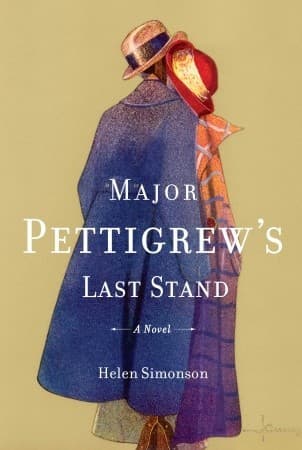
- Major Pettigrew's Last Stand
Helen Simonson
3.9 (132k) average on GoodreadsLiterary FictionOffers a charming, character-focused story about an individual navigating societal changes with grace and wit.
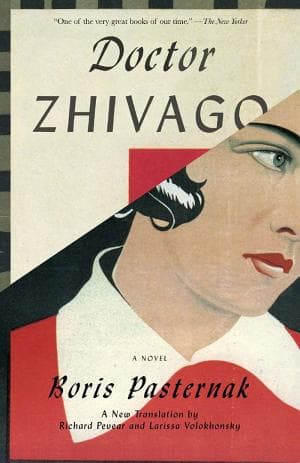
- Doctor Zhivago
Boris Pasternak
4.0 (82k) average on GoodreadsHistorical FictionUnlike Doctor Zhivago, which offers a sweeping, epic narrative of the Russian Revolution and its aftermath focusing on broad societal upheaval and suffering, 'A Gentleman in Moscow' adopts a much more intimate, almost microscopic lens, prioritizing individual resilience and philosophical reflection within a highly circumscribed environment rather than grand historical drama.
- One Hundred Years of Solitude
Gabriel García Márquez
4.1 (753k) average on GoodreadsLiterary FictionWhile sharing themes of confinement and the passage of time, 'A Gentleman in Moscow' is distinctly less magical realist and more grounded in a meticulously researched historical setting than One Hundred Years of Solitude. Marquez uses fantastical elements to explore cyclical history and myth, whereas Towles maintains a realistic, albeit whimsical, tone, focusing on the minutiae of daily life and intellectual growth.
- The Old Man and the Sea
Ernest Hemingway
3.8 (831k) average on GoodreadsLiterary FictionA Cuban fisherman's long struggle with a giant marlin becomes a story of endurance and dignity, now retold for young adults with illustrations, phonetic guides, and writing prompts in Traditional Chinese.




Enjoyed the summary?
A summary gives you the shape of the book. The book itself has the detail, the examples and the voice.
Find A Gentleman in Moscow on AmazonAs an Amazon Associate, BookBrief earns from qualifying purchases. How we're funded