
Core Idea
- Difficulty
- Medium
- Read it if
- You enjoy complex, multi-generational sagas that blend historical events with contemporary thrillers, exploring themes of ambition, legacy, and moral ambiguity with a strong narrative drive.
- Skip it if
- You prefer straightforward narratives without numerous subplots, historical flashbacks, or a large cast of interconnected characters.
Key Takeaways from The Sialkot Saga
The Duality of Ambition
Success often hides a complex tapestry of moral compromise and unexpected tenderness.
The Sialkot Saga explores the contradictions in human ambition. It suggests that the pursuit of power and wealth, shown by Arvind and Arbaaz, rarely follows a clear ethical path. Instead, it is a complicated journey where people often act as both villain and hero, driven by self-interest, family history, and unexpected empathy. The book challenges the simple idea of good versus evil, suggesting that true character appears in the grey areas, where ruthless business tactics exist alongside personal weaknesses and a capacity for connection. This dual nature is not a flaw but a basic part of being human, especially in high-stakes situations.
“Can it be that a man is both sinner and saint, victor and victim, black and and white?”
In the book: The entire narrative arc of Arvind and Arbaaz, who are both ruthless in their business dealings yet exhibit moments of personal vulnerability, familial loyalty, or unexpected pathos.
Try this: Reflect on your own ambitions and the ethical compromises you might face. Acknowledge the complexity of human nature in others, understanding that even antagonists may have their own motivations and moments of 'tenderness' or 'pathos.'
Related ideas: moral-ambiguity, human-condition, ethical-dilemmas
The Shadow of Legacy
Ancient secrets and past grievances profoundly shape present-day conflicts and destinies.
Sanghi shows how historical events and old secrets are not just background details but active forces that shape the present. The 'ancient secret' in the Sialkot Saga is more than a plot device; it shows how unresolved pasts, personal or collective, can unknowingly guide people into specific conflicts and alliances. Arvind and Arbaaz, seemingly focused on modern corporate battles, are unknowingly part of an older game, their ambitions and rivalries tied to a history they do not fully understand. This highlights history's deep, often hidden, influence on individual lives and societal structures.
“What they seek and fight over is the very obstacle in realising an ancient secret that dates back to a time long forgotten.”
In the book: The revelation that the object of their current rivalry is intrinsically linked to an 'ancient secret' that both predates and fundamentally influences their modern conflict.
Try this: Investigate the historical context of your current challenges or goals. Consider how family history, cultural background, or past events (even those you've forgotten) might be subtly influencing your present decisions and relationships.
Related ideas: historical-influence, generational-trauma, unresolved-past
The Illusory Nature of Control
Despite elaborate schemes, individuals often operate within a larger, unseen design.
The novel shows that even the most carefully planned schemes are subject to a greater, often unknown, force. Arvind and Arbaaz believe they control their own destinies, but their intertwined lives suggest a predetermined connection or a cosmic plan that goes beyond their individual actions. This theme explores the paradox of free will versus fate, where human choice, though present, is ultimately limited or guided by a larger story, possibly one rooted in the 'ancient secret.' It teaches us that even in our most calculated efforts, things beyond our control can greatly change outcomes, making true mastery an illusion.
“Their lives are unwillingly intertwined, ricochet off one another while they play out their sinister and murderous plots...”
In the book: The description of their lives 'unwillingly intertwined,' implying a force beyond their personal choices that brings them into conflict and connection.
Try this: Cultivate humility in your planning and execution. Recognize that while effort is crucial, external factors and an overarching 'flow' can significantly impact results. Be adaptable and open to unexpected turns.
Related ideas: fate-vs-free-will, cosmic-design, unforeseen-consequences
The Unseen Cost of Victory
The pursuit of 'one-upmanship' often blinds individuals to their true objectives and purpose.
Sanghi criticizes the endless pursuit of 'one-upmanship' as a self-defeating strategy. Arvind and Arbaaz are so focused on outsmarting each other that they lose sight of what they are fighting over. Their rivalry becomes an end in itself, hiding the 'ancient secret' that holds the key to greater understanding or a different kind of fulfillment. This shows how competition, while motivating, can become destructive, causing people to sacrifice long-term wisdom or real happiness for temporary wins. The real cost of 'winning' often means missing what truly matters.
“They play out their sinister and murderous plots of personal and professional one-upmanship...”
In the book: Their intense focus on 'one-upmanship' is explicitly stated as preventing them from 'realising an ancient secret,' indicating their competitive drive is a direct obstacle to enlightenment or deeper understanding.
Try this: Regularly question your motivations in competitive scenarios. Are you genuinely pursuing a meaningful goal, or are you simply trying to 'win' against a rival? Re-evaluate if your competitive drive is serving your ultimate purpose or distracting from it.
Related ideas: zero-sum-game, competitive-trap, misplaced-priorities
Tenderness in the Abyss
Even amidst brutality, moments of profound human connection and pathos can emerge.
One strong aspect of the Sialkot Saga is its claim that even in stories full of 'sinister and murderous plots,' there are 'rare moments of an almost exalted happiness' and deep 'tenderness' and 'pathos.' This shows the lasting complexity of the human spirit. It suggests that even the toughest individuals are not simply villains but can feel deep emotion, vulnerability, and connection. These unexpected moments of humanity do not excuse the characters' darker actions but make their portrayal richer, making them more relatable and prompting the reader to look beyond surface judgments.
“And yet, at the heart of it all, there lies tenderness. . . and pathos. . . and blood. . . and rare moments of an almost exalted happiness.”
In the book: The direct statement in the synopsis, 'at the heart of it all, there lies tenderness... and pathos... and blood... and rare moments of an almost exalted happiness,' directly attests to this theme.
Try this: Seek to understand the full spectrum of human experience, even in those you might initially judge harshly. Look for the underlying humanity, the moments of vulnerability, or the sources of their 'pathos' that might explain their actions, without necessarily condoning them.
Related ideas: human-vulnerability, empathy-in-conflict, emotional-complexity
The Relentless Pursuit of Power
Power, once tasted, becomes an insatiable hunger that distorts morality.
The main conflict between Arvind and Arbaaz comes from an intense desire for power and control. Sanghi shows how this pursuit, especially in the competitive world of business and ambition, quickly erodes ethical limits. 'Breaking every rule in the book' becomes necessary, not an exception, when the stakes are absolute control and 'one-upmanship.' This relentless drive, however, is a double-edged sword: it fuels their success but also blinds them to a greater truth or purpose, making them prisoners of their own ambition. The novel is a warning about the damaging nature of unchecked power.
“Both are unaware that what they seek and fight over is the very obstacle in realising an ancient secret...”
In the book: Their willingness to 'break every rule in the book' and engage in 'sinister and murderous plots' for 'personal and professional one-upmanship' demonstrates the corrupting influence of their power struggles.
Try this: Periodically assess your own motivations when striving for influence or control. Are your methods compromising your values? Establish clear ethical boundaries and regularly review them, especially when facing opportunities for significant power gains.
Related ideas: corruption-of-power, ethical-erosion, unchecked-ambition
The Interconnectedness of Lives
Individual destinies are rarely isolated, often woven into a larger, complex fabric.
Sanghi emphasizes that no person truly acts alone. The lives of Arvind and Arbaaz, despite their individual choices and distinct paths, are 'unwillingly intertwined' and constantly 'ricochet off one another.' This highlights a basic truth: our actions, choices, and even our existence are often connected to others in ways we might not see, sometimes across generations or through seemingly unrelated events. The story's structure, following two distinct but eventually converging paths, is a strong metaphor for this complex web of human connection, where even adversaries are linked by an invisible thread.
“The trajectories of Arvind and Arbaaz, both 'businessmen' of a kind whose lives are unwillingly intertwined, ricochet off one another...”
In the book: The explicit statement that their 'lives are unwillingly intertwined,' despite their separate 'trajectories,' is a direct illustration of this theme.
Try this: Recognize the ripple effect of your actions on others, both directly and indirectly. Cultivate an awareness of the broader ecosystem of relationships and influences in your life, rather than viewing yourself as an isolated entity.
Related ideas: systems-thinking, network-effect, shared-destiny
Truth as an Obstacle
Sometimes, the very thing we seek is the barrier to a deeper understanding.
This idea reverses the usual concept of seeking truth. In The Sialkot Saga, the immediate objects of Arvind and Arbaaz's desire and conflict—the very things they 'seek and fight over'—are not paths to enlightenment but 'the very obstacle' to understanding a deep 'ancient secret.' This suggests that our immediate, often superficial, goals can stop us from seeing deeper realities or achieving true wisdom. It implies that sometimes, letting go of what we think we want is necessary to discover what we truly need or what is truly important. The book challenges us to question whether our current pursuits truly serve our highest good or merely distract us.
“What they seek and fight over is the very obstacle in realising an ancient secret...”
In the book: The direct statement that their current objectives are an 'obstacle' to a greater truth ('an ancient secret').
Try this: Periodically re-evaluate your goals. Are you so focused on a specific outcome that you're missing a larger picture or a more profound truth? Be willing to step back and question if what you're fighting for is actually hindering your progress towards something more significant.
Related ideas: cognitive-bias, blind-spots, false-goals
The Cycle of Conflict
Past conflicts often echo and repeat themselves in new forms across generations.
The Sialkot Saga, by combining modern corporate warfare with an 'ancient secret,' suggests a repeating pattern in human conflict. The 'sinister and murderous plots' of Arvind and Arbaaz are not isolated events but modern examples of older struggles. This shows how patterns of rivalry, greed, and the pursuit of power often repeat throughout history, though with different people and in different settings. The book encourages us to recognize that understanding historical conflicts is important not just for academic reasons, but for breaking the cycles of animosity and misunderstanding that continue to trouble humanity.
“The trajectories of Arvind and Arbaaz... play out their sinister and murderous plots...”
In the book: The connection between the present-day rivalry and an 'ancient secret' implies that the current conflict is a continuation or echo of a much older struggle.
Try this: Study historical conflicts and their underlying causes. Identify recurring patterns in personal or professional disagreements and consider how understanding the past can help you navigate or even break cycles of conflict in the present.
Related ideas: historical-patterns, intergenerational-conflict, karma
The Elusive Nature of Happiness
True happiness is found in unexpected moments, often outside the realm of ambition and victory.
Amidst the high-stakes drama, betrayal, and violence, Sanghi points to 'rare moments of an almost exalted happiness.' This suggests that true contentment is often brief and comes not from achieving grand ambitions or defeating rivals, but from simpler, more profound human experiences like 'tenderness' or understanding 'pathos.' It implies that the characters, in their relentless pursuit of external validation and power, might be overlooking the true sources of joy that lie in connection, empathy, or moments of peace. The book subtly argues that happiness is an internal state, often found in the quiet spaces between the epic struggles.
“And yet, at the heart of it all, there lies tenderness. . . and pathos. . . and blood. . . and rare moments of an almost exalted happiness.”
In the book: The explicit mention of 'rare moments of an almost exalted happiness' alongside 'tenderness' and 'pathos' suggests these are distinct from the outcomes of their 'sinister plots' and 'one-upmanship.'
Try this: Actively seek out and appreciate small, unexpected moments of joy, connection, or peace in your daily life. Don't solely tie your happiness to achieving major goals or external victories, as these might not provide the 'exalted happiness' you truly seek.
Related ideas: intrinsic-happiness, mindfulness, gratitude
The Sialkot Saga Quotes
“History is not a set of facts, but a narrative that is created by those who have the power to tell it.”
“The past is never dead. It's not even past.”
“Every lie we tell creates a debt to the truth.”
“Sometimes, the greatest treasures are hidden in plain sight, if only we know where to look.”
“Faith is not about believing in something, but about believing that something is possible.”
“The only thing more dangerous than a secret is a secret everyone knows.”
“We are all products of our choices, and sometimes, the hardest choice is to forgive.”
“Power does not corrupt; it merely reveals what was already there.”
“The threads of destiny are woven by the choices we make, not by fate alone.”
“To truly understand the present, one must first unravel the mysteries of the past.”
“Fear is a powerful weapon, but hope is an even stronger shield.”
“The greatest battles are often fought not on battlefields, but within the confines of our own minds.”
“Sometimes, the truth is not what we want to hear, but what we need to know.”
“The past is a tapestry, and every thread, no matter how small, contributes to the whole.”
Quiz
10 questions on the main ideas. Each answer comes with a short explanation.
Question 1
Which ancient secret are Arvind and Arbaaz unknowingly obstructing in their pursuit of one-upmanship?
- The location of the lost city of Dwarka
- A formula for eternal youth
- The true identity of the mythical Saraswati river
- The secret of the Sialkot treasure, dating back to ancient times
Show answer
D. The secret of the Sialkot treasure, dating back to ancient times The core conflict revolves around Arvind and Arbaaz's rivalry unknowingly preventing them from realizing the ancient secret connected to the Sialkot treasure.
Question 2
The description of Arvind and Arbaaz's relationship is characterized by 'sinister and murderous plots of personal and professional one-upmanship.' What does this primarily suggest about their business ethics?
- They adhere strictly to legal and ethical business practices.
- They are ruthless and willing to break all rules to achieve their goals.
- They prioritize collaboration and mutual growth.
- Their competition is purely based on market innovation.
Show answer
B. They are ruthless and willing to break all rules to achieve their goals. The phrase 'sinister and murderous plots' and 'breaking every rule in the book' directly indicates their unethical and ruthless approach to business and personal rivalry.
Question 3
The narrative poses the question: 'can it be that a man is both sinner and saint, victor and victim, black and white?' What literary device is being employed here to describe the characters?
- Hyperbole
- Irony
- Paradox
- Metaphor
Show answer
C. Paradox The description uses contradictory terms (sinner and saint, victor and victim, black and white) to highlight the complex, multifaceted nature of the characters, which is a classic literary paradox.
Question 4
The lives of Arvind and Arbaaz are described as 'unwillingly intertwined.' What does this imply about their relationship dynamic?
- They are forced into cooperation by external circumstances.
- Their rivalry is so profound that their paths constantly cross despite their individual desires.
- They are secretly allies working towards a common goal.
- Their families have a long-standing tradition of arranged partnerships.
Show answer
B. Their rivalry is so profound that their paths constantly cross despite their individual desires. Being 'unwillingly intertwined' in the context of 'sinister and murderous plots' suggests that their intense rivalry and competition inextricably link their fates, even if they would prefer to operate independently.
Question 5
The synopsis mentions 'tenderness... and pathos... and blood... and rare moments of an almost exalted happiness.' What does this combination of elements suggest about the overall tone and genre of the novel?
- It is a straightforward business thriller with no emotional depth.
- It is a purely historical account devoid of personal drama.
- It is a complex narrative blending suspense, violence, and profound human emotion.
- It is primarily a romance novel with a slight mystery subplot.
Show answer
C. It is a complex narrative blending suspense, violence, and profound human emotion. The juxtaposition of 'tenderness' and 'pathos' with 'blood' and 'sinister plots' indicates a rich, multi-layered narrative that combines the intensity of a thriller with deep human emotional experiences.
Question 6
The phrase 'ricochet off one another' when describing Arvind and Arbaaz's trajectories implies:
- They have a harmonious and collaborative relationship.
- Their actions and decisions directly impact and often clash with each other's.
- They operate in completely separate spheres, never interacting.
- Their lives are moving in parallel, never converging.
Show answer
B. Their actions and decisions directly impact and often clash with each other's. 'Ricochet off one another' suggests a dynamic where their paths collide and diverge due to their mutual influence and opposition, reinforcing the idea of their intertwined, conflict-ridden relationship.
Question 7
Given the description, what is a likely consequence of Arvind and Arbaaz's relentless pursuit of 'what they seek and fight over'?
- They will ultimately achieve their individual goals, leading to mutual satisfaction.
- Their actions will inadvertently help each other in the long run.
- They will continue to be blind to the greater, ancient secret they are hindering.
- They will eventually form an alliance to uncover the ancient secret together.
Show answer
C. They will continue to be blind to the greater, ancient secret they are hindering. The text explicitly states: 'Both are unaware that what they seek and fight over is the very obstacle in realising an ancient secret.' This indicates their current focus prevents them from seeing the larger truth.
Question 8
The phrase 'a time long forgotten' in reference to the ancient secret implies what about its nature?
- It is a recent discovery that only a few know about.
- It is a secret connected to ancient history or mythology, making its rediscovery significant.
- It is a trivial matter that no one cares about anymore.
- It is a secret that has been intentionally hidden by a modern conspiracy.
Show answer
B. It is a secret connected to ancient history or mythology, making its rediscovery significant. 'A time long forgotten' directly points to a historical or ancient origin for the secret, characteristic of Ashwin Sanghi's style of blending historical elements with modern thrillers.
Question 9
Considering the themes of 'tenderness... pathos... blood... and exalted happiness' alongside 'sinister and murderous plots,' what might be a central psychological conflict for the main characters?
- The struggle between their professional ambitions and personal desires for revenge.
- The internal battle to reconcile their violent, ruthless actions with moments of profound human emotion and morality.
- The external conflict of choosing between two equally powerful criminal organizations.
- The dilemma of revealing an ancient secret versus keeping it hidden forever.
Show answer
B. The internal battle to reconcile their violent, ruthless actions with moments of profound human emotion and morality. The juxtaposition of extreme negative (blood, murderous plots) and positive (tenderness, exalted happiness) emotions within the same characters suggests a deep internal conflict regarding their moral standing and humanity amidst their ruthless pursuits.
Question 10
The phrase 'breaking every rule in the book' suggests that the 'rules' referred to are likely:
- Specific legal codes and ethical business practices.
- The rules of a specific board game they are playing.
- Ancient texts dictating the discovery of the secret.
- Personal vows they have made to each other.
Show answer
A. Specific legal codes and ethical business practices. In the context of 'businessmen' engaged in 'sinister and murderous plots' and 'one-upmanship,' 'breaking every rule in the book' most logically refers to societal, legal, and ethical norms governing business and human conduct.
The Sialkot Saga FAQ
What is the main plot of 'The Sialkot Saga'?
'The Sialkot Saga' follows the intertwined lives of Arvind and Arbaaz, two ruthless businessmen engaged in a deadly game of one-upmanship. Their sinister plots inadvertently lead them closer to an ancient secret, forcing them to confront the blurred lines between good and evil.
Does 'The Sialkot Saga' involve historical elements?
Yes, while the primary narrative is a modern thriller, the book delves into an ancient secret that dates back to a time long forgotten. This historical backdrop adds depth and mystery to the contemporary power struggle.
What kind of characters are Arvind and Arbaaz?
Arvind and Arbaaz are complex characters, portrayed as 'businessmen' who engage in sinister and murderous plots. They embody the paradox of being both sinner and saint, victor and victim, driving the central conflict of the story.
How does 'The Sialkot Saga' differ from Ashwin Sanghi's other thrillers?
While maintaining Sanghi's signature blend of history and contemporary suspense, 'The Sialkot Saga' emphasizes the moral ambiguity of its protagonists and the emotional depth of their intertwined lives. It explores themes of tenderness, pathos, and exalted happiness amidst the violence and intrigue.
Is 'The Sialkot Saga' a standalone novel?
Yes, 'The Sialkot Saga' is a standalone novel with a complete narrative arc. Readers do not need to have read other books by Ashwin Sanghi to understand or enjoy this story.
What is the 'ancient secret' mentioned in the book's description?
The 'ancient secret' is a pivotal element that Arvind and Arbaaz unknowingly seek and fight over. It serves as the ultimate obstacle and revelation in their journey, connecting their modern struggles to a forgotten past.
Does the book contain graphic content?
The description mentions 'blood' and 'murderous plots,' indicating that the book does contain elements of violence and intense situations. It explores the darker aspects of human nature and ambition.
What themes are explored in 'The Sialkot Saga'?
The book explores themes of moral ambiguity, the duality of human nature (sinner/saint), ambition, power struggles, and the enduring impact of ancient secrets. It also touches upon moments of tenderness and pathos amidst the conflict.
Is 'The Sialkot Saga' suitable for readers new to Ashwin Sanghi's works?
Yes, 'The Sialkot Saga' is an excellent entry point for new readers. It showcases Sanghi's distinctive style of blending historical mystery with contemporary thriller elements and complex characters, without requiring prior knowledge of his other novels.
About the author

Ashwin Sanghi is a critically acclaimed Indian author known for his bestselling thriller novels. His works, including "The Krishna Key," "The Rozabal Line," and "The Sialkot Saga," blend mythology, history, and suspense. Sanghi's ability to weave intricate plots with ancient Indian lore has earned him a significant readership in the Indian fiction scene and beyond.
Similar books
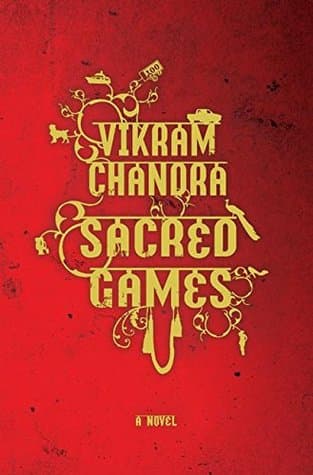
- Sacred Games
Vikram Chandra
3.9 (8k) average on GoodreadsThrillerBoth are sprawling Indian sagas blending crime, history, and intricate character development across multiple timelines.
- The Godfather
Mario Puzo
4.4 (335k) average on GoodreadsThrillerExplores the generational impact of ambition, power, and family legacy within a criminal enterprise, mirroring the moral complexities.
- The Kite Runner
Khaled Hosseini
4.3 (2.4M) average on GoodreadsHistorical FictionFeatures a multi-generational narrative deeply impacted by historical conflict and the enduring shadows of past actions.
- The Da Vinci Code
Dan Brown
3.9 (1.9M) average on GoodreadsThrillerBoth Sanghi and Brown utilize a fast-paced, contemporary thriller format rooted in historical and religious conspiracies. While Brown often focuses on Western esotericism, Sanghi grounds his narratives in Indian history and mythology. Sanghi's plots tend to be more sprawling across generations, whereas Brown typically confines his mysteries to a shorter, more intense timeline. Sanghi's ambition in weaving multiple timelines is arguably greater, but sometimes at the cost of Brown's tighter, more focused narrative.
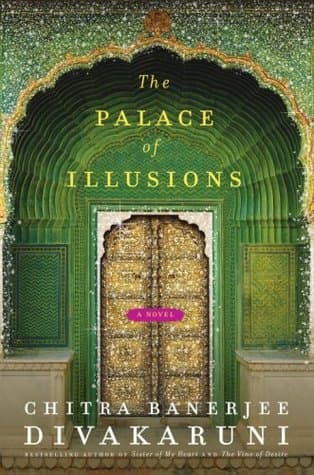
- The Palace of Illusions
Chitra Banerjee Divakaruni
4.2 (34k) average on GoodreadsFantasyWhile Divakaruni's novel also draws from Indian mythology, it does so through a more literary and character-driven lens, offering a feminist retelling of the Mahabharata. 'The Sialkot Saga' uses historical and mythological elements as springboards for a thriller plot, prioritizing mystery and action over deep character introspection or literary prose. Divakaruni's strength lies in emotional depth and nuanced character portrayal, whereas Sanghi excels in intricate plotting and suspense.
- The Diary of a Young Girl
Anne Frank
4.2 (2.7M) average on GoodreadsBiographyDuring the Nazi occupation, a teenage girl's diary, written from a secret annex, shares observations on humanity, hope, and the wait for freedom.




Enjoyed the summary?
A summary gives you the shape of the book. The book itself has the detail, the examples and the voice.
Find The Sialkot Saga on AmazonAs an Amazon Associate, BookBrief earns from qualifying purchases. How we're funded