
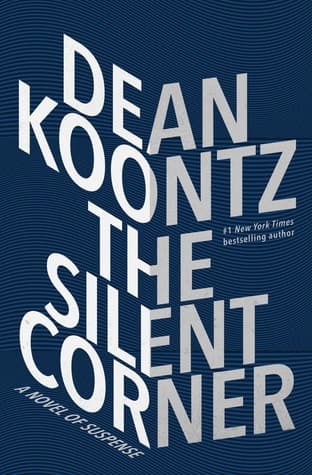
Synopsis
Covers the whole plot, including the ending.
- Difficulty
- Medium
- Pacing
- Fast
- Mood
- Suspenseful, Dark, Relentless, Paranoid
- Read it if
- You enjoy fast-paced thrillers with a strong, determined female protagonist, intricate conspiracies, and a blend of mystery and science fiction elements.
- Skip it if
- You dislike stories with a dark tone, high stakes, or a focus on mind control and government conspiracies.
The Silent Corner Plot Summary
Covers the whole plot, including the ending.
A Husband's Suicide and a Widow's Doubt
Jane Hawk, an FBI agent, is devastated when her husband, Nick, a history teacher, dies by suicide. His note, 'I very much need to be dead,' and his odd behavior before his death, make Jane suspicious. Nick loved life, his family, and his work, making his sudden end hard to understand. As Jane deals with her grief and the FBI's official findings, she feels something is wrong. She sees a pattern of other successful, happy people dying by suicide under strange circumstances, all leaving similar notes. This makes her believe Nick's death was not self-inflicted but part of a larger plan.
Unraveling the Pattern of 'Suicides'
Believing Nick was murdered, Jane starts her own secret investigation, using her FBI skills and contacts. She makes a list of recent suicides, focusing on talented and seemingly stable people: a scientist, an author, an entrepreneur. She finds they all showed similar personality changes before their deaths—sudden sadness, paranoia, and distance from loved ones. Many left notes similar to Nick's about 'needing to be dead.' Her unofficial questions quickly get the attention of powerful groups within the government and a private organization, who start watching her, showing she is close to the truth.
Becoming a Fugitive
Jane's search for answers makes her a target. After a meeting with former colleague Agent Paul Kiley, who was also looking into suspicious suicides, Kiley is murdered, and Jane is framed for it. This move by her enemies forces Jane to go into hiding, leaving her life, career, and young son, Travis, with her friend, Cornell. Now a fugitive, Jane must operate off-grid, using her training to avoid capture while continuing her investigation. She knows her enemies want to silence her and discredit her claims, but their actions only make her more determined to expose their secret and get justice for Nick.
The Network of Control
Working in secret, Jane slowly understands the truth: a hidden organization, supported by powerful people, uses advanced nanotechnology to control minds. The 'suicides' are actually assassinations, done by implanting nanobots into the brains of chosen targets. These nanobots change the victims' personalities, making them cooperative and eventually forcing them to take their own lives. The organization's goal is to create a compliant, controlled society, starting with influential figures who might be a threat or whose talents they want to use. Jane learns that a scientist, Dr. Paul Stegner, leads the project, overseen by a figure known as 'The Director.'
Allies in the Dark
Despite being wanted, Jane forms important alliances. She connects with a hacker, a former government agent, and others who know about the conspiracy or are willing to help a fugitive. These allies give her important information, resources, and safe places, helping her navigate her pursuit. They understand the power of her enemies and the risks, but they are also concerned by the mind-control technology. Their combined efforts help Jane understand the organization's structure, key people, and methods.
The Threat to Her Son
The situation becomes more serious when Jane finds out her enemies are looking for her son, Travis. They plan to use him to draw her out or to silence her by killing him. This makes Jane fiercely protective, turning her mission from revenge into a fight for her son's life. She knows her enemies are ruthless and will stop at nothing. Jane must now expose the conspiracy and keep Travis safe, knowing that every moment she is a fugitive puts him in danger. Her focus sharpens, and her actions become more calculated and daring.
Infiltrating the Enemy's Lair
To expose the truth and rescue her son, Jane knows she needs proof. She finds a key facility, a lab where the nanobots are made and given, believing it holds the evidence she needs. With help from her allies, she carefully plans a dangerous infiltration. This operation requires stealth, tactical skill, and knowledge of the enemy's security. Jane prepares for the confrontation, knowing that failure means her death, the continuation of the mind-control project, and the potential loss of Travis. Her resolve is strong as she prepares to enter the place where the conspiracy operates.
Confrontation and Narrow Escape
Jane successfully gets into the secret laboratory, moving through security and avoiding patrols. Inside, she gathers important data, including nanobot designs, victim lists, and communications about the project. She has a close encounter with Dr. Paul Stegner, the lead scientist, and other high-ranking agents. During her escape, she has several close calls and fights, using her combat training and quick thinking. She escapes the facility with her life and the evidence, but she is badly hurt and now more than ever a target for the organization.
The Director's True Identity
As Jane recovers and looks at the information she got, she finds the identity of 'The Director,' the leader behind the whole operation. It is not an unknown figure but someone seemingly above suspicion, deeply involved in the establishment. This news is a blow, showing the conspiracy's reach and the power of its creators. The Director's reasons are a twisted view of societal control and 'improvement,' believing humanity is too chaotic and needs guidance. This makes the threat even more personal for Jane, as she realizes the depth of the betrayal and the implications for society.
A Glimmer of Hope and Continued Pursuit
With clear evidence of the mind-control conspiracy, Jane now has the means to show the truth to the world. However, she knows that just releasing the data will not be enough; her enemies are too powerful and will discredit her or make the evidence disappear. She carefully plans her next steps, focusing on how to spread the information in a way that cannot be stopped. The novel ends with Jane still a fugitive, still fighting for her son and for justice, but now with knowledge and allies. The immediate threat to Travis is somewhat reduced, but the larger battle against the 'silent corner' organization and its Director is just beginning, setting up future conflicts.
The Silent Corner Characters
Jane Hawk
Protagonist
A brilliant, driven FBI agent turned fugitive, seeking justice for her husband's murder.
Jane Hawk is a former decorated FBI agent, known for her sharp intellect, exceptional combat skills, and unwavering dedication. Her world is shattered by the apparent suicide of her beloved husband, Nick, which she immediately suspects is a murder. This event transforms her from a law-abiding agent into a relentless vigilante and a wanted fugitive. Driven by a fierce love for her son, Travis, and a burning desire for truth and justice, Jane is incredibly resourceful, resilient, and morally unyielding. She is a master of disguise and evasion, constantly outmaneuvering a powerful, shadowy organization. Her character is defined by her profound grief, righteous rage, and an indomitable will to protect the innocent.
Relationships: Nick Hawk (Deceased husband, whose death propels her mission); Travis Hawk (Young son, her primary motivation and reason for fighting); Cornell (Trusted friend and caretaker for Travis); Paul Kiley (Former FBI colleague, murdered while investigating similar cases)
Nick Hawk
Catalyst/Victim
Jane's beloved husband, whose suspicious suicide triggers the entire plot.
Nick Hawk was a respected and beloved history teacher, a devoted husband to Jane, and a loving father to Travis. He was a man who genuinely enjoyed life, making his sudden and violent suicide utterly baffling to Jane. His cryptic suicide note, 'I very much need to be dead,' is the first major clue that something is amiss. Although deceased from the beginning of the novel, Nick's character is central to the plot as his death is the catalyst for Jane's investigation. He represents the innocent victims of the conspiracy and the personal toll it takes on those left behind. His memory fuels Jane's relentless pursuit of justice.
Relationships: Jane Hawk (Wife, deeply loved and mourned); Travis Hawk (Son, adored)
Travis Hawk
Motivation/Threatened Innocent
Jane's young son, whose safety becomes a primary driving force for her actions.
Travis Hawk is Jane and Nick's young son, a bright and innocent child. After his father's death and his mother's disappearance as a fugitive, he is left in the care of Cornell. Travis represents Jane's most profound vulnerability and her strongest motivation. The threat to his safety, as the conspiracy targets him to draw Jane out, significantly raises the stakes of her mission. He symbolizes the innocent lives at risk from the pervasive and ruthless organization. Jane's every move is ultimately geared towards ensuring his future and protecting him from the horrors she is uncovering.
Relationships: Jane Hawk (Mother, fiercely protective); Nick Hawk (Father, deceased); Cornell (Guardian and protector)
Cornell
Supporting
Jane's loyal friend and the entrusted guardian of her son, Travis.
Cornell is Jane's close and deeply trusted friend, a former colleague or acquaintance with a strong moral compass. When Jane is forced to go on the run, she entrusts Travis's safety to Cornell, a testament to her absolute faith in him. Cornell proves to be an unwavering ally, diligently protecting Travis and providing Jane with critical support, information, and safe havens whenever possible. He understands the immense danger Jane is in and the gravity of the conspiracy she is fighting, willingly putting his own life at risk to help her. His loyalty and practicality are invaluable to Jane's mission.
Relationships: Jane Hawk (Close friend and trusted confidant); Travis Hawk (Guardian and protector)
Dr. Paul Stegner
Antagonist (Scientific Lead)
The brilliant but morally bankrupt scientist behind the mind-control nanobot technology.
Dr. Paul Stegner is a genius-level scientist and one of the primary antagonists. He is the architect and lead developer of the nanotechnology responsible for the mind control and induced suicides. Stegner is depicted as highly intelligent but utterly devoid of empathy, driven by a cold, intellectual curiosity and a twisted belief in his own superiority. He views human beings as subjects for experimentation and believes his technology is a means to 'perfect' society. His scientific prowess makes him incredibly dangerous, and he is a key figure in the operational execution of the conspiracy.
Relationships: The Director (Subordinate and collaborator in the conspiracy); Jane Hawk (Arch-enemy, directly responsible for the technology she fights)
The Director
Primary Antagonist
The shadowy, powerful mastermind behind the entire mind-control conspiracy.
The Director is the ultimate antagonist, the elusive and powerful figure orchestrating the entire mind-control conspiracy. Initially, their identity is shrouded in mystery, known only by their title. As Jane's investigation progresses, she uncovers their shocking true identity – a seemingly respected individual deeply embedded within the establishment. The Director's motivation stems from a profound misanthropic worldview, believing humanity is too flawed and chaotic, and that their technology offers a means to achieve a 'perfect,' controlled society. They wield immense influence and resources, making them Jane's most formidable foe.
Relationships: Dr. Paul Stegner (Overseer and employer of Stegner's research); Jane Hawk (Primary adversary, target of their efforts to silence her)
Paul Kiley
Supporting/Victim
A former FBI agent who was also investigating suspicious suicides, ultimately murdered.
Paul Kiley was a former FBI agent, known to Jane, who had also begun to notice the disturbing pattern of suicides among high-achieving individuals. He was independently investigating these cases, drawing him closer to the truth Jane was seeking. Kiley's murder, orchestrated by the conspiracy and framed on Jane, serves as a crucial plot point, confirming the danger of Jane's investigation and forcing her to become a fugitive. His death reinforces the ruthlessness of the enemy and provides Jane with an early, tragic confirmation that her suspicions are valid.
Relationships: Jane Hawk (Former colleague and fellow investigator, briefly connected)
The 'Others' / The Network
Supporting
A collection of unlikely allies who assist Jane in her fight against the conspiracy.
This refers to the various individuals Jane encounters and recruits throughout her journey who, for different reasons, are willing to help her. This network includes a reclusive but brilliant hacker, a former government operative with insider knowledge, and others who have either been touched by the conspiracy or possess skills vital to Jane's survival and investigation. They provide Jane with intelligence, resources, safe houses, and technical support, allowing her to operate effectively as a fugitive. Their existence highlights that the conspiracy is not entirely airtight and that there are still good people willing to fight against overwhelming odds.
Relationships: Jane Hawk (Allies and providers of crucial support and information)
The Silent Corner Themes
Loss and Grief
The novel starts with Jane's grief over her husband Nick's suicide, which starts her actions. Her loss is emotional and also a loss of her old life, identity, and safety. This theme shows through Jane's internal struggle, her memories of Nick, and her search for justice as a way to cope. The pain of Nick's absence drives her, making her a sympathetic character whose fight is personal. It is about solving a mystery and finding peace after a loss.
“I very much need to be dead.”
Identity and Self-Discovery
Jane Hawk changes significantly throughout the novel. From an FBI agent and wife, she must become a ghost, a fugitive. This journey makes her confront who she is without her old roles, relying on her skills, intelligence, and morals. She finds a deeper, tougher resolve within herself, driven by love and anger. Her new identity as an 'invisible' warrior is shaped by hardship, making her redefine her purpose and methods in a world where rules no longer apply to her.
“She was no longer Agent Jane Hawk. She was a ghost, a whisper, a righteous fury in the dark.”
The Peril of Absolute Power and Control
At the conspiracy's center is the goal of the Director and Dr. Stegner to control humanity with technology. The nanobots are a form of coercion, taking away people's free will. This theme explores the dangers of uncontrolled power, the appeal of 'order' imposed by force, and the ethical issues of scientific advances without moral limits. The villains believe they are making society better, showing how good intentions can become oppression when people lose their right to choose.
“They believed humanity was too chaotic, too flawed. They sought to perfect it, one puppet at a time.”
Technology and Ethics
The novel prominently features advanced nanotechnology as the main plot device for mind control. This theme looks at the ethical questions around technological progress, especially when it affects human consciousness and free will. Dr. Stegner's work shows how science can be used for harm instead of for human improvement. The story asks where the line should be in scientific exploration and highlights the responsibility that comes with developing powerful new tools, especially those that can manipulate what it means to be human.
“The nanobots were a silent invasion, not of the body, but of the soul itself.”
Justice vs. Law
Jane Hawk, a former FBI agent, is outside the law, hunted by the system she once served. This creates tension between seeking justice for her husband and following legal rules. She realizes that official channels are compromised and cannot provide justice in this situation, forcing her to become a vigilante. The theme explores whether justice can sometimes only be found by acting outside normal legal systems, especially when the law is corrupted by hidden powers. Jane's actions are illegal, but her reasons are moral.
“The law had failed her husband. Now, she was the law, and she would not fail.”
Plot Devices & Literary Techniques
The Cryptic Suicide Note
A short, unsettling note that immediately raises suspicion and drives the protagonist's investigation.
Nick Hawk's suicide note, 'I very much need to be dead,' is a crucial plot device. Its stark, uncharacteristic nature immediately signals to Jane that his death was not a genuine suicide. This note, and variations of it found with other victims, serves as a recurring clue, connecting the disparate deaths and confirming Jane's suspicions of a larger conspiracy. It's a powerful and concise way to establish the central mystery and the unnaturalness of the events, propelling Jane's relentless pursuit of the truth from the very first chapter.
Nanobots (Mind-Control Technology)
The advanced technological weapon used to manipulate and assassinate victims.
The nanobots are the central technological plot device. These microscopic robots, implanted in the victims' brains, are the means by which the conspiracy controls minds, subtly alters personalities, and ultimately forces 'suicides.' This device establishes the science fiction element of the thriller and provides a terrifying, almost undetectable method of control. The nanobots represent the ultimate violation of free will and are the tangible manifestation of the antagonists' power and ambition, making the threat both insidious and profoundly disturbing.
The Fugitive Narrative
The protagonist is framed and forced to operate outside the law, creating constant tension and high stakes.
Jane Hawk becoming America's most wanted fugitive is a core narrative device. This forces her to abandon her identity, rely on her wits and training, and operate in the shadows. The constant threat of capture amplifies the tension and suspense, as Jane must not only investigate the conspiracy but also evade powerful government agencies and the shadowy organization. This device isolates Jane, making her quest more personal and dangerous, while simultaneously showcasing her exceptional skills and resilience in extreme circumstances.
The 'Silent Corner' Metaphor
A metaphorical representation of the hidden, insidious nature of the conspiracy.
The 'silent corner' refers to the clandestine, undetectable nature of the conspiracy and its operations. It symbolizes the hidden places where powerful figures manipulate events, the unseen forces that control individuals, and the silent, internal coercion experienced by the victims. The metaphor underscores the insidious quality of the threat – it's not a loud, overt war, but a quiet, psychological infiltration. It highlights the difficulty of fighting an enemy that operates in the shadows, making its presence felt through subtle changes and inexplicable deaths, rather than open confrontation.
The 'Others' / Network of Allies
A collection of diverse, skilled individuals who assist the protagonist from the shadows.
The network of allies Jane builds, often referred to as 'the others,' serves as a crucial plot device to provide her with information, resources, and safe havens she couldn't obtain as a lone fugitive. This device allows for the introduction of diverse characters with unique skills (e.g., hacking, intelligence gathering) without bogging down the main narrative. It also demonstrates that even against an overwhelmingly powerful enemy, there are still individuals willing to fight for truth and freedom, offering a glimmer of hope and collective resistance against the forces of control.
The Silent Corner Quotes
“In the silent corner of the mind, the truth often whispers when the world shouts lies.”
“Fear is a weapon, but courage is the shield that turns it aside.”
“The most dangerous monsters are those who believe they are angels.”
“In a world gone mad, sanity is the greatest rebellion.”
“Memory is a ghost that haunts the present, but it can also light the way forward.”
“Technology can build cages as easily as it opens doors.”
“Sometimes the only way out is through the heart of darkness.”
“Trust is a fragile thing, easily broken and hard to rebuild.”
“The past is a story we tell ourselves, but the future is a mystery we must face.”
“In the silence between heartbeats, destiny is decided.”
“Evil wears many masks, but its eyes are always cold.”
“Hope is the spark that ignites in the deepest night.”
“Freedom is not given; it is taken by those brave enough to seize it.”
“The human spirit is a flame that no darkness can extinguish.”
Quiz
10 questions on the plot and the characters. Each answer comes with a short explanation.
Question 1
What is Jane Hawk's primary motivation for investigating the mysterious suicides in 'The Silent Corner'?
- To advance her career as an FBI agent
- To uncover a government conspiracy for personal fame
- To understand why her husband, who had everything to live for, took his own life
- To seek revenge against a criminal organization that wronged her family
Show answer
C. To understand why her husband, who had everything to live for, took his own life Jane Hawk's investigation is driven by personal grief and love after her husband's inexplicable suicide, which is described as the catalyst for her quest in the book's summary.
Question 2
What chilling words does Jane Hawk's husband leave behind before his suicide?
- "I have seen the future"
- "I very much need to be dead"
- "They are watching me"
- "The truth will set you free"
Show answer
B. "I very much need to be dead" The book's summary explicitly quotes these words as the haunting message from Jane's husband, setting the tone for the mystery.
Question 3
What happens to Jane Hawk as she investigates the suicides?
- She is promoted to a high-ranking position in the FBI
- She becomes the most-wanted fugitive in America
- She is recruited by a secret society to join their cause
- She retires to a quiet life to mourn her husband
Show answer
B. She becomes the most-wanted fugitive in America The summary states that Jane becomes the most-wanted fugitive in America due to her pursuit of the truth, which puts her at odds with powerful enemies.
Question 4
What type of people are described as committing suicide in surprising numbers in the book?
- Only criminals and outcasts
- People of talent and accomplishment, admired and happy
- Exclusively government officials
- Primarily elderly individuals with terminal illnesses
Show answer
B. People of talent and accomplishment, admired and happy The summary specifies that the suicides involve people who are talented, accomplished, admired, happy, and sound of mind, making the phenomenon more mysterious.
Question 5
How does the book describe Jane Hawk's enemies?
- As misguided but well-intentioned scientists
- As powerful and vicious, willing to exterminate anyone in their way
- As a small group of local criminals
- As foreign spies with limited resources
Show answer
B. As powerful and vicious, willing to exterminate anyone in their way The summary characterizes Jane's enemies as powerful and vicious, protecting a terrifying secret by eliminating threats, which heightens the suspense.
Question 6
What key trait helps Jane Hawk confront her enemies according to the book's summary?
- Her wealth and social connections
- Her ability to remain emotionally detached and cold
- Her cleverness, relentlessness, and righteous rage born of love
- Her expertise in advanced technology and hacking
Show answer
C. Her cleverness, relentlessness, and righteous rage born of love The summary highlights Jane as clever, relentless, and driven by a righteous rage from love, making her a formidable opponent against cold-blooded enemies.
Question 7
In the context of the book, what does Jane Hawk seek that her enemies are trying to protect?
- A hidden treasure of historical artifacts
- A secret so important and terrifying that they kill to keep it hidden
- Evidence of her husband's infidelity
- A cure for a rare disease affecting her family
Show answer
B. A secret so important and terrifying that they kill to keep it hidden The summary states that Jane's enemies protect a secret so important and terrifying that they exterminate anyone in their way, which is central to the plot.
Question 8
What genre blend is 'The Silent Corner' primarily classified as, based on the provided description?
- Romance and Fantasy
- Thriller, Mystery, and Science Fiction
- Historical Fiction and Biography
- Horror and Comedy
Show answer
B. Thriller, Mystery, and Science Fiction The book is explicitly described as a thriller, mystery, and science fiction novel, combining elements of suspense, investigation, and speculative concepts.
Question 9
How does the book's summary contrast Jane Hawk's drive with that of her enemies?
- Jane is motivated by greed, while her enemies act out of altruism
- Jane's rage is born of love, which her enemies cannot comprehend, unlike their cold-blooded ruthlessness
- Jane seeks peace, while her enemies desire chaos
- Jane relies on technology, while her enemies use brute force
Show answer
B. Jane's rage is born of love, which her enemies cannot comprehend, unlike their cold-blooded ruthlessness The summary emphasizes that Jane's righteous rage stems from love, a motivation her enemies fail to understand, contrasting with their vicious and ruthless nature.
Question 10
What is implied about the suicides in the book that makes Jane's investigation particularly urgent?
- They are random acts with no pattern, making them hard to solve
- They involve people who should not logically take their own lives, suggesting an external cause or conspiracy
- They are publicly celebrated as heroic sacrifices
- They are isolated to a single geographic region
Show answer
B. They involve people who should not logically take their own lives, suggesting an external cause or conspiracy The summary notes that the suicides involve admired, happy, and sound-minded individuals, implying an unnatural or conspiratorial element that Jane must uncover.
The Silent Corner FAQ
What is 'The Silent Corner' about?
The novel follows FBI agent Jane Hawk, who investigates a wave of suicides among successful, seemingly happy people after her husband—one such victim—leaves a cryptic note saying, 'I very much need to be dead.' Her pursuit uncovers a terrifying conspiracy involving mind control, forcing her to become a fugitive while battling powerful enemies who will kill to protect their secret.
Why should I read 'The Silent Corner'?
It offers a gripping blend of thriller, mystery, and sci-fi, featuring Jane Hawk—a resilient, intelligent heroine driven by love and rage. The fast-paced plot explores timely themes like privacy, technology, and free will, with Dean Koontz's signature suspense and vivid prose keeping readers on edge.
What is the background/setting of 'The Silent Corner'?
Set in modern-day America, the story spans various locations as Jane Hawk goes on the run, from urban centers to remote hideouts. The backdrop involves shadowy organizations using advanced technology to manipulate behavior, creating a tense atmosphere of surveillance and paranoia.
What are the most memorable quotes?
Key quotes include Jane's husband's chilling note, 'I very much need to be dead,' which sparks the plot, and Jane's internal resolve: 'Because it is born of love,' highlighting her motivation. Another is her reflection on the conspiracy: 'They were protecting a secret so important—so terrifying—that they would exterminate anyone in their way.'
What writing style does Dean Koontz use?
Koontz employs a fast-paced, suspenseful narrative with tight prose and vivid descriptions, blending thriller and sci-fi elements. The style is driven by Jane's first-person perspective in parts, enhancing emotional depth, while third-person segments build tension and explore the conspiracy's scope.
What minor details add significant meaning?
Small details like Jane's husband's note being handwritten, not digital, hint at the conspiracy's avoidance of electronic trails. Her use of cash and burner phones while on the run underscores the theme of surveillance, and references to 'the silent corner'—a mental state induced by the technology—symbolize loss of free will.
What are some subtle foreshadowing moments?
Early mentions of Jane's husband's unusual behavior before his suicide foreshadow the mind-control plot. Scenes where characters discuss technological advances in privacy invasion subtly hint at the conspiracy's methods, and Jane's initial FBI cases involving unexplained deaths lay groundwork for the larger mystery.
What unexpected character connections exist?
Jane discovers that seemingly unrelated victims—like her husband and other suicides—are linked through a network of elites using mind-control technology. Her allies include former colleagues and strangers who have also been targeted, revealing hidden ties across society that amplify the conspiracy's reach.
What are unspoken character motivations?
Jane's drive stems not just from grief but from a deep-seated need for justice and protection of her son, whom she hides to keep safe. The antagonists are motivated by a desire for control and power, masked as societal improvement, while victims often harbor hidden fears or vulnerabilities exploited by the technology.
What psychological complexities do characters exhibit?
Jane balances fierce determination with vulnerability, showing PTSD from her loss while maintaining tactical brilliance. The antagonists display a cold, utilitarian psychology, justifying horrific acts as necessary for progress. Victims experience manipulated states of despair, blurring lines between free will and coercion.
What are the major emotional turning points?
Key moments include Jane's discovery of her husband's note, which shifts her from grief to action; her decision to go rogue from the FBI, embracing fugitive status; and confrontations where she learns the full extent of the conspiracy, fueling her rage and resolve to expose the truth.
How do relationship dynamics evolve?
Jane's relationship with her son becomes more distant yet protective as she hides him for safety. Her trust in institutions like the FBI erodes, leading to alliances with unlikely outsiders. Antagonists' relationships are marked by betrayal and secrecy, as the conspiracy pits even allies against each other.
Which parts remain ambiguous or open-ended?
The full scope of the conspiracy and its global reach is hinted at but not fully revealed, leaving room for sequels. The exact number of victims and the long-term effects of the mind-control technology are ambiguous, as is the ultimate fate of some secondary characters Jane encounters.
What are controversial scenes or decisions?
Jane's choice to become a fugitive and use violent means against her enemies sparks debate on morality versus necessity. The antagonists' use of technology to erase free will raises ethical questions about control and consent, and scenes of suicide are handled with tension that some readers may find distressing.
'The Silent Corner' ending explained: how it ends & what it means
The ending sees Jane surviving initial threats and gaining crucial evidence against the conspiracy, but she remains on the run, with the larger battle unresolved. It signifies her ongoing struggle and sets up future installments, emphasizing themes of resilience and the cost of truth in a world where power corrupts absolutely.
About the author

Dean Koontz is a prolific American author best known for his suspenseful thrillers and horror novels. His works often blend elements of the supernatural, science fiction, and detective fiction, exploring themes of good versus evil and the human condition. Notable books include 'Life Expectancy,' 'The Bad Place,' and 'Strangers,' which have garnered international acclaim and bestseller status.
Similar books
- The Andromeda Strain
Michael Crichton
3.9 (223k) average on GoodreadsThrillerInvolves a scientific mystery with a race against time, a sense of impending doom, and a focus on a small group against a larger threat.
- Gone Girl
Gillian Flynn
4.1 (2.3M) average on GoodreadsThrillerExplores a mystery surrounding a missing spouse with psychological twists and a dark, unsettling atmosphere.
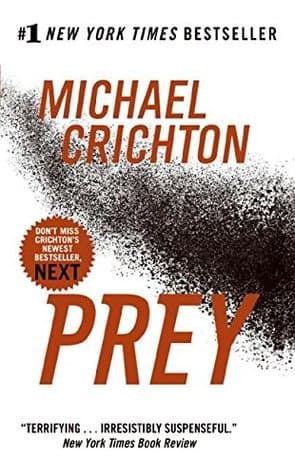
- Prey
Michael Crichton
3.8 (9k) average on GoodreadsThrillerCrichton's Prey deals with self-organizing nanotechnology and emergent intelligence, building tension through immediate physical danger. Koontz's AI operates on a more abstract level of control, creating dread from the erosion of personal freedom rather than direct physical threat.
- Angels & Demons
Dan Brown
3.9 (2.7M) average on GoodreadsThrillerA Harvard symbologist races through Rome's ancient sites, deciphering cryptic clues to unmask the Illuminati and stop a vengeful plot to destroy the Vatican with a stolen antimatter weapon.
- The Girl on the Train
Paula Hawkins
3.9 (2.1M) average on GoodreadsThrillerA woman’s fascination with a seemingly perfect couple she watches from her daily train commute leads her into a dark investigation when she witnesses something that shatters their idyllic image.
- The Da Vinci Code
Dan Brown
3.9 (1.9M) average on GoodreadsThrillerA symbologist and a cryptologist race through European landmarks, deciphering ancient codes and uncovering a conspiracy that could rewrite the foundations of Christianity.





Enjoyed the summary?
A summary gives you the shape of the book. The book itself has the detail, the examples and the voice.
Find The Silent Corner on AmazonAs an Amazon Associate, BookBrief earns from qualifying purchases. How we're funded