
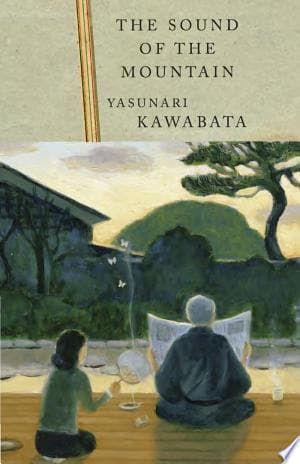
Synopsis
Covers the whole plot, including the ending.
- Difficulty
- Medium
- Pacing
- Slow
- Mood
- Atmospheric, Melancholy, Reflective, Poignant
- Read it if
- You appreciate reflective, character-driven novels with a focus on aging, family dynamics, and subtle emotional depth, set against a backdrop of Japanese culture.
- Skip it if
- You prefer fast-paced plots, clear resolutions, or overt emotional expression.
The Sound of the Mountain Plot Summary
Covers the whole plot, including the ending.
The Sound of the Mountain and Fading Memory
Ogata Shingo, a sixty-two-year-old Tokyo businessman, worries about his age. He often forgets names and appointments, which he tries to hide. One night, he hears a deep sound from the nearby mountain, which he connects with death. This sound becomes a recurring sign of his growing awareness of his mortality. He lives with his wife Yasuko, his son Shuichi, who often cheats, and his gentle daughter-in-law Kikuko. Shingo sees Kikuko's quiet suffering, as Shuichi often neglects her, and feels a growing sympathy and a more complex, unsettling attraction to her.
Kikuko's Quiet Suffering and Shingo's Observations
Shingo is very aware of Kikuko's quiet suffering. His son, Shuichi, is openly unfaithful, frequently staying out late with affairs, especially with a woman named Kinuko. Kikuko endures this silently, which increases Shingo’s pity and concern. He often compares Kikuko's gentle nature and beauty to his wife, Yasuko, and even to his deceased first love. He appreciates Kikuko's thoughtfulness and how she cares for their home. These observations create complex feelings in Shingo, where paternal affection mixes with an unsettling, unspoken desire, causing him inner conflict and guilt.
Fusako's Return and Family Tensions
Shingo's daughter, Fusako, unhappily married, returns home with her two young children after a fight with her husband. Her presence adds tension to the already strained household. Fusako is resentful and critical, often complaining about her husband and life, and frequently argues with her mother, Yasuko. Shingo sees his daughter's unhappiness and sharp tongue with a mix of sympathy and disappointment, recognizing his wife's more bitter traits in Fusako. Her return shows the fragility of family relationships and the unhappiness within the Ogata family.
Shuichi's Affairs and Kikuko's Dilemma
Shuichi's infidelity becomes more obvious. He makes little effort to hide his relationship with Kinuko, often calling her from home or staying out late. This open disrespect deeply affects Kikuko, who, despite her quiet nature, reaches a breaking point. She tells Shingo about her unhappiness, hinting at wanting to leave Shuichi. Shingo feels a deep conflict, wanting to protect Kikuko but also aware of the social impact of divorce and his son's reputation. He is caught between his son's selfish desires and Kikuko's gentle suffering, unable to directly help but deeply troubled.
Memories of the Past and Lost Loves
As Shingo deals with his current family problems, his mind often goes to the past. He clearly remembers his deceased sister-in-law, whom he believes was his true love, and his first love, a woman he never married. He remembers their beauty, kindness, and the choices he didn't make. These memories are not just nostalgic; they contrast sharply with his current home life, which he sees as full of disappointment and unhappiness. He often compares Kikuko to these idealized women, further complicating his feelings for his daughter-in-law and highlighting his regrets about his own life choices and relationships.
Kikuko's Pregnancy Scare
Kikuko has a pregnancy scare, which she tells Shingo about. This adds a new layer to her difficult situation with Shuichi. Shingo is concerned, as a child would tie Kikuko more firmly to his unfaithful son, possibly trapping her in an unhappy marriage. He considers what this would mean for Kikuko's future and happiness. The scare turns out to be false, but the incident forces both Shingo and Kikuko to face the idea of a child and its impact on their family's already complex dynamics, showing Kikuko's vulnerability and Shingo's protective instincts.
Confronting Shuichi and Kinuko
Shingo, usually quiet, tries to subtly intervene in Shuichi's affairs. He makes veiled comments and shows his disapproval, but Shuichi largely ignores him. Shingo also meets Kinuko, Shuichi's mistress, observing her appearance and manner. He notes her commonness, which further puzzles him about Shuichi's attraction to her. This observation strengthens his preference for Kikuko's gentle elegance and fuels his quiet disappointment in his son's choices, solidifying his protective feelings for Kikuko.
The Cherry Tree and Nature's Cycle
Shingo often watches the cherry tree in his garden, especially when it blooms and fades. The cherry blossoms, with their fleeting beauty, become a strong symbol for him, representing life's transient nature, beauty, and love. He finds quiet comfort in nature's cycles of growth and decay, which mirror his own journey towards old age and death. The cherry tree in the garden is a constant, gentle reminder of time passing and inevitable changes, in both nature and human lives, offering a contrast to the domestic turmoil.
Kikuko's Potential Departure
Kikuko's unhappiness reaches a peak, and she seriously considers leaving Shuichi, even discussing it with Shingo. This possibility deeply upsets Shingo. While he understands her reasons and sympathizes, the thought of Kikuko leaving creates a deep sense of loss and emptiness in him. He struggles with his conflicting emotions: his wish for her happiness versus his own unspoken attachment and the stability she brings to his life. Her potential departure forces him to confront the depth of his feelings for her and the quiet role she has come to play in his emotional well-being.
The Enduring Sound of the Mountain
As the story ends, Shingo continues to hear the mysterious sound of the mountain. It no longer brings him the initial shock or fear, but rather a quiet acceptance of his death and time's passage. The family's situation remains unresolved, with Shuichi's infidelity continuing and Kikuko's future uncertain. However, Shingo's inner journey has progressed. He has come to terms with his own aging, his regrets, and his complex feelings for Kikuko. The sound of the mountain is a constant, subtle reminder of the natural order, a deep, resonant hum against human frailty and lasting affection.
Principal Figures
Ogata Shingo
Protagonist
An aging Tokyo businessman grappling with mortality, family dysfunction, and unspoken desires.
Shingo is a sixty-two-year-old businessman living in Kamakura. He is introspective, observant, and often withdrawn, grappling with the physical and mental decline associated with old age, particularly memory loss. He is deeply sensitive to the natural world and frequently finds solace and meaning in its cycles. Shingo is a man of quiet contemplation, often more comfortable observing than actively intervening in the tumultuous lives of his family. He carries a burden of unspoken regrets and unfulfilled desires from his past, which color his perception of his present relationships.
Relationships: Yasuko (Wife; distant, often critical, a source of quiet disappointment.); Shuichi (Son; philandering, irresponsible, a source of shame and frustration.); Kikuko (Daughter-in-law; object of his complex affection, pity, and unsettling desire.); Fusako (Daughter; unhappy, critical, reminds him of Yasuko's less desirable traits.)
Kikuko
Supporting
Shingo's gentle and long-suffering daughter-in-law, neglected by her husband.
Kikuko is Shingo's daughter-in-law, married to his son Shuichi. She is characterized by her quiet grace, gentle demeanor, and resilience in the face of her husband's blatant infidelity. Kikuko is often the recipient of Shingo's sympathetic gaze and unspoken affection. She is respectful and attentive, bringing a sense of calm and order to the household. Despite her quiet nature, she possesses an inner strength and a growing desire for happiness, which eventually leads her to consider drastic changes in her life. Her beauty and kindness deeply affect Shingo.
Relationships: Ogata Shingo (Father-in-law; receives his protective affection and complex, unspoken desire.); Shuichi (Husband; neglected and betrayed by him, source of her unhappiness.); Yasuko (Mother-in-law; generally kind, but sometimes overshadowed by Yasuko's own frustrations.)
Ogata Yasuko
Supporting
Shingo's wife, whose marriage is marked by disappointment and a sharp tongue.
Yasuko is Shingo's wife, a woman who has grown somewhat bitter and critical over the years. Her relationship with Shingo lacks warmth and intimacy, burdened by unfulfilled expectations and the disappointments of their children. She often clashes with her daughter, Fusako, and is aware of Shuichi's infidelities, though she seems resigned to them. Yasuko represents the mundane and often frustrating realities of Shingo's domestic life, contrasting sharply with his idealized memories and his feelings for Kikuko.
Relationships: Ogata Shingo (Husband; distant, often critical, a source of quiet disappointment.); Shuichi (Son; tolerates his behavior, perhaps out of a sense of maternal duty or resignation.); Fusako (Daughter; frequently quarrels with her, but shares a bond of maternal concern.)
Ogata Shuichi
Supporting
Shingo's philandering son, whose irresponsibility causes much family distress.
Shuichi is Shingo and Yasuko's son, and Kikuko's husband. He is portrayed as irresponsible, self-centered, and a serial philanderer. His affairs, particularly with Kinuko, are a constant source of pain for Kikuko and a deep disappointment for Shingo. Shuichi seems oblivious or indifferent to the suffering he causes, prioritizing his own desires over his marital and familial duties. He embodies the decay of traditional values and the younger generation's perceived moral failings in Shingo's eyes.
Relationships: Ogata Shingo (Father; a source of disappointment and quiet disapproval.); Kikuko (Wife; neglects and betrays her with his affairs.); Kinuko (Mistress; his primary extramarital entanglement.)
Fusako
Supporting
Shingo's unhappy daughter, who returns home after marital problems.
Fusako is Shingo and Yasuko's daughter, unhappily married and with two children. She returns to her parents' home after a quarrel with her husband, bringing with her a sense of resentment and bitterness. Fusako is critical and outspoken, often complaining about her life and clashing with her mother. Her unhappiness mirrors, in some ways, the broader discontent within the family, and her sharp tongue reminds Shingo of his wife's less appealing traits. She represents another facet of the family's dysfunction.
Relationships: Ogata Shingo (Father; a source of quiet disappointment but also concern.); Yasuko (Mother; frequently quarrels with her, but shares a complex maternal bond.)
Kinuko
Mentioned
Shuichi's primary mistress.
Kinuko is Shuichi's most prominent mistress. She is never a direct character in the narrative but her presence is felt through Shuichi's frequent absences and Kikuko's suffering. Shingo has a brief, distant encounter with her, forming an impression of her as common and lacking the refined beauty he associates with Kikuko. She serves as a catalyst for much of the domestic discord and highlights Shuichi's moral failings.
Relationships: Shuichi (Lover; the object of his extramarital affections.)
Themes & Insights
Aging and Mortality
The main theme is Shingo's struggle with his own aging, memory loss, and the certainty of death. The 'sound of the mountain' is a constant, personal sign of his mortality. He experiences physical decline and mental lapses, which he tries to hide. His thoughts on past loves and his current unhappiness are tied to his awareness of time running out, seen when he observes the fleeting beauty of cherry blossoms, which symbolize life's briefness.
“He felt that the sound of the mountain was the sound of his own death.”
Family Dysfunction and Disappointment
The novel carefully shows the strained and unhappy relationships within the Ogata family. Shingo's marriage to Yasuko lacks warmth, his son Shuichi is unfaithful, and his daughter Fusako is resentful. The family home, despite its physical presence, is a place of emotional distance and unmet expectations. Shuichi's infidelity and Kikuko's quiet suffering are central to this theme, showing the breakdown of traditional family values and Shingo's disappointment in his children's lives.
“His son was a man of forty, but he was still a child.”
Unspoken Desire and Guilt
A deep and unsettling theme is Shingo's growing, complex affection for his daughter-in-law, Kikuko. This feeling is more than paternal care, bordering on an unspoken, almost sexual desire, which fills him with guilt and inner conflict. He often compares Kikuko to his idealized past loves, highlighting his deep regrets and the emotional emptiness in his own marriage. This unspoken desire is never acted upon but colors his every interaction with Kikuko, creating a subtle, touching tension in the story.
“He felt that Kikuko's youth was beautiful, but it was a beauty that made him sad.”
The Beauty and Transience of Nature
Nature is important in reflecting Shingo's inner state and providing him with comfort and philosophical thought. The cherry blossoms, the moon, and the sound of the mountain itself are not just backdrops but active parts of the story. The fleeting beauty of the cherry tree, for instance, symbolizes life's and beauty's brief nature, reinforcing Shingo's awareness of his own death. Nature's cycles offer order and peace amid the domestic chaos and emotional trouble.
“The cherry blossoms were in full bloom, but they would soon fall.”
Plot Devices & Literary Techniques
The Sound of the Mountain
A recurring auditory motif symbolizing mortality and the subconscious.
The 'sound of the mountain' is a powerful symbolic device. Initially, it is a mysterious, deep rumble that Shingo interprets as an omen of his own death. It recurs throughout the novel, evolving from a source of fear to a quiet acceptance of mortality. It represents the inescapable presence of the subconscious and the natural world's indifferent power, echoing Shingo's internal anxieties and his slow journey towards understanding his place in the grand scheme of life and death. It's a constant, subtle reminder of the inevitable.
Memory and Nostalgia
Shingo's fragmented memories of past loves and events.
Shingo's failing memory is a direct manifestation of his aging, but his vivid recollections of past loves (his deceased sister-in-law, his first love) serve as a narrative device to contrast his present, disappointing life with an idealized past. These nostalgic episodes offer insight into Shingo's character, his regrets, and the roots of his current emotional landscape. They highlight the gap between what was and what is, and subtly explain his complex feelings for Kikuko, who often reminds him of these lost figures.
Nature Imagery
Symbolic use of natural elements to reflect internal states and themes.
Kawabata frequently employs nature imagery, such as the cherry tree, the moon, and various flowers, not merely as descriptive elements but as symbolic reflections of the characters' emotions and the novel's themes. The cherry blossoms, with their transient beauty, symbolize the fleetingness of life and love. The moon often represents solitude and contemplation. These natural elements provide a serene counterpoint to the domestic turmoil, offering Shingo moments of peace and profound reflection on the cycles of life, death, and beauty.
The Sound of the Mountain Quotes
“The old man was not a mountain, but a man who had lived too long, and was now only a shadow of himself.”
“The sound of the mountain was the sound of his own death.”
“He felt as if he were standing on the edge of a precipice, looking down into a bottomless abyss.”
“The silence of the house was more oppressive than any noise.”
“Beauty, even if it is only a momentary flicker, can illuminate the darkness of life.”
“He was like a tree whose roots were slowly decaying, while its branches still reached for the sky.”
“The past was a dream from which he could never fully awaken.”
“Love was a fragile thing, easily broken, but capable of mending itself, given time.”
“Even in old age, the heart could still feel the pangs of desire.”
“The world was full of shadows, and he was one of them.”
“He longed for a peace that seemed forever out of reach.”
“The sound of the cicadas was a reminder of the fleeting nature of life.”
“Perhaps all human relationships were built on a foundation of unspoken understandings and misunderstandings.”
“He was a man caught between two worlds: the fading past and the uncertain future.”
Quiz
10 questions on the plot and the characters. Each answer comes with a short explanation.
Question 1
What sound does Ogata Shingo associate with death?
- The distant rumble of a train
- The sound of the nearby mountain
- The chirping of cicadas at dusk
- The ringing of a temple bell
Show answer
B. The sound of the nearby mountain The synopsis explicitly states that Shingo hears a distant rumble from the nearby mountain, a sound he associates with death.
Question 2
Which character is described as Ogata Shingo's 'disappointing wife'?
- Kikuko
- Yasuko
- Fusako
- Takako
Show answer
B. Yasuko The synopsis mentions Shingo's relationships, specifically 'with his disappointing wife'. While her name is not given in the synopsis, the novel identifies her as Yasuko.
Question 3
What is Ogata Shingo's profession?
- A retired professor
- An elderly Tokyo businessman
- A traditional artist
- A government official
Show answer
B. An elderly Tokyo businessman The novel's description clearly identifies Shingo as 'an elderly Tokyo businessman'.
Question 4
What specific type of relationship does Kikuko have with Ogata Shingo?
- She is his daughter
- She is his daughter-in-law
- She is his mistress
- She is his sister-in-law
Show answer
B. She is his daughter-in-law The synopsis states Shingo's relationships include 'his daughter-in-law Kikuko'.
Question 5
What feelings does Kikuko instill in Ogata Shingo?
- Annoyance and resentment
- Pity and uneasy stirrings of sexual desire
- Admiration and respect
- Indifference and boredom
Show answer
B. Pity and uneasy stirrings of sexual desire The synopsis explicitly mentions that Kikuko 'instills in him both pity and uneasy stirrings of sexual desire'.
Question 6
Which of the following best describes Shingo's son?
- A dedicated and loyal family man
- A philandering son
- A successful and respected businessman
- An estranged son living abroad
Show answer
B. A philandering son The synopsis characterizes Shingo's relationships, including 'his philandering son'.
Question 7
What is a prominent theme explored through Ogata Shingo's experiences in the novel?
- The triumph of youth over old age
- The predicament of old age and the narrowing of life
- The pursuit of corporate success in post-war Japan
- The challenges of raising a large family
Show answer
B. The predicament of old age and the narrowing of life The description highlights that 'Few novels have rendered the predicament of old age more beautifully' and charts 'the gradual, reluctant narrowing of a human life'.
Question 8
What specific cognitive issue does Shingo experience by day?
- Difficulty with speech
- Small failures of memory
- Loss of motor skills
- Hallucinations
Show answer
B. Small failures of memory The synopsis states, 'By day Ogata Shingo is troubled by small failures of memory.'
Question 9
The 'Saturday Review' likened elements of Kawabata’s fictional world to the incantatory fascination of what Japanese art form?
- Kabuki theater
- Haiku poetry
- Nō drama
- Ukiyo-e woodblock prints
Show answer
C. Nō drama The 'Saturday Review' quote in the prompt explicitly mentions 'the incantatory fascination of a Nō drama'.
Question 10
What does the novel suggest about the 'flaming or flickering patterns of love and lust' in the context of Shingo's life?
- They are absent in old age
- They illuminate the closing stages of life
- They lead to inevitable despair
- They are solely a concern of the younger generation
Show answer
B. They illuminate the closing stages of life The synopsis states that the novel charts the narrowing of life 'along with the sudden upsurges of passion that illuminate its closing'. The 'flaming or flickering patterns of love and lust' are mentioned as elements of Kawabata's world that combine in the novel.
The Sound of the Mountain FAQ
What is the central premise of 'The Sound of the Mountain'?
The novel centers on Ogata Shingo, an elderly Tokyo businessman, as he confronts the realities of aging, memory loss, and his impending mortality, symbolized by the sound of the mountain. It explores his complex relationships with his family, particularly his distant wife Yasuko, his philandering son Shuichi, and his deeply admired daughter-in-law Kikuko.
Who is Kikuko and what is her significance to Shingo?
Kikuko is Shingo's daughter-in-law, married to his son Shuichi. She becomes a central figure in Shingo's emotional life, representing purity, beauty, and a quiet strength. Shingo develops a profound admiration and a subtle, unsettling attraction towards her, which stands in stark contrast to his disappointment with his own son and wife.
What does the 'sound of the mountain' symbolize for Shingo?
The 'sound of the mountain' is a recurring auditory hallucination or perception for Shingo, which he interprets as a harbinger of death and the narrowing of his life. It represents the inevitability of his mortality and the quiet, natural forces that are drawing him towards his end, often appearing after moments of introspection or anxiety.
Describe Shingo's relationship with his son, Shuichi.
Shingo's relationship with Shuichi is fraught with disappointment and a sense of failure. Shuichi is a philandering husband who frequently cheats on Kikuko, causing Shingo immense shame and concern. Shingo feels a paternal responsibility for Shuichi's actions but is largely powerless to influence him, leading to a strained and often unspoken tension.
How does Shingo's failing memory affect his daily life?
Shingo experiences small but unsettling failures of memory, forgetting names or details, which contribute to his anxiety about aging and his declining faculties. These moments serve as constant reminders of his physical and mental deterioration, fueling his introspection about his past and future.
What is the significance of the various dreams Shingo experiences throughout the novel?
Shingo's dreams often provide psychological insight into his subconscious desires, anxieties, and unresolved conflicts. They frequently feature images of nature, memories of his past, or distorted reflections of his current family dynamics, serving as a window into his innermost thoughts and feelings that he rarely expresses verbally.
Are there any subtle indications of Shingo's past romantic life or regrets?
Yes, Shingo occasionally reflects on his youth and past attractions, particularly one woman named Chieko, whom he considered marrying before his arranged marriage to Yasuko. These fleeting memories suggest a life he might have lived and contribute to his current sense of dissatisfaction with his marriage and his longing for a more fulfilling emotional connection.
How does Kikuko's personal suffering subtly mirror or contrast Shingo's own?
Kikuko's quiet suffering due to Shuichi's infidelity and her own inability to bear children subtly mirrors Shingo's internal struggles with his own aging and sense of failure. While Shingo carries the burden of age, Kikuko carries the burden of youth's unfulfilled promises and betrayal, creating a poignant parallel between their respective forms of quiet despair.
What role do traditional Japanese aesthetics, like Noh drama or nature imagery, play in the narrative?
Kawabata masterfully weaves traditional Japanese aesthetics throughout the narrative, using nature imagery (cherry blossoms, cicadas, the moon) to reflect emotional states and the passage of time. The novel's structure and contemplative pace also evoke the restrained intensity and symbolic depth of a Noh drama, particularly in the unfolding of Shingo's internal world.
How does Shingo's internal monologue reveal his psychological state regarding his attraction to Kikuko?
Shingo's internal monologues reveal a complex mix of admiration, paternal affection, and an unsettling, unspoken sexual desire for Kikuko. He struggles with the impropriety of these feelings, often rationalizing them as appreciation for her purity, but his intense observations of her beauty and his protective instincts betray a deeper, more troubling attraction.
Analyze the psychological impact of Shuichi's infidelity on Kikuko and the wider family.
Shuichi's infidelity causes profound emotional pain for Kikuko, leading to her quiet resignation and a deep sense of betrayal. For Shingo, it fuels his disappointment in his son and a protective empathy for Kikuko, while for Yasuko, it highlights her own past suffering and her pragmatic, albeit resigned, view of marriage.
How does the novel explore the concept of loneliness in old age?
The novel deeply explores the loneliness of old age through Shingo's increasing isolation and introspection. Despite living in a family home, he feels emotionally distant from his wife and son, finding his deepest, albeit complicated, connection with Kikuko. His reflections on mortality and the past are largely solitary, emphasizing the inherent loneliness of the aging process.
What is the psychological significance of Shingo's recurring association of the mountain sound with death?
The mountain sound's association with death is a manifestation of Shingo's subconscious anxieties about his mortality and his fear of oblivion. It represents a primal, inescapable force, a constant reminder of the finite nature of life, and acts as a psychological anchor for his meditations on aging and the end of existence.
Is Shingo's attraction to Kikuko purely platonic, or is there an underlying sexual tension?
While Shingo's overt actions and internal rationalizations lean towards platonic admiration and paternal affection, there is an undeniable underlying sexual tension. His detailed observations of Kikuko's physical appearance, his discomfort with his own thoughts, and his comparison of her to his wife and past loves subtly indicate a repressed, uneasy sexual desire that he struggles to acknowledge.
How does Kawabata use the theme of memory to shape the narrative and Shingo's character?
Memory is crucial; Shingo's failing short-term memory heightens his anxiety about aging, while his vivid long-term memories of his youth, his deceased sister-in-law, and past loves provide contrast to his present disappointments. These memories are not linear but associative, reflecting the fragmented nature of an aging mind and offering insights into his character's past motivations and regrets.
Does the novel offer any hope or resolution for Shingo by its conclusion?
The novel offers a nuanced, rather than definitive, resolution. Shingo doesn't find a grand solution to his problems or a cure for his aging. Instead, he reaches a state of quiet acceptance and a deeper, if still complex, understanding of his family and himself. The ending is more about serene resignation and the continuation of life's cycles than a dramatic resolution.
How does the novel portray the role and expectations of women in post-war Japanese society through Kikuko and Yasuko?
Kikuko embodies the quiet suffering and resilience expected of women, enduring her husband's infidelity with grace and dignity, while also subtly pushing back against traditional expectations by seeking independence. Yasuko represents a more traditional, resigned wife, accustomed to her husband's emotional distance and her son's failings, highlighting the burden of expectation placed on women in maintaining family harmony.
What is the significance of the motif of sleep and sleeplessness in the novel?
Sleep and sleeplessness are significant motifs. Shingo's difficulty sleeping, often accompanied by the sound of the mountain, underscores his anxieties and the relentless nature of his internal struggles. Dreams provide an escape or a window into his subconscious, while the struggle for sleep emphasizes his growing frailty and the burden of his waking thoughts.
About the author
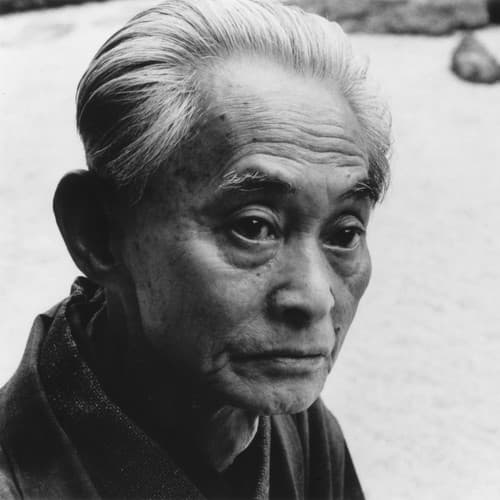
Yasunari Kawabata was a Japanese novelist and short story writer whose spare, lyrical, subtly shaded prose works won him the Nobel Prize in Literature in 1968, the first Japanese author to receive the award. His works have enjoyed broad international appeal and are still widely read.
Similar books
- The Old Capital
Yasunari Kawabata
3.8 (4k) average on GoodreadsHistorical FictionOffers another introspective look at Japanese life, tradition, and personal relationships with Kawabata's characteristic style.
- The Makioka Sisters
Jun'ichirō Tanizaki
4.0 (6k) average on GoodreadsHistorical FictionPresents a detailed portrait of a traditional Japanese family facing changing times, with a focus on internal lives and social customs.
- Nineteen Eighty-Four
George Orwell
4.2 (5.5M) average on GoodreadsFictionWinston Smith dreams of truth and rebellion in a world where Big Brother watches all, but he confronts the terrifying power of a regime that controls not just actions, but thoughts.
- The Frozen River
Ariel Lawhon
4.4 (600k) average on GoodreadsFictionIn 1789 Maine, a heroic midwife's diary helps her expose a murder and get justice in a town that wants to silence her.
- A Man Called Ove
Fredrik Backman
4.4 (569k) average on GoodreadsFictionA stubborn widower, who lives by strict rules, finds his quiet world changed by a lively new family next door, making him face his past and find happiness in human connection.
- The Art of Racing in the Rain
Garth Stein
4.2 (452k) average on GoodreadsFictionThrough the eyes of Enzo, a wise and observant dog, a race car driver's family navigates a journey of love, loss, and resilience, learning that life's most important lessons often come in the curves, not just on the straightaways.




Enjoyed the summary?
A summary gives you the shape of the book. The book itself has the detail, the examples and the voice.
Find The Sound of the Mountain on AmazonAs an Amazon Associate, BookBrief earns from qualifying purchases. How we're funded