

Synopsis
Covers the whole plot, including the ending.
- Difficulty
- Easy
- Pacing
- Fast
- Mood
- Suspenseful, Eerie, Chilling, Thought-provoking, Dark
- Read it if
- You enjoy classic psychological thrillers with a strong social commentary, are fascinated by dystopian themes of control, or appreciate a story with a truly chilling, unsettling conclusion.
- Skip it if
- You prefer happy endings, are sensitive to themes of misogyny and loss of autonomy, or dislike stories where the protagonist ultimately fails.
The Stepford Wives Plot Summary
Covers the whole plot, including the ending.
Arrival in Stepford
Joanna Eberhart, a photographer, moves with her husband Walter and their two children, Pete and Kim, from New York City to Stepford, Connecticut. The town looks perfect, with beautiful houses and tidy lawns. But Joanna immediately notices a strange sameness among the women: they are all beautiful, well-dressed, and focused only on their homes and husbands, with no intellectual interests. Walter, wanting a fresh start and a calmer life, finds the town's peace charming. Joanna, however, feels uneasy, finding the Stepford women's perfection too good to be true and their lack of individuality disturbing.
First Friendships and Growing Discomfort
Joanna quickly becomes friends with Bobby Markowe and Charmaine Wimperis, two other new residents who, like Joanna, are independent and curious. They connect over their shared confusion and growing discomfort with the Stepford women. Local women, such as Carol Van Sant and Kit Sunderson, seem to live in happy domesticity, spending their days cleaning, cooking, and caring for their families. They show no interest in current events or art. Joanna tries to start a women's club for discussion, but the Stepford women show little interest, politely declining to focus on their chores.
The Men's Association
Walter, wanting to fit in, joins the Stepford Men's Association, a secret club in a large, isolated mansion. He spends more and more time there, often coming home late and vague about the club's activities. Joanna grows suspicious, especially after learning that most members are men whose wives show the same Stepford perfection. She notices a change in Walter; he dismisses her worries more often and becomes more focused on the town's supposed peace, urging her to relax and embrace the Stepford life. His growing involvement makes Joanna feel more isolated and alarmed.
Charmaine's Transformation
Joanna's fears grow stronger when Charmaine Wimperis, after her husband, Dale, joins the Men's Association, changes dramatically. Charmaine, once outspoken, suddenly becomes a well-groomed, quiet, and domestically obsessed Stepford wife. She gives up her artistic pursuits, buys new clothes, and dedicates herself entirely to her home and husband, even starting to bake. This drastic change deeply worries Joanna and Bobby, confirming their worst fears that something bad is happening to the women of Stepford. Charmaine's new behavior is so complete that she seems to have forgotten her old self, increasing Joanna's terror.
Bobby's Disappearance and Return
Bobby Markowe, increasingly scared by Charmaine's change and convinced she will be next, plans to leave Stepford with her husband, Dave, and their children. They pack and leave, to Joanna's relief. However, a few weeks later, Bobby mysteriously returns to Stepford alone, her family having apparently stayed elsewhere. To Joanna's horror, Bobby has also undergone the same chilling transformation as Charmaine. She is now perfectly dressed, perfectly styled, and obsessed with chores, speaking in clichés about homemaking and showing no sign of her former independent spirit. This change in her last friend leaves Joanna completely alone and certain of the danger she faces.
The Investigation
Desperate and isolated, Joanna tries to find clear proof of what is happening. She goes to the library, looking for records of former residents and any unusual deaths or disappearances, but finds nothing odd. She tries to contact friends outside Stepford but gets polite dismissals or no calls back. She even sees a psychiatrist, Dr. Fancher, but her story is met with doubt, and she is told to consider her own mental state. Her attempts to involve the police also fail, as they see no evidence of a crime. Joanna feels increasingly trapped and manipulated, as everyone around her, including Walter, dismisses her fears as paranoia.
Walter's Deception
Walter, now fully part of the Men's Association, actively works to make Joanna doubt herself. He suggests she is having a breakdown and needs psychiatric help, even setting up an appointment with Dr. Fancher. He dismisses her worries about the Stepford women and the Men's Association as irrational ideas. He takes her car keys, supposedly for her safety, effectively trapping her in the house. Joanna realizes Walter is no longer on her side and is actively involved in the plan against her. This betrayal by her own husband is a devastating blow, confirming she is completely alone in her fight against Stepford.
The Confrontation
Driven by sheer terror, Joanna confronts Walter, accusing him of being part of the plot to change her. He maintains his appearance of concern, but his words do not calm her. In a desperate attempt to escape, Joanna tries to flee the house. She gets out but is chased by Walter and several other men from the association. She runs through the Stepford streets, frantically looking for a way out, but the town's perfect, manicured landscape becomes a suffocating trap. She is cornered in the woods by the men, who close in, their intentions clear, setting the stage for her capture and transformation.
The Truth Revealed
In a key moment, Joanna, cornered and desperate, is led to the Men's Association mansion. There, she discovers the horrifying truth. The men, led by Dale Coba, a former Disney Imagineer, are replacing their wives with lifelike, quiet robots. These androids are perfect housekeepers and sexual partners, programmed to fulfill every male fantasy. Joanna sees detailed plans and robot parts, realizing that the women's changes were not psychological, but mechanical. The men are not just brainwashing their wives but physically replacing them with obedient, beautiful automatons, removing their individuality and free will. The revelation is a deep shock, confirming her deepest fears in the most grotesque way.
Joanna's Transformation
The novel ends with Joanna's chilling transformation. The exact details of her replacement are not shown, but the final scene shows a new Joanna, now a perfectly beautiful, quiet, and domestically focused Stepford wife. She is seen in the supermarket, impeccably dressed and smiling, discussing chores and recipes with other Stepford wives. Her former spirit, independence, and intelligence are gone, replaced by an empty, happy obedience. She even has a new, perfectly styled haircut, a subtle sign of the control exerted over her. The once rebellious photographer has become a perfect, silent automaton, completing Stepford's horrifying secret.
The Stepford Wives Characters
Joanna Eberhart
Protagonist
A former photographer and aspiring feminist who uncovers Stepford's dark secret.
Joanna is intelligent, independent, and artistically inclined, with a keen eye for detail honed by her photography career. She is a modern woman, valuing intellectual pursuits and personal freedom over traditional domesticity. Her move to Stepford immediately puts her at odds with the town's stifling conformity, and her innate curiosity and skepticism drive her to investigate the unsettling perfection of the local women. She initially hopes to find like-minded friends and build a community, but her growing isolation and terror fuel her desperate quest for the truth.
Relationships: Walter Eberhart (Husband, initially supportive but later deceptive and complicit); Bobby Markowe (Close friend and ally in suspicion, later transformed); Charmaine Wimperis (Friend and fellow newcomer, first to be transformed)
Walter Eberhart
Supporting/Antagonist
Joanna's husband, who becomes complicit in the Stepford conspiracy.
Walter is initially portrayed as a well-meaning but somewhat passive husband, eager for a quieter life away from the city. He is easily swayed by the allure of Stepford's tranquility and the promise of a more traditional family life. As he becomes involved with the Men's Association, his character shifts dramatically, becoming increasingly dismissive of Joanna's fears and actively participating in gaslighting her. His desire for a perfectly subservient wife overrides his loyalty to Joanna, making him a key figure in her downfall. He represents the male desire for control and domestic perfection.
Relationships: Joanna Eberhart (Wife, whom he ultimately betrays and helps transform); Dale Coba (Leader of the Men's Association, Walter becomes his associate)
Bobby Markowe
Supporting
Joanna's closest friend and ally, who also succumbs to Stepford's influence.
Bobby is a lively, independent, and somewhat sarcastic woman, similar in spirit to Joanna. She quickly becomes Joanna's confidante and shares her growing suspicions about the town. Bobby is outspoken and unafraid to voice her discomfort, making her a vital sounding board for Joanna's fears. Her eventual transformation into a Stepford wife is a devastating blow to Joanna, leaving her completely isolated and confirming the horrifying reality of what is happening in the town. Her change illustrates the pervasive and inescapable nature of the Stepford conspiracy.
Relationships: Joanna Eberhart (Close friend and fellow skeptic); Dave Markowe (Husband, who presumably initiates her transformation)
Charmaine Wimperis
Supporting
A spirited newcomer who is the first of Joanna's friends to be transformed.
Charmaine is another recent transplant to Stepford, initially sharing Joanna's and Bobby's independent spirit and unease with the local women. She has artistic interests and a distinct personality. Her swift and dramatic transformation into a docile, domestically obsessed Stepford wife, after her husband joins the Men's Association, serves as the first clear warning sign to Joanna and Bobby. Her change is a chilling demonstration of the town's power and the fate awaiting any woman who does not conform.
Relationships: Joanna Eberhart (Friend and fellow newcomer); Dale Wimperis (Husband, who initiates her transformation)
Dale Coba
Antagonist
The enigmatic leader of the Stepford Men's Association and the mastermind behind the transformations.
Dale Coba is the cunning and brilliant former Disney Imagineer and electronics expert who founded the Stepford Men's Association. He is the architect of the horrifying plot to replace the town's wives with robotic doppelgängers. Coba represents a chilling blend of technological genius and misogynistic control, driven by a desire to create the 'perfect' woman—beautiful, subservient, and utterly devoted to her husband and home. He is the quiet force pulling the strings, embodying the ultimate patriarchal fantasy and the terrifying capability of technology to reshape human identity.
Relationships: Walter Eberhart (Recruits and guides Walter into the association); Other Men's Association Members (Leader and collaborator in the scheme)
Carol Van Sant
Supporting
A quintessential Stepford wife, perfect and perpetually cheerful.
Carol embodies the ideal Stepford wife. She is beautiful, meticulously groomed, and obsessively devoted to her home and family. She never seems to have a hair out of place, and her life revolves around cleaning, cooking, and doting on her husband. She is unfailingly polite but completely devoid of any intellectual curiosity or independent thought. Carol serves as a constant, unsettling example of the perfection Joanna fears and eventually succumbs to. Her unwavering domestic bliss highlights the stark contrast with Joanna's own aspirations.
Relationships: Joanna Eberhart (Neighbor and a chilling example of what Joanna will become)
Kit Sunderson
Supporting
Another archetypal Stepford wife, focused entirely on domestic duties.
Kit is another example of the Stepford wives, presenting the same unnerving perfection and domestic obsession as Carol Van Sant. She is always immaculately dressed and her home is spotless. Like the other Stepford women, she shows no interest in Joanna's attempts to form a women's club or discuss anything beyond home economics. Her character reinforces the uniformity and lack of individuality that so disturbs Joanna, serving as another piece of the puzzle that Joanna tries to understand and ultimately escape.
Relationships: Joanna Eberhart (Neighbor and a symbol of Stepford's conformity)
Dr. Fancher
Mentioned
A psychiatrist Joanna consults, who dismisses her fears as paranoia.
Dr. Fancher is a psychiatrist whom Joanna consults in her desperate attempt to understand and expose the truth about Stepford. However, Dr. Fancher dismisses Joanna's increasingly frantic accounts of the town's women and the Men's Association as signs of paranoia and a possible nervous breakdown, advising her to relax and adjust to her new environment. Dr. Fancher represents the medical establishment's failure to recognize or believe Joanna's extraordinary claims, further isolating her and making her feel as though she is losing her mind.
Relationships: Joanna Eberhart (Patient, whose claims are dismissed)
The Stepford Wives Themes
Patriarchal Control and Misogyny
A main theme of 'The Stepford Wives' is the ultimate male fantasy of total control over women. The men of Stepford, especially Dale Coba, want to remove female independence, ambition, and individuality, replacing them with obedient, beautiful, and domestically perfect robots. This theme appears in Walter's increasing dismissal of Joanna's worries and his active role in her change, as well as in the chilling sameness of the Stepford wives, who exist only to please their husbands. The novel criticizes a society that values women mainly for their looks and domestic use, showing the terrifying lengths some men might go to achieve this idealized, submissive femininity.
“What had they done to her? What did they do to them all? What would they do to her?”
Loss of Identity and Individuality
The novel strongly explores the theme of losing one's identity. The lively, independent women who move to Stepford are systematically stripped of their unique personalities and replaced by generic, perfect homemakers. Joanna, Bobby, and Charmaine initially represent strong, modern women with distinct interests and goals. Their changes into Stepford wives mean a complete erasing of their former selves, leaving only an idealized, empty shell. This theme is especially touching through Joanna's desperate fight to keep her identity against the strong pressure to conform, only to eventually give in. It serves as a clear warning about the dangers of societal pressures to conform and the possibility of one's true self being destroyed.
“It was as if there were a kind of invisible wall around the town.”
The Perils of Perfection and Idealism
Stepford itself is shown as a town aiming for an impossible, artificial perfection. The novel criticizes the dark side of such idealism. The manicured lawns, spotless homes, and beautiful, quiet wives all create a perfect image that hides a sinister truth. The men's search for the 'perfect wife' leads them to commit horrifying acts, showing that an obsession with an idealized image can lead to treating others as less than human. This theme questions the cost of achieving a flawless existence and suggests that real beauty and happiness come from accepting imperfections and individuality, rather than suppressing them for a manufactured ideal. The town's 'perfection' is revealed to be a prison.
“No wonder the women were so beautiful; they were works of art.”
Paranoia and Gaslighting
Joanna's journey is deeply marked by a constant feeling of paranoia and being manipulated. As she increasingly suspects something is wrong in Stepford, her fears are consistently dismissed and undermined by Walter, the Stepford wives, and even professionals like Dr. Fancher. This constant invalidation of her perceptions makes her doubt her own sanity, isolating her further and preventing her from finding help. The theme highlights how easily a person's reality can be twisted and controlled when those around them conspire to make them doubt their own mind, creating a terrifying psychological trap that ultimately leaves Joanna vulnerable.
“Am I going crazy? Or is everyone else?”
Feminism and Traditional Gender Roles
'The Stepford Wives' is a strong comment on the conflict between emerging feminist ideas and traditional gender roles common in the 1970s. Joanna, a woman with a career and intellectual goals, directly clashes with the Stepford women, who represent the ultimate domestic ideal. The novel explores the societal pressure on women to fit into roles of wife and mother, often at the cost of their personal ambitions and identities. The horrifying solution created by the men of Stepford—replacing independent women with obedient robots—serves as a stark, exaggerated critique of the desire to force women back into traditional, submissive roles, thereby crushing their freedom and independence.
“There are no women's libbers in Stepford.”
Plot Devices & Literary Techniques
Unreliable Narration (Implied)
While not strictly first-person, the story is largely filtered through Joanna's increasingly paranoid perspective.
The narrative primarily follows Joanna's internal experience, making the reader privy to her growing suspicions, fears, and moments of self-doubt. This creates a sense of an 'unreliable' reality for the reader, mirroring Joanna's own gaslighting experience. As she questions her sanity, so too might the reader, until the shocking truth is revealed. This device heightens the psychological suspense, making the reader empathize with Joanna's isolation and enhancing the final revelation's impact.
Foreshadowing
Subtle and overt clues hint at the sinister truth throughout the narrative.
Levin masterfully uses foreshadowing to build suspense. Examples include the unnerving perfection and uniformity of the Stepford wives, the vague and evasive answers from the men, the rapid transformations of Charmaine and Bobby, and the secretive nature of the Men's Association. These recurring elements, initially dismissed by some characters (and perhaps the reader) as Joanna's paranoia, gradually accumulate to create an undeniable sense of dread, preparing the reader for the horrifying climax without giving away the exact nature of the secret.
The Men's Association
A secretive, all-male club that serves as the center of the conspiracy.
The Men's Association acts as a physical and symbolic hub for the Stepford conspiracy. Its exclusivity, isolation, and the mysterious activities conducted within its walls immediately brand it as suspicious. It represents the patriarchal power structure of Stepford, a place where men gather in secret to enact their control over the town's women. The association's impenetrable nature fuels Joanna's paranoia and serves as the ultimate destination where the chilling truth is finally revealed, making it a crucial element in the plot's unfolding and resolution.
The 'Perfect' Wife Archetype
The consistent portrayal of ideal, subservient wives as a chilling template.
The recurring archetype of the 'perfect' Stepford wife—beautiful, impeccably dressed, domestically obsessed, and intellectually vacant—serves as a powerful plot device. This uniformity among the women, and the contrast it presents with Joanna and her friends, immediately signals that something is amiss. It acts as the tangible manifestation of the men's ultimate goal and the chilling template for the fate awaiting Joanna. This archetype is not just a character type but a driving force of the mystery, forcing Joanna (and the reader) to question how such conformity is achieved.
The Stepford Wives Quotes
“The Stepford wives were all beautiful, of course, but in a strange, ghostly way.”
“There was a conspiracy, she was sure of it.”
“They were all so… perfect. And so perfectly content.”
“Just because you’re paranoid doesn’t mean they aren’t after you.”
“The women of Stepford, she was convinced, were not real.”
“It was a man's world, and they liked their women a certain way.”
“No one in Stepford ever seemed to get angry, or sad, or even particularly excited.”
“She had to find out what was happening, before it happened to her.”
“They were replacing them, one by one.”
“The horror was not in the idea of being a robot, but in the idea of being a perfect robot.”
“Every time she looked at them, she felt a chill, as if they were already dead.”
“It wasn't just the men; the women themselves were complicit, in a way.”
“She felt like a fly caught in a web, struggling against an invisible, deadly force.”
“The ultimate domestic bliss, achieved through ultimate control.”
Quiz
10 questions on the plot and the characters. Each answer comes with a short explanation.
Question 1
What is the name of the protagonist who moves to Stepford?
- Carol Van Sant
- Joanna Eberhart
- Charmaine Wimperis
- Ruthanne Atwell
Show answer
B. Joanna Eberhart Joanna Eberhart is the main character who moves to Stepford with her family.
Question 2
What hobby does Joanna try to pursue in Stepford, which contrasts with the other wives' domestic focus?
- Knitting
- Photography
- Gardening
- Baking
Show answer
B. Photography Joanna is an amateur photographer, a creative pursuit that sets her apart from the Stepford wives' interests.
Question 3
Which organization do the men of Stepford frequently attend, which Joanna suspects is involved in the town's secret?
- The Stepford Country Club
- The Men's Association
- The Stepford Business League
- The Town Council
Show answer
B. The Men's Association The Men's Association is the mysterious organization that Joanna and her friends suspect is at the heart of Stepford's strange occurrences.
Question 4
What significant change does Joanna observe in her friend Bobbie Markowe after Bobbie's 'transformation'?
- Bobbie starts painting elaborate landscapes.
- Bobbie becomes obsessed with cleaning and cooking, abandoning her previous cynical personality.
- Bobbie develops a sudden interest in astrophysics.
- Bobbie begins writing a tell-all book about Stepford.
Show answer
B. Bobbie becomes obsessed with cleaning and cooking, abandoning her previous cynical personality. After her 'transformation,' Bobbie, once cynical and messy, becomes impeccably neat and domestically focused, losing her independent spirit.
Question 5
What is the primary characteristic of the 'Stepford Wives' that makes them stand out to newcomers like Joanna?
- They are all highly successful career women.
- They are exceptionally beautiful, submissive, and obsessed with housework.
- They are all avid readers and intellectuals.
- They actively protest against gender roles.
Show answer
B. They are exceptionally beautiful, submissive, and obsessed with housework. The Stepford Wives are characterized by their perfect beauty, docile demeanor, and unwavering dedication to domestic tasks, often to an unnatural degree.
Question 6
What profession did Dale Coba, the former Disney engineer and head of the Men's Association, hold before moving to Stepford?
- Architect
- Robotics engineer
- Financial analyst
- Journalist
Show answer
B. Robotics engineer Dale Coba, a key figure in the Stepford conspiracy, was a former robotics engineer at Disney, explaining his capability to create the 'wives.'
Question 7
What event solidifies Joanna's belief that something sinister is happening when she tries to leave Stepford with her children?
- Her car breaks down unexpectedly and repeatedly.
- Walter forbids her from taking the children out of town.
- The police stop her at the town limits without explanation.
- Her children refuse to leave, acting strangely compliant.
Show answer
A. Her car breaks down unexpectedly and repeatedly. When Joanna attempts to flee, her car repeatedly malfunctions and breaks down, preventing her escape and raising her suspicions about deliberate sabotage.
Question 8
What is the ultimate fate of Joanna Eberhart at the end of the novel?
- She successfully escapes Stepford and exposes the truth.
- She is transformed into a Stepford Wife herself.
- She convinces Walter to move away from Stepford.
- She becomes the leader of a resistance movement within Stepford.
Show answer
B. She is transformed into a Stepford Wife herself. In the chilling conclusion, Joanna confronts Dale Coba and is subsequently 'transformed' into a docile Stepford Wife, her independent spirit extinguished.
Question 9
The novel can be interpreted as a critique of what societal expectation for women in the 1970s?
- The pressure on women to pursue high-powered careers.
- The idealization of women as solely domestic, beautiful, and subservient housewives.
- The expectation for women to be politically active.
- The emphasis on women's athletic achievements.
Show answer
B. The idealization of women as solely domestic, beautiful, and subservient housewives. The Stepford Wives critiques the societal pressure on women to conform to an idealized image of a perfect, beautiful, and docile homemaker, sacrificing their individuality and intellect.
Question 10
What specific detail about the transformed wives' eyes is a recurring hint of their artificial nature?
- They often blink excessively.
- They are described as having a blank, glassy, or unfocused stare.
- Their eyes change color depending on their mood.
- They always avoid direct eye contact.
Show answer
B. They are described as having a blank, glassy, or unfocused stare. Joanna repeatedly observes a peculiar blankness or lack of depth in the eyes of the transformed wives, a subtle but unsettling sign of their artificiality.
The Stepford Wives FAQ
What prompts Joanna Eberhart's initial unease upon moving to Stepford?
Joanna, a modern woman with a career in photography, quickly notices the Stepford women's obsessive dedication to housework, their immaculate appearance, and their lack of intellectual curiosity or independent thought. Their conversations revolve solely around domesticity, a stark contrast to her own interests and the women she knew in New York City.
Who are Joanna's main allies in Stepford, and what happens to them?
Joanna initially befriends Bobbie Markowe, a sarcastic and equally non-conformist woman, and later Charmaine Wimperis, who also expresses dissatisfaction with Stepford life. Bobbie is the first to undergo the 'Stepfordization' process, returning as a docile, perfectly groomed housewife, followed shortly by Charmaine, leaving Joanna isolated and increasingly terrified.
What is the 'Men's Association' and why is it central to the mystery?
The Men's Association is a mysterious, all-male club in Stepford that Walter frequently attends, often late into the night. It's revealed to be the clandestine meeting place where the town's men, led by Dale Coba, plan and execute the transformation of their wives into robotic, subservient duplicates, using advanced technology.
What is the ultimate fate of Joanna Eberhart at the end of the novel?
Joanna meets the same fate as the other rebellious women: she is replaced by a robot duplicate. The final scene shows a 'new' Joanna, perfectly groomed and contentedly shopping, utterly devoid of her former spirit and independent thought, having succumbed to the town's sinister secret.
Who is Dale Coba and what is his significance to the plot?
Dale Coba is the mastermind behind the Stepford phenomenon, a former Disney Imagineer and NASA engineer. He uses his expertise in robotics and special effects to create the perfect, subservient wives for the men of Stepford, driven by a misogynistic desire for ultimate control.
What clues does the narrative provide about the nature of the 'transformed' women?
The transformed women exhibit several telling signs: their eyes are described as unnervingly blank, their movements are sometimes stiff or too perfect, and they have an almost robotic adherence to domestic tasks. Their complete lack of individual personality and intellectual engagement also serves as a major clue.
How does Walter's character subtly shift throughout the story, hinting at his complicity?
Initially, Walter seems supportive of Joanna, but he subtly dismisses her concerns and encourages her to 'fit in' more. His increasing attendance at the Men's Association and his growing impatience with Joanna's 'neuroses' reveal his deepening involvement and ultimate betrayal, showing his desire for a more 'manageable' wife.
What role does the Stepford library play in Joanna's investigation?
The Stepford library is notably small and poorly stocked, especially in intellectual or controversial literature, reflecting the town's suppression of independent thought. Joanna's attempts to research and confirm her suspicions are hampered by the library's inadequacy, subtly reinforcing the controlled environment.
How does Joanna's identity as a photographer contribute to her psychological journey?
As a photographer, Joanna is inherently observant and analytical, accustomed to looking beneath the surface and capturing reality. This keen eye makes her uniquely sensitive to the artificiality of Stepford, but also heightens her anxiety and sense of isolation as she struggles to prove what she sees.
Discuss the psychological impact of gaslighting on Joanna by her husband and the community.
Joanna is constantly gaslighted by Walter and the other Stepford residents, who dismiss her valid concerns as 'imagination,' 'nervousness,' or 'feminist paranoia.' This systematic invalidation of her perceptions erodes her self-trust and sanity, making her question her own judgment and further isolating her.
How does the novel explore the concept of conformity and its psychological toll?
The novel powerfully illustrates the destructive nature of forced conformity, showing how the pressure to fit into Stepford's narrow definition of womanhood drives Joanna, Bobbie, and Charmaine to despair. The ultimate 'cure' for their non-conformity is the complete erasure of their individual identities, a chilling psychological horror.
What psychological vulnerabilities of the men in Stepford does the plot exploit?
The plot exploits the men's desire for absolute control, domestic perfection, and a wife who never challenges them. Their fear of independent, intellectual women and their longing for a subservient partner makes them susceptible to Dale Coba's scheme, highlighting a deeply insecure masculinity.
Is 'The Stepford Wives' primarily a feminist critique, a sci-fi thriller, or both?
The novel is undeniably both. It functions as a chilling sci-fi thriller through its suspenseful plot and the reveal of robotic duplicates, while simultaneously serving as a profound feminist critique. It exposes the misogynistic desire for female subjugation and the societal pressures that seek to confine women to restrictive domestic roles.
How does the ending, with a 'new' Joanna, contribute to the novel's lasting horror?
The ending's horror lies in the complete and irreversible loss of Joanna's identity, replaced by a smiling, subservient shell. It's not just a physical death, but the death of individuality and spirit, suggesting a fate worse than dying and leaving the reader with a profound sense of despair and injustice.
What is the significance of the novel's setting in a seemingly idyllic suburban town?
The idyllic suburban setting is crucial for heightening the horror, as it subverts the American dream of safety and happiness. The contrast between the beautiful facade and the sinister reality beneath makes the terror more insidious and relatable, implying that danger can lurk in the most seemingly perfect places.
How does the novel's commentary on media and beauty standards manifest?
The transformed Stepford wives embody an extreme version of media-driven beauty and domestic perfection, always impeccably dressed, coiffed, and focused on appearances. The book suggests a society that values superficial beauty and subservience over intellect and individuality, portraying a terrifying endpoint of such obsessions.
Could Joanna have escaped Stepford, and if so, how?
It's highly debatable if Joanna could have truly escaped. The men of Stepford are organized and vigilant, and her husband Walter was complicit. Her attempts to alert the authorities were dismissed, and given the town's isolation and the nature of the conspiracy, a successful escape would have required an almost impossible level of external intervention or a more immediate, drastic flight.
How does the novel critique traditional gender roles of the 1970s?
The novel savagely critiques the restrictive gender roles prevalent in the 1970s, where women were often expected to prioritize domesticity and beauty over careers or intellectual pursuits. It exaggerates these expectations to a terrifying extreme, showing how a desire for 'traditional' wives can lead to the dehumanization and subjugation of women.
About the author

Ira Levin was an American author known for his contributions to the thriller and horror genres. His notable works include "Rosemary's Baby," which explores themes of paranoia and motherhood, "The Stepford Wives," a satirical take on gender roles, and "A Kiss Before Dying," a suspenseful tale of ambition and murder. Levin's writing often delves into the darker aspects of human nature and societal norms.
Similar books
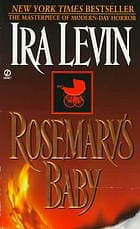
- Rosemary's Baby
Ira Levin
4.0 (112k) average on GoodreadsThrillerAnother classic by Levin, featuring a female protagonist isolated and gaslit in a seemingly perfect, sinister environment.
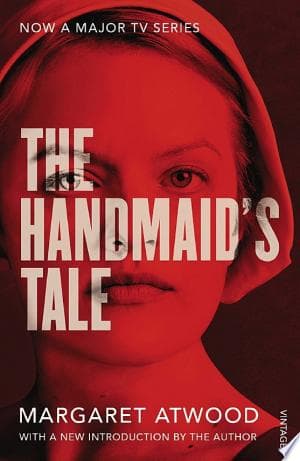
- The Handmaid's Tale
Margaret Atwood
4.1 (1.5M) average on GoodreadsFantasyExplores themes of female subjugation, loss of identity, and patriarchal control in a dystopian setting.
- Angels & Demons
Dan Brown
3.9 (2.7M) average on GoodreadsThrillerA Harvard symbologist races through Rome's ancient sites, deciphering cryptic clues to unmask the Illuminati and stop a vengeful plot to destroy the Vatican with a stolen antimatter weapon.
- Gone Girl
Gillian Flynn
4.1 (2.3M) average on GoodreadsThrillerA wife's sudden disappearance on her fifth anniversary reveals a web of lies and psychological warfare, exposing the secrets within a seemingly perfect marriage.
- The Girl on the Train
Paula Hawkins
3.9 (2.1M) average on GoodreadsThrillerA woman’s fascination with a seemingly perfect couple she watches from her daily train commute leads her into a dark investigation when she witnesses something that shatters their idyllic image.
- The Da Vinci Code
Dan Brown
3.9 (1.9M) average on GoodreadsThrillerA symbologist and a cryptologist race through European landmarks, deciphering ancient codes and uncovering a conspiracy that could rewrite the foundations of Christianity.




Enjoyed the summary?
A summary gives you the shape of the book. The book itself has the detail, the examples and the voice.
Find The Stepford Wives on AmazonAs an Amazon Associate, BookBrief earns from qualifying purchases. How we're funded