

Synopsis
Covers the whole plot, including the ending.
- Difficulty
- Medium
- Pacing
- Moderate
- Mood
- Atmospheric, Suspenseful, Dark, Ominous, Dreamlike
- Read it if
- You enjoy political thrillers set in totalitarian states, psychological mysteries, and narratives that blend dreamlike sequences with stark reality.
- Skip it if
- You prefer straightforward whodunits with clear-cut resolutions and explicit explanations for all events.
The Successor Plot Summary
Covers the whole plot, including the ending.
The Dawn Discovery
On the morning of December 14th, the Designated Successor, the heir to the Leader of Albania, is found dead in his bedroom. The official announcement quickly calls it a suicide. However, the details are mysterious: his body lies on a rug, not in his bed, and the pistol is in his right hand, though he was left-handed. The news shakes the totalitarian regime's upper levels, as the Party works to control the story. The Leader is deeply affected, and a quiet investigation begins, led by the Chief Investigator, but its true goal seems to be to confirm the suicide verdict rather than find the truth.
The Autopsy and the Official Narrative
A quick, secret autopsy is done, and the Party immediately controls the results. Dr. Litoz, a respected pathologist, examines the body, but his findings are heavily influenced by the political need to declare suicide. Details emerge about the Successor's personal life, including his recent marriage to the beautiful Ana K. and his perceived sadness. The Party's official line, reinforced by state media, portrays the Successor as a troubled individual who gave in to his own problems. Yet, whispers and doubts persist among the public and Party elite, fueled by the unusual circumstances and the regime's history of political purges.
Ana K. and the Successor's Inner Circle
Ana K., the Successor's young widow, becomes a focus of scrutiny and suspicion. Her background, her seemingly sudden marriage to the Successor, and her quiet manner raise questions. The Leader's daughter, a close friend of Ana, is especially upset and doubts the official story. The Successor's aide, loyal but nervous, is also questioned, offering glimpses into the Successor's last days and his state of mind. These individuals, along with members of the Successor's security detail, give conflicting accounts, further clouding the death and hinting at deeper conspiracies within the Party.
The Architect's Testimony and the House of Horrors
The architect who designed the Successor's elaborate, fortress-like residence is questioned. He describes the meticulous, almost paranoid, specifications for the house's construction, including soundproofing, reinforced walls, and secret passages. He reveals that the Successor himself was deeply involved in these designs, creating a home that felt more like a prison or a tomb. The architect's testimony unintentionally paints a picture of a man under immense pressure, possibly fearing for his life or withdrawing into his own world. The house itself becomes a character, a silent witness to the tragedy, embodying the regime's claustrophobic atmosphere.
The Chief Investigator's Covert Inquiry
While publicly supporting the suicide verdict, the Chief Investigator, a seasoned operative, conducts a separate, more discreet investigation. He re-examines evidence, interviews witnesses again, and looks into the psychological profiles of those involved. He is particularly interested in the inconsistencies around the pistol and the Successor's left-handedness. His methods are subtle, relying on observation, inference, and an understanding of the Party's power dynamics. He senses a deeper truth hidden beneath the official statements and political maneuvering, suggesting a power struggle or a planned assassination rather than a simple act of self-destruction.
The Leader's Obsession and the Dream World
The Leader, a powerful and isolated figure, becomes increasingly obsessed with the Successor's death. He often summons the Chief Investigator, asking for updates and offering his own theories. His dreams become vivid and disturbing, filled with symbols of blood, betrayal, and the Successor's presence. These dreams begin to blend with his waking reality, making it hard for him to tell fact from his own anxieties. His paranoia deepens, extending to those around him, as he deals with the implications of the Successor's death for his legacy and the stability of his regime. The Leader's internal struggle reflects the broader psychological impact of the event on the nation.
The Foreign Press and International Scrutiny
News of the Successor's death quickly reaches the international press, which, unlike the controlled domestic media, openly questions the official suicide story. Foreign journalists and intelligence agencies speculate about a political assassination, a power struggle within the Party, or even the Leader's direct involvement. This external scrutiny puts great pressure on the regime, forcing it to maintain stability while dealing with potential fallout. The international skepticism further fuels internal doubts and whispers, making it harder for the Party to control the narrative and suppress the truth.
The Unveiling of the Conspiracy's Scope
Through his efforts, the Chief Investigator begins to piece together information pointing to a sophisticated plot. He learns of secret meetings, coded communications, and shifts in power that happened shortly before the Successor's death. He discovers that the Successor had grown increasingly unhappy with the regime and might have been seen as a threat by certain Party factions. The investigation suggests the 'suicide' was likely a carefully planned murder, made to look like self-harm, involving multiple high-ranking officials. The Chief Investigator realizes the great danger he is in, as exposing the truth could destabilize the state.
Ana K.'s Revelation and the Leader's Confession
Ana K., under renewed pressure, finally provides a cryptic clue or a piece of information that, while not explicitly stating murder, strongly implies foul play and the involvement of powerful figures. Her revelation, combined with the Chief Investigator's findings, pushes the Leader to a breaking point. In a moment of vulnerability or calculated manipulation, the Leader confides in the Chief Investigator, not directly confessing to the murder, but revealing his deep anxieties about the Successor, his perceived disloyalty, and how far he would go to protect his regime. His 'confession' is less about guilt and more about the brutal logic of power in a totalitarian state, suggesting his awareness, if not direct involvement, in the plot.
The Final Verdict and Lingering Doubts
Despite the evidence and the Chief Investigator's private conclusions, the official verdict of suicide is ultimately upheld and reinforced by the Party. The regime, through its control over information and its ability to suppress dissent, successfully buries the truth. The Chief Investigator, understanding the futility and danger of challenging the state, accepts this outcome, though the truth bothers him. The book ends with the lingering ambiguity of the Successor's death, leaving the reader to consider the nature of power, truth, and justice in a totalitarian society where reality is constantly manufactured.
Principal Figures
The Designated Successor
Central Figure (posthumous)
The enigmatic heir to the Leader, whose mysterious death drives the narrative.
The Successor is a complex and ultimately tragic figure, known for his intelligence, cultural refinement, and a melancholic disposition. He is portrayed as increasingly disillusioned with the rigid ideology of the regime, perhaps yearning for something more authentic. His marriage to Ana K. is seen as both a personal choice and a political maneuver. While initially groomed for power, his independent thoughts and potential reforms may have made him a threat to the established order. His death is the catalyst for the entire story, and his true character is revealed through the conflicting testimonies and investigations.
Relationships: The Leader (Adoptive father figure and political mentor, later a potential antagonist.); Ana K. (Wife, whose role in his life and death is ambiguous and central to the mystery.); Chief Investigator (The subject of his posthumous investigation.)
The Leader
Antagonist/Driving Force
The powerful, paranoid, and aging dictator of Albania, obsessed with control and his legacy.
The Leader is the absolute ruler of Albania, a figure of immense power and pervasive paranoia. He is a master manipulator, capable of both paternalistic charm and ruthless brutality. His obsession with the Successor's death stems not from grief, but from a profound fear of losing control and a desire to maintain the meticulously constructed facade of his regime. He is a man haunted by his past and driven by the need to secure his legacy, even if it means sacrificing those closest to him. His internal struggle and vivid dreams reveal the psychological toll of absolute power.
Relationships: The Designated Successor (Adoptive son and political heir, whose death he both mourns and potentially orchestrated.); Chief Investigator (His trusted, yet subtly manipulated, enforcer and confidante.); Ana K. (Views her with suspicion and as a potential threat to the official narrative.)
Chief Investigator
Protagonist
A shrewd and pragmatic investigator tasked with uncovering the truth behind the Successor's death.
The Chief Investigator is a seasoned and intelligent operative, loyal to the state but possessing a keen sense of justice and an analytical mind. He navigates the treacherous political landscape with caution, understanding the unspoken rules of the regime. While officially tasked with confirming the suicide, he secretly pursues his own, more thorough investigation, driven by an instinct that something is amiss. He is a master of inference and observation, piecing together clues from fragmented testimonies and the oppressive atmosphere itself. He represents the glimmer of truth-seeking within a system built on lies.
Relationships: The Leader (Subordinate, but subtly challenges the Leader's narrative through his investigation.); The Designated Successor (His posthumous subject of inquiry.); Ana K. (Key witness he interrogates to uncover the truth.)
Ana K.
Supporting
The beautiful and enigmatic widow of the Successor, whose past and present are shrouded in mystery.
Ana K. is a captivating and elusive figure, whose sudden marriage to the Successor and subsequent widowhood place her at the center of the political storm. She possesses an air of detachment and quiet strength, making it difficult to discern her true feelings or knowledge. Her past is hinted at as being somewhat unconventional, adding to her mystique. She is a pawn in the larger political game, yet her subtle revelations and enigmatic presence provide crucial, albeit ambiguous, insights into the Successor's final days and the machinations of the regime. Her beauty and inscrutability make her a fascinating and unsettling character.
Relationships: The Designated Successor (Wife, whose relationship and knowledge of his death are central to the mystery.); The Leader's Daughter (Friend, but with a growing distance due to the circumstances.); Chief Investigator (Key witness, whose testimony she carefully controls.)
The Leader's Daughter
Supporting
A close friend of Ana K. and the Successor, who harbors deep suspicions about the official story.
The Leader's Daughter is a more empathetic and less cynical character than many within the Party elite. She was genuinely fond of the Successor and Ana K., and her personal grief fuels her skepticism about the official suicide verdict. She represents a voice of doubt and humanity within the rigid system, often questioning her father's motives and the Party's pronouncements. Her observations and emotional reactions provide a contrasting perspective to the detached pragmatism of the Chief Investigator and the cold calculations of the Leader. She is a witness to the human cost of political intrigue.
Relationships: Ana K. (Close friend, though their bond is strained by the tragedy.); The Designated Successor (Friend, whose death she finds deeply unsettling.); The Leader (Daughter, but increasingly distrustful of his actions and motives.)
Dr. Litoz
Supporting/Mentioned
The pathologist forced to conduct the autopsy under political pressure.
Dr. Litoz is a skilled pathologist, but his professional integrity is compromised by the demands of the state. He is tasked with performing the Successor's autopsy, but his findings are heavily influenced, if not dictated, by the Party's need to declare suicide. He represents the suppression of scientific truth and the pervasive control of the regime over all aspects of life, even death. His actions highlight the ethical dilemmas faced by professionals in a totalitarian state, where truth is secondary to political expediency.
The Architect
Supporting
The designer of the Successor's house, whose testimony reveals the Successor's paranoia.
The Architect is a meticulous professional who designed the Successor's elaborate and highly fortified residence. His testimony provides crucial details about the house's unusual features, such as its soundproofing and hidden rooms, which inadvertently paint a picture of the Successor's increasingly isolated and perhaps fearful existence. He is an unwitting witness to the psychological state of the Successor, and his descriptions of the house contribute significantly to the oppressive atmosphere of the narrative, making the building itself feel like a character in the mystery.
Relationships: The Designated Successor (Client, for whom he built a peculiar and symbolic residence.)
The Successor's Aide
Supporting
A loyal but nervous assistant who provides insight into the Successor's final days.
The Successor's Aide is a relatively minor character, but his testimony offers valuable glimpses into the Successor's routine, his mood, and the events leading up to his death. He is a loyal servant, somewhat intimidated by the power structures around him, and his nervousness during interrogation suggests a fear of saying the wrong thing. His observations, though perhaps incomplete or filtered by his own anxieties, contribute to the fragmented picture of the Successor's life and the ongoing mystery.
Relationships: The Designated Successor (Subordinate and assistant.)
Themes & Insights
The Nature of Truth and Lies in a Totalitarian State
This theme is central to the novel, exploring how truth is not an objective reality but a state construct. The regime immediately declares the Successor's death a suicide, despite inconsistencies. The Chief Investigator's private search for truth runs parallel to the public fabrication of it. The novel shows how official narratives are enforced through propaganda, fear, and suppressed voices, making it almost impossible for genuine truth to emerge. The ambiguity at the end reinforces the idea that in such a system, the 'official' truth often overrides objective reality.
“In this country, the truth was often the first casualty, especially when the dead were powerful.”
Power, Paranoia, and Control
The pervasive paranoia and the Leader's absolute control are key elements. The Leader's obsession with the Successor's death, his disturbing dreams, and his constant need to monitor everyone around him show the psychological toll of absolute power. The design of the Successor's house, with its fortress-like qualities and secret passages, symbolizes the fear and lack of privacy in the regime. The novel shows how power corrupts, leading to a constant struggle to maintain control, even at the cost of human lives and moral integrity. The investigation itself is a tool of control, designed to manage perception rather than uncover facts.
“Power was a poison that seeped into every corner, distorting vision, twisting reality.”
The Individual Versus the State
The novel pits the individual's search for truth and autonomy against the state's power. The Chief Investigator, despite his loyalty, embodies this struggle as he subtly challenges the official narrative. The Successor himself, through his growing unhappiness and perhaps his desire for change, represents an individual chafing under the state's rigid ideology. Ultimately, the novel suggests the state's overwhelming power to crush individual agency and dictate reality, leaving characters like the Chief Investigator with only a private, unacknowledged truth. Ana K. also embodies this, as her individual story is subsumed by the political narrative.
“In the end, the state was a monster that devoured its own, leaving only the official version of events.”
The Blurring of Dream and Reality
Kadare blends dream sequences and the Leader's vivid hallucinations with the unfolding 'reality' of the investigation. The Leader's recurring nightmares and waking visions of blood and betrayal reflect his internal turmoil and the psychological pressure of the regime. These dreamlike elements disorient the reader, mirroring the characters' own confusion and their world's manufactured reality. They suggest that in a totalitarian state, the lines between what is real and what is imagined, what is fact and what is propaganda, become dangerously fluid, further obscuring the true nature of events.
“The border between what was real and what was merely dreamed had long since dissolved in this country.”
Legacy and Succession
The entire premise revolves around the death of the Designated Successor, highlighting the theme of legacy in a totalitarian system. The Leader is obsessed with his own legacy and the continuation of his regime, seeing the Successor as both an extension of himself and a potential threat. The investigation into the death is not just about a crime, but about securing the future of the state and the Leader's historical narrative. The fragility of succession and the ruthlessness needed to maintain power are starkly portrayed, revealing how even heirs can be sacrificed for the sake of an enduring, unchallenged authority.
“A successor was not merely an heir; he was a mirror, and sometimes a rival, to the one who had chosen him.”
Plot Devices & Literary Techniques
The Unreliable Narrative
The story is told through multiple perspectives, none entirely trustworthy, reflecting the regime's manipulation of truth.
The novel employs an unreliable narrative, where the reader is presented with conflicting accounts, official pronouncements, and whispered rumors, making it difficult to discern the objective truth. The state's immediate declaration of suicide is challenged by the Chief Investigator's observations and the Leader's own ambiguous 'confessions' and dreams. This device mirrors the oppressive reality of a totalitarian state where official narratives are constantly manufactured and truth is subjective, forcing the reader to actively interpret and question every piece of information, much like the characters within the story.
Symbolic Setting: The Successor's House
The elaborate, fortress-like residence of the Successor serves as a metaphor for the oppressive state and the Successor's isolation.
The Successor's house is not just a location but a powerful symbol. Its meticulous design, with its soundproofed walls, hidden passages, and reinforced structure, reflects the paranoia of the regime and the Successor's own psychological state. It functions as a prison, a tomb, and a silent witness to the tragedy. The house embodies the claustrophobic and controlled environment in which the characters live, suggesting that even the most powerful individuals are trapped within the system. Its architectural details provide clues about the Successor's fears and the nature of the power dynamics at play.
Dream Sequences and Hallucinations
The Leader's vivid dreams and waking visions blur the lines of reality, reflecting his paranoia and potentially revealing subconscious truths.
The inclusion of detailed dream sequences and the Leader's hallucinations serves to disorient both the characters and the reader. These surreal moments, filled with symbolic imagery of blood, betrayal, and the Successor's ghost, reflect the Leader's deep-seated anxieties and guilt, hinting at truths he cannot consciously acknowledge. This device blurs the boundary between the internal psychological landscape and external reality, emphasizing how the oppressive political climate warps perception and makes it difficult to distinguish between objective fact and subjective experience. They are a window into the subconscious mind of the dictator.
The Red Herring of Suicide
The initial official verdict of suicide is a deliberate misdirection designed to mask a more sinister truth.
From the outset, the 'suicide' of the Successor is presented as the official truth, yet the narrative immediately introduces inconsistencies and doubts (e.g., the left-handed Successor holding the pistol in his right hand). This serves as a classic red herring, drawing the reader's attention to a seemingly simple explanation while the true, more complex and sinister plot unfolds beneath the surface. This device highlights the regime's control over information and its ability to construct a false reality, forcing the Chief Investigator and the reader to look beyond the obvious for the real story, which is likely murder.
The Successor Quotes
“The greatest enemy of truth is very often not the lie—deliberate, contrived, and dishonest—but the myth—persistent, persuasive, and unrealistic.”
“There are times when the fate of an entire nation seems to hang on the precise, almost surgical, placement of a single word.”
“Every secret, no matter how carefully guarded, carries within it the seed of its own betrayal.”
“In a land where even the air is thick with suspicion, every gesture, every silence, becomes a message.”
“The past, like a shadow, follows you, sometimes stretching long and distorted, sometimes shrinking to a dark spot beneath your feet, but always there.”
“He lived in a world where reality was a constantly shifting landscape, sculpted by decrees and whispered interpretations.”
“Power is not just the ability to command, but also the ability to define what is real and what is not.”
“Silence, in that world, was not merely the absence of sound, but often a form of communication, a coded message, a dangerous agreement.”
“The weight of unspoken words can be heavier than any spoken decree.”
“To be a successor in such a system was not merely to inherit a position, but to inherit a labyrinth of secrets, suspicions, and inevitable doom.”
“The greatest art of a dictator is to make people believe that they are free, even as their chains grow tighter.”
“He felt like an archaeologist digging through layers of official lies to uncover the fragile bones of truth.”
“In a country where history was constantly being rewritten, the only stable thing was its instability.”
“The past was not merely a collection of events, but a living, breathing entity, capable of striking back.”
“The very act of seeking the truth became an act of rebellion, a dangerous defiance against the established order.”
Quiz
10 questions on the plot and the characters. Each answer comes with a short explanation.
Question 1
On what date was the Designated Successor found dead?
- November 14
- December 14
- January 14
- October 14
Show answer
B. December 14 The book explicitly states the Designated Successor was found dead at dawn on December 14.
Question 2
What is the primary question the novel seeks to answer regarding the Successor's death?
- Who will be the next Designated Successor?
- Was he killed by a foreign power?
- Did he kill himself or was he murdered?
- What was his political agenda?
Show answer
C. Did he kill himself or was he murdered? The central mystery driving the plot is whether the Successor's death was suicide or murder.
Question 3
What is the official stance of the state regarding the Designated Successor's death?
- He was assassinated by rivals.
- He died by his own hand.
- His death was an accident.
- The cause of death is unknown.
Show answer
B. He died by his own hand. The novel states that 'the state insists that the future leader died by his own hand'.
Question 4
How does the rest of the world react to the state's explanation of the Successor's death?
- They immediately accept it.
- They begin to have doubts.
- They declare war on the state.
- They offer condolences without questioning.
Show answer
B. They begin to have doubts. The synopsis clearly states, 'the rest of the world begins to have doubts' about the official explanation.
Question 5
What kind of world does Kadare draw the reader into, as described in the synopsis?
- A utopian society governed by strict logic.
- A nightmarish world controlled by rules no one understands.
- A bureaucratic maze where every rule is transparent.
- A historical recreation of a specific political regime.
Show answer
B. A nightmarish world controlled by rules no one understands. The text describes the world as 'a nightmarish world controlled by rules no one understands'.
Question 6
Which literary technique does Kadare use to blur the lines of reality in the novel?
- Extensive use of historical footnotes.
- Blending dream and reality.
- Employing multiple unreliable narrators.
- Strictly adhering to a linear, factual narrative.
Show answer
B. Blending dream and reality. The synopsis mentions Kadare 'blending dream and reality to produce a mystery and a thriller'.
Question 7
What genre is 'The Successor' primarily identified as in the provided description?
- Historical Romance
- Science Fiction
- Psychological Thriller
- Fantasy Epic
Show answer
C. Psychological Thriller The description explicitly calls it 'Ismail Kadare's masterful psychological thriller'.
Question 8
What is the broader implication of 'rules no one understands' in the context of the story's setting?
- It suggests an efficient, yet complex, bureaucratic system.
- It highlights the transparency and fairness of the state.
- It implies an oppressive, arbitrary, and potentially totalitarian regime.
- It refers to the protagonist's personal confusion, not the state.
Show answer
C. It implies an oppressive, arbitrary, and potentially totalitarian regime. In the context of a 'nightmarish world' and a state insisting on a particular narrative, 'rules no one understands' strongly implies an arbitrary and oppressive political system, characteristic of totalitarian states.
Question 9
How does the novel build tension and escalate the mystery surrounding the Successor's death?
- By introducing clear evidence and a straightforward investigation.
- Through detailed forensic analysis and expert testimony.
- As the tension builds and rumours escalate.
- By focusing solely on the internal thoughts of the deceased.
Show answer
C. As the tension builds and rumours escalate. The synopsis states, 'As the tension builds and rumours escalate, Kadare draws us into a nightmarish world'.
Question 10
The description states the mystery 'seduces and surprises up to the last page'. What does this imply about the resolution of the central question?
- The answer is revealed early in the book.
- The resolution is ambiguous or unexpected.
- The book provides a clear, universally accepted answer.
- The mystery is never addressed again after the initial setup.
Show answer
B. The resolution is ambiguous or unexpected. A mystery that 'seduces and surprises up to the last page' suggests that the truth about the Successor's death is either complex, ambiguous, or revealed in an unexpected way, maintaining suspense until the very end rather than offering a straightforward resolution.
The Successor FAQ
What is the central mystery driving the plot of 'The Successor'?
The central mystery revolves around the death of the Designated Successor, found dead in his bedroom at dawn on December 14. The state immediately declares it a suicide, but the circumstances and the political climate strongly suggest the possibility of murder, leaving the reader to question the true cause.
Who is the 'Designated Successor' and what is his role in the story?
The Designated Successor is the chosen heir to the Leader of a totalitarian regime, implying immense political power and future control. His sudden and ambiguous death is the catalyst for the entire narrative, triggering investigations, rumors, and psychological turmoil within the closed society.
Describe the political system and atmosphere in which the story is set.
The story is set within a highly controlled, totalitarian state ruled by a powerful Leader, where individual freedoms are suppressed, and the truth is often manipulated by the authorities. This oppressive atmosphere fosters paranoia, fear, and a pervasive sense of surveillance, making objective inquiry nearly impossible.
Who are some of the key characters involved in the investigation or aftermath of the Successor's death?
Key characters include the Leader, whose reaction and directives shape the official narrative; various state officials and investigators tasked with confirming the suicide; and the Successor's family and associates, whose testimonies and behaviors are scrutinized. The architect, tasked with designing the Successor's living quarters, also plays a significant role.
How does the novel explore the concept of truth in an authoritarian society?
The novel profoundly explores truth as a malleable construct, dictated by the state rather than objective reality. The official declaration of suicide, despite mounting contradictions and public doubt, exemplifies how truth is manufactured and enforced to maintain power, making genuine inquiry dangerous and futile.
What is the significance of the 'House of Sleep' or the Successor's residence?
The Successor's residence, often referred to as the 'House of Sleep,' is a meticulously designed and surveilled structure, meant to be a secure and controlled environment. Its intricate architecture and the constant watch within its walls symbolize the regime's pervasive control and contribute to the ambiguity surrounding the death, as it was supposed to be impenetrable.
Are there any symbolic objects or recurring motifs that add to the mystery?
The recurring motif of dreams and nightmares, often indistinguishable from reality, significantly blurs the lines of perception and truth. Additionally, the detailed descriptions of the Successor's room and its contents, including a specific clock, often carry symbolic weight, hinting at hidden meanings or overlooked clues.
How does the narrative structure contribute to the sense of uncertainty and paranoia?
Kadare employs a fragmented, non-linear narrative, often shifting perspectives and blending official reports with rumors, dreams, and internal monologues. This structure mirrors the disjointed reality of the totalitarian state, creating a pervasive sense of uncertainty and paranoia, as no single reliable viewpoint emerges.
What role does the Architect play in unraveling or complicating the mystery?
The Architect, responsible for designing the Successor's living quarters, becomes entangled in the investigation, his professional integrity and designs scrutinized for any flaws that might explain the death. His detailed knowledge of the house inadvertently highlights its security paradoxes, making both suicide and murder seem plausible yet impossible.
How does the novel depict the psychological impact of living under constant surveillance?
The novel vividly portrays the crushing psychological impact of constant surveillance through the characters' pervasive fear, self-censorship, and inability to trust anyone, even themselves. This environment fosters internal conflict and paranoia, blurring the lines between external threats and internal anxieties, profoundly affecting their perceptions of reality.
What is the psychological state of the Leader in the aftermath of the Successor's death?
The Leader's psychological state is depicted as complex and deeply unsettling, oscillating between a desire for control and a visible struggle with the implications of the death. He exhibits signs of paranoia and a need to project an unshakeable image, while privately grappling with the potential threat to his power and legacy.
How do the dreams and hallucinations experienced by characters contribute to the psychological depth?
The dreams and hallucinations serve as a crucial window into the characters' subconscious fears, anxieties, and unexpressed doubts, particularly regarding the Successor's death. They blur the line between objective reality and internal psychological states, mirroring the regime's manipulation of truth and reflecting the characters' fragmented mental landscapes.
Analyze the concept of 'collective unconscious' or shared paranoia among the populace.
The novel illustrates a palpable 'collective unconscious' of shared paranoia among the populace, where rumors and unspoken fears propagate rapidly, shaping a communal, albeit unofficial, understanding of events. This collective anxiety highlights the psychological toll of living in a society where official narratives are distrusted and dissent is dangerous.
Does the novel ultimately provide a definitive answer to whether the Successor committed suicide or was murdered?
The novel deliberately withholds a definitive answer to the central question, leaving the reader to grapple with the ambiguity. Instead of a clear resolution, it emphasizes the impossibility of discerning truth in a totalitarian regime, where facts are manufactured and the official narrative supersedes all evidence.
What is Kadare's broader commentary on totalitarianism through this specific mystery?
Kadare uses the Successor's death as a microcosm to critique the fundamental nature of totalitarianism, demonstrating how such regimes erode truth, manipulate reality, and dehumanize individuals. He highlights the pervasive fear, the futility of seeking justice, and the ultimate triumph of state-sanctioned lies over objective reality.
How does the blending of dream and reality serve the novel's themes?
The blending of dream and reality is central to the novel's themes, mirroring the blurred lines between truth and falsehood in a totalitarian state. It emphasizes the subjective and unreliable nature of perception, making it impossible for characters (and the reader) to distinguish between actual events, rumors, and psychological projections, thus reinforcing the pervasive uncertainty.
Is there a political allegory intended by Kadare in this work?
Yes, 'The Successor' functions as a powerful political allegory for life under the communist regime in Albania, from which Kadare himself hailed. The Leader is often seen as a thinly veiled representation of Enver Hoxha, and the Designated Successor's ambiguous death mirrors actual political purges and unexplained deaths within the Albanian leadership.
How does the ending of the novel resonate with its initial mystery?
The ending of the novel does not resolve the initial mystery but instead amplifies the sense of unresolved ambiguity and the enduring power of the state's narrative. It reinforces the idea that in such a regime, the 'truth' is what the authorities declare it to be, leaving the underlying questions perpetually unanswered and the psychological wounds unhealed.
About the author
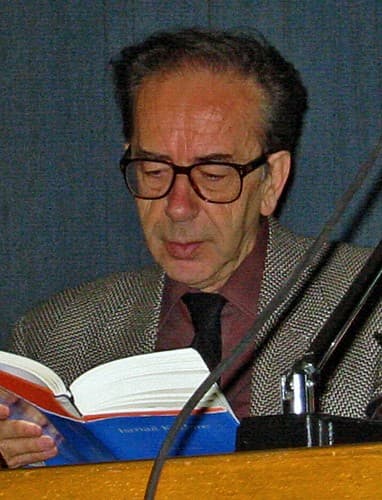
Ismail Kadare is an Albanian novelist, poet, essayist, screenwriter, and playwright. He is a leading international literary figure and intellectual. He focused on poetry until the publication of his first novel, The General of the Dead Army, which made him famous internationally.
Similar books
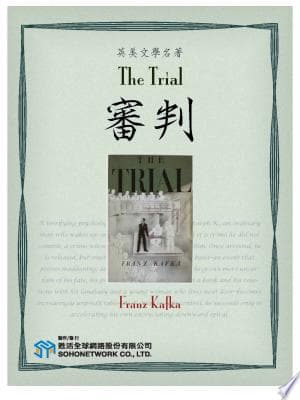
- The Trial
Franz Kafka
4.0 (235k) average on GoodreadsLiterary FictionExplores an individual's struggle within an incomprehensible, oppressive system and features a pervasive sense of dread and absurdity.
- 1984
George Orwell
4.2 (3.1M) average on GoodreadsPoliticsDepicts life under a totalitarian regime, where truth is manipulated, and individuals are constantly under surveillance.
- The Name of the Rose
Umberto Eco
4.1 (301k) average on GoodreadsHistorical FictionWhile both novels feature intricate investigations within closed systems and explore the manipulation of truth, Kadare's The Successor is more explicitly a political critique of totalitarianism, grounded in a specific historical context. Eco's work is more concerned with semiotics, philosophy, and the nature of interpretation within a medieval monastic setting, whereas Kadare directly targets the mechanisms of state control and propaganda.
- Darkness at Noon
Arthur Koestler
4.0 (26k) average on GoodreadsPoliticsKoestler's novel primarily focuses on the psychological torment and forced confessions of political prisoners during show trials, exploring the individual's struggle against the party line. The Successor, while touching on individual fates, offers a broader systemic critique, examining how an entire society is shaped by the production of lies, the Leader's paranoia, and the pervasive culture of fear that permeates all levels of the regime, from the initial 'Dawn Discovery' to 'The Final Verdict'.
- Nineteen Eighty-Four
George Orwell
4.2 (5.5M) average on GoodreadsFictionWinston Smith dreams of truth and rebellion in a world where Big Brother watches all, but he confronts the terrifying power of a regime that controls not just actions, but thoughts.
- The Frozen River
Ariel Lawhon
4.4 (600k) average on GoodreadsFictionIn 1789 Maine, a heroic midwife's diary helps her expose a murder and get justice in a town that wants to silence her.





Enjoyed the summary?
A summary gives you the shape of the book. The book itself has the detail, the examples and the voice.
Find The Successor on AmazonAs an Amazon Associate, BookBrief earns from qualifying purchases. How we're funded