

Synopsis
Covers the whole plot, including the ending.
- Difficulty
- Easy
- Pacing
- Moderate
- Mood
- Whimsical, Charming, Heartwarming, Magical, Hopeful
- Read it if
- You enjoy whimsical, magical realism stories with strong female friendships and charming small-town settings, and you like a touch of romance and self-discovery.
- Skip it if
- You prefer gritty realism or fast-paced thrillers, or you dislike magical elements in contemporary fiction.
The Sugar Queen Plot Summary
Covers the whole plot, including the ending.
The Closet Intruder
Josey Cirrini, a 27-year-old woman living with her overbearing mother, Della Cirrini, finds solace in a hidden closet filled with romance novels and an extensive stash of sugary treats. This closet is her sanctuary, a place where she can escape her mother's constant scrutiny and expectations. One evening, Josey discovers a stranger, Della Lee Baker, a waitress from a local diner, hiding in her closet, eating her candy. Della Lee is a feisty, no-nonsense woman who, despite being an intruder, seems to understand Josey's need for escape. Their initial encounter is tense, but Della Lee's unexpected presence forces Josey to confront her secretive life and the comfort she finds in isolation.
A Pact and a Purpose
Della Lee, after being discovered, doesn't leave. Instead, she moves into Josey's closet, claiming it's her new home. She establishes rules for Josey, including the stipulation that Josey must start eating her candy in public. This bizarre arrangement throws Josey's controlled life into disarray. Della Lee's presence is both disruptive and oddly comforting, as she starts to nudge Josey out of her shell. She encourages Josey to engage with the world outside her mother's house and her hidden closet, challenging Josey's long-held habits and fears, and hinting at a deeper purpose behind her sudden appearance.
The Bookstore and the Barber
Under Della Lee's influence, Josey starts to break free from her routine. She begins visiting the local bookstore, an activity her mother usually disapproves of. There, she meets Adam, the charming and enigmatic owner, who seems to see beyond Josey's shy exterior. She also encounters Chloe, a young woman who works at the bookstore. These new interactions are small but significant steps for Josey, who has long avoided social engagement. Della Lee continues to push her, even arranging for Josey to get her hair cut by a new barber, symbolizing Josey's slow but steady transformation and growing independence from her mother's control.
Unraveling the Past
As Josey's world expands, the mystery surrounding Della Lee deepens. Della Lee begins to reveal fragments of her past, hinting at a connection to Josey's family, specifically her deceased father. She speaks of events and people that only someone intimately familiar with the Cirrini family would know. These revelations begin to stir long-dormant questions in Josey about her father's life and the secrets her mother has kept. Della Lee's stories are often cryptic, delivered with a mix of wisdom and sass, but they slowly start to paint a different picture of Josey's family history than the one she has always known.
The Truth About Della Cirrini
Through Della Lee's stories and Josey's own courage, the truth about Della Cirrini, Josey's mother, begins to surface. Josey learns that her mother wasn't always the rigid, controlling woman she knows. Della Cirrini had her own dreams and a passionate nature that was stifled by societal expectations and personal tragedies. This understanding gives Josey a new perspective on her mother's behavior, showing that her strictness often stems from fear and a desire to protect Josey from similar disappointments. This revelation is painful but helps Josey to see her mother not just as an oppressor, but as a complex woman with her own history of struggle.
Adam's Embrace
Josey's relationship with Adam, the bookstore owner, blossoms. Their shared love for books and quiet understanding creates a safe space for Josey to be herself. Adam's gentle nature and genuine interest in Josey provide a stark contrast to her mother's demanding presence. Their connection is a source of strength and comfort for Josey as she navigates the increasingly strange events surrounding Della Lee and the truths about her family. Adam represents a future where Josey can be loved and accepted for who she is, free from the constraints of her past and her mother's expectations, and his affection empowers her growing self-confidence.
The Festival of Lights
The annual Festival of Lights in Josey's North Carolina town is a backdrop for further character development and magical occurrences. The festival, with its twinkling lights and festive atmosphere, draws Josey further into the community. It is a place where the lines between the ordinary and the extraordinary blur, reflecting the magical realism woven throughout the story. Josey attends with Adam, solidifying their growing romance. The festival also provides opportunities for Josey to interact with other townsfolk, including Chloe, and observe the subtle ways Della Lee continues to influence events, hinting at her otherworldly nature and her role in orchestrating Josey's transformation.
The Power of Stories
Throughout her journey, Josey comes to understand the power of stories—both the ones we tell ourselves and the ones others tell about us. Her love for romance novels, initially an escape, evolves into an appreciation for the narratives that shape human experience. Della Lee's cryptic tales and the revelations about her mother's past highlight how personal histories, whether concealed or revealed, influence the present. Josey realizes that by reclaiming her own story and understanding the narratives of those around her, she can rewrite her future. This realization is crucial to her growth, empowering her to embrace her own desires and forge her own path.
Della Lee's Departure
Once Josey has fully embraced her newfound independence, confronted her mother, and accepted Adam's love, Della Lee's mission appears to be complete. With her purpose fulfilled, Della Lee mysteriously disappears from Josey's closet as suddenly as she arrived. Her departure is bittersweet, marking the end of a strange but transformative chapter in Josey's life. While Josey misses her eccentric mentor, she understands that Della Lee's role was to guide her towards self-discovery and that she no longer needs her physical presence to thrive. Della Lee leaves behind a lasting impact, a changed Josey ready to live her own life.
A Sweet New Beginning
In the aftermath of Della Lee's departure, Josey is a transformed woman. She no longer hides her love for sweets or her true self. She stands up to her mother, asserting her independence and desires. Her relationship with Adam deepens, and they begin to build a future together, one filled with mutual respect and genuine affection. Josey embraces her unique qualities and finds joy in the simple pleasures of life, no longer confined by fear or the expectations of others. She has learned to savor life's sweetness openly, finding her own version of happiness and proving that even the most timid soul can bloom with a little magic and self-acceptance.
Principal Figures
Josey Cirrini
Protagonist
A shy, reclusive woman who finds solace in sweets and romance novels.
Josey is a 27-year-old woman trapped in a life dictated by her overbearing mother, Della Cirrini. She is quiet, socially awkward, and finds comfort in a secret stash of sugary treats and paperback romance novels in a hidden closet. Her life is uneventful and largely spent avoiding conflict. She yearns for independence but lacks the courage to pursue it, often using food as a coping mechanism for her anxieties and frustrations. Josey is kind-hearted and observant, but her self-esteem is low, stemming from years of her mother's critical nature.
Relationships: Della Cirrini (Overbearing mother, source of Josey's insecurity); Della Lee Baker (Mysterious mentor, catalyst for change); Adam (Love interest, supportive and understanding)
Della Lee Baker
Supporting/Fairy Godmother
A tough-talking, mysterious woman who helps Josey find her voice.
Della Lee is an enigmatic and feisty waitress who mysteriously appears in Josey's closet. She is bold, direct, and possesses a no-nonsense attitude, often speaking in riddles or offering blunt advice. She has an almost magical ability to understand Josey's deepest fears and desires. Della Lee acts as a catalyst for Josey's transformation, pushing her out of her comfort zone and forcing her to confront her mother and her own insecurities. She seems to have an otherworldly quality, hinting at a deeper purpose related to Josey's family history.
Relationships: Josey Cirrini (Mentee, subject of her guidance); Della Cirrini (Former acquaintance, holds secrets about her past)
Della Cirrini
Antagonist/Supporting
Josey's overbearing and controlling mother.
Della Cirrini is Josey's mother, a woman who meticulously controls every aspect of Josey's life. She is critical, judgmental, and obsessed with appearances, particularly Josey's weight and social standing. Her control stems from her own past disappointments and a deep-seated fear of Josey experiencing similar heartbreaks. While she appears as an antagonist, her actions are born from a misguided sense of protection and a desire for Josey to conform to her idea of a 'proper' Southern woman. She is complex, with her own history of suppressed desires and unfulfilled dreams.
Relationships: Josey Cirrini (Daughter, subject of her control); Della Lee Baker (Past acquaintance, connected by shared history)
Adam
Love Interest/Supporting
The kind and understanding owner of the local bookstore.
Adam is the gentle and observant owner of the local bookstore, a haven for Josey. He is quiet but perceptive, possessing a calm demeanor that puts Josey at ease. He sees beyond Josey's shyness and appreciates her genuine nature and love for books. Adam is patient, supportive, and provides Josey with a safe space to explore her budding independence and affections. He represents a healthy, understanding relationship, contrasting sharply with the controlling dynamic Josey shares with her mother. His presence in Josey's life is crucial for her emotional growth and self-acceptance.
Relationships: Josey Cirrini (Love interest, supportive partner)
Chloe
Supporting
A vibrant and free-spirited employee at the bookstore.
Chloe is a lively and outspoken young woman who works at Adam's bookstore. She is confident, unafraid to express herself, and possesses a refreshing honesty. Chloe represents the kind of independence and self-assurance that Josey initially lacks. She becomes a friendly face for Josey during her visits to the bookstore, offering a glimpse into a world of uninhibited self-expression. Her presence, though minor, encourages Josey to consider a life less constrained by societal expectations and her mother's judgments.
Relationships: Josey Cirrini (Acquaintance, friendly connection); Adam (Employer/employee)
Mr. Henderson
Mentioned
A local barber who helps Josey with a symbolic haircut.
Mr. Henderson is a local barber who Josey visits at Della Lee's insistence. His role is brief but symbolically significant. The haircut represents Josey's physical transformation and her breaking away from her mother's control over her appearance. He is portrayed as a kind and professional figure who treats Josey with respect, further contributing to her growing sense of self-worth and independence from her mother's scrutiny.
Relationships: Josey Cirrini (Client)
Themes & Insights
Self-Acceptance and Authenticity
The novel explores Josey's journey from hiding her true self and her desires to openly embracing them. Her secret candy closet symbolizes her hidden life and her reliance on external validation. Through Della Lee's unconventional guidance, Josey learns to love her quirks, her love for sweets, and her own unique identity. This theme is evident when Josey starts eating candy in public, a small act of rebellion that signifies her growing self-acceptance. Ultimately, she sheds the persona her mother imposed on her and lives authentically.
“Sometimes you just have to eat the cake.”
The Power of Story and Imagination
Stories, both read and lived, are central to the narrative. Josey's initial escape into romance novels highlights the power of imagination as a coping mechanism. Della Lee's cryptic tales and the unraveling of family secrets demonstrate how personal narratives shape identity and relationships. The magical realism itself suggests that life is a story we co-create, where belief can influence reality. Josey learns to rewrite her own story, moving from a passive character to an active protagonist in her life, guided by the narratives she chooses to believe in and create.
“The right book at the right time can change a life.”
Breaking Free from Control and Expectations
Josey's life is heavily controlled by her mother, Della Cirrini, who imposes strict expectations on her appearance, behavior, and social life. The novel portrays the suffocating nature of this control and Josey's struggle to break free. Della Lee acts as the catalyst, pushing Josey to defy her mother's rules and forge her own path. This theme is seen in Josey's decision to get a haircut, pursue her relationship with Adam, and ultimately assert her independence, showing that true freedom comes from within and requires challenging external pressures.
“Some things just aren’t for other people to decide.”
Magical Realism and Everyday Enchantment
The novel infuses ordinary life with subtle magical elements, creating a sense of wonder and possibility. Della Lee's mysterious appearance and her seemingly supernatural ability to know things, combined with the way food and emotions intertwine, show magical realism. The world of "The Sugar Queen" suggests that magic isn't just in grand gestures, but in the small, unexpected moments of life—a perfectly baked cake, a comforting book, or an inexplicable connection. This theme encourages readers to look for the enchantment in the mundane and to believe in the unforeseen possibilities that life offers.
“Sometimes you have to believe in the impossible to make it possible.”
Plot Devices & Literary Techniques
The Hidden Candy Closet
A literal and metaphorical sanctuary for Josey's hidden desires.
Josey's secret closet, filled with sweets and romance novels, serves as her physical and emotional refuge. It is a symbol of her hidden self, her escapism, and the parts of her life she keeps secret from her controlling mother. The closet's invasion by Della Lee forces Josey to confront her secretive nature and eventually dismantle the walls she has built around herself. It also acts as the primary setting for the initial, transformative interactions between Josey and Della Lee, making it a pivotal location for the story's catalyst.
Magical Realism
The blending of realistic settings with fantastical elements.
Magical realism is a pervasive plot device, subtly weaving supernatural elements into the otherwise ordinary world of Josey's North Carolina town. Della Lee Baker's inexplicable appearance, her uncanny knowledge of Josey's life, and her almost fairy godmother-like influence are central examples. This device allows for the exploration of deeper emotional truths and character transformations without requiring a full fantasy world, making the internal changes Josey undergoes feel both profound and subtly enchanted. It highlights the idea that magic can exist in everyday life and relationships.
Food as Metaphor
Sweets and food symbolize comfort, control, and self-expression.
Food, particularly sweets, functions as a powerful metaphor throughout the novel. For Josey, candy is both a source of comfort and a symbol of her secret defiance against her mother's control over her weight and diet. The act of eating candy in public, instigated by Della Lee, becomes an act of self-acceptance and rebellion. Different foods also represent emotional states or relationships, such as Della Cirrini's elaborate, often joyless, cooking contrasting with the simple, comforting sweets Josey craves. It highlights the emotional connection to food and its role in identity.
The Mentor Figure (Della Lee Baker)
A mysterious guide who facilitates the protagonist's growth.
Della Lee Baker embodies the mentor archetype, a common plot device. She appears seemingly out of nowhere, possesses wisdom and insight beyond the ordinary, and actively guides Josey through her journey of self-discovery. Her unconventional methods and cryptic advice push Josey to confront her fears and break free from her mother's control. Like a fairy godmother, she helps Josey unlock her potential and then disappears once her purpose is fulfilled, leaving Josey to navigate her new life independently. Her role is crucial in initiating and sustaining Josey's character arc.
The Sugar Queen Quotes
“The hardest part of any journey is taking that first step.”
“Sometimes the things you’re afraid of are the things that set you free.”
“Books are not just paper and ink. They are worlds, and within them, anything is possible.”
“Everyone has a secret garden, a place where they keep their hopes and dreams.”
“The best kind of magic is the kind you make yourself.”
“You can’t find happiness if you’re always hiding.”
“Sometimes the truth is sweeter than any lie, even if it hurts a little at first.”
“Life is like a box of chocolates, you never know what you're gonna get. But in this case, it's a box of magic.”
“A little bit of sugar makes everything better, but too much will make you sick.”
“It’s never too late to become the person you were meant to be.”
“Love isn't always grand gestures; sometimes it's just being there.”
“The world is full of people who are just waiting for you to notice their magic.”
“You don't have to be perfect to be loved. You just have to be yourself.”
“Sometimes the most extraordinary things happen in the most ordinary places.”
“Every secret has a shelf life.”
Quiz
10 questions on the plot and the characters. Each answer comes with a short explanation.
Question 1
What is Josey's favorite season?
- Spring
- Summer
- Autumn
- Winter
Show answer
D. Winter The book explicitly states that winter in her North Carolina hometown is Josey's favorite season.
Question 2
Where does Josey hide her sugary treats and paperback romances?
- Under her bed
- In a secret pantry
- In her hidden closet
- At a friend's house
Show answer
C. In her hidden closet Josey escapes to her hidden closet each night to enjoy her stockpile of sweets and romances.
Question 3
Who does Josey discover harboring in her hidden closet?
- Her mother
- A stray cat
- Local waitress Della Lee Baker
- Her childhood best friend
Show answer
C. Local waitress Della Lee Baker The synopsis clearly states that Josey finds local waitress Della Lee Baker in her closet.
Question 4
What is Josey's primary coping mechanism for her uneventful life?
- Exercising regularly
- Reading and consuming sweets in private
- Socializing with friends
- Traveling to new places
Show answer
B. Reading and consuming sweets in private Josey's one consolation is her stockpile of sugary treats and paperback romances she escapes to each night, indicating this as her primary coping mechanism.
Question 5
How old is Josey at the beginning of the story?
- 21
- 27
- 30
- 35
Show answer
B. 27 The synopsis explicitly states, 'Twenty-seven-year-old Josey is sure of three things.'
Question 6
In what type of town does Josey live?
- A bustling metropolis in New York
- A small coastal town in Florida
- A North Carolina hometown
- A rural village in California
Show answer
C. A North Carolina hometown The story is set in Josey's 'North Carolina hometown'.
Question 7
Which of the following best describes Della Lee Baker's initial relationship with Josey, as perceived by Josey?
- A close confidante
- A romantic interest
- One part nemesis
- A long-lost sister
Show answer
C. One part nemesis The synopsis describes Della Lee Baker as 'one part nemesis' to Josey.
Question 8
What does Josey consider herself to be, despite living in her mother's house?
- A successful businesswoman
- A sorry excuse for a Southern belle
- An adventurous traveler
- A renowned chef
Show answer
B. A sorry excuse for a Southern belle Josey is sure she's 'a sorry excuse for a Southern belle', indicating her self-perception.
Question 9
The description of Della Lee Baker as 'two parts fairy godmother' suggests what about her role in the story?
- She will be a magical antagonist to Josey.
- She will provide guidance and help Josey transform her life.
- She is literally a magical being with supernatural powers.
- She will mainly cause trouble and chaos for Josey.
Show answer
B. She will provide guidance and help Josey transform her life. The 'fairy godmother' archetype typically represents a benevolent figure who helps a protagonist overcome obstacles and achieve their desires, suggesting Della Lee will guide Josey.
Question 10
Based on the synopsis, what is a central theme likely to be explored in 'The Sugar Queen'?
- The challenges of space exploration and alien encounters.
- The importance of historical preservation in Southern towns.
- Escapism, self-discovery, and unexpected connections leading to personal growth.
- The cutthroat world of competitive baking contests.
Show answer
C. Escapism, self-discovery, and unexpected connections leading to personal growth. Josey's hidden world of sweets and romances (escapism), her uneventful life, and the arrival of Della Lee (unexpected connection) who is described as a 'fairy godmother' all point to themes of self-discovery and growth.
The Sugar Queen FAQ
What is the central premise of 'The Sugar Queen'?
The Sugar Queen follows Josey, a shy 27-year-old living an uneventful life with her overbearing mother in North Carolina. Her only solace is a secret closet filled with sweets and romance novels, until she discovers it's being used by Della Lee Baker, a local waitress who becomes an unexpected catalyst for change in Josey's life.
Who is Della Lee Baker and what is her role in Josey's life?
Della Lee Baker is a tough, mysterious waitress who is found hiding in Josey's secret closet. She acts as a transformative figure, challenging Josey's complacency, pushing her to confront her mother, and ultimately guiding her towards independence and self-discovery, often appearing with an almost magical ability to know what Josey needs.
What kind of relationship does Josey have with her mother, Caroline?
Josey has a suffocating and codependent relationship with her mother, Caroline. Caroline is overprotective, controlling, and manipulative, constantly undermining Josey's confidence and keeping her infantilized, which prevents Josey from living an independent life or forming meaningful connections outside their home.
What role do sweets and food play in the novel?
Sweets and food are central to the novel, symbolizing comfort, escape, and repressed desires for Josey. Her secret stash of sugary treats represents her hidden self and her longing for pleasure, while the magical recipes and ingredients introduced by Della Lee signify the possibility of transformation and embracing life's sweetness.
Is 'The Sugar Queen' a purely realistic novel, or does it contain fantastical elements?
The Sugar Queen definitely contains fantastical elements, characteristic of Sarah Addison Allen's style. While grounded in a realistic setting, it features magical realism such as Della Lee's seemingly prescient knowledge, the transformative power of certain foods, and the way wishes manifest, blurring the lines between reality and enchantment.
What is the significance of the specific types of candy Della Lee gives Josey, like the licorice or the conversation hearts?
The specific candies Della Lee gives Josey often carry symbolic weight, acting as prompts or catalysts. For instance, the licorice might represent facing bitter truths, while the conversation hearts could symbolize the need for open communication and expressing one's desires, subtly guiding Josey's emotional journey.
Are there any subtle hints about Della Lee's true nature or backstory beyond her being a waitress?
Yes, Della Lee's true nature is hinted at through her mysterious appearances, her seemingly magical knowledge of Josey's thoughts and needs, and her ability to influence events. She possesses an otherworldly wisdom and a knack for appearing exactly when needed, suggesting she might be more than just a human waitress, perhaps a modern-day fairy godmother or spirit.
What is the importance of the hidden closet beyond being a place for sweets?
The hidden closet serves as a powerful metaphor for Josey's inner self and her repressed desires. It's a sanctuary where she escapes her mother's control and indulges in her true self, even if only through fantasy. Della Lee's intrusion into this space forces Josey to confront her hidden aspects and bring them into the light.
Are there any recurring motifs or symbols, besides food, that have deeper meanings?
Beyond food, the motif of 'hiding' is significant, seen in Josey's closet, her repressed feelings, and Della Lee's initial presence. The changing seasons, particularly winter and its transition to spring, also symbolize Josey's emotional thawing and personal growth, moving from a dormant, controlled state to one of blossoming independence.
How does Josey's relationship with her mother, Caroline, impact her self-esteem and decision-making?
Caroline's constant criticism and infantilization severely cripple Josey's self-esteem, making her believe she's incapable and unworthy. This leads to Josey being indecisive, overly anxious, and unable to assert herself, perpetuating her trapped existence within her mother's home and preventing her from pursuing her own desires.
What psychological journey does Josey undergo throughout the novel?
Josey undergoes a profound psychological journey from extreme passivity and dependence to self-assertion and independence. Initially suffering from learned helplessness and low self-worth, she gradually finds her voice, confronts her fears, and breaks free from her mother's control, ultimately embracing her authentic self and pursuing her own happiness.
How does Della Lee challenge Josey's psychological defenses and coping mechanisms?
Della Lee directly challenges Josey's reliance on escapism (sweets, romance novels) and her avoidance of conflict. She forces Josey out of her comfort zone, pushes her to communicate assertively with her mother, and encourages her to face her fears head-on, effectively dismantling Josey's long-held psychological defenses.
What is the psychological significance of Josey's love for romance novels?
Josey's love for romance novels represents her yearning for love, adventure, and a life beyond her mundane reality. They offer her an escape and a vicarious experience of passion and heroism, compensating for the lack of these elements in her own life, while also hinting at her underlying desire for a romantic connection.
Is Della Lee a literal fairy godmother, or a symbolic representation of Josey's inner strength?
This is open to interpretation. Della Lee can be seen as a literal magical figure, given the book's magical realism. However, she also functions as a symbolic externalization of Josey's dormant inner strength and desire for change, appearing when Josey is ready to confront her life and providing the push she subconsciously needs.
What message does the book convey about breaking free from toxic family dynamics?
The book strongly conveys the message that breaking free from toxic family dynamics, even deeply ingrained ones, is essential for personal growth and happiness. It illustrates that true independence requires confronting difficult truths, asserting boundaries, and prioritizing one's own well-being over guilt or obligation.
How does the ending suggest Josey's future will be different from her past?
The ending suggests a radically different future for Josey. She has moved out of her mother's house, started a new job, and embraced a romantic relationship, signifying her complete liberation and self-sufficiency. The final image of her making her own choices and enjoying life on her own terms definitively marks a break from her past dependence.
What is the thematic significance of the 'sugar' in the title 'The Sugar Queen'?
The 'sugar' in the title signifies both Josey's initial escape mechanism (her secret sweets) and the eventual sweetness of a life lived authentically and joyfully. It represents comfort, indulgence, and the hidden pleasures of life, ultimately becoming a metaphor for the rich, fulfilling existence Josey claims for herself by the end of the story.
Could the character of Della Lee be interpreted as a manifestation of magical realism, rather than a purely supernatural being?
Yes, Della Lee is a prime example of magical realism, a blend of the magical and the mundane. While she possesses extraordinary abilities and insights, she remains grounded in the ordinary world as a waitress, making her presence feel subtly enchanted rather than overtly supernatural, fitting the genre's characteristic blend.
Similar books
- Garden Spells
Sarah Addison Allen
4.1 (87k) average on GoodreadsFantasyFeatures magical realism, small-town charm, and focus on female relationships.
- Practical Magic
Alice Hoffman
3.8 (75k) average on GoodreadsFantasyCombines magic, family secrets, and a sense of enchantment in a small-town setting.
- Chocolat
Joanne Harris
4.0 (113k) average on GoodreadsFantasyDeals with a transformative outsider bringing change to a conservative town, with food playing a central, magical role.
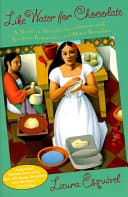
- Like Water for Chocolate
Laura Esquivel
4.0 (324k) average on GoodreadsFantasyWhile both books feature magical realism intertwined with food and romance, Esquivel's novel uses magic as a more visceral and potent expression of suppressed emotions and societal constraints, often with tragic undertones. 'The Sugar Queen' employs magic in a gentler, more comforting way, primarily as a catalyst for personal growth and happiness, rather than a force that can be overwhelming or destructive.
- Harry Potter and the Sorcerer's Stone
J.K. Rowling
4.5 (7M) average on GoodreadsFantasyRescued from a miserable life under the stairs, an orphaned boy discovers he's a wizard destined for a magical school, where he uncovers a dangerous secret tied to the dark wizard who murdered his parents.
- The Hunger Games
Suzanne Collins
4.3 (6.4M) average on GoodreadsFantasyIn a future where children fight to the death on live television, Katniss Everdeen volunteers for the arena, turning a death sentence into a fight for survival and a spark of rebellion.




Enjoyed the summary?
A summary gives you the shape of the book. The book itself has the detail, the examples and the voice.
Find The Sugar Queen on AmazonAs an Amazon Associate, BookBrief earns from qualifying purchases. How we're funded