
Synopsis
Covers the whole plot, including the ending.
- Difficulty
- Medium
- Pacing
- Moderate
- Mood
- Magical, Romantic, Bittersweet, Heartbreaking, Sensory
- Read it if
- You enjoy magical realism, passionate romance, and stories where food plays a central, almost mystical role.
- Skip it if
- You prefer straightforward narratives without magical elements or find themes of forbidden love and tragedy too heavy.
Like Water for Chocolate Plot Summary
Covers the whole plot, including the ending.
A Life Born in the Kitchen
Tita De la Garza is born on the kitchen table, amid ingredients for noodle soup, during a flood of her own tears. Her mother, Mama Elena, is chopping onions, believed to have caused Tita's early labor. Tita's birth gives her a strong connection to food and the kitchen, where she feels most at home. Her tears are so many they fill a five-kilo sack of salt, which Nacha, the ranch cook and Tita's surrogate mother, collects and uses for years. From a young age, Tita is always with Nacha in the kitchen, learning culinary secrets and finding comfort in the smells and tastes that shape her life.
Forbidden Love and a Cruel Tradition
When Tita is sixteen, Pedro Muzquiz arrives at the De la Garza ranch and quickly falls in love with her. He asks Mama Elena for Tita's hand in marriage. However, Mama Elena follows a strict family tradition: Tita, as the youngest daughter, must care for her mother until Mama Elena's death and cannot marry. This tradition has been passed down for generations, and Mama Elena will not change her mind. Pedro is heartbroken, and Tita realizes the barrier between them caused by her mother and an old custom.
A Sacrifice for Proximity
Desperate to stay near Tita, Pedro accepts Mama Elena's surprising offer: he will marry Tita's older sister, Rosaura. Tita is devastated by this, feeling betrayed. Pedro tells Tita he is only marrying Rosaura to be close to Tita, and his love for her will never change. This creates a painful love triangle, keeping Tita near her beloved but always out of reach. Wedding preparations begin, and Tita must bake the wedding cake, putting her deep sorrow into it.
The Wedding Cake of Tears
Tita bakes the wedding cake for Pedro and Rosaura's ceremony, her tears mixing into the batter. During the wedding feast, guests who eat the cake are overcome with sadness, vomiting, and longing for lost loves. Even Mama Elena is affected, though she tries to hide her emotions. Nacha, who tasted Tita's sorrow in the cake, dies shortly after the wedding, unable to bear Tita's grief. This event shows Tita's powerful ability to transfer her emotions through her cooking, affecting all who eat her food.
The Quail in Rose Petal Sauce
To celebrate Rosaura and Pedro's first anniversary, Tita makes Quail in Rose Petal Sauce, using roses from Pedro. As she cooks, Tita's strong feelings for Pedro infuse the food. When the family eats the dish, a wave of intense heat and desire washes over them. Gertrudis, Tita's middle sister, feels an overwhelming desire, causing her to spontaneously combust and set the shower on fire. She then runs naked from the ranch and is carried away by a revolutionary soldier on horseback, embracing a life of freedom and passion, free from Mama Elena's control.
The Death of a Child
Rosaura gives birth to her second child, a son named Roberto. However, Rosaura cannot produce milk to nurse him, and the baby is starving. Tita, despite never having given birth, miraculously begins to lactate and nurses Roberto, forming a deep bond with him. Mama Elena, fearing the growing closeness between Tita and Pedro through their care for Roberto, sends Rosaura, Pedro, and Roberto to San Antonio, Texas. Soon after they leave, Tita hears that Roberto has died, likely from starvation, which devastates her and causes a deep depression.
Tita's Breakdown and Dr. Brown
Devastated by Roberto's death and Mama Elena's ongoing cruelty, Tita withdraws completely, refusing to speak and becoming catatonic. Mama Elena, unable to handle Tita's condition, sends her to a mental asylum. Dr. John Brown, a kind American doctor, cares for Tita. He patiently helps her recover, encouraging her to draw and offering compassion she never received from her family. John falls in love with Tita, seeing her unique spirit and understanding her emotional depth.
Mama Elena's Demise and the Ghost
Mama Elena falls ill and dies from an overdose of a laxative. Her death gives Tita a temporary sense of freedom, but Mama Elena's ghost returns to haunt Tita, appearing as a terrifying spirit, continuing her criticism and interference in Tita's life. The ghost especially targets Tita's relationship with Pedro, trying to prevent any intimacy between them. Tita eventually confronts the ghost, using her strong emotions and a candle's light to banish her mother's spirit, finally freeing herself from her mother's control.
The Return of Gertrudis
Gertrudis, who left the ranch years ago, returns as a celebrated general in the revolutionary army, with her husband, Juan. Her return is a joyful event, bringing a sense of freedom and a contrast to the ranch's oppressive atmosphere under Mama Elena. Gertrudis represents freedom, sensuality, and strength, having embraced her desires and found her own path. She encourages Tita to seek her own happiness and challenges the traditional limits that bound Tita, offering support and a different view on life and love.
Rosaura's Death and Tita's Freedom
Rosaura's health declines over the years due to severe digestive problems, a result of her inability to process her emotions and the rich foods she eats. She becomes obese and suffers from chronic flatulence. Her death finally removes the last physical barrier between Tita and Pedro. Tita feels a mix of sadness and relief, as Rosaura's passing means the end of the imposed love triangle and the true start of her potential happiness with Pedro, after decades of longing.
The Wedding and the Eternal Flame
After Rosaura's death, Tita and Pedro are free to marry. On their wedding night, after years of suppressed desire, they make love. Their passion is so intense it creates a powerful internal fire, similar to what happened with Gertrudis and the Quail in Rose Petal Sauce. Pedro experiences a surge of heat that leads to his death in Tita's arms, overwhelmed by their shared passion. Tita, unwilling to live without him, eats candles to ignite her own internal fire, joining Pedro in an all-consuming blaze that burns down the entire ranch, leaving only a cookbook behind.
Principal Figures
Tita De la Garza
Protagonist
The youngest daughter, bound by tradition, who expresses herself through cooking.
Tita is the novel's protagonist, born with an innate connection to the kitchen and food. She is gentle, passionate, and deeply emotional, often expressing her feelings through her cooking. Bound by the oppressive family tradition that forbids her from marrying and forces her to care for her mother, Tita suffers immensely. Despite her subservient role, she possesses an inner strength and a magical ability to infuse her emotions into her dishes, affecting all who consume them. Her love for Pedro is the central driving force of her life.
Relationships: Mama Elena (Oppressive mother-daughter relationship, filled with cruelty and resentment.); Pedro Muzquiz (Forbidden true love, enduring decades of longing and sacrifice.); Rosaura De la Garza (Sister and rival for Pedro's affection, strained and resentful.); Gertrudis De la Garza (Sister and confidante, a source of encouragement and freedom.); Nacha (Surrogate mother and mentor in cooking, loving and supportive.); Dr. John Brown (Kind suitor and healer, offering compassion and a path to recovery.)
Mama Elena De la Garza
Antagonist
Tita's tyrannical and unyielding mother, who enforces strict family traditions.
Mama Elena is the formidable matriarch of the De la Garza family and the primary antagonist. Cold, authoritarian, and deeply entrenched in tradition, she rules her household with an iron fist. Her cruelty towards Tita stems from her own past heartbreak and a rigid adherence to social norms, which she projects onto her youngest daughter. She forbids Tita's marriage and manipulates her daughters' lives for her own perceived order and control. Even after her death, her ghost continues to torment Tita, symbolizing the lasting impact of her oppressive influence.
Relationships: Tita De la Garza (Oppressive mother-daughter relationship, filled with cruelty and resentment.); Pedro Muzquiz (Disliked suitor, forced to marry Rosaura to stay near Tita.); Rosaura De la Garza (Compliant daughter, used as a tool to control Tita.); Gertrudis De la Garza (Disowned daughter, whose rebellion she cannot tolerate.)
Pedro Muzquiz
Supporting
Tita's true love, who marries her sister to stay close to her.
Pedro is Tita's enduring love interest. He is passionate and determined, willing to make the ultimate sacrifice of marrying Rosaura to remain on the De la Garza ranch, close to Tita. While his actions cause Tita immense pain, his love for her remains constant, expressed through stolen glances, secret touches, and gifts. He is often caught between his love for Tita and the societal constraints imposed by Mama Elena. His presence fuels Tita's culinary magic and her longing for freedom.
Relationships: Tita De la Garza (Forbidden true love, enduring decades of longing and sacrifice.); Rosaura De la Garza (Wife by circumstance, a marriage devoid of love and intimacy.); Mama Elena (Antagonistic relationship, as she controls his access to Tita.)
Rosaura De la Garza
Supporting
Tita's older sister, who marries Pedro and struggles with her own insecurities.
Rosaura is Tita's older sister and Pedro's wife. She is less vibrant and more conventional than Tita, often conforming to Mama Elena's expectations. Her marriage to Pedro is loveless, and she struggles with various health issues, including obesity and digestive problems, which symbolize her inability to process life's difficulties and her emotional stagnation. She is often jealous of Tita's connection with Pedro and tries to assert her authority, but ultimately lives a life of unhappiness and ill health.
Relationships: Tita De la Garza (Sister and rival for Pedro's affection, strained and resentful.); Pedro Muzquiz (Husband by circumstance, a marriage devoid of love and intimacy.); Mama Elena (Compliant daughter, used as a tool to control Tita.)
Gertrudis De la Garza
Supporting
Tita's spirited sister, who embraces freedom and sensuality.
Gertrudis is Tita's middle sister, characterized by her fiery spirit, sensuality, and independence. Unlike Tita and Rosaura, she refuses to be bound by Mama Elena's strictures. Her passionate nature is so intense that it causes her to spontaneously combust after eating Tita's Quail in Rose Petal Sauce, leading her to run away with a revolutionary soldier. She later returns as a powerful and respected general, embodying liberation and self-discovery. Gertrudis serves as a foil to Tita, showing a path of open rebellion and fulfillment of desires.
Relationships: Tita De la Garza (Sister and confidante, a source of encouragement and freedom.); Mama Elena (Disowned daughter, whose rebellion she cannot tolerate.); Juan Alejandrez (Husband and revolutionary soldier, sharing a life of passion and adventure.)
Nacha
Supporting
The ranch cook and Tita's loving surrogate mother.
Nacha is the De la Garza ranch cook and Tita's true maternal figure. She is a kind, wise, and nurturing presence in Tita's life, teaching her all the secrets of traditional Mexican cooking from a young age. Nacha understands Tita's unique connection to food and her emotional depth. She provides Tita with the love and understanding that Mama Elena withholds. Her death, brought on by Tita's sorrow-infused wedding cake, marks a significant loss for Tita but also signifies the powerful impact of Tita's emotional cooking.
Relationships: Tita De la Garza (Surrogate mother and mentor in cooking, loving and supportive.); Mama Elena (Employee, but with a deeper, unspoken understanding of the household dynamics.)
Dr. John Brown
Supporting
An American doctor who falls in love with Tita and helps her heal.
Dr. John Brown is a kind, intelligent, and compassionate American doctor who cares for Tita during her mental breakdown. He represents a different world view, one of science, reason, and empathy, contrasting sharply with the rigid traditions of the De la Garza family. He falls deeply in love with Tita, appreciating her unique spirit and offering her a genuine path to happiness and recovery. He is patient and understanding, providing Tita with the emotional support and intellectual stimulation she desperately needs.
Relationships: Tita De la Garza (Kind suitor and healer, offering compassion and a path to recovery.); Alex Brown (Son, with whom he shares a close and intellectual bond.)
Chencha
Supporting
A loyal and gossipy servant on the De la Garza ranch.
Chencha is one of the loyal servants on the De la Garza ranch. She is a source of both practical help and gossip, often providing Tita with information about the outside world and the goings-on within the family. While she can be fearful of Mama Elena, she generally cares for Tita and offers her support when possible. She experiences her own brief escape from the ranch when she is raped by bandits but eventually returns, providing a grounded, albeit sometimes comical, perspective on the events of the story.
Relationships: Tita De la Garza (Friend and fellow inhabitant of the kitchen, sharing daily life.)
Themes & Insights
The Oppression of Tradition vs. Individual Desire
The novel's main conflict is the stifling family tradition that says the youngest daughter must remain unmarried to care for her mother. This tradition directly conflicts with Tita's desires for love, marriage, and self-expression. Mama Elena strictly enforces this tradition, symbolizing the patriarchal and conservative societal norms of the time. Tita's struggle to break free, shown in her forbidden love for Pedro and her emotional cooking, highlights how suppressing individual will for outdated customs is destructive. Gertrudis's escape also shows a rejection of this oppression, demonstrating a different path to freedom.
“Tita was like a chile in nogada, delicious to the sight but a bit bitter to the taste, a dark mystery to all who knew her.”
The Power of Food and Emotion
Food in 'Like Water for Chocolate' is more than just sustenance; it is a magical way to express emotion, passion, and rebellion. Tita's tears, joy, anger, and longing literally go into her dishes, making those who eat her food feel the same intense emotions. The wedding cake of tears makes guests weep and vomit, while the Quail in Rose Petal Sauce ignites uncontrollable passion in Gertrudis. This magical realism shows that emotions, especially suppressed ones, have real, powerful effects. The kitchen becomes Tita's refuge and her main way to communicate and express herself, a place where she can act despite her restricted life.
“The way Tita was feeling, the best thing would have been for her to die on the spot, but she still had a duty to fulfill, to cook the wedding dinner.”
Love, Passion, and Sacrifice
The novel explores different kinds of love, from the forbidden, passionate love between Tita and Pedro to the dutiful, yet unfulfilled, love in Rosaura's marriage. Tita and Pedro's love is marked by great longing, sacrifice, and the hope of being together. Pedro's decision to marry Rosaura, though painful, is a sacrifice made to stay near Tita. The intensity of their suppressed passion eventually becomes a destructive force, consuming them in the novel's fiery end. The story suggests that true love, when denied and repressed for too long, can appear with overwhelming power, leading to both deep joy and tragic outcomes.
“Each person has to find their own way to light their inner fire.”
Feminine Identity and Rebellion
The De la Garza women deal with their identities in a patriarchal society and under Mama Elena's strict rule. Tita finds her identity and voice through her cooking, subtly rebelling against her mother's authority and societal expectations. Gertrudis embodies open rebellion, leaving the ranch for a life of passion and independence, eventually becoming a general in the revolutionary army. Even Mama Elena, despite her tyranny, was shaped by her own past heartbreak, hinting at the limited choices for women of her generation. The novel explores different forms of feminine strength and resistance against oppressive forces.
“Tita knew through her own flesh how fire transforms objects, how a body that has been burned cannot be restored.”
Plot Devices & Literary Techniques
Magical Realism
The blending of realistic settings with fantastical elements.
Magical realism is the defining stylistic device of the novel. Everyday events on the De la Garza ranch are interwoven with fantastical occurrences, such as Tita's tears filling a sack of salt, her emotions literally infusing food to affect consumers, or Gertrudis spontaneously combusting from passion. This device allows the author to externalize Tita's intense inner emotional world, making her suppressed feelings tangible and impactful. It also gives a unique voice to the story, reflecting a cultural tradition where the mystical and the mundane coexist, enhancing the themes of passion, tradition, and repression.
Food as Metaphor and Communication
Food serves as a primary vehicle for emotion, communication, and social commentary.
Beyond being a magical conduit for emotion, food functions as a powerful metaphor throughout the novel. Each chapter is named after a traditional Mexican recipe, and the preparation of these dishes often mirrors or directly influences the plot. Tita's cooking becomes her language, allowing her to express love, sorrow, anger, and desire when spoken words are forbidden or inadequate. The recipes themselves, included in the text, ground the magical elements in a tangible, cultural reality, connecting the reader to Tita's world and heritage. Food also symbolizes tradition, comfort, and the domestic sphere, which Tita both embraces and transcends.
The De la Garza Ranch
The physical setting acts as a microcosm of societal oppression and familial conflict.
The De la Garza ranch is more than just a setting; it functions as a symbolic space. Under Mama Elena's rule, it represents a closed, oppressive world where tradition suffocates individual freedom. The kitchen, however, serves as Tita's personal sanctuary and the heart of her rebellion. The ranch's isolation mirrors the family's insular nature and their adherence to outdated customs. Its eventual fiery destruction in the climax symbolizes the complete breaking free from these constraints and the overwhelming power of Tita and Pedro's unleashed passion, paving the way for a new, unburdened existence.
The Ghost of Mama Elena
A spectral presence representing the lingering power of oppression and unresolved trauma.
After her death, Mama Elena's ghost continues to haunt Tita, particularly when Tita attempts to find happiness with Pedro. This spectral presence is a powerful plot device symbolizing the deep psychological impact of Mama Elena's tyranny and the difficulty of escaping generational trauma and internalized oppression. Tita's struggle to banish the ghost represents her journey towards true liberation and self-acceptance, finally shedding the psychological shackles imposed by her mother. The ghost also reinforces the magical realism of the narrative, blending the supernatural with Tita's emotional reality.
Like Water for Chocolate Quotes
“Tita was so sensitive to onions, any time she was near one, she started to cry.”
“The table was set, the food was served, but no one could eat. All they could do was cry.”
“She knew then that she could never marry anyone else, because Pedro was the love of her life.”
“Tita had been born in the kitchen, on the kitchen table, precisely at the moment when the soup was ready.”
“The only thing that saved her from total despair was the thought that Pedro would at least be near her, even if he was married to Rosaura.”
“Each of the guests, on tasting a mouthful of the cake, was overcome by a wave of intense longing.”
“She understood that the only way to get her mother to stop was to obey her.”
“Tita felt a strange warmth spread through her body, a pleasant sensation that made her shiver.”
“She had to prepare the food, and she had to do it with love, because that was the only way to transmit feelings.”
“This was the first time Tita had ever challenged her mother's authority, and she felt a thrill of fear and exhilaration.”
“Her body was giving off so much heat that the wooden walls of the ranch were beginning to ignite.”
“The smells of the kitchen were always present, like a constant companion, a comforting presence.”
“There are many ways to communicate, but the best way is through food.”
“She felt herself melting, slowly, deliciously, into his arms, into his kiss, into his love.”
Quiz
10 questions on the plot and the characters. Each answer comes with a short explanation.
Question 1
What unique circumstance surrounds Tita's birth?
- She was born during a violent thunderstorm.
- She was born prematurely in the kitchen amidst spices and ingredients.
- She was born in the middle of a family wedding celebration.
- She was born in a field while her mother was harvesting corn.
Show answer
B. She was born prematurely in the kitchen amidst spices and ingredients. Tita's birth is described as happening prematurely in the kitchen, surrounded by the ingredients for noodle soup, emphasizing her deep connection to food from the very beginning.
Question 2
What is the traditional rule that prevents Tita from marrying Pedro?
- She is too young to marry.
- As the youngest daughter, she must care for her mother until Mama Elena dies.
- Pedro is already engaged to another woman.
- Mama Elena believes Pedro is not wealthy enough.
Show answer
B. As the youngest daughter, she must care for her mother until Mama Elena dies. The De la Garza family tradition dictates that the youngest daughter cannot marry and must remain to care for her mother until the mother's death, a rule Mama Elena strictly enforces on Tita.
Question 3
Which dish does Tita prepare that causes everyone who eats it to experience profound sadness and longing?
- Christmas Rolls
- Quail in Rose Petal Sauce
- Chiles in Walnut Sauce
- Noodle Soup
Show answer
B. Quail in Rose Petal Sauce Tita's emotions, infused into the Quail in Rose Petal Sauce, cause all who eat it to weep and experience an intense longing, famously leading to Gertrudis's passionate escape.
Question 4
What happens to Gertrudis after she eats the Quail in Rose Petal Sauce?
- She becomes ill and requires medical attention.
- She is overcome with passion and runs away with a revolutionary soldier.
- She decides to dedicate her life to cooking alongside Tita.
- She falls deeply in love with a man in the village.
Show answer
B. She is overcome with passion and runs away with a revolutionary soldier. The intense passion Tita imbues into the Quail in Rose Petal Sauce causes Gertrudis to spontaneously combust and run away naked on horseback with Juan Alejandrez, a revolutionary general, who is drawn to her scent.
Question 5
After Mama Elena's death, what does Tita discover about her true parentage?
- She was adopted by Mama Elena as an infant.
- Her real father was a ranch hand, and Mama Elena had an affair.
- She was the daughter of a wealthy family that abandoned her.
- She was the daughter of Mama Elena's sister.
Show answer
B. Her real father was a ranch hand, and Mama Elena had an affair. After Mama Elena's death, Tita discovers letters revealing that her true father was Jose Treviño, a mulatto ranch hand with whom Mama Elena had a passionate affair.
Question 6
What is the symbolic significance of the 'matchbox' and 'inner fire' that Dr. John Brown describes to Tita?
- It represents the danger of open flames in the kitchen.
- It symbolizes her repressed emotions and the potential for destructive or transformative passion.
- It describes the scientific process of cooking and heat transfer.
- It is a metaphor for the rapid spread of revolutionary ideas.
Show answer
B. It symbolizes her repressed emotions and the potential for destructive or transformative passion. Dr. John Brown uses the analogy of a matchbox to explain that each person has an 'inner fire' or 'soul' that needs to be lit by the right match (love/passion). If not properly ignited, this fire can either cause a destructive explosion or simply fade away, representing Tita's own suppressed desires and emotions.
Question 7
How does Tita's cooking affect those who consume it?
- It always makes them feel content and well-fed.
- It can transfer her emotions and experiences directly to the eaters.
- It has no effect beyond its taste and nutritional value.
- It occasionally causes hallucinations and strange visions.
Show answer
B. It can transfer her emotions and experiences directly to the eaters. A central magical realism element in the novel is that Tita's emotions (joy, sorrow, passion) are literally infused into her food, directly affecting the feelings and actions of those who eat it.
Question 8
What is the ultimate fate of Tita and Pedro at the end of the novel?
- They decide to part ways and live separate lives.
- They finally marry and live a long, happy life together.
- They die together in a passionate embrace, consumed by their 'inner fire'.
- Tita marries Dr. John Brown, and Pedro remains with Rosaura.
Show answer
C. They die together in a passionate embrace, consumed by their 'inner fire'. After years of longing, Tita and Pedro finally consummate their love. Pedro dies in her arms from the intensity of their passion, and Tita, unwilling to live without him, consumes her own 'inner fire' by eating matches, dying in a blaze that consumes the ranch.
Question 9
Who is the narrator of the story?
- Tita herself, looking back on her life.
- Pedro, reflecting on his love for Tita.
- Tita's grand-niece, telling the family history through her recipes.
- An omniscient third-person narrator.
Show answer
C. Tita's grand-niece, telling the family history through her recipes. The story is narrated by Tita's grand-niece, who pieces together Tita's life story, memories, and recipes, presenting it as a family history.
Question 10
What becomes of the De la Garza ranch after Tita and Pedro's deaths?
- It is sold to a new family who restores it.
- It is converted into a historical museum.
- It burns down completely, leaving only Tita's cookbook.
- It is inherited by Esperanza, Tita's niece.
Show answer
C. It burns down completely, leaving only Tita's cookbook. After Tita and Pedro's deaths, the intense 'inner fire' that consumes them also sets the ranch ablaze, burning it down completely. The only thing that survives is Tita's cookbook, which Esperanza eventually finds.
Like Water for Chocolate FAQ
What is the central conflict preventing Tita and Pedro from being together?
The central conflict stems from the De la Garza family tradition, enforced by Mama Elena, that the youngest daughter, Tita, must remain unmarried and care for her mother until Mama Elena's death. This tradition directly forbids Tita from marrying Pedro, despite their profound love, leading to Pedro marrying Tita's sister, Rosaura, to stay close to Tita.
How does Tita's cooking serve as a form of communication and magical realism?
Tita's cooking is deeply intertwined with her emotions, acting as a powerful conduit for her unspoken feelings. The magical realism manifests as these emotions are literally transferred to those who consume her food, causing them to experience the same joy, sorrow, or passion Tita feels while cooking, as seen with the wedding cake that made everyone weep.
Who are the primary members of the De la Garza family, and what are their roles?
The De la Garza family includes Mama Elena, the tyrannical matriarch; Tita, the youngest daughter and protagonist; Rosaura, the eldest sister who marries Pedro; and Gertrudis, the middle sister who elopes with a revolutionary. Pedro Múzquiz is the object of Tita's affection, and Dr. John Brown is Tita's suitor.
What is the significance of the recipes included throughout the book?
The recipes are not merely decorative but are integral to the narrative, each one reflecting Tita's emotional state or a significant plot point. They provide a sensory experience for the reader, grounding the magical realism in tangible, delicious reality, and serving as a direct link to Tita's culinary expression and heritage.
How does the author use the historical setting of early 20th-century Mexico?
The early 20th-century Mexican Revolution provides a turbulent backdrop that mirrors the emotional turmoil within the De la Garza household. The revolutionary soldiers and the social upheaval outside the ranch offer a contrast to the domestic drama, occasionally intersecting with the family's lives, such as when Gertrudis runs off with a soldier.
What is the 'secret' connection between Nacha and Tita's upbringing?
Nacha, the ranch cook, practically raises Tita from birth, becoming her surrogate mother and teaching her everything about cooking and life in the kitchen. This deep bond means Nacha is the only one who truly understands Tita's spirit and magical connection to food, a connection Mama Elena actively suppresses.
What specific event reveals Mama Elena's own tragic past and its influence on her strictness?
It is revealed that Mama Elena herself had a forbidden love affair with a mulatto man, the true father of Gertrudis, which was never permitted to blossom. This personal heartbreak and societal pressure hardened her, leading her to rigidly enforce traditions and deny Tita the very love she herself was denied.
How does the 'quail in rose petal sauce' dish become a catalyst for major plot developments?
Tita prepares quail in rose petal sauce, infused with her intense passion for Pedro, causing an uncontrollable heat and desire in those who eat it. This dish directly leads to Gertrudis's fiery escape with a revolutionary soldier, literally burning down the shower, and ignites a deep, undeniable connection between Tita and Pedro.
What is the significance of the ghost of Mama Elena in Tita's life?
The ghost of Mama Elena represents Tita's internalized fear, guilt, and the lingering psychological oppression from her mother's tyranny, even after her death. The ghost actively tries to sabotage Tita's happiness and relationships, particularly with Dr. John Brown, until Tita finally confronts and banishes it, signifying her liberation.
How does Tita's 'milk' production for Esperanza reflect her emotional state and a break from tradition?
Tita's spontaneous production of breast milk for Esperanza, Rosaura's baby, after Rosaura is unable to nurse, symbolizes Tita's powerful maternal instincts and her ability to nurture life despite being denied motherhood by tradition. It also shows Tita's inherent connection to life and her ability to provide when others cannot, defying the traditional role imposed upon her.
Analyze the psychological impact of Mama Elena's tyranny on Tita's development.
Mama Elena's relentless tyranny stunts Tita's emotional and personal growth, forcing her to suppress her true desires and live in constant fear and obedience. This repression manifests in Tita's cooking, where her emotions find their only outlet, and ultimately leads to a temporary breakdown, highlighting the severe psychological toll of her mother's control.
How does Tita's relationship with Dr. John Brown offer a different kind of love and freedom?
Dr. John Brown offers Tita a love based on respect, intellectual companionship, and genuine care, contrasting sharply with the passionate but forbidden love she shares with Pedro. He encourages her independence and creativity, seeing her as a whole person capable of making her own choices, which represents a profound sense of freedom Tita had never experienced.
Explore the theme of rebellion and liberation through Tita's actions.
Tita's rebellion is often subtle but profound, expressed through her cooking and her quiet defiance of Mama Elena's rules. Her ultimate liberation comes when she confronts Mama Elena's ghost, choosing her own happiness and breaking free from the oppressive family tradition, demonstrating that true freedom can be found even within restrictive environments.
Is the ending of the novel ultimately tragic or triumphant for Tita and Pedro?
The ending can be interpreted as both tragic and triumphant. While Tita and Pedro finally achieve their passionate union, it is tragically short-lived, as they both die in a blaze of overwhelming emotion. However, it is triumphant in that they finally experience complete, uninhibited love, breaking free from all societal constraints and finding eternal peace together.
What is the metaphorical significance of the matchbox analogy used by Dr. John Brown?
Dr. John Brown's matchbox analogy, where each person carries a box of matches that need to be lit by a 'breath,' symbolizes the internal fire and potential for passion within everyone. It suggests that a person needs external stimulus or love to ignite their true self, and if not lit, the matches will never burn, leaving one unfulfilled.
How does the novel critique traditional gender roles and societal expectations in Mexico?
The novel critiques traditional gender roles by showing how the strict expectations placed on women, particularly the youngest daughter's duty to remain unwed, stifle individual desires and lead to immense suffering. Tita's journey to self-expression through cooking and her defiance of these norms highlight the restrictive nature of these societal expectations.
Discuss the role of fire and heat as symbolic motifs throughout the story.
Fire and heat are powerful symbols representing passion, desire, destruction, and transformation. From Tita's birth in the kitchen's heat to the burning passion ignited by her food, the spontaneous combustion of Gertrudis, and the final fiery embrace of Tita and Pedro, fire consistently signifies intense emotion and profound change.
What is the enduring legacy of the De la Garza ranch and Tita's kitchen?
The De la Garza ranch, particularly Tita's kitchen, becomes a powerful symbol of memory, tradition, and the enduring power of love and food. After the fire, Esperanza and Alex rebuild, preserving Tita's recipes and stories, ensuring that the ranch's legacy is one of passionate living and the magical connection between food and emotion, rather than just oppression.
About the author
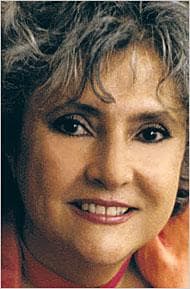
Laura Beatriz Esquivel Valdés is a Mexican novelist, screenwriter and politician, serving in the LXIII Legislature of the Mexican Congress in the Chamber of Deputies for the Morena Party from 2015 to 2018. Her first novel Como agua para chocolate became a bestseller in Mexico and the United States, and was later developed into an award-winning film.
Similar books
- One Hundred Years of Solitude
Gabriel García Márquez
4.1 (753k) average on GoodreadsLiterary FictionShares magical realism, multi-generational family saga, and Latin American setting.
- The House of the Spirits
Isabel Allende
4.2 (190k) average on GoodreadsFantasyFeatures magical realism, strong female characters, and a sweeping historical family narrative.
- Chocolat
Joanne Harris
4.0 (113k) average on GoodreadsFantasyExplores the magical, transformative power of food and its impact on a community.
- Harry Potter and the Sorcerer's Stone
J.K. Rowling
4.5 (7M) average on GoodreadsFantasyRescued from a miserable life under the stairs, an orphaned boy discovers he's a wizard destined for a magical school, where he uncovers a dangerous secret tied to the dark wizard who murdered his parents.
- The Hunger Games
Suzanne Collins
4.3 (6.4M) average on GoodreadsFantasyIn a future where children fight to the death on live television, Katniss Everdeen volunteers for the arena, turning a death sentence into a fight for survival and a spark of rebellion.
- 1984
George Orwell
4.2 (3.1M) average on GoodreadsPoliticsIn a future where surveillance and thought control are absolute, a man's search for truth clashes with the Party, showing that hope can be a form of rebellion.






Enjoyed the summary?
A summary gives you the shape of the book. The book itself has the detail, the examples and the voice.
Find Like Water for Chocolate on AmazonAs an Amazon Associate, BookBrief earns from qualifying purchases. How we're funded