
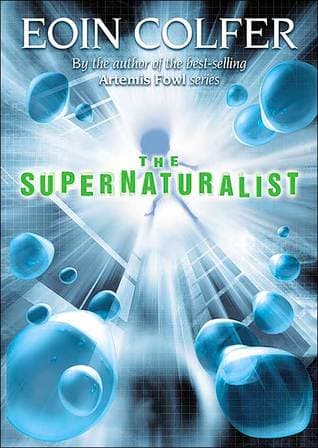
Synopsis
Covers the whole plot, including the ending.
- Difficulty
- Easy
- Pacing
- Fast
- Mood
- Gritty, Adventurous, Mysterious, Action-packed
- Read it if
- You enjoy fast-paced, action-packed sci-fi adventures with a dystopian edge and a unique magic system.
- Skip it if
- You prefer fantasy without technological elements or are looking for deeply complex character studies.
The Supernaturalist Plot Summary
Covers the whole plot, including the ending.
The Clarissa Frayne Institute
Cosmo Hill, a fourteen-year-old orphan, lives at the Clarissa Frayne Institute for Parentally Challenged Boys, Freight Class, in Satellite City. The Institute is more a forced labor camp than an orphanage, where boys test dangerous products for the Myishi Corporation. Daily, Cosmo and boys like Ziplock get hurt from these tests. They know 'graduation' means being sent to the equally bad Work Experience Program. Cosmo, needing to survive and feeling the injustice, plans his escape, knowing staying at Clarissa Frayne will lead to his death.
The Escape and the Parasite Sighting
During a chaotic product test with a super-adhesive, Cosmo sees his chance. As the adhesive fails and chaos erupts, he slips past guards and escapes into Satellite City's alleys. Exhausted, he collapses. While recovering, he sees a strange, glowing creature feeding on an unconscious man. Before he can understand, a group of kids appears, armed with odd devices, and attacks the creature. Cosmo realizes these kids also see the 'Parasite'.
Joining the Supernaturalists
The kids, the Supernaturalists, are Stefan Bashkir, the leader; Mona Lisa, a tech-savvy girl; and Ditto, a young, quiet boy. They tell Cosmo they, like him, see energy-draining creatures they call 'Parasites.' They believe these Parasites slowly kill humans and hunt them with their gadgets, which disrupt the creatures' energy. Stefan invites Cosmo to join their group and mission, offering him a sense of belonging he has never known.
Life in the 'No-Man's-Land'
Cosmo settles into the Supernaturalists' hideout: an old blimp high above the city in an abandoned 'No-Man's-Land' district. He learns how to use their 'Blast-sticks' to stop Parasites. He sees the group's roles: Stefan's leadership, Mona's tech skills, and Ditto's quiet observation. Despite their shared goal, Cosmo senses a deeper mystery about their mission and where they came from. He starts to bond with his new friends, finding camaraderie and purpose that contrasts with his past at Clarissa Frayne.
Encountering the Myishi Corporation
As the Supernaturalists continue their hunts, their actions draw the attention of the Myishi Corporation, which runs Satellite City and the Clarissa Frayne Institute. Myishi security, especially Commander Vex, starts watching the children, seeing them as a threat. The Supernaturalists realize they are not just fighting unseen beings, but now also the most powerful corporation in their world, making their dangerous lives even riskier.
The Capture and the Revelation
During a tough encounter, Myishi security ambushes and captures the Supernaturalists. They are taken to a Myishi facility, where they meet the scientist, Dr. Kowloon. Kowloon reveals the truth: the 'Parasites' are not evil beings but parts of human souls, or 'auras,' that leave the body at death. He explains that Myishi, saying it's 'improving life,' has been secretly developing technology to capture and use these auras as a new energy source. The children's 'Blast-sticks' do not destroy the Parasites, but only disrupt them.
The True Nature of the Supernaturalists
Dr. Kowloon also reveals that the Supernaturalists are from Myishi's genetic experiments, designed to see and interact with these auras. Their ability is not natural but created. He explains that the Clarissa Frayne Institute is a place to find subjects, and the dangerous product tests help auras detach faster, making them easier to collect. This news shatters the children's understanding of themselves and their mission, turning their world upside down and forcing them to rethink their purpose.
The Ethical Dilemma
The Supernaturalists face a difficult ethical problem. They learn Myishi's research, while possibly offering new energy, involves using and possibly destroying human souls. Dr. Kowloon argues this research benefits humanity, but the children are horrified. They realize they have been unknowingly part of a morally questionable project, believing they saved lives when they were interfering with a natural process or helping its exploitation. Their previous ideas of good and evil become unclear.
Planning an Escape and Sabotage
United by betrayal and a new purpose, the Supernaturalists, including Cosmo, decide to escape the Myishi facility and expose the corporation's unethical actions. They realize the real 'enemy' is Myishi. Using their combined skills—Mona's tech knowledge, Stefan's strategy, Cosmo's quick thinking, and Ditto's unexpected abilities—they plan a daring escape and to sabotage Myishi's aura-harvesting. Their goal is not just freedom, but to stop Myishi's morally wrong experiments.
The Facility Breach
The Supernaturalists begin their plan. They create diversions, get past security, and move through the Myishi facility, facing resistance from Commander Vex and his security. The escape is dangerous. During the chaos, Ditto shows a surprising ability to manipulate energy, helping their escape. They reach the central aura-harvesting chamber, planning to disable the machinery and release the captured auras, hoping to disrupt Myishi's operation and expose its secrets.
Confronting Kowloon and Vex
In the central chamber, the Supernaturalists confront Dr. Kowloon, who tries to defend his work, and Commander Vex, who tries to stop them. A tense situation combines discussion with physical conflict. The children, aware of the risks, are determined to shut down the operation. Cosmo, thinking fast, causes a critical system overload. Stefan and Mona work to disable the main aura containment field, while Ditto uses his abilities to cause more disruptions, turning Myishi's own technology against them.
The Release of the Auras and Escape
The Supernaturalists overload the Myishi system, causing a chain reaction. The captured auras are released, swirling before disappearing, a powerful sight. The facility starts to fall apart. With Commander Vex defeated and Dr. Kowloon's plans ruined, the children make a desperate escape from the crumbling Myishi complex. They emerge into Satellite City, no longer naive hunters of 'Parasites,' but survivors with a deeper understanding of life, death, and the corporations that try to control them.
A New Beginning
After exposing Myishi's secrets and freeing the auras, the Supernaturalists are free but without a clear goal. They are no longer hunting 'Parasites,' as they now understand their true nature. They are heroes, though mostly unknown, for stopping Myishi's unethical plan. The experience has changed them, making Cosmo, Stefan, Mona, and Ditto closer. They look at Satellite City, still polluted and controlled by corporations, but now with hope, knowing they made a difference and are ready for new challenges, together.
The Supernaturalist Characters
Cosmo Hill
Protagonist
A resourceful orphan who joins the Supernaturalists after escaping a harsh institute.
Cosmo is a fourteen-year-old orphan who possesses a sharp wit, an innate sense of survival, and a deep-seated desire for freedom. Raised in the brutal Clarissa Frayne Institute, he is initially cynical and distrustful, but his experiences with the Supernaturalists awaken a sense of purpose and loyalty. He is quick-thinking and adaptable, often coming up with clever solutions in dire situations. His ability to see auras makes him a valuable member of the team, but it's his moral compass and growing courage that truly drive him.
Relationships: Stefan Bashkir (mentor and friend); Mona Lisa (friend and fellow Supernaturalist); Ditto (younger friend and fellow Supernaturalist); Ziplock (fellow orphan at Clarissa Frayne)
Stefan Bashkir
Supporting
The pragmatic and often stoic leader of the Supernaturalists.
Stefan is the de facto leader of the Supernaturalists, a few years older than Cosmo, with a serious demeanor and a strong sense of responsibility. He is pragmatic and strategic, often making difficult decisions for the group's survival. Stefan carries the weight of their mission to 'save humanity' from Parasites, which initially makes him rigid in his beliefs. Beneath his tough exterior, he cares deeply for his team, acting as a protective figure. He is skilled in combat and the use of their 'Blast-sticks'.
Relationships: Cosmo Hill (mentee and friend); Mona Lisa (close friend and confidante); Ditto (younger friend and ward)
Mona Lisa
Supporting
The tech-savvy and intelligent member of the Supernaturalists.
Mona Lisa, often called Mona, is the brains of the Supernaturalists, specializing in technology and gadgets. She is intelligent, curious, and quick-witted, capable of repairing and upgrading their equipment. Mona possesses a strong sense of justice and is often the first to question inconsistencies or moral ambiguities. She provides a balance to Stefan's more rigid approach and Ditto's silent nature, often offering a more empathetic perspective. Her technical skills prove crucial in their missions and eventual escape.
Relationships: Cosmo Hill (friend and fellow Supernaturalist); Stefan Bashkir (close friend and collaborator); Ditto (younger friend and fellow Supernaturalist)
Ditto
Supporting
The youngest and seemingly mute Supernaturalist with surprising powers.
Ditto is the youngest member of the Supernaturalists, a small boy who rarely speaks, communicating mostly through gestures and expressions. He is observant and surprisingly resilient despite his size. Initially appearing vulnerable, Ditto possesses a unique and powerful ability to manipulate energy, which he gradually reveals throughout the story. His silence often hides a deeper understanding or intuition, making him a mysterious but integral part of the team. His hidden potential becomes a significant asset in their fight against Myishi.
Relationships: Cosmo Hill (friend and fellow Supernaturalist); Stefan Bashkir (older friend and protector); Mona Lisa (older friend and fellow Supernaturalist)
Dr. Kowloon
Antagonist
The brilliant but morally ambiguous scientist behind Myishi's aura research.
Dr. Kowloon is a brilliant scientist working for the Myishi Corporation, the mastermind behind the 'aura' harvesting project. He is highly intelligent and articulate, genuinely believing that his research into capturing and utilizing human souls is for the ultimate benefit of humanity, providing a new, sustainable energy source. He sees the Supernaturalists as valuable, albeit misguided, test subjects. Kowloon is a man of science driven by ambition, but his ethical framework is severely warped by his utilitarian view, making him a complex and formidable antagonist.
Relationships: The Supernaturalists (subjects of his research); Commander Vex (subordinate and enforcer)
Commander Vex
Antagonist
The ruthless and loyal security chief for the Myishi Corporation.
Commander Vex is the no-nonsense head of security for the Myishi Corporation, dedicated to enforcing its will and protecting its secrets. He is a formidable physical presence, highly disciplined, and utterly loyal to Myishi and Dr. Kowloon. Vex views the Supernaturalists as mere nuisances and threats to corporate order, pursuing them relentlessly. He represents the oppressive, authoritarian arm of the corporate state, valuing control and efficiency above all else. He is less concerned with the ethics of Kowloon's work and more with its security.
Relationships: Dr. Kowloon (superior and scientific visionary); The Supernaturalists (targets of his pursuit)
Ziplock
Mentioned
A timid orphan at the Clarissa Frayne Institute.
Ziplock is one of Cosmo's fellow orphans at the Clarissa Frayne Institute. He is timid, fearful, and easily intimidated by the harsh conditions and the guards. Ziplock represents the majority of the boys at the Institute, who are too broken or too scared to attempt escape or resist. His presence highlights the brutal reality of Cosmo's past and the desperation that drives his actions. He serves as a reminder of what Cosmo narrowly escaped.
Relationships: Cosmo Hill (fellow orphan)
The Supernaturalist Themes
The Nature of Humanity and the Soul
The novel explores what makes up a soul and the ethics of changing it. The 'Parasites' are first thought to be evil, but are later revealed as human auras (souls) leaving the body at death. This makes characters and readers question life and death, and if a 'soul' can be an energy source. Dr. Kowloon's experiments show a view where even a person's core can be a product, which strongly contrasts with the Supernaturalists' eventual respect for these auras as parts of human life.
“What if the very essence of a person could be harnessed? What if the soul itself was just another form of energy?”
Corporate Control and Dystopian Society
Satellite City shows a corporate-controlled future, where the Myishi Corporation controls everything, from orphanages to energy. The Clarissa Frayne Institute, where children are used for experiments, shows how unchecked corporate greed and control can dehumanize people. The widespread pollution and lack of freedom paint a grim picture of a society where profit and power are more important than human dignity. The Supernaturalists' fight becomes a rebellion against this oppressive system.
“In Satellite City, Myishi was everything. Myishi was the air you breathed, the food you ate, the dreams you dared to dream.”
The Search for Identity and Belonging
Cosmo, as an unwanted orphan, constantly seeks belonging. His initial escape is for survival, but joining the Supernaturalists gives him a family and purpose he has never had. The other Supernaturalists, also outcasts, find their identity in their shared ability and mission. However, this identity breaks when they learn Myishi created their powers. They then must find a new identity, not as 'Parasite' hunters, but as protectors of ethics and truth, strengthening their bond through shared hardship.
“He had found a family, a purpose. Even if that purpose was a lie, the family was real.”
Moral Ambiguity and Ethical Dilemmas
The story has much moral uncertainty. The Supernaturalists first believe they are doing good by 'destroying' Parasites, only to find they are interfering with human souls. Dr. Kowloon, the villain, truly believes his unethical experiments are for humanity's 'greater good,' forcing the heroes to deal with complex ethical questions. Is it okay to sacrifice individual souls for society's benefit? The story challenges simple ideas of good and evil, showing a world where intentions do not always match results, and where scientific progress can lead to moral decline.
“Sometimes, for the greater good, one must make difficult choices. Choices that lesser minds might call 'evil'.”
Plot Devices & Literary Techniques
The Aura Sight
The unique ability to see the energy forms of souls (Parasites).
The aura sight is the central supernatural ability shared by Cosmo and the Supernaturalists. It allows them to perceive the 'Parasites' – which are later revealed to be human auras – that are invisible to ordinary people. This ability initially defines their mission, making them feel special and purposeful. It also serves as a crucial plot device by being the very trait Myishi engineered in them, thereby tying their existence directly to the corporation's unethical experiments. The revelation of its true nature fundamentally shifts the narrative and the characters' understanding of their world.
The Clarissa Frayne Institute
A dystopian orphanage serving as a testing ground for Myishi's experiments.
The Clarissa Frayne Institute acts as the catalyst for Cosmo's escape and introduction to the main plot. It establishes the dystopian nature of Satellite City and the ruthless corporate control of Myishi. More than just a setting, it is revealed to be a crucial plot device: a clandestine facility for Myishi to identify and cultivate children with the latent ability to see auras, making it directly linked to the Supernaturalists' origins and Dr. Kowloon's research. It underscores the theme of corporate exploitation and the dehumanization of the vulnerable.
Myishi Corporation
The omnipresent, controlling corporate entity of Satellite City.
Myishi Corporation functions as the primary antagonist and the overarching symbol of corporate control. It is not merely a company but the governing power of Satellite City, dictating every aspect of life. As a plot device, Myishi drives much of the conflict, from the harsh conditions at Clarissa Frayne to the pursuit of the Supernaturalists. Its secret research into aura harvesting provides the central mystery and ethical dilemma, revealing the true nature of the 'Parasites' and the Supernaturalists' abilities, thereby unraveling the entire initial premise of the story.
The Blimp Hideout
A derelict blimp serving as the Supernaturalists' secret base.
The blimp hideout provides a physical representation of the Supernaturalists' status as outcasts and their defiance of the city's control. Tethered high above the 'No-Man's-Land,' it offers them a secure, secluded base of operations for their nightly hunts. As a plot device, it fosters a sense of camaraderie and family among the group, serving as a safe haven and a symbol of their independence. Its eventual abandonment signifies their forced confrontation with Myishi and their transition from hidden rebels to active challengers of the corporate regime.
The Supernaturalist Quotes
“There are no monsters, not really. Only people who are a little different.”
“The truth was, the world was a crazy place, and you were either crazy enough to survive it, or you weren't.”
“Sometimes you just had to make a leap, even if you weren't sure where you'd land.”
“There was a fine line between genius and madness, and sometimes it was a tightrope walk.”
“It was amazing how quickly you could get used to the impossible.”
“Friends were like that. They didn't always make sense, but they were always there.”
“The greatest discoveries often came from the most unlikely places.”
“Fear was a powerful motivator, but hope was even stronger.”
“Every secret had a price, and some were too high to pay.”
“Even in the darkest corners, there was always a flicker of light.”
“The future was not set in stone; it was a path you forged yourself.”
“Sometimes, the only way to save something was to let it go.”
“Being different wasn't a curse; it was a superpower.”
Quiz
10 questions on the plot and the characters. Each answer comes with a short explanation.
Question 1
What is the name of the institution where Cosmo Hill is sent after being deemed 'parentally challenged'?
- The Satellite City Orphanage
- The Clarissa Frayne Institute for Parentally Challenged Boys
- The St. Augustine's Home for Unwanted Children
- The Freight Class Youth Academy
Show answer
B. The Clarissa Frayne Institute for Parentally Challenged Boys Cosmo Hill is sent to the Clarissa Frayne Institute for Parentally Challenged Boys, Freight class, where boys are put to work testing dangerous products.
Question 2
What special ability do Cosmo and the Supernaturalists share that allows them to see certain creatures?
- They can hear the thoughts of animals.
- They can manipulate technology with their minds.
- They can see supernatural Parasites.
- They have enhanced night vision.
Show answer
C. They can see supernatural Parasites. Cosmo and the Supernaturalists all possess the unique ability to see the supernatural Parasites that feed on human life force.
Question 3
What is the primary danger the boys face while at the Clarissa Frayne Institute?
- Strict disciplinary punishments for minor infractions.
- Malnutrition due to inadequate food rations.
- Being forced to test highly dangerous products.
- Constant bullying from older boys.
Show answer
C. Being forced to test highly dangerous products. The boys at Clarissa Frayne are put to work by the state, testing highly dangerous products, often resulting in injuries.
Question 4
What do the Parasites, seen by the Supernaturalists, feed on?
- Electronic signals from Satellite City's infrastructure.
- The life force of humans.
- Negative emotions like fear and sadness.
- Physical waste and pollution in the city.
Show answer
B. The life force of humans. The Supernaturalists hunt Parasites, creatures that feed on the life force of humans, believing they are saving humanity.
Question 5
What is the initial perceived mission of the Supernaturalists when they patrol Satellite City?
- To find hidden treasures within the city.
- To dismantle the corrupt government of Satellite City.
- To hunt Parasites in hopes of saving humanity.
- To recruit more children with their special ability.
Show answer
C. To hunt Parasites in hopes of saving humanity. The Supernaturalists patrol the city at night, hunting the Parasites in hopes of saving what's left of humanity in Satellite City.
Question 6
The description likens Satellite City to a combination of which two well-known fictional settings?
- Star Wars and The Matrix
- Blade Runner and futuristic Dickens
- Mad Max and Cyberpunk 2077
- Dune and Metropolis
Show answer
B. Blade Runner and futuristic Dickens Eoin Colfer has created an eerie and captivating world—part Blade Runner, part futuristic Dickens—replete with non-stop action.
Question 7
What major event forces the Supernaturalists to question everything they believe in?
- They are betrayed by one of their own members.
- They discover a horrifying secret about the Parasites or their mission.
- Satellite City is suddenly attacked by an unknown force.
- Cosmo loses his ability to see the Parasites.
Show answer
B. They discover a horrifying secret about the Parasites or their mission. The Supernaturalists soon find themselves caught in a web far more complicated than they'd imagined, when they discover a horrifying secret that will force them to question everything they believe in.
Question 8
Why is Cosmo Hill considered 'unwanted by his parents' at birth?
- He was born with a rare genetic condition.
- His parents were too poor to raise him in Satellite City.
- He entered the world 'unwanted by his parents' in a society where children might be sent away for being 'parentally challenged'.
- He displayed his supernatural ability immediately after birth.
Show answer
C. He entered the world 'unwanted by his parents' in a society where children might be sent away for being 'parentally challenged'. The text states Cosmo Hill enters the world, unwanted by his parents, and is sent to an institution for 'parentally challenged' boys, implying a societal system where children are deemed unwanted for various reasons.
Question 9
What is the underlying thematic conflict hinted at by the Supernaturalists' eventual discovery of a 'horrifying secret'?
- The conflict between advanced technology and natural life.
- The theme of challenging perceived truths and authority.
- The struggle between individual freedom and societal control.
- The impact of environmental decay on urban populations.
Show answer
B. The theme of challenging perceived truths and authority. The discovery of a 'horrifying secret that will force them to question everything they believe in' strongly suggests a theme of challenging previously held beliefs and the nature of truth, often related to authority or their mission.
Question 10
Based on the description, what specific characteristic makes the Clarissa Frayne Institute a 'futuristic Dickens' element?
- Its grand, imposing architectural style.
- The use of advanced robotics for childcare.
- The exploitation of impoverished children for dangerous labor.
- Its location in a bustling, overcrowded part of the city.
Show answer
C. The exploitation of impoverished children for dangerous labor. The description mentions 'boys are put to work by the state, testing highly dangerous products' and 'covered with burns, bruises, and sores,' which strongly echoes the theme of child exploitation and harsh conditions found in the works of Charles Dickens.
The Supernaturalist FAQ
What is the Clarissa Frayne Institute, and what is its true purpose?
The Clarissa Frayne Institute for Parentally Challenged Boys, Freight class, is ostensibly an orphanage for unwanted children in Satellite City. However, its true purpose is to exploit the boys as involuntary test subjects for dangerous products, effectively a state-sanctioned child labor camp where their injuries are commonplace and often severe.
Who are the Supernaturalists, and what unique ability do they share?
The Supernaturalists are a small group of runaway orphans – Stefan, Mona, and Ditto – who possess the unique ability to see and interact with 'Parasites,' invisible creatures that drain human life force. They believe they are protecting humanity by hunting these entities in Satellite City.
How does Cosmo Hill escape the Clarissa Frayne Institute and join the Supernaturalists?
Cosmo escapes during a chaotic product test involving an exploding device, which creates a large hole in the institute's wall. He seizes the opportunity amidst the confusion and pain, encountering the Supernaturalists who are observing the event and subsequently inviting him to join their ranks.
What are Parasites, and what do the Supernaturalists initially believe about them?
Parasites are ethereal, invisible creatures that feed on human life force, causing weakness and eventually death. The Supernaturalists initially believe they are malevolent entities that must be eradicated to protect humanity, viewing themselves as the city's unsung heroes.
What is the 'horrifying secret' that the Supernaturalists eventually uncover?
The horrifying secret is that the Parasites are not malevolent invaders but rather the collective consciousness of humans who have died in Satellite City, and they are being systematically destroyed by a powerful corporation. This revelation forces the Supernaturalists to question their entire mission.
What is the significance of the 'Blue Aura' mentioned by Stefan, and how does it relate to the Parasites?
The 'Blue Aura' is Stefan's term for the visible manifestation of life force that the Supernaturalists can perceive emanating from humans. The Parasites are drawn to and feed on this very aura, making its visibility to the Supernaturalists crucial for their hunting activities.
How does the character of Stefan's past, particularly his connection to the 'Aura-nauts,' foreshadow the true nature of the Parasites?
Stefan's past as part of a street gang called the 'Aura-nauts,' who also saw the Parasites, subtly foreshadows the creatures' true nature. Their name itself hints at an connection to human 'auras' or life force, a detail that becomes critical when the truth about the Parasites as collective human consciousness is revealed.
What is the role of the Myishi Corporation in the overarching conspiracy?
The Myishi Corporation is the primary antagonist, secretly developing technology to harvest and destroy the Parasites, believing them to be a threat or a resource. Their advanced technology and ruthless pursuit of their agenda are central to the story's conflict and the Supernaturalists' eventual discovery of the truth.
How does Satellite City's environment, with its advanced technology and pervasive poverty, contribute to the story's themes?
Satellite City's environment, a blend of futuristic technology and Dickensian poverty, highlights themes of class disparity and corporate exploitation. The gleaming towers of Myishi contrast sharply with the squalor of the orphanage and the streets, underscoring the dehumanizing aspects of progress without ethics.
Discuss Cosmo's initial motivations for joining the Supernaturalists. Are they purely altruistic?
Cosmo's initial motivations are a mix of survival and a desire for belonging. Having escaped the brutal Clarissa Frayne, he seeks refuge and purpose. While he does eventually care about the mission, his immediate drive is to escape his past and find a place where he is valued.
How does Mona's leadership style and her personal history shape the group dynamic of the Supernaturalists?
Mona, as the de facto leader, is fiercely independent and pragmatic, shaped by her own harsh experiences as an orphan. Her protective nature and determination to survive, combined with her strategic thinking, often guide the group's actions and maintain their precarious existence.
Analyze Stefan's internal conflict and his eventual acceptance of the Parasites' true nature.
Stefan initially struggles with the revelation about the Parasites, as it shatters his worldview and his identity as a 'hero.' His internal conflict stems from the emotional investment he had in hunting them, but his compassion eventually leads him to accept and protect them, demonstrating significant personal growth.
How does the trauma of the Clarissa Frayne Institute impact the boys beyond their physical scars?
The trauma of Clarissa Frayne leaves deep psychological scars on the boys, fostering a sense of distrust towards authority and a fierce drive for self-preservation. Cosmo, in particular, carries a deep-seated fear of confinement and a yearning for freedom, which fuels his actions throughout the story.
Is the ending of 'The Supernaturalist' truly a victory, given the sacrifices made and the ongoing nature of the conflict?
The ending is a complex mix of victory and ongoing struggle. While the Supernaturalists expose Myishi's unethical practices and save many Parasites, the underlying issues of corporate power and societal neglect persist. It's a victory for awareness and a step towards justice, but not a definitive resolution to all problems.
How does the concept of 'unwanted children' serve as a metaphor for the Parasites themselves?
The 'unwanted children' of Clarissa Frayne serve as a powerful metaphor for the Parasites. Both groups are marginalized, exploited, and deemed disposable by the dominant society. This parallel underscores the theme of valuing all life, regardless of its perceived utility or origin.
What ethical questions does the Myishi Corporation's actions raise regarding technological advancement and corporate responsibility?
Myishi's actions raise profound ethical questions about the unchecked pursuit of technological advancement at the expense of sentient life and corporate responsibility towards society. Their willingness to destroy the collective consciousness of the deceased for perceived gain highlights the dangers of prioritizing profit and power over morality.
Could the Supernaturalists' initial mission, though misguided, be seen as a form of coping mechanism for their own trauma?
Yes, the Supernaturalists' initial mission to hunt Parasites can be interpreted as a coping mechanism. It gives them purpose, a sense of control, and a way to channel their anger and powerlessness into a perceived heroic act, providing a framework for their lives outside the orphanage.
How does the book blend elements of fantasy, science fiction, and social commentary?
The book blends fantasy with the magical ability to see Parasites, science fiction through its futuristic setting and advanced technology (Myishi), and social commentary by critiquing child exploitation, corporate greed, and societal indifference, creating a rich, multi-layered narrative.
About the author

Eoin Colfer is an Irish author best known for his work in children's and young adult fiction. He gained prominence with the Artemis Fowl series, which includes titles such as The Lost Colony, The Arctic Incident, The Opal Deception, The Eternity Code, and The Supernaturalist. His stories often blend fantasy and adventure, appealing to a wide range of readers.
Similar books
- Artemis Fowl
Eoin Colfer
3.9 (496k) average on GoodreadsFantasyShares Colfer's characteristic blend of humor, clever gadgets, and action with young protagonists.
- The Giver
Lois Lowry
4.1 (1.8M) average on GoodreadsFantasyFeatures a young protagonist uncovering a dark secret in a seemingly utopian society.
- The Hunger Games
Suzanne Collins
4.3 (6.4M) average on GoodreadsFantasyBoth novels are prominent YA dystopias, but they differ significantly in focus. The Supernaturalist explores corporate exploitation and the perception of an unseen world, using technology and trauma to reveal 'supernatural' entities. The Hunger Games concentrates on state-sponsored oppression, class warfare, and the spectacle of violence for control. While both feature protagonists fighting against a powerful system, The Supernaturalist introduces a more fantastical element directly into its sci-fi setting, whereas The Hunger Games remains firmly grounded in a post-apocalyptic reality with no 'supernatural' elements.
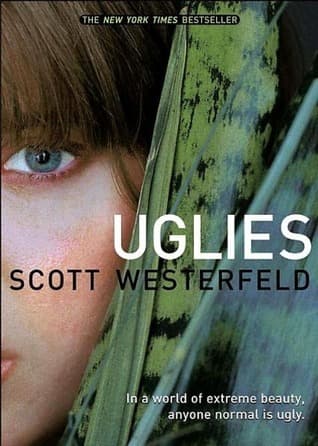
- Uglies
Scott Westerfeld
3.9 (560k) average on GoodreadsFantasyThe Supernaturalist and Uglies both feature protagonists rebelling against a technologically advanced, controlling society that manipulates its citizens. However, Uglies focuses heavily on themes of enforced conformity, beauty standards, and the loss of individuality through physical transformation. The Supernaturalist, in contrast, explores the exploitation of the vulnerable and the revelation of a hidden, parasitic ecosystem. While both deal with uncovering truth in a manufactured reality, Uglies is more explicitly about societal control over identity and appearance, whereas The Supernaturalist is about corporate exploitation and a hidden dimension of life.
- Harry Potter and the Sorcerer's Stone
J.K. Rowling
4.5 (7M) average on GoodreadsFantasyRescued from a miserable life under the stairs, an orphaned boy discovers he's a wizard destined for a magical school, where he uncovers a dangerous secret tied to the dark wizard who murdered his parents.
- 1984
George Orwell
4.2 (3.1M) average on GoodreadsPoliticsIn a future where surveillance and thought control are absolute, a man's search for truth clashes with the Party, showing that hope can be a form of rebellion.





Enjoyed the summary?
A summary gives you the shape of the book. The book itself has the detail, the examples and the voice.
Find The Supernaturalist on AmazonAs an Amazon Associate, BookBrief earns from qualifying purchases. How we're funded