

Synopsis
Covers the whole plot, including the ending.
- Difficulty
- Medium
- Pacing
- Variable
- Mood
- Apocalyptic, Suspenseful, Thought-provoking, Urgent
- Read it if
- You enjoy large-scale disaster thrillers with a strong scientific basis, ecological themes, and a sense of global peril, similar to 'The Day After Tomorrow' but with an intelligent, alien antagonist.
- Skip it if
- You prefer character-driven stories over plot-heavy narratives with extensive scientific exposition, or if you dislike open-ended conclusions.
The Swarm Plot Summary
Covers the whole plot, including the ending.
Unexplained Oceanic Phenomena Begin
The novel starts with strange and increasingly violent incidents from the ocean. Off British Columbia, whale researcher Leon Anawam finds whales acting very aggressively, then intentionally sinking a tourist boat. In Norway, a fisherman named Harald dies after finding a strange, cold, pulsating organism in the sea. Off Peru, an underwater landslide creates a large tsunami, destroying coastal areas. These events seem separate at first, but the scale and unusual precision of some, like the whale attack, begin to worry scientists and government agencies, suggesting a coordinated, intelligent force.
Early Investigations and Emerging Patterns
In France, marine biologist Dr. Cécile Roche investigates a new, deadly type of toxic jellyfish that spreads quickly. In the United States, molecular biologist Dr. Samantha Crowe studies a strange, eyeless crab species that has appeared in large numbers off Long Island, polluting water with a strong neurotoxin. Sigur Johanson, a Norwegian marine biologist and oil industry consultant, investigates the strange organism Harald found, identifying it as a new species with unusual traits. These scientists, along with others like Canadian whale expert Leon Anawam, slowly realize their different findings point to a global, organized threat, not just separate natural disasters.
The North Sea Tsunami and Global Crisis
The crisis worsens when the North Sea shelf collapses, causing a huge tsunami that devastates European coastlines, killing hundreds of thousands and causing massive economic and social chaos. This disaster, along with continued marine life attacks and new pathogens, forces world leaders to see how serious the situation is. The United Nations forms a special task force, bringing together leading scientists who have been studying these events. Sigur Johanson, Samantha Crowe, Cécile Roche, and Leon Anawam are among those chosen, tasked with understanding the threat and finding a solution.
The Search for the Source: Yrr Hypothesis
The international team, based on a research vessel, begins to combine their findings. Sigur Johanson, using his knowledge, suggests the 'Yrr' hypothesis: an intelligent, collective organism, previously unknown, living deep in the oceans, is causing the attacks. He thinks the Yrr are manipulating marine life and creating new species to fight humanity. This idea is met with doubt at first but gains support as more evidence appears, including complex, coordinated behaviors in marine animals and the fast evolution of new, hostile organisms. The team feels great pressure to prove their theory and find the Yrr's central intelligence.
Deep Sea Exploration and First Contact
To confirm the Yrr hypothesis and understand it, the team plans a risky deep-sea expedition. Using advanced submersibles, they go down into the abyssal plains, an area once thought to lack such complex life. They find vast, connected colonies of the Yrr: a gelatinous, bioluminescent, and very intelligent collective organism. The Yrr communicate through complex chemical signals and bio-electrical impulses, showing an advanced form of distributed intelligence. During this exploration, the team has direct, unsettling contact with the Yrr, realizing how large and alien their enemy is.
Understanding the Yrr's Motives
Through genetic analysis, observing behavior, and interpreting the Yrr's communication, the scientists start to understand the Yrr's reasons. They conclude that the Yrr are not evil but are reacting to humanity's constant pollution, overfishing, and climate change, which have badly harmed their ocean home. The Yrr see humanity as a parasitic threat to Earth's ecosystem and have started a planned, systematic response to remove humans and restore the ocean's balance. This realization creates a difficult moral problem for the team: are they fighting for survival, or are they the aggressors being rightly punished?
The Yrr's Escalation and Human Desperation
As the team deals with the Yrr's motives, attacks increase worldwide. More coastal cities are submerged by tsunamis, new pathogens appear, and marine life continues its coordinated assaults. Humanity's infrastructure breaks down, and society is close to collapse. Governments consider desperate measures, including military action, despite scientists' warnings that such actions would be useless and only cause a more severe response from the Yrr. The world faces a threat to its existence, and the scientific team works fast to find a peaceful solution or a way to stop the threat without further harming the planet.
The Plan for Communication
Knowing that military force is not an option, the scientific team, led by Sigur Johanson and Samantha Crowe, develops a risky plan: to try to communicate directly with the Yrr. Their plan involves creating a synthetic chemical signal that copies the Yrr's own complex communication patterns, hoping to show humanity's understanding of their complaints and a request for coexistence. This needs a lot of scientific skill, as they must decode and copy an alien language from a species with a very different view of reality. The plan's success depends on the Yrr's ability to understand and their willingness to stop their destructive campaign.
The Confrontation and the Message
A small, specialized team, including Sigur Johanson and Samantha Crowe, goes down in an advanced submersible to the deepest known Yrr colony, where they believe the main intelligence is. They deploy their specially designed communication device, sending the synthesized chemical message. The encounter is dangerous, as the Yrr respond with strong bio-electrical pulses and physical signs, testing the team's resolve. The message includes an apology for humanity's destructive actions and a promise of change and a request for a chance at living together, emphasizing shared responsibility for the planet's health. The tension is high as they wait for a response, unsure if their plea has been understood or if it will be met with more aggression.
The Yrr's Response and an Uncertain Future
After a period of quiet, the Yrr respond, not with words, but with complex bioluminescent patterns and subtle environmental changes. The scientists interpret this as a conditional truce. The Yrr signal that they understand humanity's message but demand concrete, immediate action to fix the ecological damage. They do not completely stop their operations but greatly reduce the intensity and frequency of their attacks, giving humanity a break. The novel ends with humanity facing the huge task of changing its relationship with the planet, knowing that the Yrr are still watching, and human survival depends on keeping their promise to protect the oceans. The future remains uncertain, with a fragile peace.
Principal Figures
Sigur Johanson
Protagonist
Norwegian marine biologist and oil industry consultant, key theorist of the Yrr.
Sigur Johanson is a brilliant but cynical marine biologist and an expert in deep-sea ecosystems. Initially working for an oil company, he becomes one of the first to recognize the unnatural patterns in the oceanic phenomena. His deep understanding of marine life, coupled with his sharp intellect, allows him to hypothesize the existence of the Yrr and later lead the scientific effort to understand and communicate with them. He is often critical of humanity's destructive impact on the environment, providing a moral compass for the scientific team. His personal life is marked by a sense of isolation and a dedication to his work.
Relationships: Samantha Crowe (scientific colleague and intellectual partner); Leon Anawam (scientific colleague); Cécile Roche (scientific colleague)
Samantha Crowe
Protagonist
American molecular biologist specializing in extremophiles.
Dr. Samantha Crowe is a highly intelligent and resourceful molecular biologist from the United States. She initially investigates the mysterious eyeless crabs off Long Island and quickly recognizes their unnatural characteristics. Her expertise in genetics and microbiology proves crucial in understanding the Yrr's biological mechanisms and their ability to manipulate existing species. Samantha is pragmatic and analytical, often balancing Sigur's more theoretical insights with practical scientific investigation. She plays a vital role in developing the communication strategy with the Yrr.
Relationships: Sigur Johanson (scientific colleague and intellectual partner); Leon Anawam (scientific colleague); Cécile Roche (scientific colleague)
Leon Anawam
Supporting
Canadian whale researcher and indigenous elder, first to witness the whales' aggression.
Leon Anawam is a respected whale researcher and a member of an indigenous community in British Columbia. He is among the first to witness the unprecedented aggression in whales and their coordinated attacks on human vessels. His deep connection to the ocean and his traditional knowledge provide a unique perspective, often sensing the deeper, spiritual implications of the unfolding crisis. Leon's observations are critical in establishing the early evidence of intelligent coordination among marine life. He is a calm and reflective presence on the scientific team.
Relationships: Sigur Johanson (scientific colleague); Samantha Crowe (scientific colleague)
Cécile Roche
Supporting
French marine biologist specializing in jellyfish and plankton.
Dr. Cécile Roche is a brilliant French marine biologist whose initial investigations focus on the rapid proliferation and increased toxicity of a new jellyfish species. Her work highlights the Yrr's ability to manipulate and weaponize even seemingly innocuous marine life. Cécile is highly analytical and dedicated, contributing crucial data on the biological spread and impact of the Yrr's agents. She often provides a grounded, practical scientific approach to the team's more theoretical discussions.
Relationships: Sigur Johanson (scientific colleague); Samantha Crowe (scientific colleague)
Gerhard Bohrmann
Supporting
German geophysicist, instrumental in understanding the North Sea shelf collapse.
Gerhard Bohrmann is a German geophysicist whose expertise becomes vital after the catastrophic North Sea shelf collapse. His research into underwater geological phenomena helps the team understand how the Yrr might be manipulating tectonic plates and seafloor structures to trigger tsunamis and other massive geological events. He provides the geological context for the Yrr's large-scale destructive capabilities, confirming that even the Earth's crust is not immune to their influence. Bohrmann is a pragmatic scientist focused on data and evidence.
Relationships: Sigur Johanson (scientific colleague)
Tina Lund
Supporting
Norwegian naval officer and security specialist.
Tina Lund is a capable and intelligent Norwegian naval officer assigned to the international task force. She is responsible for security, logistics, and coordinating military and governmental responses to the escalating crisis. While initially skeptical of the scientific team's more outlandish theories, she quickly adapts to the unprecedented nature of the threat. Tina provides a crucial link between the scientific community and the military/political establishment, ensuring the team has the resources and protection needed for their dangerous research.
Relationships: Sigur Johanson (colleague, often providing logistical support)
Murray Shang
Supporting
American intelligence analyst and liaison.
Murray Shang is an American intelligence analyst who serves as a liaison between the scientific task force and the U.S. government/intelligence agencies. He is initially tasked with assessing the threat from a national security perspective. Shang is sharp, pragmatic, and often acts as a voice of caution or skepticism, representing the political and military concerns that often conflict with the scientific approach. His role is to ensure the scientific team's findings are communicated effectively to decision-makers, while also relaying governmental pressures and expectations.
Relationships: Samantha Crowe (colleague, often providing governmental oversight)
The Yrr
Antagonist
A collective, intelligent, deep-sea organism, orchestrating the attacks on humanity.
The Yrr are the primary antagonists, a previously unknown, highly intelligent, and collective deep-sea organism. They are not a single entity but a vast network of interconnected, gelatinous life forms that communicate chemically and bio-electrically. The Yrr possess the ability to manipulate existing marine life, create new species, and even influence geological processes. Their actions are driven by a perceived existential threat from humanity's destruction of the oceans. They operate with a cold, calculating efficiency, viewing humanity as a planetary parasite that must be eradicated to restore ecological balance. They represent an alien intelligence with a fundamentally different understanding of life and purpose.
Relationships: Humanity (antagonistic, predator/prey relationship, later a conditional truce)
Themes & Insights
Humanity's Impact on the Environment
The main theme of 'The Swarm' is the destructive impact of human activity on the global environment, especially the oceans. The Yrr's 'revenge' comes directly from pollution, climate change, and overfishing. The novel details the scientific evidence of ecological harm, from plastic pollution to ocean acidification, arguing that humanity is destroying its own habitat. This theme warns that nature's retaliation, though fictional, is a possible result of uncontrolled environmental damage. The entire global crisis comes from this basic imbalance caused by human neglect.
“We are a plague, a cancer on this planet, and the planet is finally fighting back.”
The Limits of Human Understanding and Arrogance
The book explores humanity's belief that it is the top predator and only intelligent species. The initial failure to understand the Yrr's existence or reasons comes from this human-centered view. Scientists first dismiss the events as natural disasters, showing a failure to consider life forms beyond human understanding. Even when the Yrr's intelligence is clear, there is a struggle to accept that another species could plan such a complex attack. This theme criticizes human pride and highlights the vastness of unknown life forms and intelligences that might exist, questioning our place in the global ecosystem.
“We thought we were alone at the top of the food chain, alone in our intelligence. The ocean just proved us wrong.”
Interconnectedness of Life and Ecosystems
'The Swarm' shows how connected global ecosystems are. The Yrr, as a collective intelligence, shows this theme, demonstrating how a single, widespread species can affect everything from whale behavior to geological stability. The ripple effects of humanity's environmental damage, from local pollution to global climate change, are shown to have far-reaching results across the planet. The novel argues that no part of Earth's system exists alone, and disrupting one element can lead to unexpected and disastrous chain reactions across the whole biosphere.
“Every molecule, every creature, every current is part of an unimaginable whole. We broke it.”
Communication and Misunderstanding Between Species
A main theme is the challenge of communication, especially between very different forms of intelligence. The Yrr's actions are first seen as random attacks, but later understood as a form of communication—a desperate plea and then a declaration of war against humanity. The scientific team's goal is to create a shared language with the Yrr, not with words, but with chemical signals and a shared understanding of ecological principles. This theme highlights how hard, yet important, it is to bridge conceptual differences with alien intelligences, even when planetary survival is at stake.
“How do you apologize to an ocean? How do you ask for peace from something that doesn't think in our terms?”
Scientific Responsibility and Ethics
The novel looks at the ethical duties of scientists, especially when facing global disaster and the chance for big discoveries. The scientists on the task force deal with the moral meaning of their findings—admitting humanity's fault, considering military solutions versus peaceful coexistence, and taking on the big task of communicating with an alien intelligence. The book questions science's role not just in discovery, but in offering solutions and guiding humanity toward a more sustainable future, even when those solutions are extreme and demand big societal change.
“Our job isn't just to understand the threat, it's to find a way for us to survive it, even if that means changing everything we are.”
Plot Devices & Literary Techniques
Distributed Collective Intelligence (The Yrr)
The primary antagonist, an alien intelligence spread across the global ocean.
The Yrr serve as the central plot device, representing an entirely new form of life and intelligence. Unlike a single antagonist, the Yrr is a collective organism, a 'swarm intelligence' that communicates and acts as a unified entity across vast oceanic distances. This device allows for a global threat that can manipulate diverse marine life and geological forces simultaneously. It challenges human assumptions about intelligence and agency, forcing the characters to confront a foe that is everywhere and nowhere, making traditional military responses obsolete and necessitating a scientific and diplomatic approach.
Escalating Global Catastrophes
A series of increasingly severe and coordinated events driving the plot forward.
The narrative employs a device of escalating global catastrophes. The plot begins with isolated, strange events (whale attacks, toxic crabs) and gradually builds to continent-spanning tsunamis and worldwide ecological collapse. This continuous escalation maintains high stakes and urgency, forcing humanity to acknowledge the threat and compelling the scientific team to act quickly. Each new disaster reveals another facet of the Yrr's capabilities and further narrows humanity's options, driving the characters towards increasingly desperate and unconventional solutions.
Multiple Scientific Perspectives
The use of diverse scientific specialists to piece together a complex puzzle.
The novel utilizes a device where different scientific specialists (marine biologists, molecular biologists, geophysicists, whale researchers) contribute their unique expertise to a unified investigation. This allows for a multi-faceted understanding of the complex, global threat posed by the Yrr. Each character's initial localized investigation eventually feeds into a larger, interconnected picture, demonstrating how diverse fields of science are necessary to comprehend a truly global and interdisciplinary phenomenon. It also helps to build a sense of realism and scientific rigor within the narrative.
Scientific Thriller Pacing
Combines detailed scientific exposition with high-stakes action and mystery.
Schätzing employs a scientific thriller pacing, blending extensive scientific detail and exposition with a fast-moving, high-stakes plot. Chapters often alternate between detailed explanations of marine biology, geology, and chemistry, and dramatic action sequences involving natural disasters or dangerous expeditions. This device educates the reader about complex scientific concepts while simultaneously building suspense and maintaining the urgency of the unfolding crisis. It allows the author to explore scientific realism without sacrificing the tension and excitement of a thriller.
The 'Alien' Communication Challenge
The central problem of establishing contact with a non-human intelligence.
A crucial plot device is the challenge of establishing communication with the Yrr. Since the Yrr are an alien intelligence with a fundamentally different biology and communication method (chemical and bio-electrical signals), the scientists must decipher and replicate this 'language.' This device creates intellectual suspense and drives much of the latter half of the plot, as the team works to develop a message that can be understood by the Yrr. It highlights the profound difficulty of interspecies dialogue, especially when one species is actively trying to eradicate the other.
The Swarm Quotes
“The sea is not just a collection of water; it is a living, breathing entity, with its own will and its own memory.”
“Humanity's greatest flaw is its inability to see beyond its own species.”
“We are not alone. We never have been.”
“What if the monster isn't coming from outside, but from within?”
“The ocean doesn't forgive. It simply reclaims.”
“Fear is a powerful motivator, but it can also blind us to the truth.”
“Every action has an equal and opposite reaction. The ocean is simply responding.”
“Sometimes, the most terrifying thing is not what we don't know, but what we refuse to believe.”
“We are guests on this planet, not its owners.”
“The deeper you go, the stranger it gets. And the deeper you go, the more it knows.”
“There are more things in heaven and earth, Horatio, than are dreamt of in your philosophy.”
“The swarm is not just a collection of individuals; it is a single, unified consciousness.”
“To survive, we must adapt. But what if adaptation means changing who we are?”
“The greatest threat to life on Earth might not be an asteroid, but the very life that thrives beneath the waves.”
Quiz
10 questions on the plot and the characters. Each answer comes with a short explanation.
Question 1
What is one of the first major unusual events that signals the ocean's 'rebellion' in 'The Swarm'?
- A massive tsunami strikes the coast of Japan without warning.
- Whales begin sinking ships by deliberately ramming them.
- All major coral reefs worldwide suddenly turn white and die.
- Deep-sea trenches start emitting strange, bioluminescent light.
Show answer
B. Whales begin sinking ships by deliberately ramming them. One of the initial and most dramatic signs of the ocean's coordinated attack is when whales, particularly sperm whales, begin to actively and intelligently sink ships, a key plot point early in the book.
Question 2
Which specific marine creature is responsible for poisoning Long Island's water supply?
- Genetically modified jellyfish
- Toxic, eyeless crabs
- Bioluminescent algae blooms
- Parasitic deep-sea worms
Show answer
B. Toxic, eyeless crabs The book details how a new species of toxic, eyeless crabs emerges and contaminates the water systems around Long Island, causing widespread illness and death.
Question 3
What catastrophic geological event occurs in the North Sea, killing thousands in Europe?
- A massive underwater volcanic eruption
- The sudden collapse of the North Sea shelf
- An unprecedented magnitude 9.0 earthquake
- The rapid melting of Arctic ice causing localized super-tsunamis
Show answer
B. The sudden collapse of the North Sea shelf A major event that devastates Europe is the collapse of the North Sea shelf, which triggers tsunamis and causes immense destruction and loss of life.
Question 4
What is the collective intelligence or organism believed to be orchestrating the ocean's attacks called by the scientists?
- The Abyssal Mind
- The Yrr
- The Deep One
- Oceanus
Show answer
B. The Yrr The scientists in the book eventually identify the intelligent, collective organism responsible for coordinating the global oceanic phenomena as 'The Yrr'.
Question 5
What is the primary motivation attributed to the ocean's 'revenge' against humanity?
- A natural evolutionary cycle of planetary cleansing.
- The Yrr's inherent desire for territorial expansion.
- Humanity's relentless pollution and destruction of marine ecosystems.
- An accidental side effect of deep-sea drilling operations.
Show answer
C. Humanity's relentless pollution and destruction of marine ecosystems. The core theme and explanation for the ocean's violent reaction is humanity's destructive impact on the marine environment, leading the Yrr to perceive humans as a threat that needs to be eradicated.
Question 6
Which scientific discipline plays a crucial role in understanding and combating the Yrr?
- Astrophysics
- Marine biology and deep-sea research
- Theoretical quantum physics
- Paleontology
Show answer
B. Marine biology and deep-sea research Given that the threat originates from the ocean and involves marine life, marine biology, oceanography, and deep-sea research are central to the scientific team's efforts to understand the Yrr.
Question 7
How do the Yrr typically communicate or influence other marine life to act on their behalf?
- Through emitting specific pheromones that trigger aggression.
- By physically attaching to and controlling the nervous systems of creatures.
- Through complex bio-electrical signals and chemical messengers.
- Using advanced sonar frequencies that induce hypnotic states.
Show answer
C. Through complex bio-electrical signals and chemical messengers. The Yrr are depicted as having the ability to manipulate other marine organisms through bio-electrical and chemical signals, effectively 'hacking' their instincts and behavior to coordinate attacks.
Question 8
What is the ultimate, desperate plan devised by the human scientists to try and stop the Yrr's attacks?
- Detonating a massive nuclear device in the deepest ocean trench.
- Creating a bioweapon designed to specifically target and destroy the Yrr's genetic structure.
- Attempting direct communication with the Yrr through a human-Yrr hybrid interface.
- Developing a global network of sound emitters to drive the Yrr away from human settlements.
Show answer
C. Attempting direct communication with the Yrr through a human-Yrr hybrid interface. The most audacious and risky plan involves sending a human into the Yrr's domain to attempt direct communication and understanding, hoping to find a peaceful resolution or at least a way to convey humanity's plea.
Question 9
The Yrr are described as being fundamentally different from any known terrestrial life form in what key aspect?
- They are composed entirely of inorganic crystalline structures.
- They exist as a distributed, collective intelligence without a single, centralized 'brain'.
- They are capable of teleportation across vast oceanic distances.
- Their life cycle requires them to periodically leave the water and live on land.
Show answer
B. They exist as a distributed, collective intelligence without a single, centralized 'brain'. A crucial revelation about the Yrr is that they are not a single, individual organism but a vast, distributed collective intelligence, where each 'individual' part contributes to the whole, making them incredibly resilient and difficult to target.
Question 10
What is the philosophical implication or warning that 'The Swarm' ultimately conveys about humanity's relationship with nature?
- That nature is inherently hostile and must be conquered for human survival.
- That humanity's technological advancement will always overcome ecological threats.
- That unchecked exploitation of the environment can lead to catastrophic, intelligent retaliation from nature itself.
- That alien life forms are secretly manipulating Earth's ecosystems.
Show answer
C. That unchecked exploitation of the environment can lead to catastrophic, intelligent retaliation from nature itself. The central theme of 'The Swarm' is a stark warning about the consequences of humanity's environmental degradation. It posits that nature, pushed to its breaking point, might not just passively suffer but actively fight back, with intelligence and devastating force.
The Swarm FAQ
What is 'The Swarm' about?
'The Swarm' is a global science fiction thriller where the ocean's creatures, from whales to microscopic organisms, begin to systematically attack humanity. Led by a sentient, collective intelligence known as the Yrr, these attacks escalate from isolated incidents to widespread catastrophes, forcing scientists and military personnel to uncover the reason behind the ocean's violent rebellion and find a way to stop it before mankind is annihilated.
Why should I read 'The Swarm'?
You should read 'The Swarm' for its epic scale, scientifically plausible scenarios, and a gripping narrative that blends ecological disaster with a deep-sea mystery. It offers a thought-provoking look at humanity's impact on the environment and presents a truly alien intelligence, pushing readers to consider the ocean not just as a resource but as a living, potentially hostile entity.
What is the background/setting of 'The Swarm'?
The story unfolds across multiple global locations, including the Norwegian fjords where whale attacks begin, the coasts of British Columbia, the United States where toxic crabs emerge, and the deep-sea research facilities where scientists like Sigur Johanson and Leon Anawak investigate the anomalies. The primary setting is contemporary Earth, grappling with the unprecedented environmental and biological threats emanating from the world's oceans.
What writing style does Frank Schätzing use in 'The Swarm'?
Schätzing employs a highly detailed and scientifically rigorous writing style, often integrating extensive explanations of marine biology, geology, and physics directly into the narrative. His prose is descriptive and immersive, building suspense through a slow burn of escalating global incidents and shifting perspectives among a large international cast of characters.
What minor details add significant meaning in 'The Swarm'?
The repeated mention of the Yrr's ability to manipulate electromagnetic fields and acoustic signals is crucial, explaining how they can disrupt human technology and communicate across vast distances. Also, the subtle hints that the Yrr might have been observing humanity for centuries, not just recently, deepen the sense of an ancient, patient intelligence at play.
What are some subtle foreshadowing moments in 'The Swarm'?
Early on, the unusual, almost coordinated behavior of the whales, such as their synchronized attacks and the way they seem to target specific vessels, foreshadows a guiding intelligence rather than mere animal instinct. Additionally, the inexplicable 'singing' detected from the deep ocean hints at the Yrr's advanced communication methods long before their existence is confirmed.
What unexpected character connections exist in 'The Swarm'?
An unexpected connection is between the brilliant but reclusive marine biologist Sigur Johanson and the pragmatic, often skeptical military advisor, Judith Li. Despite their initial clashes, their intellectual synergy and mutual respect become vital in understanding the Yrr. Another is the shared scientific pursuit that unites diverse experts like Dr. Tina Lund and Leon Anawak across continents, forming an ad-hoc global team.
What are unspoken character motivations in 'The Swarm'?
Sigur Johanson's relentless pursuit of the truth about the ocean's anomalies is driven not just by scientific curiosity but by a deep-seated ecological conscience and a sense of responsibility for humanity's destructive impact. Leon Anawak's dedication to understanding the whales is motivated by a profound connection to his Inuit heritage and a spiritual respect for nature that goes beyond mere scientific study.
What psychological complexities do characters exhibit in 'The Swarm'?
Characters like Sigur Johanson grapple with the immense pressure of global catastrophe, often isolating themselves due to the burden of knowledge and the skepticism of others. General Judith Li struggles with the moral dilemmas of military intervention versus scientific understanding, constantly balancing aggression with diplomacy. Their complexities highlight humanity's diverse reactions to an existential threat.
What are the major emotional turning points in 'The Swarm'?
A major emotional turning point is when the scientists, particularly Johanson and Anawak, finally accept that the ocean's attacks are not random natural disasters but orchestrated by a sentient, collective intelligence. Another is the sinking of the research vessel 'T. S. Eliot,' which solidifies the danger and the Yrr's capabilities, shifting the tone from investigation to desperate survival.
How do relationship dynamics evolve in 'The Swarm'?
Initially, the global scientific and military factions exhibit mistrust and competition, often hindering progress. However, as the Yrr's threat escalates, these dynamics evolve into reluctant cooperation and eventually, a unified front against a common enemy. The personal relationships, like that between Johanson and Li, transform from professional friction to a bond forged in shared crisis.
Which parts of 'The Swarm' remain ambiguous or open-ended?
The ultimate fate of the Yrr and humanity's long-term relationship with the ocean remains somewhat ambiguous. While a temporary truce is established, the novel leaves open whether humanity has truly learned its lesson and if the Yrr will ever fully trust mankind again. The full scope of the Yrr's intelligence and its true origins are also only partially revealed.
What are controversial scenes or decisions in 'The Swarm'?
A controversial decision is the repeated consideration, and at one point actual use, of aggressive military force against the Yrr, despite scientific warnings that such actions could provoke an even greater retaliation. The ethical debate surrounding humanity's right to defend itself at any cost versus the need to understand and coexist with a non-human intelligence is a central theme.
'The Swarm' ending explained: how it ends & what it means
The book ends with the scientists, led by Johanson and Anawak, making a desperate attempt to communicate with the Yrr using a human-like avatar. They manage to convey humanity's plea for coexistence and the Yrr, after demonstrating its devastating power, agrees to a temporary cessation of hostilities. The ending signifies a fragile truce and a stark warning: humanity must fundamentally change its relationship with the planet, or face inevitable destruction from the very environment it has abused, highlighting a future of uneasy coexistence rather than outright victory.
About the author
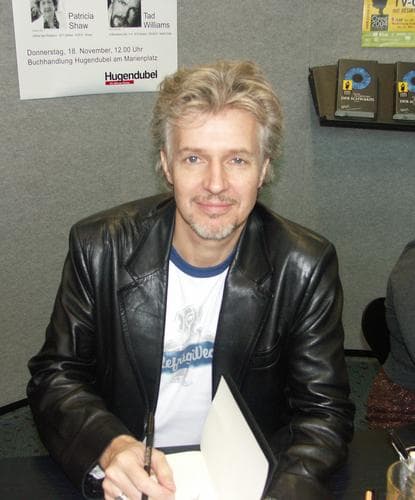
Frank Schätzing is a German author known for his works of fiction, particularly in the thriller and science fiction genres. His notable book, "The Swarm," explores ecological themes and the impact of human actions on the environment. Schätzing's writing often combines scientific concepts with engaging narratives.
Similar books
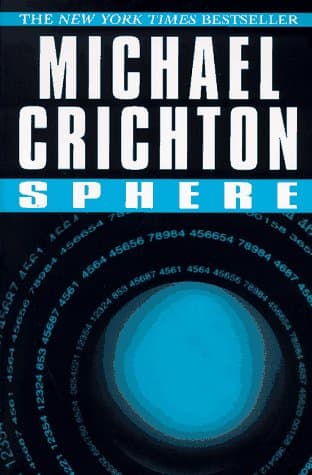
- Sphere
Michael Crichton
3.8 (167k) average on GoodreadsThrillerFeatures a team of scientists investigating an intelligent, mysterious entity in a deep-sea setting.
- Angels & Demons
Dan Brown
3.9 (2.7M) average on GoodreadsThrillerA Harvard symbologist races through Rome's ancient sites, deciphering cryptic clues to unmask the Illuminati and stop a vengeful plot to destroy the Vatican with a stolen antimatter weapon.
- Gone Girl
Gillian Flynn
4.1 (2.3M) average on GoodreadsThrillerA wife's sudden disappearance on her fifth anniversary reveals a web of lies and psychological warfare, exposing the secrets within a seemingly perfect marriage.
- The Girl on the Train
Paula Hawkins
3.9 (2.1M) average on GoodreadsThrillerA woman’s fascination with a seemingly perfect couple she watches from her daily train commute leads her into a dark investigation when she witnesses something that shatters their idyllic image.
- The Da Vinci Code
Dan Brown
3.9 (1.9M) average on GoodreadsThrillerA symbologist and a cryptologist race through European landmarks, deciphering ancient codes and uncovering a conspiracy that could rewrite the foundations of Christianity.
- The Guest List
Lucy Foley
3.8 (1.3M) average on GoodreadsThrillerOn a remote Irish island, a glamorous wedding descends into a deadly whodunnit when a guest is found murdered, trapping everyone with their secrets as a storm rages.





Enjoyed the summary?
A summary gives you the shape of the book. The book itself has the detail, the examples and the voice.
Find The Swarm on AmazonAs an Amazon Associate, BookBrief earns from qualifying purchases. How we're funded