
Synopsis
Covers the whole plot, including the ending.
- Difficulty
- Easy
- Pacing
- Fast
- Mood
- Humorous, Adventurous, Mythological, Exciting
- Read it if
- You enjoy fast-paced, humorous adventure stories rooted in mythology, similar to the Percy Jackson series.
- Skip it if
- You prefer serious, gritty fantasy or dislike a lighthearted, often sarcastic narrative voice.
The Sword of Summer Plot Summary
Covers the whole plot, including the ending.
Magnus Chase's Unconventional Life and Unexpected Encounter
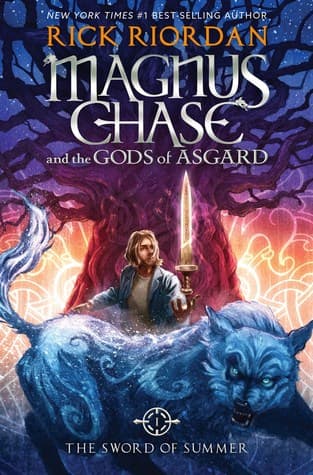
Magnus Chase, a sixteen-year-old orphan, has lived on the streets of Boston for two years since his mother's death. He survives with his friends Blitz and Hearth, pickpocketing and scavenging. On his birthday, his uncle Randolph, whom his mother had warned him to avoid, tracks him down. Randolph reveals Magnus's true heritage as a son of a Norse god and tells him that a powerful ancient sword, Sumarbrander (Sumar), has been lost in Boston Harbor for centuries. Before Magnus can fully process this, a fire giant, Surt, attacks the Longfellow Bridge, seeking the sword to begin Ragnarok. Magnus tries to protect innocent bystanders from Surt's fiery attack.
A Hero's Death and Arrival at Valhalla
During the confrontation on the Longfellow Bridge, Magnus confronts Surt, who searches for the Sword of Summer. In an attempt to buy time for civilians and distract the giant, Magnus sacrifices himself, impaling Surt with a shard of glass before being consumed by the giant's fire and falling into the icy Charles River. His death is not the end. He awakens in a grand hall, tended to by a Valkyrie named Samirah al-Abbas (Sam). She explains that his heroic death has qualified him for Valhalla, the afterlife for valiant warriors chosen by Odin. Sam takes him to the Hotel Valhalla, a luxurious, ever-rebuilding mansion in Asgard.
The Feast and the Fates
At his first feast in Valhalla, Magnus meets the einherjar, chosen warriors who train daily and die spectacularly, only to be resurrected for dinner. He meets his hallmates, including the giant-slayer Halfborn Gunderson and the shieldmaiden Mallory Keen. His arrival, however, is controversial. The Norns, the Fates of Norse mythology, appear and declare that Samirah al-Abbas chose Magnus prematurely. They say his death was not heroic enough for Valhalla. They proclaim that he is a 'wolf-son' and that his presence means a great evil is coming; he will fail to retrieve the Sword of Summer, thus hastening Ragnarok.
Samirah's Demotion and Magnus's Quest
Because of the Norns' pronouncement and the 'unworthiness' of Magnus's death, Samirah al-Abbas is stripped of her Valkyrie wings and banished from Valhalla. Despite the skepticism of the other einherjar and the gods, the goddess Freyja, Valhalla's manager, gives Magnus a quest: he must find and retrieve the Sword of Summer himself, as it is now with Surt. If he fails, Ragnarok will begin. Magnus, bewildered and still adjusting to his new reality, accepts. He realizes his life, even in death, is now tied to the fate of the Nine Worlds.
Escape from Valhalla and Alliance with Old Friends
Magnus, aided by his new einherjar friends, Halfborn and Mallory, escapes Valhalla. He uses one of the hotel's magical doors, which only those on a quest can open. He finds himself back in Boston and quickly reunites with his former homeless friends: Blitzen, a dwarf who cares about fashion, and Hearthstone, a deaf elf who communicates through runic sign language. They reveal they are not ordinary mortals but magical beings who have watched over him. They agree to help Magnus on his quest to find the Sword of Summer, as they also want to prevent Ragnarok.
Journey to Nidavellir and the Dwarven Forges
The trio, with the now-mortal Samirah, travels to Nidavellir, the realm of the dwarves, through a magical portal. They seek a new weapon for Magnus, as the Sword of Summer is still missing. In Nidavellir, they meet Blitzen's father, Bilí, and navigate dwarven society, where craftsmanship and fashion are important. They learn about the dangers of the realm and the importance of precise dealings with dwarves. Blitzen, using his knowledge of dwarven fashion, secures a magical chainmail shirt for Magnus, which is crucial for his protection.
Encounter with the Gods and a Warning
During their quest, Magnus and his companions encounter Thor, the god of thunder, who is more interested in watching TV than world-saving. Thor, while initially dismissive, eventually offers some cryptic advice and a warning about Loki's manipulative nature. It becomes clear that Loki, the god of mischief, is pulling strings behind the scenes. He orchestrates events and uses various figures to further his agenda. This adds another layer of complexity to Magnus's quest, as he realizes he is not just fighting giants but also navigating divine politics and deception.
Retrieving the Sword of Summer
The group eventually finds the Sword of Summer, Sumarbrander, not in a grand temple or a giant's lair, but in Randolph Chase's apartment. It is revealed that Randolph, under Loki's influence, had tried to find the sword himself, believing it was his birthright. The sword, which can transform into a small runic pendant, is sentient and chooses Magnus as its wielder, recognizing him as the rightful son of Frey. This moment confirms Magnus's connection to his divine heritage and the sword's power.
Confrontation with Fenris Wolf
The quest ends in a confrontation with the monstrous Fenris Wolf, who is chained on an island. Loki's plan is revealed: he intends to free Fenris and bring about Ragnarok. Magnus, Sam, Blitzen, and Hearthstone, along with Sumar, must work together to prevent Fenris's escape. The battle is fierce, testing their combined strengths and loyalties. Magnus learns to wield Sumar effectively, understanding its sentience and power. The fight highlights the grave consequences of Loki's plans and the power of the mythical creatures they face.
The Binding of Fenris and the Price of Victory
Through strategy and the group's combined efforts, Magnus re-binds Fenris Wolf using the magical rope Gleipnir, a prophesied task. However, the victory has a cost. Hearthstone sacrifices a significant portion of his life force to use powerful magic during the battle, weakening him severely. The Norns' prophecy about Magnus being a 'wolf-son' and being involved in Fenris's binding is fulfilled. The true meaning of his role in preventing Ragnarok remains unclear. The event leaves the group shaken but victorious, with Fenris temporarily contained.
Return to Valhalla and a New Understanding
After re-binding Fenris and preventing a premature Ragnarok, Magnus returns to Valhalla as a recognized hero. The gods, especially Odin, acknowledge his bravery and the importance of his actions. Samirah al-Abbas is reinstated as a Valkyrie, her honor restored. Magnus is now fully accepted as an einherji, but he carries the weight of his experiences and the knowledge of Loki's ongoing schemes. He realizes that his death was only the beginning of a larger, more dangerous journey within the Nine Worlds, and that his purpose is far from over.
Principal Figures
Magnus Chase
Protagonist
A sarcastic, compassionate homeless demigod, son of Frey.
Magnus is initially a cynical, street-smart sixteen-year-old orphan who has lived on the streets of Boston for two years. He's resourceful, quick-witted, and possesses a strong moral compass, often putting others' safety before his own. Despite his sarcastic exterior, he is deeply compassionate and fiercely loyal to his friends. He struggles with his past traumas, particularly his mother's death, and his newfound identity as a demigod. He has a unique connection to healing magic and nature, stemming from his divine parentage.
Relationships: Natalie Chase (Deceased mother, mortal); Randolph Chase (Estranged uncle, mortal, manipulated by Loki); Freya (Divine mother, goddess of love, beauty, fertility); Samirah al-Abbas (Valkyrie, friend, love interest in later books, partner in quest); Blitzen (Dwarf, friend, protector, fashion consultant); Hearthstone (Elf, friend, protector, magical practitioner); Sumarbrander (Jack) (Sentient sword, companion, weapon)
Samirah al-Abbas
Supporting
A brave, devout Muslim Valkyrie, daughter of Loki.
Samirah, or Sam, is a seventeen-year-old Valkyrie who initially brings Magnus to Valhalla. She is courageous, fiercely independent, and devout in her Muslim faith, often balancing her duties as a Valkyrie with her cultural and religious obligations. She is intelligent and perceptive, though sometimes impulsive. Her family life is complicated by her divine parentage as a daughter of Loki, which often leads to suspicion and prejudice from other gods and demigods. She is engaged to Amir Fadlan, a mortal.
Relationships: Loki (Divine father, god of mischief); Magnus Chase (Einherji she chose, friend, quest partner); Amir Fadlan (Mortal fiancé); Freyja (Manager of Valhalla, her superior)
Blitzen (Blitz)
Supporting
A fashion-forward dwarf who is an expert in clothing and crafting.
Blitzen is one of Magnus's homeless friends who is secretly a dwarf, son of Bilí. He is an outlier in dwarven society due to his passion for fashion and sunlight, which can turn dwarves to stone. He is loyal, protective, and surprisingly resourceful, often using his keen eye for style to navigate tricky situations. He possesses an encyclopedic knowledge of fabrics, tailoring, and dwarven craftsmanship, which proves invaluable on their quest. He often acts as a calming presence and a source of practical advice for the group.
Relationships: Magnus Chase (Friend, protégé he watches over); Hearthstone (Best friend, partner in protecting Magnus); Bilí (Father, master craftsman)
Hearthstone (Hearth)
Supporting
A deaf elf who communicates through runic sign language and wields powerful magic.
Hearthstone is another of Magnus's homeless friends, secretly an elf. He is deaf and communicates through a specialized runic sign language. He is a skilled practitioner of elven magic, though his powers come at a great personal cost. Hearth is often quiet and withdrawn, haunted by a tragic past involving his family and a powerful curse. Despite his solemn demeanor, he is fiercely loyal and self-sacrificing, always willing to use his magic to protect his friends, even if it means depleting his own life force. He has a dry wit and a deep understanding of ancient lore.
Relationships: Magnus Chase (Friend, protégé he watches over); Blitzen (Best friend, partner in protecting Magnus); Andiron (Deceased brother, source of his trauma); Randolph Chase (Former master/teacher of magic)
Sumarbrander (Jack)
Supporting
A sentient, talking sword that transforms into a pendant.
Sumarbrander, affectionately known as Jack, is the legendary Sword of Summer. He is not merely a weapon but a sentient being with a distinct personality: arrogant, boastful, and surprisingly cheerful. He can fly, glow, and cut through almost anything. He chooses his wielder and can transform into a small runic pendant for concealment. Jack frequently offers unsolicited advice, often in song, and has a strong sense of loyalty to his chosen master, Magnus. He is a powerful magical artifact tied to the fate of Ragnarok.
Relationships: Magnus Chase (Chosen wielder, master); Frey (Original owner, divine father of Magnus)
Loki
Antagonist
The manipulative Norse god of mischief and lies, father of Samirah and Fenris.
Loki is the primary antagonist, though often operating from the shadows. He is cunning, charming, and a master manipulator, capable of twisting events and people to serve his own ends. He is driven by a desire to bring about Ragnarok and challenge the established order of the gods. As the father of Samirah, Fenris Wolf, and other monstrous beings, his influence is far-reaching and deeply personal for many characters. He revels in chaos and deception, making him a formidable and unpredictable foe.
Relationships: Samirah al-Abbas (Daughter, whom he tries to manipulate); Fenris Wolf (Son, whom he seeks to free); Randolph Chase (Mortal he manipulates and influences); The Aesir (Opponent, whom he seeks to overthrow)
Randolph Chase
Supporting
Magnus's estranged, academically obsessed uncle, manipulated by Loki.
Randolph is Magnus's maternal uncle, a disgraced Harvard professor of Norse mythology. He is obsessed with uncovering ancient artifacts and restoring his family's honor, believing it's his birthright. His ambition and desperation make him susceptible to Loki's manipulations. He is initially portrayed as a somewhat sinister figure, but his actions are often driven by a misguided sense of duty and a desire for recognition. He has a deep, if flawed, knowledge of Norse lore.
Relationships: Magnus Chase (Nephew, whom he initially seeks to exploit); Loki (Manipulator, master); Natalie Chase (Deceased sister)
Surt
Antagonist
A primordial fire giant from Muspellheim, destined to bring Ragnarok.
Surt is a colossal fire giant, a powerful being from Muspellheim. He is one of the primary catalysts for the novel's initial conflict, as he seeks the Sword of Summer to usher in Ragnarok, the twilight of the gods. He is depicted as a force of destructive nature, wielding a flaming sword and capable of immense devastation. His role is to challenge the established order and bring about the end of the worlds, making him a formidable and terrifying foe for Magnus.
Relationships: Magnus Chase (Enemy, whom he kills); Loki (Indirect ally in bringing about Ragnarok)
Themes & Insights
Family and Identity
The novel explores how family, both biological and chosen, shapes identity. Magnus grapples with memories of his mortal mother and the revelation of his divine parentage as a son of Frey. He finds a new 'family' in his friends, Blitzen and Hearthstone, and later in his hallmates in Valhalla, who accept him despite his unusual circumstances. Samirah's identity is challenged by her lineage as a daughter of Loki and her devout Muslim faith, forcing her to reconcile seemingly opposing aspects of herself. The idea of family extends beyond blood, emphasizing loyalty and acceptance.
“Family is not always blood. It's the people in your life who want you in theirs. The ones who accept you for who you are. The ones who would do anything to see you smile, and who love you no matter what.”
Heroism and Sacrifice
Heroism is central, especially in Valhalla. Magnus's initial death, though seemingly accidental, is seen as heroic because he selflessly protected others. The book challenges traditional notions of a 'warrior's death,' suggesting that bravery can appear in many forms, not just on the battlefield. Characters like Hearthstone make sacrifices, using their life force for the greater good, showing that heroism often comes with a personal cost. The story questions what truly makes a hero in a world of gods and monsters.
“Sometimes, the only way to start a new life is to die.”
Prejudice and Acceptance
The characters often face prejudice based on their lineage or appearance. Samirah, as a daughter of Loki, is constantly viewed with suspicion, even by other gods and Valkyries, despite her loyalty. Blitzen, a dwarf who loves fashion, is an outcast in his own society, seen as 'un-dwarflike.' Hearthstone, a deaf elf, carries the burden of his family's judgment. Magnus himself is initially seen as an 'unworthy' einherji. The story advocates for judging individuals by their actions and character rather than by their heritage or perceived differences. It promotes themes of acceptance and understanding.
“Just because someone is from a certain family doesn't mean they'll be just like the rest of them.”
Destiny vs. Free Will
The Norns' prophecies and the impending Ragnarok create a sense of destiny. Magnus is told he is a 'wolf-son' and that he will fail, yet he makes choices that defy these predictions. The characters struggle with fate, trying to carve their own paths while knowing that powerful, ancient forces are at play. Loki's manipulations further blur the lines, as characters like Randolph believe they are acting freely but are actually pawns in a larger scheme. This theme explores whether individuals can truly alter their predetermined future or if their choices are merely steps on a destined path.
“The Norns have spoken. You will fail. Ragnarok will come.”
Plot Devices & Literary Techniques
The Prophecy of Ragnarok
The overarching apocalyptic event that drives the primary conflict.
Ragnarok, the 'Twilight of the Gods,' serves as the central looming threat. The prophecy dictates a series of events leading to the destruction of the Nine Worlds, including the freeing of Fenris Wolf and the battle between gods and giants. This device creates a constant sense of urgency and high stakes, as Magnus and his companions are continually working to delay or prevent its onset. It also frames the importance of the Sword of Summer and Magnus's role as a son of Frey, directly connecting his personal journey to the fate of the cosmos.
Sentient Magical Item (Sumarbrander/Jack)
A powerful, talking sword that chooses its wielder and aids in battle.
The Sword of Summer, Sumarbrander (Jack), is not just a weapon but a character in itself. Its sentience, ability to talk, and distinct personality (boastful, loyal, sometimes annoying) make it a unique plot device. It guides Magnus, offers advice, and actively participates in battles. Its ability to transform into a pendant allows for concealment and ease of transport. Jack's presence ensures that Magnus always has a magical, albeit opinionated, ally, and its power is crucial for overcoming many obstacles, particularly in the confrontation with Fenris Wolf.
Divine Parentage
The secret heritage of characters as children of Norse gods, granting them unique abilities.
The device of divine parentage is central to the series, explaining Magnus's healing powers (son of Frey) and Samirah's ability to be a Valkyrie (daughter of Loki). It provides the characters with their inherent strengths and weaknesses, as well as their connections to the mythical world. This heritage also fuels much of the conflict, as the gods' intricate family trees and rivalries directly impact the demigods' lives, often thrusting them into dangerous quests and political schemes beyond their control. It grounds the fantastical elements in a personal context for the protagonists.
The Hotel Valhalla
A magical afterlife where valiant warriors train and are resurrected daily.
The Hotel Valhalla serves as a primary setting and a unique plot device. It is an afterlife for einherjar, warriors who died heroically and are resurrected daily to train for Ragnarok. This setup allows for continuous combat and character development without permanent death, creating a distinct dynamic for the einherjar. The hotel's magical properties, such as its ever-changing rooms and portals to other realms, facilitate travel and provide a base of operations for Magnus. It represents both a reward and a responsibility for the chosen warriors.
The Sword of Summer Quotes
“Yeah, I know. I’m a demigod. My dad is some kind of Norse god. I’m an einherji. I’m dead. And I’m going to Valhalla. And my life sucks.”
“The world is full of amazing things you haven’t seen yet. Don’t ever let anyone tell you otherwise.”
“Some stories don't have a clear beginning, middle, and end. Life is about not knowing, having to change, taking the moment and making the best of it, without knowing what's going to happen next.”
“Blame it on the gods. They're a bunch of dysfunctional, self-obsessed, power-hungry jerks.”
“A good sword is like a good friend. It'll stick with you to the end, and if you take care of it, it'll take care of you.”
“The dead don't stay dead in Valhalla. We just get better at it.”
“If you're going to be a hero, you have to accept that sometimes you're going to get hurt. And sometimes you're going to fail.”
“Magic is not about what you can see. It's about what you believe.”
“Sometimes you have to do the brave thing, even if you're terrified. Especially if you're terrified.”
“The gods don't give you what you want. They give you what you need.”
“Being homeless taught me a lot. Like how to disappear. How to survive. How to be invisible.”
“Family isn't always blood. It's the people who want you in their life; the ones who accept you for who you are.”
“There's nothing more dangerous than a god who thinks he's doing you a favor.”
“You can't choose your family, but you can choose your friends. And sometimes, your friends are more family than your actual family.”
Quiz
10 questions on the plot and the characters. Each answer comes with a short explanation.
Question 1
What significant event happens to Magnus Chase at the beginning of the book that leads him to Valhalla?
- He is arrested by the police for truancy.
- He is killed by the fire giant Surt while trying to protect innocents.
- He is kidnapped by his uncle Randolph and taken to Asgard.
- He accidentally summons a Norse god in an alleyway.
Show answer
B. He is killed by the fire giant Surt while trying to protect innocents. Magnus dies heroically in battle against Surt, the fire giant, while attempting to retrieve the Sword of Summer and protect people on the Longfellow Bridge. This act of bravery qualifies him for Valhalla.
Question 2
Who is Magnus Chase's divine parent?
- Thor
- Loki
- Frey
- Odin
Show answer
C. Frey Magnus Chase is revealed to be the son of Frey, the Norse god of summer, fertility, and peace, and the twin brother of Freya.
Question 3
What is the name of the talking sword that Magnus retrieves, which later helps him on his quest?
- Mjolnir
- Gleipnir
- Sumarbrander (Jack)
- Skofnung
Show answer
C. Sumarbrander (Jack) Magnus retrieves Sumarbrander, also known as the Sword of Summer, which he affectionately names Jack. Jack is a sentient, talking sword that proves to be a powerful ally.
Question 4
Which of these characters is NOT one of Magnus's companions on his initial quest?
- Blitzen (Blitzen)
- Hearthstone (Hearth)
- Samirah al-Abbas (Sam)
- Alex Fierro
Show answer
D. Alex Fierro Alex Fierro is introduced in the second book, 'The Hammer of Thor.' Blitzen, Hearthstone, and Samirah al-Abbas are Magnus's primary companions in 'The Sword of Summer'.
Question 5
What is the primary goal of Magnus and his friends' quest in 'The Sword of Summer'?
- To prevent Ragnarok by finding and binding Fenris Wolf.
- To rescue Odin from a trap set by Loki.
- To retrieve Thor's lost hammer, Mjolnir.
- To find a cure for Hearthstone's magical ailment.
Show answer
A. To prevent Ragnarok by finding and binding Fenris Wolf. The main quest revolves around finding and re-binding Fenris Wolf with Gleipnir to prevent his escape, which would trigger Ragnarok.
Question 6
What kind of creature is Blitzen, and what is his special skill?
- A dwarf, skilled in crafting and fashion.
- An elf, skilled in magic and illusions.
- A giant, skilled in combat and strength.
- A human, skilled in tracking and survival.
Show answer
A. A dwarf, skilled in crafting and fashion. Blitzen is a dwarf, and despite his lineage, he has a passion and skill for fashion design, which is unusual for a dwarf, who are typically known for metalwork.
Question 7
What is unique about Hearthstone's communication method?
- He communicates telepathically with animals.
- He uses ASL (American Sign Language) because he is deaf.
- He can only speak in riddles and prophecies.
- He communicates through musical notes and melodies.
Show answer
B. He uses ASL (American Sign Language) because he is deaf. Hearthstone is deaf and communicates primarily through American Sign Language, which Magnus learns to understand. He is also an elf skilled in rune magic.
Question 8
What is the significance of the tree Yggdrasil in Norse mythology, as depicted in the book?
- It is the prison of Fenris Wolf.
- It is the source of all magic in the Nine Worlds.
- It is the World Tree that connects all Nine Worlds.
- It is where the gods hold their council meetings.
Show answer
C. It is the World Tree that connects all Nine Worlds. Yggdrasil is the colossal World Tree that binds together all Nine Worlds of Norse cosmology, including Asgard, Midgard, and Jotunheim, allowing travel between them.
Question 9
What is the ultimate fate of Magnus's uncle Randolph at the end of 'The Sword of Summer'?
- He is imprisoned in Valhalla for his crimes.
- He sacrifices himself to save Magnus from Loki.
- He escapes with Loki, having been under his influence and serving his agenda.
- He becomes a permanent resident of Hotel Valhalla.
Show answer
C. He escapes with Loki, having been under his influence and serving his agenda. Randolph, revealed to have been manipulated and working for Loki, escapes with the trickster god at the end of the book, setting up future conflicts.
Question 10
How does Magnus manage to temporarily re-bind Fenris Wolf, despite being outmatched in strength?
- He uses his healing powers to weaken the wolf.
- He outsmarts Fenris by using the power of music and illusions.
- He uses words and the power of his father's blessing (Frey's peace) to calm and trick the wolf into a vulnerable position.
- He receives direct intervention from Odin, who helps him.
Show answer
C. He uses words and the power of his father's blessing (Frey's peace) to calm and trick the wolf into a vulnerable position. Magnus, channeling his father Frey's power over peace and growth, uses words and a carefully crafted argument to distract and trick Fenris, making him vulnerable to being re-bound by the chain Gleipnir.
The Sword of Summer FAQ
What is the central conflict that kicks off Magnus Chase's adventure in 'The Sword of Summer'?
Magnus Chase's adventure begins when he learns of his Norse heritage and is forced to confront a fire giant, Surt, who is trying to retrieve the Sword of Summer (Sumarbrander). Magnus sacrifices himself to protect innocents from Surt, leading to his death and subsequent arrival in Valhalla.
Who are the key companions Magnus gathers on his quest and what are their species/roles?
Magnus's main companions are Samirah al-Abbas, a Valkyrie and daughter of Loki; Blitzen, a fashion-conscious dwarf; and Hearthstone, a deaf elf who communicates via runic magic. Together, they form a diverse and somewhat dysfunctional team tasked with preventing Ragnarok.
What is the significance of the Sword of Summer, also known as Sumarbrander, in the plot?
The Sword of Summer is a sentient, powerful weapon that chooses its wielder. It is crucial because Surt intends to use it to free Fenris Wolf and initiate Ragnarok. Magnus must retrieve it from the bottom of the sea and then prevent Surt from wielding its power.
Where does Magnus go after his initial death and what is this place?
After his heroic death against Surt, Magnus is taken to Valhalla, the Norse afterlife for heroes slain gloriously in battle. It is a grand hotel where einherjar (chosen warriors) train for Ragnarok, constantly dying and resurrecting.
Who is Uncle Randolph and what is his initial role in Magnus's life and the overall plot?
Uncle Randolph is Magnus's maternal uncle, a disgraced academic obsessed with Norse mythology. He initially appears to be helping Magnus find his birthright but is secretly manipulating him under Loki's influence to retrieve the Sword of Summer for his own nefarious purposes.
How does Magnus's connection to Annabeth Chase from the Percy Jackson series manifest in this book?
Annabeth Chase is Magnus's cousin, and she appears in the book to offer support and help him adjust to his new reality. Her presence establishes a direct link between the Norse and Greek mythological worlds, hinting at a larger shared universe.
What specific clues or details foreshadow Loki's involvement as the true antagonist?
Loki's involvement is hinted at through Samirah's heritage as his daughter and his subtle manipulation of Randolph. The constant focus on breaking oaths and the complex, often contradictory prophecies also point to a trickster god pulling strings behind the scenes.
What is the significance of the runes Hearthstone uses for magic, and how does this tie into Norse mythology?
Hearthstone's runic magic is a direct nod to Norse mythology, where runes are ancient, powerful symbols associated with Odin and magic. His ability to cast spells through them, despite being deaf, highlights the deep magical connection of these symbols in the Norse cosmos.
How does Magnus's experience as a homeless teen shape his character and decisions in Valhalla?
Magnus's past as a homeless teen makes him resourceful, wary of authority, and deeply empathetic towards the vulnerable. This perspective often clashes with the rigid, warrior-centric culture of Valhalla, making him question traditional heroic ideals and value his friends' well-being above glory.
Discuss the psychological impact of Samirah al-Abbas's dual identity as a Valkyrie and a devout Muslim.
Samirah grapples with the immense pressure of balancing her duties as a Valkyrie, serving Odin, with her strong Islamic faith and cultural expectations. This creates internal conflict, as she strives to honor both her spiritual beliefs and her mythological responsibilities, often feeling like an outsider in both worlds.
How does Blitzen's obsession with fashion serve as a coping mechanism or a character trait beyond mere eccentricity?
Blitzen's intense focus on fashion can be interpreted as a coping mechanism against the grim realities of his dwarven heritage and the impending Ragnarok. It allows him a sense of control, creativity, and identity distinct from the typical image of a gruff dwarf, providing a source of joy and self-expression.
What psychological challenges does Hearthstone face, and how does he overcome them throughout the quest?
Hearthstone, being deaf, faces significant communication barriers and the emotional trauma of his past, including his family's disapproval of his magical pursuits. He overcomes these through his unwavering dedication to learning runic magic, his strong bond with Blitzen, and his quiet determination to prove his worth.
To what extent is Magnus truly a 'hero' in the traditional sense, given his initial reluctance and unconventional methods?
Magnus is an unconventional hero. He often questions the violence and glory-seeking of traditional einherjar, prioritizing compassion and strategic thinking over brute force. His heroism stems from his selflessness, loyalty to his friends, and willingness to challenge divine authority, rather than a desire for fame.
How does the book challenge or reinforce traditional notions of Norse mythology for a young adult audience?
The book challenges traditional notions by presenting gods with human flaws and bureaucracy, making them relatable yet still formidable. It reinforces mythological elements through accurate depictions of creatures, realms, and prophecies, but modernizes them with humor and a diverse cast of characters.
What is the broader message about destiny vs. free will implied by Magnus's actions and the prophecies presented?
The book suggests a complex interplay between destiny and free will. While prophecies often seem inescapable, Magnus and his friends repeatedly make choices that alter the immediate course of events, implying that while the 'end' might be set, the 'how' and 'when' can be influenced by individual courage and resolve.
Discuss the role of humor in 'The Sword of Summer' and how it balances the serious themes of death and Ragnarok.
Humor, often delivered through Magnus's sarcastic narration and the quirky personalities of his companions, serves as a crucial coping mechanism and a way to make the heavy themes of death, impending doom, and divine manipulation more palatable. It creates levity, humanizes the characters, and makes the perilous journey enjoyable for the reader.
What makes Magnus Chase a unique protagonist compared to other Rick Riordan heroes like Percy Jackson?
Magnus is unique due to his background as a homeless individual, his more cynical and sarcastic inner monologue, and his initial reluctance to embrace his divine heritage, often questioning the traditional heroic path. Unlike Percy, who quickly accepts his demigod status, Magnus struggles more with the concept of being a 'hero' and the violent nature of Valhalla.
About the author

Rick Riordan is an American author known for his young adult fiction, particularly in the fantasy genre. He is best known for the "Percy Jackson & the Olympians" series, which includes "The Lightning Thief," "The Sea of Monsters," "The Titan's Curse," "The Battle of the Labyrinth," and "The Last Olympian," as well as "The Lost Hero," part of the subsequent Heroes of Olympus series. His works often blend mythology with contemporary themes, appealing to a wide audience.
Similar books
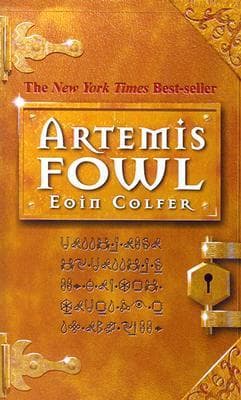
- Artemis Fowl
Eoin Colfer
3.9 (496k) average on GoodreadsFantasyFeatures a young protagonist thrust into a hidden magical world with a blend of humor and action.
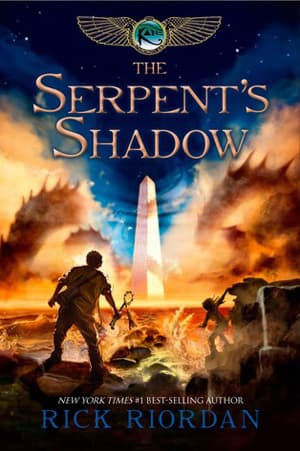
- The Serpent's Shadow
Rick Riordan
4.3 (123k) average on GoodreadsFantasyAnother series by Riordan exploring a different mythology (Egyptian) with similar character dynamics and adventure.
- Aru Shah and the End of Time
Roshani Chokshi
4.1 (13k) average on GoodreadsFantasySimilar to 'The Sword of Summer', 'Aru Shah' introduces a young protagonist to a rich mythological world (Hindu mythology in this case) with a blend of humor and adventure. Both books feature a protagonist who initially feels out of place and is thrust into a quest to prevent a catastrophic event. Chokshi's work, like Riordan's, excels at making complex myths accessible and fun. However, 'Aru Shah' might delve slightly more into the protagonist's internal emotional struggles and family dynamics early on, whereas 'The Sword of Summer' prioritizes Magnus's immediate disorientation and quest progression.
- Harry Potter and the Sorcerer's Stone
J.K. Rowling
4.5 (7M) average on GoodreadsFantasyRescued from a miserable life under the stairs, an orphaned boy discovers he's a wizard destined for a magical school, where he uncovers a dangerous secret tied to the dark wizard who murdered his parents.
- The Hunger Games
Suzanne Collins
4.3 (6.4M) average on GoodreadsFantasyIn a future where children fight to the death on live television, Katniss Everdeen volunteers for the arena, turning a death sentence into a fight for survival and a spark of rebellion.
- 1984
George Orwell
4.2 (3.1M) average on GoodreadsPoliticsIn a future where surveillance and thought control are absolute, a man's search for truth clashes with the Party, showing that hope can be a form of rebellion.




Enjoyed the summary?
A summary gives you the shape of the book. The book itself has the detail, the examples and the voice.
Find The Sword of Summer on AmazonAs an Amazon Associate, BookBrief earns from qualifying purchases. How we're funded